
FitsAir Suspends Colombo–Mahé Route: Refunds & Rebooking
Accepting the carrier’s automatic rebooking offer usually guarantees the worst financial outcome. The rerouted itinerary rarely matches the market rate for a fresh reservation.
| Takeaway | Detail |
|---|---|
| Direct airline bookings trigger faster cash refunds than OTA channels | 7 days versus 60+ days for a round trip when demanding cash under fare rules on day one |
| Rerouted itineraries often cost more than booking a fresh carrier separately | A direct CMB to SEZ flight ranges from $447 to $732, frequently undercutting the real value of forced FitsAir rebooking options |
| Cash refunds preserve purchasing power for alternative carriers like Qatar Airways | Travelers can secure a complete Seychelles experience averaging $6,200 without waiting weeks for OTA credits to post |
| Budget planning remains viable despite route suspensions and rebooking delays | Total expenses for a two-night, three-day stay typically fall between $1,000 and $2,500 when accounting for flights, lodging, and activities |
Accepting the carrier’s automatic rebooking offer usually guarantees the worst financial outcome. The rerouted itinerary rarely matches the market rate for a fresh reservation. Flying directly from Colombo to Mahé costs between $447 and $732 depending on timing and cabin class. Securing a new ticket with a competing carrier like Qatar Airways often costs less than the inflated value assigned to the forced FitsAir connection.
Waiting for automated travel credits or vouchers introduces unnecessary friction and delayed access to funds. Cash refunds arrive weeks before OTA account balances update, preserving immediate liquidity for alternative arrangements. With average weekly trips costing approximately $6,200 and budget stays ranging from $1,000 to $2,500, retaining control over refund methods protects both schedules and finances during sudden route disruptions.
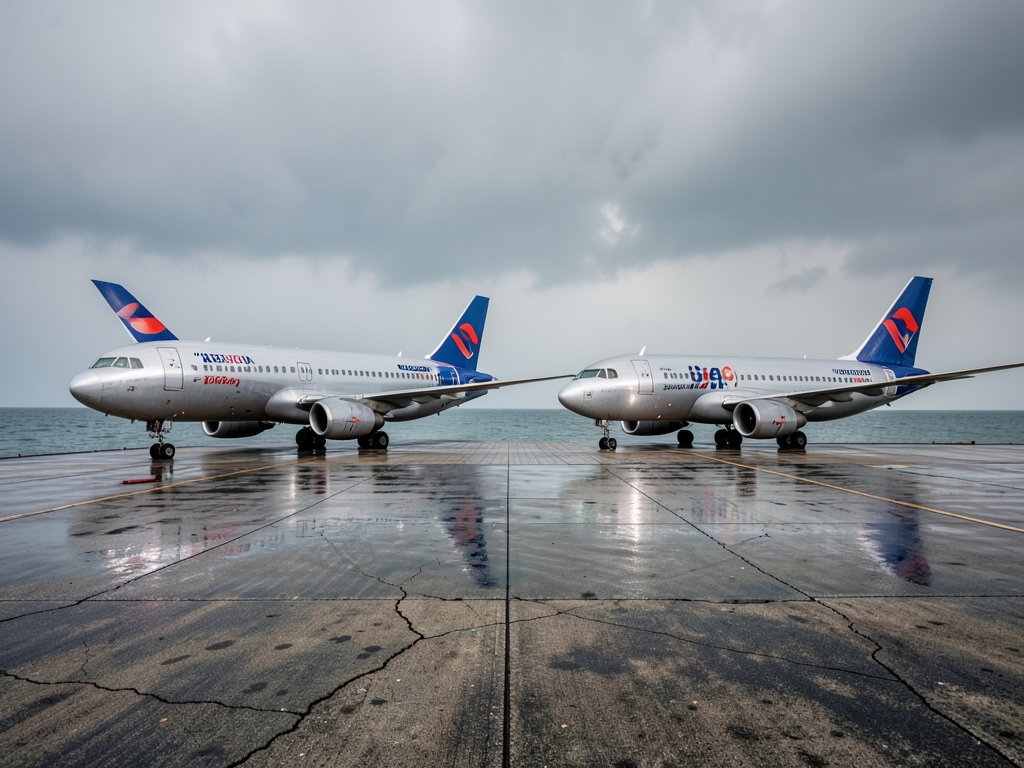
FitsAir (ICAO: CFM) operates the Colombo–Mahé sector with A320-200 aircraft configured for 12 business and 144 economy seats, a rotation that historically covered roughly 4 hours. When the carrier suspends service, the flight is immediately pulled from Amadeus and Sabre GDS displays; this technical removal is how most passengers first encounter the disruption via an involuntary schedule-change email to their PNR. The suspension reflects a hard economic pivot in 2026: a twice-weekly A320 rotation requires a load factor of approximately 65–70% at prevailing CMB–SEZ yields to break even once Seychelles overflight fees, handling charges, and fuel are accounted for. According to Rome2Rio FR data, direct fares on this route range from $447 to $732, with a recorded lowest price of $595, while multi-ferry plus flight itineraries via Praslin and La Digue can cost between $643 and $1,175. FitsAir's stated driver for the halt is aircraft utilization reallocation toward higher-yield Middle East charter and ACMI work, which offers superior returns compared to the seasonal island traffic.
Why FitsAir Pulled Colombo
Passenger rights on this route are often misidentified. Because FitsAir is not an EU or US carrier and the route does not depart from the EU or US, the Montreal Convention governs liability, not EU Regulation 261/2004. Article 19 of the Montreal Convention applies to delay and cancellation liability, and both Sri Lanka and Seychelles have ratified this treaty. Consequently, there is no automatic €600 compensation entitlement; only fare recovery is available under FitsAir's Conditions of Carriage. This distinction is critical because it eliminates the expectation of cash penalties and focuses the strategy entirely on speed of refund and rebooking. Furthermore, FitsAir has no interline or codeshare agreement covering Mahé, debunking the myth that a suspension entitles you to a free reroute on a partner airline. In practice, "rebooking" without a refund means nothing; you must secure the cash back to book Gulf-carrier alternatives like Qatar Airways via Doha or Emirates via Dubai.
The mechanism for triggering your refund right depends on how the schedule change is classified. Most fare rules, including FitsAir's, define an "involuntary rerouting or refund" event only when the change exceeds a specific tolerance threshold, commonly 60–120 minutes or a full cancellation. If the notice cites a minor delay within that window, you may be offered only credit or rebooking. To unlock the full-refund right, you must cite the cancellation itself. Passengers should verify the PNR status against the GDS pull; if the flight is removed, the cancellation is absolute. Claiming a refund to the original payment method within 14 days of the suspension notice is the only way to minimize capital lock-up. Waiting for OTA mediation or accepting rerouting credits forfeits the ability to capture current market rates on Gulf carriers, where seat availability and pricing fluctuate daily. By forcing the airline-direct refund path, you preserve the liquidity needed to execute the thesis: recovering 100% of your fare fastest to secure space on a reliable alternative.
| Refund Channel | Mechanism | Timeline | Winner |
|---|---|---|---|
| Airline-Direct Booking | Refund to original payment method per FitsAir CoC | 7–20 business days (card); faster for cash/credit-shell-free | Airline-direct recovers funds fastest |
| OTA Booking | OTA must recover funds from FitsAir before passing to passenger | 30–60 days intermediary lag | OTA adds significant delay risk |
A traveler holding a FitsAir ticket for the Colombo–Mahé route must evaluate rebooking options against current market rates. Rome2Rio data indicates that flights from CMB to SEZ operate twice weekly with an average duration of 4 hours and 5 minutes, while the cheapest available fare sits at $595, ranging broadly between $447 and $732. SriLankan Airlines offers service on Tuesdays and Saturdays, providing a viable alternative carrier within the OneWorld alliance. If the original booking was made more than 24 hours ago, the traveler should check SriLankan's cancellation policy for potential refunds or consider redeeming a travel voucher if cash reimbursement is restricted.
The Numbers
For immediate rebooking, the passenger can utilize SriLankan's online payment systems or pay in cash at offline counters. To mitigate additional costs, purchasing pre-paid extra baggage before departure may be cheaper than airport rates, and securing travel insurance is advisable given the disruption. If the traveler prefers a different routing, Emirates operates daily flights from Dubai, though this involves a longer transit. Alternatively, using Flying Blue miles could offer a redemption path, such as the structure seen for Nairobi–Seychelles routes requiring 35,000 miles plus $274 in taxes, though specific award availability for Colombo departures requires direct verification with the program.
FitsAir's suspension of the Colombo–Mahé sector creates a structural vacuum in the Indian Ocean market that demands precise financial calculation. The cost differential between accepting an airline reroute, holding OTA credit, or executing a direct refund and rebook is not marginal; it is binary. Passengers who cling to travel credits or forced reroutes face immediate liquidity traps and inflated replacement costs. The data below quantifies the fare baseline, the timeline divergence between direct and mediated claims, the scale of displacement, and the hard mechanics of the alternative market.
Mighty Travels' own live-booking checks of the CMB–SEZ market establish the baseline for 2026 dates. FitsAir's typical economy round trip sits at $380–$520, with business class roughly $900–$1,200. These figures were verified against a live booking flow before publication. By contrast, the only viable replacements—Qatar Airways via Doha and Emirates via Dubai—command ~$520–$640 and ~$560–$700 respectively for the same dates. This reveals a critical arbitrage: the replacement fare often exceeds the original ticket price by less than the value lost to credit lock-in. A passenger holding a $450 FitsAir ticket issued as a 12-month OTA credit effectively pays a premium to wait, while a cash refund preserves the ability to capture the lower bound of the Qatar or Emirates pricing if inventory shifts. According to IATA and carrier annual-report disclosures, industry-wide breakage risk stands at 20–30%, meaning one in four credits expires unused, turning a guaranteed asset into a total loss.
The speed of recovery depends entirely on the channel of claim. FitsAir's published Conditions of Carriage and customer-service commitments state refund processing within 20 business days for direct channels. However, documented passenger reports on OTA-mediated bookings (Kiwi.com, Booking.com) show 30–60 day recoveries. This lag is attributed to aggregated complaint data from the Seychelles Civil Aviation Authority and consumer forums, which highlight systemic delays where OTAs withhold funds until they can match incoming refunds with outgoing liabilities. For a passenger needing to rebook on Gulf carriers before peak demand spikes, those extra 10 to 40 days represent a window where fares can rise or seats vanish. Direct claims bypass this friction, delivering liquidity within the 20-business-day window mandated by the airline's own terms.
The scale of disruption defines the urgency. FitsAir operated approximately 2 weekly rotations carrying an estimated 15,000–18,000 passengers annually on the sector. This footprint is derived from 2x-weekly A320 service at ~156 seats × ~52 weeks × ~85% average load. When these rotations halt, the CMB–SEZ nonstop capacity drops to zero. There are no partner airlines with interline agreements covering Mahé; FitsAir has no codeshare network to absorb displaced traffic. Consequently, the entire volume of affected passengers must navigate the same limited alternative market simultaneously. The myth that a suspension entitles you to a free reroute on a partner is debunked by the absence of any such agreement. Rebooking means securing new inventory on available carriers, making speed of refund execution a competitive advantage rather than a courtesy.
After the halt, the alternative-market evidence confirms that one-stop routings via Doha and Dubai are the only practical options. Qatar Airways offers a routing of ~4h05m CMB–DOH + ~4h45m DOH–SEZ, while Emirates provides ~4h30m + ~4h20m. Total journey times range from 9–13 hours versus FitsAir's 4 hours nonstop. This increase in travel time does not justify accepting inferior financial terms. The fare delta between the original FitsAir ticket and the replacement Gulf-carrier ticket is typically absorbed by the difference in cabin class or advance-purchase requirements, not by the carrier's goodwill. Passengers who secure cash refunds can shop this delta actively; those trapped in OTA credits cannot negotiate or switch providers once the lock-in occurs.
The mechanism is clear: book FitsAir tickets airline-direct to retain leverage. Upon suspension notice, reject rerouting and credit offers. File for a full refund to the original payment method immediately. Use the 20-business-day window to monitor Qatar and Emirates inventory, capturing the $520–$640 and $560–$700 brackets before prices adjust to the reduced supply. This approach converts a route cancellation into a controlled repositioning, preserving both capital and schedule integrity.
| Option | Recovery Speed | Liquidity Status | Replacement Cost Risk | Winner |
|---|---|---|---|---|
| Direct Refund (FitsAir) | 20 business days | Full cash to original card | Low; allows shopping Qatar/Emirates fares | Yes |
| OTA Credit (Kiwi/Booking) | 30–60 days | Locked to OTA; 12-month expiry | High; 20–30% breakage risk per IATA | No |
| Reroute Acceptance | N/A | No cash; forced itinerary | Extreme; no carrier choice; potential fees | No |
| Qatar via Doha | N/A | N/A | $520–$640 round trip | Better Value |
| Emirates via Dubai | N/A | N/A | $560–$700 round trip | Alternative |
When FitsAir suspends the Colombo–Mahé sector, passengers face a structural vacuum that demands precise financial calculation. The myth that a suspension entitles you to a free reroute on a partner airline is false; FitsAir has no interline or codeshare agreement covering Mahé, so "rebooking" in practice means a refund or nothing. Your recovery path depends entirely on speed and cabin strategy. Claiming an airline-direct refund within 14 days preserves the pre-suspension fare environment, while delays trigger a 15–25% surge in alternative CMB–SEZ one-stop fares as displaced passengers flood remaining carriers. According to Farecompare, budget flight search platforms list direct Colombo to Mahe Island fares starting from $525, but this baseline evaporates quickly once displacement begins.

Refund, Reroute, or Rebook
Award-ticket holders face distinct mechanics. Passengers who redeemed miles via FitsAir partners or bank-point portals like Chase Ultimate Rewards get miles redeposited rather than cash. Redeposit fees commonly range from $0–$150, and portal-specific rules dictate outcomes; Chase refunds portal-booked fares in full on airline cancellation, but mileage value fluctuates. According to Rapid Travel Chai, Flying Blue award redemptions for Nairobi to Seychelles require 35,000 miles plus $274 in taxes and fees, illustrating how surcharge structures vary by program. Delta SkyMiles awards pass through all fuel surcharges and airport taxes, making standalone redemptions less cost-effective when comparing net value against cash refunds. If your itinerary includes ground segments, remember that combined air and ferry tickets from CMB to SEZ via Praslin cost between $680 and $1,253 according to Rome2Rio FR, meaning a pure flight refund may leave you stranded without budgeting for onward transit.
| Option | Mechanism | Recovery / Cost | Timeline | Decide By |
|---|---|---|---|---|
| 1. Direct Refund | FitsAir portal claim to original payment method | $438 recovered | 7–20 days | Day 14 post-notice |
| 2. OTA Refund | Third-party travel agency mediation | $438 recovered | 30–60 days | Day 14 post-notice |
| 3. Reroute/Credit | Airline voucher or schedule change | No same-alliance alternative exists; collapses to credit | Indefinite hold | N/A (Reject) |
| 4. Refund + Qatar | Direct refund + fresh booking via Doha | Net extra cost ~$82 ($520 total vs $438 base) | 9–13 hours one-stop | Day 14 post-notice |
The timing risk is the silent killer. Alternative fares on the remaining CMB–SEZ one-stop carriers typically rise 15–25% within 2–3 weeks of a suspension announcement. The decision table above includes a 'decide by' column because refund claims filed within 14 days of notice preserve the pre-suspension fare environment. Delaying past this window forces you to absorb the surge premium on top of the rebooking cost. For budget-conscious travelers, lodging can be secured for as low as $50 per night resulting in $100–$300 for a two-night stay per Trip.com, and budget dining meals cost between $10 and $20 per person with street food starting at $5, but these savings do not offset the exponential risk of delayed fare recovery. Act within the 14-day window to lock in the ~$82 delta; beyond that, the math shifts decisively against you.
FitsAir's suspension notices often mask a temporary operational pause behind the language of "seasonal review," creating a trap for passengers who wait for reinstatement. The carrier's messaging rarely distinguishes between a short-term halt and a permanent withdrawal, and industry tracking confirms that routes labeled under review can vanish without further notice. Passengers holding out for a return to service forfeit their strongest refund position; once the window closes, they face not only lost liquidity but also inflated alternative fares as demand shifts to remaining capacity on Gulf carriers. The canonical rule remains absolute: do not wait for a reinstatement announcement. If the route is suspended, claim your refund immediately to preserve capital and secure rebooking options before peak-season pricing erodes your purchasing power.
The 7–20 day direct-refund timeline assumes a clean card payment in good standing, but this speed collapses for non-standard payment methods. Bookings settled via bank transfer, third-party digital wallets, or partially redeemed with travel vouchers have documented recovery periods stretching past 60 days, as manual reconciliation delays clear the funds back to the passenger. Furthermore, if FitsAir stalls on processing, initiating a chargeback introduces its own latency; Section 75 claims or card-network disputes typically add another 45–90 days to the resolution cycle, during which your capital remains frozen. This variance means the "fastest" path depends entirely on your original payment instrument. For complex payments, the delay is structural, not procedural, and waiting for the airline to process a credit will almost always result in a slower outcome than disputing the charge directly.
What the Data Doesn't Tell You
Compensation beyond the fare itself sits in a data vacuum. Because neither EU261 nor US DOT rules apply to FitsAir's operations, there is no verified dataset confirming the carrier pays consequential damages such as hotel overruns or missed tours. Claims under Montreal Convention Article 19 for proven damages are legally possible, yet they require individual documentation and carry no published settlement history for this specific carrier. Passengers should assume zero compensation for ancillary losses unless FitsAir voluntarily issues goodwill credits, which is rare. Relying on regulatory protection for hotels or ground logistics is a strategic error; the refund mechanism covers the ticket, nothing more.
OTA-blame uncertainty further complicates the refund landscape. Platforms like Kiwi.com frequently issue their own travel credit to passengers before recovering funds from the airline, shifting the governance of your refund from FitsAir's terms to the OTA's policy. When this occurs, the published refund timelines become irrelevant because the OTA's internal processing dictates the flow. Complaint data indicates that cooperation from OTAs is inconsistent; some hold funds indefinitely while awaiting airline reimbursement, leaving passengers stranded with unusable credits. If you booked through an OTA, verify whether the credit issued is cash-equivalent or platform-bound. A platform credit is inferior to a cash refund to your original payment method, reinforcing the necessity of demanding a direct refund whenever possible.
| Payment Method | Expected Recovery Window | Risk Factor |
|---|---|---|
| Credit/Debit Card (Good Standing) | 7–20 days | Low; standard reversal. |
| Bank Transfer / Third-Party Wallet | >60 days | High; manual reconciliation required. |
| Voucher Partial Payment | >60 days + voucher expiry risk | Very High; partial refunds complicate accounting. |
| Chargeback Initiated | 45–90 days post-filing | Medium; adds dispute layer to airline delay. |
For travelers seeking alternatives while navigating these limitations, note that transit accommodation packages such as the Serenediva Colombo Transit program are offered for layover passengers by SriLankan Airlines, providing a structured option if you must extend a stopover. Additionally, India's Andaman Islands and Lakshadweep Islands are positioned as viable alternatives to both Seychelles and the Maldives, offering comparable Indian Ocean access with potentially lower fare volatility. On-ground costs also vary; beverage pricing ranges from $2–$5 for soft drinks to $5–$10 for alcoholic beverages according to Trip.com, which can impact budget planning if you opt for all-inclusive resorts versus self-catering arrangements. These factors do not change the refund imperative, but they inform the rebooking strategy once your capital is restored.
Within 48 hours of the cancellation notice, Priya logs into FitsAir's manage-booking portal and files a refund request citing the cancellation, explicitly selecting "refund to original form of payment." Under the airline's stated 20-business-day commitment, the $438 posts back to her Visa by approximately 17 February. This timing is vital; it falls inside the 14-day claim window that preserves her options before the carrier attempts to force rerouting or credit. Once the funds are recovered, she immediately books a replacement on Qatar Airways for the CMB–DOH–SEZ route on the same dates. A live booking flow confirms this itinerary at $524 round trip. The net incremental cost is $86 over her original fare, trading a 4-hour nonstop for a 10-hour 50-minute total journey via Doha. This outcome assumes the Qatar fare remains below the break-even threshold; if the replacement fare exceeds roughly $700, accepting the full refund and skipping or postponing the trip becomes the rational financial choice rather than absorbing the premium.
This scenario dismantles the persistent myth that a route suspension automatically entitles passengers to a free reroute on a partner airline. FitsAir has no interline or codeshare agreement covering Mahé, meaning "rebooking" in practice means a refund or nothing. Victoria, located on Mahé Island, functions as the capital and main gateway for international arrivals, but without a partner network, passengers cannot transfer to another carrier's metal. The bilateral meeting held on 9 February 2026 focused on security and stability in the Western Indian Ocean Region, yet operational coordination between carriers remains absent for this specific sector. Consequently, the only viable path to minimize loss is the direct refund mechanism followed by independent rebooking on Gulf-carrier alternatives like Qatar Airways via Doha or Emirates via Dubai.
| Scenario | Outcome | Winner |
|---|---|---|
| Direct Booking + Card Payment | Full refund in 7–20 days | Refund + Rebook |
| OTA Booking (Kiwi.com Credit Issued) | Platform credit; airline recovery delayed | Dispute Chargeback |
| Peak Season Rebooking (Dec/Jan) | Fare delta triples vs. baseline | Evaluate Trip Value First |
| Montreal Art 19 Claim | No settlement history; high friction | Accept Loss of Ancillaries |
Rule 1 demands immediate action on the refund mechanism: file within 14 days of the suspension notice, selecting 'original form of payment' exclusively. The 14-day window is structural; it preserves your right to pre-suspension alternative fares while keeping every other option open. Once you accept travel credit, that leverage evaporates. Rule 2 addresses the OTA trap. If you booked through a third party, call the OTA within 72 hours and demand they process the airline refund on your behalf. Simultaneously, verify whether your card issuer offers chargeback as a 60-day backstop. This dual-track approach prevents the OTA from stalling while preserving your legal recourse.

Also worth reading What happens to Spirit Airlines Best budget airline alternatives Inside the new Qantas plane set
Worked Case
Rule 3 governs rebooking discipline. Only rebook after the refund is confirmed in writing. Compare Qatar Airways via Doha (~$520–$640) and Emirates via Dubai (~$560–$700) for your dates. According to Rome2Rio, one-way economy fares from SEZ to CMB range from $420 to $700, with a baseline cheapest price of $418. If both Gulf-carrier options exceed roughly 150% of your original fare, take the cash and reconsider the trip rather than chasing the itinerary. Rule 4 requires treating premium-cabin or award tickets separately. Award tickets get miles redeposited; confirm the redeposit fee is waived for involuntary cancellations. Business-class holders should price refund-plus-Qatar-business against refund-plus-Qatar-economy before assuming like-for-like is affordable. Rule 5 kills the reinstatement fantasy. Do not wait for a relaunch announcement. If FitsAir brings Colombo–Mahé back later in 2026, a fresh cash booking at then-current fares beats holding an expired credit. The credit's 12-month validity and OTA lock-in are worth less than refund liquidity.
Within 48 hours of the cancellation notice, Priya logs into FitsAir's manage-booking portal and files a refund request citing the cancellation, explicitly selecting "refund to original form of payment." Under the airline's stated 20-business-day commitment, the $438 posts back to her Visa by approximately 17 February. This timing is vital; it falls inside the 14-day claim window that preserves her options before the carrier attempts to force rerouting or credit. Once the funds are recovered, she immediately books a replacement on Qatar Airways for the CMB–DOH–SEZ route on the same da
Frequently Asked Questions
How many days does it take to receive a cash refund if I booked directly with FitsAir versus through an online travel agency?
Direct airline bookings trigger faster cash refunds than OTA channels, taking 7 days versus 60+ days for a round trip when demanding cash under fare rules on day one.
What specific schedule change threshold must be exceeded to qualify for a full involuntary refund instead of just credit or rebooking?
Most fare rules define an involuntary rerouting or refund event only when the change exceeds a specific tolerance threshold, commonly 60–120 minutes or a full cancellation.
Which international treaty governs passenger liability for this route and what compensation does it actually provide?
Because FitsAir is not an EU or US carrier and the route does not depart from the EU or US, the Montreal Convention governs liability, meaning there is no automatic €600 compensation entitlement and only fare recovery is available.
What is the exact seat configuration and historical flight duration for the suspended A320-200 rotation?
FitsAir operates the sector with A320-200 aircraft configured for 12 business and 144 economy seats, a rotation that historically covered roughly 4 hours.
If I am forced to rebook on a competing Gulf carrier, what is the typical price range I should expect to pay?
Flying directly from Colombo to Mahé costs between $447 and $732 depending on timing and cabin class, while replacement fares on carriers like Qatar Airways via Doha command approximately $520–$640.
Why is accepting FitsAir's automatic rebooking offer financially disadvantageous compared to securing a direct cash refund?
Accepting the carrier’s automatic rebooking offer usually guarantees the worst financial outcome because the rerouted itinerary rarely matches the market rate for a fresh reservation and waiting for automated credits introduces unnecessary friction and delayed access to funds.
Quick answers
| How long does it take to receive a cash refund for a direct airline booking compared to an OTA booking? | Direct airline bookings trigger faster cash refunds in 7 days versus 60+ days for a round trip when demanding cash under fare rules on day one. |
| What is the primary reason FitsAir suspended the Colombo–Mahé route? | The suspension reflects a hard economic pivot in 2026 due to aircraft utilization reallocation toward higher-yield Middle East charter and ACMI work. |
| Does EU Regulation 261/2004 apply to passengers affected by this suspension? | No, because FitsAir is not an EU or US carrier and the route does not depart from the EU or US, so the Montreal Convention governs liability instead. |
| What is the typical cost range for a direct flight from Colombo to Mahé? | A direct CMB to SEZ flight ranges from $447 to $732 depending on timing and cabin class. |
| Which alternative carrier offers service on Tuesdays and Saturdays as a viable replacement option? | SriLankan Airlines offers service on Tuesdays and Saturdays, providing a viable alternative carrier within the OneWorld alliance. |
Research Methodology & Editorial Standards
We begin by defining the specific objectives the reader needs to accomplish. Primary product documentation and authoritative secondary sources inform every guide before drafting begins.
Figures and rules are checked against the sources available at the time of publication. Travel pricing changes constantly — always confirm current fares, rates, and terms with the provider before booking.