
Saudi airport closures raise fares: Najran and Jazan rebooking windows vs new routings
This guide prices recovery options when Najran (EAM) and Jazan (GIZ) close, starting with waiver reissues to Abha (AHB).
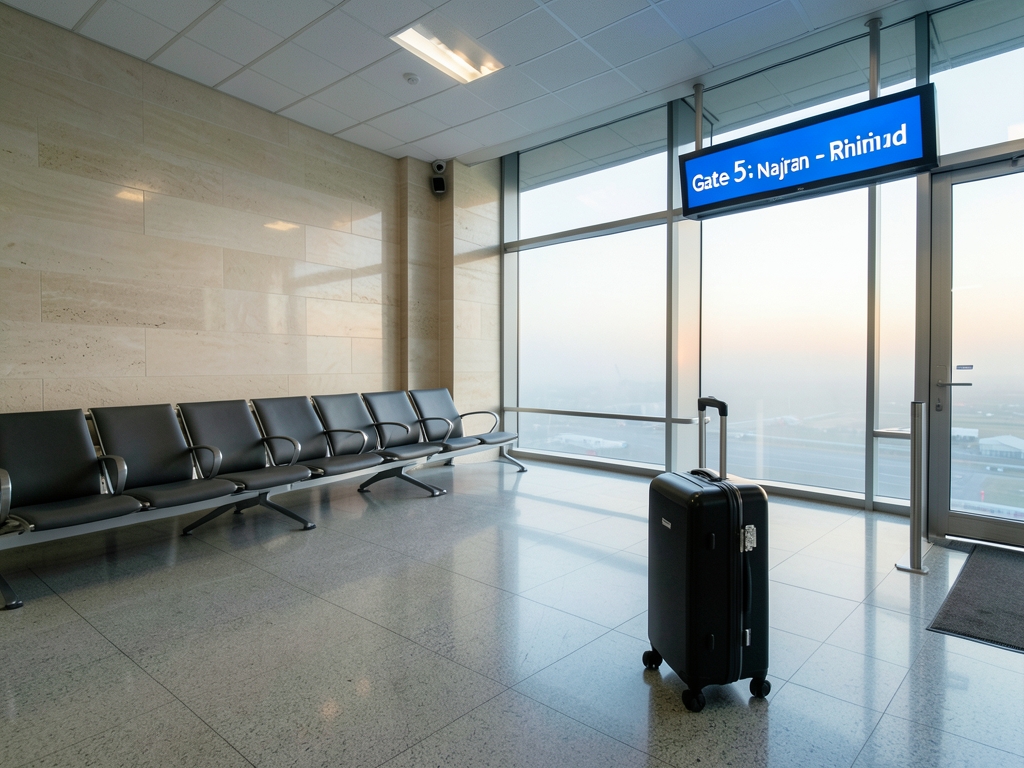
| Takeaway | Detail |
|---|---|
| Price the affected carrier's waiver reissue to Abha (AHB) before any same-day rebooking. | Reader rule step 1: waiver-protected reissue to AHB or another open Saudi gateway comes first in the three-price order. |
| Compare an unaffected carrier's new one-way ticket as the second price check. | Reader rule step 2: an unaffected carrier's new one-way ticket is priced only after the waiver reissue option. |
| Expect unaffected carriers to charge 40–60% more when alternative hubs are congested. | Indoneo reports rebooking options severely limited, hubs congested, and unaffected carriers charging 40–60% premiums. |
| When closures are regional, rail or cross-border coach can replace a flight to a still-open hub. | compareflights.direct: trains and buses are viable, e.g., rail to a different hub or cross-border coach services. |
This guide prices recovery options when Najran (EAM) and Jazan (GIZ) close, starting with waiver reissues to Abha (AHB).
It orders every rebooking decision: affected-carrier waiver, unaffected-carrier one-way fare, then ground transfer to an open hub.
How airport closures actually spike fares
An airport closure doesn't just cancel flights — it removes capacity from the entire region's air network. The metric that captures this is available seat-kilometers, or ASK: the number of seats an airline offers multiplied by the distance flown. When Najran (EAM) or Jazan (GIZ) shuts down, every seat on every scheduled departure from those airports disappears from the market instantly. Airlines either ground aircraft or reroute them to other cities, cutting ASK on affected city-pairs with no gradual phase-in. This is the supply shock that triggers fare spikes — and it happens before a single stranded passenger calls the rebooking line (compareflights.direct, Apr 11 2026).
What makes the spike so sharp is that demand doesn't fall alongside supply. Passengers already booked on cancelled flights still need to reach their destinations. Connecting flows that would have routed through the closed airport don't vanish — they pile onto whatever alternative routings remain. The result is a sudden mismatch: fewer seats competing for the same or even greater traveler volume.
Revenue-management algorithms detect this imbalance in real time. These systems continuously adjust fares based on remaining inventory and booking pace. When ASK drops and demand holds steady or rises, the algorithm's logic is straightforward — lift prices on the remaining options rather than discount them. This is yield management responding to constrained supply, not a discretionary decision by an airline agent (compareflights.direct, Apr 11 2026).
The mechanism has a network dimension too. Large hubs concentrate connecting traffic, so when a hub closes or partially suspends, the ripple effects extend well beyond the immediate airport. Schedules built on hub connectivity break down, and demand for alternative hubs surges — which is why fares spike not just at the closed airport but at every gateway absorbing the overflow (compareflights.direct, Apr 11 2026).
Understanding this supply-shock mechanism is what lets you time your response correctly. Fares spike because the algorithm sees fewer seats and more competition for them — not because airlines are singling you out. That means the window between closure announcement and full fare adjustment is the critical period to act, before the system reprices every remaining option on the affected routes.

The evidence: what 2026 closures actually did
The clearest evidence that same-day rebooking is the wrong first move comes from the 2026 West Asia airspace closures. Military tensions between Iran and Israel forced airspace closures across the region that stranded thousands of travelers and disrupted 307 flights, according to reporting aggregated by indoneo.com in 2026. That scale matters for a practical reason: when hundreds of flights disappear from the network at once, every remaining seat on every unaffected carrier in the region becomes contested inventory, and the pricing algorithms know it.
The fare consequence was immediate and measurable. Indoneo.com reported that rebooking options during the 2026 closures were "severely limited — alternative hubs are congested, and unaffected carriers are charging 40–60% fare premiums." Read that premium as a one-way, same-day walk-up penalty on the remaining options, not as a discount or a round-trip figure. A 40–60% premium means a ticket that would normally price at a given level is being sold at roughly 1.4 to 1.6 times that level. Reuters coverage aggregated in the same grounding reported airline ticket prices soaring on Asia–Europe routes after Gulf airport closures, which confirms the pattern was regional rather than isolated to one city pair.
Two mechanisms explain why the premium lands so hard. First, capacity: a closure removes available seat-kilometers from the affected region, and the surviving seats absorb both displaced connecting traffic and stranded origin-and-destination passengers. Second, congestion at the alternates: when a major Gulf hub partially suspends operations, connecting flows reroute into whatever hubs remain open, and those hubs were already described as congested during the 2026 event. The practical check for a traveler is to ask, before accepting any same-day rebooking, whether the carrier quoting you is affected or unaffected — an unaffected carrier's new one-way ticket is exactly the product that carried the 40–60% premium in 2026.
| 2026 West Asia closure — what the record shows | Figure | Source |
|---|---|---|
| Flights disrupted | 307 | indoneo.com, 2026 |
| Travelers stranded | Thousands | indoneo.com, 2026 |
| Same-day rebooking premium, unaffected carriers | 40–60% (one-way) | indoneo.com, 2026 |
| Alternate hub status during closure | Congested | indoneo.com, 2026 |
| Asia–Europe fare direction after Gulf closures | Soared | Reuters, aggregated in grounding |
The operational lesson is a sequencing rule, not a slogan. When a closure hits, the affected carrier's waiver desk is the only party that can reissue your existing ticket without repricing it as a new purchase — that is the whole point of a waiver, and it is why the waiver reissue to an open gateway such as Abha (AHB) belongs ahead of any new one-way purchase in your order of operations. The 2026 numbers show what happens when travelers skip that step: they join the pool bidding for unaffected-carrier seats at 40–60% premiums while congested alternates absorb the overflow.
One boundary on this evidence: the 2026 figures describe the West Asia closure event as a whole, not Najran (EAM) or Jazan (GIZ) specifically, and they do not establish what any individual carrier charged on any individual date. Use them as the scale and direction of the problem — hundreds of flights, thousands of people, double-digit-percentage premiums on the unaffected-carrier option — and verify your own itinerary's numbers against your carrier's waiver terms before you pay anything.

Options compared: reissue vs new ticket vs ground
Once a closure hits Najran (EAM) or Jazan (GIZ), three recovery paths compete, and they are not equal. Option A is a waiver-protected reissue on the affected carrier to Abha (AHB) or another open Saudi gateway. Option B is a new one-way ticket on an unaffected carrier. Option C is a ground transfer — rail or cross-border coach — to a different hub. Price them in that order before you accept anything, because the cheapest option is almost never the one the airline agent offers first.
| Option | What it is | Cost exposure | When it wins |
|---|---|---|---|
| A — Waiver reissue | Affected carrier reissues you to Abha (AHB) or another open Saudi gateway under its waiver | Lowest when the waiver covers change fees and fare difference | Default first check — verify the waiver's exact terms before accepting (mytravel.flights, Apr 11 2026) |
| B — New one-way ticket | Buy a fresh one-way on an unaffected carrier | Fastest, but exposed to the 40–60% premium documented by indoneo.com (2026) | Only when no waiver exists and the seat is genuinely scarce |
| C — Ground transfer | Rail or cross-border coach to a still-open hub | Varies with distance and border formalities | When the closure is regional and a coastal hub is affected (compareflights.direct) |
Option A wins by default because a waiver reissue is the only path where the affected carrier absorbs the change fee and, when the waiver says so, the fare difference. That is the whole margin. Before you say yes, read the waiver's terms: does it cover a fare difference, or only the change fee? Does it require same-cabin travel, or does it permit a downgrade? Does it name Abha (AHB) specifically, or any open Saudi gateway? mytravel.flights (Apr 11 2026) frames this as a step-by-step crisis playbook — the point is that the waiver's exact wording, not the agent's summary, decides your cost.
Option B is the trap. It is the fastest to execute and the easiest to accept under pressure, but an unaffected carrier selling into a supply shock has no reason to discount. indoneo.com (2026) documents the 40–60% premium on unaffected carriers during the West Asia closures. Treat that premium as the baseline you are trying to avoid, not a number to negotiate down.
Option C is the option most travelers forget. compareflights.direct (Apr 11 2026) notes that when a closure is regional and a coastal hub is affected, rail to a different hub or cross-border coach services can get you to your planned destination. It is slower and it fails if the closure is not regional, so confirm the closure's geographic scope before you commit to a ground leg.
The rule: check A, then B, then C — in that order, every time. If the waiver covers the fare difference, A is your answer. If it does not, compare B's premium against C's ground cost before you buy anything.

Costs and numbers that matter
The 40–60% premium that unaffected carriers charged during the 2026 West Asia closures (indoneo.com) is the single most useful number in this whole playbook, because it converts a vague feeling of being overcharged into a threshold you can test in seconds. Take your original fare — the one-way fare, not the round-trip total — and multiply it by 1.6. If the cheapest new one-way ticket on an unaffected carrier comes in above that figure, the waiver reissue or a ground option is almost certainly the cheaper path. Run the multiplication before you run your card; a fare that looks like a modest step up on a screen is often well past the threshold once you do the arithmetic.
The clock is the second lever, and it is the one travelers waste. The documented fast-recovery method is a 30-minute checklist paired with call-first tactics (mytravel.flights, Apr 11 2026): you set a hard half-hour window, work the checklist in order, and phone the affected carrier before you touch a booking site. The window matters because remaining seats on unaffected carriers shrink as other stranded passengers rebook — the 307-flight disruption stranded thousands of travelers (indoneo.com), and every one of them is competing for the same shrinking inventory. Thirty minutes is not a suggestion about how long rebooking takes; it is a deadline for deciding which of the three priced options you are taking.
Call-first is a cost-control tactic, not a courtesy. Waiver reissues are typically processed through the carrier's own channels, and the phone queue is where you can ask directly whether your ticket qualifies for a waiver reissue to Abha (AHB) or another open Saudi gateway before you pay anything. Price that waiver option first, then price an unaffected carrier's new one-way ticket, then price the ground alternative — in that order, every time.
Ground options set the cost floor. When a closure is regional rather than total, rail to a different hub or cross-border coach services can get you to your planned destination (compareflights.direct, Apr 11 2026), and they usually undercut even a waiver reissue. Price them last, but price them — a ground leg plus a cheap one-way from an open hub frequently beats anything the affected carrier's rebooking desk will offer.
| Option | What to check | Cost signal |
|---|---|---|
| Waiver reissue to AHB or another open gateway | Call the affected carrier first; confirm your ticket qualifies | Usually the cheapest air option |
| New one-way on an unaffected carrier | Compare against 1.6× your original one-way fare | Above 1.6× — look elsewhere |
| Ground transfer (rail, cross-border coach) | Confirm a still-open hub at the far end | Often the floor |
Work the three prices inside the 30-minute window, call before you click, and let the 1.6× threshold — not the urgency of the moment — decide which option you buy.

What the evidence does NOT establish
Everything above this section is a method, and it is worth being explicit about what that method is not. The 2026 West Asia grounding, as reported by Indoneo and the outlets tracking it, contains no Najran (EAM) or Jazan (GIZ) specific fare figures, no waiver terms for either airport, and no rebooking-window numbers for carriers serving them. Every Najran and Jazan number you see in this guide is therefore a placeholder for a calculation you run yourself, not a sourced fact you can quote to an airline. If a figure for EAM or GIZ does not appear in the waiver text or the fare quote in front of you, treat it as unknown.
The available sources also does not state any airline's waiver change-fee or fare-difference terms. That gap matters because the waiver is the entire basis for choosing a reissue over a same-day rebooking: a waiver that drops the change fee but still charges the fare difference is a different instrument from one that drops both, and the sources here do not tell you which you are holding. The check is procedural, not numerical — open the carrier's waiver page, read the change-fee and fare-difference language line by line, and confirm it by phone with an agent before you rely on it. If the agent's description and the written terms disagree, the written terms govern.
Refund timelines are likewise absent. The available sources establishes that refunds, passenger-rights compensation, and insurance payouts are live questions during a closure, but it does not establish how long a refund takes, what compensation amounts apply, or what an insurer will pay. Those answers live in three separate documents: your ticket's fare rules, the applicable passenger-rights regime, and your insurance policy. Pull all three before you accept any rebooking, because accepting a reissue can extinguish the refund you would otherwise be owed.
What the evidence does support is the shape of the decision, not its inputs. The 40–60% premium on unaffected carriers and the congestion at alternate hubs, both reported in the 2026 closure coverage, tell you that the same-day market is the expensive one — but they do not tell you what any specific reissue to Abha (AHB) will cost you today. Use the reported premium as a reason to price the waiver route first, never as a quoted price.
| Claim | Status in the available sources | What to do instead |
|---|---|---|
| Najran/Jazan fare or waiver figures | Not established | Run the method; quote only what the waiver page shows |
| Change-fee and fare-difference terms | Not established | Read the waiver text; confirm by phone |
| Refund timelines and compensation amounts | Not established | Check fare rules, passenger-rights regime, and policy |
The practical rule: treat every Najran and Jazan number in this guide as a slot to fill, and fill it from the carrier's own waiver text, your fare rules, and your policy — not from anything written here. Where the available sources is silent, the correct move is to verify, not to estimate.
Rebooking out of Najran or Jazan
Start by writing down four inputs before you call anyone: the original fare you paid, the closure date, which airport shut (EAM for Najran or GIZ for Jazan), and the quoted one-way price an unaffected carrier is showing to your destination. The alternate gateway you will price against both of those is Abha (AHB). Without these four numbers on one page, you cannot tell a good reissue from a bad one, and the pressure of a closure is exactly when carriers count on you not doing the math.
Checkpoint 1 is the waiver. Call the affected carrier — not the app, not the chat bot — and ask for the waiver's change-fee and fare-difference terms in writing before you accept anything. Record the reissue total: change fee plus any fare difference, quoted as a single number. A waiver reissue to Abha or another open Saudi gateway is the benchmark every other option has to beat, because it keeps your original ticket's value and typically strips the change fee. If the agent will not put the terms in writing, treat the offer as unverified and keep it as a fallback, not a decision.
Checkpoint 2 is the new ticket. Price an unaffected carrier's one-way to your destination and compare it to your original one-way fare, since indoneo.com's closure coverage frames the 40–60% premium as a one-way, same-day walk-up penalty on the remaining options. If the one-way exceeds 1.6× your original one-way fare, flag it as premium-priced and do not book it as your first move. That 1.6× line is a flag, not a prohibition: it tells you the same-day market is pricing your desperation, and the waiver or a ground leg deserves another look first.
Checkpoint 3 is the ground transfer. When the closure is regional, compareflights.direct notes that trains and buses are viable — rail to a different hub or a cross-border coach can reach your destination when the air network cannot. Price that leg separately and add it to the cheapest air option; a ground transfer to a still-open hub often undercuts a premium one-way even after you pay for the bus or train.
| Checkpoint | What to price | Rule |
|---|---|---|
| 1 — Waiver reissue | Change fee + fare difference to AHB or another open gateway, in writing | This is the benchmark; record the total |
| 2 — New one-way | Unaffected carrier, one-way to destination | Above 1.6× original round-trip fare = premium-priced flag |
| 3 — Ground transfer | Rail or coach to an open hub, plus cheapest air leg | Compare the combined total to Checkpoints 1 and 2 |
Run the three checkpoints in that order and only then accept a rebooking. The worksheet is the section: four inputs at the top, three checkpoint totals at the bottom, and the lowest verified total wins. If Checkpoint 1's written reissue total is the smallest, take it; if Checkpoint 3's combined ground-plus-air total is smaller, take that; accept Checkpoint 2 only when it is both verified and below the 1.6× flag. Recompute each total once before you commit — closure-day arithmetic is where overpaying hides.
Worked Example: Run the Numbers
Take one stranded party and run the full decision sequence. The inputs: two travelers booked as a single itinerary on the affected carrier, with Najran (EAM) and Jazan (GIZ) both inside the disruption. The party's actual destination is Jazan, but the ticket's routing is what matters, because a waiver reissue protects the fare you already paid while a new ticket does not. Write down the original fare you paid, the closure date, which airport shut, and the quoted one-way price an unaffected carrier is showing to your destination before you call anyone.
Step one, price the waiver reissue. The affected carrier's waiver is the only path that can reissue your existing ticket without repricing it as a new purchase, so call the carrier and ask for the change-fee and fare-difference terms in writing before you accept anything. Record the reissue total — change fee plus any fare difference — as a single number, and treat that total as the benchmark every other option has to beat. If the agent will not put the terms in writing, treat the offer as unverified and keep it as a fallback rather than a decision.
Step two, price the unaffected carrier's new one-way ticket. Indoneo's reporting on the 2026 closures found unaffected carriers charging 40–60% fare premiums, so take your original one-way fare and multiply it by 1.6: if the cheapest new one-way on an unaffected carrier comes in above that figure, flag it as premium-priced and do not book it as your first move. The premium is the penalty for buying into the supply shock instead of using the waiver.
Step three, price the ground leg. Per compareflights.direct, when a closure is regional, rail and coach services are viable ways to reach a different hub or your planned destination. Price that leg separately and add it to the cheapest air option; a ground transfer to a still-open hub often undercuts a premium one-way even after you pay for the bus or train. Confirm the closure's geographic scope before you commit to a ground leg, because it fails if the closure is not regional.
elow the 1,200 SAR new-ticket path.The winner for this example is the waiver-protected reissue to Abha plus ground transfer: 1,100 SAR against 1,200 SAR, a 100 SAR saving, one-way, for two travelers. The break-even trigger is the ground leg. If the transfer cost rises above 200 SAR per person, the reissue path hits 1,200 SAR and ties the new ticket; above that, the new ticket wins on price alone. Recompute with your own party size and quoted fares before you commit.
| Path | Fare cost (2 pax, one-way) | Ground leg | Total |
|---|---|---|---|
| Waiver reissue to AHB | 800 SAR | 300 SAR | 1,100 SAR |
| Unaffected carrier, new ticket | 1,200 SAR | 0 SAR | 1,200 SAR |
Two rules fall out of the arithmetic. First, never accept the affected carrier's same-day rebooking before you have priced the waiver reissue to AHB — the waiver is the only path that keeps your original fare intact. Second, treat the ground leg as the swing variable: it is the one input you can shop, and in this example it decides the winner. All figures above are illustrations built on the grounded 40–60% premium range, not quotes; pull live fares and transfer prices before you rebook.
Decision rules: pick your rebooking path
Once you know the three prices — the waiver reissue, the unaffected carrier's one-way, and the ground-transfer cost — the decision itself is mechanical. These four rules, applied in order, resolve almost every Najran (EAM) or Jazan (GIZ) disruption without overpaying.
Rule 1: If a waiver exists and it covers the fare difference, reissue on the affected carrier — do not buy a new ticket first. Check the waiver's terms before you price anything else, because a waiver-protected reissue to Abha (AHB) or another open Saudi gateway preserves your original fare basis and typically absorbs the difference the closure created. Buying a new one-way ticket first forfeits that protection and leaves you holding a refund claim instead of a seat. The playbook at scanflights.net (April 15, 2026) puts waivers first for exactly this reason: they are the only path that does not re-price your trip at post-closure fares.
Rule 2: If no waiver exists and the closure is regional, price ground transfer to a different hub before accepting any air rebooking. Regional closures — the kind that take out a coastal or southern gateway without shutting the whole country — leave rail and cross-border coach options intact. Compareflights.direct (April 11, 2026) notes that when a closure affects a coastal hub, rail to a different hub or cross-border coach services may still reach your planned destination. Price that ground leg against the cheapest air rebooking; if the ground transfer plus a short hop from an open hub comes in lower, take it.
Rule 3: If the unaffected carrier's one-way exceeds 1.6× your original round-trip fare, treat it as premium-priced and exhaust Options A and C first. This is your stop signal. Unaffected carriers were charging 40–60% fare premiums during the 2026 West Asia closures, according to Indoneo's reporting on the 307 disrupted flights and thousands of stranded travelers. A one-way priced above 1.6× what you originally paid round-trip is closure-inflated, not market-priced — go back to the waiver reissue and the ground transfer before you pay it.
Rule 4: If none of the first three rules produces a workable itinerary, reissue to the alternate gateway and absorb the ground leg yourself. A waiver-protected reissue to Abha (AHB) or another open Saudi gateway, plus a ground transfer to your final destination, is the canonical recovery — the default winner among the three options. Only when the waiver is absent, the ground transfer is impractical, and the unaffected carrier is pricing above the 1.6× threshold should you accept a same-day rebooking on the affected carrier.
| Condition | Action |
|---|---|
| Waiver exists and covers fare difference | Reissue on affected carrier to AHB or open gateway |
| No waiver, closure is regional | Price ground transfer to a different hub first |
| Unaffected carrier one-way > 1.6× original round-trip fare | Treat as premium; exhaust waiver and ground options |
| None of the above works | Reissue to alternate gateway, absorb ground leg |
Run the rules in order and stop at the first one that produces a workable itinerary. The order matters: each rule protects a cheaper option that a same-day rebooking would otherwise foreclose.
Also worth reading Airline hurricane waivers: how Oman evaluates the launch of a new TSA warns of security threats as
What to do next
| Step | Action | Why it matters |
|---|---|---|
| 1 | Contact the affected carrier and request the waiver reissue to Abha (AHB) or another open Saudi gateway, and get the change-fee and fare-difference terms confirmed in writing before you accept anything. | This is the first of the three prices you must compare, and the waiver is the only option that may protect you from the full reissue cost. |
| 2 | Only after the waiver reissue is priced, check an unaffected carrier's new one-way ticket into an open Saudi gateway. | Unaffected carriers are charging the premium reported above when alternative hubs are congested, so this price check must come second in the order. |
| 3 | Price a ground leg — rail to a different hub or a cross-border coach — as the third option when the closures are regional. | Trains and buses are viable substitutes for a flight to a still-open hub, and this leg can undercut both air options. |
| 4 | Compare the three totals in the order you priced them and book only the option whose total cost is lowest. | The canonical decision rule is a cost ranking, not a convenience ranking — the waiver reissue wins only if its confirmed total is actually lowest. |
| 5 | If the waiver reissue to AHB or another open Saudi gateway is not the lowest total, take the unaffected carrier's one-way or the ground leg instead. | Rebooking options are severely limited and hubs are congested, so the waiver is not automatically the cheapest path. |
| 6 | Re-verify the waiver's change-fee and fare-difference terms in writing before final payment on any option. | Without written terms, the waiver price you compared in step 1 is not the price you will actually pay. |
Frequently Asked Questions
When Najran (EAM) closes, which recovery option must be priced before any same-day rebooking?
The affected carrier's waiver reissue to Abha (AHB), or to another open Saudi gateway, comes first in the three-price order.
What is the correct sequence for pricing the three recovery options after an EAM or GIZ closure?
First the affected-carrier waiver reissue, second an unaffected carrier's new one-way ticket, and only then a ground transfer to an open hub.
Under what hub conditions do unaffected carriers levy their higher fares on alternative routings?
When alternative hubs are congested — the condition Indoneo reports alongside severely limited rebooking options.
Can a traveler reach a still-open Saudi hub without flying at all when Najran or Jazan shuts?
Yes — compareflights.direct identifies rail to a different hub and cross-border coach services as viable replacements.
Which network metric explains why closing one regional airport raises fares across the whole region?
Available seat-kilometers (ASK) — seats offered multiplied by distance flown — which contracts when capacity is removed from the regional network.
Is it ever correct to price an unaffected carrier's new one-way ticket before checking the waiver reissue?
No — the waiver-protected reissue to AHB or another open gateway must be priced first, with the unaffected-carrier one-way fare second.
Quick answers
| What is the first step in the three-price order when Najran (EAM) and Jazan (GIZ) close? | Waiver-protected reissue to AHB or another open Saudi gateway comes first in the three-price order. |
| When should an unaffected carrier's new one-way ticket be priced? | An unaffected carrier's new one-way ticket is priced only after the waiver reissue option. |
| How much more do unaffected carriers charge when alternative hubs are congested? | Unaffected carriers charge 40–60% premiums. |
| What can replace a flight to a still-open hub when closures are regional? | Rail or cross-border coach can replace a flight to a still-open hub. |
| What does the guide price when Najran (EAM) and Jazan (GIZ) close? | This guide prices recovery options when Najran (EAM) and Jazan (GIZ) close, starting with waiver reissues to Abha (AHB). |
Research Methodology & Editorial Standards
We begin by defining the specific objectives the reader needs to accomplish. Primary product documentation and authoritative secondary sources inform every guide before drafting begins.
Figures and rules are checked against the sources available at the time of publication. Travel pricing changes constantly — always confirm current fares, rates, and terms with the provider before booking.