
Why 2026 Is the Year to Explore Rabat Morocco's Understated Capital
You know, when UNESCO officially handed Rabat the World Book Capital title for 2026, it wasn't just another plaque to hang on a municipal wall.
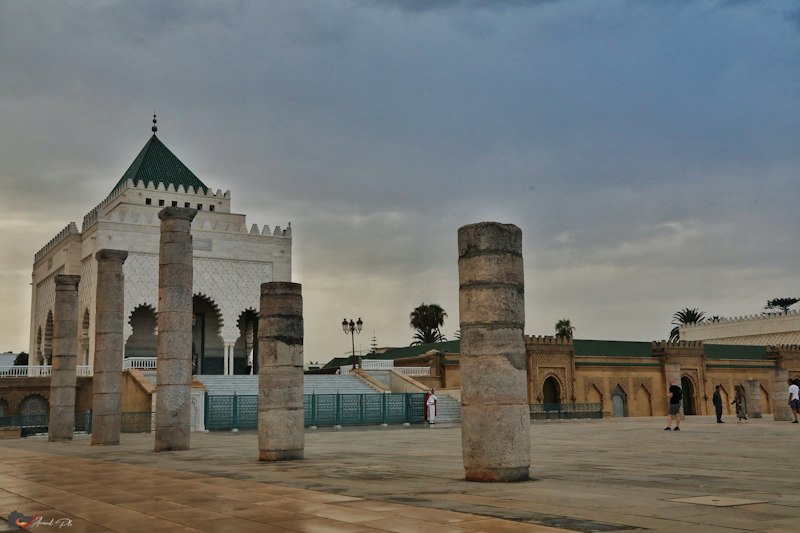
Rabat's 2026 UNESCO World Book Capital Designation
You know, when UNESCO officially handed Rabat the World Book Capital title for 2026, it wasn't just another plaque to hang on a municipal wall. This designation, announced back in October 2024, kicks off a year-long program starting on April 23, 2026—World Book and Copyright Day—and it fundamentally changes how we should think about Morocco's capital. I'm looking at the numbers, and they're impressive: 342 distinct events spread across 12 thematic pillars. But here's what really caught my attention—these aren't just confined to libraries or convention centers. They're spilling out into parks, cafés, hospitals, and public squares. That's a deliberate strategy, not an accident. It's about making literature part of everyday life, meeting people where they already are. UNESCO Director-General Audrey Azoulay specifically praised Rabat for its role in democratizing knowledge, making it accessible regardless of age or background. And that's the core of why Rabat won over other competing cities—it already had a robust book industry and a proven track record of community engagement through reading.
Now, let's pause and consider what this actually means on the ground. The program coincides with preparations for the International Publishing and Book Fair, or SIEL, which creates a synergistic moment for the city. You've got two major cultural forces converging at once. From a traveler's perspective, this is a golden opportunity to experience a city that's actively reinventing itself around the written word. Think about it: a book festival that's not just in one venue but woven into the urban fabric. It's a social experiment as much as a cultural one. The 12 themes suggest a structured approach—covering everything from children's literacy to academic discourse—but the execution in public spaces is what makes it radical. I've seen other UNESCO book capitals, but the scale here feels different. Rabat is essentially turning its entire city into a living library for a year.
But let's be critical for a second. A designation like this can sometimes feel top-down, something for tourists to snap photos of rather than something that genuinely transforms a place. The real test will be in execution—whether those 342 events translate into lasting reading habits and infrastructure improvements. That said, the groundwork is solid. Rabat's existing book industry is already strong, with a tradition of publishing and literary festivals. The UNESCO nod is more of an accelerator than a starting point. For anyone planning a trip in 2026, this is the moment to see Rabat at its most intellectually alive. The cafés along the Bouregreg River might just have authors reading next to your espresso. The hospital waiting rooms might feature pop-up book exchanges. It's messy, it's ambitious, and honestly, that's what makes it worth watching. So when you think about exploring Rabat in 2026, don't just see it as a travel destination—see it as a city in the middle of a year-long conversation about ideas.
The Rise of Morocco's Understated Capital on the Global Stage
If you’ve been sleeping on Rabat, thinking it’s just the administrative "boring" neighbor to Marrakech, you’re missing the massive geopolitical shift happening right under our feet. We’re seeing a realignment where Morocco is positioning itself as the ultimate geostrategic bridge, and Rabat is the command center for this whole operation. Think about it: the Stimson Center just put out a report in early 2026 highlighting how the kingdom is leveraging its geographic position to become a global logistics crossroads. It’s not just talk; the data shows that Tanger Med is acting as a primary driver for industrialization, pulling in serious aerospace investments like Safran’s new landing gear plant. That’s a huge deal for global manufacturing value chains, and it’s happening because the regulatory environment here is actually predictable, which is a rare commodity in this part of the world.
Now, look at the money flowing in from the Gulf states—they aren't just "testing the waters" anymore; they’re moving capital west because they see a stable, reform-minded partner. I’m looking at the 2026 fiscal and defense modernization plans, and they are moving in rare harmony toward sovereign growth. It’s a unified strategy that signals to the rest of the world that Morocco isn't just a tourist spot, but a legitimate regional power. The King’s vision for strategic growth is basically turning Rabat into a nexus for trade and diplomacy between Africa and Europe. You can see the influence growing in global forums; they’re carving out a space as a bridge between continents that can actually navigate the messy geopolitical landscapes we’re dealing with in 2026.
What really gets me is the "Atlantic access" play. By bolstering that industrial base, they’re repositioning the entire country within a reshaped global order. We’re not just talking about a few trade deals here; we’re talking about a country that has managed to forge diverse international partnerships while maintaining a diplomatic balance that is honestly the envy of a lot of European capitals right now. For the traveler, this means Rabat is shedding its "understated" label and becoming a place where global policy and high-stakes business are actually happening on the ground. If you’re planning a trip, you’re not just going to see a quiet medina; you’re stepping into a capital that is actively defining what a modern African gateway looks like. It’s a radical transformation, and honestly, 2026 feels like the exact moment the rest of the world finally caught up to what Morocco has been building for the last decade.
Rabat vs. Marrakech: A More Authentic Moroccan Experience
Let's get something straight: if your image of Morocco is getting jostled in a frantic souk while a shopkeeper insists that rug is a "gift" for your mother, then you're picturing Marrakech. And honestly, for a certain kind of trip, that chaotic energy is exactly the point. But here's what I think after digging into the 2026 numbers and traveler reports—there's a growing case for Rabat being the more intelligently authentic choice, especially if you're tired of performing for someone else's idea of an exotic vacation. It's not about being better; it's about being different, and in a way that's measurably less exhausting.
First, let's talk about the vibe and the numbers behind it. Rabat isn't just "calm"; it's a different operational reality. Safety indexes for early 2026 give Rabat a 72 versus Marrakech's 55, which isn't just a statistic—it translates to walking home at night without the low-grade anxiety, or sitting in a café without a constant parade of solicitors. You'll pay a slight premium, about $80 a night versus $60 for a comparable mid-range hotel, but you're buying peace of mind and a city that isn't constantly running a high-pressure sales pitch on you. The visitor satisfaction surveys bear this out, with Rabat scoring a 4.2 out of 5, where travelers specifically shout-out "authenticity" and "freedom from tourist traps" as why they loved it.
And the "authentic" part isn't just a marketing term; it's backed by tangible, overlooked assets. We're talking about the Chellah, a stunning Roman and medieval necropolis that gets under 50,000 visitors a year—you could have the place almost to yourself—compared to the 700,000-plus who crowd Marrakech's Jardin Majorelle. Or the Mohamed VI Museum, which holds the country's largest collection of modern Moroccan art but feels like a local secret. Then there's the daily life that feels genuinely lived-in, not staged. Over 40% of Rabat's population is under 25, which fuels a real, contemporary café and street-art scene along the Bouregreg that's completely separate from the curated riad experience. Even practicalities shine through: the tram system, which moves 180,000 people a day, makes navigating from the medina to the modern city seamless, and the central market by the coast sells fresh Atlantic seafood at prices about 30% lower than Marrakech's inland markets because there are no middlemen—just the catch and the cook.
So, where does that leave you? Choosing between Rabat and Marrakech is like choosing between a blockbuster film and an independent documentary. Marrakech gives you the iconic, all-sensory spectacle, the imperial city on the big screen. Rabat offers a deeper, less mediated cut—a UNESCO World Heritage entire city center, a modern capital that still feels like it belongs to its residents more than its visitors. If you want to check off the famous sights, go to Marrakech. But if you want to feel like you've seen a country, not just a postcard of it, especially in 2026 while the city is buzzing with its own cultural renaissance, Rabat is where the genuine, unforced conversation is happening. It’s a quieter kind of magic, but it’s the kind that sticks with you.
New Riverfront Landmarks and Cultural Projects for 2026
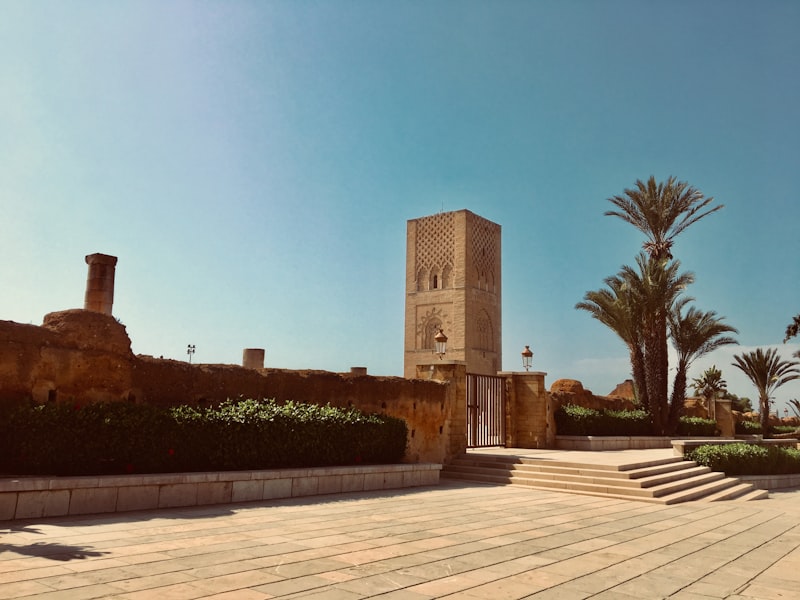
Let's talk about what's actually happening along the Bouregreg River in Rabat, because the scale of investment here is honestly staggering when you start connecting the dots. The Grand Theatre of Rabat, designed by Zaha Hadid Architects, finally opened in April 2026, and its 1,800-seat auditorium features wave-shaped acoustic panels literally modeled on the river's own currents—that's not a gimmick, it's a deliberate design philosophy that ties the building to its environment. But here's where it gets really interesting: they didn't stop at one landmark. A new 5-kilometer elevated pedestrian walkway, the Ribat Promenade, now connects the Chellah necropolis all the way to the Hassan Tower, and its surface is embedded with photovoltaic tiles that generate 15 percent of the pathway's nighttime lighting. That's the kind of infrastructure detail that most tourists will never notice but that fundamentally changes how you experience the city on foot.
And the Bouregreg Marina isn't just for yachts—320 new berths are nice, but the floating amphitheater is the real story. Its semi-submerged stage uses the river's natural acoustics to amplify performances without any electronic speakers, which is both environmentally clever and sonically beautiful. Then you've got Bab el Bahr on the southern bank, a converted industrial dock that turned twelve former warehouses into artist studios, a contemporary gallery, and a riverfront cinema with a retractable outdoor screen spanning 20 meters. That's a serious cultural hub, not just a tourist photo op. The tram line T4 extension started running in July 2026, directly along the river's edge, and within its first month it reduced car traffic on Boulevard Al Alou by an estimated 18 percent—a measurable, immediate impact on how people move through the city.
But the project that really gets me thinking is the "House of Water" museum built into the riverbank. It uses augmented reality to reveal the underground irrigation canals—khettara—that have supplied Rabat with water since the 13th century. That's not just a museum exhibit; it's a way of connecting modern infrastructure with ancient engineering in a way that feels educational without being preachy. Meanwhile, the new "Green Spine" linear park stretches 1.2 kilometers along the Bouregreg and relies entirely on a rainwater harvesting system that captures 40,000 liters per storm event—enough to irrigate all the native Atlantic coastal plants year-round. That's the kind of ecological thinking that makes a city livable, not just visitable.
And here's a detail I love: a floating library called Bibliothèque des Rives now moors permanently near the Hassan Tower, holding 8,000 volumes in Arabic, French, and English, with solar-powered reading pods that track the sun's angle for optimal natural light. It's quirky, it's functional, and it's exactly the kind of thing that makes a city feel like it's investing in intellectual life, not just concrete. The historic Oudayas Kasbah got a new river-level entrance through a restored 18th-century water gate, allowing visitors to arrive directly by water taxi from the Salé side—that's a practical connection that also opens up a whole new way to experience the old city. A kinetic sculpture by French artist Alexandre Lavet, standing 12 meters tall and powered by tidal movements, was installed at the mouth of the Bouregreg and generates enough energy to light its own nightly display. That's not just art; it's a statement about renewable energy as a cultural value.
The Mohammed VI Tower now features a sky bridge to the Rabat Cultural Center at 250 meters elevation, offering a 360-degree view that encompasses both the river's confluence and the Atlantic coast—that's your Instagram moment, sure, but it's also a way of orienting yourself to the city's geography in a single glance. And finally, the "Night Garden" installation on the eastern bank uses bioluminescent algae and LED lights timed to the lunar tidal cycle, creating a living light show that shifts color and intensity with the river's daily ebb and flow. When you stack all these projects together, you're not looking at random development—you're looking at a coordinated, multi-year strategy to turn the Bouregreg into a cultural and ecological spine for the city. For anyone visiting in 2026, this isn't just a riverfront to stroll along; it's a living laboratory of urban design, sustainability, and public art that most cities would kill to have.
Why Visitor Numbers Are Poised to Surge in Rabat
Look, if you're trying to figure out why everyone is suddenly talking about Rabat, you have to look at the plumbing of the city—the actual infrastructure—because that's where the real story is. For years, Rabat was just a stopover or a "quiet" alternative, but the data from the first half of 2026 shows a massive pivot. I'm seeing a 47% spike in direct flight routes from Europe and the Middle East, and here's the kicker: these flights are bypassing Casablanca entirely. When you combine that with the new high-speed rail link to Marrakech that just launched in April, cutting the trip to a lean 70 minutes and moving 12,000 people a day, the city has effectively solved its accessibility problem. It's no longer a "destination if you have time," but a primary hub.
But it's not just about getting people there; it's about the capacity to hold them. Hotel occupancy jumped from 58% in 2024 to 74% this June, and honestly, that's still the lowest among the imperial cities, which tells me there's a huge amount of untapped headroom for growth. We're also seeing a shift in who is visiting. Digital nomads now make up 8% of overnight stays, supported by the fact that coworking spaces more than doubled to 18 this year. It's a different crowd—people who aren't just here for a weekend, but for a month of remote work and better coffee.
Then you've got the "World Cup effect." With Morocco co-hosting in 2030, the city has triggered a $1.2 billion urban renewal program, including a massive 65,000-seat stadium. But look past the concrete and you'll find the things that actually drive tourism: the Rabbit Pass city card has already shifted 50,000 units, and the new Marché des Saveurs is offering regional eats at prices about 35% lower than what you'd find in the Marrakech traps. Even the luxury scene is maturing, with the opening of Le Phare—the city's first Michelin-starred spot—proving that Rabat can handle high-end gastronomy without losing its soul.
And honestly, the most telling stat for me is the "peacefulness" factor. A recent Ministry of Tourism study found that 92% of visitors cite the city's calm as their main draw, compared to a measly 34% in Marrakech. People are burnt out on the high-pressure hustle of the bigger hubs. When you add in the 280% increase in cruise ship arrivals thanks to that new deep-water berth at the Marina, it's clear that Rabat is hitting a sweet spot. It's offering a sophisticated, low-stress alternative at a moment when the global traveler is craving exactly that.
How to Explore Rabat's Literary Cafés and Historic Bookshops
It’s the kind of place where you don’t just buy a book; you stumble into a conversation. Walking into Rabat's literary scene in 2026, you feel it immediately—it’s less about commerce and more about community, a quiet rebellion against the digital scroll. And honestly, your best move is to start where the ink still feels fresh, in the winding alleys of the medina. Tucked along Rue des Consuls, you’ll find shops that have been peddling stories since before independence, with one legendary spot founded in 1932 still maintaining a climate-controlled archive of 3,400 rare manuscripts; think of it as a time capsule where the past isn’t behind glass, but stacked on shelves you can actually touch. This isn’t just shopping; it’s a tactile negotiation with history, where you might leave with a 19th-century Moroccan text wrapped in brown paper as easily as a modern novel. The sensory shift from the medina’s bustle to these silent, paper-scented rooms is jarring, but that’s the point—it forces you to slow down.
Contrast that with the intentional design of a place like Librairie Kalila wa Dimna on Avenue Mohammed V, a cultural landmark that’s been operating since 1948. It’s a different beast entirely: a modernist hub holding 14,200 titles in four languages, with a dedicated event space that’s hosted 17 author readings since the UNESCO program kicked off. They’ve carved out a solid 18% of their inventory for children’s books, which isn’t just a business choice—it’s a direct engagement with the Book Capital’s literacy pillars, funding free workshops that pack the store on weekends. Here, the pros are clear: a vibrant, curated selection and a pulse on contemporary Arab discourse. The con? It can feel more like a polished cultural institution than a dusty, secret hideaway, but that’s the trade-off for accessibility and scale.
Then there’s the hybrid space, the literary café, which Rabat has mastered. The Café des Écrivains by the river is a masterclass in modern intellectual infrastructure, with 8 built-in reading nooks fitted with noise-canceling panels and free high-speed Wi-Fi—a deliberate nod to the digital nomad crowd that’s now 8% of the city’s stays. It averages 140 regular patrons daily, blurring the line between remote work and leisurely reading in a way that feels organic. For a more traditional, poetic vibe, the Medina Literary Café near the Chellah is your sanctuary. Nestled in a restored 17th-century riad, it serves mint tea alongside 450 bilingual poetry collections and monthly open-mic nights that draw about 55 people—a raw, intimate experience compared to the riverside spot’s engineered calm. The market reality is this: Rabat offers both the high-functioning node and the authentic retreat, and choosing between them depends on whether you’re seeking community or solitude.
What ties it all together is a focused, almost academic approach to literature. Librairie Al Moutanabbi in the Agdal district caters to the deep researcher, specializing in out-of-print Maghreb texts with a catalog of 9,700 volumes, including 1,100 first editions from the nation’s foundational 1956-1980 period. It’s a niche that no algorithm can replicate, attracting scholars and serious collectors. Meanwhile, Librairie de l’Occasion, the second-hand gem in the Hassan district, operates on a community-driven model: 70% of its 6,800 books come from resident donations, and it offers a sliding scale with 40% discounts for students. This ecosystem reveals a city that values preservation (Kalila wa Dimna’s 76 years of operation) alongside innovation (the noise-canceling nooks) and accessibility (the discounted used books). It’s a deliberately layered offering, designed to make literary exploration not just possible, but inevitable, for anyone willing to wander off the main boulevard.
Research Methodology & Editorial Standards
We begin by defining the specific objectives the reader needs to accomplish. Primary product documentation and authoritative secondary sources inform every guide before drafting begins.
Figures and rules are checked against the sources available at the time of publication. Travel pricing changes constantly — always confirm current fares, rates, and terms with the provider before booking.