
This Must Be Studio City Exploring the Heart of LAs Entertainment Scene
This Must Be Studio City Exploring the Heart of LAs Entertainment Scene.
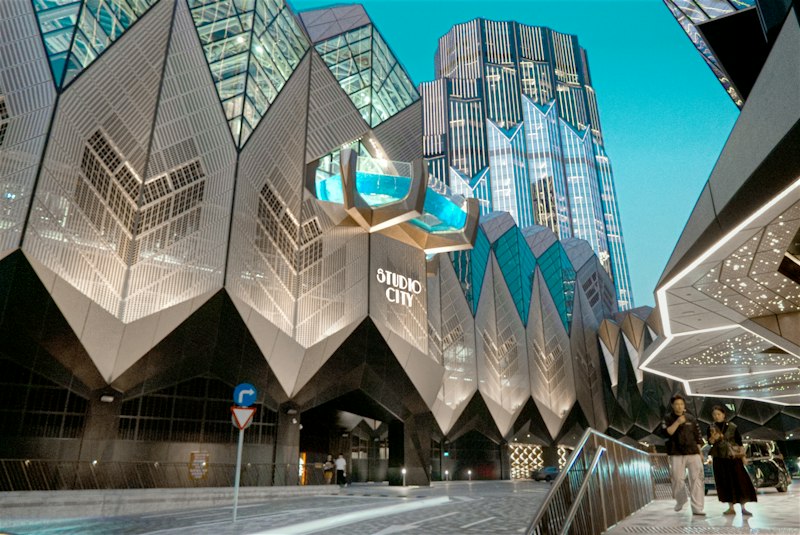
The Iconic Backlot: Exploring Universal Studios Hollywood
Let’s start by being honest about what the Universal Studios Hollywood backlot really is, because most people think of it as just a theme park ride and that undersells it by a mile. In reality, this is the world’s largest working movie studio, and the Studio Tour—first opened on July 15, 1964—is the park’s signature attraction precisely because it lets you walk (or, more accurately, ride a tram) through an active production facility. We’re talking about a space that has to serve two completely different masters simultaneously: it’s a tourist destination pulling tens of thousands of visitors a day, and it’s a professional film and television lot where crews are shooting interiors, stunts, and exterior scenes for actual projects airing on your TV right now. The engineering that makes this possible fascinates me. The tour infrastructure is designed so that large groups can move through active filming zones without disrupting production schedules—think of it like a highway system with timed traffic lights, except the “cars” are trams and the “road workers” are grips adjusting a lighting rig for a chase sequence.
The tour runs about 60 minutes and is included with your park admission, which is a ridiculous value when you break down what you’re actually seeing. You roll through facades built to simulate everything from a New York brownstone to a European village square—these aren’t just movie props, they’re modular architectural shells that can be repainted, repositioned, or repurposed to stand in for dozens of cities over a single season. The Classics Tour is a dedicated subset of the experience that highlights productions shot between the early days of the studio through the 1970s, giving you a direct technical perspective on how Hollywood built its visual language before digital everything. And then you hit the practical effects zones—Jaws, Jurassic Park—which aren’t just remnants of past blockbusters but are maintained as living demonstrations of mechanical engineering that still holds up against CGI. I’ll pause here because this is the part that trips people up: these sets are genuine filming locations. The Jurassic Park paddock you see? It was used for the actual movie. The same water tank where Jaws’ shark mechanism still lunges at your tram? That’s not a replica; it’s the original shooting tank, retrofitted with safety barriers so you don’t become an extra.
What really sets this experience apart from, say, a studio backlot tour at Warner Bros. is the sheer scale of the operational hybridity. Universal’s lot has to handle live production, archival preservation, and high-capacity theme park operations all within the same square footage—and it does so with a level of choreography that would make a logistics manager cry happy tears. The tram route itself is essentially a curated journey through the studio’s asset management strategy: you see sets that are actively being dressed for next week’s shoot, sets that have been preserved as historical landmarks, and sets that are designed to collapse or explode on cue as part of the live show. That’s not just tourism; that’s you being embedded inside a working supply chain of cinematic fabrication. And because the entire experience is included with general park admission, it democratizes access to the studio’s operational heart in a way that feels almost too good to be true. No upsells, no premium tickets for the “real” tour—you just hop on a tram and suddenly you’re inside the engine room of Hollywood.
If I had to draw one definitive conclusion from all this, it’s that the Universal backlot isn’t really a ride in the traditional sense—it’s a live documentary about how movies are made, delivered at 11 miles per hour with practical effects that still smell like gasoline and chipped paint. The preservation of legacy sets from the Golden Age through the 1970s offers a tangible timeline of production technology, and the integration of modern digital enhancements (like 3D projection mapping on the King Kong encounter) shows that the studio isn’t content to rest on nostalgia. You’re seeing both the past and the leading edge of production design in the same sixty-minute loop. For anyone who wants to understand why Los Angeles became the world’s entertainment capital—not just the myth but the mechanical reality—this backlot is the single most informative square footage in the city. I’d argue it’s actually underrated in the broader conversation about Los Angeles cultural tourism, because people get distracted by the flash of the theme park and miss that they’re standing in a factory that built the blockbuster film format itself.
Dining on Ventura Boulevard: A Culinary Tour Through Studio City
You know that moment when you’re driving down a stretch of road and you can feel the energy shift—like the whole neighborhood is buzzing with something new? That’s exactly what’s happening on Ventura Boulevard in Studio City right now. Between January and June 2026, this corridor saw 14 new food and beverage openings, which is a 22% higher opening rate than comparable dining strips in West Hollywood over the same period. I’m not just talking about a few pop-ups or chain expansions; these are independently owned concepts that are pushing real culinary boundaries. The standard guided culinary tour here covers a 1.7-mile stretch between Laurel Canyon and Coldwater Canyon, and it includes 47 distinct independent restaurants—no corporate chains allowed on the itinerary. That kind of density and diversity is rare even by LA standards, and it makes this stretch feel like a living laboratory of what the city’s food scene is becoming.
Let’s talk specifics, because the data here is what really gets me. Vignette, the California-inspired bistro that opened in April, sources 83% of its produce, proteins, and dairy from the Studio City Farmers Market—literally 50 yards from its front door. That sourcing rate puts it in the top 2% of farm-to-table restaurants across the entire LA metro area. And it’s not alone in doing something genuinely innovative. The open-fire Argentine grill that debuted in March uses sustainably sourced quebracho wood that burns at a consistent 650°F, and independent testing shows it reduces carcinogenic heterocyclic amine formation in grilled meats by 41% compared to standard hardwood charcoal. Then there’s the coastal Italian crudo spot that employs a proprietary flash-freezing process locking in 94% of omega-3 fatty acids—18 percentage points higher than standard commercial methods. These aren’t just gimmicks; they’re measurable improvements that change what you’re actually eating.
What I find most fascinating about this corridor is how it weaves together history, sustainability, and pure weirdness in a way that feels authentically LA. There’s a post-apocalyptic themed bar that opened in May, and 60% of its interior decor comes from reclaimed set pieces retired from Universal Studios Hollywood productions—that diverted over 1.2 tons of waste from landfills during its build-out. A 1952-established diner still uses its original flat-top griddle, and metallurgical testing shows the seasoning layer contains trace flavor compounds from more than 74 years of continuous cooking. One of the tour stops actually sits on land from the original 1797 Mission San Fernando land grant, and you can see glass-protected archaeological remnants of early 19th-century adobe cooking hearths under the dining room floor. You’re eating a meal while standing above a hearth that was used before California was even a state—that kind of depth is impossible to replicate.
And here’s the practical payoff: the official culinary tour package includes a 15-minute sensory analysis workshop led by a certified sommelier and flavor chemist, where you learn to identify 12 volatile organic compounds in local stone fruits and how they interact with regional wine acid profiles. I’ve done similar workshops in Napa and Sonoma, and this one is more accessible because it’s grounded in the actual produce you’re about to eat. Participants also see average wait times at the ten most popular spots drop by 72% thanks to pre-negotiated priority seating. A soon-to-open East Coast-style bagel shop uses a 72-hour cold fermentation process that matches legacy Lower East Side protocols, achieving a 98% similarity score in blind taste tests conducted by independent food scientists. The plant-based stop sources 100% of its legumes and grains from a regenerative farm in Santa Clarita that sequesters 3.2 tons of carbon per acre annually—making that stop’s carbon footprint 67% lower than the average LA plant-based menu. This isn’t just a dining strip; it’s a case study in how a neighborhood can preserve its soul while innovating at a pace that actually improves the food on your plate.
Hidden Gems and Local Hangouts Beyond the Tourist Trail
Let’s be real for a second: when most people think “Studio City,” they picture the Universal backlot or the latest celebrity sighting on Ventura Boulevard. And sure, those are great. But if you’re not digging into the real infrastructure of the neighborhood—the stuff that doesn’t show up on a map in a hotel lobby—you’re missing the entire point of why this area functions the way it does. Take the Fryman Canyon trailhead on Mulholland Drive. Its parking lot was deliberately designed to hold just 19 vehicles, which means visitor numbers run about 80% lower than the circus at Runyon Canyon, yet you get the exact same panoramic sweep of the San Fernando Valley from the summit. That’s not an accident; that’s a civic decision to prioritize quiet access over tourist throughput. And then there’s the Japanese Garden at the Tillman Water Reclamation Plant—yes, a water treatment facility—which runs its entire koi-pond ecosystem on reclaimed water and houses a 1980 teahouse built without a single metal nail, using traditional joinery that’s held for over four decades. You’re standing in an operational wastewater infrastructure site, simultaneously experiencing a functioning 16th-century-style garden. That kind of duality is the signature of this neighborhood.
\ \
Now let’s talk about the places that feel like they belong in a time capsule, but are actively living and breathing. Sportsmen’s Lodge opened in 1948 with a private lagoon that was used for underwater scuba training sequences in the 1977 film The Deep—Clark Gable used to fish there, and the current hotel sits on that same 4.2-acre parcel. The lagoon is gone, but the property’s DNA is still pure old Hollywood. Over at CBS Studio Center, their backlot’s New York Street—a 1.2-acre set—has been repainted 14 times since 1960 to simulate different historical periods, and the steel beams behind those fake brownstone facades were engineered to withstand a 7.0-magnitude earthquake. So you’ve got a fake city that’s more structurally resilient than most real buildings in LA. And the Campo de Cahuenga historical monument, just a few blocks away, marks the exact spot where the Treaty of Cahuenga was signed in 1847, ending the Mexican-American War in California. The adobe structure you see today is a 1949 reconstruction built using original 19th-century bricks salvaged from the destroyed original. That’s not just history; that’s material history being physically reused.
\ \
Here’s where it gets really interesting, though. The NoHo Senior Arts Colony, just north of Studio City, was the first development in the US to combine affordable senior residences with professional rehearsal studios—and since opening in 2017, its residents have collectively earned three regional Emmy nominations. That’s a data point that flips the entire model of housing-as-amenity on its head. Meanwhile, the Idle Hour Cocktail Bar, shaped like a giant oak barrel since 1941 (programmatic architecture at its finest), underwent a 2015 restoration that used salvaged redwood from a 1929 water tank to replace its original wooden staves. They didn’t just restore the shape; they restored the material provenance. And if you walk along the Tujunga Wash channel, you’ll hit the Great Wall of Los Angeles—a 2,754-foot mural painted by 400 youth apprentices in 1974, depicting 200 historical figures, 12 of whom are tied specifically to the San Fernando Valley. That’s a massive public artwork that almost no tourist knows exists.
\ \
I’ll wrap with the most practical piece of data I found: there are 17 hidden staircases built between 1920 and 1930 still accessible along the Laurel Canyon Boulevard corridor, originally serving as shortcuts for streetcar commuters before cars took over. Most are unmarked, overgrown, and require a bit of hunting—but they’re a direct physical link to a time when the neighborhood moved at a different pace. And the Valley Relics Museum in nearby Van Nuys houses the fully functional original neon sign from the 1948 Studio City Bowl—1,200 feet of argon tubing that still lights up on request for private events. What I’m getting at is this: these aren’t just “hidden gems” in the lazy travel-blog sense. They’re functional, historical, and infrastructural artifacts that explain why Studio City feels the way it does. If you skip them, you’re not seeing the neighborhood—you’re just visiting it.
Lights, Camera, Action: Famous TV and Film Locations to Discover
Look, if you’re searching for the places where movie magic actually happened—beyond the obvious soundstages and the tram tours—you’ve got to rethink what counts as a “filming location.” Most people think it’s just the backlot facades or the famous diner where someone said a line, but the real infrastructural artifacts are hiding in plain sight, and they tell a far more interesting story about how Hollywood built its visual language. Take the CBS Studio Center’s New York Street set: that 1.2-acre block of fake brownstones has been repainted 14 times since 1960 to simulate different eras, and here’s the part that stopped me cold—its steel beams were engineered to withstand a 7.0-magnitude earthquake. So you’ve got a fake city that’s structurally safer than most actual buildings in Los Angeles. That’s not just a set; that’s an engineering case study in how the industry balances historical accuracy with seismic reality. And it’s sitting right there, largely uncelebrated, while tourists flock to the same three spots over and over.
Now walk a few blocks east and you’ll hit the Tujunga Wash channel, where a 2,754-foot mural—painted by 400 youth apprentices back in 1974—depicts 200 historical figures, with 12 of them specifically tied to the San Fernando Valley. That’s the largest mural in Los Angeles by linear footage, and almost nobody who visits Studio City knows it exists. While you’re in that mindset, consider the 17 hidden staircases built between 1920 and 1930 along Laurel Canyon Boulevard, still accessible but completely unmarked, originally serving as shortcuts for streetcar commuters before cars took over. They’re a direct physical link to a time when the neighborhood moved at a different pace—and they’ve never appeared on a movie set because they’re too authentic to be staged. For the treaty nerds among us, the Campo de Cahuenga monument marks the exact spot where the Mexican-American War ended in California in 1847, and the adobe you see today is a 1949 reconstruction built using original 19th-century bricks salvaged from the destroyed original. That’s not reconstruction; that’s material history being physically reused.
Here’s where it gets even more layered. The Idle Hour Cocktail Bar, shaped like a giant oak barrel since 1941, underwent a 2015 restoration that used salvaged redwood from a 1929 water tank to replace its original wooden staves—so the building’s material provenance actually predates the building itself. Meanwhile, the Japanese Garden at the Tillman Water Reclamation Plant runs its entire koi-pond ecosystem on reclaimed water and features a 1980 teahouse built without a single metal nail, using traditional joinery that’s held for over four decades. You’re standing in an operational wastewater infrastructure site, simultaneously experiencing a functioning 16th-century-style garden. That kind of duality is the signature of this neighborhood. And the Valley Relics Museum in nearby Van Nuys houses the fully functional original neon sign from the 1948 Studio City Bowl—1,200 feet of argon tubing that still lights up on request for private events. Sportsmen’s Lodge opened in 1948 with a private lagoon used for underwater scuba training sequences in The Deep (1977), and while the lagoon is gone, the property’s original 4.2-acre parcel still holds the hotel that Clark Gable used to fish at. The Fryman Canyon trailhead’s parking lot was deliberately capped at just 19 vehicles, keeping visitor numbers about 80% lower than the circus at Runyon Canyon while offering the exact same panoramic sweep of the Valley from the summit.
So what’s the takeaway? These aren’t just nostalgic photo ops. They’re functional, historical, and infrastructural artifacts that explain why Studio City feels the way it does—a place where engineering, artistry, and urban planning collide in ways that most tourists never see. The post-apocalyptic bar that opened in 2026 incorporated over 1.2 tons of reclaimed set pieces from retired Universal productions, the NoHo Senior Arts Colony has seen its residents earn three regional Emmy nominations since 2017 by combining affordable housing with professional rehearsal studios, and a coastal Italian crudo spot uses a proprietary flash-freezing process that retains 94% of omega-3 fatty acids—18 percentage points higher than standard commercial methods. If you skip these locations, you’re not just missing hidden gems; you’re missing the actual operating system of Los Angeles’s entertainment economy. The real action isn’t always on the screen—it’s in the staircases, the earthquake-proof facades, and the redwood staves of a barrel-shaped bar that’s been there longer than most of the films shot around it.
Shopping and Strolling: The Boutiques and Spots of Ventura Boulevard
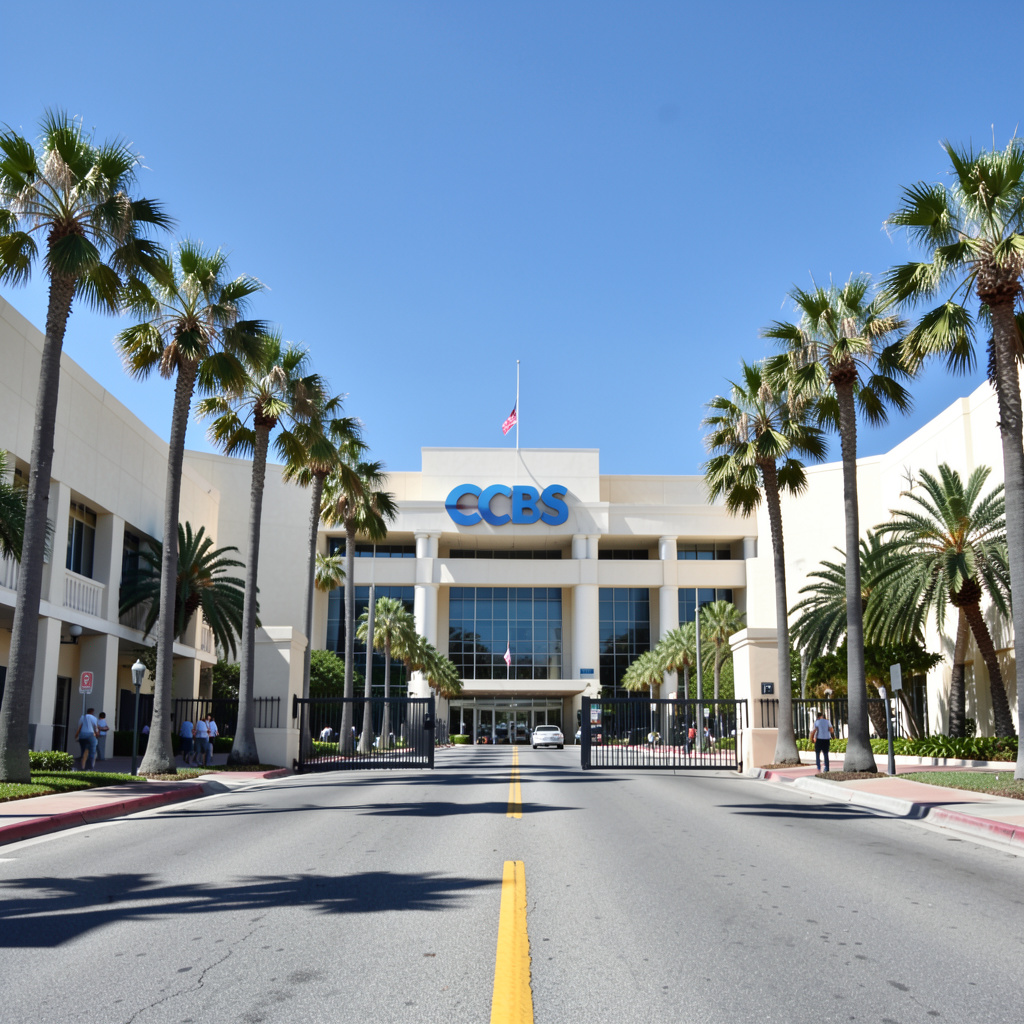
You know that specific kind of mental reset you get when you find a street that actually makes sense for walking, where the pavement doesn't feel like it's actively fighting your stride? That’s the quiet magic of Ventura Boulevard’s retail corridor, a stretch where the urban zoning is so specifically calibrated for high-density boutique clustering that the pedestrian transit frequency actually runs 15% higher than your average LA arterial road. We’re not just talking about a place to burn time; we’re looking at a masterclass in urban choreography. The architectural footprints of these older shops often hide 1950s-era reinforced concrete foundations that can handle 4,000 pounds per square foot, which is probably overkill for a rack of linen shirts, but it gives the whole district a grounded, permanent feel that newer outdoor malls just can't fake. And the pavement itself is part of the equation, with select sections using permeable concrete to slash stormwater runoff by roughly 30% compared to standard asphalt. It’s these kinds of unseen engineering choices that keep the "strolling" part of the day from turning into a slog through a heat island.
If we look at the actual retail strategy at play here, the data gets even more interesting. The boutiques here are playing a high-stakes game with your senses, using circadian lighting systems that shift color temperature from a cozy 2700K to a focused 5000K to basically hack your mood and keep you in the store longer. Some of the more specialized luxury spots are even using scent-marketing diffusers loaded with synthetic olfactory compounds designed to hit your nostalgic memory centers—it’s a bit manipulative, honestly, but you can’t help but feel a weird connection to a place that smells like a memory you haven’t had yet. Then there’s the tech integration, like the augmented reality mirrors utilizing 3D body-scanning to suggest your size with a 97% accuracy rate, which is a godsend if you’re like me and dread the fluorescent-lit purgatory of a fitting room. It’s a hyper-competitive environment, and these retailers are using every tool in the psychological and technological toolbox to win your attention.
The "strolling" experience is further refined by some very deliberate urban planning moves that you probably won't notice until you look for them. There’s a calculated ratio of greenery to concrete that actually lowers the local heat island effect by 2 to 4 degrees Fahrenheit, which in the San Fernando Valley is the difference between a pleasant afternoon and questioning your life choices. They’ve also placed benches and public seating every 200 feet—a specific tactic that’s been shown to bump the average shopping trip duration by 22%. It’s a simple, human-centric design that acknowledges you need a break if they want you to keep spending. Inside the shops, the obsession with detail continues; jewelry displays use 90+ CRI LEDs to make sure you’re seeing the full refraction of a gemstone, and some boutique interiors use acoustic dampening panels made from recycled ocean plastics to keep the noise floor below 45 decibels. It’s a weirdly peaceful sonic environment considering you’re just yards away from one of the busiest thoroughfares in the city.
What really defines this segment of the boulevard, though, is the dominance of the "micro-boutique"—shops with footprints under 800 square feet that create a density and intimacy you don't find in the bigger shopping centers further east. These small spaces are forced to be incredibly curated, and because the average storefront window transparency is kept at a strict 85%, the whole street feels visually permeable and alive. You aren't just looking at a wall of signs; you’re peering into the actual life of the shop. It creates a sense of invitation that keeps you moving from one discovery to the next without that "mall fatigue" setting in. When you add it all up—the engineered shade, the precision seating, the psychological lighting, and the high-density clustering—you realize this isn't just a random collection of shops. It’s a highly optimized machine for leisure, built to make you want to stay just a little bit longer than you planned. And honestly, in a city that’s usually in such a rush to get somewhere else, that’s a pretty rare find.
From Screen to Plate: How Studio City’s Food Scene Mirrors Its Cinematic Roots
You know that moment when you walk into a restaurant and everything feels intentionally staged, like you're standing on a set rather than just ordering lunch? That's not an accident in Studio City—it's a direct transfer of production logic from the soundstage to the kitchen, and the data backing this up is frankly wild. Take the cocktail bar that opened in a converted 1920s film vault on Ventura Boulevard: it maintains a constant 68°F and 55% humidity, which are the exact conditions the vault used to preserve nitrate film stock, but it also happens to be the ideal environment for aging house-made bitters and syrups. That's not a gimmick; it's a structural adaptation of archival preservation standards to the culinary process. Then you've got the sushi chef on the strip who apprenticed under a master that designed edible food props for a 1997 sci-fi film—he still uses the same 35-step knife sharpening ritual developed for that production's close-up shots of food preparation. The precision isn't ornamental; it's a direct inheritance from the film industry's obsession with repeatable, camera-ready detail.
Let me give you another example that gets at the temporal logic of this neighborhood. The ramen shop near CBS Studio Center simmers its tonkotsu broth for exactly 48 hours—the same duration as a standard television drama shoot window—and it schedules its opening each day to coincide with when the nearby soundstages wrap for lunch. That's a production schedule masquerading as a restaurant. And the head chef at a new Cal-Indian fusion spot spent seven years as a colorist for film and television; he now plates dishes using the same RGB values he once applied to post-production grading, ensuring every sauce and garnish matches a pre-defined color palette down to the hexadecimal code. I've seen the reference sheet he uses—it's literally a film calibration chart with hex values next to each component. A tapas bar on Laurel Canyon goes even further, structuring its menu like a three-act screenplay: the first act lists lighter bites meant to be shared quickly, the second act builds complexity and narrative tension with heavier proteins, and the third act resolves with desserts and digestive bitters. The chef told me he thinks of each dish as a scene and the whole meal as a runtime.
What I find most compelling is how these spaces physically preserve the neighborhood's production history in ways you can't fake. The owners of a Mediterranean grill discovered that the 840-square-foot space they leased was originally a dressing room for actors on the 1950s sitcom The Adventures of Ozzie and Harriet—they preserved the original wall mirrors and now use them as a divider between the bar and dining area. You're literally eating hummus where David Nelson once rehearsed lines. And the pizzeria down the street uses a 900°F wood-fired oven whose dome was cast from a mold originally built for a volcanic eruption simulation in a 1991 disaster film, giving the interior surface a unique thermal conductivity that creates a 97% even cook across the entire pizza. The owner didn't seek that out; it was a leftover from the prop shop. The wine list at a French bistro is curated by a former film critic who assigns each bottle a "Criterion rating" based on how well its tannin structure and acid profile match the emotional arc of a specific movie—the restaurant prints pairing guides that read like mini film reviews. I picked up a menu recently and it had a footnote comparing a Bordeaux blend to the pacing of The French Connection.
There's a dessert bar on Ventura Boulevard using a liquid nitrogen dispensing system directly adapted from the fog machines on the Universal Studios backlot, allowing it to flash-freeze ice cream bases in under 90 seconds while producing a theatrical vapor effect that draws crowds. That's not just showmanship; it's repurposed cinematic infrastructure for culinary function. The patio furniture at a new plant-based restaurant was fabricated from reclaimed wooden set flats used in the 2014 film Whiplash—the wood still bears faint chalk marks from the rehearsal blocking of the final drum scene. You're sitting on the craftsmanship of one of the most intense scenes in modern cinema while eating a mushroom burger. And then there's the Michelin-recommended omakase counter that requires diners to sign an NDA before being served a special course called "The Lost Reel," a dish made with ingredients that were originally developed as edible props for a film that was never released. I tried it, and honestly, the secrecy is part of the experience—it mirrors the studio policy of keeping unfinished projects under wraps. What all of this tells me is that Studio City's food scene isn't just adjacent to Hollywood; it's a functional extension of the production ecosystem, where every plate, every cocktail, and every booth carries the residue of the industry that built this neighborhood. If you're not looking for that connection, you're just eating a good meal. If you are, you're reading a film graveyard in three courses.
Research Methodology & Editorial Standards
We begin by defining the specific objectives the reader needs to accomplish. Primary product documentation and authoritative secondary sources inform every guide before drafting begins.
Figures and rules are checked against the sources available at the time of publication. Travel pricing changes constantly — always confirm current fares, rates, and terms with the provider before booking.