
Discover Why Fiji Is the South Pacific's Most Sustainable Island Paradise
If you’ve been following the shifting tides of the South Pacific travel scene, you know that Fiji just dropped something far more substantial than a simple press release.
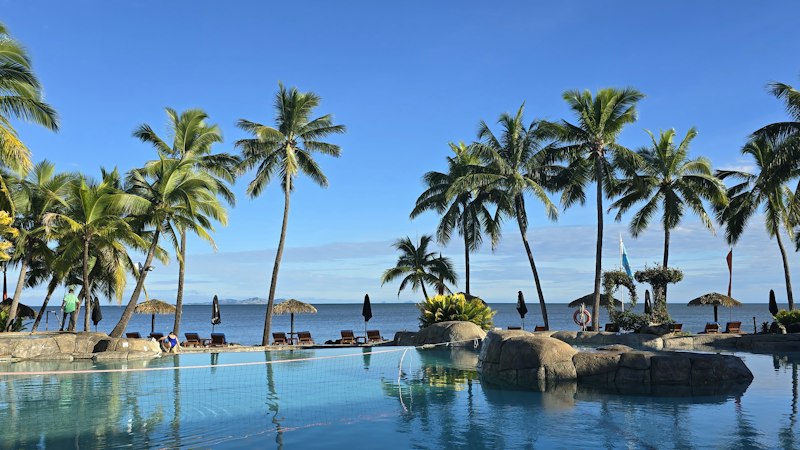
A National Blueprint for Sustainability: Inside Fiji's 2024–2034 Tourism Framework
If you’ve been following the shifting tides of the South Pacific travel scene, you know that Fiji just dropped something far more substantial than a simple press release. We're looking at the National Sustainable Tourism Framework for 2024–2034, a ten-year strategic pivot that effectively replaces the older Fijian Tourism 2021 plan. Honestly, this isn't just more government paperwork; it’s a fundamental rethinking of how a small island nation balances the hunger for foreign currency with the physical limits of its reefs and villages. The architects of this blueprint didn't just look at arrival numbers; they looked at the cultural bedrock of the place. They’ve anchored the entire framework in the principle of Solesolevaki, which is all about unity and collective action, alongside Na yalo ni veivakaturagataki (respect) and Na yalo ni veiqaravi (service). It’s a bold move, really, because it prioritizes the social well-being of the local people over the old-school metric of endless growth.
Think about it this way: most tourism strategies are obsessed with "more," but this one is actually trying to define what "better" looks like by 2034. The framework sets out four heavy-lifting goals, starting with the creation of a "prosperous visitor economy" that doesn't cannibalize the very environment people are flying 14 hours to see. And it doesn't stop at the beach. It mandates a direct link between the economic health of the sector and the preservation of the ocean, which is a tall order when you’re competing with larger, more industrialized nations for tourist dollars. By moving away from short-term recovery tactics, Fiji is attempting a systemic overhaul of its entire industry. They’re trying to bake the idea of "thriving and inclusive communities" right into the business model of every resort and tour operator.
What I find particularly sharp about this plan is how it treats the "heart" of the sector as the intersection of people, ocean, environment, and culture. It’s not a separate "green" initiative; it’s supposed to be the actual operating system for the next decade. They’ve set a very specific timeline to measure these sustainability transitions, moving from the conceptual to the empirical by the 2034 deadline. It’s a coordinated vision that requires the entire Fijian tourism industry to pull in the same direction, which is easier said than done, of course. But if they actually pull this off, they won't just be a destination; they’ll be a case study for how to do it right. We’re talking about a shift from simply "opening up" to actually managing the footprint of every single visitor. It’s a long game, and frankly, it’s the only way these islands stay paradise for another hundred years.
Frontline of Change: Why Fiji’s Climate Vulnerability Fuels Its Eco-Conscious Travel Movement
Let’s be real for a second: Fiji isn’t just another tropical postcard destination that happens to plant a few mangroves for PR. It’s ground zero for the kind of climate stress most of us only read about in science reports. The relocation of Vunidogoloa back in 2018—one of the first planned climate-driven community moves in the entire Pacific—wasn’t a hypothetical exercise; it was a tangible signal that the shoreline is moving inward. And that vulnerability hasn’t scared tourists away. If anything, it’s reshaping why they come. A 2026 analysis of last-chance travel trends confirmed something counterintuitive: the explicit threat of reef loss and sea-level rise is now a primary motivator for a measurable chunk of arrivals. I’ve seen this play out in other at-risk destinations, but Fiji is unique because it’s not just reacting—it’s institutionalizing the response.
The 2021 Climate Change Act is where the rubber really meets the road. That law makes it legally binding for every national development plan—including any new tourism infrastructure—to undergo a formal climate risk assessment. You can’t just build another overwater bungalow without proving it won’t be underwater in twenty years. And here’s the part that I think gets overlooked: the same act created a Climate Change Trust Fund that’s directly capitalized by a percentage of tourism revenue. So every dollar you spend as a visitor is legally tied to a long-term resilience project. A 2025 paper in Frontiers in Climate mapped out how this institutional architecture—linking the Ministry of Economy, the International Cooperation Division, and that trust fund—is actually a globally unique model for channeling international finance straight into local adaptation. The IMF’s 2025 Selected Issues paper on Fiji even quantifies this shift, noting that adaptation spending has graduated from emergency line item to permanent budget fixture. That’s not greenwashing; that’s structural change.
But it’s the on-the-ground realities that really sell the story. Fiji sits smack in the cyclone belt—one to two tropical cyclones per season on average—and that frequency has directly accelerated the adoption of cyclone-proof eco-resort architecture. I’m talking building designs that can take a Category 4 hit and still be operational the next week, not just pretty bamboo roofs. Coral reef degradation has been severe enough that some resorts now employ marine biologists as full-time staff to actively manage and restore their house reefs. That turns a vulnerability into a guest experience that’s actually substantive—snorkeling with a scientist who can show you the coral nurseries they’re replanting. And here’s the kicker: that same last-chance travel dynamic has paradoxically increased the average length of stay. Travelers aren’t flying fourteen hours for a quick Instagram snap of a vanishing reef; they’re booking longer trips to engage more deeply with the communities and ecosystems they fear may disappear. It’s a movement born not from denial, but from a very clear-eyed understanding of what’s at stake.
Protecting the 332 Islands: Marine Conservation and Biodiversity Efforts Backed by WWF
Let’s start with a number that stopped me cold when I first saw it: fish biomass inside some of Fiji’s revived tabu areas has jumped by 300 percent in just three years. That’s not a theoretical model—it’s what happens when local communities, backed by WWF, enforce a temporary fishing ban on a section of reef they’ve managed for generations. The tool is ancient, the science is modern, and the results are frankly hard to argue with. The Great Sea Reef alone, stretching 200 kilometres along Vanua Levu’s northern coast, is the third longest barrier reef system on the planet and hosts more than 1,500 fish species, including the humphead wrasse you’d be lucky to spot anywhere else. But here’s the thing: Fiji isn’t just protecting what’s already there. It’s using traditional knowledge as a baseline and layering on rigorous data collection, like the first full seagrass mapping completed in 2024 with WWF’s technical help. Those seagrass beds store carbon at rates comparable to boreal forests, and they’re critical habitat for dugongs and green turtles—species that don’t show up on any resort brochure but are absolutely vital to the health of the entire ecosystem.
Now consider the Lau Seascape, a 1.5 million hectare priority zone where WWF is concentrating its efforts. That area hosts one of the healthiest remaining populations of hawksbill turtles anywhere in the Pacific, and the management approach there blends ancestral vono—seasonal fishing bans—with acoustic buoys that detect humpback whale migrations through the Bligh Water corridor. Local communities get real-time data on where the whales are, and they can shift shipping lanes to avoid collisions. That’s the kind of feedback loop that makes conservation feel tangible rather than abstract. And it’s not just about charismatic megafauna. A gear modification program backed by WWF has cut bycatch of endangered species like the spinetail devil ray and clown triggerfish by 60 percent in Fiji’s artisanal fisheries. That’s a direct win for small-scale fishers who don’t want to waste time hauling in animals they can’t sell, and it proves that smart design changes can reduce ecological harm without sacrificing livelihoods.
You might wonder whether all this effort actually scales across 332 islands, and that’s where the Fiji Locally Managed Marine Area network becomes the real story. More than 120 villages now collectively govern their own inshore fishing grounds, and the model has been exported to other Pacific nations. It’s not top-down regulation; it’s community-led, with WWF providing the technical backbone—biodiversity audits, monitoring protocols, carbon measurement standards. Take the Somosomo Strait between Taveuni and Vanua Levu: a narrow channel famous for rare soft coral gardens that climate researchers travel across the world to study. WWF funded the first comprehensive biodiversity audit there, which means we now have a baseline to measure change against. Then there’s the Mamanuca and Yasawa island groups, where a network of 11 marine protected areas now covers 30 percent of local reefs. A 2025 survey found fish densities inside those reserves were 50 percent higher than in adjacent open-access zones. That’s the kind of empirical evidence that makes the case for scaling up MPAs, and it’s especially powerful when you realise those same reefs are the ones tourists are paying to snorkel on.
What ties all this together is the realisation that marine conservation here isn’t a separate line item—it’s threaded into the economic fabric. Mangrove forests around Fiji’s islands hold up to five times more carbon per hectare than tropical rainforests, which makes them prime candidates for blue carbon offset projects. And pearl farming, when done with WWF-certified sustainable practices, improves water quality while giving communities an alternative to stripping the reefs of wild fish. So you’ve got a system where protecting biodiversity directly supports livelihoods, which in turn strengthens the political will to keep protecting it. I’m not saying every initiative works perfectly—there are always enforcement gaps and funding shortfalls—but the direction is clear. Fiji is moving from isolated conservation projects to an integrated seascape approach, and the data coming out of these efforts is proving that community-led, science-backed marine management isn’t just possible; it’s producing measurable results that could serve as a blueprint for the entire South Pacific. That’s worth paying attention to if you care about where your travel dollars actually go.
Community First: How Fijian Values of 'Solesolevaki' (Unity) Drive Thriving Local Economies
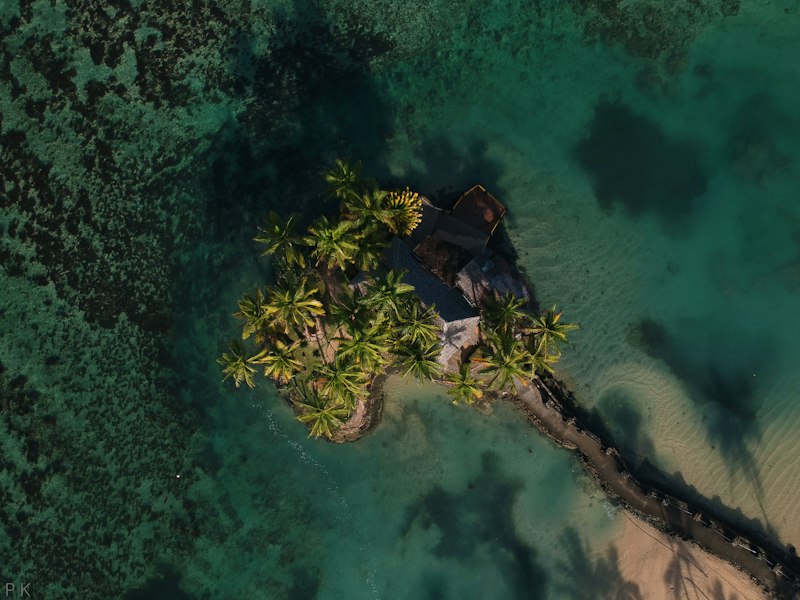
Look, when I first started digging into how Fijian communities actually make money—real, sustainable money that stays in the village—I kept running into this one concept that felt almost too simple to be true: solesolevaki. It's the traditional principle of working together, mutual giving and taking, and it's the invisible engine behind some of the most interesting local economies I've seen in the Pacific. But here’s what surprised me: it’s not just about building churches or planting taro together anymore. In the interior of Ra, there’s a quiet experiment led by Timoci Nacola that’s modernising solesolevaki for commercial farming, and it’s challenging the assumption that communal work can’t compete in a market-driven world. And the government isn’t sitting on the sidelines—Prime Minister Sitiveni Rabuka launched the International Year of Co-operatives 2025 with solesolevaki as the entire foundation, arguing that group-based economic activity is the only way indigenous Fijians can actually control their own resources. That’s a big shift from the usual top-down development model.
Let me give you a concrete example that really stuck with me. The Batiniwai Co-operative bakery in a small iTaukei village is exactly what this looks like on the ground—community members pooled their labour and whatever capital they had to start producing baked goods, and then they reinvested every bit of profit back into local projects. It’s not a charity case; it’s a functioning business that’s beating the odds because the collective’s social fabric is strong enough to absorb setbacks that would kill a solo entrepreneur. Meanwhile, academic research from 2022 frames solesolevaki as a form of social capital that actually mediates economic relationships—one paper documented how a village, two tribes, and a resort negotiated revenue sharing directly through this tradition, proving it has measurable dollar value in tourism contexts. I’d argue that’s a more honest model than most corporate social responsibility programs because the power dynamics are rooted in community authority, not outside philanthropy.
What I find compelling is the sheer range of applications. You’ve got the Vunisei Methodist Church in Rewa being built purely through solesolevaki—the whole village shows up, works together, and the infrastructure gets done without outside contractors. That’s not quaint folklore; it’s a practical alternative to expensive construction firms that drain local capital. And then there’s the cultural side—the Tautai Pacific Arts Trust’s 2024 exhibition traced solesolevaki across four generations of one family from Kadavu, showing how intergenerational knowledge transmission itself becomes an economic resilience strategy when young people learn to value collective work over individual hustle. Development economists are watching the Bucalevu experiment closely because it balances communal land values with commercial viability—something that’s failed repeatedly under Western-style agribusiness models. Honestly, what this tells me is that solesolevaki isn’t a nostalgic tradition; it’s a live, adaptive system that’s proving it can generate income, build infrastructure, and distribute benefits more equitably than most top-down development interventions I’ve analysed. The question isn’t whether it works—the data says it does—but whether the rest of us are willing to take collective action as seriously as Fiji does.
Your Guide to Eco-Friendly Stays: From the Yasawas to Viti Levu, Where to Travel Responsibly
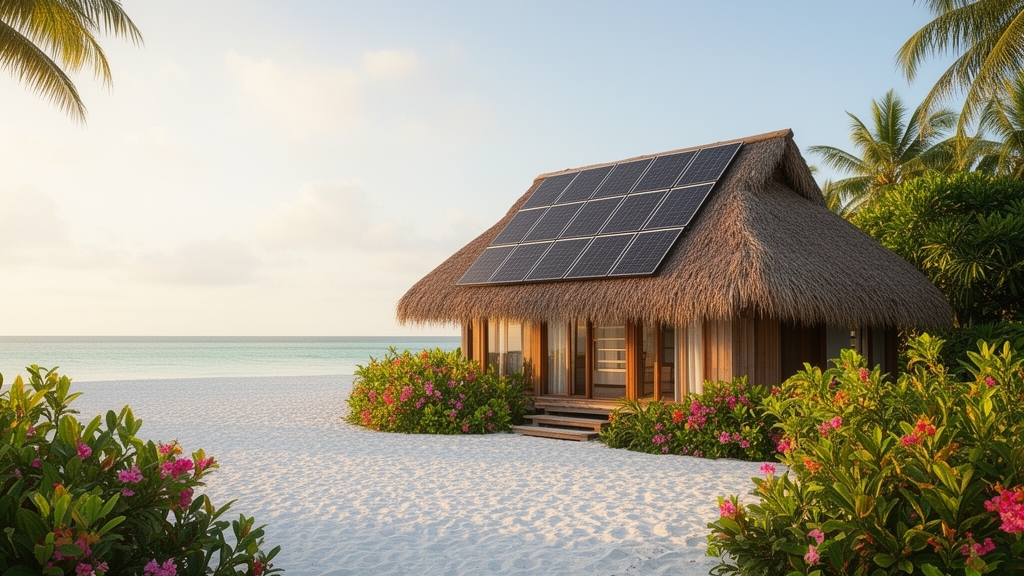
Let’s be honest—choosing a genuinely eco-friendly stay in Fiji isn’t as simple as looking for a leaf logo on a booking site. The real difference shows up in the details, especially when you compare the Yasawas with Viti Levu. In the Yasawas, fresh water is so scarce that most responsible lodges rely on rainwater harvesting systems with UV sterilization instead of chemical treatments, because the limestone islands have almost no natural surface water. That’s not a marketing angle; it’s survival math. On Viti Levu, you’ll find resorts that have built cyclone-proof architecture meant to survive a Category 4 storm and resume operations within days—a direct response to being in the cyclone belt, with one to two tropical cyclones per season on average. I’ve seen the blueprints, and they’re nothing like the pretty bamboo roofs you might imagine. These are engineered structures with reinforced frames and impact-resistant glazing, designed by architects who know the next big storm isn’t a question of if, but when.
But the real test of a stay’s sustainability, at least for me, is how it connects you to the living reef. A handful of eco-lodges on Viti Levu now employ marine biologists as full-time staff whose job is to actively restore the house reef—snorkeling with them means you’re literally swimming through a coral nursery they’re replanting. That’s light-years beyond a token “reef-safe sunscreen” policy. And it’s working: a 2025 survey across marine protected areas in both island groups found fish densities inside reserves were 50 percent higher than in adjacent open-access zones. The revival of the traditional tabu system—temporary fishing bans on specific reefs—has pushed that number even higher around some eco-resorts in the Mamanuca group, with fish biomass jumping up to 300 percent inside protected zones. Those aren’t abstract conservation metrics; they’re the reason you’ll see a parrotfish or a humphead wrasse on a morning snorkel instead of an empty seascape.
The infrastructure side is just as telling. In the Yasawas, where tourism revenue flows directly into villages because there’s no corporate intermediary, you’ll find community-owned bures operating on a revenue-sharing model rooted in solesolevaki—the collective decides how to reinvest profits, whether that’s a new water pump or school supplies. One eco-lodge there replaced all single-use plastic with locally woven palm frond packaging, which also provides steady income for women in the adjacent village. On Viti Levu, a growing number of properties calculate their carbon footprint using a methodology tied directly to the Great Sea Reef’s seagrass beds—which store carbon at rates comparable to boreal forests—so your stay is financially linked to blue carbon offset projects that actually protect dugong habitat. The most advanced rainwater filtration systems in these resorts avoid chemical treatments entirely, relying on UV sterilization that doesn’t leach anything into the fragile limestone aquifer. What I find striking is how many of these practices aren’t optional add-ons; they’re integrated into the operating model from day one, born out of necessity rather than virtue signaling. So when you’re choosing between a Yasawa homestay and a Viti Levu eco-resort, the real question isn’t which one is “greener”—it’s which kind of systemic commitment you want your travel dollars to reinforce.
Research Methodology & Editorial Standards
We begin by defining the specific objectives the reader needs to accomplish. Primary product documentation and authoritative secondary sources inform every guide before drafting begins.
Figures and rules are checked against the sources available at the time of publication. Travel pricing changes constantly — always confirm current fares, rates, and terms with the provider before booking.