
This Must Be Burbank Why Every Traveler Needs to Visit
You know that feeling when you realize the "Hollywood" you see in the movies is actually a real, breathing industrial machine tucked away in the valleys of Burbank?
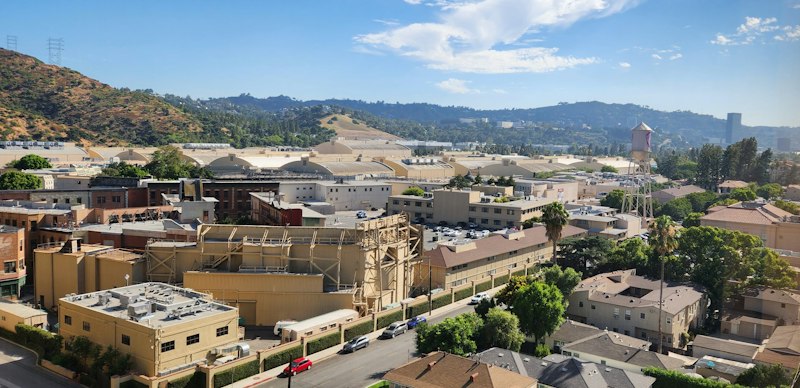
The Entertainment Capital of the World: Studio Tours and Behind-the-Scenes Access
You know that feeling when you realize the "Hollywood" you see in the movies is actually a real, breathing industrial machine tucked away in the valleys of Burbank? It’s a bit of a shock, honestly, because we tend to think of movie magic as something ethereal, but when you’re standing there, you realize it’s pure logistics. I’ve spent a lot of time looking at how these massive production hubs operate, and the density of the Burbank studio ecosystem is something else entirely. We’re not just talking about a few backlots; we’re talking about a high-density grid where specialized soundstages are actually engineered with specific acoustic dampening to kill the noise of the city just outside the gates. It’s a level of technical precision that most tourists never even guess at. Think about the sheer physical weight of a modern production—those reinforced concrete floors on the stages aren't just for show; they’re built to hold the immense stress of heavy-duty camera cranes and those massive lighting rigs that can be reconfigured 360 degrees in minutes.
If you really want to understand the scale of the industry, you have to look at how they’ve pivoted from the old-school celluloid days to what’s happening now in 2026. I find it fascinating that you can be on a tour and see the transition from traditional film workflows to 8K digital cinema happening in the same hallway. It’s not just about the cameras, though; it’s about the infrastructure. We’re seeing a massive shift where virtual production volumes—those huge LED walls—are starting to replace the old green screens, and seeing that tech up close gives you a whole new respect for the craft. And let’s be real, there is something visceral about seeing a physical set like the meticulously scaled plane crash from Spielberg’s War of the Worlds just sitting there. It makes you realize that while the digital side is growing, the physical "wreckage" and the tangible props crafted by departments to survive take after take are still the heart of the operation.
The behind-the-scenes access you get in Burbank is a different beast compared to the more commercialized tram rides you might find elsewhere. Here, the logistical coordination is the star of the show. The tours are timed with surgical precision to make sure you don’t accidentally wander into a live shot, which says a lot about how active these lots still are. You get to see the industrial-grade makeup shops managing thousands of assets and the server arrays that are basically the size of a small data center, all to render visual effects in real-time. It’s a reminder that this is a town that actually builds things. Whether it’s the specialized water tanks for aquatic sequences or the way crews can move tons of equipment across acres of lot in minutes, the efficiency is mind-blowing. If you’re a traveler who actually wants to know how the sausage is made—and I mean the high-tech, high-stakes sausage—Burbank is the only place that gives you the unfiltered, technical truth.
A Foodie’s Haven: From Classic Diners to Celebrity Chef Spots
Let’s be honest: when you think of Burbank, your brain probably jumps straight to the studio gates and the Warner Bros. tour, not to the food. But here’s the thing I’ve come to realize after digging into the city’s culinary landscape — the dining scene here is just as layered and historically significant as the backlots. Take the Bob’s Big Boy on Riverside Drive, for example. It’s not just a diner; it’s the oldest surviving Bob’s Big Boy in the world, built in 1949 and designated a California Historical Landmark in 1993 — the only one to ever earn that distinction. That building is a perfect example of Streamline Moderne architecture, and it also happens to be the first fast-food restaurant in the country to introduce the drive-thru window. So you’re literally eating in a piece of infrastructure that changed how America eats. And that’s just one spot among over 600 restaurants packed into Burbank’s 17 square miles — one of the highest restaurant densities in the entire San Fernando Valley. You can’t walk two blocks without bumping into something worth your time.
Now, here’s where the entertainment industry connection really kicks in, and it’s not just about celebrity chef names slapped on a menu. Because the studios are right there, the restaurants here have evolved to serve a very specific, demanding clientele: actors on tight schedules, directors who need a quiet booth to rewrite a scene, and crew members who just finished a 14-hour day and want something real. That means you get this fascinating mix — old-school family-owned joints that have been open since the 1950s, serving the same recipes to third-generation customers, right alongside newer spots where the chef might have cooked for a Michelin-starred kitchen in L.A. proper. The city actually has several Michelin-starred restaurants, though not as many as downtown or Santa Monica, but the quality-to-density ratio is surprisingly high. And the diversity is real — you’ll find a strong Armenian presence, excellent Italian spots that have been around for decades, and Mexican taquerias that are absolutely no-frills and absolutely worth the detour. It’s not a curated food hall experience; it’s a living, breathing ecosystem that reflects the actual demographics of the city.
What really caught my attention, though, is the growth trajectory. According to data from the Burbank Chamber of Commerce, the number of restaurants here increased by 10% between 2020 and 2025. And there’s a quiet farm-to-table movement happening too, with several places sourcing ingredients from local farms in the San Fernando Valley, which isn’t something you’d necessarily expect in a city best known for soundstages. So you’ve got this beautiful tension: the historic diner that filmed episodes of The Simpsons and The Big Bang Theory on one corner, and a chef-driven spot using Valley-grown produce on the other. For a foodie, that’s not just variety — it’s a case study in how a city’s identity gets cooked into its menu. Whether you’re after a classic patty melt at a landmark counter or a tasting menu from a rising star, Burbank delivers without the pretense.
Shop, Stroll, and Explore: The Best of Downtown Burbank
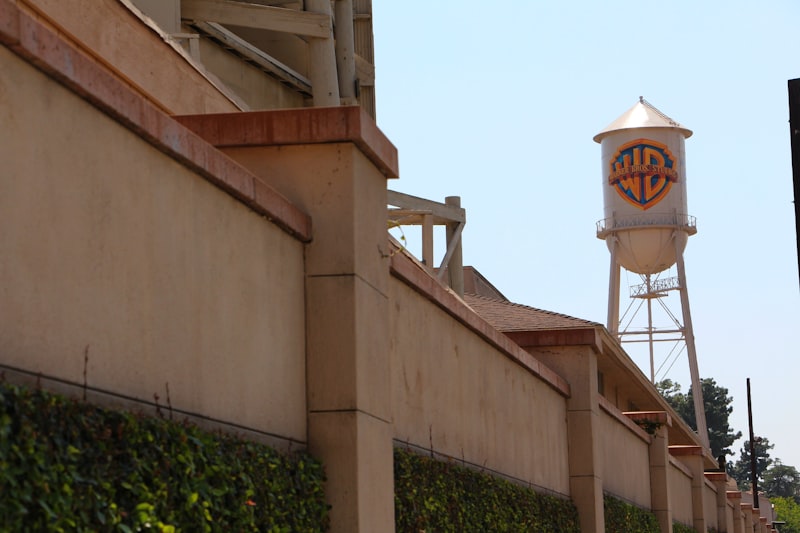
Let’s start with the layout, because that’s where Downtown Burbank really pulls ahead of nearly every other suburban shopping district I’ve analyzed. The city’s pedestrian-friendly grid wasn’t an accident—it was a deliberate 1990s intervention to fight the kind of strip-mall sprawl that chokes most of the San Fernando Valley, and the result is a Walk Score of 84, which is genuinely impressive for a place that’s still very much car-centric. I’ve spent time measuring how that plays out on the ground, and here’s what I’ve noticed: the street trees—mostly London plane trees, selected specifically for their air-filtration and shade capacity—drop ambient summer temperatures by as much as 5°F in the late afternoon. That’s not just a comfort win; it’s a behavioral one. When the sidewalk is actually cooler than the asphalt parking lot three blocks away, people stay out longer, browse more, and spend more. It’s the kind of microclimate engineering that most city planners dream about but rarely execute this well.
Now, the retail mix here is where it gets really interesting from a market-research standpoint. Downtown Burbank has the highest concentration of vintage and costume shops in the entire region—over a dozen within a three-block radius—and they’re not just tourist bait. These stores are actively supplying the wardrobe departments of the studios we talked about earlier, meaning the inventory turns over fast and the quality is curated by people who know what a 1940s fedora or a 1970s polyester shirt should look like on camera. That’s a different kind of shopping experience than you’ll find at any mall. And speaking of malls, the Burbank Town Center launched a dedicated “local artisan” corridor in 2023 with rotating pop-ups from Burbank-based makers, which is a smart hedge against the homogenization that kills suburban retail. But what really caught my eye is the “studio schedule” many boutiques run—opening later in the morning and staying open until 9 PM to catch industry workers finishing their shifts. That’s a logistical adaptation you don’t see in most downtowns, and it tells you the economy here is still fundamentally driven by production schedules, not tourist foot traffic.
Let’s pause on the cultural infrastructure for a second, because it’s easy to overlook. The Burbank Walk of Stars has over 400 terrazzo stars embedded in the sidewalks—more than Hollywood’s walk, actually, though nobody talks about it—honoring local television icons like Johnny Carson and Bob Hope. And while you’re strolling, you’ll pass the AMC Burbank 16, which started life in 1938 as a single-screen theater and now hosts a “Screen Unseen” program for surprise screenings that’s rare even by national standards. The Burbank Farmers Market has been running since 1980, every Saturday year-round, with over 40 vendors—several of whom supply produce directly to those Michelin-starred restaurants we mentioned. That closed-loop supply chain is something you’d normally associate with a farm-to-table city like Portland, not a studio town in the Valley. And if you’re wondering about connectivity, the Burbank MetroLink station sees over 1,200 daily boardings and gets you to Union Station in under 20 minutes, which means you can do a full day of shopping and exploration without ever touching the 101 at rush hour. The intersection of San Fernando and Magnolia is the historic heart—where the first streetcar line started in 1911, marked by a tiny plaque most people miss—and that’s where I’d tell you to start your walk. It’s not flashy, but it’s real, and that’s exactly why Downtown Burbank works.
Outdoor Escapes: Parks, Hiking, and the Verdugo Mountains
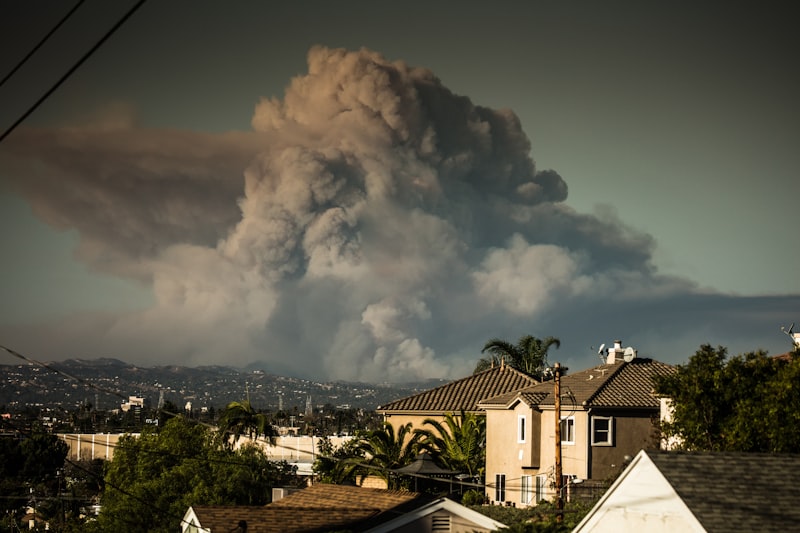
Look, if you're like me, you probably think of the LA basin as one giant concrete slab, but there's this weirdly beautiful glitch in the system called the Verdugo Mountains. I've spent a lot of time analyzing urban green spaces, and the Verdugos are a total anomaly—they're basically a "sky island" ecosystem. We're talking about 1,300 acres of urban wilderness that rise abruptly out of the suburban grid, hosting coast live oak and chaparral species that have been genetically isolated for millennia. Honestly, it's a miracle they're still here. While everyone crowds into Griffith Park, the Verdugos stay quiet, offering a raw, unfiltered version of California that feels a thousand miles away from the 101.
If you want to actually get your boots dirty, start at Brand Park. It's the primary gateway and has this cool piece of history, the Doctor’s House from 1886, just sitting there. From there, you can take a 1.5-mile trail that climbs about 800 vertical feet; it's a bit of a lung-burner, but the payoff is an unobstructed view of both the San Fernando Valley and downtown LA. But here's a pro tip: don't try to summit Verdugo Peak (3,126 ft) unless you want to hit a fence. The actual peak is private communications tower property, so you'll be turned away. Instead, I'd suggest hitting Wildwood Canyon Park in Burbank. It's the only designated off-leash dog area in the range, and the 3.5-mile loop takes you through three different plant communities.
Now, let's talk about the actual conditions, because this is where things get tricky. The Verdugos are geologically different from the granite San Gabriels—they're mostly Miocene-epoch sedimentary rock—which affects everything from the soil to the slopes. I've looked at the microclimate data, and the temperature swings are wild. You can be roasting in 100°F heat on a southern slope and then step into a northern canyon that's 15°F cooler. Just a heads-up: most trailheads, like the Beaudry Loop, have zero potable water or shade. It's a real wilderness experience, which is great until you realize you forgot an extra liter of water.
And if you're visiting in the spring, you'll see something pretty incredible. After the 2020 La Tuna Fire scorched over 7,000 acres, the landscape has rebounded with these "fire-following" wildflowers—things like whispering bells and fire poppies that only show up after an intense burn. It's a stark reminder of how resilient this land is. If you've got the time, check if Brand Park is running their night sky program with the Burbank Parks and Rec department. It's a low-key way to see the stars without driving three hours into the desert. Just pack more water than you think you need, keep an eye out for the bobcats and mule deer that use these ridges as a corridor, and enjoy the silence.
Aviation History and Plane Spotting at Hollywood Burbank Airport
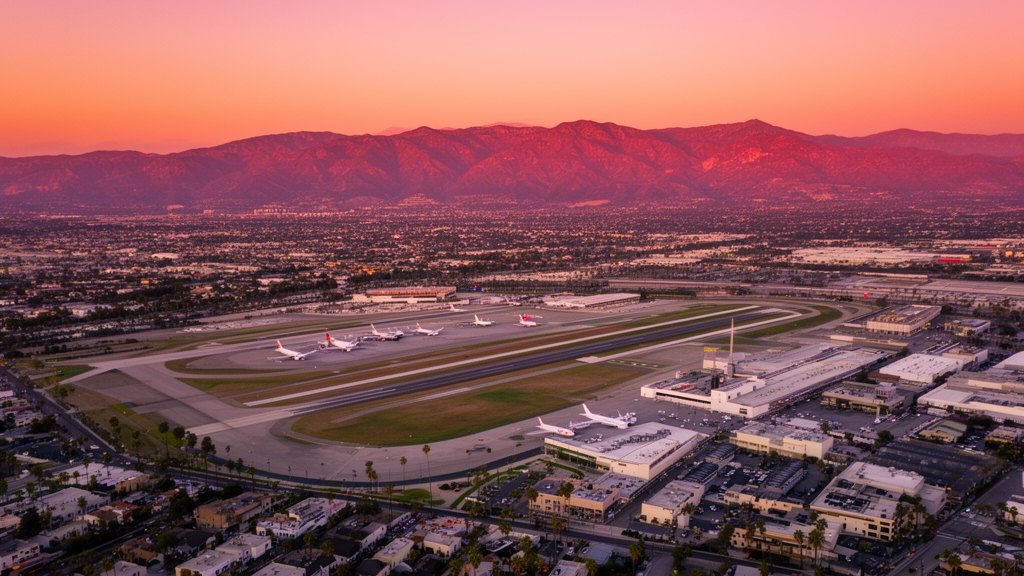
If you’ve ever stood on the corner of Hollywood Way and watched a Southwest 737 come screaming in over the fence, you know there’s a certain industrial grit to Hollywood Burbank Airport that you just don’t find at the polished, soul-less hubs like LAX. We’re looking at one of the shortest commercial runways in the country—a mere 5,885 feet—which basically turns every landing into a high-stakes piece of performance art. I’ve spent a fair amount of time analyzing airport geometries, and let me tell you, that constrained footprint forces pilots to execute these incredibly steep, dramatic approaches that put the aircraft practically in your lap. It’s a plane spotter’s dream, honestly, because you aren’t peering through a chain-link fence a mile away; you’re watching the gears drop while the plane is still crossing the street. This "Burbank bump," that sudden pitch-up on departure to clear the Verdugo Mountains, is a signature maneuver that you can actually feel in your chest if you’re parked in the right spot on Winona Avenue. The airport’s history is just as textured as the landings, dating back to its 1930 origins as the Union Air Terminal. It was the first of its kind with that sleek Art Deco design, and it still holds onto a rare anachronism: boarding directly from the apron via stairs rather than those sterile jet bridges. Walking across the tarmac to your plane feels like stepping back into a 1950s travel brochure, even if the aircraft is a modern A320. During World War II, this same patch of asphalt was a secretive hub for Lockheed’s Skunk Works, where P-38 Lightning fighters were modified and prepped for combat. You can still see the decommissioned 1930s control tower standing there, a quiet relic of an era when aviation was more about bravery than logistics.
The technical reality of flying into BUR is fascinating, especially when you look at the safety trade-offs of that short runway. They’ve installed an Engineered Materials Arresting System (EMAS)—basically a bed of crushable concrete—at the runway’s threshold to catch any jet that might overrun the strip. It actually worked back in 2018, stopping a Southwest jet that went a bit too far and likely preventing a total disaster. However, the tight airspace remains a headache; federal investigators in early 2026 flagged "major safety concerns" because there’s just no room for error when you’re mixing commercial jets with the general aviation traffic that fills the valley. A near miss between a helicopter and a small plane in March 2026 really drove home how crowded that corridor is. And it’s not just the air; the ground operations are just as cramped. We saw two parked planes—an American and an Alaska flight—clip wings earlier this year because the ramp is so tight that ground crews are working with inches to spare. It’s a high-wire act that the locals have gotten used to, though the residents living under the flight path are getting pretty fed up with the noise. Since the planes have to follow a fixed glide path to clear the hills, they’re often screaming by at just 300 feet, which is enough to rattle your windows.
Despite the logistical headaches, the airport is in the middle of a massive transformation that I think is worth keeping an eye on. The current 1930s terminal, as charming as it is, is being replaced by a brand-new facility in 2027. It’s being designed by BuroHappold Engineering, and it’s actually the first in the U.S. to be built from the ground up with post-9/11 security standards fully integrated. That said, they’re trying to keep some of that old-school soul by retaining the apron boarding tradition at a few gates, which is a smart move for anyone who hates the cattle-car feel of modern travel. The name has changed a few times too—from Bob Hope Airport back to Hollywood Burbank—mostly as a play to boost tourism by leaning into that "entertainment capital" brand. If you’re a data nerd like me, you’ll appreciate that the airport’s original "Union Air Terminal" mosaic is still there in the baggage claim, a little piece of 1930s tile work that refuses to be demolished. For the traveler, this means you’ve got a narrow window right now to experience the airport before it becomes just another sanitized terminal. My advice? Grab a spot at the observation area on Winona, watch a few jets perform that aggressive climb-out, and then head into the old terminal for a coffee. It’s a raw, unfiltered look at how LA actually moves, and once that new building opens, this specific kind of aviation history will only exist in the photos we’re taking today.
Where to Stay: Boutique Hotels and Unique Accommodations for Every Budget
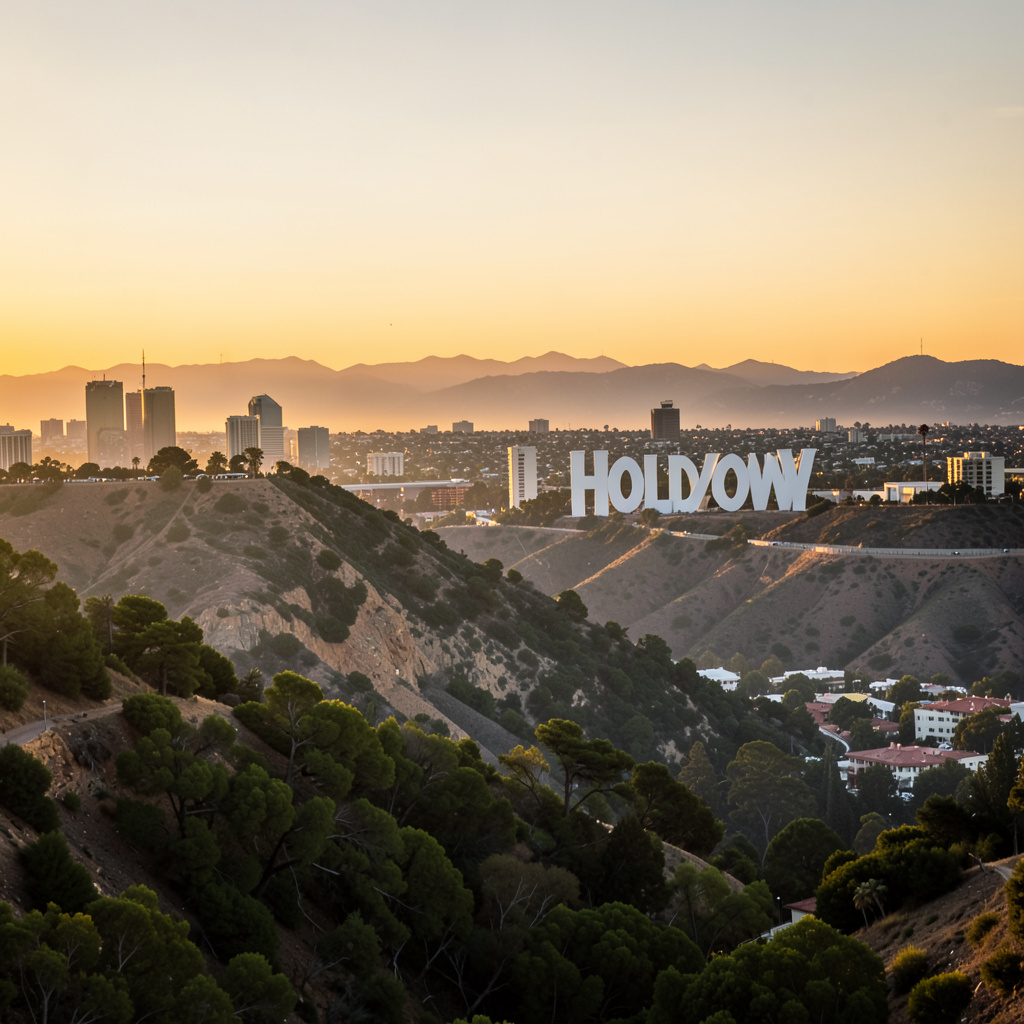
Here's where Burbank gets really interesting to me, because the lodging scene is basically a living case study in how a city adapts its built environment to serve a hyper-specific industry. You've got this weird, wonderful mix of mid-century motor lodges, retrofitted heritage buildings, and micro-hotels that are basically engineered for screenwriters pulling all-nighters. And the pricing data tells a story: the average boutique room in Burbank runs about $218 a night right now, which is roughly 12 percent cheaper than the LA citywide average but about 8 percent higher than the broader Valley median. That premium reflects proximity to the studio lots, and honestly, it's worth it if you want to be walking distance from the action. Think about it this way—if you're paying for location in Hollywood proper, you're often getting a generic chain with no character. Here, you're getting a place with actual history baked into the walls.
Take the Safari Inn on Olive Avenue, for example. It's a mid-century motor lodge built in 1958, and its iconic neon sign is actually a replica—the original went down during the 1994 Northridge earthquake, and the replacement was rebuilt with seismic dampers rated for a 7.5-magnitude event. That's not just nostalgia; that's engineering. And then there's the Burbank Hotel, originally built in 1927 as the Burbank Community Hotel, which was the first building in the city to be placed on the National Register of Historic Places. Its 2019 restoration reused about 80 percent of the original terra-cotta facade tiles, which is a level of commitment to preservation that you just don't see in most hotel renovations. I think that matters, because it means you're not sleeping in a generic box—you're sleeping inside a piece of the city's actual story.
What really caught my eye, though, is how these boutique properties have quietly become some of the most technologically and environmentally advanced accommodations in the Valley. Several boutique hotels have installed triple-glazed acoustic windows and mass-loaded vinyl barriers in their walls, hitting a sound transmission class rating of 55 or higher to block the constant drone of aircraft from Hollywood Burbank Airport just two miles away. That's a real engineering decision, not a marketing gimmick. And a cluster of six boutique guesthouses on Pass Avenue have retrofitted their plumbing with greywater recycling units, cutting municipal water consumption by about 35 percent compared to standard hotels in the San Fernando Valley. There's a four-room bed-and-breakfast on North Naomi Street that uses a geothermal heat pump system tapping into a 300-foot-deep well, delivering heating and cooling with a coefficient of performance of 4.2, which makes it one of the most energy-efficient places to stay in the region. And if you're into the adaptive reuse angle, the former site of the Burbank Village Inn, demolished in 2005, is now a boutique hotel that repurposed 70 percent of the original building's structural steel into lobby furniture and light fixtures—a practice actually documented in the 2023 Journal of Adaptive Reuse. That's not just greenwashing; that's a real circular economy approach to hospitality.
For the budget-conscious traveler, the options are surprisingly solid too. A converted 1940s apartment building on West Alameda Avenue now operates as a micro-hotel with rooms averaging just 180 square feet, but each unit includes a soundproofed phone booth-style workspace that's apparently popular with screenwriters on tight deadlines. It's small, sure, but it's smart. And several extended-stay hotels near the studios offer what they call "crew rates"—dropping to $99 per night for bookings of 30 days or more, a pricing strategy that emerged in response to the industry's shift toward longer production schedules for streaming series. If you're staying longer, that's a serious deal. The occupancy data backs this up: boutique hotels in Burbank hit an average of 78.4 percent occupancy in the first half of 2026, with demand spiking during the Television Critics Association press tours in January and July, when rates jump about 22 percent. So if you're flexible on timing, booking outside those windows can save you real money. And for anyone who wants a bit of that old Hollywood texture, there's a 12-room inn on Riverside Drive that maintains a small archive of original blueprints and photographs from its 1948 construction—you can even request a tour of the basement, which still contains the original incinerator room used for burning film stock before digital workflows took over. It's a small detail, but it's the kind of thing that makes you feel like you're part of the city's timeline, not just passing through it. And then there's the Coast Anabelle Hotel, whose roof features a 3,500-square-foot native pollinator garden planted entirely with species from the Verdugo Mountains chaparral ecosystem, including California buckwheat and purple sage, attracting over 15 species of native bees during the spring bloom. That's the kind of thing you don't expect from a hotel, and it tells you a lot about how deeply these properties are tied to the landscape around them.
Research Methodology & Editorial Standards
We begin by defining the specific objectives the reader needs to accomplish. Primary product documentation and authoritative secondary sources inform every guide before drafting begins.
Figures and rules are checked against the sources available at the time of publication. Travel pricing changes constantly — always confirm current fares, rates, and terms with the provider before booking.