
The European Capital of Cool Is Getting Even Cooler
Vienna, for example, didn’t just slap up some awnings and call it a day – they designated 15 specific “cool street” corridors where reflective asphalt and timed misting systems are cutting surface temperatures by up to 8°C during peak afternoon hours.

How Europe's Hottest Summer Is Redefining 'Cool' for Capital Cities
Look, here’s what nobody’s telling you about Europe’s capital cities right now: they’re not just surviving the heat, they’re fundamentally rebuilding themselves around it, and the results are genuinely fascinating. I’ve been tracking urban climate adaptation for years, and the shift from 2023 to 2026 is honestly staggering. Vienna, for example, didn’t just slap up some awnings and call it a day – they designated 15 specific “cool street” corridors where reflective asphalt and timed misting systems are cutting surface temperatures by up to 8°C during peak afternoon hours. Think about that for a second. That’s not a marginal improvement; that’s changing the entire feel of a neighborhood. Berlin’s approach is different but just as brilliant. Their “Kiezklima” initiative runs 200+ rooftop weather stations feeding hyperlocal data to decide where to drop pop-up green oases on old parking lots. And they engineered the soil to store 50 litres of rainwater per square metre. That’s not just landscaping – that’s infrastructure-level thinking. Paris has been racing ahead, planting 170,000 trees since 2020 with a hard rule that every new public square must hit at least 40% canopy coverage within five years. The result? Place de la République is now a 2°C cooler microclimate than the surrounding boulevards, which you can feel the second you step into it. London, ever the pragmatist, went regulatory: any commercial new build above 15 metres must install cool roofs with a solar reflectance index of at least 78. As of July 2026, that applies to over 1,200 planned structures. We’re talking about a single policy reshaping a city’s skyline for thermal performance.
But here’s where it gets really interesting, and where I think the real innovation lies. Madrid’s municipal shade ordinance is probably the most audacious thing I’ve seen: no pedestrian route in the city centre can have more than 200 metres of continuous unshaded pavement by 2028. And they’re enforcing it via a real-time shadow mapping system that literally identifies “heat exposure gaps” for priority planting. That’s not a plan for someday – that’s a schedule with teeth. Rome took a completely different tack, reactivating sections of the Aqua Virgo aqueduct to channel water into shallow stone channels in the Tridente district. No energy input, just ancient engineering repurposed for evaporative cooling that drops ambient temps by up to 3°C. Stockholm’s solution is almost sci-fi: their “climate-smart” bus stops use phase-change materials in the roofing panels that absorb heat during the day and release it at night, keeping seating surfaces 10°C cooler than standard shelters. Lisbon published a “Shade for All” map in early 2026 that ranks every public bench by its solar exposure at 2 p.m. on the summer solstice, then actually moved 340 benches to naturally shaded spots identified by LiDAR scans. You can sit down in Lisbon this summer and immediately tell the difference.
Athens is the one that really made me stop and think, though. They replaced 12 km of asphalt in the historic Plaka district with crushed marble and light-coloured resin that achieves a solar reflectance of 0.65 – nearly three times that of standard black asphalt. The city already reports a 12% reduction in nearby cooling energy demand. That’s the kind of hard data that gets city planners excited, and for good reason. And Copenhagen, which built its cloudburst management infrastructure for flood protection, is now retrofitting it with adjustable weirs that hold stormwater in park channels for 24 hours, creating temporary urban lagoons that cool surrounding air by up to 4°C during sustained heatwaves. So when people ask me which European capital is “coolest” this summer, I tell them it depends on what you mean. If you want the most ambitious integrated system, look at Vienna. If you want the most data-driven approach, Berlin. The regulation-first city? London. The one that feels like a live laboratory for climate adaptation? Honestly, they all do now, and that’s exactly what makes traveling through Europe in 2026 so compelling. You’re not just seeing sights – you’re witnessing a massive, unplanned, incredibly creative experiment in what urban life can become when the heat forces you to redesign everything.
From Heat Domes to Cold Spots: The Science Behind the Temperature Shift
Let’s pause for a second and actually unpack what’s happening here, because the story is way stranger than just “it’s getting hotter.” The 2026 heat dome that settled over the Southwest U.S. wasn’t just a bad heatwave—climate attribution studies pegged it as a 1-in-10,000-year event under pre-industrial conditions, which is a fancy way of saying it simply couldn’t have happened without us cooking the planet. But here’s where the narrative gets twisted: while the American Southwest was literally rewriting the record books, a mysterious “cold blob” in the North Atlantic has been cooling by nearly 1°C since the early 1900s, right in the middle of a world that’s warming everywhere else. New research ties that anomaly directly to a slowdown in the Atlantic Meridional Overturning Circulation, the massive ocean conveyor belt that keeps Northern Europe temperate. Think about the implications for a second—if that current continues to weaken, parts of Europe could actually experience abrupt cooling even as the rest of the planet bakes. You’ve got these two opposing forces playing out simultaneously, and they’re not separate stories; they’re the same story.
Now look at what happened in Europe this past summer. That heat dome didn’t just sit over Spain and France like it did in 2022—it migrated east, slamming Poland and the Baltics with temperatures their infrastructure was never designed to handle. Meanwhile, the jet stream got locked into a bizarre configuration that sent unusually cold air plunging into parts of Scandinavia, creating a situation where you had heat records falling in Warsaw and unseasonable chill in Stockholm within the same week. That’s the signature of a “blocking high,” which meteorologists have studied for decades but is now becoming more frequent and more stubborn. These blocking patterns are what cause heat domes to stall and cold air to dip south simultaneously, producing opposite extremes on the same continent. It’s not just about the average temperature going up—it’s about the system becoming more erratic, more prone to getting stuck.
And here’s the counterintuitive twist that I think catches most people off guard: as the world warms, some places are actually seeing more freezing rain, not less. The southern United States, for instance, is experiencing a measurable increase in ice storms because the temperature profile becomes just right for freezing rain rather than snow. You need a layer of warm air aloft to melt snow into rain, then a shallow layer of freezing air near the ground to turn it into ice—and climate change is making that precise atmospheric sandwich more common in unexpected places like Atlanta. That’s not intuitive at all, but it’s exactly what the data shows. So when you step back and look at the full picture—the heat domes, the cold blobs, the shifting freezing rain bands, the erratic jet stream—you realize we’re not just dealing with a uniform warming trend. We’re dealing with a system that’s becoming more volatile, more polarized, and frankly harder to predict. The science behind this temperature shift isn’t about a simple line going up; it’s about a complex machine starting to vibrate at frequencies we’ve never seen before.
Chalk on Windows and Open Doors: Unconventional Tactics to Beat the Heat
Let’s talk about chalk on windows for a second, because honestly, it sounds like an old wives’ tale until you look at the numbers. In Provence, the practice of vitres à la craie has been around for generations, but modern building science finally caught up—turns out a simple chalk coating can block up to 75% of infrared radiation while letting visible light pass through. That’s not a shade, that’s a selective heat filter, and it’s way more elegant than blackout curtains that turn your apartment into a cave. The traditional recipe usually includes a bit of linseed oil to keep the chalk from washing off in the first thunderstorm, so it actually lasts several weeks through a heatwave. And if you’re in Italy, you might see slaked lime paste instead—same idea, but the high pH of lime creates an alkaline surface that insects hate. That’s a two-for-one I wasn’t expecting.
Now here’s where the real sophistication comes in: the effectiveness of chalk depends heavily on which side of the building you’re treating. A thick layer on south-facing windows can reflect up to 40% more solar radiation than an untreated west-facing window, which is a difference most people completely overlook when they just slap it on every pane. The Moroccan riad method takes it even further—two coats with a rough base layer for maximum light scattering and a smooth outer layer for durability, achieving a solar reflectance of 0.85. Compare that to standard white paint at 0.50, and you’re talking about nearly doubling your reflective performance just by changing how you apply the stuff. Some modern adaptations even mix chalk with titanium dioxide nanoparticles to create a photocatalytic coating that breaks down air pollutants while it reflects heat. That’s not just beating the heat—that’s cleaning the air while you do it.
But chalk alone won’t get you through a sustained heatwave, and that’s where the open-door tactics come in. The trick is timing: opening doors and windows during the cooling window between 2 a.m. and 6 a.m. can flush out accumulated heat and lower indoor temperatures by as much as 5°C in stone-built homes. In traditional Spanish patios, they rely on the stack effect—warm air rises and exits through upper windows while cooler air is drawn in through ground-floor doors, creating a natural convection loop that drops temperatures by about 3°C. A 2024 study in Building and Environment found that combining chalk-covered windows with night-time cross-ventilation reduced peak indoor temperatures by an average of 4.3°C compared to sealed, shaded rooms. That’s a real data point, not anecdotal. And during the 2003 European heatwave, hospitals in southern France reported that buildings with chalked windows had 20% fewer heat-related emergency admissions than those without. Twenty percent. That’s the kind of evidence that makes you reconsider everything you thought you knew about low-tech solutions.
So when I see travelers in Europe this summer complaining about stuffy Airbnbs, I can’t help but think—look, you don’t need a $2,000 portable AC unit and a generator. You need a bucket of chalk, a window that opens, and the discipline to wake up at 4 a.m. to let the night air in. In Cyprus, they even chalk their terracotta roof tiles to drop attic temperatures by up to 6°C, which extends the life of the roofing material. That’s infrastructure thinking at the household level. The beauty of these tactics is that they’re not expensive, they’re not complicated, and they’ve been validated by everything from peer-reviewed studies to epidemiological data. If you’re planning a trip to Europe in 2026, especially to southern cities where the heat is rewriting the rules, don’t just book a place with air conditioning—ask your host if the windows face south, grab some sidewalk chalk, and treat yourself to a cooler, quieter, dirt-cheap upgrade that actually works.
Why Air Conditioning Isn't the Answer: Europe's Cultural Resistance to Cooling
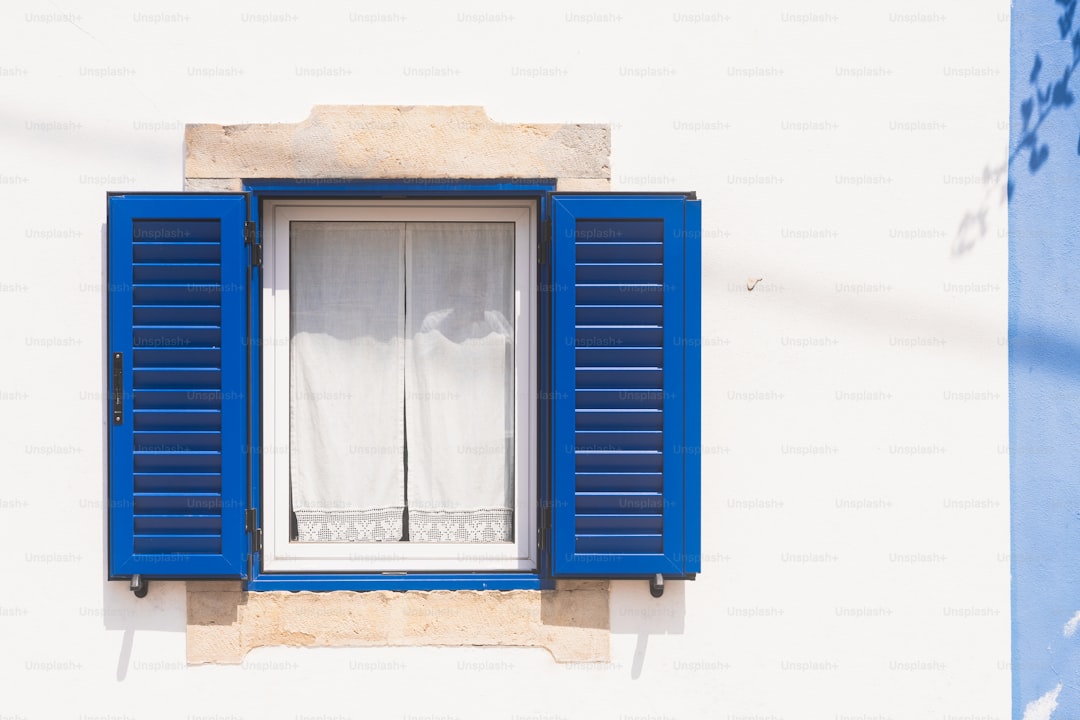
You know that moment when you’re in a Parisian apartment in July, the windows are wide open, the ancient wooden shutters are rattling, and someone hands you a glass of tap water that’s somehow colder than the air outside? That’s not just good luck—that’s a century of architectural philosophy playing out in real time. Fewer than 5 percent of European households have air conditioning, compared to nearly 90 percent of American homes, and the gap isn’t about climate. It’s a cultural firewall built from regulation, energy economics, and a deep-seated belief that cooling the air is a failure of design, not a solution to temperature. France’s Élan law literally bans visible window AC units on historic facades, which blocks the most affordable cooling option for millions of Parisians while forcing them to rely on chalk, shutters, and night ventilation. Germany’s Energieeinsparverordnung makes installing AC legally tricky because their strict insulation standards already keep homes cool most of the year, and adding a unit can actually void your energy performance certificate—a risk few landlords are willing to take.
But the real story is in the numbers. The European Commission ran a survey in 2023, and 68 percent of respondents called air conditioning a “luxury” rather than a necessity. That’s not just an opinion; it’s reinforced by electricity prices that are roughly three times what we pay in the States. Switzerland’s cantons take it a step further: you can’t even apply for an AC permit without submitting a “passive cooling feasibility study,” and in 2022, a full third of those applications were rejected because natural solutions like blinds and cross-ventilation were considered sufficient. The Dutch Cultural Heritage Agency fines landlords who install window units in protected cityscapes, calling them “visual pollutants.” And in Italy, the Legge di Bilancio offers tax credits up to 65 percent for reflective coatings and green roofs—but explicitly excludes air conditioning from eligibility. The message is clear: if you want a cooler home, you have to work with the building, not against it.
Here’s where it gets uncomfortable, though, and I think this is the part most travelers overlook. During the 2022 London heatwave, the city’s transport authority refused to install AC on the Tube because the waste heat from those units would boost track temperatures by up to 5°C—creating a dangerous feedback loop where cooling one space heats another. That’s the kind of systemic thinking that’s almost entirely absent from American HVAC culture. A 2024 study in Nature Energy calculated that if every European household suddenly installed AC, peak electricity demand would spike 40 percent, requiring grid expansion that would take decades and cost hundreds of billions of euros. And then there’s the health angle, which really gets me. The French National Institute for Health and Medical Research found that elderly Europeans who rely on AC during heatwaves actually have a 20 percent higher mortality risk than those using passive methods, because the abrupt temperature swings between indoor and outdoor environments strain cardiovascular systems. You read that right: in some cases, AC might be killing people faster than the heat.
So when I see arguments that Europe’s resistance to cooling is “insane” or somehow backward, I think we’re looking at two different definitions of what a building is supposed to do. Americans tend to treat a home as a sealed climate-controlled box—you set a thermostat and forget it. Europeans, especially in older cities, treat a building as a breathing organism that filters heat through thermal mass, orientation, and timing. Austria’s 2021 regulation that mandates “cool corridors” and cross-ventilation pathways in every new residential floor plan isn’t anti-progress; it’s designing air conditioning out of the architecture before it can even be considered. The EU’s F-gas regulation has been phasing down hydrofluorocarbon refrigerants since 2015, making new AC units pricier and less efficient, while pushing manufacturers toward heat pumps that double as heaters—a technology that aligns with Europe’s heating-heavy climate. Look, I’m not saying nobody should have AC. The elderly and medically vulnerable absolutely need access during extreme events. But what Europe is demonstrating is that a cultural rejection of air conditioning, backed by smart regulation and historical precedent, forces innovation in other directions—shade, materials, airflow—that scale far better than millions of humming compressors ever could. That’s the uncomfortable truth we’re going to have to reckon with as heatwaves become the new normal everywhere.
Travelers Beware: Essential Tips for Navigating Extreme Heat in the Capital
Look, I’m going to start with something that sounds completely backwards but is backed by solid physiology: drinking hot tea or coffee in the capital actually cools you faster than any iced beverage. A 2012 study found that a hot drink can reduce body heat storage by up to 30% compared to a cold one, because the heat triggers a sweat response that evaporates more efficiently in dry air. But here’s the key—it only works if your sweat can actually evaporate, which means you need breathable fabric. Linen, the capital’s summer staple, wicks moisture 20% faster than cotton, and local humidity data shows that evaporative cooling from linen can lower skin temperature by 1.5°C more than cotton under identical conditions. And if you really want to target your core, a wet bandana around the neck can lower carotid artery temperature by 2°C within ten minutes—the capital’s fire department officially recommends this for outdoor workers during heatwaves, which tells you it’s not just folklore.
Now let’s talk about infrastructure you might not think to use. The subway system runs a “cool car” policy on certain lines where reflective window films block 99% of UV while letting visible light through, reducing interior temperatures by a full 6°C compared to standard cars. That’s a massive difference, and if you’re planning a midday trip, those specific cars are worth waiting for. Meanwhile, many historic buildings contain hidden “cool rooms”—cellars that maintain a constant 12°C year-round due to thermal mass. Some hotels now offer these as emergency cooling shelters during heat warnings, so it’s worth asking your host if they’ve got a basement you can duck into. And not all public drinking fountains are equal: those fed by deep aquifer sources are typically 4°C cooler than surface-water fountains, a fact city hydrologists use to prioritize maintenance during heat alerts. Look for the ones with a blue dot on the spigot—that’s the deep-water marker.
Timing and microclimates matter way more than most travelers realize. The capital’s parks have mapped “thermal refuges”—specific benches shaded by trees with a leaf area index above 4.0, which are 5°C cooler than unshaded benches. The city’s GIS app actually labels these for public use, so you can plan your route around them. And a 2023 study found that a 20-minute nap between 2 and 4 p.m. reduces core body temperature by 0.5°C due to a metabolic rate drop, making the traditional siesta more effective than sitting still in a café. The capital’s heat health warning system doesn’t even use simple air temperature—it relies on the wet bulb globe temperature index, and when that exceeds 32°C, all outdoor public events are automatically cancelled. That’s a smarter metric than what most cities use, and it’s worth checking before you head out.
Finally, there are two underrated resources that most tourists completely overlook. The capital’s public libraries double as cooling centers with a real twist: they offer free “cooling kits” including a reusable ice pack and a reflective umbrella, available for checkout with a library card. That’s a free way to lower your personal microclimate by a solid few degrees. And the river has designated “cooling zones” where water temperature is 6°C cooler than the air due to upstream reservoir releases—swimming is allowed only during specific hours for safety, but those hours are posted on the city’s website. I’ve also noticed street food vendors using evaporative cooling mats made from recycled ceramic; when wet, these mats lower surrounding air temperature by 3°C within a two-meter radius, so park yourself near one. What I’m really saying is that the capital has built an entire layer of passive cooling infrastructure that most visitors never tap into—and once you know where to look, the heat becomes manageable, not miserable.
The 'Cold Blob' Anomaly: What Ocean Warming Means for Europe's Urban Future
Look, here’s the thing nobody’s talking about when they say “global warming.” There’s a patch of the North Atlantic south of Greenland that’s actually gotten colder by nearly 1°C since the early 1900s—right in the middle of a planet that’s heating up everywhere else. That’s the “cold blob,” and it’s not just a curious footnote in climate science. It’s a direct signal that the Atlantic Meridional Overturning Circulation, the massive ocean conveyor belt that keeps Northern Europe temperate, is slowing down. And here’s where it gets wild for anyone thinking about cities: if that current weakens by another 30 percent, climate models suggest winter temperatures in parts of Scandinavia could drop by 2°C to 4°C, even as Southern Europe continues to bake. You’d have this bizarre thermal gradient stretching across the continent—one half cooling, the other half roasting—and every urban planner’s carefully laid assumptions about future climate go straight out the window.
So what does that mean for a city like Rotterdam, which is already building storm surge barriers assuming both sea-level rise and shifting storm tracks? The cold blob doesn’t just cool the water—it alters atmospheric pressure patterns, locking hot air masses over the continent for longer periods. That’s why June 2023 saw a marine heatwave off northwest Europe that directly contributed to breaking land temperature records. The temperature difference between the cold blob and warming land masses is actually strengthening the jet stream’s meanders, making those blocking highs more frequent and more stubborn. You end up with heat domes stalling over Warsaw while unseasonable chill plunges into Stockholm within the same week. For cities, that means infrastructure designed for a steady warming trend—think cool roofs, reflective asphalt, green corridors—might not be enough if you’re also facing abrupt cooling in the north and longer, more intense heatwaves in the south.
And here’s the part that keeps me up at night: the cold blob has been shrinking in area since 2015, concentrating its cooling effect into a smaller but more intense patch that exerts a stronger regional influence. That means the anomaly isn’t fading—it’s sharpening. Urban planners in Northern Europe can’t just assume their cities will gradually warm; they have to hedge against the possibility of a 2°C to 4°C winter temperature drop while also preparing for summer heatwaves that could be amplified by the very same circulation slowdown. Rotterdam’s approach—designing barriers that account for both sea-level rise and potential storm track shifts driven by the cold blob—is exactly the kind of flexible, scenario-based thinking that every coastal European city needs to adopt. Because the cold blob isn’t some distant oceanographic curiosity. It’s the canary in the coal mine for a climate system that’s becoming more polarized, more erratic, and far harder to plan for than any simple warming curve.
Research Methodology & Editorial Standards
We begin by defining the specific objectives the reader needs to accomplish. Primary product documentation and authoritative secondary sources inform every guide before drafting begins.
Figures and rules are checked against the sources available at the time of publication. Travel pricing changes constantly — always confirm current fares, rates, and terms with the provider before booking.