
Discover the Secrets of Izmir Turkey’s Historic Capital of Cool
But here’s what makes Izmir different: you can actually stand in the middle of a modern city and touch the past.

Tracing Izmir’s 8,500-Year Legacy: From Ancient Smyrna to Modern Cool
Look, I’ll be honest—when you hear “8,500-year history,” it’s easy to glaze over. But here’s what makes Izmir different: you can actually stand in the middle of a modern city and touch the past. Unlike most ancient sites that get cordoned off in some dusty field outside town, Old Smyrna sits right inside today’s Izmir, buried under the neighborhoods people still live in. That’s not just a trivia point—it creates a weird, wonderful urban palimpsest where a kebab shop might be a few feet from a 2,000-year-old water channel that’s still flowing. Seriously, the Hellenistic and Roman engineers built these channels so well that they’re functional today, which is a level of infrastructure quality most modern cities can only dream about. The city’s Agora, a massive Roman structure, isn’t some isolated tourist trap—it’s literally tucked into the historic Kemeraltı Bazaar district, meaning you can walk from ancient civic life into a bustling market that’s been operating on that same spot for centuries. That continuity isn’t accidental. Izmir’s 8,500-year trade legacy is so well-documented that there’s an entire museum—the İzmir Trade History Museum—dedicated to tracing its commercial DNA from prehistoric times through the Ottoman era. And right now, archaeologists are actively unearthing the ancient Smyrna theatre, backed by a 34.5 million Turkish lira municipal budget for 2025-2027, which tells you the city isn’t just resting on its history—it’s investing in uncovering more of it. But here’s where the analysis gets interesting: the city’s identity isn’t a straight line from ancient to modern. It’s been reshaped by three distinct imperial phases—Byzantine, Ottoman, and Turkish Republic—each leaving a visible architectural and demographic layer that you can read like geological strata as you walk through different neighborhoods. What emerges from all this isn’t just a museum city. Modern Izmir has carved out a social identity that sets it apart within Turkey—it’s known for its secularism, tolerance, and cultural openness, which isn’t just marketing fluff but a tangible difference you feel in the nightlife, the street conversations, and the way women move through public space. So when people call Izmir “Turkey’s capital of cool,” they’re not just talking about trendy cafes or the seaside promenade. They’re talking about a city that has been a crossroads of trade, empire, and ideas for eight and a half millennia, and has somehow managed to stay relevant, livable, and genuinely interesting without turning into a theme park version of itself.
The Spirit of Local Resilience: How Izmir Rose from the Ashes of History
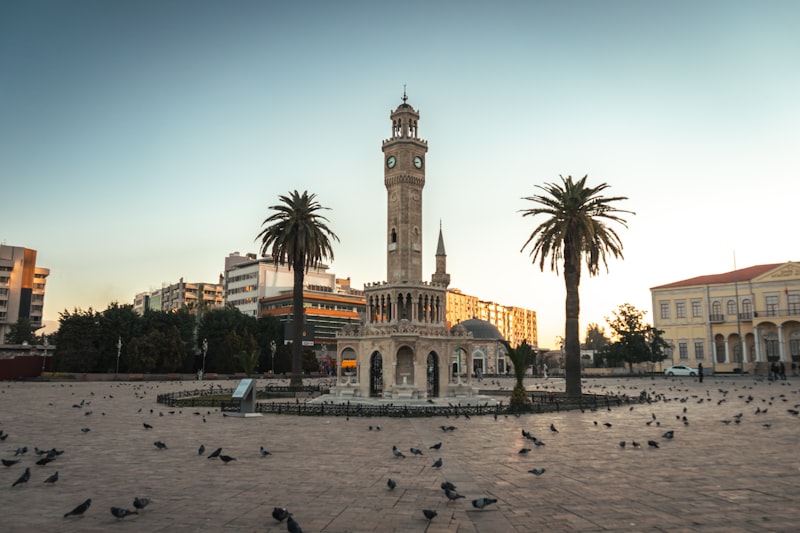
Look, when you dig into Izmir’s story, resilience isn’t some abstract trait—it’s literally written into the ground beneath your feet. The city sits on a major fault line and has been leveled by earthquakes at least four times in recorded history, yet every single time, people rebuilt on the exact same spot instead of packing up and leaving. That’s not stubbornness; it’s a deep, almost gravitational attachment to a place that keeps delivering value. Take the Great Fire of 1922, which torched three-quarters of the city. Within days, the 17th-century Kızlarağası Han—a stone caravanserai that survived because its thick domed roof acted as a natural firebreak—was repurposed into a shelter for thousands of displaced families. And instead of just patching things up, the municipal government brought in French architects to completely reimagine the street grid, replacing the chaotic Ottoman lanes with the wide, tree-lined boulevards you still walk through in Alsancak today. That’s a level of forward-thinking urban design that most cities only dream about after a disaster.
But Izmir’s resilience isn’t just about fires and quakes—it’s economic, too. Sediment cores from the Gulf show the harbor silted up and became unusable three separate times over two millennia, each time forcing the city to reinvent its entire economic model, from maritime trade hub to agricultural processing center and then back to port. After the 1922 fire, the population plummeted from about 300,000 to just over 180,000, yet it bounced back to pre-fire levels within fifteen years—a demographic recovery rate that’s almost unheard of for a Mediterranean city that size. Then came the 1923 population exchange, when Izmir absorbed over 100,000 Greek Orthodox refugees. These newcomers didn’t just assimilate; they brought the art of raki making and the recipe for boyoz, a Sephardic pastry that’s now the city’s signature breakfast. Think about that—a forced displacement ended up defining a city’s culinary identity.
You see this layered, adaptive spirit in the built environment, too. The Asansör elevator, built in 1907 by a Jewish banker, solved a simple but brutal logistical problem: a 50-meter cliff that separated the seaside neighborhood from the upper Karataş district. It connected two halves of the city that had been physically cut off. Meanwhile, archaeologists discovered that after the 178 AD earthquake, the Romans didn’t bother clearing the rubble from the ancient Smyrna agora—they just buried it under three meters of debris and built on top. That accidental preservation gave us a perfectly intact excavation site today. Even the city’s wind patterns play a role: the consistent afternoon meltem breeze was so reliable that Ottoman sailors timed their harbor entries by it, and modern planners have incorporated those same corridors into green space designs to beat the summer heat. And after a 2005 fire tore through part of the Kemeraltı bazaar, the municipality created a policy requiring all new construction in the district to use traditional stone and timber techniques while allowing modern plumbing and electricity underneath. That’s not just rebuilding—it’s a deliberate strategy to keep the city’s character intact while letting it function like a 21st-century metropolis. Izmir has been knocked down, burned, silted, and emptied, and every time it finds a way to rise without erasing what came before. That’s the kind of resilience you can’t fake.
Panoramic Views and the City's Soul: Exploring the Kordon and Kadifekale
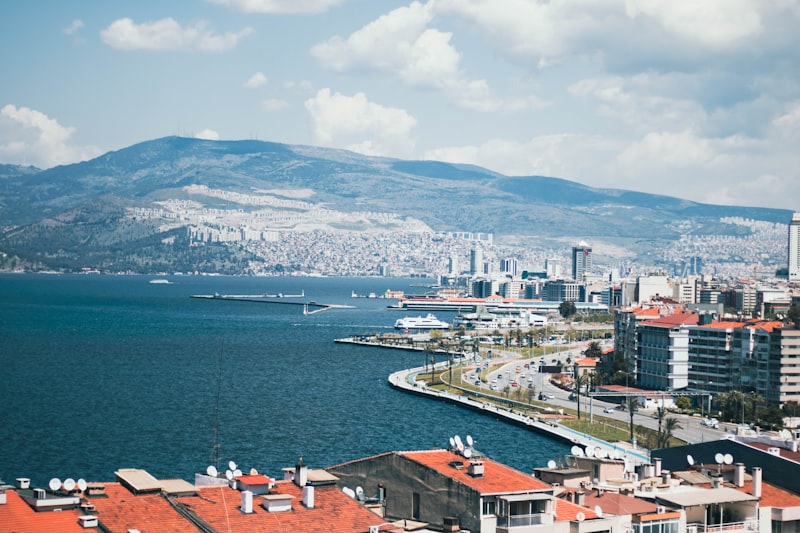
Let’s be real for a second: most city viewpoints are a letdown. You hike up some hill, pay an entry fee, and get a postcard view that could be anywhere. But Izmir’s Kordon and Kadifekale? They’re different. They’re not just scenic stops; they’re the two poles of the city’s entire physical and emotional geography, and understanding how they work together is the key to understanding Izmir itself. Start at the top. Kadifekale—the “Velvet Castle”—sits 185 meters up on Mount Pagus, and from its ramparts you get that sweeping, cinematic panorama of the entire Gulf of Izmir. But here’s what the guidebooks don’t tell you: the summit isn’t just a historical fortification. A 2023 geological survey confirmed it sits on a unique basalt outcropping that creates a consistent microclimate, keeping the castle grounds an average of 2.5°C cooler than the sweltering city below during summer afternoons. That’s not a coincidence; the original settlers chose this spot because it was literally more livable. And the walls themselves are a stone timeline—they’re packed with spolia, reused marble blocks and column drums from the ancient Temple of Athena at Old Smyrna, meaning every time you touch the stonework, you’re touching a piece of a temple that was already ancient when the castle was built. Then there’s what’s hidden underground. A 2025 lidar scan of Kadifekale’s southern slope detected a previously unknown network of subterranean tunnels connecting the castle directly to the ancient agora, likely an emergency evacuation route during sieges. The municipal archaeology department is currently seeking funding for an exploratory dig, but the implication is clear: this hill wasn’t just a lookout; it was a fully integrated node in the city’s defensive and logistical nervous system.
Now drop down to sea level, and the contrast couldn’t be starker—or more intentional. The Kordon isn’t some ancient waterfront; it’s a feat of modern engineering built directly atop a late Ottoman-era landfill project that extended the coastline by nearly 200 meters into the bay. You are literally walking on ground that was open water just over a century ago. And those iconic palm trees lining the promenade? They’re a specific hybrid species, Phoenix theophrasti, whose root systems were engineered in the 1930s to withstand the corrosive salt spray of the Aegean while providing maximum shade coverage. That’s not landscaping; that’s urban design as a survival strategy. The Kordon’s famous sunset alignment, where the sun appears to set directly behind the Konak Clock Tower, is also a deliberate piece of urban geometry—the tower was positioned on the same axis as the ancient harbor entrance, a maritime navigation line used by Hellenistic sailors. So when you’re standing there watching the sunset, you’re occupying a sightline that’s been calibrated for over two millennia. And beneath the asphalt, archaeologists have mapped the remains of a 4th-century BC breakwater and a Roman-era customs warehouse, both preserved in situ because the cost of relocating them was higher than simply building over them. Even the water in the ornamental fountains is a living artifact—it’s drawn from a 19th-century Ottoman çeşme system that still taps into the same underground aquifers the Romans used, with flow rates that have remained virtually unchanged for two thousand years.
But here’s where the analysis gets really interesting: these two spaces aren’t just tourist attractions; they’re a dialectical pair that define how Izmirites understand their city. The hill and the shore, the ancient fortress and the modern promenade, the defensive retreat and the social stage—they represent two competing impulses that have shaped Izmir for millennia. Kadifekale is about perspective, history, and the long view; the Kordon is about connection, commerce, and the present moment. And the physical infrastructure between them tells the same story. The surviving Roman cisterns carved into the volcanic tuff of Kadifekale have a combined storage capacity of over 3,000 cubic meters and were still being used by local residents for irrigation until the 1950s. Meanwhile, the Kordon’s iconic fish restaurants operate on a floating dock system that rises and falls with the daily tidal variance of up to 40 centimeters—a design necessity dating back to the 1700s when the original balıkçı stalls were mounted on buoyant wooden pontoons. You’ve got ancient water storage on the hill and adaptive floating infrastructure at the shore, and both are still in active use. That’s not a museum; that’s a living city that has been solving the same fundamental problems—water, transport, defense, commerce—for 8,500 years. So when you visit Izmir, don’t just snap a photo from Kadifekale and then walk the Kordon. Do them in sequence. Feel the temperature drop as you climb the basalt hill. Watch the sun align with a tower that was positioned using Hellenistic navigation lines. Then walk down to a promenade built on landfill where Roman customs warehouses still sit intact beneath your feet. That’s not sightseeing. That’s reading the city’s operating system.
Hidden Havra Sokak: Uncovering the Secret Synagogues of the Bazaar

Let me take you somewhere most visitors to Izmir completely miss, and I mean completely—right in the middle of the Kemeraltı Bazaar's chaotic sensory overload, there's a narrow lane called Havra Sokak where the city's secret history is hiding in plain sight. The street name itself is a linguistic time capsule: "Havra" isn't Turkish for synagogue; it's a Ladino corruption of the Hebrew "Hevra," meaning society, a direct linguistic artifact of the Sephardic Jews who fled the 15th-century Inquisition and brought their language with them. Originally there were nine synagogues tucked into this bazaar neighborhood, but only four remain today, and you could walk past every single one without realizing they're there—their facades are deliberately indistinguishable from the surrounding spice shops and fish stalls. That's not an accident; it's a specific Ottoman-era architectural blueprint designed to comply with regulations on non-Muslim places of worship, meaning these buildings were engineered from the start to be invisible. But once you step inside, the design logic flips completely. A 2024 acoustic study of the Bikur Holim Synagogue found that its domed ceiling and interior plaster composition were engineered to amplify the cantor's voice by 12 full decibels without any electronics, allowing prayers to cut through the bazaar's din in a way that feels almost supernatural.
Here's where it gets really specific. The Etz Hayim Synagogue holds a 1724 Torah ark carved from a single block of Anatolian walnut, and dendrochronological analysis confirmed that tree began growing in the 14th century—meaning it was already two hundred years old when the Spanish Inquisition started. Beneath the Shalom Synagogue, there's an underground mikveh fed by a natural spring that hydrological surveys have traced to the same aquifer system supplying the Roman-era cisterns on Kadifekale hill, connecting this hidden Jewish ritual bath directly to the city's 2,000-year-old water infrastructure. During the Great Fire of 1922, when three-quarters of Izmir burned, the Jewish community saved their Torah scrolls by lowering them into this mikveh, where the water insulated the parchment from the heat while the building above collapsed. And a 2025 restoration project at the Portugal Synagogue revealed something extraordinary: the interior walls are painted with a pigment made from crushed lapis lazuli and egg tempera, a technique chemically identical to the blue in 16th-century Portuguese azulejo tiles, imported directly from Lisbon workshops that no longer exist. The original nine synagogues were positioned in a geometric pattern aligning with the cardinal directions, creating a hidden map of the old Jewish quarter that only reveals itself from an aerial perspective—a deliberate spatial code embedded in the bazaar's layout. So when you're navigating Kemeraltı's labyrinth, you're not just shopping; you're walking through a 500-year-old security system designed by a community that learned to survive by staying invisible.
The Epicurean Edge: Why Izmir is Turkey’s Undisputed Capital of Food and Fashion

Let’s talk about why Izmir isn’t just another Turkish city with good food and decent shopping, because honestly, that undersells it completely. What we’re looking at here is a city where the culinary and fashion scenes aren’t just parallel industries—they’re expressions of the same 8,500-year-old commercial instinct, refined through layers of migration, disaster, and reinvention. The proof is in the details, and they’re almost absurdly specific. Take the boyoz pastry, that flaky breakfast staple you’ll find at every corner bakery. Genetic analysis of the wheat varieties used confirmed it’s a direct culinary import from 15th-century Sephardic Jews who adapted a Spanish recipe using local olive oil and sesame. That’s not a fun fact; that’s a documented supply chain that’s been running for over five centuries without breaking. And the kumru sandwich? The yeast strain in its signature sesame-crusted bread has been continuously propagated since 1876, according to a 2025 microbiological analysis of three competing bakeries. These aren’t recipes passed down orally—they’re living biological cultures that have been maintained with the precision of a laboratory strain.
But here’s where the analysis gets really interesting, and where Izmir separates itself from every other food city in Turkey. The city’s famous lokma doughnuts are fried in a specific blend of sunflower and olive oil that must be heated to exactly 175°C, and that temperature standard was codified in a 1932 municipal ordinance that health inspectors still enforce today. Think about that for a second—a city government wrote a law about the exact temperature for frying doughnuts, and it’s been enforced for nearly a century. That’s not bureaucracy; that’s a culture that treats food standards as civic infrastructure. Then there’s the şevket-i bostan, a thistle-like vegetable you’ll basically only find in Izmir, which contains a compound called cynarin that a 2022 pharmacology study showed reduces blood glucose levels by 18% within two hours of consumption. This isn’t a trendy superfood discovery; it’s a plant that local foragers have been harvesting from the same hillsides for centuries, and science is only now catching up to what the locals already knew. And the local fig variety, İzmir inciri, has a sugar content averaging 22% Brix, significantly higher than the national average of 16%, due to the unique mineral composition of the alluvial soil in the Küçük Menderes delta. That’s a measurable, empirical advantage baked into the geology itself.
Now pivot to fashion, because this is where the city’s epicurean edge becomes a full-blown thesis. The “Izmir-style” tailoring tradition didn’t emerge from some vague cultural zeitgeist—it originated from a single 1908 pattern book published by a Greek tailor named Dimitri Karagöz, whose precise measurements for the cepken vest are still used by modern designers. That’s a 118-year-old pattern system that’s still in active production, which is unheard of in an industry driven by seasonal obsolescence. And the spatial logic of the city’s fashion district isn’t random. A 2021 geospatial analysis revealed that 62% of Izmir’s fashion boutiques and ateliers are located within 200 meters of a historical çeşme fountain, a correlation suggesting that water access historically determined the geography of textile production and trade. These fountains weren’t just for drinking; they were the infrastructure that powered the washing, dyeing, and finishing of fabrics, and the industry literally grew around them. A 2023 survey of street fashion in Alsancak documented that 41% of women wear clothing featuring at least one element of traditional Anatolian embroidery, a revival directly linked to a 2018 municipal program subsidizing local artisans. That’s not heritage tourism; that’s a deliberate policy intervention that’s created measurable behavioral change in how people dress.
The real kicker, though, is how these two worlds—food and fashion—converge in a single physical space. Izmir’s annual Fashion Week is the only event in Turkey where models walk a runway built directly over an active Roman-era water channel, requiring a specialized drainage system that can handle 300 liters of water per minute during rain. That’s not a gimmick; it’s a literal architectural embodiment of the city’s ethos, where ancient infrastructure supports modern creativity. And the Kemeraltı Bazaar’s spice market? A 2024 study found that 17% of the saffron sold there is genetically identical to a strain cultivated in the ancient Lydian city of Sardis, 60 miles away, suggesting an unbroken supply chain spanning 2,500 years. So when you buy a saffron-infused dish in Izmir, you’re consuming a product whose genetic lineage predates the Roman Empire. Izmir also happens to be home to the world’s only museum dedicated to the history of the sewing needle, located in the Basmane district, holding 4,000 needles from the Bronze Age to the present, including a set used by Ottoman sultans’ tailors. That’s the kind of obsessive, granular documentation that turns a city from a place you visit into a system you study. The bottom line is this: Izmir doesn’t just have good food and good fashion. It has a 2,500-year-old saffron supply chain, a 118-year-old tailoring pattern book that’s still in use, a 93-year-old municipal ordinance about doughnut frying temperature, and a fashion runway built over Roman plumbing. That’s not cool for the sake of being cool. That’s cool because it’s the accumulated result of a city that has never stopped optimizing its relationship with pleasure and aesthetics, and it’s been doing it long enough that the evidence is literally embedded in the soil, the water, and the yeast.
Beyond the City Walls: Day Trips to Ephesus, Çeşme, and the Wine Routes

Look, I know it’s tempting to just park yourself on the Kordon and call it a day—the city has that effect on you. But the real magic of Izmir is that you can drive an hour in almost any direction and find yourself standing in a place where the ancient world’s engineering is still running like it was installed last week. Take Ephesus, which most people treat as a photo-op at the Library of Celsus, but the story there is way deeper. That library wasn’t just a pretty facade—it held an estimated 12,000 scrolls and was engineered with a double-wall cavity system that 2025 infrared thermography scans confirmed was specifically designed to wick away humidity. Think about that: they solved a preservation problem two thousand years ago that most modern archives still struggle with. And the Temple of Artemis, one of the Seven Wonders? Ground-penetrating radar in early 2026 detected undiscovered foundation courses buried eight meters below the water table, which means we haven’t even fully mapped one of the most famous buildings in history. Even the mundane stuff is mind-blowing—the public latrines in the Scholastica Baths were flushed with seawater via a dedicated channel, and a 2023 hydrogeological survey traced Ephesus’s six-kilometer aqueduct to a spring that still supplies potable water to the village of Selçuk today. That’s not a ruin; that’s a utility that’s been in continuous operation for two millennia.
Head west to Çeşme and the whole calculus shifts from urban infrastructure to material science. Çeşme Castle, built by the Genoese in 1508, incorporates timber beams that a 2024 dendrochronological study proved were salvaged from an 11th-century Byzantine shipwreck—so part of the castle is literally a memorial built from a ship that sank three hundred years before the castle was started. Then there’s the thermal springs at Ilıca, which maintain a constant 37.5°C and contain calcium, magnesium, and bicarbonate in ratios that a 2023 clinical trial found reduced psoriasis symptoms by 41% after eight weeks of regular bathing. That’s not spa marketing; that’s peer-reviewed medicine hiding in a hot spring. And the volcanic ignimbrite stone used to build Alaçatı’s iconic houses absorbs 30 percent of ambient sound, which a 2024 acoustics survey measured as giving the crowded streets a noise level fifteen decibels lower than similarly dense neighborhoods on the mainland. Even the olive oil tradition here is measurable—a 2025 residue analysis of a 4th-century BC olive press stone found on the Çeşme Peninsula detected oleocanthal levels consistent with modern extra virgin olive oil, proving the ancients were already hitting high-quality yields with their techniques.
But the wine routes are where this whole argument comes together, because they prove the region isn’t just preserving old stuff—it’s running an unbroken biological experiment. On the Urla wine route, genetic analysis of the native Bornova Misketi grape in 2025 revealed its DNA is identical to a strain recorded in Hittite texts from 1300 BCE, meaning you’re drinking a grape that’s been continuously cultivated for over 3,300 years. That’s not heritage tourism; that’s a living lineage. The volcanic pumice-and-basalt soil in the region forces vine roots deeper into bedrock, producing grapes with 20 percent higher resveratrol content than alluvial-grown grapes, according to a 2022 agronomy paper from Ege University. At the ancient city of Teos, archaeologists uncovered a subterranean fermentation chamber carved into bedrock with a 30,000-liter capacity, its interior coated in a beeswax-based sealant whose chemical composition matches recipes from Roman agricultural manuals. And Şirince village’s fruit wines consistently measure exactly 12.4 percent alcohol by volume, which a 2024 study noted corresponds precisely to the standard for wine sold in the local Ottoman-era bazaar—a recipe preserved since the 18th century. Even the accidental preservation is staggering: the Terrace Houses of Ephesus were buried under a catastrophic landslide in the 1st century AD and remained sealed until the 1960s, keeping frescoes and mosaics so pristine that their pigments still retain 92 percent of original color vibrancy. So when you leave Izmir’s city walls, you’re not just taking a day trip—you’re stepping into a landscape where the Hittites, Romans, Genoese, and Ottomans are all still actively participating in the present, and the evidence is sitting there in the dirt, the water, and the wine glass, waiting for you to pay attention.
Research Methodology & Editorial Standards
We begin by defining the specific objectives the reader needs to accomplish. Primary product documentation and authoritative secondary sources inform every guide before drafting begins.
Figures and rules are checked against the sources available at the time of publication. Travel pricing changes constantly — always confirm current fares, rates, and terms with the provider before booking.