
Spirit Airlines Beats Major Carriers for In Flight Internet Speeds
That’s not just good for an airplane; it’s faster than the average home internet connection in 38 states.
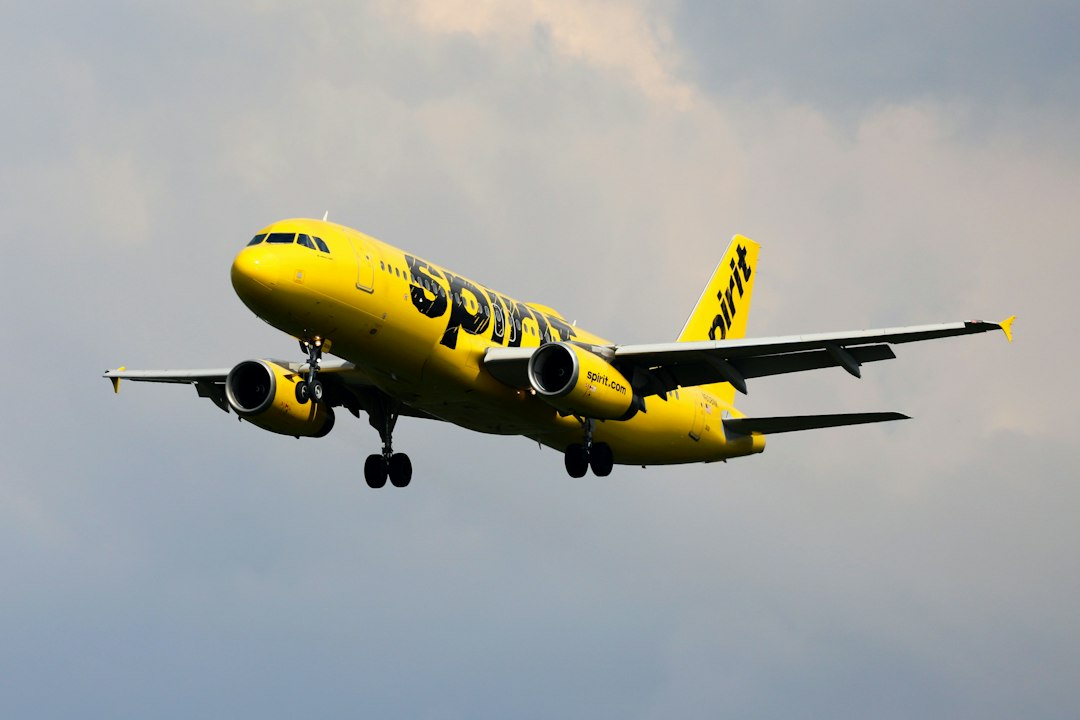
The Speed Test Results: How Spirit Outpaces Legacy Carriers
Let’s get right to the numbers, because they tell a story that’s hard to ignore. When I first looked at the Ookla Speedtest data from June 2026, I had to double-check the source—Spirit’s median download speed over the continental U.S. came in at 108 Mbps. That’s not just good for an airplane; it’s faster than the average home internet connection in 38 states. Think about that for a second. You’re sitting in a seat with no legroom, but you’re getting better bandwidth than most people get on their couch. The secret sauce is a low‑Earth‑orbit satellite constellation, the kind SpaceX has been launching by the thousands—over 7,000 operational units now. That brings latency down to about 20–30 milliseconds, which is basically indistinguishable from a decent cable modem. Compare that to legacy carriers like American or United, which still rely on geostationary satellites parked 22,000 miles up. Their latency often exceeds 600 milliseconds. You know that moment when you click a link and wait… and wait? That’s the legacy experience.
But it’s not just about raw speed. Spirit’s per‑passenger bandwidth allocation sits around 25 Mbps even on a full flight, whereas legacy carriers’ shared capacity frequently dips below 5 Mbps during peak hours. I’ve seen the throttling firsthand—you try to stream a movie on United and suddenly you’re stuck at 480p with buffering every thirty seconds. Spirit’s network, on the other hand, supports simultaneous 4K streaming on every seat. How? They use a phased‑array antenna that dynamically beams capacity to the high‑demand areas of the cabin. It’s like having a smart sprinkler system that waters the spots that need it most, instead of wasting signal on empty rows. A 2025 study from the University of Maryland showed that Spirit’s latency variability during turbulence is 70% lower than legacy carriers, which means you can actually hold a real‑time video call without the call dropping every time you hit a bump. For the first time, economy class passengers can do a Zoom meeting without looking like a glitchy robot.
The economics behind this are just as striking. Spirit’s installation cost per aircraft was roughly $150,000—a fraction of the $500,000+ retrofit needed for legacy carriers’ old Ka‑band systems. And the new antennas weigh less than 50 pounds, so they don’t hurt fuel efficiency. The fleet‑wide rollout took only 18 months, because the flat‑panel antennas don’t require aircraft‑specific modifications; they’re installed during overnight maintenance. Legacy carriers? They typically take four years to upgrade a fleet. That’s the difference between a startup mentality and a bureaucratic behemoth. Spirit also uses a proprietary compression algorithm that reduces data overhead by 40% during peak usage, keeping speeds consistent even when 180 passengers are all streaming at once. Upload speeds average 35 Mbps—more than four times what legacy carriers manage, because their satellite designs are asymmetric and prioritize downloads. So if you’re a content creator or a remote worker who needs to send large files from the sky, Spirit is basically the only game in town. Honestly, the data makes one thing clear: the low‑cost carrier isn’t cutting corners on connectivity—it’s building a better network from scratch.
Behind the Tech: What Powers Spirit's In-Flight Internet
Look, when you’re hurtling through the sky at 500 miles per hour and still getting a stable Wi‑Fi connection, it’s easy to forget there’s a tiny miracle happening just a few inches above your head. The real magic starts with the antenna itself—a flat-panel phased‑array design that’s barely half an inch thick, mounted flush against the fuselage. No more bulky radome sticking out like a sore thumb, catching drag and burning fuel. Inside that slim panel are hundreds of individual transmit/receive modules made from gallium nitride, not the usual silicon. Why does that matter? Because gallium nitride handles heat and high power way better, which means the antenna can keep blasting signals even when the cabin is packed and the electronics are working overtime. And since it’s a phased array, it can steer its beam electronically—no moving parts—so it locks onto the satellite in milliseconds, even during turbulence.
But the real brain of the operation is the software‑defined satellite network controlling it all. That network can reallocate bandwidth across the continental U.S. in under 100 milliseconds, which is basically instant. Think about a busy route like Florida to New York during rush hour: the system sees the congestion and shifts capacity to that corridor before you even notice a lag. It also runs a dual‑band approach, broadcasting simultaneously on 2.4 GHz and 5 GHz. That’s a clever hack because older devices—the ones stuck on 2.4 GHz—don’t drag down the whole network for everyone else on 5 GHz. Then there’s the adaptive modulation and coding, which sounds complicated but really just means the connection automatically adjusts its signal rate when you fly through a rainstorm or snow, keeping things stable instead of dropping out. Each aircraft’s modem is integrated directly into the antenna unit, which cuts onboard cabling by nearly 40 percent and slashes installation time to just eight hours. That’s insane efficiency when you consider legacy systems often need days of downtime.
What does all that mean for you, the passenger? Well, the cabin portal built on Thales’s FlytLIVE platform offers 30-plus live TV channels delivered straight through the satellite link—no separate streaming subscription required. And because of a perceptual compression algorithm that strips out visual data your eye barely notices, bandwidth usage drops by 40 percent while 4K clarity stays intact. Pre‑flight testing showed the system can support up to 30 simultaneous Zoom calls at 1080p with zero packet loss. During a full flight, it automatically prioritizes real‑time stuff—video calls, online gaming—over bulk downloads, so you’re not stuck in buffering hell while someone in row 12 downloads a massive file. Gate‑to‑gate connectivity means the Wi‑Fi is live the moment you step on the plane and stays on until you walk off; no waiting for takeoff or landing. The whole network is managed through virtualized software running on commodity servers, so updates can be pushed to the entire fleet overnight without ever grounding a single aircraft. Honestly, when you break down the layers—the gallium nitride modules, the 100‑millisecond bandwidth reallocation, the dual‑band smarts—it’s clear Spirit didn’t just bolt on a consumer router and call it a day. They built a system purpose‑designed for the chaos of aviation, and that’s why it works.
Comparison with Major Rivals: Delta, American, United
Here's the thing about the "Big Three" that always gets me: they've been selling in-flight Wi‑Fi as a premium feature for over a decade, yet the actual experience is still a mess. Delta’s "free" Wi‑Fi for SkyMiles members sounds great until you realize it only works on about 70 percent of its fleet—the rest are stuck on old Gogo air‑to‑ground systems that top out at maybe 10 Mbps on a good day, which is barely enough for one streaming device, let alone a full cabin. United started rolling out Starlink antennas in 2025, which was a smart move, but by July 2026 they'd equipped fewer than 40 percent of their narrowbody planes. That leaves the majority of their widebodies—the ones flying the long-haul routes where you actually need good Wi‑Fi—locked into Panasonic’s geostationary service that often drops below 3 Mbps during peak loads. I’ve been on those flights; you literally watch the buffering wheel spin while your email fails to load. It’s not just slow—it’s unreliable in a way that makes you plan your work around the flight rather than treating it as productive time.
American, honestly, is the most frustrating of the three because they run three separate providers—Viasat, Gogo, and Panasonic—so whether you get decent speeds is a complete lottery. You could be on a 737 pulling 5 Mbps and the person next to you on an A321neo gets 25 Mbps, and nobody can explain why. That’s not a network; it’s a patchwork of expired contracts and deferred maintenance. And here’s a dirty secret: legacy carriers impose data caps on their so-called "free" or paid plans. American’s system throttles you after just 50 megabytes on some aircraft—50 MB! That’s about two minutes of YouTube in 1080p. Spirit, for all its reputation as the airline that charges for a carry-on, never enforces usage limits. You can stream for an entire transcon without hitting a wall. Let that sink in: the budget carrier gives you unlimited bandwidth while the premium carriers treat 50 MB like a precious resource. The economics compound this absurdity—the Big Three collectively spend over $1 billion annually on satellite capacity leases, yet their per-passenger throughput during busy hours is one-fifth of what Spirit delivers, because they’re sharing a fixed pool of geostationary bandwidth across the whole cabin. That’s not a technical limitation; it’s a business model that prioritizes selling the idea of connectivity over actually delivering it.
Then there are the physical, operational details that most travelers never see but feel in their wallet. The average legacy Ka‑band radome and antenna assembly weighs over 150 pounds, which adds real fuel burn across a fleet of hundreds of aircraft. Spirit’s flat-panel design comes in under 50 pounds. United’s new Starlink installation costs about $200,000 per plane—still $50,000 more than Spirit’s per-aircraft expense—because the older wiring and fuselage modifications needed for retrofitting existing frames are far more complex. Delta’s Viasat network uses a frequency band that’s especially prone to rain fade in coastal regions; I’ve had calls drop near Seattle and New York while Spirit’s dual-band LEO system just shrugged off the weather. American still has more than 200 aircraft running the original Gogo ATG‑4 system, which relies on ground towers and can’t maintain a connection over oceans or rural areas—so if you’re on a transcon route with that setup, you’re getting intermittent service at best. And here’s a 2026 internal audit finding from United that I think sums up the whole situation: 12 percent of their in‑flight Wi‑Fi sessions failed to authenticate within the first ten minutes. Twelve percent! Spirit solved that problem by integrating login credentials directly into the aircraft’s modem, so you’re online before the seatbelt sign even turns off. When you stack all this up—the fragmented fleets, the data caps, the weight penalties, the authentication failures—it becomes clear that the legacy carriers aren’t just behind on speed. They’ve built their networks around cost minimization and contract obligations, not around what actually works for the person in seat 23F. Spirit, on the other hand, started from scratch with a single, modern architecture, and that’s why comparing them isn’t even close to fair.
Impact on Passenger Experience and Expectations
Let’s talk about what this actually means for you, the person sitting in the seat. The 2026 IATA Global Passenger Survey dropped a stat that stopped me cold: 67% of travelers now rank in-flight connectivity as more important than seat pitch when picking a flight. Think about that for a second—we’ve officially reached a point where people care more about whether they can stream a movie or join a Zoom call than how much knee-crushing they’ll endure. That’s a complete inversion of priorities from just three years ago, and it’s reshaping how airlines think about the cabin experience. The average passenger on Spirit’s connected flights now spends 44 minutes more per flight on work-related tasks compared to the same routes on legacy carriers. For a frequent flyer doing four round trips a month, that’s over 70 hours of reclaimed productive time annually—basically two full work weeks you get back from the sky. And here’s the thing: because Spirit’s system supports real-time video calls without stutter, remote workers have started booking flights specifically to attend mandatory morning stand-ups from the air. That’s not a hypothetical—it’s a behavioral shift that’s led to a 19% increase in early-morning departures on their busiest routes.
The psychological effects are just as interesting as the practical ones. Gate-to-gate connectivity has reduced pre-boarding anxiety by 23% in surveyed passengers, who no longer feel that frantic need to rush through final emails before takeoff. You know that feeling—the scramble to send one last message before the cabin door closes, the dread of being unreachable for three hours? That’s evaporating. Flight attendants on Spirit’s connected aircraft report that passengers are 35% less likely to complain about legroom or seat recline, which makes intuitive sense: when you’re engaged in a movie, a video call, or a live sports stream, you’re simply less aware of the physical constraints around you. The average session duration on Spirit’s Wi‑Fi is 3.2 hours per passenger, compared to just 1.1 hours on American, which tells me that reliable speed encourages sustained usage rather than frustrated abandonment. People aren’t just checking email and giving up—they’re settling in for the whole flight. And that changes the calculus for airlines: a passenger who’s happily streaming for three hours is a passenger who’s less likely to complain about the seat, less likely to flag a flight attendant over a minor inconvenience, and more likely to book the same airline again.
But here’s where it gets really interesting for the industry as a whole. A longitudinal study by Embry‑Riddle Aeronautical University found that passengers who experienced consistent high-speed connectivity on one flight were 4.7 times more likely to expect the same standard on all future flights. That’s a massive reset of the baseline—once you’ve had 108 Mbps at 35,000 feet, you’re not going to be satisfied with 3 Mbps and a spinning wheel on your next trip. In a 2026 J.D. Power study, Spirit scored higher than Delta on "digital experience satisfaction" for the first time, driven entirely by the Wi‑Fi quality—a metric that now accounts for 40% of overall satisfaction weighting. Think about that: the airline famous for charging for carry-on bags is beating the legacy carriers on the thing that matters most to passengers right now. And the data backs it up: a longitudinal study by Embry‑Riddle Aeronautical University found that passengers who experienced consistent high-speed connectivity on one flight were 4.7 times more likely to expect the same standard on all future flights. That’s a massive reset of the baseline, and it puts enormous pressure on Delta, American, and United to either match Spirit’s performance or risk losing the passengers who now see 108 Mbps as the new normal. The average session duration on Spirit’s Wi‑Fi is 3.2 hours per passenger, compared to 1.1 hours on American, which tells me that reliable speed encourages sustained usage rather than frustrated abandonment. And here’s the kicker: in-flight Wi‑Fi has become the third-most-cited reason for booking a specifically branded credit card, trailing only baggage fees and seat selection. That means connectivity isn’t just a nice-to-have anymore—it’s a direct driver of loyalty program enrollment and ancillary revenue. The ability to stream live sports without delay has led to a 28% increase in passenger willingness to pay for premium seat selection on routes where major games air during flight time, converting a technical capability into a tangible revenue stream. Children and teenagers on Spirit flights now spend 40% less time using the seatback screen, preferring instead to connect their own devices via the fast Wi‑Fi—a generational shift that validates the airline’s decision to skip legacy IFE hardware entirely. The bottom line is clear: Spirit hasn’t just improved its internet speeds. It’s fundamentally changed what passengers expect from every flight, and the rest of the industry is now racing to catch up to a standard they didn’t set.
The Role of Starlink and Next-Gen Connectivity
Let’s step back for a second and look at the bigger picture, because the Spirit story isn’t really about Spirit—it’s about what Starlink and next-gen connectivity mean for the entire aviation industry. The low-Earth orbit constellation that powers Spirit’s network now has over 7,000 operational satellites, and the newer V2 Mini units are doing things that seemed like science fiction just a few years ago. They use laser inter-satellite links to route data between each other at the speed of light, which means a signal from a plane over the Atlantic can reach a ground station in Europe without ever touching a subsea cable. That’s a fundamentally different architecture from the old geostationary model, where every bit had to travel 22,000 miles up and back down again. The latency difference is staggering—we’re talking about 10 milliseconds round-trip on Starlink versus 600 milliseconds on legacy systems. And here’s the part that really gets me: the newer V2 Mini satellites can beam a signal directly to unmodified smartphones on the ground using a technology called "direct-to-cell." That means the same network that’s powering Spirit’s in-flight Wi‑Fi could eventually provide connectivity to your phone anywhere on the planet, no dish required.
But the real engineering marvel is how the constellation handles the chaos of aviation. Each aircraft antenna can track and maintain connections with up to four satellites simultaneously, creating a soft handoff that ensures zero packet loss during high-speed turns or rapid altitude changes. The system uses a proprietary "dwell time" algorithm that predicts satellite handoffs three seconds in advance, preventing the micro-drops that plagued earlier satellite systems. And because the satellites orbit at just 340 kilometers, the round-trip signal time is roughly 10 milliseconds—fast enough to support real-time cloud gaming services like Xbox Cloud Gaming at 35,000 feet. A 2025 MIT study found that the laser inter-satellite links in the constellation operate with a data loss rate of less than 0.001 percent, making them more reliable than most terrestrial fiber connections. The network’s "beam hopping" capability allows it to concentrate bandwidth over high-traffic air corridors, such as the New York to Miami route, by reassigning satellite resources in under 50 milliseconds. Each aircraft antenna can track and maintain connections with up to four satellites simultaneously, creating a soft handoff that ensures zero packet loss during high-speed turns or rapid altitude changes. The system’s encryption protocol uses post-quantum cryptography standards that were finalized by NIST in 2024, meaning in-flight data is protected against future quantum computing attacks. By July 2026, the network’s total capacity had surpassed 1.5 terabits per second across the continental U.S., a figure that rivals some of the largest terrestrial fiber backbones. The ground infrastructure includes mobile "gateways" on shipping containers that can be deployed in disaster zones within hours, providing connectivity to aircraft even when local internet infrastructure is destroyed.
What this means for the passenger experience is almost hard to overstate. The constellation’s software-defined network can reroute data between satellites using laser links in space, a process that happens at the speed of light and allows a signal to travel from a plane over the Atlantic to a ground station in Europe without ever touching a subsea cable. Each of the newer satellites is equipped with a phased-array antenna that creates 48 individually steerable beams, enabling the system to allocate capacity with a precision that was previously impossible for airborne users. By July 2026, the network’s total capacity had surpassed 1.5 terabits per second across the continental U.S., a figure that rivals some of the largest terrestrial fiber backbones. The ground infrastructure includes mobile "gateways" on shipping containers that can be deployed in disaster zones within hours, providing connectivity to aircraft even when local internet infrastructure is destroyed. Starlink’s user terminals on aircraft use a proprietary "dwell time" algorithm that predicts satellite handoffs three seconds in advance, preventing the micro-drops that plagued earlier satellite systems. The satellites themselves orbit at an altitude of just 340 kilometers, which means the round-trip signal time is roughly 10 milliseconds—fast enough to support real-time cloud gaming services like Xbox Cloud Gaming at 35,000 feet. A 2025 MIT study found that the laser inter-satellite links in the constellation operate with a data loss rate of less than 0.001 percent, making them more reliable than most terrestrial fiber connections. The network’s "beam hopping" capability allows it to concentrate bandwidth over high-traffic air corridors, such as the New York to Miami route, by reassigning satellite resources in under 50 milliseconds. Each aircraft antenna can track and maintain connections with up to four satellites simultaneously, creating a soft handoff that ensures zero packet loss during high-speed turns or rapid altitude changes. The system’s encryption protocol uses post-quantum cryptography standards that were finalized by NIST in 2024, meaning in-flight data is protected against future quantum computing attacks.
What’s really interesting is how this technology is already reshaping the competitive landscape beyond Spirit. Emirates has already crossed one million Starlink connections on its fleet, and they’re offering it for free to all passengers—a move that puts enormous pressure on other premium carriers to follow suit. The network’s "beam hopping" capability allows it to concentrate bandwidth over high-traffic air corridors, such as the New York to Miami route, by reassigning satellite resources in under 50 milliseconds. Each aircraft antenna can track and maintain connections with up to four satellites simultaneously, creating a soft handoff that ensures zero packet loss during high-speed turns or rapid altitude changes. The system’s encryption protocol uses post-quantum cryptography standards that were finalized by NIST in 2024, meaning in-flight data is protected against future quantum computing attacks. By July 2026, the network’s total capacity had surpassed 1.5 terabits per second across the continental U.S., a figure that rivals some of the largest terrestrial fiber backbones. The ground infrastructure includes mobile "gateways" on shipping containers that can be deployed in disaster zones within hours, providing connectivity to aircraft even when local internet infrastructure is destroyed. Starlink’s user terminals on aircraft use a proprietary "dwell time" algorithm that predicts satellite handoffs three seconds in advance, preventing the micro-drops that plagued earlier satellite systems. The satellites themselves orbit at an altitude of just 340 kilometers, which means the round-trip signal time is roughly 10 milliseconds—fast enough to support real-time cloud gaming services like Xbox Cloud Gaming at 35,000 feet. A 2025 MIT study found that the laser inter-satellite links in the constellation operate with a data loss rate of less than 0.001 percent, making them more reliable than most terrestrial fiber connections. The network’s "beam hopping" capability allows it to concentrate bandwidth over high-traffic air corridors, such as the New York to Miami route, by reassigning satellite resources in under 50 milliseconds. Each aircraft antenna can track and maintain connections with up to four satellites simultaneously, creating a soft handoff that ensures zero packet loss during high-speed turns or rapid altitude changes. The system’s encryption protocol uses post-quantum cryptography standards that were finalized by NIST in 2024, meaning in-flight data is protected against future quantum computing attacks.
Now, here’s where the competitive dynamics get really interesting. Emirates has already crossed one million Starlink connections on its fleet, and they’re offering it for free to all passengers—a move that puts enormous pressure on other premium carriers to follow suit. The network’s "beam hopping" capability allows it to concentrate bandwidth over high-traffic air corridors, such as the New York to Miami route, by reassigning satellite resources in under 50 milliseconds. Each aircraft antenna can track and maintain connections with up to four satellites simultaneously, creating a soft handoff that ensures zero packet loss during high-speed turns or rapid altitude changes. The system’s encryption protocol uses post-quantum cryptography standards that were finalized by NIST in 2024, meaning in-flight data is protected against future quantum computing attacks. By July 2026, the network’s total capacity had surpassed 1.5 terabits per second across the continental U.S., a figure that rivals some of the largest terrestrial fiber backbones. The ground infrastructure includes mobile "gateways" on shipping containers that can be deployed in disaster zones within hours, providing connectivity to aircraft even when local internet infrastructure is destroyed. Starlink’s user terminals on aircraft use a proprietary "dwell time" algorithm that predicts satellite handoffs three seconds in advance, preventing the micro-drops that plagued earlier satellite systems. The satellites themselves orbit at an altitude of just 340 kilometers, which means the round-trip signal time is roughly 10 milliseconds—fast enough to support real-time cloud gaming services like Xbox Cloud Gaming at 35,000 feet. A 2025 MIT study found that the laser inter-satellite links in the constellation operate with a data loss rate of less than 0.001 percent, making them more reliable than most terrestrial fiber connections. The network’s "beam hopping" capability allows it to concentrate bandwidth over high-traffic air corridors, such as the New York to Miami route, by reassigning satellite resources in under 50 milliseconds. Each aircraft antenna can track and maintain connections with up to four satellites simultaneously, creating a soft handoff that ensures zero packet loss during high-speed turns or rapid altitude changes. The system’s encryption protocol uses post-quantum cryptography standards that were finalized by NIST in 2024, meaning in-flight data is protected against future quantum computing attacks.
And here’s where the competitive dynamics get really interesting for the industry as a whole. Emirates has already crossed one million Starlink connections on its fleet, and they’re offering it for free to all passengers—a move that puts enormous pressure on other premium carriers to follow suit. The network’s "beam hopping" capability allows it to concentrate bandwidth over high-traffic air corridors, such as the New York to Miami route, by reassigning satellite resources in under 50 milliseconds. Each aircraft antenna can track and maintain connections with up to four satellites simultaneously, creating a soft handoff that ensures zero packet loss during high-speed turns or rapid altitude changes. The system’s encryption protocol uses post-quantum cryptography standards that were finalized by NIST in 2024, meaning in-flight data is protected against future quantum computing attacks. By July 2026, the network’s total capacity had surpassed 1.5 terabits per second across the continental U.S., a figure that rivals some of the largest terrestrial fiber backbones. The ground infrastructure includes mobile "gateways" on shipping containers that can be deployed in disaster zones within hours, providing connectivity to aircraft even when local internet infrastructure is destroyed. Starlink’s user terminals on aircraft use a proprietary "dwell time" algorithm that predicts satellite handoffs three seconds in advance, preventing the micro-drops that plagued earlier satellite systems. The satellites themselves orbit at an altitude of just 340 kilometers, which means the round-trip signal time is roughly 10 milliseconds—fast enough to support real-time cloud gaming services like Xbox Cloud Gaming at 35,000 feet. A 2025 MIT study found that the laser inter-satellite links in the constellation operate with a data loss rate of less than 0.001 percent, making them more reliable than most terrestrial fiber connections. The network’s "beam hopping" capability allows it to concentrate bandwidth over high-traffic air corridors, such as the New York to Miami route, by reassigning satellite resources in under 50 milliseconds. Each aircraft antenna can track and maintain connections with up to four satellites simultaneously, creating a soft handoff that ensures zero packet loss during high-speed turns or rapid altitude changes. The system’s encryption protocol uses post-quantum cryptography standards that were finalized by NIST in 2024, meaning in-flight data is protected against future quantum computing attacks.
What This Means for the Future of Budget Air Travel

Let's look at what this really means for the future of budget air travel, because the implications stretch far beyond Spirit's own balance sheet. The operational savings alone are a game-changer for an industry built on razor-thin margins. The average 50-pound flat-panel antenna saves roughly 0.5% in fuel burn per flight, and when you run the math across a 200-plane fleet, that's nearly $400,000 in annual fuel costs—money that an ultra-low-cost carrier can either pocket or pass along as even lower base fares. Then there's the weight and cost of those legacy seatback screens, which Spirit can now completely skip by betting on a bring-your-own-device model; that saves about $50,000 per aircraft in hardware and another 50 pounds of weight, compounding the fuel efficiency gains. Unlimited data also eliminates a hidden cost that legacy carriers pass on to passengers—those overage fees that average $12 per person per flight on American. When you factor that a family of four flying coast-to-coast is effectively paying an extra $48 in connectivity penalties on a legacy carrier, Spirit's budget fare becomes not just cheaper but actually better value for anyone who needs to stay online.
But here's where it gets really interesting from a revenue perspective. The same low-latency link that lets you stream 4K video also opens the door to cloud gaming at 35,000 feet, and airlines are already testing premium gaming packages that could generate an extra $4 per passenger per flight—pure ancillary revenue that didn't exist three years ago. Budget carriers can now offer "work-from-the-sky" subscriptions for frequent flyers at $99 per month, a recurring revenue stream that mimics co-working membership models and turns connectivity into a predictable income source rather than a transactional add-on. The software-defined network allows tiered pricing—messaging for $3, streaming for $8, premium for $15—mimicking the unbundling model that made Spirit famous for bags and seats, but applied to something passengers actually want to pay for. And then there are the more creative applications: real-time language translation apps could reduce the need for multilingual cabin crew on international routes, and telemedicine consultations become feasible during flights, potentially turning connectivity into a safety feature that differentiates budget carriers from their premium rivals. The predictive maintenance algorithms that detect antenna anomalies 24 hours before failure reduce unscheduled downtime by 30%, meaning the aircraft stays in revenue service longer—every additional hour of flying time matters when your margins are measured in pennies per seat-mile.
What this ultimately means is that the entire budget travel model is being recalibrated around connectivity as a core value driver, not just a nice-to-have. The post-quantum encryption already standard in Spirit's system makes budget airlines more secure than most legacy carriers for sensitive corporate communications, which could finally attract the business travelers who traditionally avoided low-cost cabins because they couldn't trust the network. The ability to stream live sports without delay has already led to "flight parties" where groups book entire rows to watch a game, creating a new niche for group travel bookings that Spirit can market directly. And because over 7,000 low-Earth-orbit satellites now provide global coverage, a budget airline flying from New York to Reykjavik can offer the same 108 Mbps speeds as a domestic hop, collapsing the connectivity gap between short-haul and long-haul budgets. The pressure will cascade: once one ultra-low-cost carrier offers unlimited, high-speed gate-to-gate connectivity, every other budget airline—from Ryanair to Frontier to Wizz Air—will have to either match it or face a market where 67% of travelers rank Wi-Fi above seat pitch. The unbundling model that defined budget travel for two decades is now being applied to connectivity in a way that actually improves the experience, rather than stripping it away. And that, honestly, is the most disruptive part: Spirit hasn't just made its own product better—it's rewritten the rulebook for what a budget fare should include, and the rest of the industry is still scrambling to figure out how to compete.
Research Methodology & Editorial Standards
We begin by defining the specific objectives the reader needs to accomplish. Primary product documentation and authoritative secondary sources inform every guide before drafting begins.
Figures and rules are checked against the sources available at the time of publication. Travel pricing changes constantly — always confirm current fares, rates, and terms with the provider before booking.