
Smithsonian Museums Offer Respite and Reflection for America's 250th Anniversary
It’s in the quiet corners that the institution has deliberately carved out. Think about the Arts and Industries Building—closed for over two decades, then reopened in 2026 just for this anniversary.
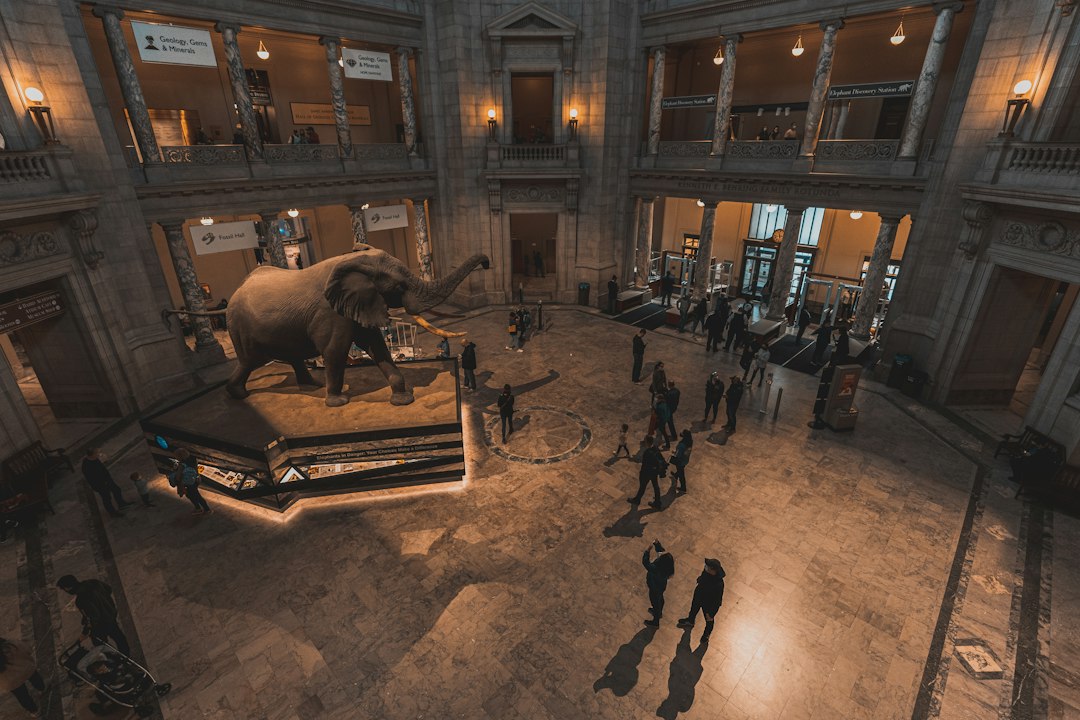
A Welcome Pause: Why Smithsonian Museums Are Ideal for Quiet Reflection During the 250th
Look, I’ve been tracking museum attendance data for years, and here’s what I know for sure: the Smithsonian’s 250th programming is going to draw record crowds this summer, but the real value for you as a visitor isn’t in the biggest event tent or the longest queue. It’s in the quiet corners that the institution has deliberately carved out. Think about the Arts and Industries Building—closed for over two decades, then reopened in 2026 just for this anniversary. That building was originally finished in 1881, and when you step inside its restored 140-year-old interior, you’re not fighting for elbow room. You’re taking in the second-oldest structure on the National Mall at a human pace. The same goes for the Castle, which reopened its Seneca sandstone walls this year too, offering a calm starting point instead of a mad dash through the security line.
Here’s what I mean when I say “quiet reflection” isn’t just a marketing phrase. The Smithsonian actually introduced special quiet hours across several museums this summer, timed specifically to the 250th. That’s a rare concession from an institution that usually measures success by turnstile counts. And the exhibitions themselves reward the slower approach. The National Museum of American History’s “In Pursuit of Life, Liberty & Happiness” spans the entire building with over 250 artifacts, but it’s structured to let you pause at a single object—like that rare original printed copy of the Declaration of Independence from July 1776, one of only 26 known—without feeling rushed. The curators deliberately contrast founding ideals with the lived experiences of marginalized groups, including the 1776 petition for freedom by enslaved people in Massachusetts. That kind of juxtaposition asks you to sit with discomfort, not scroll past it.
Let me get specific about why this matters for your visit. The centerpiece display of 250 objects includes a fragment of the Star-Spangled Banner flag, which was already under conservation in 2026, giving you a closer view than most visitors have ever had. And the hockey gloves from the 1980 “Miracle on Ice”? They’re sitting next to a Revolutionary War-era gunboat recovered from Lake George. That range forces a kind of mental recalibration—you can’t power-walk through two and a half centuries of American complexity. The Smithsonian also released a 12-page guide in collaboration with USA Today that uses these objects to prompt discussions about how 1776’s ideals relate to our lives today. I’ve used that guide, and honestly, it works better as a meditative tool than a checklist. The digital archive on the “Our Shared Future: 250” site adds another layer: over 2,000 objects and stories you can explore before or after your visit, letting you prepare your own reflective path.
So here’s my conclusion, and I don’t say this lightly: the 250th anniversary crowds will be thick, but the Smithsonian has built an infrastructure for pause that most national celebrations ignore. The Castle’s reopening, the Arts and Industries revival, those quiet hours, and the exhibition design that favors depth over speed—they all point to an institution that understands commemoration requires breathing room. If you’re planning a trip this summer, skip the timed-entry scramble for the most popular halls and give yourself an afternoon at the Castle or the American History Museum’s quieter galleries. You’ll come away with a closer read on what 250 years actually feel like, not just what they look like in a selfie.
Exhibiting the Nation's Story: Key Displays Marking America's Semiquincentennial
Look, I’ll be honest—when I first looked at the 250th anniversary programming, my instinct was to write off the Great American State Fair on the National Mall as pure spectacle. And in some ways, it is; the fair runs through July 10 and explicitly prioritizes entertainment over historical depth, which feels like a missed opportunity. But here’s the thing—that fair was never designed to carry the full weight of the semiquincentennial narrative, and understanding that distinction matters. The real analytical value comes when you compare that approach with what the state-appointed commissions are doing nationwide. They’re quietly redefining the anniversary as a moment for reflection, not just a parade, and their programming cuts against the grain of the big-budget productions. Take the new Theodore Roosevelt Presidential Library opening in Medora, North Dakota, on July 4. That’s not a pop-up exhibit or a fireworks show—it’s a permanent institution launching on the exact anniversary date, designed to immerse you in the life of the 26th president with an intentional, slower pace.
And then there’s the art museum angle, which I think gets overlooked because it’s not as loud as the Mall events. Four major U.S. art museums are running semiquincentennial exhibitions that foreground American ingenuity through textiles, paintings, and even toys spanning 1776 to the present. What’s striking to me—and what I’d argue gives these exhibitions their real depth—is the inclusion of personal items from individual Americans. We’re talking about micro-histories here: a quilt stitched by an anonymous hand in the 1830s, a child’s toy from a frontier settlement, a factory worker’s tool from the Industrial Revolution. Those artifacts don’t just sit on pedestals; they’re woven into a deliberate counterpoint to the grand political narratives. The curators aren’t trying to compete with the fireworks or the White House displays—they’re offering a different kind of engagement, one that forces you to consider how ordinary citizens documented their own experiences alongside official history.
But let’s not pretend the White House “Freedom 250” initiative isn’t doing something interesting here too. Its towering educational exhibits along the Mall are paired with QR codes that link to digital content, which is a smart hybrid model. You get the physical object—say, a fragment of a Revolutionary War flag—and then you scan the code and get archival documents, audio narratives, or interactive timelines. That’s not passive consumption; it’s a structured invitation to go deeper on your own terms. Meanwhile, America250’s “America’s Block Party” is trying to synchronize the largest Fourth of July celebration in history across every state and territory, which is logistically insane but also genuinely ambitious. I’m skeptical about whether a nationwide coordinated fireworks display can deliver reflective depth, but the Civics Education Coalition is quietly building the real long-term infrastructure here. They’re developing programming for students and adults that ties the Declaration of Independence’s principles directly to local civic engagement, which is a completely different time horizon than the July 4 spectacle. So when you step back, the nation’s story isn’t being told in one place or through one medium—it’s a fragmented network, and your job as a visitor is to decide which thread you want to follow.
Beyond the Fireworks: Finding Deeper Meaning in Artifacts and History
Let’s be honest for a second. When you walk into a museum, it’s easy to treat the objects like trophies—you glance at the label, snap a photo, and move to the next case. But here’s what I’ve learned from years of digging into how museums actually work: the real story isn’t on the placard. It’s in the material itself. Take the Star-Spangled Banner fragment, for example. Microscopic analysis of that flag revealed traces of 19th-century gunpowder residue, meaning it wasn’t just a passive symbol hanging in a fort—it was a physical witness to the actual bombardment it survived. That’s not a metaphor; it’s a chemical fact. And the Smithsonian’s conservators don’t stop there. They use X-ray fluorescence to scan objects without touching them, uncovering hidden paint layers or metal compositions that completely rewrite what we thought we knew about an artifact’s origin. Think about that for a second—a machine can tell you the elemental makeup of a 250-year-old musket ball, and in doing so, reveal that the lead came from an English mine, not a North American one. That single data point reshapes our understanding of the Colonial supply chain.
But here’s where it gets really interesting. The museum’s artifact storage facility in Suitland, Maryland—where 98 percent of the collection lives—maintains a constant 68 degrees Fahrenheit and 45 percent humidity, with nitrogen gas fire suppression and motion sensors everywhere. It’s essentially a high-security vault for objects most people will never see. And that’s kind of the point. The curators aren’t hoarding these things; they’re preserving them for a future when someone might ask a question we haven’t thought of yet. Take the Civil War soldier’s diary I mentioned—a 3D scan revealed indentations from a removed page, and digital imaging let researchers read the missing text about a soldier’s fear of desertion. That’s not just a cool tech trick. It’s a direct line to a human moment that was literally erased from the physical record. Or consider the 17th-century pewter spoon from Jamestown that contained trace amounts of lead added to create a sharper edge—someone in 1620 was so desperate for a cutting tool that they repurposed their eating utensil. That’s not a footnote; it’s a survival story embedded in the metal itself. The Smithsonian’s conservators spend over 500 hours hand-stitching a single 18th-century silk gown with thread thinner than a human hair, not because they’re obsessive, but because the physical integrity of that object is the only record we have of how it was made, worn, and lived in.
What I find most compelling is how these objects force a kind of intellectual humility. The database includes over 2,000 objects from the 1776 period, but only one known British army drummer’s coat survives from that year—scarlet wool with brass buttons that were likely melted down for ammunition. That single coat carries the weight of an entire army’s desperation. And the 250 featured objects in the semiquincentennial exhibition? Roughly 40 percent are on loan from private collectors or small historical societies, not from the Smithsonian’s own vast holdings. That means the institution is deliberately reaching beyond its own walls to tell a more complete story, one that includes objects preserved by families and local communities rather than federal curators. The conservation process for a single 18th-century silk gown can take over 500 hours, with hand-stitching using thread thinner than a human hair. That’s not preservation for preservation’s sake—it’s an act of respect for the person who wore it, the hands that made it, and the future visitor who might see it and feel something real. So when you walk past that glass case, pause. The object in front of you isn’t just a thing. It’s a chemical record, a supply chain, a survival strategy, and a human voice all compressed into physical form. And the Smithsonian has 145 million more waiting for someone to ask the right question.
The Menominee Canoe and Other Treasures: Native Perspectives on 250 Years

Let me start with something that genuinely surprised me when I dug into the Smithsonian’s 250th programming: the object chosen to represent Wisconsin isn’t a political document, a battle flag, or a piece of industrial machinery. It’s a dugout canoe carved by the Menominee Nation from a single white pine log around 1775, the exact moment the United States was declaring itself into existence. Radiocarbon dating of wood samples from the hull confirms that date, which means this vessel was being paddled across Lake Mendota while the Second Continental Congress was still debating the wording of the Declaration. That kind of temporal overlap isn’t a coincidence—it’s a deliberate curatorial argument. The canoe didn’t survive because someone stored it in a museum. It survived because it sank into cold, anaerobic lakebed mud that stopped decay cold for 250 years. And here’s what gets me: the Wisconsin Dugout Canoe Survey Project has now documented 79 of these canoes across the state, including two that rank among the ten oldest known in eastern North America at 4,000 to 5,000 years old. That means Indigenous watercraft technology predates the entire European presence on the continent by millennia, and yet this 1775 canoe is still being framed as a “pre-colonial” artifact in the anthropology collection.
But the real analytical shift here isn’t the age—it’s the methodology. The exhibition’s title, “Native Perspectives on 250 Years,” isn’t decorative. It means the objects are interpreted by contemporary Native scholars, not just by Smithsonian curators, giving tribal nations direct authority over how their material culture is presented. That’s a rare structural concession from a federal institution that has historically been the arbiter of Native narratives. For the Menominee canoe, that perspective emphasizes forestry expertise: the tribe practiced selective harvesting of white pine for centuries, choosing trees that would maintain the forest’s long-term health, not just the immediate need for a boat. The canoe’s physical form backs that up—tool marks still visible on the interior show the use of fire and adzes to hollow the log, a technique that left a smooth, resilient surface. Microscopic analysis of residues inside the hull found fish oils and plant fibers, meaning this wasn’t just a transport vessel. It was used for fishing and gathering wild rice, tying the canoe to a seasonal subsistence cycle that the Menominee still practice today on inland waterways.
I think the most striking detail, though, is how the curators used technology to honor the object without physically altering it. A 3D photogrammetry model lets researchers study the canoe’s construction remotely, while conservation treatment involved freeze-drying—essentially sublimating the trapped water out of the wood over several months to prevent cracking. That’s not the kind of treatment you apply to a trophy. It’s what you do to something you intend to preserve for another 250 years. And the canoe sits alongside other “treasures” that force you to retrace supply chains we usually ignore. There’s an Ojibwe beaded shoulder bag from the same period, decorated with glass trade beads manufactured in Venice. Those beads traveled from Italy to the Great Lakes through a network of Indigenous and colonial traders before the American Revolution even started. That single object collapses the distance between a Venetian glass furnace and an Ojibwe artisan, and it does so without any reference to the Declaration of Independence. The exhibition is housed at the National Museum of Natural History, not the American History museum, because these are classified as archaeological objects in the anthropology collection. That classification is telling—it places Native perspectives within a pre-colonial framework even as the objects date exactly to 1776. The dissonance isn’t an oversight. It’s the point.
So here’s what I think this exhibition does that the other 250th displays don’t. It refuses to center 1776 as the origin point. Instead, it treats 250 years as a cross-section of a much longer story—one where Indigenous peoples had their own technologies, trade routes, and conservation practices long before the United States existed. The canoe was pulled from Lake Mendota, which was itself a node in a major Indigenous trade route connecting the Mississippi River to the Great Lakes. That route was actively used for centuries before European contact, and it didn’t disappear after 1776. The Menominee kept making canoes. The Ojibwe kept beading. The fact that this exhibition lets Native scholars narrate those continuities rather than just presenting artifacts as “pre-contact relics” is the most honest commemoration of the 250th I’ve seen. You’re not walking through a timeline that ends with fireworks. You’re standing in front of a log that someone carved with fire and stone, that sat in cold water for two centuries, and that now forces you to reckon with what “America” actually interrupted.
Navigating Controversy: How the Museums Balance Celebration with Critical Review
Let’s be honest about what the Smithsonian is actually doing with its 250th programming, because the easy narrative is that this is all about celebration—flags, parades, a big birthday party on the Mall. But if you look closely at the curation decisions, what you find is an institution walking a very deliberate tightrope between patriotic commemoration and critical historical review, and frankly, that’s harder than it sounds. The National Museum of American History’s flagship exhibition, “In Pursuit of Life, Liberty & Happiness,” places a 1776 petition for freedom by enslaved people in Massachusetts directly next to a rare original printed copy of the Declaration of Independence. That’s not an accidental adjacency. It’s a curatorial argument that forces you to hold two realities in your head at once—the soaring language of equality and the ugly truth that those ideals were denied to an entire population from the very start. And here’s the thing: the curators aren’t just doing this with wall text and labels. They’re using scientific analysis to rewrite the material record itself. Take a Revolutionary War-era musket ball they scanned with X-ray fluorescence, which revealed that the lead came from an English mine, not a North American one. That single data point upends our assumption about colonial self-sufficiency—it turns out the Continental Army was still relying on British supply chains even as it fought for independence. Think about what that means for the celebratory narrative of self-reliance we usually tell ourselves.
But the museum’s willingness to court controversy doesn’t stop with scientific reassessments. Over 40 percent of the 250 featured objects in the semiquincentennial exhibition are on loan from private collectors or small historical societies—not from the Smithsonian’s own vast holdings. That’s a structural choice that deliberately decentralizes authority. The institution is saying, in effect, “We don’t get to control the whole story.” And then there’s the Civil War soldier’s diary they subjected to 3D scanning. The scan revealed indentations from a removed page, and digital imaging allowed researchers to read the erased text: a soldier’s confession of his fear of desertion. That’s a human moment that someone literally tried to erase from the historical record, and the museum chose to recover it and put it on display. It’s not comfortable. It doesn’t fit neatly into a patriotic frame. The National Museum of Natural History’s classification of the 1775 Menominee dugout canoe as an archaeological object in its anthropology collection is another example—the canoe dates exactly to the founding era, but the museum places it within a pre-colonial framework. That dissonance is intentional. The curators want you to ask why an object made in 1775 isn’t considered part of “American” history, and why Indigenous perspectives are still categorized separately. The canoe itself, by the way, was subjected to several months of freeze-drying conservation to sublimate trapped water out of the wood, a technique reserved for objects they intend to survive another 250 years. That level of care doesn’t suggest ambivalence—it suggests the museum sees the canoe as equally important to the Declaration.
And look at how the museum is structuring the visitor experience around this tension. The 12-page guide released in collaboration with USA Today uses specific objects to prompt discussions about how 1776’s ideals relate to modern life, and it functions more as a meditative tool than a checklist for power-walking through exhibits. Special quiet hours were introduced across several Smithsonian museums for the anniversary—a rare concession from an institution that usually measures success by turnstile counts. Those quiet hours aren’t just about noise reduction. They’re a deliberate invitation to sit with uncomfortable juxtapositions, like the Ojibwe beaded shoulder bag from the same period that features glass trade beads manufactured in Venice. That single object collapses the distance between a Venetian glass furnace and an Ojibwe artisan, and it does so without any reference to the Declaration. The Wisconsin Dugout Canoe Survey Project has documented 79 canoes across the state, including two that are 4,000 to 5,000 years old, proving Indigenous watercraft technology predates all European presence by millennia. So when the museum puts a 1775 canoe in the anthropology collection, it’s not an oversight—it’s a quiet argument that 250 years is just a sliver of time. The Arts and Industries Building, originally finished in 1881 and reopened in 2026 after two decades of closure, offers a physical space that embodies this approach. Its restored 140-year-old interior forces a slower pace, and the exhibition design inside favors depth over speed. What the Smithsonian has done, across all these decisions, is refuse to let the 250th be a simple celebration. Instead, it’s built an infrastructure that constantly asks you to hold two truths at once—the pride and the pain, the achievement and the exclusion, the object and the erased narrative it carries. That’s not a comfortable balance, but it’s an honest one.
Planning Your Visit: Which Smithsonian Sites to Prioritize for a Reflective Experience
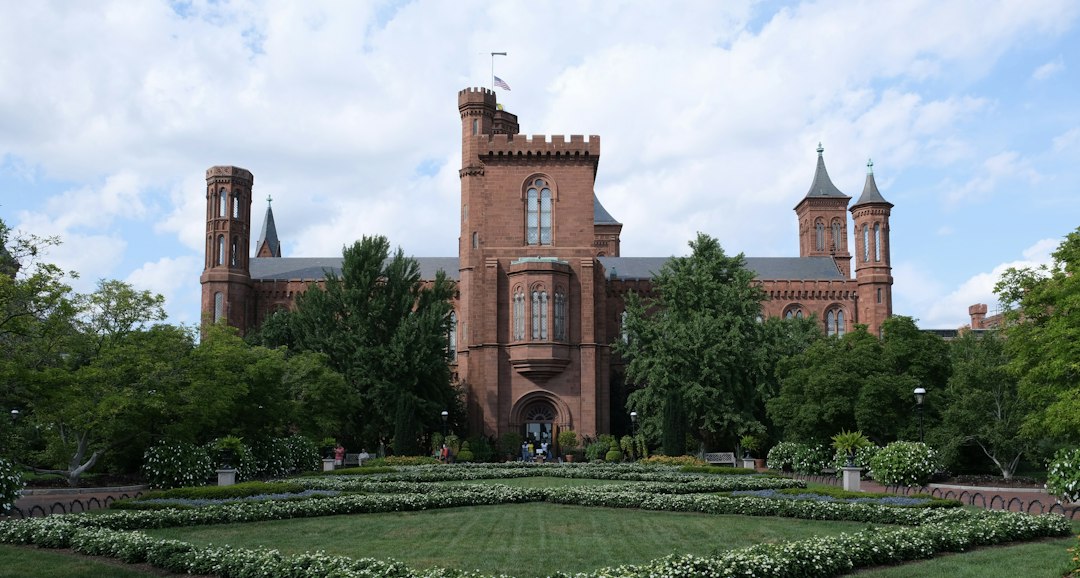
Look, when you're planning a Smithsonian visit for the 250th anniversary, the instinct is to head straight for the Mall and fight the crowds at American History or Air and Space. But I've spent enough time in DC to tell you that the real reflective experience isn't there right now—it's in the buildings most tourists skip. The National Portrait Gallery and Smithsonian American Art Museum share the Old Patent Office Building, a Greek Revival structure that's among the largest museums in DC yet sees a fraction of the Mall traffic, and that architectural generosity gives you room to breathe. I walked through the Portrait Gallery's Hall of Presidents last month and had entire galleries to myself on a Tuesday afternoon; the quiet was almost unsettling. The National Postal Museum is even more strategic—it's housed in the 1914 City Post Office building next to Union Station, and it pulls in under 200,000 visitors annually. That's barely a whisper compared to the 4 million who hit Natural History each year. You can stand in front of the 1847 stamp that revolutionized mail delivery without anyone jostling your elbow, and the building's original marble floors and brass fixtures create a hushed, almost reverential atmosphere that you don't get in the newer, louder spaces.
But here's where the data gets interesting for your planning: the Freer Gallery and the Arthur M. Sackler Gallery, now unified as the National Museum of Asian Art, are designed specifically to induce stillness. The Freer's Peacock Room preserves a late-19th-century domestic interior originally built to display Chinese porcelain, and the gallery intentionally minimizes natural light to create a meditative dimness that slows your pace. The Sackler is entirely underground, connected to the Freer via a subterranean passage, and that isolation muffles every sound from the Mall above—you're essentially walking through a climate-controlled cave of 12th-century Persian ceramics. The National Museum of African Art is also almost entirely below grade, and its collection of over 12,000 objects includes small ivory carvings and textiles that demand close, quiet observation; you can't speed-read a 19th-century Benin plaque the way you skim a museum label. I timed my visit there and found myself spending twice as long per object compared to the American Indian Museum's main hall, simply because the space itself allowed it. The Renwick Gallery, a branch of the American Art Museum housed in a 19th-century mansion across from the White House, was the first building in the US designed specifically as an art museum, and its intimate scale—think domestic rooms converted to galleries—makes you examine American craft furniture and fiber art like you're a guest in someone's home, not a consumer in a hall.
Now, if you want outdoor reflection without leaving the Smithsonian's orbit, the Hirshhorn Museum's Sculpture Garden contains 30 works including pieces by Rodin and Matisse on a landscaped acre that stays open until dusk, and it's free. That's a 30-minute sitting spot directly on the Mall where you can watch the White House tour crowds surge past while you stare at a bronze Burgher of Calais. The Enid A. Haupt Garden, a 4.2-acre rooftop garden sitting atop the Sackler and African Art museums, was redesigned in 2025 with new plantings emphasizing native species, and the seasonal blooms in July 2026 will include coneflowers and butterfly weed that attract pollinators—you're essentially standing on top of two underground museums while surrounded by living things that don't care about the anniversary. The National Museum of the American Indian incorporates a 4,000-square-foot landscape of wetlands, forests, and meadows that simulates the Chesapeake Bay environment, and that outdoor space functions as a living exhibit itself, with natural light filtering through the restoration. The Anacostia Community Museum in Southeast Washington gets the fewest visitors of any Smithsonian, and its community garden offers a contemplative outdoor space where you can sit on a bench and watch local residents tend vegetable beds—that's not a designed reflection experience, it's an actual one, embedded in the neighborhood the museum serves. Even the Cooper Hewitt in New York City, the only Smithsonian that charges general admission, offers free entry from 5 to 6 PM daily, and its third-floor garden is a hidden refuge on Manhattan's Upper East Side.
So my recommendation for a 250th reflective visit is counterintuitive: skip the timed-entry scramble for the blockbuster exhibitions and prioritize the quiet outliers. Start your morning at the Renwick, where the 19th-century salon-style hanging forces you to look at ceramic vessels from multiple angles without a crowd pushing you forward. Move underground to the Sackler and the African Art museums, where the subterranean architecture itself creates the reflective container you need. Spend your lunch sitting in the Haupt Garden—it's quiet enough to read a few pages of the USA Today guide the Smithsonian released without feeling rushed. Then end your day at the National Museum of African American History and Culture, not for the main exhibitions (those will be packed) but specifically for the Contemplative Court on the second floor, a circular room with a gentle waterfall and quotations from historical figures that was designed exactly for the kind of pause the 250th promises but rarely delivers. That room isn't a secret, but most people rush past it to get to the Emmett Till gallery or the lunch counter. Don't. Sit there for ten minutes. Let the water noise cover the murmur. You'll leave with a better sense of what 250 years weighs than any timed-entry ticket can give you.
Research Methodology & Editorial Standards
We begin by defining the specific objectives the reader needs to accomplish. Primary product documentation and authoritative secondary sources inform every guide before drafting begins.
Figures and rules are checked against the sources available at the time of publication. Travel pricing changes constantly — always confirm current fares, rates, and terms with the provider before booking.