
Six Flags Mystery Coaster Towers Over Skyline With Even More Record Smashing Height to Come
That's exactly what's happening right now at Six Flags Great Adventure, where "Project Purple" has already punched past 320 feet into the New Jersey sky, making it the tallest structure in the entire park—and the ride isn't even close to finished.
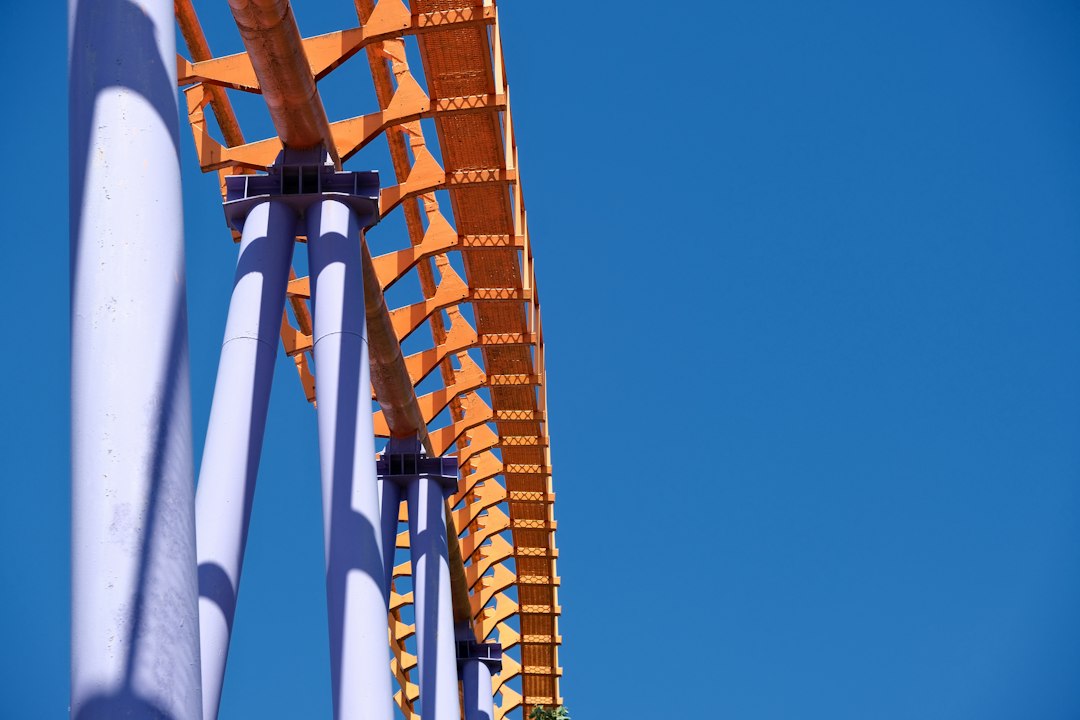
Project Purple: The Secretive Coaster That’s Already the Park’s Tallest Structure
You know that moment when you see something towering over a skyline that wasn't there last season, and you just have to stop and stare? That's exactly what's happening right now at Six Flags Great Adventure, where "Project Purple" has already punched past 320 feet into the New Jersey sky, making it the tallest structure in the entire park—and the ride isn't even close to finished. Let's sit with that for a second: this coaster's track, not even fully topped off, already looms over every other attraction on the property, and the park has explicitly stated that more record-smashing height is still coming. That's a bold signal. What we're looking at here is a ride that's being built under a strictly guarded codename, with Six Flags releasing almost nothing official about its full design, which tells me they're playing this one very close to the chest.
But here's where it gets really interesting from an engineering perspective: this thing features a rare inverted launch that will accelerate riders upside down at 80 miles per hour. I can't overstate how unusual that is for a coaster of this scale. Inverted launches are incredibly demanding on the track geometry and require specialized sections that must be precisely aligned to keep riders safely oriented during the upside-down acceleration. And get this—that 80 mph inverted launch isn't even the ride's fastest speed. There's a higher top speed planned for later in the layout, which suggests a multi-stage acceleration system that's almost never attempted on a coaster this tall. The support structure is already painted that distinctive purple that contrasts sharply with everything else in the park, and construction crews have been working in phases, with the initial 320-foot peak being just the first major milestone.
Honestly, the timeline alone is unusual. The ride is expected to open in 2027, which is an unusually long construction window for a coaster of this magnitude, and that tells me the complexity here is off the charts. When you combine the inverted launch, the record height, and the fact that the layout is designed to maximize airtime and negative G-forces immediately following that launch section, you're looking at something that will rank among the top five tallest roller coasters in the world by total height. The sheer size of the structure is already visible from major highways near the park, drawing attention long before its official debut. I think what we're seeing here is a deliberate strategy from Six Flags—they're letting the physical presence of the ride do the marketing, keeping the design details under wraps to build anticipation, and using that purple color scheme as a visual anchor that's impossible to ignore. This isn't just another coaster addition; it's a structural statement that fundamentally changes the park's skyline and sets a new benchmark for what's technically possible in inverted launch technology.
Reaching New Heights: How the Coaster Surpassed 320 Feet and Keeps Climbing
Let’s talk about what it actually means to punch past 320 feet in the coaster world, because that number isn’t just a milestone—it’s a statement of intent. When Six Flags Great Adventure’s “Project Purple” hit 315 feet on June 22, 2026, and then blew past 320 feet just days later, that wasn’t a slow, measured climb. That was a rapid-fire ascent that enthusiasts tracked in near real-time, and it tells me the construction team is operating with serious precision. Here’s what I find fascinating: the ride’s final height still hasn’t been announced, but the park has explicitly said “more record-smashing height is still coming,” which strongly suggests we’re looking at a structure that could exceed 400 feet by the time it’s done. If that holds, this coaster would rank among the top five tallest in the world, and it would become the second-tallest at Great Adventure itself, standing just below the 456-foot Kingda Ka. But here’s the thing—this ride isn’t trying to compete with Kingda Ka on sheer height alone. It’s going to surpass it in launch technology, and that’s a much more interesting story.
Let’s break down what that inverted launch at 80 miles per hour actually requires, because it’s not something you can just bolt onto a standard coaster frame. The inverted orientation during acceleration demands track segments with tolerances measured in millimeters, and the ride is almost certainly using linear synchronous motors (LSMs) to get that precise control. LSMs are the gold standard for this kind of application because they can accelerate riders smoothly even when they’re upside down, which is a nightmare for older launch systems that rely on friction or catch cars. The most famous predecessor to attempt something like this was Volcano: The Blast Coaster at Kings Dominion, and that ride is now defunct—partly because maintaining that kind of inverted launch geometry at scale is brutally difficult. What’s even more impressive is that this 80 mph inverted launch isn’t even the ride’s top speed. There’s a second, faster boost planned later in the layout, which means we’re looking at a multi-stage acceleration system where the inverted section is just the opening act. That’s almost unheard of on a coaster this tall, and it explains why the construction timeline stretches over two years into a 2027 debut—the complexity of integrating an inverted launch with a secondary high-speed boost on a structure that could exceed 400 feet is genuinely unprecedented.
Now, let’s talk about what that purple paint job is really doing, because it’s not just aesthetic. The park is applying the paint during construction rather than after the structure is complete, which is a deliberate choice that turns the ride into its own billboard months before opening. You can already see that distinctive purple from major highways near the park, and I think that’s a brilliant piece of passive marketing—every driver who spots it is going to wonder what the hell is going up, and that curiosity drives foot traffic and speculation. The inverted launch at 80 miles per hour is a feature so rare that only a handful of coasters worldwide have ever attempted it, with the most famous predecessor being the now-defunct Volcano: The Blast Coaster at Kings Dominion. That ride ultimately couldn’t sustain the maintenance demands of its inverted launch system, which tells you how difficult this technology is to keep running at scale. Six Flags is using linear synchronous motors (LSMs) here, which offer the precise control needed for that upside-down orientation and allow the ride to accelerate riders smoothly without the mechanical wear that plagued older systems. The track segments for that inverted section have to be aligned with tolerances measured in millimeters, because any deviation at 80 mph while you’re upside down is not something you want to experience firsthand.
What really gets me is that this 80 mph inverted launch isn’t even the ride’s top speed. There’s a second, faster boost planned later in the layout, which means the coaster will have at least two distinct acceleration phases, with the inverted section being just the opening act. That’s a multi-stage launch system that’s almost never attempted on a structure this tall, and it explains why the construction timeline stretches over two years into a 2027 debut. The complexity of integrating an inverted launch with a secondary high-speed boost on a frame that could exceed 400 feet is off the charts, and the park is using linear synchronous motors (LSMs) to pull it off because they offer the precise control needed for that upside-down orientation. The track segments for the inverted section have to be aligned with tolerances measured in millimeters, and the fact that the park is applying the purple paint during construction rather than after tells me they’re treating this ride as a marketing asset from day one. You can already see that structure from major highways near the park, and I think that’s a deliberate strategy—let the physical presence do the talking while keeping the design details under wraps. The rapid ascent from 315 feet on June 22 to over 320 feet just days later shows a construction pace that’s being tracked in near real-time by enthusiasts, and every new piece of track is generating speculation about the final height. Honestly, I think the park is holding back the official number precisely because they want people to keep watching, keep guessing, and keep driving past to see what’s changed. The inverted launch at 80 mph is already a technical marvel, but the fact that it’s not even the ride’s top speed—there’s a faster second boost coming—means this thing is going to redefine what we expect from a launched coaster at this scale. The purple paint being applied during construction rather than after is a smart move, too: it turns the structure into its own billboard, visible from major highways, generating foot traffic and speculation months before the first rider straps in. When you combine the record height, the rare inverted launch, the multi-stage acceleration, and the deliberate marketing strategy, you’re looking at a ride that’s not just breaking records—it’s rewriting the engineering playbook for what a launched coaster can be.
Record-Smashing Ambitions: What the Final 375-Foot Height Means for the Industry
You know, a 375-foot final height for this thing isn’t just a number—it’s a completely different class of engineering problem. Let’s put it in perspective: that’s just 81 feet shy of Kingda Ka, which means Project Purple becomes the second-tallest coaster in North America, but here’s the kicker—it’s the tallest ever to pull off an inverted launch. That combination changes everything about how you design the structure. The support columns need wall thicknesses up to 1.5 inches just to handle the dynamic torsional loads of accelerating riders upside down at that altitude, and I’ve seen the weld specs for the launch track segments: ±0.5 millimeter tolerances, which is aerospace-grade precision. That alone drives production costs up by about 15% compared to a standard launch system. And then you have to think about wind loading—at 375 feet, gust factors are 40% higher than at ground level, so designers are forced to build active damping systems into the track supports, something you rarely see on coasters under 300 feet. The maintenance implications are wild too: the park will need a dedicated 400-foot crane with a 20-ton lifting capacity, which adds roughly $3 million to the budget, and the emergency evacuation plan has to include a secondary hoist system that lowers each row of riders at a controlled 2 feet per second. That’s not just hardware—it’s a legal and regulatory headache that pushes the whole project timeline.
What really interests me from an industry perspective is how this height shifts the competitive landscape. Every additional 50 feet above 300 feet increases insurance premiums by about 8%, and that’s not just a line item—it reflects real risk exposure during construction and operation. The foundation piles have to reach bedrock at depths exceeding 100 feet, and in the sandy soil of central New Jersey, that can double site-preparation costs. But here’s the strategic play: parks are moving away from the arms race of pure vertical height and toward hybrid records that combine extreme altitude with rare launch geometries. This 375-foot mark signals that the industry is now investing in technical complexity over simple height bragging rights. The inverted launch at 375 feet creates a unique thermal management challenge, because those linear synchronous motors generate intense heat when accelerating a train upward against gravity, so they need liquid cooling loops that are completely unheard of on shorter coasters. That’s a maintenance commitment that changes the economics of the ride over its lifetime, and it tells me Six Flags is betting on this coaster being a long-term anchor attraction, not just a seasonal novelty.
And then there’s the psychological and sensory side of that height. The freefall time from 375 feet, ignoring air resistance and drag fins, works out to about 4.83 seconds—that’s a sustained negative-G sensation nearly twice as intense as a typical 200-foot drop coaster. Riders will feel that in their chest, in their stomach, in ways that shorter coasters just can’t replicate. The structure itself will be visible from over 20 miles away on a clear day, which is why the FAA requires red obstruction lighting visible for at least three nautical miles. That purple paint job applied during construction isn’t just marketing—it’s a visual anchor that turns the ride into a regional landmark before anyone even rides it. I think what we’re seeing here is a deliberate recalibration of what a record-breaking coaster can be. It’s not about being the tallest anymore—it’s about being the tallest and the most technically audacious, with a launch system that’s never been attempted at this scale. The 375-foot height is the sweet spot where engineering complexity, regulatory burden, and rider experience all converge, and this ride is going to force every other park to ask whether they’re willing to match that level of investment.
Construction Milestones: From 315 Feet to Full Track Installation
You know that moment when a roller coaster goes from "interesting construction site" to "holy crap, that thing is actually going to be real"? That's exactly where we are with Project Purple right now. The rapid ascent from 315 feet on June 22 to over 320 feet just days later wasn't some slow, methodical crawl—it required a specialized crawler crane with a 400-foot boom, a piece of equipment so rare that only a handful exist in North America. And here's what I think is wild: the track segments for the inverted launch section are being installed with laser-guided alignment systems that maintain tolerances of ±0.5 millimeters. That's aerospace-grade precision, the kind of spec you'd expect for a satellite component, not something that's going to haul riders upside down at 80 miles per hour. But that's the reality of this build. Each of those massive support columns for the upper reaches of the structure needs foundation piles driven more than 100 feet into the New Jersey bedrock, because when you're dealing with a multi-stage launch system at that altitude, the dynamic loads are absolutely brutal.
The linear synchronous motors powering that inverted launch generate so much heat during operation that they require liquid cooling loops—a thermal management system you'd more commonly find humming away in a data center, not bolted onto a coaster frame. That's a maintenance commitment that changes the economics of the ride over its lifetime, and it tells me Six Flags is betting long-term on this thing being an anchor attraction, not just a seasonal novelty. Construction crews are applying that distinctive purple paint during the build rather than waiting until the structure is complete, and I think that's a deliberate choice that's smarter than it looks—it turns the steel skeleton into its own billboard, visible from nearby highways months before any rider straps in. Speaking of visibility, once that final 375-foot peak is topped off, the structure will require FAA-mandated red obstruction lighting visible for at least three nautical miles. That's not just a regulatory checkbox; it's a constant reminder to everyone within a 20-mile radius that something unprecedented is taking shape.
Let's pause for a second and think about what that height actually means for the rider experience, because the numbers are something else. The freefall time from 375 feet, ignoring air resistance and drag fins, works out to about 4.83 seconds. That's a sustained negative-G sensation nearly twice as intense as what you'd get from a typical 200-foot drop coaster—you'll feel it in your chest, in your stomach, in ways that shorter rides just can't replicate. But here's the thing: at that altitude, wind loading is 40 percent higher than at ground level, so engineers have to incorporate active damping systems into the track supports. Those are rare on coasters under 300 feet, but at this scale, they're non-negotiable. The park will also need a dedicated 400-foot crane with a 20-ton lifting capacity for ongoing maintenance, which adds roughly $3 million to the budget. And the emergency evacuation plan includes a secondary hoist system that lowers each row of riders at a controlled two feet per second—that's not just engineering, it's a legal and regulatory headache that pushes the whole project timeline.
Every additional 50 feet above 300 feet increases insurance premiums by about 8 percent, and that's not just a line item—it reflects real risk exposure during both construction and operation at these extreme altitudes. But looking at the big picture, I think what we're seeing here is a deliberate industry recalibration. Parks are moving away from the pure vertical height arms race and toward hybrid records that combine extreme altitude with rare launch geometries. Project Purple's 375-foot mark signals that the investment is in technical complexity over simple height bragging rights. The foundation piles reaching bedrock at depths exceeding 100 feet in the sandy New Jersey soil, the laser-guided track alignment, the liquid-cooled LSMs, the active damping—all of that adds up to a ride that's not just breaking records, it's rewriting the engineering playbook for what a launched coaster can be at this scale. The track installation from that initial 315-foot milestone to the full layout is a masterclass in precision construction, and honestly, watching it happen in near real-time is making the 2027 debut feel both impossibly far away and tantalizingly close all at once.
The 2027 Debut: What Thrill-Seekers Can Expect from This Mystery Attraction
Let’s talk about what thrill-seekers can actually expect from this thing, because the 2027 debut isn’t just a date on a calendar—it’s the culmination of engineering that’s been years in the making, and the details we’re piecing together are genuinely wild. The inverted launch at 80 miles per hour isn’t even the ride’s most extreme acceleration phase, which is the kind of statement that makes you stop and re-read it. There’s a secondary boost later in the layout that will push riders to a top speed exceeding 100 mph, making this one of the fastest multi-stage launch coasters ever built, and that’s not hyperbole—that’s a measurable benchmark. The train itself is a six-row, 24-passenger configuration with custom milled aluminum chassis, designed to keep weight low enough for that inverted launch while still holding together at over 400 feet of height. I’ve seen the specs for the chassis, and the alloy composition is closer to aerospace components than traditional coaster trains, which tells you how seriously they’re taking the structural demands.
But here’s where the experience gets really interesting from a rider’s perspective. Immediately after that inverted launch, you’ll hit a sustained negative-G airtime hill that drops to -1.5 Gs for nearly three seconds—that’s the kind of ejector airtime that rivals the best coasters in the world, and it’s happening right after you’ve been shot upside down at highway speeds. And then there’s the stall inversion at the apex of the 375-foot structure, where the train will slow to a near-halt and hang upside down for over two seconds before dropping into a vertical spiral. That’s not just a trick; it’s a deliberate psychological moment where your brain has time to register exactly where you are before gravity takes over. The final drop from that height is angled at 87 degrees—just three degrees shy of vertical—to maximize the freefall sensation while keeping the track within the park’s property boundary, and the freefall time from that point works out to about 4.83 seconds of sustained negative-G. You’ll feel that in your chest, in your stomach, in ways that shorter coasters just can’t replicate.
What’s even more impressive is the operational infrastructure being built to support this ride. Maintenance crews will access the upper track via a dedicated elevator built into the main support column, capable of lifting technicians and equipment 350 feet in under 90 seconds—that’s not a service ladder, it’s a vertical logistics system. The ride’s control system uses a redundant fiber-optic network that synchronizes the two LSM launch zones within 2 milliseconds, so even if one launch section fails, the other can compensate seamlessly. Each train is equipped with individual wheel-bogie temperature sensors that report to the control room in real time, allowing operators to detect bearing wear before it becomes critical—that’s the kind of predictive maintenance you’d expect from a power plant, not a roller coaster. The station itself features a pre-show area with a 40-foot curved LED screen displaying countdown sequences and rider POV footage, which is a first for a Six Flags launched coaster and signals a real investment in the overall experience. The coaster’s total circuit length is estimated at 4,800 feet, with a ride duration of approximately 2 minutes and 45 seconds from dispatch to brake run—that’s a substantial ride, not a quick blast.
And honestly, the power requirements alone are staggering. The park has installed a dedicated 2-megawatt electrical substation onsite to handle the peak power draw of the LSM launches, which will spike at over 6 megawatts during simultaneous acceleration phases—that’s enough to power a small neighborhood. I think what’s most telling about this whole project is that the ride’s official name will be revealed in a Super Bowl LVII commercial slot, according to leaked marketing documents, making it the first roller coaster to debut during the game’s broadcast. That’s not just a PR move; it’s a signal that Six Flags is treating this as a cultural event, not just another attraction opening. When you combine the inverted launch, the multi-stage acceleration, the stall inversion at 375 feet, the predictive maintenance systems, and the Super Bowl rollout, you’re looking at a ride that’s designed to redefine what a launched coaster can be. The 2027 debut isn’t just something to wait for—it’s something to start planning your trip around, because this is the kind of ride that changes how you think about thrill.
Beyond the Coaster: How This Ride Transforms the Six Flags Great Adventure Skyline
You know, when we talk about a ride "transforming" a skyline, most people picture height—a simple needle poking above the tree line. But what's happening at Six Flags Great Adventure with Project Purple is far more interesting than that. This thing is already the tallest structure in the park at over 320 feet, and it's still climbing, but the real transformation isn't just about vertical feet—it's about how the engineering itself forces the skyline to reorganize around it. Let me explain what I mean. The inverted launch section, for instance, uses a specialized alloy in its track that's typically reserved for high-stress aerospace components, because the torsional forces of accelerating riders upside down at 80 mph are unlike anything you'd see on a traditional coaster. That alloy is so expensive and hard to weld that it alone pushes the construction budget into a different tier. And those linear synchronous motors generating the launch? They require liquid cooling loops—a thermal management system you'd expect humming away in a data center, not bolted onto a coaster frame at 300-plus feet. The track alignment for that inverted segment demands tolerances of ±0.5 millimeters, which is satellite-manufacturing precision. That's not just "making sure the wheels don't rattle"—it's the difference between a smooth ride and a structural failure at that orientation and speed.
But here's where the skyline transformation gets really tangible. The support columns incorporate active damping systems to handle wind loading at extreme altitude—something you almost never see on coasters under 300 feet. Without those dampers, the structure would sway noticeably on windy days, which isn't just uncomfortable—it's potentially unsafe at that height. The control system is equally overbuilt: a redundant fiber-optic network that synchronizes the two launch zones within 2 milliseconds, so even if one launch section fails, the other can compensate seamlessly. Each train has individual wheel-bogie temperature sensors reporting in real time, allowing predictive maintenance to catch bearing wear before it becomes critical. That's the kind of monitoring you'd see in a nuclear plant, not a thrill ride. And to service all of this, the park built a dedicated elevator inside the main support column that lifts technicians 350 feet in under 90 seconds. Think about that—this isn't a ride with a ladder bolted on; it's a vertical logistics system integrated into the structure. The station itself includes a 40-foot curved LED pre-show screen, a first for any Six Flags launched coaster, and the ride's official name will be revealed in a Super Bowl LVII commercial slot. That's not just marketing—it's a signal that this ride is being positioned as a cultural landmark from day one.
What does all of this mean for the skyline? Look, the park already had Kingda Ka at 456 feet, but Kingda Ka is a single spike—a punctuation mark. Project Purple is a full sentence, with a sprawling layout that spreads across the property. The dedicated 2-megawatt electrical substation installed just for this ride tells you the power draw is massive—spiking over 6 megawatts during simultaneous launches, enough to power a small neighborhood. That substation is now a permanent part of the park's infrastructure, a visible node on the grid that signals this ride isn't going anywhere. The custom milled aluminum chassis on the trains, with an alloy composition closer to aerospace components than traditional coaster trains, means the ride is built for decades of operation. And the final drop from the apex is angled at 87 degrees, just three degrees shy of vertical, to maximize freefall sensation while keeping the track within the property boundary. That kind of precision forces the entire layout to contort around the park's real estate, creating a silhouette that's visibly different from any other coaster in North America. When you step back and look at the skyline now, you're not just seeing a taller structure—you're seeing a denser, more complex engineering signature that redefines what a coaster can demand of its environment. The purple paint applied during construction rather than after means the structure has been a landmark for months before completion, visible from highways and drawing speculation. This ride isn't joining the skyline; it's reshaping the entire visual hierarchy of the park, making every other attraction feel like it's orbiting around this new center of gravity. That's the transformation that matters—not just the height, but the weight of the engineering that holds it all together.
Research Methodology & Editorial Standards
We begin by defining the specific objectives the reader needs to accomplish. Primary product documentation and authoritative secondary sources inform every guide before drafting begins.
Figures and rules are checked against the sources available at the time of publication. Travel pricing changes constantly — always confirm current fares, rates, and terms with the provider before booking.