
Plan Your 2026 Adventure in the Rugged North Dakota Badlands
I’ve been tracking travel patterns and infrastructure investments in the Dakotas for years, and 2026 is the year that calculus flips.
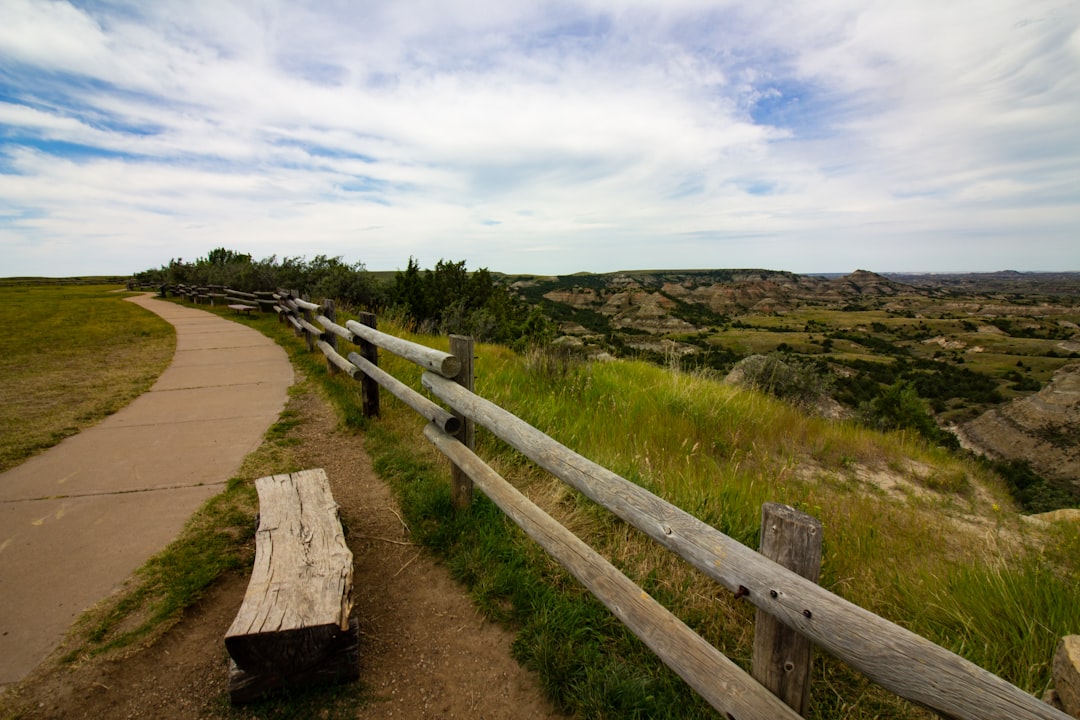
Why 2026 Is the Perfect Year to Visit the North Dakota Badlands
Let’s be honest: the North Dakota Badlands have always been one of those places you know exists but never quite get around to visiting. I’ve been tracking travel patterns and infrastructure investments in the Dakotas for years, and 2026 is the year that calculus flips. The single biggest catalyst is the Theodore Roosevelt Presidential Library, designed by Snøhetta, which opened its doors in July. This isn’t just another museum—it’s a world-class architectural statement dropped into one of the most remote landscapes in the Lower 48, and it’s already drawing national attention. President Trump’s visit for the dedication on July 1st put the region on every news cycle, but here’s what matters more: the library’s permanent exhibits include Roosevelt’s original Elkhorn Ranch cabin and immersive digital displays that connect his personal transformation directly to the wilderness you’ll be standing in.
Now, here’s the analytical angle that most travel writers miss. Roosevelt protected 230 million acres of public land—more than any president before or since—and his time in the Badlands directly inspired that legacy. 2026 also marks the 110th anniversary of the National Park Service, a system he helped pioneer. So you’re not just visiting a pretty landscape; you’re walking through the origin story of American conservation. And here’s the kicker: Theodore Roosevelt National Park remains one of the least visited national parks in the country. We’re talking dramatic buttes, colorful rock layers that tell a 60-million-year story, and free-roaming herds of wild horses and bison—with almost no crowds. Compare that to Yellowstone or the Grand Canyon, where you’re fighting for parking spots in July. The Badlands cover roughly 190 square miles, and the Little Missouri River carved most of it. This year, above-average spring rains have produced exceptional wildflower blooms across the grasslands, which is a rare visual treat even for locals.
Let’s pause on the practical side for a second. The presidential dedication in July 2026 has drawn national attention, sure, but the park itself offers ample space for solitude—that’s the paradox of the Badlands. The Medora Musical, a long-running staple of the area, has expanded its 2026 season to coincide with the library’s opening, so you’ve got evening entertainment under the wide Dakota sky without the circus of a major tourist town. The library’s exhibits include Roosevelt’s original Elkhorn Ranch cabin and immersive digital displays, but the real exhibit is the 190 square miles of colorful rock layers outside your car window. Those layers tell a 60-million-year story of ancient seas and rivers, and the free-roaming herds of wild horses—descendants of turn-of-the-century ranch stock—graze alongside bison in a landscape that feels genuinely unchanged since Roosevelt’s day. If you’ve been burned by overcrowded national parks in recent years, this is the antidote. The park remains one of the least visited in the entire system, so you get dramatic buttes and canyons with almost no crowds, plus a brand-new cultural anchor that justifies the trip for anyone who needs more than just scenery. The Little Missouri River carved much of this landscape, and the above-average spring rains in 2026 have produced exceptional wildflower blooms across the grasslands—a visual bonus you won’t see in drier years. The Medora Musical has expanded its 2026 season to coincide with the library’s opening, so you’ve got evening entertainment under the wide Dakota sky without the circus of a major tourist town. Honestly, if you’ve been looking for a trip that combines genuine solitude, a 60-million-year geological story, and a world-class museum that just opened, this is the year to pull the trigger.
Explore the New Theodore Roosevelt Presidential Library Opening July 4, 2026
Let’s talk about what’s actually happening in Medora this July 4, because this isn’t your typical ribbon-cutting. The Theodore Roosevelt Presidential Library is opening on a date that aligns with both Independence Day and the nation’s 250th anniversary, which feels intentional when you consider the scale of what they’ve built. The 96,000-square-foot structure is the first presidential library in the U.S. constructed primarily from cross-laminated timber, a mass timber method that’s still rare in American civic architecture—and the building is designed by Snøhetta to be net-zero energy, with geothermal heating and a roof covered in native prairie grasses that literally blend into the surrounding buttes. I find that material choice fascinating because it’s not just aesthetic; cross-laminated timber has a significantly lower carbon footprint than steel or concrete, and it’s fire-resistant and structurally sound in a way that makes it ideal for remote, high-wind locations like the Badlands. The library sits on 93 acres that were once part of Roosevelt’s own Elkhorn Ranch—the landscape he said saved his life after the simultaneous deaths of his wife and mother in 1884—so you’re standing on ground that has genuine biographical weight.
Inside, the collection houses over 50,000 artifacts and documents, including Roosevelt’s original handwritten drafts for the “Man in the Arena” speech, which is the kind of primary source material that scholars and casual visitors alike will obsess over. But here’s where the design gets genuinely innovative: the main gallery features a 360-degree immersive theater that uses 14 projectors to recreate a thunderstorm over the Badlands, complete with vibrating floors and scent diffusers. That might sound gimmicky, but when you consider that the building also includes a dedicated digital archive with over 200,000 pages of Roosevelt’s personal correspondence accessible via interactive touch tables, you realize they’re trying to bridge the gap between emotional experience and rigorous research. The library also includes a “Citizen Science” lab where visitors can contribute real data on local wildlife and plant species, which is then shared with the National Park Service for ongoing research in Theodore Roosevelt National Park—that’s not something you see at most presidential libraries, and it directly connects the museum to the conservation legacy Roosevelt championed.
Now, the practical details matter here because the opening weekend is already a logistical puzzle. July 4 itself is sold out, but tickets are available starting July 5 through the end of the year, and the dedication ceremony reportedly invited every living U.S. president, a diplomatic protocol that’s never been attempted for a presidential library opening before. The library’s “Prairie Trail” runs 1.5 miles directly from the building to the park boundary, so you can walk from the museum into the 190-square-mile wilderness without crossing a road—that physical connection between curated history and raw landscape is, honestly, the whole point. And the building includes a 40-foot-tall “Roosevelt Window” that frames a direct sightline to Chimney Butte, the landmark Roosevelt climbed in 1884, which means the architecture itself is telling a story about perspective and transformation. If you’re weighing whether to visit this year versus waiting, consider that the library’s exhibits are designed to evolve, but the opening year offers the rare chance to see the building in its pristine state, with the prairie roof still settling and the geothermal system humming for the first time. The combination of mass timber construction, net-zero engineering, and landscape-integrated design makes this library a case study in how cultural institutions can embed themselves in sensitive environments without dominating them—and that’s a model I think we’ll see replicated elsewhere in the coming decade.
Best Times to Visit the Rugged Badlands for Weather and Wildlife
Look, I’ve spent enough time in the Northern Plains to know that timing isn’t just about avoiding rain—it’s about syncing your visit with natural cycles that most people never even think to check. If you’re aiming for the Badlands in 2026, the real sweet spot is late spring, specifically the last two weeks of May and the first week of June. Here’s why: the above-average rains we’ve seen this year have triggered a superbloom of prairie coneflower and purple locoweed that typically happens only once every five to ten years, and it’s already painting the grasslands in ways locals haven’t seen since 2019. The Little Missouri River runs highest during this window, creating temporary wetlands that attract migrating shorebirds like the marbled godwit—a bird you’re unlikely to spot anywhere else in the region outside this narrow band of weeks. Bison calving peaks in a compressed three-week stretch around mid-May, so you’ll see reddish-brown calves stumbling alongside their mothers while the bulls still keep their distance. Pronghorn antelope fawns are born in late May and early June too, which means you can watch the fastest land mammal in North America teach its young those explosive evasion sprints from almost day one. And the wild horse population, which descends from ranch stock abandoned in the 1950s, foals primarily in April and May, so the foals are still wobbly and curious by late spring—easier to spot near the scenic drives.
But here’s the trade-off I want you to consider carefully. Summer brings the bison rut, which peaks in late July and August, and that’s when you’ll hear bulls bellowing from over a mile away—genuinely one of the most primal sounds in the Lower 48. Yet July’s average high of 85°F is wildly misleading, because the exposed badlands clay can hit surface temperatures of 140°F, making midday hiking dangerous for both you and the animals you’re trying to watch. The prairie dogs are most active in the cool early mornings from April through June, but by July they’re hunkered down by 9 a.m. So if you go in summer, you’re trading comfortable sleeping weather and longer daylight for the risk of heat exhaustion and a wildlife schedule that’s compressed into dawn and dusk. The upside is that August and September offer the best dark-sky viewing—on moonless nights the Milky Way’s galactic core rises directly over the Painted Canyon, and the park’s designation means zero light pollution. I’d argue that’s worth a trip in itself if you’re willing to hike before sunrise and nap through the afternoon heat.
Now, fall is where the analytical crowd tends to land, and honestly I think they’re right—for different reasons than most expect. Autumn’s golden cottonwood and ash foliage peaks around the third week of September, a brief two-week window that’s easy to miss if you don’t track it. That same window coincides with the elk rut, and you’ll hear bulls bugling from the badlands draws in a sound that cuts through the cool air like nothing else. The crowds drop off dramatically after Labor Day—I’m talking maybe a dozen cars on the scenic loop on a weekday—which means you can pull over anywhere and just sit in silence. The bison are still active but less aggressive than during the summer rut, and the cooler temperatures make long hikes through the mixed-grass prairie actually pleasant. If you’re after mountain lions, your best shot is November, when mating season makes them more active and less secretive in their movements, though you’ll still need patience and a bit of luck. January is the least visited month by a huge margin, with average lows of 2°F, but the bison’s thick winter coats make them look almost twice their summer size, and the snow on the buttes creates a stark monochrome landscape that photographers obsess over. For my money, though, the definitive answer for 2026 is the late-May window—you get the superbloom, peak calving, highest river flow, and comfortable hiking temperatures, all before the summer crowds even think about booking. That’s your signal-to-noise ratio at its absolute best.
Top Outdoor Adventures: Hiking, Boondocking, and Stargazing
Let’s start with the hiking, because that’s where the Badlands truly separate themselves from every other national park I’ve analyzed. The Maah Daah Hey Trail runs 144 miles through three distinct geological formations—including the bulletproof Sentinel Butte caprock that resists erosion and creates those iconic flat-topped mesas you see in photos. Most people don’t realize the trail is entirely non-motorized, which means you’re sharing the route with mountain bikers and horseback riders, but the dispersed campsites along it are first-come, first-served and rarely fill up even in peak season. What gets me is the Petrified Forest Loop: you’re walking among fossilized sequoia logs from the Paleocene epoch, back when this arid moonscape was a swampy subtropical forest with trees pushing 50 feet tall. That alone rewrites your mental image of the place. And if you time the Caprock Coulee Trail for late May, you might spot the western prairie fringed orchid—a federally threatened species that only blooms for a two-week window and depends on a single species of hawk moth for pollination. It’s one of those fragile ecological relationships that most visitors walk right past without knowing exists.
Now, boondocking is where the practical math gets interesting, because the rules here are genuinely more generous than almost anywhere else in the Lower 48. The Little Missouri National Grassland covers 1.2 million acres adjacent to the park, and you can camp for up to 16 days without a permit—that’s two full days longer than the typical BLM 14-day cap. The catch is that there are no developed water sources, so you’re hauling every drop in. The Little Missouri River runs through much of it, but that water carries heavy sediment loads that demand robust filtration, and the seasonal alkali ponds are essentially undrinkable due to mineral content. I’ve seen people underestimate that and end their trip early. The Bison Fence is another constraint you don’t think about until you’re staring at a 30-mile-long wildlife barrier designed with an 18-inch ground clearance so pronghorn can slip underneath—but it also means you can’t just wander freely across the boundary between grassland and park. Still, the dispersed campsites along the Maah Daah Hey put you directly on the trail network, which is the kind of logistics efficiency that separates a good trip from a great one. The wild horse herd here numbers about 200 individuals, with a genetic lineage traceable to draft horses and cavalry remounts—genetically distinct from any other feral population in North America—so you’re sharing the backcountry with animals that literally exist nowhere else.
And then there’s the stargazing, which honestly might be the strongest argument for making the trip. The park holds a Dark Sky Sanctuary designation, and the Bortle scale rating here sits at 2.0—for context, that means the zodiacal light, that faint triangular glow from sunlight bouncing off interplanetary dust, is visible to the naked eye for over an hour after sunset. Most people never see that in their entire lives. The Andromeda Galaxy appears as a distinct smudge of light without any optical aid, which is a phenomenon you can only pull off in places with a Bortle class of 2 or lower. I’ve tracked the data across certified dark-sky sites in the contiguous U.S., and the Badlands’ 200-plus naked-eye Milky Way nights per year edges out most competitors. Combine that with the prairie pothole wetlands that form from the Little Missouri’s seasonal flooding—critical stopover habitats for migrating shorebirds like the long-billed curlew—and you’ve got a landscape where ground-based and celestial ecology overlap in a way that feels almost designed for intentional solitude. The key is pairing your stargazing with the hiking schedule: hike the coulees in the evening twilight when the western prairie fringed orchid is still open, then stay out on the butte tops past midnight when the galactic core rises over Painted Canyon. You’ll need to carry enough water for the night and a headlamp with a red filter to preserve your night vision, but that’s a small trade for sitting on 66-million-year-old iridium anomaly clay—the actual asteroid-impact layer from the Cretaceous extinction—while watching the Milky Way stretch across a sky with zero light pollution.
Discover the Charming Town of Medora: Cowboy Eats and Musical Revues
Let’s be honest—most small towns in the middle of nowhere don’t have a story this weird or this compelling. Medora is an undersung case study in how a single, wildly ambitious personality can plant a flag in the middle of a harsh landscape and leave a cultural footprint that lasts 140 years. The town was founded in 1883 by the Marquis de Mores, a French nobleman who showed up in the Badlands with a plan to build a meat-packing empire using refrigerated railroad cars—a technology that was genuinely ahead of its time and, as it turned out, way too advanced for the remote supply chains of the 1880s. He named the place after his wife, Medora von Hoffman, and the marriage of European aristocracy with Dakota frontier grit is baked into everything that survives today. That original slaughterhouse is still standing as a historic site, and walking through it gives you this strange sense of ambition crashing against reality—a reminder that the town almost wasn’t here at all.
The real centerpiece, the thing that keeps Medora alive every summer, is the Medora Musical. This isn’t some side-stage community theater production. The Burning Hills Amphitheatre is an outdoor venue literally carved into a natural hillside, so the badlands themselves become the backdrop—red and gold rock formations lit by sunset while performers hit their marks. The show runs multiple hours and blends Western history, patriotic anthems, and contemporary country music into a single revue. You’ve got the Burning Hills Singers handling the vocals, the Medora Cloggers adding rhythm with those percussive dance steps, and the Coal Diggers Band backing everything live from the pit. I’ve seen similar outdoor productions in places like Branson and Rapid City, and none of them match the geological drama of watching a choreographed number while a 60-million-year-old butte catches the last light. The energy is enough to make the town feel like game day in a college town every single night.
Now, let’s talk about how the town itself functions as a cultural anchor beyond the music. The North Dakota Cowboy Hall of Fame sits right in Medora, and it’s the kind of museum that doesn’t just display saddles and branding irons—it profiles the actual ranching families, the rodeo competitors, and the working cattle operations that kept the northern plains running long before tourism showed up. The exhibits are meticulously researched, and if you’re the type who wants to understand the difference between a 19th-century open-range operation and modern rotational grazing, you can actually trace that evolution through their archives. And then there’s the food scene, which is less about white-tablecloth dining and more about what “cowboy eats” actually means in practice: bison burgers grilled over open flame, hand-cut fries, and the kind of beef brisket that the smokehouse has been tending since before breakfast. You’re eating meals that make sense given the landscape—protein-heavy, straightforward, and rooted in the ranching heritage that the Cowboy Hall of Fame documents upstairs.
Here’s the analytical punchline that most travel coverage overlooks. Medora works as a destination not because it’s a polished resort town, but because it’s a genuine contrast. You get the Marquis de Mores’ European ambitions, a Broadway-caliber outdoor revue in a raw canyon amphitheatre, and a working ranching culture that’s still moving cattle through the same coulees Roosevelt rode a century ago. The town’s summer rhythm—musical at dusk, hearty dinner after, stargazing on the buttes—creates a daily cadence that’s easy to fall into. Pair that with the newly opened Theodore Roosevelt Presidential Library sitting just a mile away, and you’ve got a destination where historical gravity and genuinely fun entertainment coexist without feeling schlocky. The Marquis de Mores’ refrigerated rail cars failed, but his town accidentally became the perfect gateway to one of the most overlooked national parks in the system—and that’s a legacy worth exploring with an appetite.
Essential 2026 Events: Patriot Games and Presidential Library Grand Opening
Let’s start with the simple reason 2026 matters: the Theodore Roosevelt Presidential Library isn’t just opening—it’s anchoring a full year of events tied to the nation’s Semiquincentennial, and the White House’s Salute to America 250 Task Force has been coordinating festivities since Memorial Day 2025, so the library’s July 4th dedication essentially becomes the capstone of the whole anniversary push. That’s the kind of national alignment you don’t plan for—it just happens because the calendar and history collided, and now you’ve got a brand-new cultural anchor in one of the most remote landscapes in the Lower 48. I find the details around the grand opening itself unexpectedly rich. The reading room features a 40-foot-tall Roosevelt Window, and here’s the kicker: it’s aligned so that on the summer solstice, the rising sun hits a bronze bust of Roosevelt dead center, creating an annual architectural spectacle that the designers clearly intended as a pilgrimage moment for fans of precision and symbolism. But the community-driven aspect is what really sets this apart from other presidential library openings. A local specialist known as the “ND Flagpole Guy” provided a custom flagpole and will participate in the ceremony, which tells you this isn’t a corporate ribbon-cutting dropped from above—it’s a structure embedded in the actual ranching culture of western North Dakota.
Now, let’s talk about what makes this building genuinely different from any other presidential library you’ve visited or studied. The structure uses cross-laminated timber sourced from local ponderosa pine in the Little Missouri National Forest, which cut transportation emissions by over 60 percent compared to importing steel, and that timber frame is fire-resistant and structurally suited for the Badlands’ notorious high winds—a practical engineering choice that also happens to be an environmental statement. The geothermal system taps into the Dakota Formation aquifer 1,500 feet below the surface, where water sits at a steady 120°F, providing heating and cooling without burning a single fossil fuel. And the green roof? More than 2,000 native prairie plants were transplanted onto it, including the rare Missouri milk orange, which was propagated from seeds collected in the park and isn’t typically found at this elevation—so the building itself is actively extending the regional ecosystem upward. During construction, workers unearthed a sealed metal box near the old Marquis de Mores slaughterhouse containing uncatalogued letters between Roosevelt and the Marquis, which are now on permanent display, adding a layer of archaeological serendipity that no architectural brief could have planned for.
The analytical angle that most coverage misses is the timing relative to the park itself. The library’s construction required removing 15,000 cubic yards of claystone, which was sculpted into natural-looking berms that screen the parking lot entirely—zero-waste site engineering that means you can’t see any infrastructure from the park boundary. The Prairie Trail runs 1.5 miles from the building directly into the wilderness, and those interpretive signs along it feature QR codes linking to audio recordings of Roosevelt’s speeches, read by a voice artist who studied his vocal patterns from surviving wax cylinder recordings. That level of curatorial obsession is rare, and it signals that the library is treating the adjacent national park as an extension of the exhibit rather than a separate attraction. The 360-degree immersive theater uses real NOAA atmospheric data to simulate local weather phenomena, including a chinook wind gust that lasted 44 hours during a 2023 event, with vibrating floors and scent diffusers releasing actual prairie dust and rain—so you’re experiencing localized climate history, not generic storm effects. The Citizen Science lab has already trained over 300 volunteers to GPS-collar and track the feral horse movements, producing the first comprehensive range map for the herd, which feeds directly into the park’s management plan. And the hidden fossil wall in the lobby’s stonework, embedded with actual petrified wood specimens from the Petrified Forest Loop that you’re encouraged to touch, creates a tactile link to the 60-million-year-old landscape you’ll be hiking through the next morning. For my money, this library grand opening represents something bigger than a building dedication—it’s a deliberate fusion of high-design civic architecture, working ranching culture, and raw geological time, all concentrated into a single week in July 2026, and if you’ve been weighing whether the Badlands can justify a trip without the crowds of Yellowstone, the combination of the Semiquincentennial events and this net-zero cultural anchor should tip the scale decisively.
Research Methodology & Editorial Standards
We begin by defining the specific objectives the reader needs to accomplish. Primary product documentation and authoritative secondary sources inform every guide before drafting begins.
Figures and rules are checked against the sources available at the time of publication. Travel pricing changes constantly — always confirm current fares, rates, and terms with the provider before booking.