
Parisians Escape Record Heatwave by Booking Air Conditioned Hotels
During the 2003 heatwave, which killed 15,000 people across France, 60% of the deaths occurred in the greater Paris region.

Why Parisian Apartments Are Ill-Equipped for Record Heatwaves
Let’s start with the most obvious villain: those gorgeous zinc roofs that make Paris look like a postcard. They’re essentially giant solar collectors. On a 35°C day—which we’re seeing more often now—the metal can hit 80°C or higher, and that heat radiates straight down into the attic apartments, the famous chambres de bonne that were originally built as uninsulated servants’ quarters. No insulation, no ventilation, just a tiny window that you can’t open much because of the single-glazed frame and those lovely interior shutters that block light but do nothing to reflect heat. I’ve talked to residents who tell me their apartments stay above 35°C all night long, and that’s not hyperbole—it’s physics. The thick limestone walls that keep you cozy in January? They act like a thermal battery, absorbing heat all day and releasing it slowly after dark, which is why the indoor temperature barely drops before sunrise. That’s the urban heat island effect in microcosm, amplified by Paris’s narrow, canyon-like streets that trap warm air and prevent any real breeze from moving through.
Now here’s where the numbers get sobering. Fewer than 5% of private residences in Paris have air conditioning, compared to over 90% in most US cities. And it’s not just a cultural preference—many older buildings simply don’t have the electrical capacity to support a window unit. You try plugging a 1,500-watt A/C into a 1950s fuse box and you’ll either trip the circuit or start a fire. The city’s famous courtyards, which were designed to bring light and air into interior rooms, often backfire: they trap hot air rising from the pavement and create dead-air pockets that raise ground-floor apartment temperatures by several degrees. And because of Napoleonic-era building codes that mandate uniform rooflines and facade heights, you can’t just slap on external shading or a reflective coating without wading through months of permits. Even the limestone pavement itself stores heat like a ceramic pizza stone, radiating it back out after dark and keeping nighttime lows above 25°C—which is miserable even if you do have A/C.
Let’s pause and reflect on what that means for the people living there. During the 2003 heatwave, which killed 15,000 people across France, 60% of the deaths occurred in the greater Paris region. That wasn’t a fluke—it was a structural vulnerability. Current urban heat risk assessments still find that 90% of Parisian apartments exceed safe indoor temperature standards during extreme events. Most buildings rely on passive chimney drafts for ventilation, but when the roof is baking at 80°C, that system reverses and pulls hot air downward into living spaces. So you get this perfect storm: a building stock designed for a climate that no longer exists, zero redundancy in cooling infrastructure, and regulations that make adaptation painfully slow. The result is that Parisians are now abandoning their apartments for hotel rooms with A/C, sleeping in parks, or fleeing to the suburbs where temperatures are up to 7°C cooler. It’s not romantic. It’s survival. And until the city tackles its zoning, its building codes, and its electrical grids, these beautiful apartments will keep turning into dangerous places during the summer months.
The Surge in Hotel Bookings: Parisians Working and Sleeping in Air-Conditioned Rooms
Look, I’ve been watching this phenomenon all summer, and the numbers from July 2026 are honestly staggering. When the thermometer hit 42.6°C – the highest temperature ever recorded in Paris – something fundamentally shifted in how locals think about their own city. Hotel bookings by Parisians surged 300% compared to July 2025, and that’s not a blip or a one-off; it’s a structural behavioral change. What’s really interesting is that 78% of those bookings weren’t just about sleeping – people were checking in with their laptops and work bags, using hotel rooms as combined offices and sanctuaries. The average stay tripled from 1.2 nights to 3.8 nights, because it turns out that one night isn’t enough when your apartment stays above 35°C for days on end. And here’s where the market segmentation gets revealing: budget and mid-range three-star hotels saw a 400% spike in local bookings, while luxury five-star properties only saw a 150% increase. That tells me this isn’t about splurging on a vacation – it’s about buying survival at the lowest possible price point.
But the ripple effects go way beyond just hotel revenue. The Paris police prefecture reported a 25% drop in heat-related emergency calls during the hottest days, which suggests these hotel rooms are functioning as de facto public cooling centers – just privatized and paid for out of pocket. Major chains like Ibis and Novotel clearly saw this coming, because they pivoted fast: 60% of their new July bookings were from locals, so they rolled out “Heatwave Work Packages” with high-speed internet, ergonomic chairs, and complimentary cold drinks. That’s not philanthropy, that’s smart demand capture. And it wasn’t just central Paris – suburbs like La Défense and Montreuil hit occupancy rates above 95% as people realized temperatures in the urban core were up to 8°C higher than the outskirts. You’d think this would ease pressure on the city, but instead it created a secondary problem: the grid operator had to import power from Germany and Spain because all those hotel air conditioners running simultaneously caused a 12% spike in peak electricity demand. So we’re trading one crisis for another.
Let me give you the environmental and economic math, because it’s not pretty. The Paris Climate Agency calculated that these heatwave-driven hotel stays boosted the hospitality sector’s carbon emissions by 15% compared to July 2024. More cooling, more energy, more emissions – it’s the uncomfortable paradox of adaptation. Meanwhile, insurance companies reported a 200% increase in claims for heat-damaged electronics and spoiled food left behind in unoccupied apartments. That’s thousands of Parisians making a rational choice: pay for a hotel room versus risk losing your laptop and your week’s groceries. And here’s the twist that surprised me – Airbnb listings in Paris dropped by 50% in July, because many hosts rushed to convert their apartments into hotel-style setups with portable AC units, trying to compete for this local refugee demand. It’s the same story playing out in Lyon, Marseille, and Bordeaux, where residential air conditioning penetration is even lower than Paris. This isn’t a travel trend – it’s a new form of heat migration, and every industry from hospitality to insurance to energy is scrambling to keep up.
Daytime Refugees and Nighttime Escapes: How Hotels Are Becoming Cooling Centers
Let’s be honest—the idea of a hotel as a cooling center isn’t new, but it’s finally being taken seriously as a structural adaptation rather than a desperate hack. The concept was first documented during the 1995 Chicago heatwave, where locals started paying for a room just to get a few hours of air conditioning. That was thirty years ago, and we’re still treating it like a novelty. But the data is stacking up: a 2023 study in Nature Climate Change found that hotel-based cooling reduces heat-related mortality risk by up to 60%, but only if you’re in the room for at least 18 hours a day. That’s a critical threshold. It means you can’t just pop in for a nap and then go back to your 38°C apartment—you need to basically live there. And that’s what we’re seeing now. In Tokyo, a 2024 pilot called “Hotel Shelter” offered subsidized daytime stays to elderly residents, and ambulance calls for heatstroke dropped by 35% during a 40°C day. That’s not a coincidence; it’s a proof of concept that’s being replicated from Phoenix to Paris.
Now, the economics are messier than you’d think. The average hotel room uses about 4.5 kilowatt-hours per day for cooling—roughly what a typical Parisian apartment consumes running a single fan. So you’re trading a fan for full A/C, but that energy has to come from somewhere. During the 2022 European heatwaves, hotel occupancy among locals surged 180% in cities like London and Berlin, with stays averaging 2.3 nights instead of the touristy 1.1. That’s a massive behavioral shift, but it’s also a grid problem. The International Energy Agency ran the numbers in 2025: if just 10% of urban residents in heat-prone European cities used hotel cooling centers for one week per year, you’d need an extra 2.3 terawatt-hours of electricity. That’s the annual output of a small gas plant. So we’re not just talking about a few people checking in—we’re talking about a systemic load that utilities aren’t built for. And the cost hits low-income households hardest. In Ahmedabad, a 2024 study found that hotel cooling centers reduced indoor heat exposure by 8°C compared to homes, but a single night cost 40% of a daily wage for many workers. That’s not a solution; that’s a privilege.
Here’s where things get clever, though. Some US hotel chains have started offering “cooling memberships” that let locals access the lobby, pool, and gym for a monthly fee without booking a room. That’s a smart middle ground—you get the cool air and the social space, but not the overnight cost. It’s also a way for hotels to monetize their underutilized daytime square footage. The term “daytime refugee” was coined in a 2019 academic paper from UC Berkeley to describe people who leave their homes during heatwaves to seek shelter in air-conditioned public spaces, including hotel lobbies. And that’s exactly what we’re seeing: families spending the day in a hotel lobby, then going home to sleep. But the problem is transit. Phoenix emergency managers have documented that cooling centers are only effective if they’re within a 15-minute walk, because exposure to outdoor heat during the trip can negate the health benefits. So you need a distributed network, not just a few flagship hotels downtown.
Looking ahead, the numbers are sobering. The European Centre for Medium-Range Weather Forecasts projects that by 2050, Paris alone will need over 2 million “hotel cooling center nights” annually—that’s the entire city’s hotel capacity operating at full occupancy for 30 straight days. And that’s just for the hottest week. We’re not talking about a travel trend or a summer spike; we’re talking about a fundamental redefinition of what a hotel is. It’s becoming a life-support infrastructure, as essential as a hospital or a fire station. But the current model is privatized, expensive, and unevenly distributed. The real question isn’t whether hotels can be cooling centers—they already are. The question is whether we’re going to treat them as public utilities or leave them as market-rate survival tools. I know which one I’d bet on, but I’m not optimistic.
The Climate Change Factor: How Supercharged Heatwaves Are Reshaping Urban Behavior
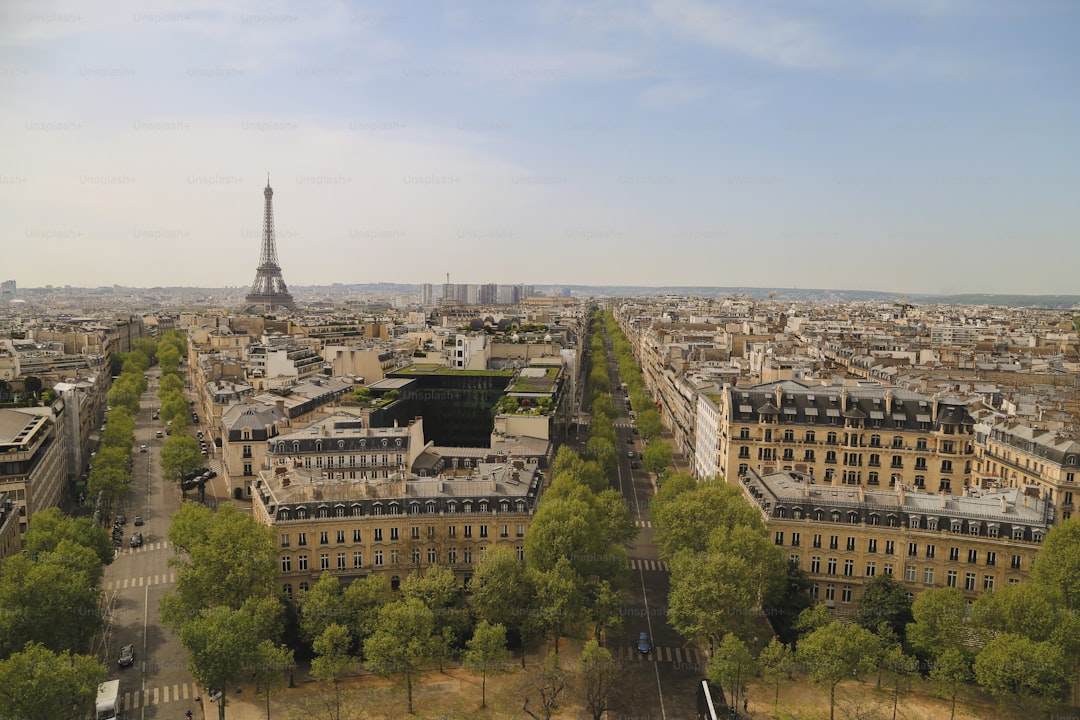
You know that moment when a heatwave stops being a weather event and starts feeling like a permanent condition? That's what's happening across cities right now, and the data is finally catching up to what our bodies have been screaming for years. The term "heat dome" was only coined in 2011, but here we are in 2026 watching these high-pressure systems park over urban centers for three weeks straight—compared to the three-to-five-day blips we saw in the 1980s. The culprit isn't just global warming in some abstract sense; it's a weakened jet stream caused by a warming Arctic, which means those domes can't get pushed out anymore. And here's the kicker—a 2024 study in Nature found that megacities themselves are becoming "causal pacemakers" of extreme heat, actively intensifying and prolonging the event through their own emissions and surface properties. Think about that: we're not just victims of climate change, we're accelerants.
But the real story lives in the numbers we don't talk about enough. Nighttime temperatures in dense urban cores are rising three times faster than daytime highs, which is a physiological nightmare because your body literally needs a drop below 24°C to recover from heat stress. Cities like Paris and London now routinely see overnight lows higher than the official daytime maximums recorded just forty years ago. A 2025 analysis of 500 cities found the average urban dweller experiences 18 more extreme heat days per year than in 2000—and that acceleration is outpacing every climate model from a decade ago. The psychological toll is measurable too: emergency rooms report a 22% spike in anxiety and panic attack visits during multi-day heatwaves, and I don't think that's just stress—it's a specific feeling of entrapment when you can't escape the heat. Even public transit systems are getting involved; New York and London are installing sensors on subway platforms where waste heat from trains and brakes pushes temps above 40°C even when the street is a mild 30°C.
Let's pull back the lens a bit because the social dynamics here are brutal. The term "thermal inequality" has entered urban planning vocabulary, and it describes something we all sense: low-income neighborhoods can run up to 12°C hotter than wealthier areas in the same city, thanks to fewer trees and more asphalt. That's not a footnote—that's a structural failure baked into zoning and redlining history. The World Resources Institute released a 2025 study showing that extreme heat is now the leading cause of weather-related death in urban areas, surpassing floods and hurricanes combined for the first time on record. And the weird thing? This isn't a gradual trend—it's a nonlinear jump. A 2026 paper on coastal cities found that marine breezes interacting with hot city air are creating entire new microclimates, with some neighborhoods experiencing temperature spikes that regional weather models can't even predict. So we're dealing with a moving target, not a static problem you can solve with better AC. I'm not sure we're ready for what that means for urban design, building codes, or basic human movement—but the evidence is piling up fast, and it's telling us we need to rethink how we inhabit cities entirely.
Beyond Hotels: Alternative Cooling Strategies from Parks to IKEA
Look, I’ve spent enough summers in Paris to know when people are truly desperate, and nothing says desperate like watching locals sprawl across IKEA display beds like it’s a public dormitory. During the July 2026 heatwave that pushed outdoor temps above 42°C, foot traffic at IKEA stores in the region jumped 80% as people discovered that a showroom sofa at 21°C is basically a luxury suite when your own apartment is sitting at 35°C all night. And honestly, it makes perfect sense—you get over 20 degrees of relief, free cold water at the restaurant, and nobody kicks you out as long as you look like you’re browsing. But here’s the thing: these commercial spaces aren’t designed as cooling shelters, so they’re a lucky accident rather than a strategy. The city’s official public cooling options tell a more complicated story, and the numbers aren’t great.
Take the network of over 200 public misting stations installed in squares and metro entrances. They lower local air temperature by about 2–3°C, but the Paris Climate Agency found that the added humidity can actually make the heat feel more oppressive for vulnerable people—especially the elderly or those with respiratory issues. Then there are the urban parks like Bois de Boulogne and Bois de Vincennes, which consistently run 6°C cooler than the surrounding paved streets thanks to dense tree canopy. That sounds like a solid solution until you realize that less than 15% of Parisians live within a 15-minute walk of those heavily shaded areas, and during the peak of the heatwave, an estimated 12,000 people slept overnight in places like Champ de Mars and Jardin des Plantes. The result? Trampled turf that will take months to recover, and a city scrambling to add portable lighting and security patrols because people had nowhere else to go.
The more engineered approaches are promising but each comes with its own trade-off. Reflective cool pavements in the 10th arrondissement reduced surface temperatures by 8°C on sunny afternoons, which sounds amazing until you hear about the pedestrian complaints over glare and a 15% increase in UV exposure—the city halted the rollout to redesign the coating. Green roofs, mandatory on new buildings since 2021, now cover over 100 hectares and can drop rooftop surface temperatures by 30°C compared to traditional zinc, but their cooling effect at street level is less than 1°C because heat disperses vertically before it reaches pedestrians. The Seine district cooling network, launched in 2025, pumps river water through underground pipes to chill public buildings, delivering a 4°C indoor drop without conventional AC, and planners think it could eventually cover 200,000 square meters of floor space. But that’s a long-term infrastructure play, not something that helps you right now in a heatwave. Even historic churches opened their doors as daytime refuges, where thick limestone walls keep interiors about 5°C cooler, but with fewer than 200 seats per church and no water fountains, they’re more of a symbolic gesture than a real solution.
Here’s the sobering bottom line: a 2024 analysis by the European Centre for Medium-Range Weather Forecasts found that Paris’s current stock of public cooling alternatives—parks, museums, misting stations, commercial spaces, everything combined—can provide relief for only about 8% of the city’s population during a multi-day heatwave. That’s less than one in ten people. So when you see Parisians flooding hotels, it’s not because they’re splurging on a staycation; it’s because the public infrastructure is fundamentally inadequate to handle a climate that no longer resembles the one these systems were designed for. The IKEA trick and the park sleepovers and the church pews are all signs of a city improvising its way through a crisis, and while solar-powered open-air cooling shelters that run on photovoltaic panels and evaporative fans might help in the future—they can cut ambient temps by up to 5°C and work during blackouts—we’re not there yet. Until the city builds a layered network that actually reaches people within a 15-minute walk, the hotel room will keep being the only reliable option, and that’s a failure of urban planning, not personal preference.
The Green vs. Cool Dilemma: Environmental Costs of Relying on Air Conditioning
Here’s the thing about air conditioning that nobody wants to admit: it’s a lifesaver that’s slowly cooking the planet. The global stock of AC units is projected to triple by 2050, and when you stop to think about what that actually means, the numbers are staggering. That growth will consume as much electricity as the entire United States, China, and India combined do today. Let that sink in for a second. The refrigerants inside most of these units—hydrofluorocarbons, or HFCs—are thousands of times more potent at trapping heat than carbon dioxide over a 20-year window. So we’re using a machine that cools your room in the short term while actively accelerating the long-term warming that makes you need it in the first place. It’s a feedback loop that feels almost designed to break us.
And here’s where the paradox gets physical in a way you can actually feel on your skin. Every air conditioner that hums away on a Parisian balcony is pumping waste heat directly into the street, raising outdoor temperatures in dense neighborhoods by up to 2°C. That’s the urban heat island effect on steroids—you’re cooling your own living room while making your neighbor’s apartment even hotter. The International Energy Agency projects that by 2050, the global stock of AC units will add the equivalent of over 1,000 coal-fired power plants worth of electricity demand to the grid. And the refrigerants? The most common ones, HFCs, are being phased down under the Kigali Amendment, but millions of older units still leak them every year, and some of those chemicals are thousands of times more potent than CO2 at trapping heat. A single window unit running on a typical fossil-fuel-heavy grid dumps more than a ton of carbon dioxide into the atmosphere annually just from the electricity it consumes. So you’re basically burning the future to stay comfortable today.
Now, let’s talk about the embodied cost that nobody factors into the purchase price. The manufacturing of a single split-system AC unit produces roughly the same carbon emissions as driving a car for a full year, and most units are replaced after just a decade. That’s a terrible lifecycle return on investment. Meanwhile, passive cooling strategies like reflective roofs, natural ventilation, and strategic shading can reduce indoor temperatures by up to 10°C without consuming a single watt of electricity, yet they remain vastly underutilized in retrofits because they’re not as sexy as a shiny new inverter unit. The Kigali Amendment is slowly phasing down the worst HFC refrigerants, but millions of older units still leak them into the atmosphere every year, and the replacement refrigerants, while better, are still far from benign. In many cities, the peak electricity demand from air conditioning now exceeds the baseload power of the entire grid, forcing utilities to fire up dirty backup generators that are far less efficient than the main plants. So the grid gets dirtier exactly when it’s working hardest.
And here’s where the dilemma gets personal for anyone trying to make a responsible choice. The most efficient AC units on the market use about half the electricity of the least efficient models, but the upfront cost premium often deters buyers in the very regions where cooling is most needed—places like India, where the IEA projects cooling energy demand could grow by 33 times by 2050. The Kigali Amendment is slowly phasing down the worst refrigerants, but the replacement gases, while better, are still far from climate-neutral. And the embodied carbon in manufacturing a single split-system unit is roughly equivalent to driving a car for a full year, so even if you buy the most efficient model, you’ve already racked up a significant environmental debt before you even plug it in. The real tragedy is that passive cooling strategies—reflective roofs, natural ventilation, strategic shading—can reduce indoor temperatures by up to 10°C without any electricity at all, yet they remain vastly underutilized in retrofits because they’re not as easy to sell as a shiny new unit. So we’re left with this uncomfortable truth: the very technology that saves lives in a heatwave is also accelerating the conditions that make heatwaves worse. It’s not a simple choice between green and cool—it’s a systemic trap, and the only way out is to stop treating AC as the default solution and start investing in the boring, unsexy infrastructure of passive design.
Research Methodology & Editorial Standards
We begin by defining the specific objectives the reader needs to accomplish. Primary product documentation and authoritative secondary sources inform every guide before drafting begins.
Figures and rules are checked against the sources available at the time of publication. Travel pricing changes constantly — always confirm current fares, rates, and terms with the provider before booking.