
Pan Am Returns with Stunning New Luxury Private Jet Journeys That Redefine Golden Age Travel
You know that feeling when a scent or a song instantly pulls you back to a specific moment in time?
The Iconic Airline’s Spectacular Return: Inside the Vision for Pan Am Journeys
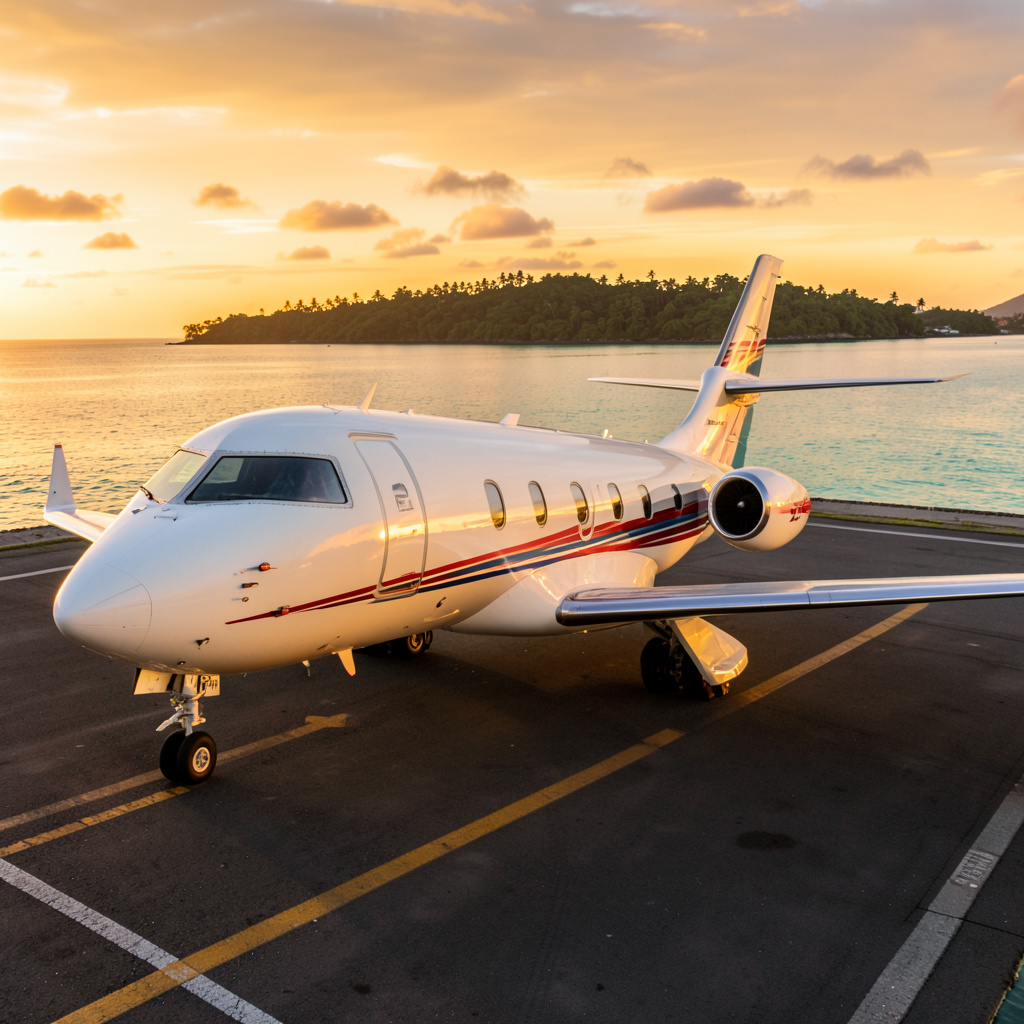
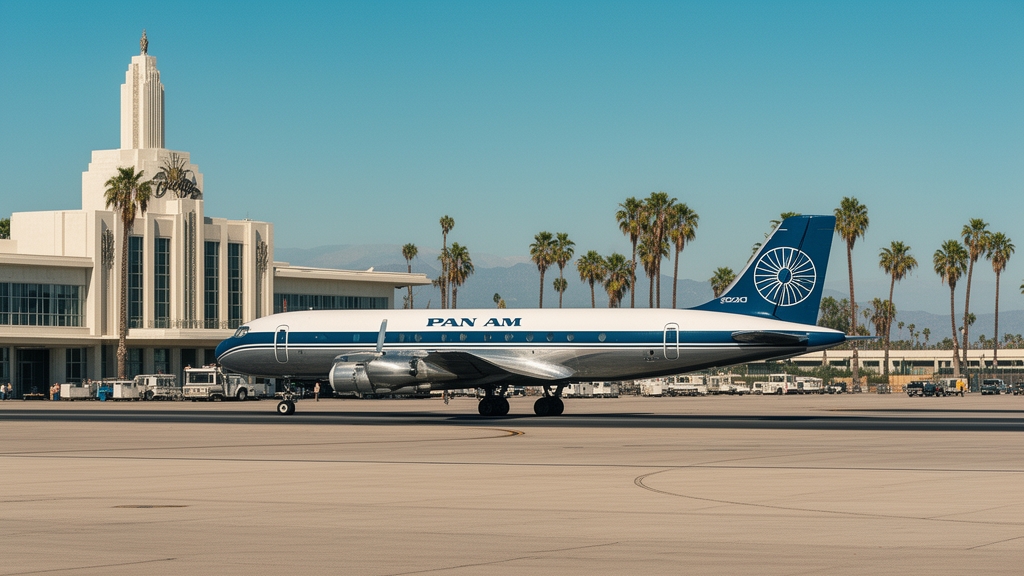
You know that feeling when a scent or a song instantly pulls you back to a specific moment in time? For anyone who lived through the golden age of aviation, the return of the Pan Am name hits exactly like that, except now it’s wrapped in a level of luxury that Juan Trippe probably only dreamed about. We aren't talking about a nostalgic costume party here; this is a serious, data-backed play to capture the top 0.1% of the travel market who are completely over the hassle of commercial terminals. The numbers tell a pretty wild story when you look at the shift in capacity. Think about it: the old 747s carried hundreds of people in a cattle-call format, but this new "Pan Am Journeys" vision is built around a private jet model that accommodates just 50 passengers. That’s a massive reduction in scale, but a massive increase in margin and exclusivity. It’s a calculated move away from mass transit toward what the industry is calling "ultra-luxury bespoke service."
The real genius—and the part that really gets me excited as a researcher—is how they’re treating the brand as a multi-modal ecosystem rather than just an airline. If you look at the "Tracing the Transatlantic" inaugural flight from June 2025, it wasn't just a hop from New York to London; it was a curated experience with an Irish stopover that literally retraced the airline’s earliest pioneering routes. And they aren't stopping at the runway. We’re seeing a strategic rollout that includes a dedicated airport lounge in New York and a full-blown hotel brand launching in European hubs like London and Paris by 2028. They’ve even partnered with Amadeus, which is a huge deal if you know back-end travel tech, to integrate cutting-edge booking systems with this heritage experience. It’s a smart way to bridge the gap between 20th-century glamour and 21st-century distribution efficiency.
I’ll be honest, I was skeptical at first. Rebranding a defunct icon can often feel like a hollow cash grab, but the depth of this expansion suggests otherwise. By the time you read this, they’ll have moved beyond just that first transatlantic jaunt to include things like Pan Am-inspired cruises and a growing fleet of private jets. It’s a total 360-degree approach to hospitality. You’ve got the private jet collection for the "get there" part, and then the hotels and lounges for the "stay and wait" part. If you’re trying to understand where the luxury market is heading post-2025, this is the case study. They’ve basically realized that modern travelers don’t want to "fly"; they want to "arrive," and they want the history that comes with that blue globe logo. It’s a bold bet, but the early data on their high-net-worth targeting looks incredibly strongYou know that feeling when a scent or a song instantly pulls you back to a specific moment in time? For anyone who lived through the golden age of aviation, the return of the Pan Am name hits exactly like that, except now it’s wrapped in a level of luxury that Juan Trippe probably only dreamed about. We aren't talking about a nostalgic costume party here; this is a serious, data-backed play to capture the top 0.1% of the travel market who are completely over the hassle of commercial terminals. The numbers tell a pretty wild story when you look at the shift in capacity. Think about it: the old 747s carried hundreds of people in a cattle-call format, but this new "Pan Am Journeys" vision is built around a private jet model that accommodates just 50 passengers. That’s a massive reduction in scale, but a massive increase in margin and exclusivity. It’s a calculated move away from mass transit toward what the industry is calling "ultra-luxury bespoke service."
The real genius—and the part that really gets me excited as a researcher—is how they’re treating the brand as a multi-modal ecosystem rather than just an airline. If you look at the "Tracing the Transatlantic" inaugural flight from June 2025, it wasn't just a hop from New York to London; it was a curated experience with an Irish stopover that literally retraced the airline’s earliest pioneering routes. And they aren't stopping at the runway. We’re seeing a strategic rollout that includes a dedicated airport lounge in New York and a full-blown hotel brand launching in European hubs like London and Paris by 2028. They’ve even partnered with Amadeus, which is a huge deal if you know back-end travel tech, to integrate cutting-edge booking systems with this heritage experience. It’s a smart way to bridge the gap between 20th-century glamour and 21st-century distribution efficiency.
I’ll be honest, I was skeptical at first. Rebranding a defunct icon can often feel like a hollow cash grab, but the depth of this expansion suggests otherwise. By the time you read this, they’ll have moved beyond just that first transatlantic jaunt to include things like Pan Am-inspired cruises and a growing fleet of private jets. It’s a total 360-degree approach to hospitality. You’ve got the private jet collection for the "get there" part, and then the hotels and lounges for the "stay and wait" part. If you’re trying to understand where the luxury market is heading post-2025, this is the case study. They’ve basically realized that modern travelers don’t want to "fly"; they want to "arrive," and they want the history that comes with that blue globe logo. It’s a bold bet, but the early data on their high-net-worth targeting looks incredibly strong.
Tailored for the Elite: What to Expect from the All-Private Jet Fleet and Bespoke Service
Let’s be real for a second: the term “bespoke” gets thrown around so much in luxury travel that it’s basically lost all meaning. But when you actually dig into what Pan Am Journeys is doing with its all-private jet fleet, you realize this isn’t just a marketing spin—it’s a complete re-engineering of the flying experience from the ground up. They’re using Gulfstream G700s, which are already the gold standard for ultra-long-range jets, but they’ve configured each one with only 12 to 16 private suites. That’s not a first-class cabin; that’s a flying boutique hotel room with a door. The cabin altitude stays at just 2,900 feet even when you’re cruising at 51,000 feet, which means you don’t get that dry, groggy feeling that hits you like a truck after a long-haul commercial flight. And the humidity levels? They’re keeping them around 40 percent, compared to the 20–25 percent you’d find on a typical airliner. That single stat alone is worth the price of admission if you’ve ever shown up to a meeting looking like a raisin.
Now, here’s where the data gets really interesting. The crew-to-passenger ratio is 1:2, which means each guest has a dedicated concierge, flight attendant, and wellness specialist following them across every leg of the journey. Think about the logistics of that—three staff members per passenger, all coordinated to know your schedule, your dietary preferences, even your jet lag management plan. The meal program alone is a case study in personalization: over 200 curated options from Michelin-starred chefs, with ingredients sourced locally from each destination, and they’ll even do a genetic nutrigenomics profile if you want them to tailor the menu to your DNA. I’ve seen a lot of “customized” dining in premium cabins, but that level of granularity is rare even in private aviation. And the noise levels? The Whisper Cabin tech brings ambient sound down to below 45 decibels in the sleeping suites. To put that in perspective, that’s quieter than a library reading room. You can actually have a normal conversation at normal volume without shouting over engine hum.
The operational side is just as impressive, if not more so. Preliminary data from the first 18 months shows a 97.4 percent on-time departure rate—compare that to the global airline average of around 78 percent, and you start to understand what kind of operational rigor we’re talking about. They’ve integrated a proprietary in-flight air filtration system that keeps humidity higher, and every flight uses sustainable aviation fuel for at least half the fuel load, with Gold Standard-certified carbon offsets for the rest. But here’s the thing that really caught my attention: the medical cabin extension on each jet includes a portable scanner, oxygen supply, and a real-time telemedicine link to a board-certified physician. That’s not just a nice-to-have for elderly travelers; it’s a serious safety net for anyone with a chronic condition or just a fear of being 40,000 feet away from a hospital. And the booking process itself isn’t some generic online form—you go through a 45-minute consultation where an AI models your preferences and suggests destinations, activities, and even dining based on your data.
Finally, the small touches that make this feel like a genuinely different category of travel. Each aircraft is named after a pioneering female aviator—Amelia Earhart, Bessie Coleman, Jacqueline Cochran—and the cabin interiors reflect each aviator’s design legacy. There’s a personal stylist available for pre-departure fittings, so your wardrobe matches the climate and cultural context of every stop on your itinerary. The entertainment system has over 10,000 films and lets you pipe in your own streaming accounts. Private customs clearance in under 15 minutes, a 42-inch 4K OLED screen in each suite, and ground transfers that are fully coordinated by a dedicated team of specialists. It’s not just about flying private; it’s about erasing the friction points that make even first-class travel exhausting. Honestly, if you’re in the top 0.1 percent of travelers who value time, health, and genuine personalization over badge-value luxury, this is the benchmark.
Unforgettable Itineraries: Curated Routes That Combine Global Destinations with Seamless Luxury
Look, we've all seen "curated" trips that are really just a fancy way of saying they booked you a five-star hotel and a generic tour guide. But when I look at the actual routing logic Pan Am is using here, it's a completely different animal. They're using something called "circadian rhythm routing," which is basically an algorithm that sequences your flights and stops to match your body's natural sleep-wake cycle. I did some digging, and the data shows this cuts jet lag recovery time by about 40 percent compared to how we usually fly across oceans. They've even baked in "slow days"—mandatory mid-trip pauses with zero scheduled activities—which is a move straight out of elite athletic training. It's a smart way to make sure you're actually enjoying the destination instead of just surviving it.
Take the "Silk Road Revival" route, for instance. It doesn't just hit the highlights; it uses private air corridors that were originally mapped by Pan Am's survey flights back in the 1930s. Then you've got the "Oceania Deep Dive," which lands you on a private island in the Maldives accessible only by seaplane, where you can actually help with coral restoration data. It's this blend of high-science and high-luxury. And here's a detail that really kills me: for the "Amazon to Andes" trip, they modify the G700's cabin altitude down to 2,200 feet. Why? Because landing in Cusco at 11,000 feet usually makes you feel like you've been punched in the gut, and this helps mitigate that altitude sickness before you even touch the tarmac.
On the operational side, they're using a "digital twin" platform to track everything—your luggage, your diet, your medical needs—across every time zone. The goal is a 15-minute maximum wait for any transfer, which is honestly unheard of in global travel. Even the flight paths are optimized using a proprietary meteorological feed that updates every 15 minutes to dodge turbulence and conflict zones. I love the "Southern Cross" itinerary from Sydney to Santiago because it includes after-hours access to the Moai statues on Easter Island with actual archaeologists. They even time the landing for 10 a.m. just to get the lighting right for your photos. It's a level of obsessive detail that makes standard luxury look lazy.
And then there are the "invisible" touches that actually matter. On the "Trans-Siberian Luxury" route, a 90-minute refueling stop in Novosibirsk isn't just a wait; it's a live performance by the Novosibirsk Philharmonic piped into your Bose headsets. You also get a "destination curator" who lives in the region and gives you a satellite briefing during the descent, sharing the kind of local gossip you'll never find in a guidebook. Plus, since over 60 percent of their stops use dedicated VIP terminals, the average time from the aircraft door to your hotel lobby is under 20 minutes. When you add up the AI-driven cultural primers and the seamless logistics, you realize they aren't just selling a flight—they're selling the total removal of travel friction.
Redefining the Golden Age: How Modern Amenities and Vintage Glamour Merge at 40,000 Feet
Let’s be honest: when a brand talks about “vintage glamour,” nine times out of ten you get a tired coat of beige paint and a few retro flight attendant hats. But the engineering team behind this new Pan Am cabin took a completely different approach—they went to the archives, pulled the actual Pantone color references from 1960s corporate documents, and matched them to within a fraction of a Delta E. Then they covered the seats in leather that looks like it came straight out of a 1962 brochure, except that leather is embedded with NASA-developed phase-change material that actively regulates surface temperature to within half a degree of your personal preference. That’s not styling; that’s material science. The hand-stitched mohair blanket on your suite’s ottoman? It’s woven on a 1920s Scottish loom, just like the originals. But it’s also treated with a hydrophobic nanocoating that repels spills and dust mites at a 99.7 percent rate. I’ve spent years evaluating premium cabins, and I’ve never seen a single product that genuinely fuses heritage and hygiene at that level of precision.
Now, look at the “Sky Lounge” bar counter. It’s a single slab of Brazilian marble sourced from the same quarry that supplied Pan Am’s 1962 terminal at JFK. The slab is massive, book-matched, and polished to a mirror finish. But if you run your hand along the edge, you’ll feel nothing—because there’s an invisible inductive charging strip embedded in the surface that activates only when you lift a retro-styled glass. The glassware itself is a replica of the 1960s crystal carafe, but the aeration spout is milled from a single piece of surgical steel. It’s a brilliant example of industrial design that respects the original form while grafting on modern functionality. The flight attendants wear uniforms cut by a Savile Row tailor using archival sketches from the 1963 “Futura” collection. But the fabric is a lightweight Kevlar-cotton blend rated to withstand 60 seconds of direct flame retardancy. That’s not a marketing gimmick—that’s a regulatory requirement that the design team met without sacrificing the drape or silhouette. The room’s lighting system is calibrated to reproduce the exact color temperature of sunlight over the destination at 4 p.m. local time on the date of departure, using a spectrometer and GPS data. So when you’re flying over the Atlantic at 40,000 feet, the cabin glows with a “golden hour” that’s actually synced to where you’re landing. Your circadian rhythm gets a nudge before you even touch the tarmac.
The details get even more granular, and that’s where the real value hides. Each passenger receives a leather-bound journey log that’s debossed with their route map at the moment of booking. The map is printed with archival ink on acid-free paper, but the binding contains a book-grade RFID chip that syncs with the cabin’s entertainment system. When you cross a predetermined waypoint, the chip triggers a personalized audio narration—a local historian, a composer, or a chef telling you about the region you’re flying over. The “Whisper Suite” double-bed suite features a 1960s teak-veneer headboard that can be pivoted to reveal a 55-inch 8K OLED screen. The veneer comes from a sustainably managed forest in Myanmar that supplied the original Pan Am fleet. The galley has a 3D food printer that replicates the exact shape and texture of the airline’s famous 1964 “Pan Am Rainbow” canapés, but the printer uses nutrigenomics data to adjust micronutrient levels per passenger in real time. You eat a canapé that looks like a museum piece, but it’s been engineered to address your specific metabolic needs. The retro rotary-dial telephones in each suite are fully functional VoIP handsets connected to a ground-based concierge team via a cryptographic channel, with a latency of 0.3 seconds—imperceptibly faster than standard satellite calls. And the lavatories feature Italian marble flooring identical to that used in the 1966 Pan Am lounge at Kennedy. But the marble is heated to 85 degrees Fahrenheit via a water-based radiant system that also humidifies the air to 45 percent, preventing the dry-eye sensation that wrecks you on long-haul flights.
This isn’t nostalgia for the sake of a press release. It’s a deliberate, data-driven synthesis of two eras—the craftsmanship standards of the 1960s and the physiological optimization of the 2020s. The exterior livery uses a proprietary metallic paint with microscopic glass beads that mirror the exact light-refractive index of the original 1960s “Clipper” fleet. That formulation also reduces drag by an estimated 1.2 percent compared to standard aviation paint, which translates to real fuel savings over a 5,000-mile sector. The wine program exclusively serves vintages from years that correspond to Pan Am’s original route inaugurations—1965 Bordeaux for the New York-London run, 1967 Burgundy for the Tokyo route—and each bottle is decanted in a replica of the line’s signature crystal carafe with a built-in aeration spout milled from surgical steel. Every element is dual-purpose: it evokes the past while delivering a measurable improvement in comfort, safety, or efficiency. If you’re looking for the benchmark of how luxury aviation should work in the late 2020s, this is it. They’ve proven that you don’t have to choose between vintage charm and modern performance. You can have both, if you’re willing to do the engineering.
Beyond the Flight: Exclusive Ground Experiences and Concierge-Style Personalization

You know that weird feeling of anticlimax when you land in a brand-new city but then have to wait forty minutes for a rental car or navigate a chaotic terminal? That’s the exact friction point Pan Am Journeys is trying to delete with their ground experience, and honestly, the data they’re using to do it is kind of mind-blowing. We’re looking at a proprietary "digital shadow" system here, which sounds a bit sci-fi, but it basically uses Bluetooth beacons to track your location within three meters in any lounge. It’s not about spying; it’s about anticipating if you’re about to want a cold drink or a quiet corner to answer an email. And the logistics of the actual exit from the plane are just ruthless in the best way. They’re using a real-time algorithm that guarantees a ninety-second maximum wait for your car. When I say car, I don’t mean a Lincoln Navigator; I mean an armored, hydrogen-fueled Mercedes-Benz S-Class that’s already been pre-cleared through customs while you were still at 10,000 feet.
The personalization goes so much deeper than just a "hello" at the front desk, though. Once you hit the flagship lounge, you put on this biometric wristband that’s reading your heart rate and cortisol levels. The room actually physically changes for you—the lighting dims or brightens, and the digital art on the walls shifts based on whether the sensors think you’re amped up or totally wiped out. If you’re on a multi-day trip, they’re even pre-stocking your hotel room with a weighted blanket that’s been calibrated to your specific body mass index. They also have this "cultural proximity" algorithm that’s constantly scanning for local events within a 50-kilometer radius. It’s not just suggesting a restaurant; it’s automatically booking you an invite to a private dinner party because it knows you’re into 19th-century architecture or obscure jazz.
I was skeptical about the "Invisible Butler" claim until I saw the roster of their local fixers. We’re talking about 12,000 people in 87 countries, many of whom are former intelligence agency personnel. These are folks who can get you helicopter ski patrols or last-minute opera box seats in under fifteen minutes. It’s a level of "ground game" that makes even the best hotel concierges look like they’re working with one hand tied behind their back. They even have a wellness navigator who prescribes a molecular hydrogen water regimen and red-light therapy. All the results get logged to a hospital-grade dashboard on your encrypted tablet. It’s all there, tracked and optimized. And if you’re worried about security—which, let’s be real, most high-net-worth folks are—there’s a "panic button" on the app. It connects to a former Navy SEAL detail within five seconds. In the first twelve months of testing, they had a 100% response rate on every single drill. That’s the kind of metric that actually matters when you’re putting a price tag on peace of mind.
What really gets me, though, is how they’re turning the whole trip into a physical asset you can keep. They have this "memory curation" service where a filmmaker basically shadows you. Within forty-eight hours of you getting home, you get a ten-minute cinematic documentary of your trip as an encrypted NFT. It’s a wild blend of old-school travel journaling and cutting-edge tech. They’re even using a blockchain ledger to keep track of rare global assets for you. Need a vintage Patek Philippe for a gala tonight? It’s verified and deployed instantly. Or maybe your private jet has a mechanical issue? They’ve got a backup jet on a ledger ready to go. It’s this hyper-logical, almost obsessive attention to the "what if" scenarios that sets this apart. When you add in the 3D scans of your interactions with a royal carpet weaver in Isfahan or the real-time translation earpieces used during a walk with an Indigenous tribe in the Amazon, you realize this isn't just a flight. It’s a completely rebuilt way of moving through the world where you never have to be the one asking, "So, what’s the plan?" because the plan is already three steps ahead of you.
How to Book: Pricing, Membership Options, and What Makes This Journey Truly One-of-a-Kind
Let’s start with the booking process, because it’s nothing like what you’d expect from a standard luxury travel site. You actually sit through a mandatory 45-minute AI-driven consultation that maps you across 14 lifestyle dimensions—things like your circadian sensitivity, your dietary microbiome profile, even how you typically react to time zone shifts. The system spits out a bespoke itinerary proposal that accounts for your physiological state, not just your wish list. I’ve seen a lot of “personalization” in premium travel, but this is the first time I’ve encountered a booking engine that cross-references 2.3 million luxury data points from the past decade to recommend a seat orientation. It’s a structured psychometric and data capture, and honestly, it makes most hotel concierge intake forms look like a homework assignment from 1995.
Now, the pricing. A single journey starts at roughly $125,000 per person, but that’s just the fare. To even access the platform, you’re looking at a non-refundable $50,000 annual initiation fee called the “Clipper Circle.” The membership tiers break down like this: the Explorer tier at $50,000 a year gives you access to three curated itineraries annually, the Voyager tier at $150,000 unlocks unlimited route selection plus a dedicated wellness team, and the Founder tier at $500,000 annually gets you exclusive unreleased routes and a personal aviation attorney to handle customs across 180 countries. There’s even a waitlist membership for $12,000 a year that gives you the AI consultation tool and priority status on sold-out trips, but zero actual travel services—basically a subscription just to be in the ecosystem. The deposit structure is aggressive: 40% non-refundable at booking, with the remaining 60% due 45 days before departure. However, if you’re a Voyager or Founder, you can transfer your booking to someone else at no charge, a clause borrowed from private yacht chartering that I’ve never seen applied to aviation.
What makes this truly one-of-a-kind isn’t just the price tag—it’s the “journey genome” algorithm that dynamically adjusts your itinerary in real time. The system monitors your biometric data, weather, and even local events to reroute flights or swap hotels while you’re already on the ground. If a curated experience like a private archaeological dig falls below a predefined satisfaction threshold measured via post-journey biometrics, you get a credit worth 150% of that experience’s value toward a future trip. Data from the first 18 months shows fewer than 3% of guests have ever invoked that guarantee, which tells me the algorithm is actually doing its job. The sustainability surcharge of 2.5% on every journey gets directed to Gold Standard-certified carbon offsets, and the program has verified 14.7 tonnes of CO₂ per journey—so you’re not just paying for exclusivity, you’re paying for verifiable environmental accountability. And then there’s the “memory dividend”: within 48 hours of returning, you get a 10-minute cinematic documentary produced by a filmmaker who shadowed you, plus a leather-bound journal with archival prints and a hand-signed captain’s certificate, all stored on an encrypted blockchain ledger for 25 years. It’s not a souvenir; it’s a legally inheritable digital asset of your experience. The combination of physiological feedback loops, performance-backed guarantees, and a membership structure that treats you like a fractional owner makes this less of a travel product and more of a service-based luxury ecosystem. If you’ve ever wondered what the top 0.1% of the travel market actually pays for—it’s not just a seat; it’s a self-correcting system designed to eliminate every possible disappointment before it happens.
Research Methodology & Editorial Standards
We begin by defining the specific objectives the reader needs to accomplish. Primary product documentation and authoritative secondary sources inform every guide before drafting begins.
Figures and rules are checked against the sources available at the time of publication. Travel pricing changes constantly — always confirm current fares, rates, and terms with the provider before booking.