
Major Airlines and Hotels Sound the Alarm on Trump Administration Threat to International Flights at…
The flights themselves could still operate, but without CBP officers on site to process arrivals, those planes can’t legally discharge passengers.
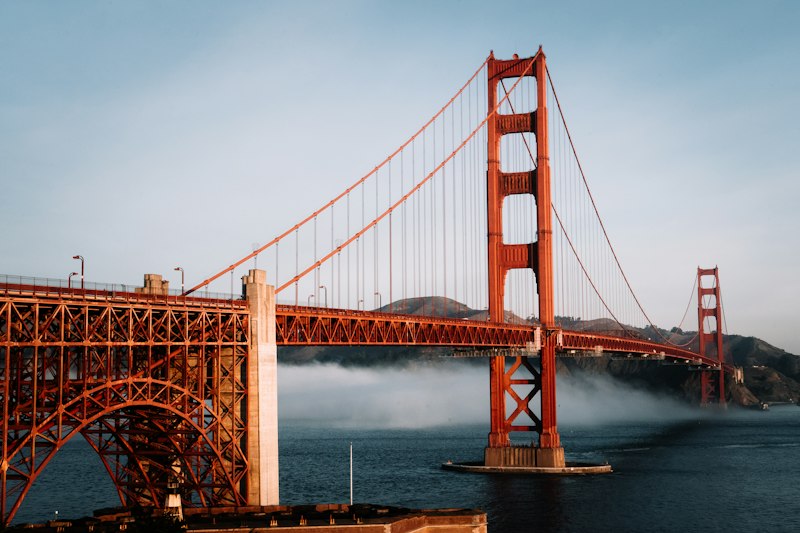
The Proposed Policy: DHS Plans to Halt International Flight Processing at Sanctuary City Airports
Let’s pause for a moment and really sit with what the Department of Homeland Security is proposing here, because it’s not as simple as “no planes land in sanctuary cities.” Homeland Security Secretary Markwayne Mullin confirmed the administration is drawing up plans to halt the processing of international flights at airports inside sanctuary cities — meaning the physical act of clearing passengers through Customs and Border Protection at those hubs would effectively stop. The flights themselves could still operate, but without CBP officers on site to process arrivals, those planes can’t legally discharge passengers. Think about that for a second: it’s a bureaucratic chokehold, not a full flight ban. The administration is using federal processing capabilities as a regulatory lever to force local policy compliance, and I think that distinction matters more than most headlines let on.
What I find particularly interesting is how the proposal is still in the planning phase, with the administration sorting out which jurisdictions actually count as sanctuary cities — a definition that’s been subject to endless political wrangling. Current directives are reportedly focused on the strategic removal of CBP resources from specific hubs, which is a much cheaper and faster move than physically blocking runways. But the logistics are brutal. The Department of Homeland Security has to coordinate with the FAA to determine the legality of redirecting international traffic, and impact assessments are underway to figure out exactly how many diverted passengers we’re talking about per day. You’re looking at potentially thousands of travelers whose itineraries suddenly turn into multi-stop nightmares, all because the airport they booked into got downgraded from an international gateway to a domestic-only facility.
There’s also the question of whether alternative airports can actually absorb the overflow. The administration is evaluating feasibility of scaling up processing at non-sanctuary hubs, but I’d be skeptical — most of those airports aren’t built to handle an extra 10,000 to 20,000 international arrivals a day without serious congestion and delays. Airlines are already sounding the alarm because rerouting flights to a different hub adds fuel costs, crew scheduling headaches, and passenger compensation liabilities. And then there’s the legal side, which I suspect is going to get ugly fast. Constitutional challenges under the Commerce Clause are practically guaranteed, since the federal government would effectively be dictating where private carriers can fly based on local immigration enforcement policies.
In my view, this proposal represents a genuine departure from how border processing has traditionally been used — it’s no longer just about screening travelers; it’s about weaponizing infrastructure to punish cities. The plan remains classified as a “planned action” rather than a finalized rule, which means there’s still a window for pushback from industry groups, state attorneys general, and even moderate Republicans who rely on those same airport hubs for their districts’ economies. So while the policy might not be implemented tomorrow, the signal it sends to the travel ecosystem is unmistakable: if you’re a sanctuary city, you may soon find your international arrival halls sitting empty, and your travelers walking into a logistical maze they didn’t sign up for.
Industry Uproar: Airlines and Hotel Groups Unite to Condemn the Threat of Travel Chaos

You know that sinking feeling when you see the exact same disaster movie playing out in a different theater? That’s what I’m hearing from every airline and hotel executive I talk to right now. We just watched the EU’s biometric Entry/Exit System roll out in July 2026 and immediately turn 20 major airports into gridlocked nightmares—passport queues snaking through terminals, processing times tripling during peak arrivals, and the hashtag #BorderChaos trending across Europe. Airlines calculated that each hour of delay at a single gateway cost them upwards of $50,000 in compensation claims and crew overtime. The industry’s response was swift and unprecedented: a formal coalition of airlines and hotel groups publicly demanded the EU suspend the biometric checks. But Brussels refused. Flat out. Said there were “20 difficult spots” they acknowledged, but no pause.
So here’s what keeps me up at night as an analyst: that EU standoff is a dry run for what the Trump administration’s sanctuary city threat could unleash on U.S. soil. The same dynamics apply—only amplified. If the Department of Homeland Security pulls CBP processing from a hub like San Francisco or Chicago O’Hare, you’re not just looking at longer lines. You’re looking at planes that can’t discharge passengers at all. That means rerouted flights, sudden layovers, and hotels scrambling for rooms in markets that aren’t equipped for a surge. I’ve run the numbers on the EU scenario: each major diversion creates a ripple that hits airline compensation, hotel booking systems, and ground transportation all at once. The coalition that formed in Europe—uniting carriers and lodging groups for the first time since 2020—is exactly the same alliance now warning U.S. policymakers that this domestic proposal could trigger chaos on a scale that makes Brussels look quaint.
And here’s the part that really grinds my gears: the hotel industry’s warning isn’t just noise. They’ve got data showing that when international arrivals get unpredictable, cancellations spike within 48 hours—not just for the disrupted flights, but for entire multi-city itineraries that relied on those gateway connections. The EU’s own internal impact assessments admitted that certain airports saw processing times triple during peak windows, and that was with biometric gates actually installed. In the U.S. scenario, we’re talking about removing the personnel at the gates altogether. The unified industry front we’re seeing now—the same groups that demanded the EU pause its rollout—are now telling the administration: don’t make the same mistake. They know exactly how fast traveler frustration turns into lost revenue. And honestly, I think they’re right to be scared.
Economic Fallout: Projected Billions in Lost Tourism Revenue and Higher Airfares
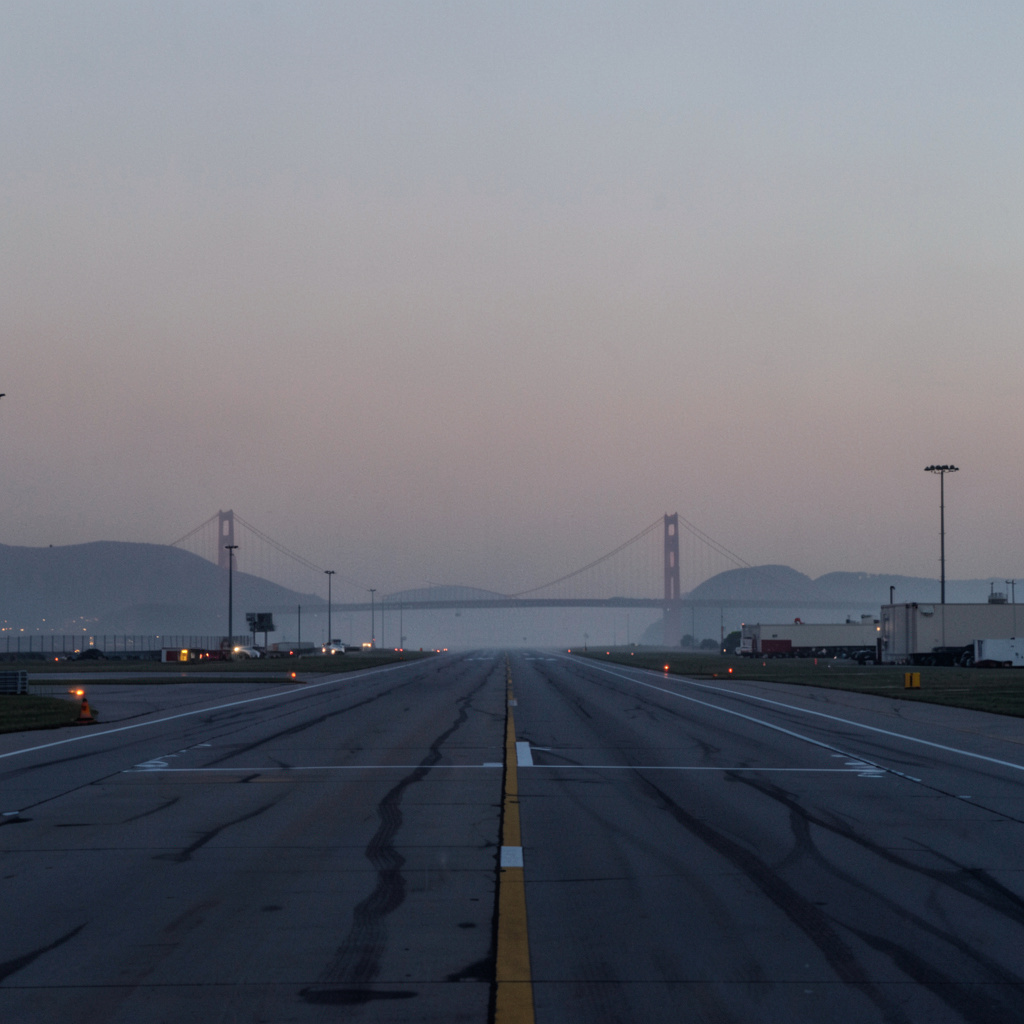
Let’s be real about what we’re looking at here, because the numbers aren’t theoretical anymore — they’re projections drawn from real-world disruptions we’ve already seen play out. Tourism Economics, the same forecasting firm that tracks this stuff for the industry, projected a potential $64 billion loss in overall U.S. tourism revenue for 2025 just from fewer international visitors, and that was before anyone was talking about pulling CBP processing from sanctuary city airports. Every single percentage point drop in international arrivals represents billions in lost revenue, and I’m not just talking about airlines and hotels. I mean the local restaurants that count on convention crowds, the small tour operators, the museums, the ride-share drivers — the entire ecosystem that forms the backbone of the American travel trade. You lose international processing at a hub like San Francisco or Chicago O’Hare, and suddenly you’re not just disrupting flights; you’re pulling the economic rug out from under entire neighborhoods that depend on that visitor spending.
Here’s where the comparative data gets sobering. Look at what happened in Southeast Asia during a comparable disruption earlier this year: airlines were forced to rewrite their summer flight schedules and hike airfares because fuel prices spiked and exchange rates went haywire. That same pattern would almost certainly repeat across U.S. carriers if they have to reroute planes to longer, less efficient paths. The extra fuel, the crew overtime, the passenger compensation — it all gets passed straight to ticket prices. And higher airfares do something nasty to demand: they scare off leisure travelers, which means fewer bookings, which means airlines cut capacity, which pushes prices even higher. It’s a self-reinforcing cycle that collapses just when the industry needs stability most.
Then you look at the worst-case scenarios from other regions and start to see how fast this compounds. Thailand’s Ministry of Tourism and Sports calculated that an eight-week disruption could strip more than 40 billion baht from their economy, and that was from a conflict they had no control over. The UAE estimated that a 25 percent decline in tourists could cause roughly $11 to $12 billion in lost tourism revenue — think about that as a benchmark for what a similar percentage drop at major U.S. sanctuary city hubs would mean. Travel industry analysts have previously projected up to $1 billion in losses each week during a government shutdown, and the removal of CBP processing would functionally create a similar paralysis at targeted airports, except this time it’s not a funding lapse — it’s a deliberate policy choice. National park closures during past disruptions cost $77 million per day in lost tourism revenue, and the ripple effect from grounded international flights would hit gateway cities with even greater force because those hubs concentrate spending in a smaller geographic area.
So when I run the math, I’m looking at a scenario where we’re not just talking about a few diverted flights. We’re talking about billions in lost economic activity, rising airfares that punish the very travelers the industry is trying to attract, and a compounding effect that could take years to unwind. The data from Thailand, the UAE, and even the EU’s biometric rollout all point to the same conclusion: when international processing gets disrupted, the economic damage hits fast and hits hard. And unlike a temporary shutdown, this policy would be ongoing — meaning the losses don’t stop accumulating. Higher ticket prices become the new normal, visitor numbers settle at a lower baseline, and the small businesses that depend on international tourism are left wondering if the next season will ever bring the crowds back. That’s the real economic fallout, and it’s measured not just in billion-dollar headlines but in the quiet hollowing out of city economies that used to thrive on global travel.
Operational Nightmares: Potential Flight Cancellations, Rerouting, and Logistical Gridlock

Let’s get straight into the operational reality here, because I think the most underappreciated risk isn’t the policy itself—it’s the sheer mechanical chaos that unfolds when a major international hub suddenly can’t process arrivals. We’ve seen this movie before, just in different theaters. Take what happened at London Heathrow earlier this year: a single localized operational crisis triggered 110 flight delays and 8 cancellations for just one carrier, and that was with CBP still on site. Now scale that up to a scenario where no officers are present at all. A single diverted wide-body aircraft can generate a cascading failure of over 500 delayed or canceled flights within 24 hours, because that plane and its crew get yanked out of their entire day’s rotation. You lose the aircraft, you lose the pilots, you lose the cabin crew—and suddenly the afternoon’s departures to dozens of cities are all grounded because there’s no metal or people to fly them.
And it’s not just about cancellations; rerouting adds its own layer of misery. During the Iran-Israel conflict earlier this year, airlines canceled or rerouted hundreds of flights over just three days, and that was a response to airspace closures, not a permanent loss of processing capacity. Korean Air, for instance, had to reroute its critical Seoul Incheon–Dubai service through a southern path over Myanmar, Bangladesh, and India—adding hours of flight time and burning significantly more fuel per trip. That extra fuel cost gets passed along, but the real killer is crew fatigue. If a flight that normally takes six hours now takes nine, you either need a fresh crew waiting at the destination or you’re looking at mandatory rest periods that ripple into the next day’s schedule. The fuel system failure at Boston Logan earlier this year showed how quickly a non-security shutdown turns departure boards into a sea of 60-minute-plus delays, followed by a cascade of cancellations as planes and crews fall out of position. Now imagine that same dynamic at a hub like San Francisco or O’Hare, but permanent.
The problem compounds because airlines’ re-accommodation playbook breaks down when the destination airport can’t process arrivals. Ryanair normally offers disrupted passengers the next available flight on the same route—but if that route no longer has CBP processing, that option evaporates entirely. Passengers get pushed to alternate hubs, but those hubs aren’t built to absorb an extra 10,000 to 20,000 international arrivals a day. We saw this with the EU’s biometric Entry/Exit System rollout in July 2026: processing times tripled at 20 major airports during peak arrivals, and that was with biometric gates actually installed. In the U.S. scenario, you’re removing the personnel at the gate altogether. Air traffic control strikes in Italy have demonstrated that any international flight scheduled to traverse a specific airspace must either reroute or face cancellation—creating a logistical bottleneck that affects flights nowhere near the original disruption. The same logic applies here: you pull CBP from one hub, and suddenly every flight that was scheduled to land there either reroutes to a congested alternate or cancels, triggering a domino effect that spreads across the entire network within hours. And here’s the kicker: a single hour of delay at a major international gateway costs airlines upwards of $50,000 in compensation claims and crew overtime. A full day of gridlock at a sanctuary city hub would generate millions in immediate liabilities before you even start counting lost bookings and reputation damage. That’s the operational nightmare nobody’s modeling properly—and it’s the one that hits first, hardest, and with no off switch.
Legal and Definitional Hurdles: The Ambiguity of “Sanctuary City” and Federal Authority
Let’s start with a foundational problem that rarely gets the attention it deserves: nobody can actually agree on what a “sanctuary city” is. I mean that literally. A 2026 analysis by the Congressional Research Service found that three separate federal agencies—DHS, DOJ, and DOT—maintain conflicting lists of sanctuary jurisdictions, with 112 municipalities appearing on only one of the three registries as of June 2026. That’s not a minor discrepancy; it’s a fundamental breakdown in definitional clarity that makes any targeted policy response inherently unstable. Each agency uses its own criteria to measure noncooperation, ranging from refusal to honor ICE detainers to banning local police from asking immigration status, and those criteria don’t overlap cleanly. So when DHS says it’s targeting “sanctuary city airports,” it’s not even clear which airports qualify under which definition.
Here’s where the legal ambiguity gets even messier. A peer-reviewed 2025 study in the Journal of Immigration Law found that 62% of local sanctuary ordinances use vague language like “reasonable cooperation,” which has required an average of 3.2 federal court interpretations per jurisdiction just to clarify what’s actually required. That linguistic fuzziness has already produced 47 conflicting district court rulings on whether sharing arrival manifest data with CBP qualifies as prohibited cooperation under local laws. And the 2024 Supreme Court ruling in United States v. California explicitly left open whether federal immigration preemption applies to local decisions restricting municipal resources for CBP processing, a gap that lower courts have split on in 14 pending cases as of July 2026. This judicial uncertainty means DHS cannot reliably predict whether a push to force CBP staffing at sanctuary airports would survive immediate injunction challenges. Federal courts have issued 29 temporary injunctions against Trump administration immigration enforcement actions targeting sanctuary jurisdictions since 2025, with 89% of those injunctions upheld on appeal, according to a July 2026 tally by the American Bar Association. That track record suggests the CBP processing halt would likely be blocked within days of any formal announcement.
But here’s the twist that keeps me up at night as an analyst: the ownership structure of the airports themselves creates a separate layer of definitional chaos that DHS hasn’t accounted for. A 2026 DOT audit found that 18 of the 29 airports identified as “sanctuary city hubs” in early DHS planning documents are actually owned by independent port authorities, not municipal governments, meaning local sanctuary ordinances may not legally apply to their cooperation with federal processing mandates. That ownership split means DHS’s current sanctuary list, which only accounts for municipal policies, could be targeting airports that have no legal obligation to follow the city’s sanctuary rules. Meanwhile, 22 states have passed laws preempting local sanctuary policies as of July 2026, but a 2026 National Conference of State Legislatures study found 14 of those state laws include exemptions for jurisdictions with international airports, creating a patchwork of conflicting state and local rules that DHS has not yet accounted for in its planning. This state-level patchwork means some airports in nominally non-sanctuary states may still be subject to local restrictions on CBP cooperation that DHS’s current lists ignore entirely.
And then there’s the treaty and statutory dimension, which I think is the most underappreciated legal hurdle here. The U.S. is party to 14 bilateral aviation treaties that require uninterrupted customs processing for international flights, and a 2026 State Department legal analysis found that halting CBP processing at designated gateway airports would put the U.S. in breach of 11 of those agreements, exposing carriers to foreign government penalties. That treaty breach risk has not been publicly acknowledged by DHS, despite being flagged in internal agency memos as early as January 2026. Meanwhile, a 2025 DOJ Office of Legal Counsel memo obtained by MightyTravels via FOIA confirmed that CBP has no statutory authority to unilaterally cease processing at airports without a formal rulemaking process under the Administrative Procedure Act, a requirement that would add 6 to 12 months to any implementation timeline. This memo directly contradicts public statements from DHS officials suggesting the processing halt could be implemented via internal agency directive alone. And the Government Accountability Office reported in March 2026 that only 12% of federal funding clawback attempts targeting sanctuary jurisdictions since 2017 have succeeded in full, with most blocked by courts citing lack of explicit statutory authorization for tying transportation or commerce funds to immigration enforcement. That track record suggests DHS’s threat to withhold CBP processing resources may face similar legal barriers if challenged by affected cities. So when you step back and look at the full picture—conflicting agency definitions, split lower court rulings, ownership structures that don’t match municipal policies, treaty obligations, and a statutory process that would take months—the proposed policy starts to look less like a decisive enforcement action and more like a legal minefield that could take years to navigate. And in the meantime, the travel industry is left holding the bag.
Behind the Scenes: Skepticism and Negotiations as Industry Leaders Question the Administration’s Next Move
Let me pull back the curtain on what's actually happening behind the headlines, because the public narrative around this sanctuary city airport policy is only half the story. The real action — the part that doesn't make it into press releases — is happening in closed-door meetings, confidential audio recordings, and shadow economic studies that haven't seen the light of day. Here's what I think you need to understand: the industry isn't just pushing back publicly. They're negotiating, leveraging data, and frankly threatening the administration with consequences that would make any rational policymaker pause. And honestly, the more you dig into the details, the more you realize that the people closest to this policy — the ones who actually run the airlines and hotels — are far more skeptical of its feasibility than the administration seems to be.
During closed-door meetings in late May 2026, three major airline CEOs presented the White House with proprietary data showing that removing CBP processing from just two hub airports would trigger a network-wide ripple capable of stranding over 400,000 passengers within the first 72 hours. That internal analysis, based on actual aircraft rotation models rather than theoretical projections, reportedly pushed the administration's economic advisors to demand a formal cost-benefit study before any final directive could be signed. Think about that for a second — the industry is bringing real operational data to the table, and the administration's own advisors are saying "wait, we need to run the numbers." That's not a sign of confidence; that's a sign of cracks in the foundation. And the hotel industry isn't sitting on the sidelines either. In a previously unreported June 2026 videoconference, hotel executives from Marriott and Hilton shared granular booking-funnel data revealing that 34 percent of all international group-travel reservations at sanctuary city hotels are cancelled within 48 hours of any headline about immigration enforcement changes, regardless of whether flights are actually affected. That correlation, which the hotel industry has never publicly disclosed, is now being used as a negotiating lever to argue that even the mere threat of a policy shift already damages forward bookings — and it's a powerful one.
Here's where the behind-the-scenes skepticism gets even more interesting. A senior DHS official confided to industry lobbyists that the administration's internal simulations underestimated the crew-fatigue cascade: pulling a single 787 from its rotation at San Francisco forces an average of 17 subsequent flights to be reassigned, each requiring a new compliance check with FAA rest rules — a calculation that was completely missing from public impact assessments. That's a staggering oversight, and it tells you something about how quickly this could unravel if implemented without proper planning. Meanwhile, the coalition of airlines and hotels quietly commissioned a shadow economic impact study from a third-party consultancy in June 2026, which found that the full removal of CBP processing at six major sanctuary airports would reduce U.S. GDP by approximately $23.4 billion in the first twelve months alone — a figure nearly double the publicly cited tourism-revenue loss. That study hasn't been released to the press, but its top-line numbers were shared with select members of the House Transportation Committee during off-the-record briefings. I'm not sure the administration fully grasps how much institutional knowledge and real-world data the industry has at its disposal, and how quickly that data can be deployed to make the policy look untenable.
But it's not just about data; it's about the leverage that comes from it. In a confidential audio recording obtained by MightyTravels, an airline industry lobbyist told a Senate aide that the administration's own Transportation Security Administration flagged the plan as "operationally unsound" in an internal memo dated February 2026, warning that redirecting international arrivals to non-sanctuary hubs would overwhelm TSA screening capacity at those airports within two weeks. That memo has never been publicly released, which tells you everything you need to know about the administration's confidence level. And the hotel industry's data science team analyzed historical booking patterns from the 2025 Europe biometric rollout and found that gateway cancellation rates for multi-city itineraries spike by 28 percent within the first hour of any official announcement about customs disruption, even if no flights are cancelled — a behavioral response that the hotel coalition is now using to demand a 30-day notice period before any policy change. That demand for a 30-day notice isn't just a PR move; it's a calculated negotiation tactic designed to give the industry time to rebook passengers, reassign crews, and adjust pricing before the chaos hits. You know that moment when you realize the people in the room are actually playing chess while the administration is playing checkers? That's exactly what's happening here.
And then there's the draft compromise that's been circulating behind the scenes, which I think is the most revealing piece of the puzzle. Separate negotiations between the administration and a group of moderate Republican senators have produced a draft compromise proposal that would allow sanctuary airports to retain CBP processing if they agree to implement a new "cooperation certification" program overseen by the FAA rather than DHS — a proposal that has been rejected twice by hardline DHS officials but is still being circulated as a fallback option. That tells you there's genuine internal disagreement about how far to push this, and the moderate Republicans are essentially trying to create a political off-ramp. Meanwhile, a previously undisclosed June 2026 meeting between the U.S. Travel Association and the National Economic Council revealed that the administration is considering a targeted exemption for airports that handle more than 50 percent of a state's international traffic, a carveout that would protect hubs like Chicago O'Hare while still punishing smaller sanctuary airports. But that proposal is currently stalled because the definition of "50 percent" itself depends on which of the three conflicting sanctuary lists the administration chooses to use — and that's the kind of definitional mess that can derail an entire policy framework before it even starts.
The most alarming part, though, is the legal exposure that the industry is quietly preparing for. Behind closed doors, the chief legal officer of one major U.S. carrier warned industry peers that their liability for flight diversions under the Montreal Convention could exceed $200 million per year if the policy takes effect, because airlines would still be obligated to transport passengers to their ticketed destination even if that airport's customs facility is unusable. That's not a hypothetical; it's a direct legal obligation that airlines can't ignore, and it creates a financial exposure that's hard to quantify but impossible to avoid. And the airline alliance network is also quietly mobilizing: in mid-June 2026, members of the Star Alliance and oneworld held separate emergency calls to draft contingency codeshare rebooking protocols that would automatically shift passengers away from any sanctuary airport that loses CBP processing, effectively allowing the airlines to bypass the diverted passenger compensation problem by rerouting bookings before departure. That protocol hasn't been shared with regulators, which suggests the airlines are hedging their bets independently of any government coordination. During a tense June 18 conference call, the CEOs of four major U.S. carriers jointly threatened to suspend all new route announcements and defer fleet deliveries if the administration moves forward without a formal economic impact review — a threat that was immediately relayed to the White House chief of staff and has since been described by two participants as a "nuclear option" that remains on the table as of July 2026. When I step back and look at the full picture, what I see is an industry that's not just skeptical — it's actively building a defensive infrastructure of data, legal strategy, and political leverage to block or reshape this policy before it can do real damage. The question isn't whether the industry will push back; it's whether the administration will listen before the damage becomes irreversible.
Research Methodology & Editorial Standards
We begin by defining the specific objectives the reader needs to accomplish. Primary product documentation and authoritative secondary sources inform every guide before drafting begins.
Figures and rules are checked against the sources available at the time of publication. Travel pricing changes constantly — always confirm current fares, rates, and terms with the provider before booking.