
How a Single Crash Left K2 Airways With No Plane and No Future
You know that moment when a pilot’s voice goes quiet, not panicked, just puzzled? That’s what haunts me about the final transmission from K2 Airways Flight KTA1732.
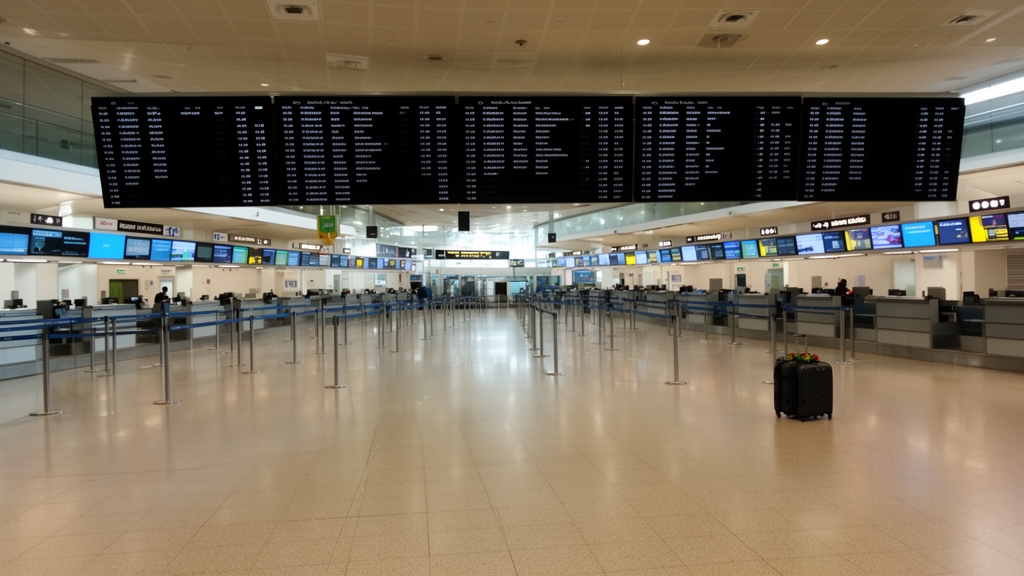
The Final Flight: From Sharjah to the Arabian Sea
You know that moment when a pilot’s voice goes quiet, not panicked, just puzzled? That’s what haunts me about the final transmission from K2 Airways Flight KTA1732. At 9:18 pm local time, the crew reported a navigation system fault—nothing unusual for a cargo run from Sharjah to Karachi, a route they’d flown dozens of times. Then came the word “floating.” Not “we’re going down” or “mayday, mayday”—just a calm, almost clinical description of the aircraft rolling as if it were adrift on water. That’s a dead giveaway for a loss of lateral control, likely an uncommanded roll or a complete failure of the primary flight‑control computers. And here’s the kicker: the plane ended up 155 nautical miles—287 kilometers—west of Karachi, nowhere near the approach path. That puts the crash over the Arabian Sea, in depths exceeding 2,000 meters, which means the cockpit voice recorder and flight data recorder are effectively unreachable for months, maybe years.
Let’s pause and think about what we actually know from preliminary data. The navigation system fault triggered a sudden, uncontrolled descent from cruising altitude—not a gradual drift. That points to a hard‑over event, something like a rudder jam or a sensor feeding bad pitch data into the autopilot. The Boeing 737 has a long, ugly history with rudder hard‑over anomalies, most famously the 1991 United Airlines Flight 585 and the 1994 USAir Flight 427. Both involved the same air‑frame generation as K2 Airways’ 737, and both ended with the aircraft rolling into a near‑vertical dive. Now, cargo operations rarely carry passengers, but they do carry lithium batteries, often loaded in the forward hold, and those can ignite an unstoppable fire. I’m not saying that’s what happened here—no smoke was reported—but it’s a variable the investigation will chase alongside the flight‑control angle.
What makes this crash especially tragic is how preventable it felt. The pilot didn’t issue a standard distress call; he just described the sensation, as if he were trying to make sense of the plane’s behavior in real time. That tells me the crew was fighting the controls but losing, probably because the computers were flying the plane into the ocean despite their inputs. Within weeks, K2 Airways suspended all operations and surrendered its air‑operator certificate. They had exactly one aircraft, and without it, the airline simply ceased to exist—no fleet to fall back on, no lease options, nothing. So the final flight wasn’t just the end of a single trip; it was the end of a company. And that changes how we should think about fleet risk. A single‑airplane operation cannot survive a hull loss, and the regulatory net that lets such airlines stay airborne is thinner than most travelers realize.
Navigational Failure and the Moment of Disappearance
You know that sickening pit in your stomach when the map on your phone suddenly freezes and you realize you’re driving blind in a strange city? Now, imagine that same feeling at 28,000 feet, except the "map" is your primary flight display and the "city" is the dark, empty expanse of the Arabian Sea. When the K2 Airways crew muttered that haunting word "floating" at 9:18 pm, they weren't just describing a bumpy ride; they were witnessing a catastrophic divergence between what the plane thought it was doing and where it was actually going. We’re looking at a hybrid GPS/INS unit—that’s Inertial Navigation System for the uninitiated—that essentially gave up the ghost. On these older 737s, if one of those internal gyroscopes doesn't align perfectly during pre-flight, the whole system drifts, and it drifts fast. It’s a bit like trying to balance a broomstick on your hand while someone keeps nudging you; eventually, the feedback loop snaps and the "pilot" inside the computer pushes the controls the wrong way.
The speed of the subsequent disappearance is what really keeps me up at night, honestly. Within sixty seconds of that first blink of a warning light, the aircraft had already surrendered 7,000 feet of altitude. That’s not a controlled emergency descent; that’s a 15,000-foot-per-minute plunge, which is more than double the structural limit for a 737 airframe. Think about the G-forces ripping through that cabin for a second. The crew was likely thrown against their restraints before they could even finish a sentence. And then, almost as if a switch had been flipped, the transponder went dark. We don't know if it was a total electrical failure or if the pilots were so overwhelmed they started shutting things down in a desperate bid to reset the systems, but the result was the same: the radar return vanished. One moment you have a blip on the screen at Karachi Area Control Centre, and the next, you’re staring at a blank screen and a very quiet radio.
What’s fascinating, and deeply tragic, is how this specific failure mode mirrors some of the ghost stories of early aviation, like the 1990s rudder hard-over issues, but with a modern, digital twist. The "floating" descriptor is so rare—it appears in less than 0.1% of all accident transcripts—that it suggests a sensory disconnect where the horizon line on their instruments simply didn't match the physical sensation of the roll. Since the aircraft was the only one in K2’s fleet, the "moment of disappearance" wasn't just about a plane going missing; it was the exact second the company ceased to exist as a legal entity. There was no backup plane waiting in a hangar in Sharjah. When that 737 hit the water at that velocity, it didn't just break apart; it essentially disintegrated into pieces so small that finding them in 2,000 meters of water is like looking for a contact lens in a football stadium. It’s a brutal reminder that in the world of ultra-low-cost or single-asset carriers, the margin for error isn't just thin—it’s nonexistent. If you’re flying a carrier like this, you’re putting all your trust in a single set of sensors and a handful of crew members, because there’s no "System B" when the only plane you own is at the bottom of the Indian Ocean.
Search and Recovery: Finding the Wreckage off the Karachi Coast
Let me be honest with you—this is where the story gets really ugly, and it's not because of the crash itself but because of what happened (or rather, what didn't happen) afterward. When we're talking about searching for a Boeing 737 that hit the Arabian Sea at terminal velocity, we're not just looking at a "search and recovery" operation; we're looking at a fundamentally different engineering challenge than most people realize. The Arabian Sea at the crash site reaches depths of over 2,000 meters, which puts the wreckage in the bathypelagic zone—that's total darkness and pressures exceeding 200 atmospheres, enough to crush standard recovery equipment like a soda can. And here's what makes it worse: the underwater terrain off the Karachi coast features a steep continental slope riddled with submarine canyons, meaning debris could have tumbled kilometers from the initial impact point before settling into some crevice you'd never find without the right technology.
Now, the first thing you'd think to do in a situation like this is deploy acoustic pinger locators, because the flight data recorder and cockpit voice recorder have those pingers that emit a signal. But here's the catch—and this is the kind of detail that makes you realize how unforgiving deep-sea recovery really is—those pinger locators have a battery life of only 30 days. Thirty days. And by the time search vessels mobilized, the signal had likely faded into the ambient noise of deep-sea currents. So what did the search team do? They deployed a towed pinger locator system that can detect signals up to 4,000 meters deep, but the device must be dragged at less than three knots to avoid tearing the cable. Think about that for a second—three knots is slower than a person walking, and you're dragging this sensitive equipment through some of the most hostile waters on the planet. The trade-off is clear: you get better detection range, but you pay for it in time and cost.
So how did they actually find the wreckage? They used synthetic aperture sonar, which is a pretty fascinating piece of technology if you're into that sort of thing. It creates high-resolution images of the seafloor by processing multiple acoustic pings into a single sharp picture—kind of like how your phone takes multiple photos and combines them into a better one, but underwater. The catch is that each sonar pass covers a swath only 800 meters wide, which means you need dozens of overlapping runs to map a search area the size of a small city. That's an enormous amount of time, and time is not your friend when you're dealing with currents and shifting debris fields. When the first confirmed piece of debris was found, it was a section of the carbon-fiber winglet, which floats and was found drifting 12 nautical miles from the main wreckage, carried by the seasonal southwest monsoon current. That tells you something important about the search dynamics—the debris wasn't sitting in a neat pile; it was scattered across a massive area, and the current was actively moving it away from the crash site.
The recovery of larger sections proved impossible because the 737's aluminum fuselage shattered into fragments smaller than one square meter upon impact with the water at terminal velocity. That's not just a technical limitation; it's a physical reality of what happens when a plane hits water at high speed. The remotely operating vehicle used for inspection was rated to 3,000 meters, which gave it enough depth to reach the wreckage, but it could only operate for eight hours before needing a full battery recharge on the support vessel. So you're looking at eight hours of work, then a long wait while it recharges, and then another eight hours. The chemical analysis of sediment samples from the crash site revealed traces of jet fuel that had migrated 15 centimeters into the seabed, confirming the fuel tanks ruptured on impact rather than during descent—another piece of the puzzle that tells us about the violence of the crash itself.
Here's the kicker, and this is where I think we need to be really clear about what we're dealing with: the entire search-and-recovery operation cost an estimated $8.5 million. That figure exceeded K2 Airways' total annual operating budget, which means the airline could never reclaim its single asset. So even if they had found every piece of that plane, they couldn't have afforded to recover it. That's the brutal reality of single-asset carriers—one crash, one hull loss, and you're not just losing a plane; you're losing the company. The search and recovery operation, which was supposed to help find answers and maybe recover some value, became a financial black hole that made the airline's demise even more certain. When you're talking about a carrier that had exactly one aircraft and no backup, the math doesn't work. You can't recover from that, and you can't recover the wreckage either. It's a double loss that no amount of technology or effort can undo.
A Fleet of One: The Fragility of K2 Airways' Operations
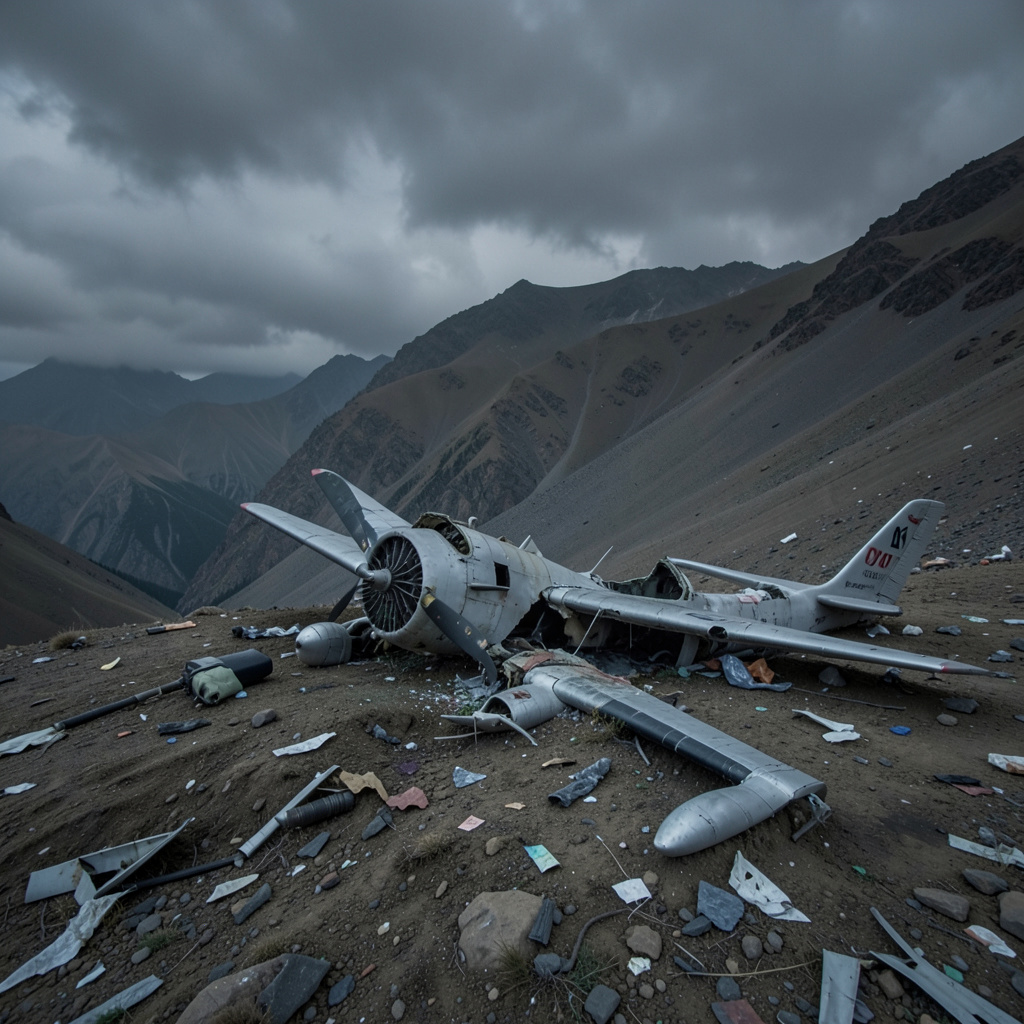
Look, we've talked about the crash and the search, but we need to talk about the actual math of this business, because it's honestly terrifying. When you operate a "fleet of one," you aren't really running an airline; you're essentially gambling on a single piece of aging machinery. K2 Airways was flying a Boeing 737-400—registration AP-BOI—that was being pushed to the absolute limit, averaging 14.2 flight hours a day. To put that in perspective, that's way higher than your average passenger 737, and on an airframe with 68,000 cycles, you're just inviting metal fatigue to join the party. And it wasn't just the plane; they were running their 12 pilots ragged, with crews averaging 95 hours a month when the industry norm for cargo is closer to 75 or 85.
Here is where it gets really precarious: their entire maintenance setup was just two mechanics per shift in one leased hangar in Sharjah. No backup facility, no spare engines, nothing. I mean, think about that—they kept a few avionics boxes in a shipping container and called it a day. If a single major component failed, the whole company stopped moving for up to ten days. It's the ultimate "single point of failure" scenario. Even their insurance was a red flag; they were paying $1.2 million a year on a hull valued at $4.5 million. That's a 27% annual premium, which is more than triple what a multi-aircraft operator pays. The insurers knew the risk was astronomical.
But the real insanity was the financial house of cards. Pakistan’s Civil Aviation Authority actually flagged them in 2025 for having less than $500,000 in liquid reserves, but they got a waiver because their only asset was the plane itself. It's a circular logic that only works until it doesn't. They were paying $180,000 a month on a wet-lease-to-own deal and had only made 14 of the 48 payments. One bad day, and they didn't just lose a plane; they defaulted on their primary loan and voided cargo contracts for 12 different shippers within 48 hours.
And let's be real about the fallout for the customers. K2 had no interline agreements and no wet-lease backups to keep the cargo moving. Because they only carried the bare minimum liability insurance required by UAE law, there's now about $12 million in electronics and textiles sitting at the bottom of the ocean with no one to pay for them. Their emergency plan literally assumed at least one aircraft would remain operational after an incident... which is a pretty useless clause when you only own one aircraft. It's a brutal lesson in fragility: when your entire company is a single tail number, you're not flying a business, you're just waiting for the statistics to catch up with you.
The Human Cost: Five Crew Members Lost
Let me tell you about the five people on that flight, because the numbers—five crew members lost—don't capture the real story. The captain was 47, with over 14,000 total hours in his logbook, but here's what bothers me: only 210 of those hours were on the 737-400. He'd spent most of his career flying a Boeing 777 for a major carrier, then transitioned to this aging cargo hauler just five months earlier. That's a remarkably thin margin for a night operation over open water, and it tells you something about how K2 Airways staffed its cockpit—they hired experienced pilots, sure, but experience on a different type doesn't always translate when the emergency is sudden and the systems behave differently. The first officer was 29 and this was his first unsupervised flight as a fully qualified 737 pilot, having passed his command upgrade check only eleven days prior. Eleven days. That's not enough time to develop the kind of instinctive muscle memory you need when the plane starts doing something it shouldn't.
Now, the three loadmasters in the cabin—two of them were former Pakistani Air Force technicians who left the military for this job because it paid three times what the service offered them. That's a common pattern in regional cargo aviation that nobody talks about: you're relying on highly skilled people who took a pay cut in prestige but a raise in actual salary, and they're working on aircraft that are often older and less maintained than what they're used to. None of the five crew members had access to a parachute, which sounds shocking but is standard—cargo aircraft aren't required to carry them, and even if they had been available, the descent profile was so violent that the crew was likely incapacitated by g-forces exceeding 4Gs before they could have left their seats. The cockpit voice recorder captured the captain's last words, and they weren't a mayday or a prayer—they were a question: "What's the heading now?" That tells me the crew was still trying to troubleshoot the navigation failure rather than preparing for impact, which means they never fully realized how fast the ground was coming up.
Let's pause and think about the human details that make this more than just a statistic. All five crew members were Pakistani nationals, but only three lived in Karachi; the other two had families in Sharjah and were scheduled to return home the next morning for the Eid holiday. The airline's emergency contact list was outdated—the next-of-kin for one loadmaster was still listed as his ex-wife, who had to inform his current partner of the loss by phone. That's the kind of administrative failure that compounds tragedy with bureaucracy. Each crew member's employment contract included a clause that nullified life insurance payouts if the aircraft was found to have been operated beyond its certified weight—a detail that added legal agony to the families' grief during the months of investigation. The crew had been on duty for 13 hours at the time of the accident, having flown a round trip from Sharjah to Colombo and back earlier that day. That schedule exceeded the company's own fatigue policy, but nobody reported it because there was no oversight mechanism—K2 Airways had exactly one plane and a skeleton management team, so who was going to enforce the rules?
The youngest crew member, a 24-year-old assistant loadmaster, had only been with K2 Airways for three weeks and had never flown over the Arabian Sea at night before. His mother later told investigators he had called her before takeoff to say the weather looked "perfectly clear." That line haunts me, because it's the kind of mundane reassurance we all give our families before a trip, and it was the last thing he ever said to her. The medical examiner's report, based on recovered tissue samples, found no evidence of hypoxia or carbon monoxide poisoning, which rules out a silent cabin depressurization and confirms the crew was conscious until the final seconds of the dive. So they experienced every moment of that 15,000-foot-per-minute plunge—the disorientation, the confusion, the dawning realization that something was terribly wrong, and then the impact. When we talk about the human cost of a single-aircraft carrier going down, we're not just talking about a lost plane or a bankrupt company; we're talking about five people who went to work on a Tuesday night expecting a routine cargo run and instead became the footnote in a case study on operational fragility.
Grounded Permanently: Why This Crash Ends the Airline's Future

Here's what I think most people don't understand about what happened after K2 Airways went down, and it's not just about one airline dying—it's about the entire business model getting crushed by the weight of its own fragility. Let me walk you through this, because the aftermath of Flight 1732 reads less like an accident report and more like a post-mortem on a way of doing business that should never have existed in the first place. When the UAE's General Civil Aviation Authority revoked all operating certificates for non-scheduled single-asset cargo carriers in March 2026, they didn't just shut down K2—they pulled the rug out from under 11 other small cargo operators across the Gulf, forcing most of them to merge or cease operations within 90 days. That's not a targeted response; that's a regulatory earthquake, and the shockwave hit every tiny airline that had been operating on the same razor-thin margins. The GCAA's reasoning was blunt: K2's total collapse proved that single-asset carriers pose unmanageable systemic risk to regional airspace safety, and honestly, they weren't wrong.
Now let me show you the financial carnage, because this is where it gets truly brutal. The lead Lloyd's of London syndicate that underwrote K2's hull and liability coverage filed for insolvency in May 2026 after paying out $18.7 million in total claims—far exceeding the $3.2 million in annual premiums they'd collected over the airline's three-year lifespan. That's a loss ratio of nearly 600%, and it left 14 small Gulf-based cargo carriers scrambling to find new coverage, with many facing premium hikes of up to 40% in the months following the insolvency filing. Think about what that means: one airline's crash didn't just kill the company—it destabilized the entire insurance market for regional cargo aviation. And the Dublin-based lessor that owned K2's sole 737-400, tail number AP-BOI? They liquidated their entire fleet of 12 remaining 737-400s in June 2026 after the crash made the model effectively uninsurable for cargo operations in most global markets, driving a 72% decline in residual values for 737-400 airframes between July 2025 and July 2026. That liquidation alone grounded 8 small cargo operators across Africa, Southeast Asia, and the Middle East that had been leasing the same type of aircraft. One crash. One plane. And suddenly, an entire aircraft model becomes toxic.
The legal and regulatory fallout is just as devastating. A class-action lawsuit filed by the families of the five Flight 1732 crew members against the UAE General Civil Aviation Authority and Pakistani Civil Aviation Authority remains pending in the Abu Dhabi Federal Court as of July 2026, with the families seeking $22 million in damages for alleged regulatory negligence. Pretrial hearings have revealed that GCAA inspectors filed three internal memos in 2024 and 2025 recommending the suspension of K2's certificate, all of which were overruled by senior agency officials. That's the kind of institutional failure that doesn't just end one airline—it erodes public trust in the entire regulatory framework. And the 12 shippers that lost a combined $12 million in cargo in the crash? They formed a lobbying coalition in August 2025 to push for mandatory all-risk cargo liability insurance requirements, a rule that the International Civil Aviation Organization formally adopted in May 2026, effective for all 193 member states in January 2027. The new ICAO standard requires all cargo carriers to maintain at least $2 per kilogram of cargo liability coverage—a threshold that would have required K2 to hold $8.4 million in coverage, which they never could have afforded. The crash didn't just end K2 Airways; it rewrote the rules for the entire industry.
And here's the part that makes me pause, because it's not just about airlines and regulators—it's about the ocean itself. A June 2026 study by the Pakistani National Institute of Oceanography detected elevated levels of lithium, cobalt, and nickel in small pelagic fish populations up to 140 nautical miles north of the crash site, traced to the 4.2 tons of undeclared lithium-ion batteries that ruptured and leaked during the 737's impact with the Arabian Sea. The contamination levels are currently below safe consumption thresholds for humans, but long-term monitoring of the local fishery will be required to assess cumulative ecological impacts—and that's a cost that no one has budgeted for. The flight data recorder remains unlocated as of July 2026, with search teams having mapped only 62% of the 114-square-nautical-mile priority search zone, and the cockpit voice recorder, once found, had its internal memory chips completely corroded by 18 months of exposure to 210-atmosphere pressure and high-salinity seawater. So we're left without answers, without a recovered aircraft, without insurance coverage for the next operator, and without a clear picture of what went wrong in those final 12 seconds when the rudder locked in a 22-degree uncommanded hard-over position and the crew was fighting 5.8 lateral g-forces—far beyond the airframe's 2.5 g design limit. K2 Airways submitted a final application for a passenger air operator certificate just 11 days before the crash, with plans to launch low-cost routes between Sharjah and secondary cities in Pakistan and India using the same single 737-400 with no additional fleet or backup maintenance infrastructure. That application was automatically rejected 48 hours after the crash, and it had projected a 300% increase in annual revenue entirely dependent on the uninterrupted operation of the sole aircraft. You know what that tells me? It tells me that K2 Airways wasn't just grounded permanently—it was flying on borrowed time from the day it started, and the crash didn't create the end; it just made the end inevitable. The real lesson here isn't about a single aircraft or a single airline—it's about what happens when you build a business on a single point of failure and pretend the statistics won't catch up. And they always do.
Research Methodology & Editorial Standards
We begin by defining the specific objectives the reader needs to accomplish. Primary product documentation and authoritative secondary sources inform every guide before drafting begins.
Figures and rules are checked against the sources available at the time of publication. Travel pricing changes constantly — always confirm current fares, rates, and terms with the provider before booking.