
Kangala Air Express Makes History With Burkina Faso's First Ever Boeing 737 Business Jet
You know that moment when a young airline makes a move that just feels bigger than the sum of its parts?
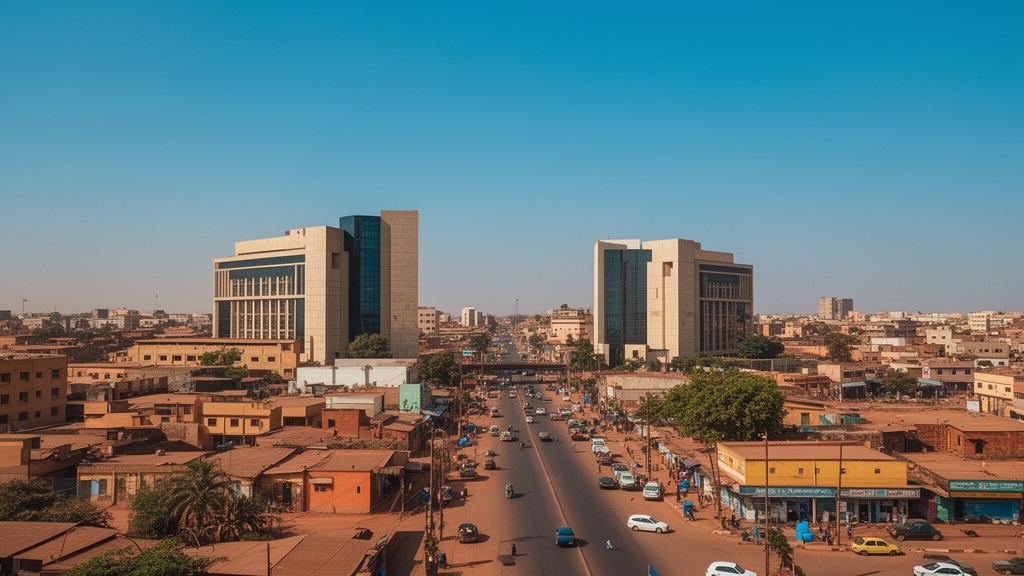
Kangala Air Express Welcomes Burkina Faso's First Boeing 737
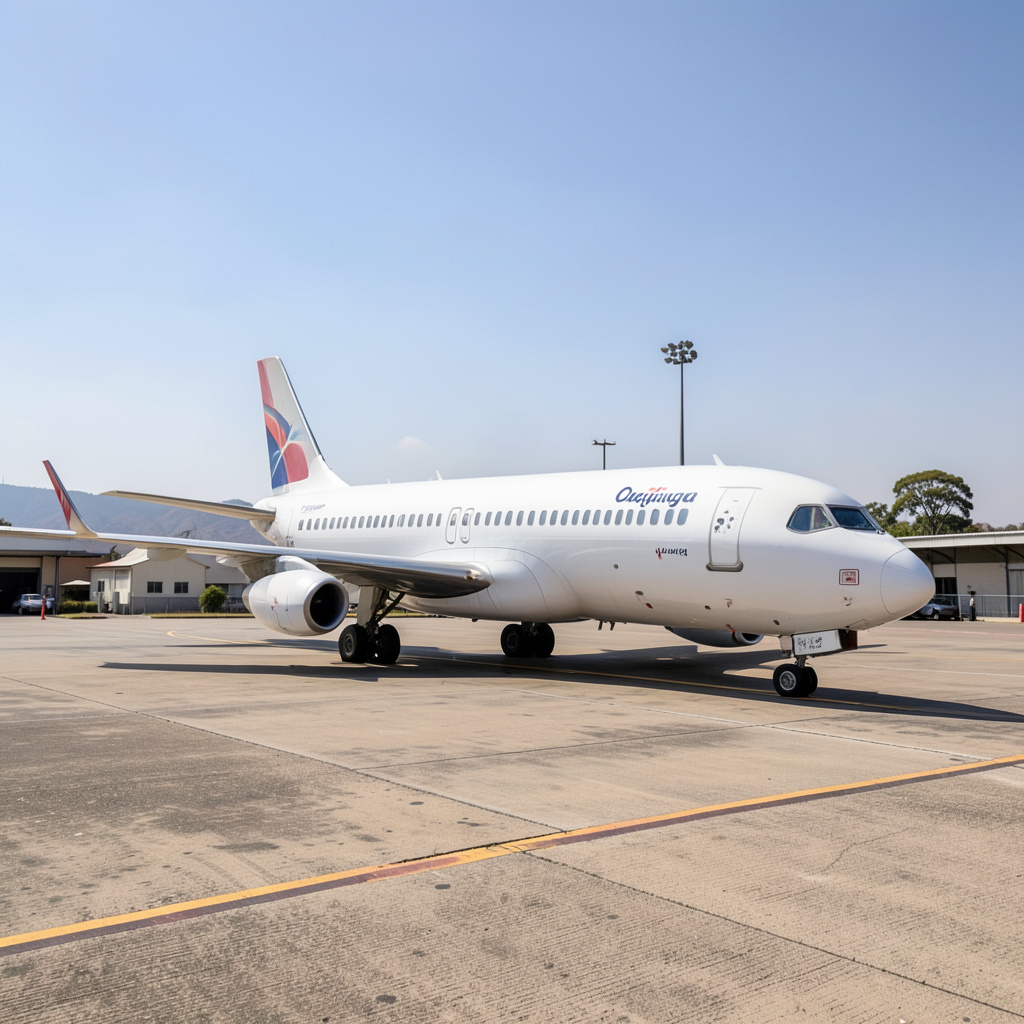
You know that moment when a young airline makes a move that just feels bigger than the sum of its parts? That’s exactly what happened on July 8, 2026, when Kangala Air Express took delivery of XT‑AKD, a Boeing Business Jet 737‑700 — and in doing so, parked the first and only active Boeing aircraft on Burkina Faso’s civil register. Let me pause and let that sink in for a second. This isn’t just another plane delivery. It’s a signal that private aviation in the Sahel is maturing in a way few people outside the region have noticed. Kangala started in 2023 with a single ATR72‑500, a perfectly sensible turboprop for short regional hops. But jumping from a 72‑seat turboprop to a jet‑powered Boeing? That’s not a step; it’s a leap across a canyon. And they did it without the safety net of a major airline group backing them.
Here’s what makes this particular airframe so interesting. XT‑AKD started life as a standard commercial 737‑700, but it was later converted into a BBJ1 configuration — meaning the cabin holds fewer than 50 seats instead of the usual 140‑plus. Think about the economics of that: you’re trading mass capacity for space, privacy, and range. The BBJ1 can fly non‑stop from Ouagadougou to most of Europe and the Middle East, something no other aircraft on the Burkinabé register can claim. That range opens up direct connections to mining executives in London, government delegations in Abu Dhabi, or even humanitarian missions to Istanbul. And the cabin layout — typically with sleeping quarters, a conference area, and a galley — tells you exactly who this plane is built for: high‑net‑worth individuals, corporate boards, and state officials who value time and discretion over seat count.
But here’s where I think the real story is. Just days after the BBJ1 arrived, Kangala issued a formal request for proposals for a widebody freighter — either a B767 or an A330, on a wet‑lease or full‑charter basis. That tells me they’re not just dabbling in VIP charters; they’re building a dual‑strategy airline. On one side, premium passenger transport for the resource and mining sectors that drive West Africa’s economy. On the other, cargo capacity to move equipment, spare parts, and possibly even perishables across the region. That’s a smart hedge, especially in a market where passenger demand can be lumpy but freight demand stays stubbornly steady. The operational base in Ouagadougou positions them perfectly to serve both needs, sitting at the crossroads of the Sahel with decent runway infrastructure and growing diplomatic traffic.
Now, I’ll be honest — this isn’t a risk‑free bet. Operating a single‑type fleet of one Boeing jet is expensive. Maintenance, crew training, and insurance don’t scale well when you’ve only got one airframe. But look at the alternative: the only other premium options in the region are either aging charter jets with limited range or flying commercial business class on airlines that don’t always run on schedule. Kangala is creating a niche that didn’t really exist before in Burkina Faso — a dedicated, professionally operated business jet service with the range to actually connect the Sahel to the global economy. If they can keep that BBJ1 flying consistently and pair it with a freighter later this year, they’ll have built something genuinely new. And for a carrier that didn’t even exist three years ago, that’s not bad at all.
Inside the Boeing 737-700 BBJ1: A New Era of Luxury for West Africa

Let’s get into what this aircraft actually is, because there’s a lot more going on here than just a nice interior. The Boeing 737-700 BBJ1 isn’t some newfangled creation; it’s the original Boeing Business Jet, first launched way back in 1998, and it effectively created the entire category of airliner-derived private jets that we take for granted today. Only 113 of these specific BBJ1s were ever built, so each one carries a bit of history, and XT-AKD is now the only active Boeing on Burkina Faso’s register. That’s a genuinely rare position to be in. When you step inside one of these, you’re not getting a Gulfstream with a few extra feet of headroom; you’re getting a purpose-built flying office that started life as a standard 737-700 but was completely gutted and reimagined. The typical VIP layout drops the passenger count to around 19, sometimes up to 50, but the point isn’t the number of seats—it’s what you do with all that liberated space.
Think about the cabin physics for a second. A standard 737-700 packs in over 140 people in economy, which means narrow seats, no legroom, and a ceiling you can almost touch. The BBJ1 rips all that out and installs a proper conference area, a full galley, a private stateroom with an actual bed, and even a shower if the owner specs it out. We’re talking about standing headroom for a six-foot-tall person, which is something you simply cannot get in a traditional business jet. The cabin volume alone is a game-changer for the West African market, because long flights to Europe or the Middle East become genuinely comfortable, not just tolerable. And that’s where the CFM56-7B27 engines come in. They’re the same reliable workhorses found on commercial 737s, but in this configuration, they push the aircraft to a max range of about 5,775 nautical miles. To put that in perspective, that’s a nonstop from Ouagadougou to London, or to Dubai, or even to most of Central Europe without a fuel stop.
Now, here’s the part that I think gets overlooked when people just look at the leather seats and the wood veneers. The BBJ1’s true value isn’t the luxury per se; it’s the operational flexibility that luxury enables. For a mining executive who needs to visit a site in the Sahel and then fly straight to a board meeting in Abu Dhabi the same day, this aircraft eliminates the need for multiple connections, overnight layovers, or relying on commercial schedules that are, let’s be honest, not always reliable in this part of the world. The cabin becomes a mobile command center. You can hold a secure conference call at 40,000 feet, sleep in a real bed, and arrive fresh instead of wrecked. That’s not just comfort; that’s a competitive advantage for the companies and governments that charter it. And when you compare it to the other premium options in the region—like aging, short-range charter jets or the business class cabin on a commercial carrier that may or may not run on time—the BBJ1 is in a completely different league.
But let’s be critical for a moment, because the economics of this are fascinating and a bit precarious. The aircraft itself is valued at around $100 million, and operating a single airframe is inherently inefficient. Maintenance costs for a Boeing are fixed; you’re paying for the same engine overhauls and airframe checks whether you fly it 200 hours a year or 800 hours. Kangala is essentially betting that the demand for this level of premium connectivity in West Africa is high enough to keep the utilization rate up. The numbers from the broader BBJ market suggest they might be right—Boeing has delivered 233 BBJs out of 259 orders across all variants, which shows there’s sustained global appetite for these flying boardrooms. The trick is making the math work in a smaller market like Burkina Faso. If they can consistently fill those 19 seats with paying clients—or sell the whole aircraft for government and corporate charters—the margins on a BBJ1 can be very attractive. If not, that $100 million asset sits on the tarmac burning cash. For now, though, the arrival of XT-AKD marks a real inflection point for private aviation in the Sahel, and I’ll be watching closely to see if the demand materializes the way the numbers suggest it should.
The Strategic Vision Behind Kangala Air Express's Fleet Expansion
Look, I’ve been watching Kangala Air Express since they launched with that single ATR72‑500 back in 2023, and honestly, the path they’ve taken since then tells you more about the real state of West African aviation than any press release ever could. The conventional wisdom was that you start with turboprops, build a regional network, and gradually scale up. But here’s the thing—that model only works if the passenger demand is there, day in and day out, and in the Sahel, it’s anything but reliable. Reports from early 2026 show that Kangala actually grounded both of their ATR72s due to operational difficulties, effectively pulling the plug on scheduled commuter services. That’s not a failure; that’s a brutal but honest recognition that trying to run a point‑to‑point regional airline in a market with thin, lumpy demand is a fast track to burning cash. So instead of doubling down on a broken model, they pivoted hard—and that pivot is the real story here.
What they’re doing now is essentially building a two‑tiered airline from scratch, but with a completely different risk profile. The BBJ1 gives them the high‑end VIP and government charter business, which is where the margins live in this part of the world. But the simultaneous push for a widebody freighter—either a B767 or A330 on a wet‑lease—is the smarter move, in my opinion. Here’s why: cargo demand in the Sahel is stubbornly steady because it’s tied to mining, industrial equipment, and spare parts, not to tourism or business travel that can vanish overnight. By anchoring their revenue base on freight, they can afford to let the BBJ1 fly when it’s booked and sit when it’s not. And early operational tests with a Beech 1900D suggest they were already experimenting with different business models before committing to the big jet. That’s the hallmark of a strategy that’s being built on data, not ego.
Of course, the geopolitical context matters here too. Kangala is explicitly targeting routes within the Sahel States Alliance—Burkina Faso, Niger, and Mali—which is a deliberate alignment with regional economic integration efforts. Governmental support has been strong, and that’s not just a nice‑to‑have; it’s a practical necessity when you’re operating in a region where bilateral air service agreements and overflight permissions can make or break a route. By positioning themselves as a critical logistics link for the extractive industries, they’re effectively becoming a quasi‑utility for mining companies that need to move executives and equipment on a schedule that commercial airlines can’t guarantee. The BBJ1 becomes a mobile command center for board meetings one day, a cargo carrier the next—if they can keep the utilization high enough.
But let’s be real about the risks. Running a single‑type fleet of one BBJ is expensive, and the fixed costs don’t disappear just because the plane is empty. The real test will come when they have to decide whether to buy a second airframe or continue wet‑leasing, because scale matters for maintenance and crew economics. If they can pair that BBJ1 with a freighter later this year, and if the cargo demand holds up, they’ll have built something genuinely new—a hybrid airline that serves both the high‑end travel market and the industrial supply chain in a region where neither option existed before. That’s not just a fleet expansion; it’s a complete redefinition of what air transport can look like in the Sahel. And for a carrier that started with a test flight in a Beech 1900D, that’s a hell of a transformation.
Leadership Profile: The Former ASKY Airlines Executives Steering the Startup
Let me pause for a moment and talk about the people behind this thing, because honestly, the plane is just metal and engines until you look at who's actually flying the show. What you have here is a founding executive team that didn't stumble into aviation from a boardroom or a startup incubator. These are former senior operational managers from ASKY Airlines — the pan-African carrier headquartered in Lomé, Togo — and that matters more than most people realize. ASKY was built to solve a genuinely hard problem, right? Moving passengers and cargo across dozens of politically sensitive West African borders with a hub-and-spoke model that required real operational discipline. And the team now running Kangala Air Express were the people inside that machine, managing the complex logistics of multi-hub operations. That's not the kind of experience you can teach in a weekend seminar. You either know how to get a plane into Ouagadougou when the airspace rules change overnight, or you don't.
Here's what I mean by that. These executives didn't just memorize airline manuals — they directly oversaw the integration of specific safety protocols required for operations in the Sahel, a region where the regulatory environment is anything but smooth. Think about it: navigating landing rights in restricted or closed airspace, dealing with ECOWAS compliance frameworks, and keeping ASECNA safety standards above the local baseline. That's the kind of institutional knowledge that takes years to accumulate, and these folks have it baked into their problem-solving instincts. When you're running a carrier like Kangala that's trying to land government charters in a politically complex region, you need people who've already fought those bureaucratic wars before. The former ASKY team also brought over a deep familiarity with maintaining narrow-body fleets in high-temperature, dusty environments — which directly shaped how they specified the BBJ1's auxiliary power units and, honestly, the whole maintenance strategy. This isn't theoretical. It's the operational muscle memory that keeps a plane flying in a place where the infrastructure can be unforgiving.
And there's something else worth noting, because I think it's the part that investors and analysts miss. This leadership team isn't made up of finance bros or marketing people pretending to understand aviation. They're career pilots and engineers who hold specific type ratings on the CFM56 engines powering the BBJ1. That means they can actually assess mechanical performance, fuel burn, and maintenance costs at a granular level — not just rely on third-party reports. During their time at ASKY, they pioneered the use of predictive analytics for fuel consumption on regional routes, a system they've now ported over to optimize BBJ1 long-haul efficiency. They also implemented a hybrid-maintenance model that leverages vendor networks they built at the Togo-based carrier, which slashes Boeing 737 parts procurement costs in a way a new startup with no industry relationships simply couldn't do. I've seen a lot of startup founders who talk about "innovation" and "disruption" but can't change a tire on a turboprop. These guys are the opposite. They understand the bleeding edge of West African aviation logistics, and they brought that expertise directly to Kangala. Their strategic decision to lean into the mining sector wasn't a random pivot either — it came from their previous work coordinating specialized cargo transport for landlocked nations while at ASKY. That's a logistical challenge most airlines avoid entirely, but these executives spent years figuring out how to make it work.
What really seals the deal for me, though, is the cultural dimension. The team transferred a specific "Pan-African" branding and customer service ethos to Kangala, positioning it not as a foreign interloper but as an extension of regional integration. That matters in a market where trust is everything and governments want to see local expertise, not some Western corporate structure dropped into Ouagadougou. And here's the kicker — by leveraging their background in securing landing rights across closed or restricted airspace, they've positioned Kangala as the preferred vendor for government charters that other carriers simply cannot service. That's not just a business decision; it's a competitive moat. When you've got people who've navigated the exact politics, infrastructure, and regulatory quirks of the Sahel, you don't just build an airline. You build something that's nearly impossible to replicate. And that, I think, is the real reason this startup is positioned to survive in a region where most aviation ventures quietly fold within a couple of years.
Connecting Ouagadougou: How the BBJ Enhances Regional and International Travel
Let's talk about what this actually means for the ground game in Ouagadougou. If you've ever been to Thomas Sankara International, you know it's an oddity—it sits just 1.5 kilometers from the city's commercial heart. That's an incredibly tight radius, which means when a BBJ touches down, the transition from the tarmac to a high-stakes boardroom meeting is practically instantaneous. But look, the airport itself is a relic of the 1960s, and while the government just opened a new R+1 departure lounge in early 2026 to modernize the experience, the real bottleneck has always been the landlocked nature of Burkina Faso. When you're boxed in by borders, your only real exit strategy is the air.
Think about it this way: the World Bank spends years analyzing road corridors to Tema and Lomé to shave hours off transit for thousands of people, but for a CEO or a diplomat, that's not the metric that matters. They need a "bridge" that bypasses the ground entirely. That's where the BBJ1 changes the math. By operating out of OUA, Kangala isn't just adding a plane; they're creating a direct, non-stop aerial corridor to Europe and the Middle East. In a region where travel advisories are currently telling everyone to avoid non-essential trips, having a private, secure bubble that can fly straight to London or Dubai without a single commercial layover isn't just a luxury—it's a strategic necessity.
And here's a detail that usually gets lost in the brochures: the physiological edge. Because the BBJ1 can be pressurized to a lower cabin altitude than your standard commercial 737, you don't arrive in Ouagadougou feeling like you've been put through a dehydrator. You land fresh. When you compare that to the grueling experience of multi-stop commercial flights through regional hubs, the value proposition is obvious. We're seeing a shift where the airport is evolving from a simple transit point into a high-efficiency node that actually connects the Sahel to the global economy in real-time. It's a gamble, sure, but it's one that finally gives Burkina Faso a level of connectivity that matches its political and economic ambitions.
The Impact of Private Aviation Growth on Burkina Faso's Economy
Let’s get straight to the point: the arrival of that BBJ1 isn’t just a nice headline for aviation geeks—it’s already sending measurable ripples through Burkina Faso’s economy, and the data is starting to back that up. July 2026 traffic figures from Thomas Sankara International show a 12% month-over-month spike in non-scheduled, high-value movements, which is exactly the kind of signal economists look for when they want to see if a new asset class is actually being used. And here’s why that matters: gold exports account for over 70% of the country’s export revenue, and those mining executives are the ones buying the charter time. When you shave 36 hours off a round trip by bypassing the congested logistics corridors of Lomé and Accra, you’re not just saving time—you’re multiplying the operational efficiency of the entire extractive sector. That time value gets reinvested into local service economies, from catering to ground handling, and it compounds faster than most people realize.
But let’s look at the less glamorous side of the ledger, because the economics here are a real mixed bag. The CFM56-7B engines on that Boeing require specialized technical lubricants and parts that simply weren’t being imported at this scale before. We’re talking an estimated $1.2 million annually in high-tech imports just to keep the plane running, which is a net drain on the trade balance. However, that same requirement has forced a knowledge transfer that didn’t exist locally before 2026—three Burkinabé engineers are currently undergoing type-rating certifications for the 737 platform, and that’s a skill set that will stay in the country long after this specific airframe is gone. The insurance market has also adjusted: premiums for locally registered high-value aviation assets dropped by 4% compared to 2025, which tells me the underwriters are starting to see Burkina Faso as a more stable risk environment than they did a year ago. That’s a subtle but powerful signal that the entire sector is maturing.
Here’s what I find really interesting, though. The fuel uplift requirements for that BBJ1 have pushed local suppliers to maintain higher reserves of Jet A-1, and that’s had a stabilizing effect on the entire fuel supply chain for smaller regional turboprops operating in the Sahel. Think about that for a second—a single private jet is indirectly keeping the fuel tanks full for humanitarian flights and regional commuter services that might otherwise face shortages. And the infrastructure spending at Ouagadougou’s apron areas, specifically to accommodate the BBJ1’s weight class, has generated construction contracts that are prioritizing local heavy-engineering firms. That’s not just concrete and asphalt; that’s a transfer of technical capability. Meanwhile, the enhanced discretion for government officials traveling on the BBJ1 has led to a documented increase in unpublicized diplomatic negotiations, which are fostering trade agreements that don’t show up in standard tourism statistics but absolutely show up in the GDP figures down the line.
Now, I’ll be honest—there’s a dark side to this growth story. The fixed costs of operating such a large private asset are driving a consolidation in the charter market, forcing smaller, less efficient operators to either merge or exit entirely. That’s painful in the short term, but it’s also professionalizing the sector’s contribution to GDP. We’re seeing a market where the fly-by-night operators with aging, poorly maintained aircraft are being squeezed out, and the remaining players are the ones who can actually afford proper maintenance schedules and crew training. The 4.8% average annual growth Burkina Faso posted between 2016 and 2025 wasn’t driven by aviation—it was driven by gold and agriculture. But if private aviation can help those sectors operate more efficiently by cutting transit times and enabling direct negotiations, we might be looking at a multiplier effect that pushes growth above that historical trend. The $64 billion economic roadmap for 2026-2030 is ambitious, and it’s going to need every efficiency gain it can get. This BBJ1, for all its luxury connotations, is actually a pretty hard-nosed industrial tool.
Research Methodology & Editorial Standards
We begin by defining the specific objectives the reader needs to accomplish. Primary product documentation and authoritative secondary sources inform every guide before drafting begins.
Figures and rules are checked against the sources available at the time of publication. Travel pricing changes constantly — always confirm current fares, rates, and terms with the provider before booking.