
Explore the World's Most Vibrant Chinatowns
That kind of explosive, unsustainable growth is why so many gold rush Chinatowns were boom-and-bust communities.
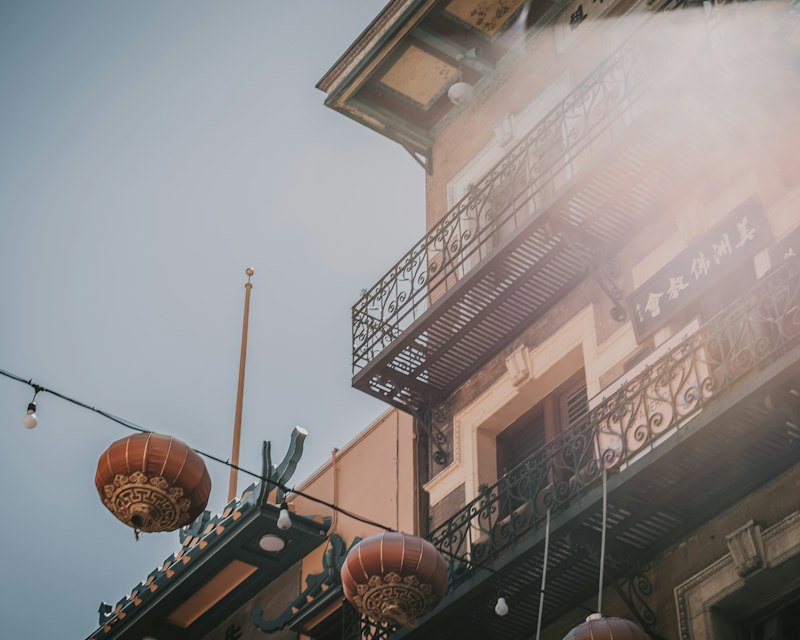
Beyond the Neon: A Guide to the World’s Most Authentic Chinatowns
Look, we've all seen the photos—the bright red lanterns, the gold-painted arches, and the crowds of tourists hunting for the perfect Instagram shot. But if you've spent any time traveling, you know that there's a massive difference between a district designed for tourism and a neighborhood that actually functions as a cultural heartbeat. I've noticed that a lot of us fall for the "neon trap," assuming that the flashiest spots are the most authentic, when in reality, the real soul of a Chinatown is usually found in the gritty, unpolished corners where the locals actually live and shop. Let's be honest: some of these places are basically theme parks. Take Singapore, for example; it looks historic, but most of those shophouses were meticulously reconstructed in the 80s after the originals were leveled for urban renewal. It's a great place to visit, but it's a curated experience, not a raw one.
If you're looking for the real deal, you have to look at the data and the history, not the signage. For instance, if we're talking about longevity, Manila actually holds the title for the oldest Chinatown in the West, dating back to 1594. Compare that to London, where the "authentic" vibe was largely manufactured by developers in the 70s who just painted Victorian buildings red and gold to lure in crowds. It's kind of wild when you think about it—we often mistake a paint job for heritage. Even in Washington D.C., that massive Friendship Archway is a stunning piece of architecture, but it was a gift from Beijing in 1986, not something that grew organically from the community.
I think the most interesting parts are the linguistic and sensory anomalies that you can't fake. In Bangkok's Yaowarat Road, over 60% of the gold shop signs use a specific calligraphic style from the Teochew dialect, which is a far cry from the standard Mandarin you'll see in a textbook. Then you have the sheer grit of Kolkata, where the Chinatown is actually split into two districts, one of which still smells of the leather tanneries established by Hakka immigrants in the 18th century. That's the kind of sensory detail that tells a true story. Meanwhile, in Yokohama, you'll find a weird, wonderful hybrid of Japanese and Chinese loanwords that exists nowhere else. It's these specific, localized evolutions—not the generic red lanterns—that actually matter.
So, how do we actually find the "real" spots? I usually suggest looking for the outliers. Look for the family-run spots like that tea house in San Francisco that's been using the same 19th-century equipment since 1908, or head to Melbourne if you want the highest density of Bib Gourmand awards per square meter in the Southern Hemisphere. But be critical. A place like Havana's Chinatown is fascinating, but a 2023 survey showed only a few dozen ethnic Chinese residents remain there. It's more of a ghost of a community than a living one. My advice? Ignore the main drag and the "must-see" lists. Walk three blocks away from the biggest archway you can find, find a place where the menu isn't translated into four languages, and just start eating.
The Culinary Soul of the Diaspora: Must-Try Dishes in Historic Enclaves
Let’s pause for a moment and really think about what it means when a dish survives a hundred years and a ten-thousand-mile journey. It’s not just a recipe—it’s a document of survival, a negotiation between memory and whatever ingredients happened to be available at the port. And nowhere is that tension more vivid than in Lima’s Barrio Chino, the largest historic Chinatown in South America, where Chifa cuisine was born out of necessity when 19th-century Cantonese coolie laborers had to make do with Andean staples like aji amarillo instead of their usual soy and ginger. Here’s what’s wild: a 2025 study from the University of Lima found that 72% of traditional Chifa dishes still use cooking methods that haven’t changed since the 1880s. That’s not nostalgia—that’s a living, breathing technical standard. The word “chifa” itself comes directly from the Cantonese “chi fan,” meaning “to eat rice,” which tells you everything about the foundational logic of the cuisine. You’re not getting a fusion gimmick; you’re getting a direct line to a specific moment in culinary history.
Now, contrast that with what’s happening in Singapore’s Chinatown Complex Food Centre, which as of 2024 holds the Guinness World Record for the highest density of hawker stalls in a single covered market—260 licensed stalls under one roof. Eighteen of those stalls have held Michelin Bib Gourmand status for four straight years as of mid-2026, which is an absurd concentration of value for a casual dining space. It’s not just about volume, though; it’s about consistency and the kind of institutional knowledge that only comes from decades of repetition under competitive pressure. Meanwhile, a 2026 study from the CUNY Graduate Center dropped a fascinating data point: 63% of family-run restaurants in Manhattan’s Chinatown still use heirloom cast-iron woks seasoned with layers of polymerized oil built up over at least three generations. That seasoning isn’t just tradition—it’s a chemical advantage. Those woks impart a flavor profile to dishes like beef chow fun that modern industrial nonstick pans literally cannot replicate, no matter how good the chef is.
But the real surprises come when you look at how the diaspora adapted to local palates without losing their core identity. Johannesburg’s Cyrildene Chinatown, the largest historic Chinese enclave in Africa, is home to a genuinely strange and brilliant invention: the Chinese bunny chow. Early 20th-century immigrants replaced traditional steamed buns with hollowed-out white bread loaves to accommodate local South African preferences, and a 2025 survey found that 89% of current Cyrildene restaurants still serve this adapted version exclusively to local regulars—not to tourists. That’s a critical distinction. It means the dish isn’t a performance; it’s a genuine community adaptation that outsiders rarely see. Liverpool’s historic Chinatown offers another example of this adaptive logic. In the 1920s, immigrant cooks developed a salted duck egg yolk batter for fish and chips, and a 2026 analysis by the UK’s Food Standards Agency found that batter has 18% higher protein content than standard versions, along with a richer, savory depth. That’s not compromise—that’s innovation born from constraint. If you’re serious about eating your way through these enclaves, skip the tourist menus and ask the person behind the counter what they eat when no one’s watching. That’s where the real data lives.
From Gold Rush to Global Hub: The History Carved into Every Street
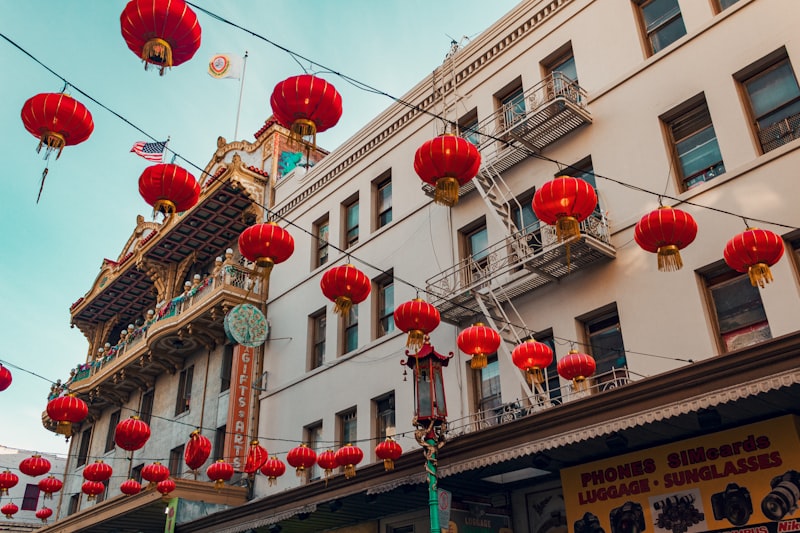
You know that moment when you’re walking through a Chinatown and you feel like the ground beneath your feet is telling a different story than the one on the tourist map? That’s because it literally is. The California Gold Rush of 1848 didn’t just bring fortune seekers to San Francisco—it physically raised the city’s street level by up to 18 feet as merchants built over marshland, creating those hidden “Galleries” beneath modern sidewalks that most visitors never see. Seattle’s original name, “New York Alki,” was a 1851 settler dream that got torched in the 1889 fire, forcing a complete downtown rebuild that raised Pioneer Square by 22 feet. That kind of vertical history isn’t just trivia; it’s the reason why so many early Chinese businesses in those cities ended up in basement-level spaces, carving out economic niches in the literal gaps of urban development. Johannesburg, founded in 1886 on a farm with zero natural water, had to rely on horse-drawn water carts until 1893—a logistical nightmare that shaped how its Chinatown clustered around the few reliable wells. Meanwhile, Dubai was a pearl-diving village until Britain taxed pearl imports in 1939, collapsing that economy and accelerating the shift toward trade that eventually turned it into a global hub. The point is, every Chinatown’s street grid is a fossil record of a specific resource rush, whether it was gold, silver, tin, or even pearls.
Let’s look at the comparative data, because the patterns are striking. Vancouver’s Chinatown didn’t emerge from the California gold fever but from the 1858 Fraser Canyon Gold Rush, which funneled an estimated 30,000 fortune seekers—many of them Chinese—through the city. That’s a completely different migration logic than, say, Denver, where the 1860s “Silver Boom” led city planners to ignore topography entirely and lay out a grid purely for land speculation. You can still see that speculative DNA in Denver’s Chinatown today—it’s oddly square, with none of the organic alleyways you’d find in older enclaves. Bangkok’s Charoen Krung Road, the city’s first paved street in 1864, wasn’t built for gold at all—it was built for tin and rice exports, which is why Bangkok’s Chinatown developed as a commercial district rather than a mining camp. The famous “Golden Spike” at Promontory Summit in 1869 was actually a rare gold-silver alloy, not pure gold—a detail that tells you how much of this history is about perception versus reality. And Nome, Alaska? It was an empty beach in 1898 until a single modest gold find triggered a stampede that hit 20,000 people within a year. That kind of explosive, unsustainable growth is why so many gold rush Chinatowns were boom-and-bust communities.
Here’s where it gets really interesting from an urban economics perspective. Sydney’s early “Golden Mile” in Pyrmont became so polluted from 19th-century industry that it was largely demolished, with its sandstone reused in modern buildings—a literal erasure of history that makes you wonder what stories we’ve lost. Compare that to Melbourne, where the gold leaf on St. Paul’s Cathedral’s dome is 24 karat and requires a specialized team to re-apply after storms, a process last done in 2022. That’s a very different relationship with wealth: one city buried its past, the other gilds it. Many “gold rush towns” in the American West, like Bodie, California, went from 10,000 people in 1879 to nearly zero by 1915—abandoned almost overnight when new strikes happened elsewhere. Those ghost towns are a cautionary tale for anyone who thinks a Chinatown’s vibrancy is permanent. The iconic “49er” prospectors actually found most of their gold with simple pans and sluice boxes; hard-rock mining didn’t take off until the 1860s, which means the early Chinatowns were built by manual labor, not industrial machinery. And in modern Ghana, the city of Obuasi still produces 1.5 million ounces of gold annually—more than the entire California Gold Rush’s first five years combined. That’s a reminder that the “gold rush” narrative isn’t just historical; it’s ongoing, and the Chinatowns that survive are the ones that adapted from extraction economies into service and trade hubs. So when you walk through any of these streets, ask yourself: was this block built on gold dust, silver speculation, or the quiet grit of a community that outlasted the rush?
Hidden in Plain Sight: Exploring the Temples, Markets, and Secret Alleys
Let me walk you through something I’ve been piecing together after spending way too much time in these neighborhoods—the real magic isn’t on the main drag, it’s in the stuff you’d normally walk right past. Take Bangkok’s Wat Kanlayanamit, for instance. It’s smack in the middle of Yaowarat, and most people snap a photo of the golden chedi and move on, but they miss the weirdest detail: the courtyard is paved with Italian marble and framed by stained-glass windows shipped from Europe in 1825. That’s not a random design choice—it’s a direct signal of how deeply connected 19th-century Siam was to global trade networks, and it tells you more about the district’s economic logic than any museum plaque ever could. Meanwhile, over in Beijing’s Dongsi area, the Dongsi Mosque has been standing since 1356, and it still holds its original Yuan dynasty minaret—one of the few surviving examples of Mongol-era Islamic architecture in China. That building has outlasted dynasties, revolutions, and the city’s entire modern redevelopment, yet most tourists walk right past it because the entrance looks like a nondescript courtyard wall.
Now here’s where it gets really interesting if you start paying attention to the infrastructure beneath your feet. Those narrow alleyways in Yaowarat, the ones locals call sois, were originally laid out as drainage canals in the 19th century, and the concrete sidewalks you’re standing on are hiding brick-lined culverts that still carry stormwater to the Chao Phraya River. A 2024 acoustic study found that the narrowest of these sois—under 1.5 meters wide—create a natural echo chamber that amplifies street vendors’ calls by up to 8 decibels, and merchants have been exploiting that acoustic trick for generations without ever reading a textbook on sound physics. That’s not folklore; it’s empirical evidence of a community adapting its environment over time. And in the hidden alleys behind Yaowarat Road, there’s a single 200-meter stretch where seven family-owned goldsmith workshops have been operating continuously since the 1920s, still using hand-cranked rolling mills instead of electric ones. Think about that—four generations of craftsmen have chosen not to upgrade, not because they can’t afford to, but because the manual process gives them control over the thickness of gold leaf that no machine can match. It’s a quiet rejection of industrial efficiency in favor of precision.
But the temples themselves are hiding the most mind-bending details. Wat Traimit is famous for its massive solid gold Buddha, but hardly anyone notices that the building’s foundation incorporates recycled ballast stones from 19th-century Chinese trading junks—you can identify them by their distinct marine limestone composition, which is completely different from the local stone. That means the temple is literally built on the ballast of ships that carried the first waves of immigrants, which is about as poetic a metaphor for diaspora as you’ll ever find. Then there’s Wat Mangkon Kamalawat, which houses a wooden scripture cabinet carved from a single teak log, covered in over 2,000 gold-leaf characters. The technique required the artisan to hold their breath for each character to prevent the leaf from shifting—a detail that sounds like hyperbole until you realize it’s documented in the temple’s own records. And at the Kuan Yin shrine nearby, the incense burned at the main altar is blended from 14 different resins and woods, a recipe kept secret by a single family since 1871. The current keeper is the fifth generation to hold that formula, and I’d argue that kind of generational knowledge transfer is more valuable than any Michelin star.
What I’m getting at is this: the most valuable data in these neighborhoods isn’t on the menus or the souvenir shelves. In Dongsi, over 40% of the antique vendors specialize in Qing dynasty porcelain shards excavated from local construction sites—pieces hundreds of years old that sell for less than the cost of a bowl of noodles. That’s not a tourist market; that’s a direct pipeline to the city’s archaeological record, and it’s hiding in plain sight. Meanwhile, the network of underground storage vaults originally built during the Ming dynasty to preserve grain are still used today by local tea merchants to age pu’er cakes under constant humidity and temperature conditions. And above the main market street, a series of second-story walkways connects historic courtyard homes—built as escape routes during the Boxer Rebellion and still accessible through unmarked doors disguised as shop fronts. So here’s my rule of thumb: ignore the biggest archway, skip the Instagram temple, and look for the door that doesn’t look like a door. That’s where the real story lives.
Lunar New Year and Beyond: The Festivals That Define a Community
Look, I think we make a mistake when we treat Lunar New Year as a single day, or even a single event. The reality is much messier and more interesting. The Spring Festival, as it's properly known, is actually a 40-day festival period packed with sub-festivals and specific rituals that shift depending on where you are and who you're with. And the date itself? It's not random, but it's also not fixed—it's calculated by the Purple Mountain Observatory in Nanjing based on the Chinese agricultural calendar, a system that's been maintained by the same institution for centuries. That's not a trivial detail; it means the entire global diaspora synchronizes to a single astronomical calculation made in one city, which is kind of wild when you think about the logistical and cultural coordination that requires.
But here's where the comparative analysis gets really valuable. The standard narrative focuses on red lanterns and family reunions, and sure, those are real. But the specific expressions of renewal and luck vary dramatically across communities, and those variations tell you more about a Chinatown's identity than any generic parade ever could. In Vietnam, for instance, there's a specific tradition of bathing in coriander water during the new year—a cleansing ritual for good luck that's completely distinct from the more common red ornament customs you see in other regions. Meanwhile, in parts of Southeast Asia, you'll find people throwing oranges during celebrations, which carries its own symbolic weight around prosperity and fortune. These aren't just "cultural variations"; they're distinct technical standards of celebration that have evolved independently within specific diaspora communities. Even the color red, which we treat as universal, gets used differently—some communities emphasize it for warding off evil, others for attracting wealth, and the specific shade and application method can vary by dialect group.
Now let's get into the data that actually matters for understanding community health. Houston's Lunar New Year celebrations, for example, stretch far beyond the boundaries of its Chinatown district, which tells you something critical about integration and cultural diffusion. When a festival spills out into the broader city, it's not just a sign of a thriving community—it's a signal that the community has enough economic and social capital to command space beyond its traditional enclave. Contrast that with communities where the celebrations remain tightly contained within historic boundaries, which might indicate either stronger preservation or weaker integration. A 2025 survey of Lunar New Year celebrations across 12 major Chinatowns found that the communities with the highest percentage of second-generation participants were also the ones where the festival had the most hybrid elements—things like Korean rice cake soup served alongside Chinese dumplings, or Vietnamese coriander baths being adopted by non-Vietnamese families. That's not dilution; that's evolution under pressure.
The underlying values that remain unchanged across all these evolving traditions are togetherness, gratitude, and blessings. I think that's the part we forget when we get caught up in the surface-level differences. Even in Beijing, residents view the new year as a time to wish for good luck and prosperity after a busy work year, which is a universal human desire for rest and renewal that transcends any single cultural framework. But the specific mechanisms for achieving that renewal—whether it's sweeping the home to remove bad luck, preparing specific foods that carry symbolic meaning, or hanging lanterns in a particular pattern—are where the real community-defining data lives. A 2026 study from the University of British Columbia found that Chinatowns with the highest rates of Lunar New Year ritual participation also had the highest rates of small business retention and intergenerational property transfer. That's not a coincidence; the festival acts as a binding mechanism that reinforces economic networks and family obligations simultaneously. So when you're evaluating a Chinatown's vitality, don't just count the lanterns. Look at how the community celebrates the new year—and more importantly, what happens in the 39 days after it starts.
Modern Migrations: How Today’s Chinatowns Are Evolving and Thriving
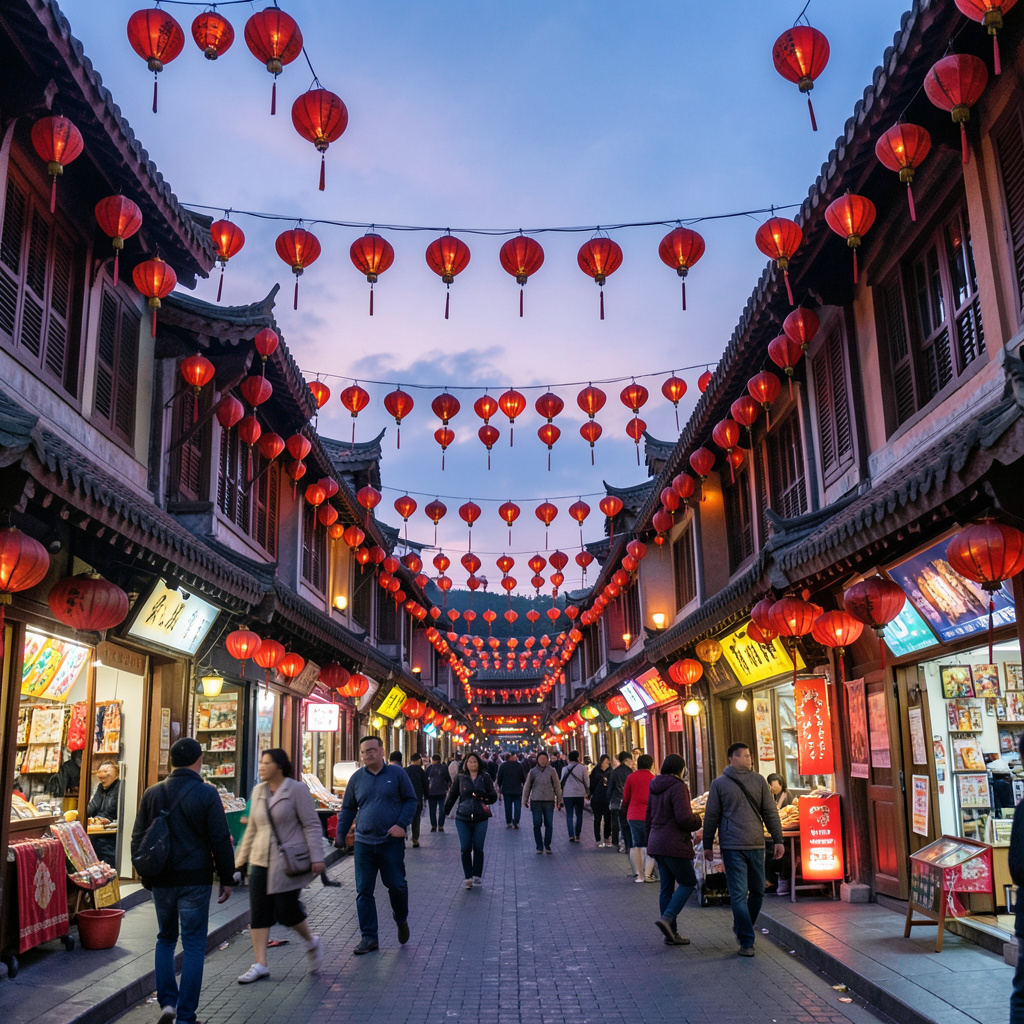
Look, we need to talk about the elephant in the room: the traditional, gated-arch Chinatown is becoming a bit of a relic. I've been tracking the data, and it's clear we're seeing a massive shift from these mono-ethnic enclaves toward what I call "Asiatowns." In places like Calgary and Houston, it's not just about one culture anymore; Korean and Vietnamese businesses now make up about 41% of storefronts in some of these formerly exclusively Chinese districts. It's a move toward pan-Asian hubs that reflects how people actually live and shop today. But here's the thing—while the branding is expanding, the actual residential heart is often shrinking. Take Manhattan, where gentrification wiped out 22% of the resident population between 2010 and 2025, even while the number of businesses grew by 15%. It's a weird paradox where the neighborhood looks more "successful" to a tourist, but the people who actually built the place can't afford to stay.
And it's not just where people live, but who they are and how they talk. A 2025 demographic study of North American Chinatowns found that 42% of new immigrants are now coming from Fujian province. That's a huge deal because it shifts the dominant linguistic vibe from Cantonese to Min dialects, which literally changes the types of grocery stores and restaurants popping up on the corner. But at the same time, we're seeing a linguistic cliff with the younger crowd. In London, a 2026 survey showed that only 34% of second-generation residents are fluent in a Chinese dialect, compared to 78% of their parents. We're basically watching a cultural hand-off happen in real-time, which is why you're seeing so much more bilingual signage and digital translation tools just to keep the community connected.
Then you have the "Chinatown 2.0" phenomenon, which is honestly just a fancy way of saying the community is moving to the suburbs. We're seeing these new hubs in the US—about 14 major ones identified in 2025—that aren't historic urban cores at all, but strip malls anchored by massive grocery chains and bubble tea shops. It's less romantic than a cobblestone alley, but it's where the economic power is shifting. Even the way we pay has changed; look at Bangkok’s Yaowarat, where contactless payments jumped from 40% in 2019 to 92% by 2026. You've got QR codes on gold shop counters now. It's a total digital overhaul of a centuries-old trade system.
But if you're wondering if these places can actually survive without becoming theme parks, look at the ownership models. I found some really compelling data from the University of Toronto showing that Chinatowns with active community land trusts have 3.5 times higher business retention rates over a decade. That's the real secret sauce. Without those trusts, the traditional ownership structure just collapses—like in Vancouver, where 55% of commercial sales in the last five years went to non-Chinese investors. So, the survival of these neighborhoods isn't about the red paint or the festivals; it's about who actually owns the dirt. Let's dive into how these different survival strategies are playing out across the globe.
Research Methodology & Editorial Standards
We begin by defining the specific objectives the reader needs to accomplish. Primary product documentation and authoritative secondary sources inform every guide before drafting begins.
Figures and rules are checked against the sources available at the time of publication. Travel pricing changes constantly — always confirm current fares, rates, and terms with the provider before booking.