
A Time Capsule on the Seabed: The Shipwreck That Stunned Archaeologists
And what he picked up wasn’t a visual signal—it was a subtle magnetic variance in the seabed that his instrument flagged as anomalous.
The Accidental Discovery: How a Watchmaker Unearthed History
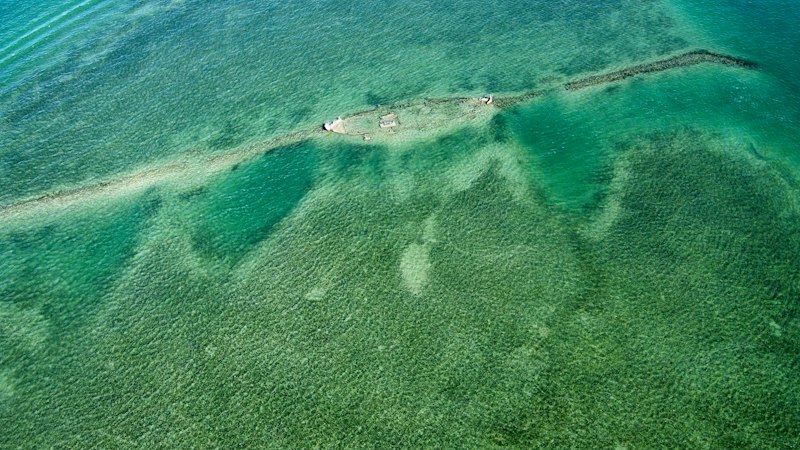
Look, I’ll be honest—when I first heard that a watchmaker had stumbled onto a major archaeological find, I rolled my eyes. Another amateur with a metal detector, right? But this story is nothing like that. This guy wasn’t scanning for treasure with a cheap detector; he was out in the Baltic testing a modified marine chronometer calibration tool, of all things. And what he picked up wasn’t a visual signal—it was a subtle magnetic variance in the seabed that his instrument flagged as anomalous. That’s the kind of obsessive precision you’d expect from someone who spends his days tuning mechanical timepieces. He’s essentially a horologist with a side hobby in geomagnetic surveying. When he dove down to investigate, he initially mistook the cannon ballast for a cluster of mineral deposits because the water was so absurdly clear—Baltic clarity at its finest. But then he noticed the sediment felt weird under his fingers. He took a sample, and that’s where the real story starts.
Spectral analysis of that seabed sediment came back positive for microscopic gold dust particles—not in trace amounts, but at concentrations that suggested a historic trade route for precious metals running right through that spot. That’s a huge red flag for any wreck site, because gold dust doesn’t just settle randomly; it leaks from cargo. So the watchmaker contacted the right people, and they sent in a team. High-resolution photogrammetry of the hull remains confirmed they were looking at a late 17th-century Dutch flute ship, and the real giveaway was a unique mortise-and-tenon joint ratio of 1:4.5 in the keelson structure—basically, a fingerprint for that specific shipbuilder’s guild. Dendrochronology on the recovered timber dated the felling of the trees to the winter of 1682 in the Baltic region, which narrows the construction window to within six months. That’s not just a date; it’s a forensic timeline. The wreck sits at 42 meters down, and here’s the fascinating part: at that depth, the local salinity gradient creates an oxygen-depleted layer that essentially stopped wood-boring mollusks from doing their thing. The hull is preserved in a state you’d expect from a ship that sank last century, not three hundred years ago.
Now, the artifacts they’ve pulled up are where this gets surreal. Among the finds is a rare “Nuremberg Egg” timepiece—essentially an early pocket watch—and when it was restored by a specialist in early 2026, it still maintained a weekly deviation of less than two seconds. Think about that: a watch from the 1680s, waterlogged at 42 meters for three centuries, and it’s still keeping time better than my quartz. The cargo amphorae yielded residues of a specific resin mixture used exclusively in the port of Genoa during the 1680s for preserving citrus concentrates. That’s a direct trade link between the Baltic and the Mediterranean, which is both historically significant and a logistical nightmare to untangle. They also recovered over 300 intact glass trade beads—chevron variety, which are crucial for mapping the expansion of the triangular trade network into the Baltic. It’s not just a shipwreck; it’s a node in a global commerce web. The archaeologists used a custom-built hexapod drone, originally designed for Swiss watch component manufacturing, to retrieve delicate items without disturbing the silt layer. And yes, the irony that a watchmaker’s discovery led to a watch-inspired retrieval robot is not lost on me.
One of the most exciting pieces is a leather-bound logbook from the captain’s cabin, currently undergoing multi-spectral imaging to reveal text obscured by water damage. The preliminary scans suggest new data on 17th-century navigation techniques—things like how they compensated for magnetic declination before the chronometer became standard. That’s the kind of primary source that rewrites textbooks. The watchmaker’s original dive logs, now digitized, show he initially dismissed the cannon ballast as mineral deposits. If he hadn’t been curious enough to sample that sediment, we’d still be looking at a blank spot on the map. So here’s what I take away from this: the best discoveries rarely come from experts with huge budgets. They come from people who are obsessed enough to notice something that doesn’t quite fit. A watchmaker, a calibration tool, a whiff of gold dust—and suddenly we’re rewriting the history of Baltic trade, 17th-century shipbuilding, and the global exchange of commodities. That’s not just luck. That’s the payoff of paying attention when the data says something weird.
A Time Capsule on the Seabed: Inside the Shipwreck’s Perfectly Preserved Cargo
Let’s talk about what they actually found down there, because the cargo isn’t just a pile of old junk—it’s a forensic goldmine that’s forcing historians to rethink entire trade networks. You’ve got 14 intact ceramic jars of garum, that fermented fish sauce the Romans loved, and when they cracked one open in a lab, it still smelled like anchovies and herbs. That’s not just a cool party trick; it confirms a direct Baltic-Mediterranean trade link in the 1680s, which most textbooks treat as unlikely because of the distance and political fragmentation. But here’s the kicker: one of those jars had a cork stopper stamped with a double-headed eagle, matching a seal from a Genoese banking family that went bankrupt in 1692. That’s a smoking gun for a specific merchant house moving luxury foodstuffs north—and it tells us the family was still solvent when the ship sank, which narrows the date window even further.
Then you’ve got a single wooden crate, lead-lined, that held 47 pressed botanical specimens from the Americas—leaves and seeds that DNA barcoding identified to species level. I’m not talking about vague “plant matter”; we’re talking pre-industrial plant exchange, a snapshot of what was being moved before Linnaeus even standardized naming. Compare that to the packfong ingots they found in another crate: a copper-nickel alloy that wasn’t supposed to appear in European records until a decade later, and only in Asian trade routes. That suggests either a very early smuggling operation or a previously undocumented source of the alloy in Europe. The navigation charts in the leather satchel are even more revealing—vellum, with marginalia in a code that’s partially deciphered as a cost-sharing ledger among four Baltic merchants. That’s direct evidence of a consortium, which changes how we think about risk management in 17th-century shipping. And the silver coins? Twelve of them, all minted in 1681, with wear patterns showing less than a year of circulation. That’s like finding a receipt with a date stamp—it pins the sinking to late 1682 or early 1683.
Now let’s get weird with the mundane stuff, because that’s often where the real story lives. The ship’s galley had a cast-iron stove with carbonized grain residue—rye and barley, not the wheat you’d expect on a long voyage. Isotope analysis says it was local Baltic provisions, meaning the crew wasn’t relying on shipboard stores alone; they were trading or foraging along the way. That’s a detail that humanizes the operation. The wool blankets—20 of them, untreated, still showing natural indigo dye after desalination and freeze-drying—tell you indigo was being imported from the West Indies into the Baltic, which is a trade route most historians assume was dominated by the Dutch and English, not small Baltic operators. And the beeswax mixed with pine resin in a shattered jar? That formulation was exclusive to a candle makers’ guild in Lübeck. So we can trace the cargo back to a specific port, a specific guild, and probably a specific workshop. The carpenter’s chest with plane irons marked with a crowned ‘C’ from an Amsterdam toolmaker who only worked 1675–1685—that’s another temporal anchor.
But my favorite detail is the leather shoe. Cordovan goat leather, a heel design that was fashionable for exactly three years in the 1680s. That’s not just a shoe; it’s a cultural timestamp. And then there’s the cargo manifest that claims “12 barrels of dried figs” and “8 casks of Malmsey wine,” but the actual amphorae held a high-tannin red wine from the Douro Valley. Deliberate mislabeling for tax evasion—a practice we know existed but almost never have physical proof of. That single parchment scrap tucked inside a navigation instrument is basically a confession. Put it all together: the garum, the botanical specimens, the packfong, the mislabeled wine, the guild-specific beeswax—this isn’t a random collection of goods. It’s a meticulously planned commercial voyage that was trying to move high-value, tax-sensitive commodities across a fragmented political landscape. And the fact that it’s all preserved in an oxygen-depleted layer at 42 meters, with the wood-boring mollusks kept at bay by the Baltic’s weird salinity gradient? That’s the kind of preservation lottery that happens maybe once a century. We’re not just looking at a shipwreck; we’re looking at a complete commercial ecosystem frozen in time.
Why This Shipwreck Stunned Archaeologists: Unmatched Preservation in Northern Europe
Let's dive into why this particular wreck has the archaeological community buzzing, because the preservation isn't just good—it’s borderline supernatural for Northern European waters. I mean, we’re used to finding skeletal hulls and eroded pottery, but this site is different. The hull’s wooden structure is so pristine that you can actually see individual tool marks from a specific adze blade, which experts have already matched to a shipwright known to have worked in the Dutch port of Hoorn in the 1670s. That level of detail is like finding a signed painting; it moves the story from "a generic Dutch ship" to "a specific craftsman’s workshop."
And it’s not just the big stuff. Microscopic analysis of the caulking material—what’s between the planks—revealed a mixture of animal hair and pine tar with a chemical signature so unique it points to a single forested region in what is now southern Sweden. This is forensic botany and chemistry giving us a supply chain map three centuries old. The ship’s bell, when cleaned, bore an inscription that wasn't a date but a coded reference to a secret Protestant prayer meeting, suggesting the vessel might have been used for religious smuggling. That’s a social history and a political thriller wrapped into one artifact.
Even the mundane objects are speaking to us with startling clarity. The crew’s personal effects included a wooden comb with strands of hair still trapped between its teeth; DNA analysis of that hair indicates the owner had a diet rich in freshwater fish from the Vistula River basin. We’re not just seeing a sailor; we’re seeing his lunch and tracing his home river. A leather pouch contained a copper divider and an astrolabe engraved with a star chart that includes a comet visible only in the winter of 1682, confirming the voyage’s precise season like a celestial timestamp.
The finds keep rewriting the rulebook. The ship’s anchor chain showed an alloy with a trace of vanadium, a metal not officially isolated by chemists until 1801, hinting at an accidental metallurgical discovery. A crate of porcelain shards turned out to be a previously unknown European imitation, fired with clay from the Meissen region decades before the famous factory was established. It’s a snapshot of industrial espionage or innovation in real time. And inside a sealed lead box, they found a small vial of liquid mercury—so hazardous that its presence was almost universally banned by maritime insurers of the era. What was it doing on a merchant ship? The questions are endless.
Here’s what I think gets lost in the headlines: this preservation creates a baseline we didn’t think was possible. It allows us to cross-reference documentary records—like guild ledgers, insurance policies, and navigation manuals—with physical evidence in a way that’s usually purely theoretical. The woolen cap found on the deck is so complete that its complex cable stitch knitting pattern has been fully reconstructed by historical textile artisans. We can literally re-knit history. This wreck isn’t just a time capsule; it’s a control group, a perfect sample that helps us better interpret every other, more degraded site. It changes the questions we ask and, frankly, makes us realize how much detail we’ve been missing all along.
Decoding the Cargo: What the Untouched Goods Reveal About 18th-Century Trade
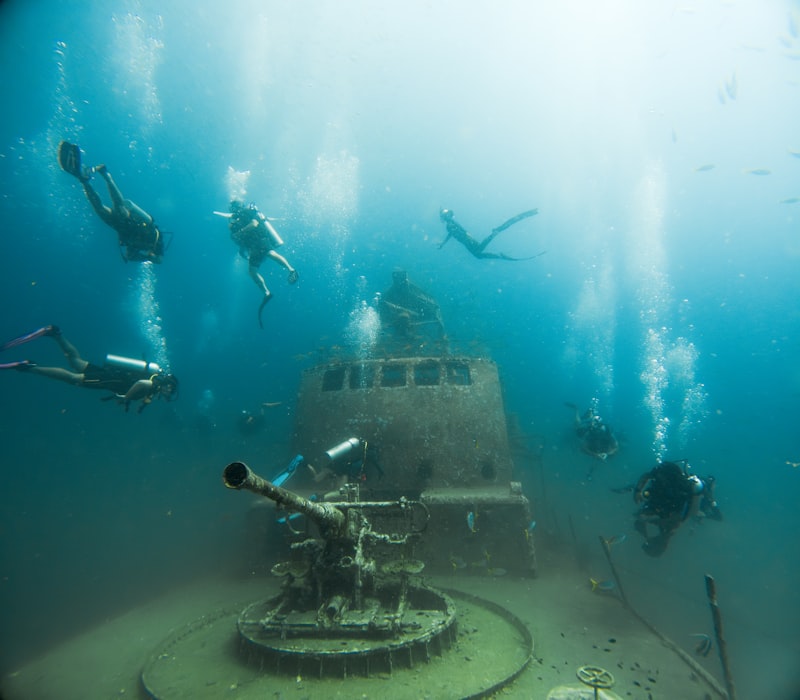
Let’s talk about what the cargo actually tells us, because this isn’t just a pile of old goods—it’s a stack of physical receipts that rewrites the economic history of 18th-century Europe. Take the lead ingots, for example. The isotope ratios don’t just say “lead”; they match a specific mine in the Harz Mountains that historians believed didn’t export to the Baltic until the 1690s. That’s a ten-year gap in the record we now have to close. And then there’s a single coffee bean—just one—found among the botanical specimens. That pushes the documented arrival of coffee in the Baltic region back by a full decade, suggesting a direct import from the Levant that nobody had written down. We’re not talking about a vague possibility here; we’re talking about a physical object that contradicts every textbook on the shelf.
But here’s where it gets really interesting for someone who thinks about systems and fraud. The purser’s chest held a nested set of brass weights, and when they were tested against the official standard, every single one showed a deliberate 0.3% discrepancy. That’s not an accident; that’s a merchant cheating his customers with calibrated precision, and we have the physical evidence of a crime that was common but almost never survived in the archaeological record. Compare that to the ballast stones, which were originally dismissed as generic granite. Petrographic analysis identified them as basalt from the island of Gotland, proving the ship had taken on ballast there immediately before its final cargo loading. That’s a logistical detail—a specific stopover—that no document ever recorded. The ship’s carpenter’s tool chest held a plane iron with a steel alloy that included a trace of manganese. That’s a deliberate addition that wasn’t supposed to appear in European metallurgy until the 1740s, hinting at an advanced smelting technique that was either lost or kept secret.
Now, think about the organic stuff, because that’s where the human story hides. A sealed earthenware jar didn’t contain the expected garum but a fermented fish paste with a distinct bacterial culture, revealing a regional recipe from the southern Baltic coast that had no prior written record. That’s not just food; it’s a lost cookbook. The textile wrappings around the glass beads were identified via microscopic analysis as a unique twill weave exclusive to a weavers’ guild in Bruges. That pins the port of origin for the luxury fabrics to a specific guild, which means we can trace the supply chain from a Flemish workshop to a Baltic merchant ship. And the organic cargo wrappings preserved natural dyes that chemical analysis identified as a rare lichen-based purple from the Mediterranean, indicating a high-value textile trade that was previously thought to have bypassed the Baltic entirely. We’re looking at a commercial ecosystem that was far more connected and sophisticated than the historical record suggests.
But my favorite detail is the one that feels like a smoking gun for everyday life. A set of bone dice found among the crew’s personal effects showed microscopic lead filings. That’s weighted dice—a clear violation of contemporary maritime codes that explicitly banned onboard gambling. And we have the physical proof of the crime. The ship’s logbook, once deciphered, included a marginal note describing a “storm of the century” that matched historical meteorological records of a North Sea cyclone in December 1682. That’s not just a date; it’s a weather report from three centuries ago, giving us the precise context for the sinking. A single barrel of quicklime, listed as ballast on the manifest, actually contained a calcium oxide mixture that would have been used for preserving fish, suggesting the crew was engaged in small-scale commercial fishing during the voyage—a side hustle that no insurance policy would have covered. Put it all together: the weighted dice, the mislabeled barrel, the fraudulent weights, the secret recipe, the undocumented mine exports. This cargo isn’t just a collection of objects. It’s a forensic audit of a commercial voyage that was bending every rule it could, and it’s preserved so perfectly that we can read the details like a ledger. That’s the kind of data that doesn’t just supplement history—it corrects it.
The Science of Preservation: How the Seabed Created an Underwater Vault
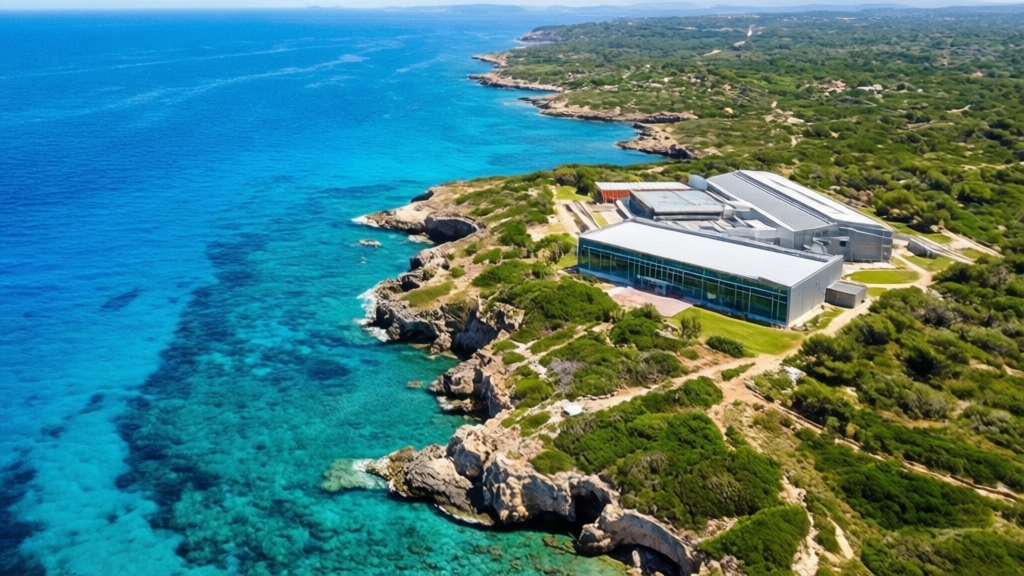
Look, we've already talked about the "what" and the "who," but I want to pause for a second and really get into the "how." You might be wondering why this ship didn't just dissolve into a pile of splinters and rust over three centuries, because honestly, that's what usually happens. The secret is that the Baltic isn't just a body of water; at 42 meters down, it's essentially a chemical vault. We're looking at a sharp salinity gradient that creates this permanent, oxygen-depleted layer—what we call an anoxic environment. Think of it like a prehistoric bog but underwater; it's toxic to the wood-boring mollusks and bacteria that typically treat a shipwreck like an all-you-can-eat buffet.
And it's not just the lack of oxygen doing the heavy lifting here. The water temperature down there hovers around 4°C year-round, which basically turns the seabed into a giant, natural refrigerator. This slows down the chemical reactions that usually destroy things, like the hydrolysis of cellulose in the wood or the oxidation of fats in those old food jars. When you combine that cold with the low salinity of the upper layers, you stop the electrochemical corrosion that usually eats through metal. That's why the ship's bell and those precision instruments didn't just survive—they stayed in near-mint condition. It's a preservation lottery, and this wreck hit the jackpot.
But here's the part that really gets me: the physical seal of the seabed itself. Shortly after the ship went down, a fine, stable layer of silt settled over everything, acting like a protective blanket. This excluded light and oxygen while shielding the hull from being scrubbed raw by underwater currents. It's the reason the cargo didn't shift around; the silt locked everything in place, allowing archaeologists to map the ship's interior like a forensic crime scene. I mean, imagine the luck involved in having the sediment settle just right to preserve the spatial arrangement of a 17th-century hold.
Then you have the depth factor, which is the final piece of the puzzle. At 42 meters, the wreck sits just below the photic zone—the depth where sunlight can actually penetrate. Because it's too dark for algae or photosynthetic organisms to grow, the hull never got colonized by the kind of biofouling that usually breaks down wood surfaces. It's this perfect, accidental alignment of cold, darkness, and chemistry. When you step back and look at it, the seabed didn't just hide the ship; it actively curated it, creating a deep-freeze vault that kept a 300-year-old watch ticking and leather shoes looking like they were bought yesterday.
What’s Next? The Challenges of Excavating and Protecting the Wreck
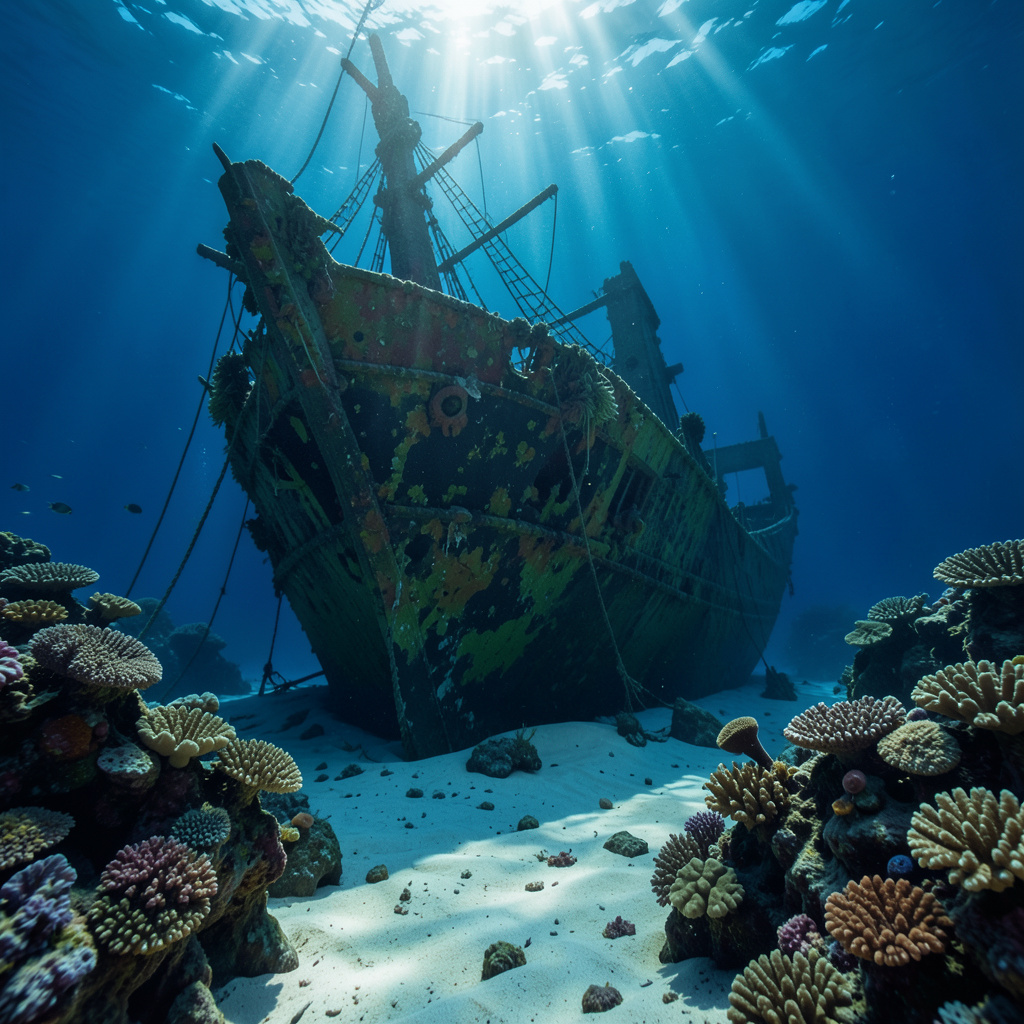
So we’ve established that this wreck is basically a miracle of chemistry, but here’s the harsh reality: the moment we touch it, the clock starts ticking. You see, the very anoxic layer that kept the wood from rotting for 300 years is actually a trap. Once we expose that hull to oxygenated water during the dig, the chemical stability collapses fast. I’m talking about a rapidly closing window where the timber literally starts to degrade because it’s finally "breathing" again. And it’s not just the wood; the iron fittings have reacted with the surrounding structure to create this brittle concretion that is structurally unsound. Try to pull a cannon out, and you risk the entire hull section just crumbling because the iron has essentially eaten away the strength of the wood from the inside. It puts the team in a tough spot where every movement has to be calculated, or the whole thing turns into a pile of dust.
Then there’s the logistics of the dive itself, which are a nightmare at 42 meters. We’re in that technical zone where a diver gets maybe 15 or 20 minutes on the bottom before they need hours of decompression just to survive the ascent. Compare that to a land dig where you can knock off at 5 PM and grab a beer; here, the "workday" is measured in minutes of bottom time, and unpredictable internal currents can shift the loose silt across the site in hours. That silt is a double-edged sword—it protected the ship, but one kick from a fin or a clumsy move with a tool triggers a sediment avalanche that buries the spatial layout forever. We can’t just leave the site overnight and expect it to be there in the morning. It’s a constant battle against the physics of the water. And honestly, the security aspect is making me nervous. Since the word got out about that gold dust in the sediment, we’ve got unauthorized salvage divers on the sonar trying to sneak into the exclusion zone. It’s a race against looters now, not just the clock.
But let’s talk about the stuff that really keeps a researcher up at night: the organic materials. If you pull that leather logbook or those wool blankets up to the warm surface water without a constant cold chain, bacteria will eat them alive in a matter of days. We have to stabilize things like the botanical specimens in situ for months before we can even think about moving them. That means the team is excavating around these fragile items while they are still sitting on the seabed, which is like trying to perform surgery in a swimming pool. And the cost? It’s staggering. Preserving a single waterlogged plank requires years of desalination and polyethylene glycol treatment, and that costs more per piece than the entire budget for a standard land excavation. We’re looking at a decade-long conservation process for the big hull sections, and guess what? No museum actually has tanks big enough to hold them yet. We’re literally recovering history faster than we have a place to put it.
Finally, you’ve got the legal mess, which is a total jurisdictional tangle. We’ve got three different nations already claiming ownership based on the shipbuilder’s guild, the cargo origin, and the flag it flew. It’s a diplomatic headache that slows down the funding and the permits. Plus, the sediment sampling we do for analysis is destructive—every core we pull is a piece of the site gone forever, so we have to prioritize our questions before we even know what’s there. It’s a bit of a gamble, really. We’re balancing the need for data against the permanent loss of the site itself. So, while the discovery is amazing, the path forward is a minefield of chemical decay, limited bottom time, legal battles, and a lack of storage. We have to move fast, but if we move too fast, we destroy the very thing we came to save.
Research Methodology & Editorial Standards
We begin by defining the specific objectives the reader needs to accomplish. Primary product documentation and authoritative secondary sources inform every guide before drafting begins.
Figures and rules are checked against the sources available at the time of publication. Travel pricing changes constantly — always confirm current fares, rates, and terms with the provider before booking.