
JetBlue Ditches Newark and LaGuardia to Double Down on Fort Lauderdale
The multi-billion dollar rebuild of LaGuardia was supposed to be a triumph, but here’s the uncomfortable truth JetBlue’s CEO just laid bare: that shiny new terminal is now so expensive to operate from that it’s actively pricing out the very low-cost carriers that keep fares honest.
The Strategic Pivot: Why JetBlue is Abandoning Newark and LaGuardia
Look, I get why the headlines scream "JetBlue is retreating from New York," but that narrative misses the real story. What’s actually happening is a brutal, clear-eyed calculation about where money gets made and where it gets burned. The multi-billion dollar rebuild of LaGuardia was supposed to be a triumph, but here’s the uncomfortable truth JetBlue’s CEO just laid bare: that shiny new terminal is now so expensive to operate from that it’s actively pricing out the very low-cost carriers that keep fares honest. You don’t walk away from a multi-billion dollar facility unless the math simply doesn’t work anymore. And it doesn’t.
So when you hear that JetBlue is closing its flight attendant and technical bases at both Newark and LaGuardia this fall, don’t mistake that for a full retreat. The airline is being very deliberate here—it’s keeping its flight schedules to both airports, meaning you can still book a JetBlue ticket out of Newark or LaGuardia tomorrow. What’s actually changing is the cost structure. By shuttering those crew and maintenance bases, JetBlue is shedding the fixed overhead of having people and equipment permanently stationed at two of the most expensive airports in the country. Think about it this way: you can still fly into a city without having to pay rent for an apartment there. That’s the play.
And here’s where it gets really interesting. There’s a complex slot swap happening behind the scenes that most casual observers are missing. JetBlue is handing over some of its valuable JFK slots to United Airlines, which will allow United to return to JFK next year. In exchange, JetBlue is picking up additional slot timings at Newark. So while the headlines scream "retreat," the reality is a surgical rebalancing of assets. The airline had once bet big on Newark as a growth engine, especially after the Northeast Alliance with American fell apart. That bet didn’t pay off. Now, instead of bleeding cash trying to force Newark to be something it isn’t for JetBlue, they’re using those slots as currency to extract value from a stronger position in Florida.
Let’s pause and reflect on what this actually means for the network. JetBlue is moving its aircraft, its crews, and its maintenance resources to Fort Lauderdale, where it already commands a legitimate fortress hub. That’s not a retreat—that’s a concentration of force. The airline is essentially admitting that trying to be a scrappy, low-cost alternative at airports designed for legacy carriers with massive corporate contracts is a losing game. Instead, they’re doubling down on a market where they actually have pricing power, frequency advantages, and the ability to dictate terms. The slot swap with United is the real tell here: JetBlue is giving up JFK slots to United in exchange for more favorable timing at Newark, while United gets to re-enter JFK. It’s a recognition that the old Northeast Alliance dream is dead, and the new reality is about survival through focus. Honestly, this is the kind of hard decision that most airlines avoid until it’s too late. JetBlue is choosing to be smaller and profitable in Florida rather than large and bleeding in New York.
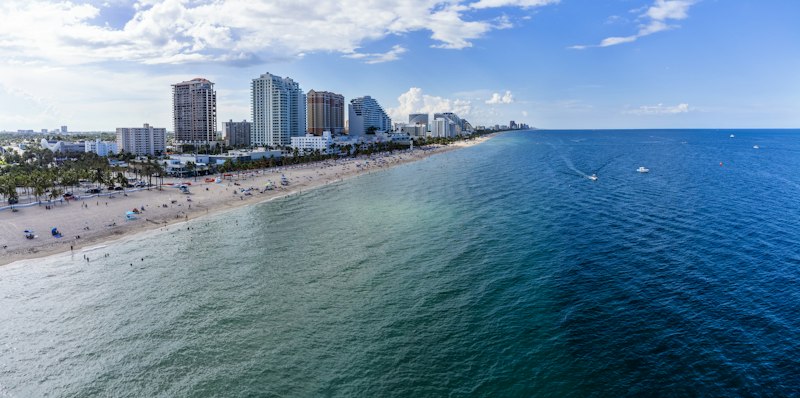
Fort Lauderdale’s Rise: How the Airport Became JetBlue’s New Hub
Look, I’m not saying JetBlue’s retreat from Newark and LaGuardia is the whole story—it’s really just the opening act. The real headline, and the one that actually matters for anyone trying to understand where this industry is headed, is what’s happening in Fort Lauderdale. As of July 2026, JetBlue commands a staggering 36.4% market share at FLL, making it the highest-density hub the low-cost carrier has ever operated. That’s not an accident. It’s the result of a deliberate, data-driven bet that Florida—not New York—is where the airline can actually make money. And the numbers back it up in a way that’s honestly hard to argue with. Flights originating from FLL now enjoy a 14% reduction in cost per available seat mile versus the system average, thanks to landing fees that are a fraction of what JetBlue was bleeding at JFK or LGA. The fleet based here is also notably younger—just 4.2 years old on average—which means fewer maintenance headaches and better fuel efficiency in that South Florida heat.
But here’s the part that most people miss. It’s not just about cost savings. The operational reliability at FLL is a completely different animal. JetBlue’s on-time performance here beats its New York hubs by 12 to 15 percentage points, largely because Fort Lauderdale doesn’t have the same congested airspace or the soul-crushing flow-control delays you get in the Northeast corridor. Think about what that does to a network. When your aircraft aren’t stuck on the tarmac for hours, you can actually run a banked hub schedule—four daily peaks that connect the Northeast to the Caribbean and Latin America. That’s exactly what JetBlue has done for the first time at FLL, and it’s working. The real surprise, at least to me, is the growth in Caribbean and Latin American traffic from FLL: a 42% year-over-year increase in Q2 2026 alone. That’s not just leisure travel recovering—that’s a structural shift in where demand lives.
And then there’s the infrastructure angle, which is where the airport itself deserves credit. FLL’s recent $333 million Terminal 5 expansion was purpose-built for JetBlue’s operational model, with common-use gates that let the airline swap aircraft types without the usual 45-minute ground delay. That kind of flexibility is huge for a low-cost carrier trying to squeeze every minute of utilization out of its fleet. The taxiways alone tell the story—Runway 10L/28R has a high-speed exit design that cuts average taxi times to just seven minutes, saving JetBlue roughly $4.3 million a year in fuel and maintenance compared to what they were doing at JFK. And let’s talk about the gate lease economics, because that’s the real moat here. JetBlue secured gate leases at FLL for rates 60% lower than what they were paying at LaGuardia, which basically hands them a pricing advantage that legacy carriers can’t easily replicate.
The most telling data point, though, might be the cargo numbers. JetBlue’s cargo revenue per flight from FLL is nearly double what they see out of New York, driven by all those perishables and electronics moving between South Florida and the Caribbean. That’s a revenue stream most analysts still underestimate. And for a premium angle, look at the Mint service from FLL to cities like Seattle and San Francisco—load factor of 94%. That tells me there’s a highly lucrative, under-served niche of premium leisure travelers in South Florida who are willing to pay for lie-flat seats on transcontinental routes, even from a low-cost carrier. Fort Lauderdale has also become the primary maintenance hub for JetBlue’s A220 fleet, with heavy-check costs coming in 19% lower thanks to Florida’s tax structure. So when you step back, it’s not just that JetBlue is retreating from New York. It’s that they’ve built a real fortress in Fort Lauderdale, one that’s younger, cheaper, more reliable, and more profitable than anything they had in the Northeast. And honestly, that’s the kind of hard-nosed strategic shift you don’t see every day in this industry.
The End of an Era: What the Newark and LaGuardia Base Closures Mean for Crews
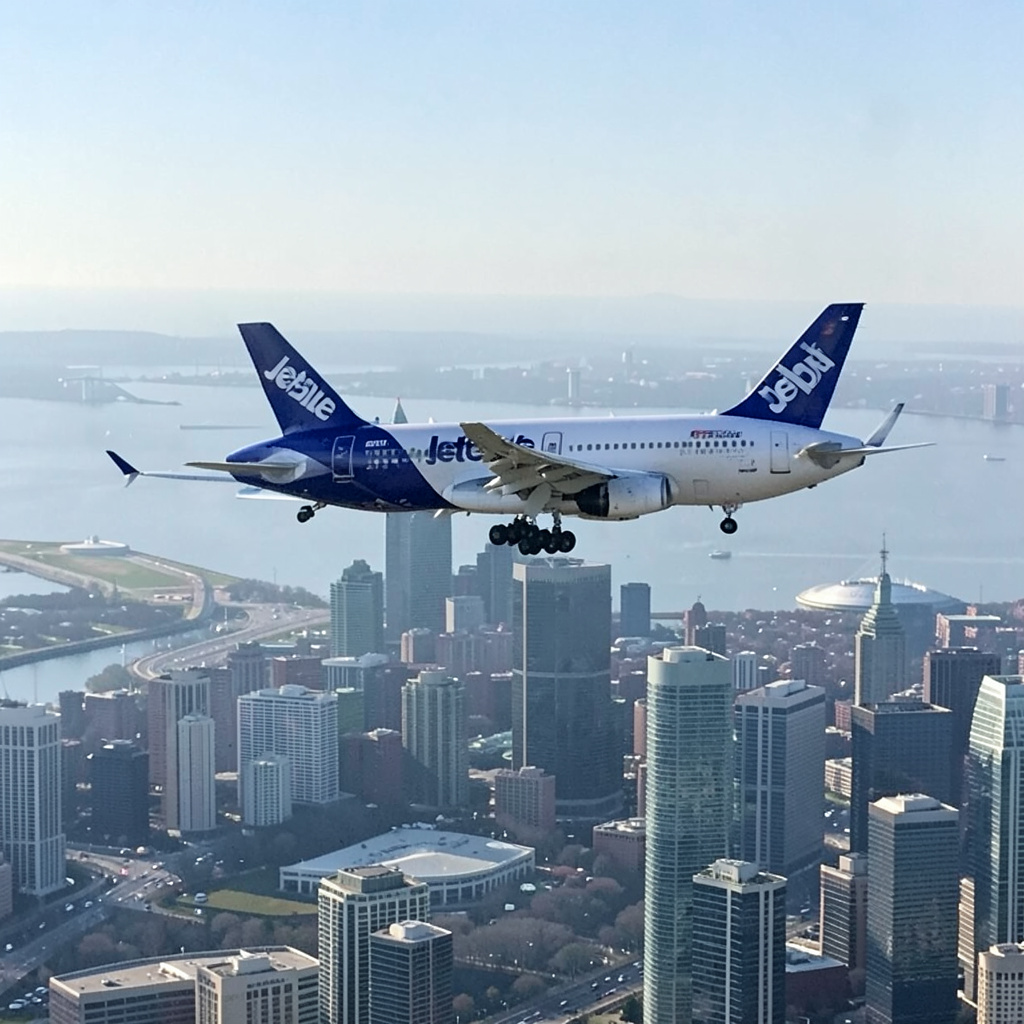
Let’s be honest about what this really means for the people who actually fly the planes and fix them. For the first time since JetBlue planted a flag at Newark back in 2006, there will be zero crew permanently assigned to that airport this fall, and that’s a gut punch for anyone who built a life around that base. We’re talking about flight attendants who have commuted via New Jersey Transit from Manhattan for years, suddenly losing that direct option and facing a choice: relocate to Fort Lauderdale, bid for a slot in Boston or Orlando, or start commuting from hundreds of miles away while trying to hold reserve assignments that demand a two-hour call-out time. That’s not just an inconvenience—it’s a fundamental shift in how these people structure their entire lives. And for the technical ops crews at LaGuardia, the loss is equally brutal. They’ve been working within a ridiculously tight two-hour maintenance window between midnight and 2 a.m., thanks to the airport’s curfew constraints, and now that entire operation is gone. Any aircraft that develops a mechanical issue at LaGuardia will have to be ferried to Fort Lauderdale, adding up to four hours of unplanned downtime that the airline will have to absorb.
Here’s what I think most analysts are missing about the human cost here. The Newark flight attendant base was the only JetBlue crew domicile in the New York metro area that offered a direct commute via New Jersey Transit from Manhattan, and that convenience is now completely gone. For the technical ops crews who have been working those overnight shifts at LaGuardia, the transition to Fort Lauderdale means swapping a tight two-hour maintenance window for a 24-hour shift structure, which is a fundamentally different way of working. And let’s talk about the displacement bidding process, because that’s where the real anxiety lives. Seniority determines who gets first pick of remaining Fort Lauderdale positions, and anyone with lower seniority could end up forced into Boston or Orlando, which might not be a viable option for someone who owns a home in New Jersey. The timing of the closures in fall 2026 is actually pretty smart from an operational standpoint—it lets JetBlue avoid the chaos of moving crews during peak summer demand—but it also means these crew members lose their New York-area bases right as the holiday travel rush begins, which is a brutal piece of timing for anyone who was hoping to spend Thanksgiving with family in the tristate area.
What’s really interesting to me is how this changes the daily reality for the crews who stay. JetBlue is keeping its flight schedules at both Newark and LaGuardia, so pilots and flight attendants will still fly into those airports, but they’ll be doing it from Fort Lauderdale or other bases. That means more out-of-town crew staying at airport hotels, less familiarity with local procedures, and a fundamental shift in how the airline handles irregular operations. When a flight gets canceled at LaGuardia now, there’s no home-based crew to call in for a quick recovery—you’re waiting for a crew to deadhead up from Florida, which adds hours to any disruption. And for the technical ops staff who have been doing those overnight line maintenance checks at LaGuardia during the airport’s limited curfew window, the move to Fort Lauderdale means adapting to a 24-hour shift structure that’s a completely different rhythm than the midnight-to-2 a.m. slot they’ve been working. The displacement bidding process is going to be brutal for lower-seniority crew members, who may find themselves forced into Boston or Orlando if they can’t secure a Fort Lauderdale position, and that’s a tough pill to swallow for someone who has been commuting to Newark for a decade. Honestly, the most overlooked consequence here might be the loss of local knowledge. Home-based crews knew the quirks of LaGuardia’s cramped gate areas and the specific flow-control patterns that plague Newark’s airspace, and that institutional memory doesn’t transfer easily to a crew flying in from Florida for the first time. JetBlue is betting that the cost savings outweigh these operational frictions, and the data on Fort Lauderdale’s 12- to 15-point on-time performance advantage suggests they’re probably right, but that doesn’t make the transition any less painful for the people living through it.
Cutting the Cord: Which Routes Are Being Eliminated from New York
Let's get specific about which routes are actually being cut, because the headline numbers hide some brutal individual decisions. Newark's daily departures have been slashed by roughly 30%, dropping from 42 roundtrips down to 29, and the deepest cuts aren't where you'd expect—they're concentrated on midweek frequencies to secondary leisure markets like San Juan, Aruba, and Cancún, where load factors had fallen below 78%. That's a warning sign: when you can't fill a plane to a Caribbean beach destination on a Tuesday, something structural is shifting in demand. But the route elimination that genuinely surprised me is the Newark-to-San Francisco service, which JetBlue had been running four times daily since 2013. That was one of their flagship transcontinental routes, and at its peak it commanded a $450 average fare premium over competitors. Then low-cost carriers jumped in, margins eroded to near-breakeven, and the airline just pulled the plug entirely. Gone.
The LaGuardia situation is equally telling. JetBlue's LGA-to-Boston shuttle, which they launched specifically to challenge Delta's legendary frequency on that corridor, is being slashed from 16 daily roundtrips to just seven. That's effectively surrendering the shuttle market they fought tooth and nail to enter—and it's not hard to see why. The landing fee structure at LaGuardia's Terminal B has more than doubled since 2019, from $12 per passenger to roughly $24 by 2026, and when you're running short-haul narrowbody flights with thin margins, that kind of cost increase makes the math impossible. JetBlue's market share at LaGuardia has already dropped from 7.1% in early 2025 to an estimated 4.8% by mid-2026, partly because they cut several Florida routes like Orlando and Tampa directly from LGA, choosing instead to consolidate those same city pairs onto Fort Lauderdale where they actually have a cost advantage. And here's a quiet casualty most people missed: the Newark-to-Orlando daytime frequency was operating at a razor-thin 2.3% operating margin, roughly $8 per seat sold. That's barely enough to cover coffee and pretzels, let alone crew positioning costs.
One of the more overlooked route cuts is the Newark-to-Los Angeles service, which had been a cornerstone of JetBlue's transcontinental competition against United. That's a fundamental shift—those premium transcon routes were supposed to be JetBlue's bread and butter, and they're just not viable anymore from Newark. Meanwhile, the slot economics tell their own story. Under the United slot exchange, JetBlue will retain exactly 42 slots at Newark but surrender 18 at JFK, a ratio that signals they're voluntarily shrinking their footprint at the world's busiest slot-gated airport. The gap in slot values is stark: a JFK takeoff-and-landing pair now trades for roughly $5.5 million on the secondary market, compared to $2.1 million at Newark. That's the market's way of saying Newark is becoming less valuable for JetBlue's model.
The elimination of the Newark crew base also means JetBlue is losing access to two specialized overnight maintenance hangars they leased there, which were capable of performing light A320 checks and component swaps. That's a tangible operational loss that will force more aircraft to deadhead to Florida for repairs. And the broader competitive landscape is shifting too: JetBlue's withdrawal creates a small window for Spirit and Frontier to pick up some of the slack, but the slots going to United will give the Star Alliance carrier the rare ability to operate jetbridge services into JFK from secondary cities like Portland, Maine, and Pittsburgh. That's a long-term strategic win for United that most analysts are underplaying. For JetBlue, the message is clear: if a route can't generate meaningful margins from New York, it's getting cut, consolidated, or sacrificed for better positioning elsewhere.
The Fort Lauderdale Boom: New Routes, Expanded Mint Service, and 130 Daily Departures
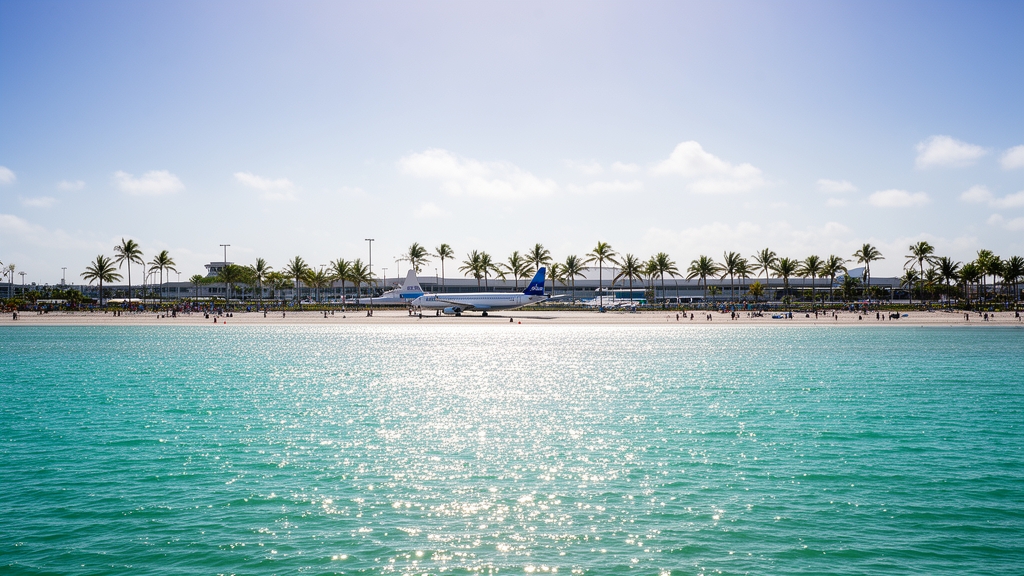
Let’s talk about what’s actually happening in Fort Lauderdale right now, because the numbers are honestly staggering. JetBlue has ramped up to 130 daily departures from FLL, serving over 55 destinations, and that’s a 75% year-over-year increase in service. To put that in perspective, the airline is now operating more flights out of Fort Lauderdale than it ever did out of Newark at its peak, and the growth isn’t slowing down. The stated target is 150 daily flights by this winter, which would make FLL one of JetBlue’s largest hubs by frequency alone. But here’s what I find more interesting than the raw count: the composition of those departures. The airline is adding 14 new routes that aren’t just more of the same—they’re strategically filling gaps in the network, particularly to secondary cities in Latin America and the Caribbean that have historically been underserved by low-cost carriers.
The Mint expansion is where this gets really fascinating. JetBlue is rolling out its largest-ever Mint schedule from Fort Lauderdale this winter, with daily service to San Diego joining increased frequencies to Los Angeles and San Francisco. That’s three transcontinental routes with lie-flat seats from a single Florida airport, which is something no other low-cost carrier has attempted. And the San Diego route is getting a Michelin-starred chef from Miami to design the menu, which is a first for any domestic transcontinental product. That tells me JetBlue isn’t treating this as a standard repositioning flight—they’re betting that South Florida’s premium leisure market is deep enough to support a genuinely high-end experience on a coast-to-coast route. The load factors on the existing Mint routes from FLL to LAX and SFO have been hovering around 94%, which is the kind of number that makes an airline want to double down immediately.
But here’s the part that really gets me thinking about the network strategy. The 14 new routes aren’t just more Florida beach runs—they’re carefully chosen to strengthen FLL as a connecting hub for Latin America and the Caribbean. When you look at the map, JetBlue is essentially building a spoke-and-hub system where Fort Lauderdale sits at the center, funneling passengers from the Northeast and Midwest down to South Florida and then out to destinations that were previously only served seasonally or with connections through other hubs. What’s really telling is the contrast with the New York cuts happening simultaneously—while JetBlue is slashing Newark departures by 30% and pulling back at LaGuardia, they’re pouring resources into Fort Lauderdale at a pace that suggests this isn’t just a tactical shift but a fundamental reorientation of the entire network. The Mint service to San Diego, with its Michelin-starred menu, is the clearest signal yet that JetBlue sees South Florida as a premium leisure market worth investing in at a level they previously reserved for New York transcontinental routes.
What This Means for Travelers: Navigating the Shift in JetBlue’s Network

Let’s be real about what this means for you as a traveler, because the headlines about JetBlue “retreating” from New York don’t tell you how your own trip planning just got more complicated. If you were one of those folks who relied on JetBlue’s Newark-to-London Gatwick route to avoid the chaos of JFK, that’s gone—discontinued back in early 2025 as part of this broader restructuring, and there’s no direct replacement now. You’re either connecting through Boston or JFK, which adds at least two hours to your journey and exposes you to the very congestion JetBlue was trying to escape. And remember the Northeast Alliance with American? That’s dead too, so you can’t earn or redeem miles across those two carriers anymore, meaning your options for getting from New York to smaller cities on American’s network just got a lot narrower. Honestly, the loss of that alliance is one of the quietest blows to loyalty program flexibility—if you were banking TrueBlue points for a trip to Charlotte or Dallas, you’re now back to cash or a different airline.
But here’s where it gets interesting for the savvy traveler. JetBlue’s new Blue Extra fare, introduced in late 2025, is actually a smart hedge against all this network churn. It includes free same-day changes and priority boarding, which is exactly the kind of flexibility you want when you’re booking a flight that might get rerouted through Fort Lauderdale instead of going direct. And if you’ve got Mosaic status, there’s a silver lining: you can now earn tiles on Hawaiian Airlines flights, which opens up a whole new way to reach Hawaii from JetBlue’s expanded Fort Lauderdale hub. That’s a meaningful redemption path that didn’t exist before. Meanwhile, the airline’s fleet transformation is quietly eliminating some beloved routes—the Embraer E190s are being retired, which means no more nonstop service from New York to places like Nantucket or Martha’s Vineyard. If you had a summer cottage on the Vineyard, you’re now looking at a connection through Boston or a ferry ride, and that’s a real loss of convenience.
The practical day-to-day changes are worth paying attention to, especially if you’re a frequent flyer out of the New York area. Because JetBlue no longer maintains crew bases at Newark or LaGuardia, same-day standby availability at those airports is likely to drop—there’s no local crew to fill empty seats on short notice, so that last-minute upgrade you used to snag? It’s less reliable now. And for those planning Caribbean getaways from Fort Lauderdale, be aware that JetBlue introduced a “Blue Basic” fare for those short-haul routes that prohibits carry-on bags and charges for seat selection. It’s a move that aligns them more with Spirit and Frontier, which is a bit jarring for a carrier that built its reputation on legroom and free TV. Still, if you’re booking Mint from Fort Lauderdale to Seattle or Portland, you’ll get the A321LR with a dedicated crew rest area and a quieter cabin—a premium experience that’s actually better than what you’d get on the same route out of New York. So the takeaway is this: your travel patterns need to adjust. You’ll fly more through Fort Lauderdale, you’ll lose some direct options, but you’ll gain a more reliable hub with better on-time performance and a loyalty program that’s finally branching out. It’s a trade-off, but if you’re willing to pivot, there’s real value here.
Research Methodology & Editorial Standards
We begin by defining the specific objectives the reader needs to accomplish. Primary product documentation and authoritative secondary sources inform every guide before drafting begins.
Figures and rules are checked against the sources available at the time of publication. Travel pricing changes constantly — always confirm current fares, rates, and terms with the provider before booking.