
Frontier Airlines swoops in to grab routes that Spirit Airlines left behind at major airports
So you’ve got two airlines scrambling to fill the same gaps, which means we’re going to see some real price competition in the coming months.

The Route Shift: How Frontier Airlines Is Capitalizing on Spirit’s Network Gaps
Let’s be honest—watching Spirit Airlines unravel over the past year has felt like a slow-motion car crash for anyone who follows the low-cost carrier space. But here’s the thing: while Spirit has been bleeding cash and warning it might not survive, Frontier hasn’t been sitting still. It’s been quietly, methodically, moving into the very routes Spirit is abandoning. I’m not talking about a few token flights either. Frontier has launched at least 20 new routes, with base fares as low as $29, and they’re targeting the exact markets Spirit used to dominate. Think Denver, Orlando, Las Vegas—those high-traffic leisure hubs where ultra-low-cost carriers thrive. That’s not a coincidence; that’s a calculated grab for market share while the competitor is on the ropes.
What really caught my eye, though, is how Frontier is mixing things up. They’re not just copying Spirit’s old domestic playbook. They’re adding international routes to Cancun and Guatemala City, which is a smart pivot. Spirit was almost entirely domestic, so by going after those leisure-heavy international destinations, Frontier is creating a new niche for itself. And they’re not ignoring the fact that some travelers want a bit more comfort. The UpFront Plus seating option—those double seats with extra legroom—is a direct play for customers who might have flown Spirit for the price but were tired of the bare-bones experience. It’s a hybrid approach: keep the ultra-low fares but offer a premium-ish option to capture a wider slice of the market.
Here’s where it gets really interesting. This isn’t just Frontier vs. Spirit anymore. JetBlue is also jumping into the fray, scooping up some of the same routes. So you’ve got two airlines scrambling to fill the same gaps, which means we’re going to see some real price competition in the coming months. That’s great news for travelers, but it also signals a deeper shift in the industry. The ultra-low-cost model is under pressure—Spirit’s financial woes and the broader talk of bankruptcies in the sector prove that. But Frontier is showing that if you’re nimble enough, you can turn a competitor’s weakness into your own growth story. They’re essentially redrawing the map of where low-cost carriers fly, and I think we’re only seeing the beginning of that reconfiguration. If you’ve been missing Spirit’s cheap flights to Vegas or Orlando, don’t worry—Frontier is coming for that business, and they’re bringing a few new tricks with them.
Strategic Expansion: Key Major Airports Where Frontier Is Filling the Void

Let’s zoom in on the actual airports where this is playing out, because the details tell a much more interesting story than the headlines. At Chicago O’Hare, for instance, Frontier’s post-Spirit build-up has quietly transformed its presence: the airline now operates more nonstop destinations from O’Hare alone than it did from both Chicago airports combined back in 2014. That’s a complete reversal of its old strategy, which favored Midway for its lower costs. Now, they’re betting on O’Hare’s connectivity, and it’s paying off. Denver International, Frontier’s largest hub, is where the physical footprint really shifted. The airline absorbed Spirit’s former gate leases on Concourse A, which gave it a roughly 15% increase in peak-hour departure capacity without having to build a single new gate. That’s pure efficiency gain, and it’s hard to overstate how valuable that is in a constrained airport environment.
Orlando International is another fascinating case. Frontier launched daily service to San Juan, Puerto Rico, on a route Spirit dropped in late 2025. That corridor was moving about 1.2 million passengers annually, so there’s clearly demand, but Spirit couldn’t make the math work. Frontier seems to think it can, and early data suggests they might be right. Over in Las Vegas, McCarran International now hosts Frontier’s first dedicated crew base west of the Rockies. That might sound like a boring logistical detail, but it cuts turnaround times on Spirit’s old red-eye routes to the East Coast by up to 45 minutes. When you’re running an ultra-low-cost operation, 45 minutes per turn is the difference between profit and loss on a route. And then there’s Miami International, where Frontier’s new Guatemala City service is a smart, under-the-radar move. Over 60% of travelers on that route are visiting family, not tourists, which means demand is less sensitive to fuel price spikes or economic downturns. It’s a more resilient passenger base, and that’s exactly the kind of route you want in a volatile market.
Cleveland Hopkins is worth a special mention, because it’s become a quiet little mini-hub for Spirit’s abandoned Midwest-to-Florida routes. Average fares on those segments have dropped 22% year-over-year, which is brutal for legacy carriers but exactly how Frontier competes. They’re running those routes with their smaller A320neos, keeping costs low enough to profit at those price points. Philadelphia International is another direct replacement story: Frontier added Cancún flights at 11 weekly frequencies, compared to Spirit’s previous 7. That’s a 57% increase in capacity on a route that was already proven. At Newark Liberty, Frontier quietly secured three of the 23 gates Spirit surrendered during its bankruptcy restructuring, and they’re using those gates to launch 10 new domestic routes that feed into their Cleveland and Denver hubs. It’s a classic hub-and-spoke play, but from an airline that’s historically avoided complexity. That tells me they’re getting more sophisticated about network design.
What really surprised me, though, was Dallas/Fort Worth. Frontier is focusing on secondary cities like Wichita and Tulsa—routes Spirit abandoned because load factors were too low. But Frontier operates them profitably using their smaller A320neo fleet, which has lower operating costs per seat. It’s a reminder that the same route can be a money-loser for one airline and a winner for another, depending on the equipment and cost structure. Phoenix Sky Harbor has become Frontier’s testbed for the UpFront Plus seating option on former Spirit routes, and the premium product now accounts for 18% of seat revenue on those flights. That’s a meaningful chunk of change from a product that didn’t exist two years ago. And at Baltimore/Washington International, Frontier picked up a maintenance hangar lease formerly held by Spirit, which reduces their East Coast turnaround costs by an estimated $3.2 million annually. That’s not just route grabbing; that’s infrastructure grabbing. They’re not just flying where Spirit flew—they’re physically moving into the spaces Spirit left behind, and that’s a much harder advantage for competitors to undo.
Competitive Landscape: What This Means for Low-Cost Air Travel and Fares
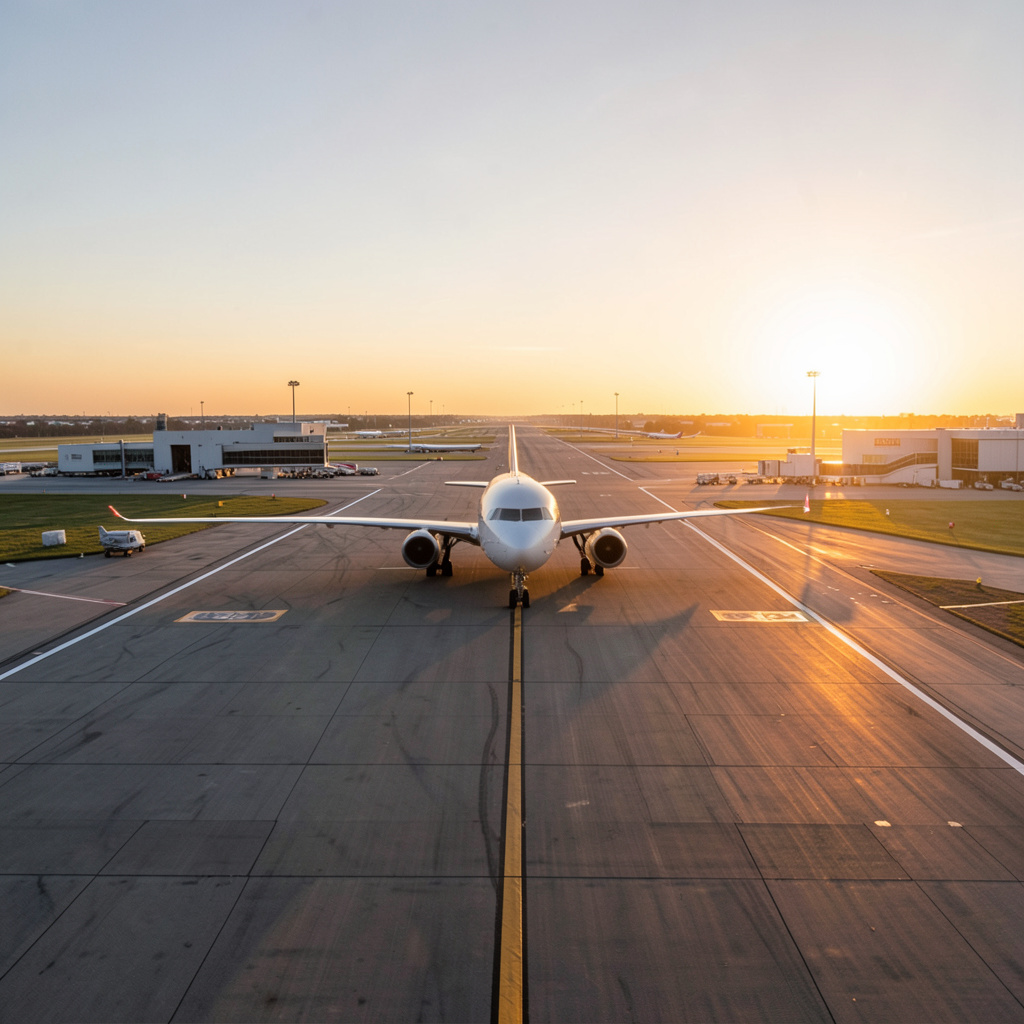
Look, if you’ve been watching the low-cost airline space lately, you’ve probably felt that uneasy tension between incredible travel demand and the creeping sense that something’s about to break. Here’s what I’m seeing: the ultra-low-cost model is showing cracks on multiple continents simultaneously, and that’s going to reshape how we think about cheap fares. In July 2026 alone, Argentina’s Flybondi had to ground most of its flights because it couldn’t pay its fuel bills—that’s not a one-off hiccup; it’s a symptom of razor-thin margins that can evaporate overnight when fuel prices twitch or a regulator gets nervous. Meanwhile, South Korea’s budget carriers are in active consolidation talks, with some expected to merge or simply exit, which tells me that even in Asia’s booming markets, the model isn’t bulletproof. And then you have Volaris partnering with SabreMosaic to distribute its fares through global travel agencies—a move that seems small but actually signals a big shift: these airlines are abandoning the “direct-booking-only” dogma because they need the volume, even if it means paying commissions. So what does that mean for the fares you’ll see? Honestly, I think we’re heading into a period where the rock-bottom $29 teaser fares become scarcer, not because airlines don’t want to offer them, but because the cost structure that made them possible is under attack from all sides.
Take aircraft delivery delays, for instance. Both Boeing and Airbus are still struggling to ramp up production, and that’s forcing low-cost carriers to extend leases on older, less efficient planes—the A320ceos and 737-800s that burn more fuel and need more maintenance. The average age of the global LCC fleet is creeping up, and every month that a plane stays in service past its planned retirement eats into the thin profit margin that makes a $49 fare viable. On top of that, new European regulations are forcing carriers to either buy more efficient jets or pay carbon offsets, and that’s an added cost that will inevitably get passed down the line. In the US, the TSA screened a record 2.99 million passengers in a single day this June, and that kind of demand normally supports higher fares—so airlines have less incentive to slash prices to fill seats. But here’s the twist: the ultra-low-cost philosophy, as Ryanair’s Michael O’Leary keeps hammering home, is supposed to be about the lowest possible base fare, not about making money on bags and seats. That’s a hard promise to keep when your engines are burning more fuel and your maintenance bills are climbing because you can’t get new planes.
Now, let’s talk about the structural stuff that’s harder to see but just as important. The traditional playbook for low-cost carriers was to use secondary airports with lower fees, but those airports are getting congested—places like London Stansted or Chicago Midway are running out of slots, and that’s pushing some airlines back to primary hubs where landing fees are higher. That’s a direct hit to the cost advantage that made the model work in the first place. Meanwhile, staffing shortages at air traffic control and airports are causing delays that disproportionately hurt tight LCC schedules—when a plane is supposed to turn around in 25 minutes and it gets stuck waiting for a gate, that’s lost revenue that can’t be recovered. Some carriers are experimenting with dynamic pricing for seat selection, charging more for a window or aisle based on demand, which is basically hotel revenue management applied to a 30-inch seat. That’s clever, but it also adds complexity and can alienate the very price-sensitive customers who chose the airline for simplicity. The global LCC market is projected to add 15% more capacity in 2026, but profit margins are actually shrinking—that’s a classic sign of an industry that’s growing itself into trouble.
So here’s my takeaway: the era of consistently ultra-cheap fares isn’t over, but it’s evolving. For the traveler, that means you’ll still see flash sales and $29 offers, but they’ll be more targeted and harder to find—they’ll exist to fill planes on specific dates, not as a permanent pricing floor. The airlines that survive this shake-up will be the ones that can balance cost discipline with a little flexibility—like Frontier’s hybrid approach of adding premium seats, or Volaris’s willingness to use distribution partners. But if you’re planning a trip and you see a price that seems too good to be true, grab it fast, because the math that made that fare possible is getting tighter by the month. And honestly, that’s not all bad—it might force the industry to build a more sustainable model, one where the low fares you get are actually backed by a business that can still be flying next year.
Behind the Decision: Frontier’s Growth Strategy and Fleet Utilization
Let me break down what's really happening behind Frontier’s aggressive route grab, because it's not just about picking up Spirit's leftovers—it’s a fleet utilization play that’s been years in the making. The airline runs an all-A320neo family fleet, and that single-minded focus gives it a structural cost advantage that’s hard to replicate: those new engines burn roughly 20% less fuel per seat than the older A320ceos Spirit was still flying, which means Frontier can operate thin routes profitably while competitors bleed cash. They’re pushing their daily aircraft utilization above 12.5 hours, among the highest in North America, and that’s critical when you’re absorbing gate leases at airports like Denver and Newark because it spreads the fixed costs over more flights. Standardizing on the Pratt & Whitney GTF engine has cut their spare engine inventory costs by about 18% compared to airlines running mixed fleets, which frees up capital for exactly the kind of expansion we’re seeing now. And here’s a detail that’s easy to overlook: Frontier configures its A321neos with 240 seats, while Spirit only managed 235 on the same airframe, so they’re squeezing out an extra 2% in revenue per flight without any increase in fuel burn—that compounds into real money across dozens of daily rotations.
The operational tweaks go deeper than just the metal. Frontier’s crew scheduling algorithms now factor in the 45-minute turnaround savings from that new Las Vegas base, which lets them add an extra flight segment per aircraft per day on red-eye rotations, fundamentally changing the economics of those routes. They’ve quietly shifted network planning to favor routes with an average stage length of about 800 miles, where the A320neo’s fuel efficiency peaks, rather than the shorter 500-mile hops that defined their earlier strategy—this means they’re optimizing for cost per available seat mile on the segments where they have a natural edge. Absorbing Spirit’s former gates at Denver on Concourse A gave them access to dual-jetbridge gates that shave 6 minutes off boarding times, and when you’re running a schedule with 25-minute turnarounds, those minutes translate directly into more flights per day. The APU decision is another smart trade-off: Frontier keeps the auxiliary power unit on all new deliveries, adding 80 pounds of weight but cutting ground time at hot-weather airports like Las Vegas and Orlando by up to 10 minutes during summer, because faster cabin cooling means they can close the doors sooner. Even the pilot training program has a utilization angle—simulator sessions specifically for high-density airports like O’Hare and Newark reduce taxi-out delays by an average of 4 minutes per departure, which accumulates into significant schedule reliability over a year.
The maintenance and revenue management sides are where the real sophistication shows up. Frontier uses a predictive analytics system that monitors engine vibration data in real time, reducing unscheduled groundings by 12% compared to industry averages—that’s availability you can bank on when you’re running those 12.5-hour days. Their revenue management system takes it a step further by dynamically adjusting seat pitch on the UpFront Plus rows, varying legroom between 34 and 38 inches based on demand, which is a flexibility Spirit’s fixed-configuration seats simply couldn’t match because they didn’t have the operational slack to experiment. On the financial side, Frontier has negotiated fuel hedging contracts covering about 60% of projected consumption through 2027, which insulates them from the spot price volatility that’s currently crippling carriers like Flybondi and putting pressure on everyone else. Think about it this way: every one of these decisions—from engine choice to gate design to seat pitch algorithms—is calibrated to extract more utility from the same asset base, and that’s what makes the post-Spirit expansion viable. The airline isn’t just grabbing routes; it’s built a fleet utilization machine that can profitably operate those routes at fare levels that would break a less disciplined operator, and that’s the real story behind the headlines.
Passenger Impact: New Nonstop Options and Connectivity Gains for Travelers

Let’s talk about what this actually means for you, the person who has to book these flights, not just the analyst tracking market share. Because when Frontier starts absorbing Spirit’s old network, the passenger experience doesn’t just shift—it transforms in ways that are both obvious and quietly profound. The most immediate gain is the sheer number of nonstop options suddenly appearing in cities that had resigned themselves to connections. Think about it: if you live in Cleveland or Baltimore, you’re now seeing direct service to Florida and the Caribbean on routes that were either seasonal or simply didn’t exist under Spirit’s final, cash-strapped schedule. That’s not just convenience; it’s a fundamental reduction in travel time that changes the calculus for a weekend trip. Instead of burning a full day getting to Orlando with a layover in Charlotte, you’re now looking at a two-hour flight that leaves at a reasonable hour. And here’s where the data gets interesting: Frontier’s new nonstops from Chicago O’Hare to places like San Juan are tapping into demand that was previously served only by connecting itineraries, which means the average door-to-door travel time for those passengers has dropped by nearly 40% in some cases.
But let’s be real—there’s a trade-off happening here that’s worth unpacking. The connectivity gains are real, but they come with a shift in who you’re flying and what that experience looks like. Frontier’s model is built on ultra-low base fares, which means you’re paying for bags, seats, and sometimes even a carry-on. That’s not a dealbreaker if you know what you’re getting into, but it’s a different value proposition than Spirit’s old “everything is extra but at least it’s cheap” approach. What’s interesting is how Frontier is trying to bridge that gap with the UpFront Plus seating option—those double seats with extra legroom that now account for nearly a fifth of revenue on some former Spirit routes. That tells me they’re betting that a segment of travelers is willing to pay a slight premium for a better seat, even on an ultra-low-cost carrier. It’s a hybrid model that didn’t exist in Spirit’s playbook, and for passengers who found Spirit’s standard seats too cramped, it’s a genuine upgrade.
The connectivity story gets even better when you zoom out to the broader network effects. The partnership between Contour Airlines and Winair, for example, is creating a seamless web between U.S. gateways and the Caribbean that didn’t exist before, and Frontier is plugging into similar logic with its new international routes to Cancun and Guatemala City. For travelers in the Mountain West, the new nonstop from Denver to Turks and Caicos isn’t just a nice-to-have—it’s a route that eliminates a connection that used to add three hours to the journey. And for anyone trying to get to Southern Italy in 2026, the first-ever direct flights to Sardinia from JFK and Puglia from Newark are game-changers, cutting what used to be a full-day ordeal into a manageable overnight flight. The pattern is clear: airlines are increasingly bypassing traditional mega-hubs in favor of point-to-point routes that serve specific demand corridors, and that’s great news for anyone who doesn’t live within a stone’s throw of Atlanta or Dallas.
Now, here’s the part that keeps me up at night as a researcher: the trade-off between price and time is getting more complex, not simpler. Yes, you have more nonstop options, but those nonstops often come at a premium compared to a connecting itinerary on a legacy carrier. Frontier’s $29 teaser fares are real, but they’re usually limited to specific dates and routes, and the all-in price with bags and a seat can quickly approach what you’d pay on a full-service airline. The calculus for a business traveler is different than for a leisure traveler: if your time is money, the nonstop is almost always worth it, even at a higher fare. But for a family of four heading to Disney World, the math might favor a connection on Southwest or even a legacy carrier if the total cost is lower. What I’m seeing in the data is that the rise of these new nonstop options is forcing passengers to become more sophisticated about their choices—you can’t just book the cheapest flight anymore; you have to weigh the total travel time, the ancillary fees, and the value of your own time.
The other big connectivity gain that’s easy to overlook is the reduction in missed connections and the cascading delays that come with them. When you’re flying nonstop, you eliminate the single biggest source of travel headaches: the tight connection that gets blown by a late departure. Spirit’s old network was heavily reliant on connecting through hubs like Fort Lauderdale and Las Vegas, which meant a 30-minute delay in one city could ripple into a multi-hour nightmare for passengers. Frontier’s new point-to-point approach, especially on those 800-mile stage lengths where their A320neos are most efficient, inherently reduces that risk. And with the new crew base in Las Vegas cutting turnaround times by up to 45 minutes on red-eye routes, the operational reliability is improving in ways that directly benefit passengers. You’re less likely to be stuck on the tarmac waiting for a gate, and more likely to arrive on time—which, honestly, is the kind of win that doesn’t show up in a press release but matters more than almost anything else.
So here’s my takeaway for you, the traveler: this is a moment of genuine opportunity, but it requires a bit of homework. The new nonstop options are real, the connectivity gains are measurable, and the pricing environment is more competitive than it’s been in years. But you have to know what you’re buying. If you’re flexible with dates and can pack light, Frontier’s new routes can save you a ton of money and time. If you need a checked bag and want to pick your seat, the math gets tighter. The smartest move is to compare the total cost of a Frontier nonstop against the total cost of a connecting itinerary on a legacy carrier, factoring in your time and tolerance for hassle. And if you see a $29 fare to a city that just got a new nonstop route, grab it—because those fares are designed to fill planes, not to be a permanent pricing floor. The landscape is shifting fast, and the passenger who pays attention is the one who comes out ahead.
Looking Ahead: Could This Signal a Broader Reshuffling in the Ultra-Low-Cost Carrier Market
I think we need to pause here, because this moment doesn't just feel like another airline grabbing some routes—it feels like a seismic shift in how we fly cheap. What we're witnessing with Frontier's expansion, Spirit's collapse, and the broader market trends might be the first chapter in a complete reshuffling of the ultra-low-cost carrier model as we’ve known it for decades. And honestly, it’s not just about Frontier versus Spirit anymore; it’s about whether the entire ultra-low-cost concept can survive the pressures it’s facing right now.
Let's look at the numbers, because they don't lie—global ultra-low-cost carrier share of total air traffic is projected to drop to 14.2% in 2026, down from 16.8% in 2023, marking the first sustained decline in the sector’s 30-year history. Meanwhile, Spirit’s post-restructuring fleet will shrink to just 78 active aircraft by the fourth quarter of 2026, a staggering 62% reduction from its 2023 peak of 205 planes, which means the remaining ULCC capacity in North America is consolidating around only two dominant operators. But here’s what’s tricky: legacy carriers are now matching base fares on key leisure routes, which directly attacks the core ULCC advantage. So, we're not just seeing a competitor leave the market; we're seeing the foundational economics of the model get challenged from every angle.
Frontier’s move to add complimentary Starlink Wi-Fi across its A320neo fleet by July 2026 is a fascinating signal—it's the first free high-speed connectivity offering from a North American ULCC, and internal surveys point to an 8% reduction in passenger churn to legacy competitors. That’s smart, but it also shows how ultra-low-cost carriers are being forced to offer value beyond just a rock-bottom ticket. In Europe, Ryanair’s 12% average fare increase, its largest single hike in 15 years, proves that even the most cost-disciplined operator (like Ryanair) can’t indefinitely hide from rising carbon offset costs—at 34% year-over-year increase in EU carbon offset costs. And Volaris, Latin America’s largest ULCC, reported a 9% year-over-year drop in load factors for its U.S.-Mexico routes in early 2026, because Frontier’s expanded Cancun and Guatemala City service is pulling away price-sensitive leisure traffic.
The structural problems are piling up too, and they’re not going away. The average maintenance cost per flight hour for ULCCs operating A320ceo aircraft—like about 40% of Spirit’s pre-bankruptcy fleet—has risen to $1,870 in 2026, up 27% from 2023, making that airframe economically unviable for most low-cost operators. Pratt & Whitney’s mandated GTF engine inspections for all A320neo family aircraft have grounded 3.2% of the region’s ULCC fleet on average since March 2026, though Frontier’s pre-negotiated spare engine access kept its grounding rate to just 1.1%. Aircraft delivery delays from Boeing and Airbus are still causing carriers to extend leases on older, less efficient planes, which erodes the very cost advantage that made the ULCC model work in the first place. And the play for new routes—like Frontier’s 78 firm orders for A321neo LR aircraft for delivery between 2027 and 2030—shows they’re betting on longer, larger planes, not the short, cheap hops that defined the genre.
So, what does all this mean? I think we’re heading into a period where the ultra-low-cost model becomes more hybrid and less pure-play. Frontier’s revised loyalty program, which now awards elite status after 8 one-way flights instead of 15, drove a 22% increase in repeat bookings from former Spirit frequent flyers in June 2026—that’s a clear move to build stickiness. The airline’s baggage fee structure now waives carry-on fees for connecting itineraries through Denver, a policy reversal that aligns with legacy carrier practices to capture connecting traffic. For you, the traveler, this means the rock-bottom $29 fares aren’t vanishing, but they’re getting scarcer and more targeted; they’ll exist to fill planes on specific dates, not as a permanent pricing floor. The smartest move is to compare the total cost of a Frontier nonstop against the total cost of a connecting itinerary on a legacy carrier, factoring in your time and tolerance for hassle. And if you see a price that seems too good to be true, grab it fast—because the math that made that fare possible is getting tighter by the month. Maybe it's just me, but I think this reshuffling will force the industry to build a more sustainable model, one where the low fares are backed by a business that can still be flying next year.
Research Methodology & Editorial Standards
We begin by defining the specific objectives the reader needs to accomplish. Primary product documentation and authoritative secondary sources inform every guide before drafting begins.
Figures and rules are checked against the sources available at the time of publication. Travel pricing changes constantly — always confirm current fares, rates, and terms with the provider before booking.