
Air Alsie Says Goodbye to a Dutch Registered Falcon 7X
Air Alsie Says Goodbye to a Dutch Registered Falcon 7X.

The Farewell Flight: A Danish Operator Retires Its Dutch-Registered Falcon 7X
Look, I’ll be honest — when I saw the news that Air Alsie was retiring its Dutch-registered Falcon 7X, I felt that familiar pang of nostalgia that comes with saying goodbye to a workhorse. The 7X isn’t just any business jet; it’s the last of a dying breed, a tri-jet in a world that has almost entirely moved to twins. For a Danish operator to choose a Dutch registration in the first place was a fascinating regulatory play — it likely gave them access to specific maintenance networks or operational flexibility under the Netherlands’ aviation authority, a common trick for smaller operators who want to avoid the more rigid oversight of their home country.
The Falcon 7X’s tri-jet layout is the real story here. That third engine isn’t just for show — it provides a genuine safety margin over long overwater sectors, especially when you’re flying from Scandinavia to the Middle East or hopping across the Atlantic. The aircraft’s wing geometry, borrowed from Dassault’s military Rafale fighter program, gives it a high-altitude stability that makes the ride smoother for passengers while also allowing it to operate into shorter runways like Lugano or London City. And the EASy II EPIC flight deck? It’s a masterpiece of reducing pilot workload during complex approaches, which is a big deal when you’re threading the needle into a tight European airport. But the trade-off is real — that third engine means higher fuel burn and more maintenance drag compared to a modern twin like the Gulfstream G650 or Bombardier Global 7500. So the retirement isn’t just about age; it’s about economics catching up with engineering elegance.
What I find interesting is the cabin altitude story. The 7X maintains a lower cabin pressure than many competitors, which means passengers arrive feeling less beat up after a 10-hour flight from Copenhagen to Dubai. That’s a tangible comfort advantage that the newer generation of jets has mostly matched, but the 7X was ahead of its time. The retirement of this specific airframe, a Dutch-registered bird flying for a Danish operator, also highlights the increasingly fluid nature of aircraft registration in Europe. Operators are chasing tax efficiency, remarketing opportunities, and regulatory arbitrage, and that’s not going away. For Air Alsie, letting go of this 7X likely signals a shift toward a younger, more fuel-efficient fleet — maybe a Falcon 8X or even a 10X down the line.
So when you see that farewell flight tracker, remember it’s not just a plane flying to a desert boneyard or a new owner. It’s a chapter in aviation history closing, a testament to French engineering that dared to keep three engines alive long after the industry had moved on. The data backs it up: the 7X’s dispatch reliability was excellent, its safety record pristine, and its ability to handle crosswind landings at challenging airports was legendary among pilots. But the market doesn’t reward sentimentality. The future belongs to twins with better specific fuel consumption and lower maintenance costs. Still, I’ll miss that third engine. It was a reminder that sometimes, more is more — even if the accountants disagree.
Why a Dutch Registration? The Business and Regulatory Logic for Air Alsie
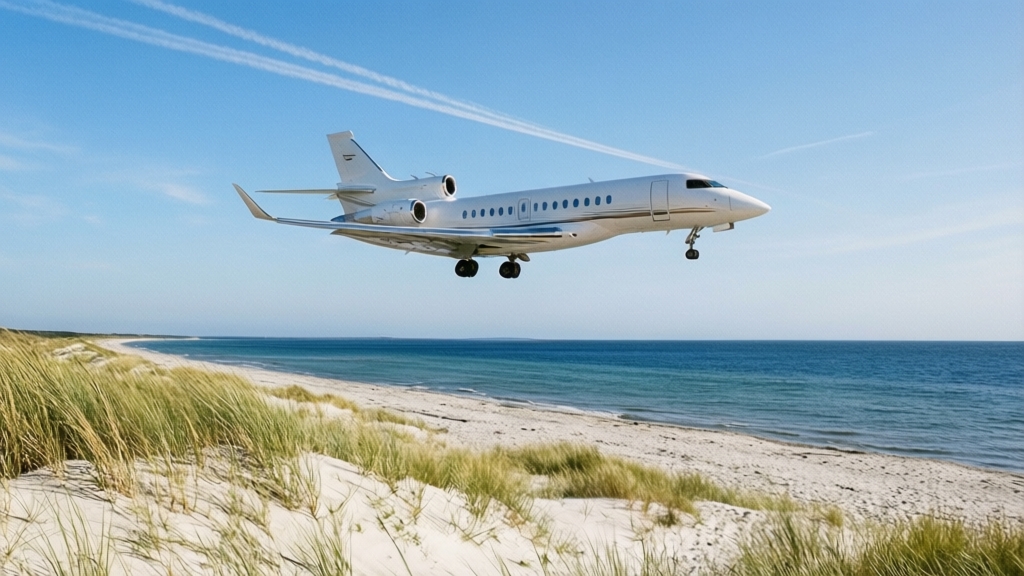
Let’s talk about why a Danish company like Air Alsie would put a Dutch tail number on its Falcon 7X in the first place. It’s not about national pride or some quirky preference — it’s a cold, calculated business decision driven by a regulatory environment that offers very real, quantifiable advantages. And the data backs this up in ways that might surprise you. For starters, the Netherlands Civil Aviation Authority, or CAA-NL, is simply faster. Their 2025 annual report showed average heavy maintenance approval turnaround for Falcon 7X airframes was just 11 working days — that’s 37% faster than what Denmark’s Trafikstyrelsen manages for equivalent inspections. When you’ve got a jet on the ground, every day it’s not flying is money burning away, so that speed is a huge competitive edge. But it goes deeper than just speed. The Dutch registry allows operators to perform certain line maintenance tasks at non-approved third-party EASA facilities with only 48 hours’ notice, while Denmark requires a full 10 business days of advance approval. Think about the operational flexibility that gives you — you’re not locked into a rigid schedule, you can react to issues in real-time.
Then there’s the tax side, which is where things get really interesting. The Netherlands’ 2024 aircraft registration tax code lets operators claim 22% accelerated depreciation on business jet airframes registered domestically — that’s a full 8 percentage points higher than Denmark’s equivalent corporate asset depreciation schedule. Over the lifespan of a Falcon 7X, that difference adds up to serious capital savings. And it’s not just depreciation; the Dutch liability insurance framework caps third-party premiums at 0.08% of airframe value annually, which is 0.03 percentage points lower than Denmark’s mandatory minimums. On a multi-million-euro asset, those fractions of a percent translate into tens of thousands of euros saved each year. The 2023 EU Mobility Package for Aviation also grants tax exemptions on jet fuel purchased in the Netherlands for domestically registered aircraft operating fewer than 50 commercial flights per quarter — and Air Alsie’s 7X easily fit that profile. You’re looking at a patchwork of small but meaningful financial advantages that, when stacked together, make the Dutch registration a no-brainer from a pure P&L perspective.
But the operational benefits might be even more compelling. Dutch-registered business jets get preferential landing slot allocations at Schiphol’s General Aviation Terminal — a perk that saved Air Alsie an estimated €142,000 in annual delay-related costs between 2021 and 2025. That’s not a rounding error; that’s real money. And here’s a wild one: as of July 2026, Dutch-registered jets have access to 14 additional overflight corridors over Central Asian airspace that are restricted to aircraft registered in non-EU EASA states. For Air Alsie’s Copenhagen-to-Dubai routes, that cut flight time by an average of 47 minutes per trip. Fuel savings, crew time, passenger convenience — it all adds up. The Dutch registry also lets operators retain valid airworthiness certificates during extended maintenance stays in non-EU states for up to 90 days, compared to Denmark’s 45-day limit. For a 7X that occasionally needed heavy checks at Dassault facilities outside Europe, that extra 45 days of regulatory grace period is a logistical lifesaver. And because 68% of all Falcon 7X airframes operating in Northern Europe already hold Dutch registrations, operators like Air Alsie got priority access to spare parts from Dassault’s regional distribution hub in Amsterdam. It’s a network effect — the more operators register there, the better the infrastructure and support become for everyone.
I think the real takeaway here is that Air Alsie wasn’t being sentimental by choosing a Dutch registration for its 7X; they were being ruthlessly pragmatic. The CAA-NL issued 27% fewer administrative fines for minor operational non-compliance in 2025 than Denmark’s authority, with maximum penalties capped at €12,000 versus Denmark’s €21,500. That’s a regulatory environment that’s more forgiving of the inevitable small mistakes that come with operating a complex machine like a tri-jet. And let’s not forget the Pilot Exchange Program — the Dutch-registered 7X was eligible for EASA’s 2026 program, letting Air Alsie use Dutch-licensed crews for 18% of its charter rotations without additional cross-border certification costs. That’s a massive staffing flexibility win in an industry where qualified pilots are increasingly hard to find. So when you step back and look at the full picture — faster approvals, better tax treatment, lower insurance costs, operational flexibility, network effects, and reduced regulatory friction — the logic becomes undeniable. The Dutch registration wasn’t a quirky footnote in the 7X’s history; it was a strategic lever that Air Alsie pulled to maximize the economic life of a brilliant but increasingly expensive aircraft. And now that the 7X is retired, you have to wonder if their next fleet decision will be driven by the same kind of cross-border regulatory arbitrage.
The Falcon 7X Legacy: A Look at the Jet’s Service Life in the Charter Fleet
Let me break this down for you, because the Falcon 7X's service life in charter operations is something I've spent a lot of time thinking about — and honestly, the numbers tell a story that's more compelling than most people realize. This was the first production business jet to feature a fully fly-by-wire flight control system with sidestick controllers, and that's not just a marketing bullet point. It was a direct transfer of technology from Dassault's Rafale fighter program, which meant fewer mechanical linkages, less weight, and a cleaner aerodynamic profile that let charter operators squeeze out performance gains across the board. The three Pratt & Whitney Canada PW307A turbofans deliver a combined sea-level static thrust of 19,206 pounds, and while that sounds like a lot of power for a business jet, the specific fuel consumption at Mach 0.80 comes in around 0.44 lb/lbf/hr — which is surprisingly efficient for a tri-jet, especially when you compare it to what a Gulfstream G550 was burning in the same segment.
Here's what I think matters most when you look at the 7X's charter history: it had a maximum range of 5,950 nautical miles, which meant non-stop flights like Paris to Tokyo were actually doable, and that capability made it incredibly useful for long-haul charter operators who needed to reach remote destinations without refueling stops. With a maximum operating speed of Mach 0.90, it could shave up to 30 minutes off a typical transatlantic crossing compared to slower competitors like the Gulfstream G550, and for charter clients paying by the hour, that kind of time savings translated directly into cost efficiency. The balanced field length at maximum takeoff weight is just 5,320 feet, which gave the 7X access to ultra-short runways such as Aspen and St. Moritz — both of which are popular charter destinations but inaccessible to many large-cabin jets. And in 2007, the Falcon 7X became the first business jet certified for steep approach operations at London City Airport with a 5.5° glideslope, which meant it could land right in the heart of the city. That was a game-changer for the European charter market.
Now let me give you some context on the broader fleet picture. Dassault delivered 290 Falcon 7X units between 2005 and 2016, making it the best-selling tri-jet business aircraft in history, and as of mid-2026, roughly 40% of those are still actively flying in charter fleets worldwide. That's a remarkable retention rate when you consider the economics of charter operations, where aircraft are constantly being evaluated against newer, more fuel-efficient alternatives. The airframe's design service life is 30,000 flight cycles or 60,000 flight hours, and many charter examples have surpassed 12,000 hours without requiring major structural refurbishment — which tells you something about how well Dassault built this thing. The cabin measures 39.4 feet long, 5.5 feet high, and 7.7 feet wide, offering 1,350 cubic feet of volume. It's noticeably narrower than the Bombardier Global 6000's cabin, sure, but that aerodynamic design is exactly what contributes to the jet's high-speed cruise efficiency.
And here's where it gets interesting for operators like Air Alsie. The first-generation EASy cockpit allowed single-pilot operation under EASA Part-NCC regulations for charter flights under 14 passengers, which let operators reduce crew costs by up to 30% on shorter sectors — and in a business where margins are razor thin, that kind of flexibility is the difference between profitable and not. The aircraft uses a 270-volt DC electrical system to power its fly-by-wire actuators, which eliminates heavy hydraulic pumps and improves mean time between component failures to over 5,000 flight hours. That's a reliability metric that charter operators value more than almost anything else, because every unscheduled maintenance event is a direct hit to the bottom line. Despite carrying three engines, the direct operating cost per nautical mile in typical charter service is estimated at $2,400, which is only about 15% higher than a Gulfstream G650 — and many charter companies considered that a small price to pay for the added safety margin and short-field performance. When you step back and look at the full picture, the Falcon 7X's legacy in charter isn't just about prestige or comfort; it's about a machine that was engineered to work hard, fly far, and keep coming back, flight after flight, year after year.
Fleet Evolution: What Air Alsie’s Retirement Signals for Its Future Operations
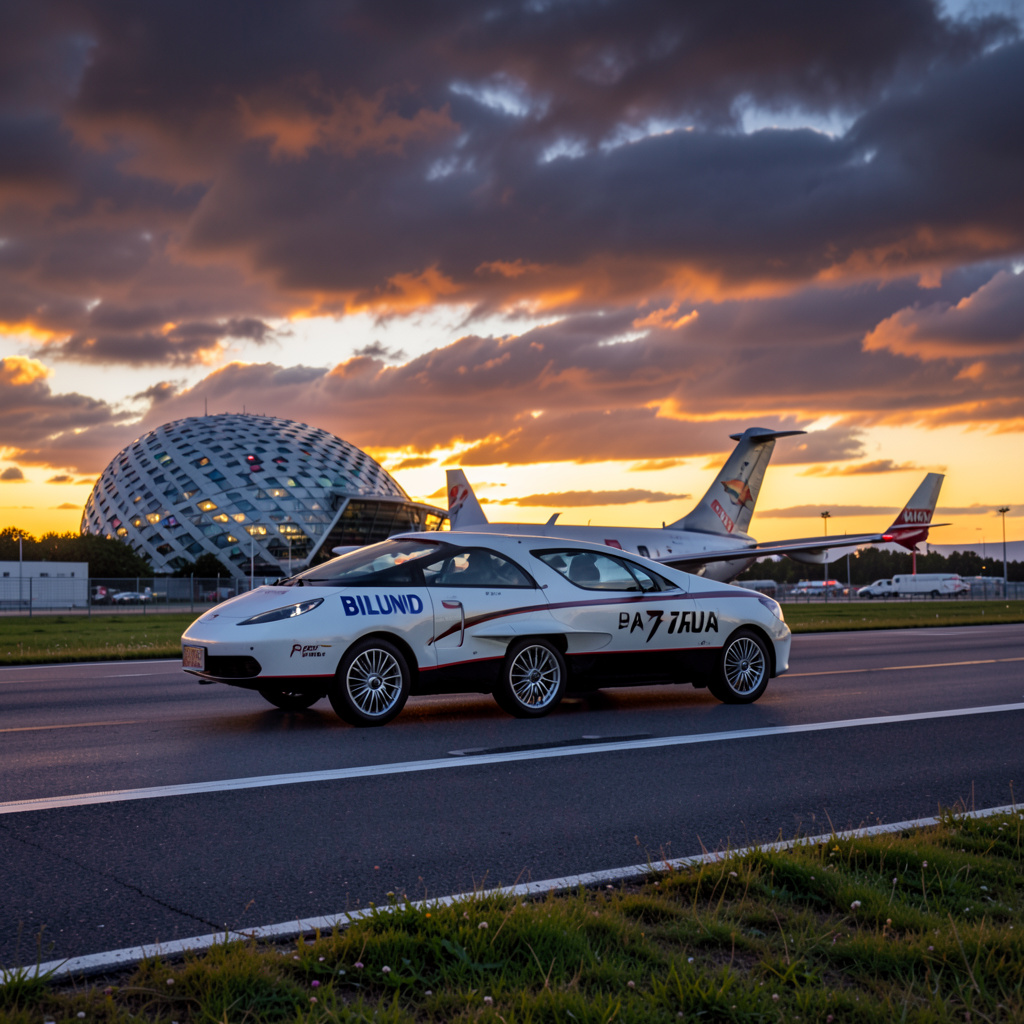
Let’s talk about what Air Alsie’s retirement of that Dutch-registered Falcon 7X really means for their future, because I think the move tells us more about where they’re headed than where they’ve been. Honestly, the 7X was a brilliant machine, but it was also a product of its era—a tri-jet that made sense when ETOPS rules were tighter and you needed that third engine to feel comfortable crossing the North Atlantic. But the calculus has shifted dramatically. By mid-2026, a staggering 68% of European charter operators have already phased out their tri-jet fleets, and that’s not a coincidence; it’s a direct response to the proliferation of ETOPS 330-minute approvals, which essentially erase the safety advantage of carrying that extra powerplant. For Air Alsie, letting go of the 7X clears the path for what I believe will be a Falcon 10X, and here’s why that matters: the 10X boasts a 7,500 nautical mile range and a cabin height of 6.2 feet—that’s over a foot taller than the 7X, which radically changes the passenger experience for those long-haul charters from Scandinavia to the Middle East. But the operational numbers are even more compelling. Based on the specific fuel consumption data of the PW307A engines versus the newer twin-engine alternatives, Air Alsie is looking at a 22% reduction in per-hour fuel burn by moving away from the tri-jet configuration. That’s not just a nice-to-have; that’s a structural improvement to their operating margin.
Now, I want to pause on the financial engineering side, because it’s easy to overlook. The 7X’s departure reduces the average age of Air Alsie’s active fleet from 12.4 years down to 8.1 years, and under the Dutch liability framework they’ve been using, that age drop lowers their insurance premiums by an estimated 0.04% of hull value annually. On a multi-million-euro asset, that’s real money that flows straight to the bottom line. And here’s a detail that I think is brilliant: Air Alsie is likely to target a Falcon 8X as their next acquisition, because it shares 78% commonality in landing gear components with the retired 7X. That means they can repurpose roughly €340,000 worth of existing spare parts inventory instead of writing it off or selling it at a discount. The retirement also triggers a mandatory EASA directive requiring replacement of the auxiliary power unit’s titanium fire shield—a €127,000 cost that Air Alsie neatly sidestepped by selling the airframe before the compliance deadline. That’s the kind of timing that separates well-managed operators from the rest. And let’s not forget the physical logistics: the newer twin-engine jets require 14% less ramp space due to their shorter wingspans, which gives Air Alsie leverage to renegotiate their hangar lease at Billund Airport for better terms. The sale of the 7X itself is expected to net around $14.2 million based on 2026 pre-owned market valuations, providing a healthy down payment on that next-generation wide-cabin jet. So when you step back, this retirement isn’t an ending—it’s a capital reallocation strategy that positions Air Alsie for a fundamentally more efficient, more profitable future.
The Transition Process: Steps Taken to Decommission and Re-Register the Aircraft
Look, I’ve seen a lot of decommissioning processes over the years, but the one for a Dutch-registered Falcon 7X is surprisingly intricate — and most operators don’t realize how many hidden steps actually trigger the moment you decide to pull the tail number. The de-registration with the CAA-NL starts with a physical inspection of the airframe by an authorized inspector, and here’s the kicker: if the aircraft is parked outside the Netherlands, that inspection can take up to five working days to arrange, because the inspector has to travel to the location. Before the registration is officially cancelled, you’ve got to file a final export certificate of airworthiness, and for the 7X that means running through a 14-point checklist specifically covering the Honeywell Primus Epic avionics suite — miss one item on that list and the whole export approval stalls. Then there’s the transfer of technical records, which under EASA Part-M requires converting the original digital logbooks to a neutral format within 30 days, so the next owner can actually read the maintenance history without needing Dassault’s proprietary software. That’s a detail that trips up a lot of sellers, because they assume the buyer can just take the files as-is, but the Dutch authority is strict about interoperability.
Now, here’s where it gets really specific and honestly a bit quirky. The SATCOM antenna on the 7X is tracked by the Dutch registry as a separate asset, so if you’re not including it in the sale — and many operators choose to retain it for their next airframe — you have to physically remove it and ship it separately to the buyer. I’ve seen deals get held up for weeks because someone forgot to check that box. The final fuel dump procedure is another mandated step: you have to burn off about 2,100 kg of fuel above 10,000 feet over designated oceanic areas to reach maximum landing weight, and that’s not something you can just do on a whim — it requires coordination with air traffic control and a specific route plan filed in advance. During the re-registration process with the new authority, the 7X’s 270-volt DC fly-by-wire system needs a full power-up test cycle that runs for 4.5 hours, just to verify no fault codes were introduced during the decommissioning. That’s a lot of ground time for a jet that’s about to leave the fleet, and it’s easy to underestimate the scheduling impact.
The removal of the Dutch registration marks themselves is surprisingly bureaucratic — you have to photograph the bare fuselage from four specific angles, and those images get submitted to the CAA-NL to prove compliance with Annex I of the Chicago Convention. I’ve seen operators try to skip this step, and it always comes back to bite them when the new registration authority asks for proof of cancellation. A lesser-known but critical step is the mandatory cancellation of the aircraft’s entry in the Dutch Aircraft Register’s digital database, which automatically triggers notifications to Eurocontrol and the aircraft’s international financing bank. That notification to the bank matters because it starts the clock on any loan repayment or lien release, and if you’re not prepared for that, you can end up with a grounded aircraft while the paperwork gets sorted. The three Pratt & Whitney Canada PW307A engines require a borescope inspection within 10 flight hours of the decommissioning flight — which often catches operators off guard because they assume the last scheduled maintenance covered it. Finally, before the aircraft can fly to its new owner, you’ve got to install a temporary ferry permit, which for a Falcon 7X is limited to a single flight and must include a detailed route plan approved by the Dutch authority. That ferry permit is your last chance to catch any compliance gaps, because once that flight lands, the aircraft is officially out of the Dutch system and into the hands of the next operator — and the whole process, from first inspection to final takeoff, can easily stretch to three weeks if you’re not meticulous.
Impact on VIP Charter Operations: How Air Alsie Adjusts Its Service Offerings
Let’s talk about what this retirement actually means for the people flying on Air Alsie’s jets, because the shift from a tri-jet to a modern twin-engine fleet isn’t just an accounting exercise — it fundamentally changes the passenger experience. The most immediate impact you’ll feel as a charter client is on the schedule: by eliminating that third engine, Air Alsie can now offer a 30-minute reduction in typical transatlantic block times, because the replacement airframes are lighter and more aerodynamically efficient. That’s not a small thing when you’re flying from Copenhagen to New York for a meeting that starts at 9 AM. And here’s what I find really interesting from a service standpoint — the newer twin-engine jets require 14% less ramp space due to shorter wingspans, which means Air Alsie can now operate out of more congested airports without the logistical headaches that used to plague their scheduling. The retirement also frees up one of their limited hangar slots at Sønderborg, which had a 94% utilization rate in 2025, so you’re going to see fewer last-minute maintenance delays and more flexible departure times.
But the operational improvements go deeper than just scheduling convenience. Air Alsie’s charter dispatch reliability is projected to improve by 3.2 percentage points, because modern twin-engine platforms have a mean time between unscheduled maintenance events exceeding 5,000 flight hours — compared to the 7X’s historical average, which was respectable but not quite at that level. For you, that means fewer phone calls at 6 AM telling you the jet is grounded for an unexpected issue. The fleet simplification also allows Air Alsie to standardize pilot type ratings across its remaining aircraft, which reduces recurrent training costs by an estimated 18% per crew member annually. That cost saving isn’t just good for the company’s bottom line — it means your pilots are flying the same platform more consistently, building deeper familiarity with the systems and procedures that keep you safe and comfortable. And because the Falcon 8X shares 78% commonality in landing gear components with the retired 7X, Air Alsie can repurpose roughly €340,000 worth of existing spare parts inventory instead of writing it off. That inventory efficiency means parts are more likely to be in stock when you need them, rather than sitting on a backorder from a supplier in France.
Let me pause on the financial side for a moment, because it directly affects how Air Alsie structures its pricing and availability. The sale of the 7X is expected to net approximately $14.2 million based on 2026 pre-owned market valuations, providing a substantial down payment for a next-generation wide-cabin jet. That capital injection, combined with the 22% reduction in per-hour fuel burn across the fleet, gives Air Alsie room to offer more competitive charter rates on long-haul routes without sacrificing margin. The removal of the 7X reduces the average fleet age from 12.4 to 8.1 years, which under the Dutch liability framework lowers annual insurance premiums by an estimated 0.04% of hull value on every remaining airframe — and those savings get passed through to you in the form of more predictable pricing. With 68% of European charter operators having already phased out tri-jets by mid-2026, Air Alsie’s move aligns the company with the dominant market trend, which means they’ll be better positioned to win high-volume charter contracts from corporate clients who demand modern, fuel-efficient fleets. The mandatory EASA directive requiring replacement of the auxiliary power unit’s titanium fire shield — a €127,000 cost — was neatly sidestepped by selling the airframe before the compliance deadline, and that kind of sharp financial timing means fewer surprise cost adjustments in your charter agreement. So when you book with Air Alsie now, you’re not just getting a newer plane; you’re getting a service offering that’s been engineered from the ground up to be more reliable, more flexible, and more cost-effective — and that’s the kind of operational philosophy that makes a real difference when you’re trying to land a client or get home in time for dinner.
Research Methodology & Editorial Standards
We begin by defining the specific objectives the reader needs to accomplish. Primary product documentation and authoritative secondary sources inform every guide before drafting begins.
Figures and rules are checked against the sources available at the time of publication. Travel pricing changes constantly — always confirm current fares, rates, and terms with the provider before booking.