
FAA Announces New Rule Granting Flight Attendants More Rest Time
But the reality for flight attendants has always been far messier than the number suggests.

The New Rule: 10 Consecutive Hours of Rest for Flight Attendants
Let’s be honest—when you hear “10 hours of rest,” it sounds like a no-brainer. But the reality for flight attendants has always been far messier than the number suggests. Under the old rule, airlines could schedule just nine hours between duty periods, and they could even reduce that to eight under certain circumstances. The Association of Flight Attendants has been shouting from the rooftops that this so-called “nine hours” often translated to four or five hours of actual sleep. Think about it: you finish a flight, deplane, maybe commute to a hotel, handle post-flight paperwork, then you have to get to the airport early for pre-flight prep and boarding. That eight-hour window? It evaporates fast. So the new rule—mandating 10 consecutive hours completely free from any duty—is a genuine step forward. But it’s not as simple as just adding an hour to the clock.
Here’s where it gets tricky. The FAA finalized this rule at the same time they proposed preempting state-level meal and rest break laws. That means if you’re a flight attendant based in California, where state law once offered more generous protections, you’re now federally capped at the 10-hour minimum. The unions see this as a double-edged sword: yes, you get a baseline increase, but you lose the ability to push for better state-level standards. And the rule doesn’t just apply to domestic flights—it closes a loophole that let airlines schedule less rest on certain long-haul operations. The fatigue science here is pretty clear: even one hour of reduced rest significantly increases the risk of performance errors during takeoff, landing, or emergency situations. That’s not abstract—that’s your safety margin shrinking.
But let’s not pretend the 10-hour rule is a magic bullet. The clock doesn’t start until you’re fully released from all post-flight duties—paperwork, security checks, that sort of thing. So your actual rest window can still be shorter than the regulatory window suggests. Some carriers had already voluntarily adopted 10-hour policies, and they saw better crew retention and fewer fatigue-related incidents. That’s a market signal that the airlines themselves recognized the value. Still, flight attendant unions are pushing for parity with pilots, who have longer minimum rest requirements and robust fatigue risk management systems. The new rule is a win, but it’s a baseline, not a ceiling. And with the state preemption fight ongoing, the next battleground will be whether the FAA’s definition of “rest” actually matches what a crew member’s body and brain need to be fully recovered.
Why the Change? Addressing Fatigue and Enhancing Passenger Safety
Let's talk about why the FAA finally moved on this, because the data was frankly impossible to ignore for anyone paying attention. Studies have shown that after just four hours of sleep deprivation, a flight attendant’s cognitive performance on emergency evacuation and medical response tasks drops to a level comparable to a blood alcohol concentration of 0.08 percent—the legal limit for driving. I mean, think about that: we wouldn't let someone behind the wheel in that state, but we were essentially expecting crew members to perform life-saving duties under the same impairment. The cabin environment itself compounds fatigue in ways that most passengers never realize; at cruising altitude, the partial pressure of oxygen is equivalent to being at 8,000 feet, causing mild hypoxia that impairs decision-making, and low humidity dehydrates the body, further eroding focus. A 2024 industry survey found that 35 percent of U.S. flight attendants commute more than 90 minutes each way to their base, adding significant sleep debt before duty even begins. The FAA’s own rulemaking process revealed that flight attendants on international ultra-long-haul flights can face multiple circadian disruptions within a single trip, creating cumulative sleep debt that a single 10-hour rest period cannot fully reverse.
Here’s what really gets me: a NASA study on aviation fatigue showed that after three consecutive days of irregular schedules, reaction time on safety tasks degrades by up to 25 percent and checklist error rates increase by 40 percent, directly affecting passenger safety during evacuations. That’s not some hypothetical risk—that’s the difference between a smooth emergency evacuation and a chaotic one where seconds cost lives. Unlike pilots, flight attendants have historically been excluded from the FAA’s aviation fatigue risk management system, meaning airlines were not required to scientifically assess and mitigate their fatigue until this new rule. Data from the National Transportation Safety Board found that flight attendant fatigue contributed to 12 percent of serious turbulence-related passenger injuries, where delayed or improper seatbelt checks occurred due to crew inattention. A single overnight red-eye duty can shift a flight attendant’s internal circadian clock by up to eight hours, and full recovery requires at least two full days of consistent sleep timing. The new rule’s focus on consecutive rest free from all duty was driven by evidence that flight attendants whose rest was interrupted by administrative tasks had a 50 percent higher rate of near-miss incidents during service.
So the shift wasn't arbitrary—it was a direct response to mounting empirical evidence that the old system was fundamentally broken. Emerging research on “sleep inertia”—the grogginess upon sudden awakening—shows that flight attendants woken from a nap during an extended duty may have impaired performance for up to 20 minutes, a critical window during an emergency. When you stack all these factors together—hypoxia, dehydration, circadian disruption, commute fatigue, and interrupted rest—you realize that the nine-hour rule wasn't just insufficient; it was actively creating unsafe conditions. The airlines knew this, the unions knew this, and eventually the regulatory data caught up to what crew members had been experiencing for years. The new rule doesn’t solve everything—cumulative sleep debt and state preemption battles remain real concerns—but it represents a fundamental recognition that passenger safety and crew rest are not competing priorities. They’re the same thing.
From Nine to Ten: How the Updated Rest Period Compares to Previous Standards
Let’s start with the raw numbers, because they tell a story that’s been ignored for far too long. The old nine-hour minimum rest standard for flight attendants had been frozen in place since 1996—that’s over a quarter century of essentially the same rule, while aircraft got bigger, routes got longer, and fatigue science got a whole lot more sophisticated. Congress finally forced the FAA’s hand through the 2018 Reauthorization Act, giving the agency four years to study, draft, and finalize the bump to ten hours. And here’s the thing: that nine-hour rule wasn’t even a hard floor in practice. Under the old system, airlines could schedule just eight hours of rest for augmented crews on long-haul flights equipped with onboard bunks—a loophole the new rule finally closes. So when you hear “from nine to ten,” it’s really “from eight-to-nine to a guaranteed ten.” That’s a meaningful jump, but the devil is in the details.
The economics of this shift are actually fascinating. The FAA’s own regulatory impact analysis estimated the change would cost airlines roughly $60 million annually in staffing adjustments—more crew, more scheduling complexity, more hotel rooms. But they projected over $150 million in benefits from reduced fatigue-related incidents and lower crew turnover. That’s a 2.5-to-1 return on investment, which frankly makes you wonder why it took so long. The new ten-hour requirement now matches the minimum rest for domestic pilots under Part 121, which is a symbolic milestone—flight attendants finally get parity with the folks in the cockpit on paper. But don’t get too comfortable: European Aviation Safety Agency standards already require at least twelve consecutive hours of rest for cabin crew, so the U.S. still lags two hours behind common international practice. And the rule allows a ten-minute transition window after a flight attendant is released before the rest period officially starts, meaning the effective rest can routinely be nine hours and fifty minutes rather than a full ten. That’s not nothing, but it’s a small crack in the floor.
Now, the new rule applies exclusively to flight attendants working under Part 121 scheduled airline operations, which covers the major carriers. That leaves roughly 22,000 charter and corporate flight attendants covered by Part 135 or Part 91 still stuck at the nine-hour minimum. So if you’re flying private or on a regional charter, your safety margin hasn’t budged. The rule also explicitly protects reserve crew from being contacted during their rest period, which is a big deal—under the old rules, airlines could interrupt rest for reserve crew in certain emergency situations, effectively making that nine-hour window a fiction. But here’s the unresolved tension: the rule mandates time free from duty, not actual sleep. It doesn’t require airlines to track how much restorative rest a crew member gets, only that they’re not working. A 2023 analysis by the National Academies of Sciences found that cumulative sleep debt in flight attendants increases exponentially with consecutive duty days, and even the ten-hour rule may be insufficient to fully recover after a multi-day international trip involving multiple time zone crossings. So the new standard is a genuine improvement—it’s a floor that’s higher than before—but it’s still a floor, not a ceiling. And the gap between scheduled rest and restorative sleep remains the real battleground for unions and fatigue researchers.
Federal Preemption: How This Rule Overrides State Meal and Rest Break Laws

Look, I need to walk you through why this preemption piece is actually the most consequential part of the whole rule—the 10-hour rest baseline gets the headlines, but the preemption quietly reshapes the entire legal landscape for flight attendants. Here’s the thing: the FAA explicitly relied on a 2018 Federal Motor Carrier Safety Administration precedent that preempted California’s meal and rest break rules for interstate truck drivers, and that same logic now applies to aviation. California used to require an uninterrupted 30-minute meal break for any shift over five hours, plus a second break for shifts over ten hours, and 10-minute rest breaks every four hours—all of which are now suspended for airline crew under this federal rule. The Airline Deregulation Act’s preemption clause has been interpreted by federal courts to invalidate state meal and rest laws because they affect an airline’s “service,” and courts have expansively defined that term to include crew scheduling and rest periods. So if you’re a flight attendant based in San Francisco, the state protections that once gave you a legally enforceable off-duty meal break? Gone. The federal standard is now the only floor.
But here’s where I think the unions have a real point: this preemption doesn’t just set a minimum—it actively prevents states from raising the bar. Washington State had its own meal break law requiring a 30-minute break within the first five hours of a shift, and Oregon required a 15-minute rest break for every four hours worked—both preempted now. The FAA’s justification argued that conflicting state laws could actually create safety risks by forcing airlines into rigid scheduling patterns that undermine fatigue management systems, which is an interesting twist: they’re using safety as the reason to remove stronger safety protections. Airlines had been litigating against California’s meal break laws in federal court for years, and the FAA’s rule effectively ends that litigation by imposing a uniform federal standard that no state can exceed. Let that sink in—airlines can voluntarily offer more rest than 10 hours, but no state can mandate even a 15-minute additional break. That creates a legal asymmetry that non-unionized carriers could easily exploit.
Now, some legal scholars are already arguing that this preemption may conflict with the National Labor Relations Act, which protects the right of unions to bargain for better conditions, so we might see court challenges down the road. A 2025 Congressional Research Service analysis flagged exactly this tension: the rule creates a potential race to the bottom at non-union carriers where management has no incentive to exceed the federal minimum. The preemption doesn’t eliminate all state protections—flight attendants can still sue for unpaid overtime or wage-and-hour violations unrelated to breaks under state law—so it’s not a total wipeout. But the core issue remains: the FAA has essentially decided that one federal definition of rest is sufficient for everyone, regardless of the different operational realities at a regional carrier versus a major airline. And honestly, that rubs me the wrong way because fatigue science tells us that rest needs vary by route type, time zone crossings, and cumulative duty days—a one-size-fits-all minimum ignores that complexity. The unions pushed hard against the preemption even as they supported the 10-hour baseline, and they’re right: this rule gives with one hand and takes away with the other. We gained an hour of guaranteed rest, but we lost the ability to advocate for anything more at the state level. That’s a trade-off that deserves a lot more scrutiny than it’s getting in most of the coverage.
Industry and Union Reactions: Balancing Safety with Operational Challenges
Here's what I’ve been watching closely as this rule rolled out: the reaction from the industry and unions has been anything but unified, and honestly, that tension tells you more about the real-world impact of this policy than any official summary ever could. Let’s start with the airlines. They spent years lobbying hard for federal preemption of state meal and rest laws as the price of accepting that ten-hour baseline, because from an operational standpoint, a single national standard is far easier to schedule around than a patchwork of California, Washington, and Oregon mandates—each with their own break timing and penalty structures. But here’s the rub: even with that win, carriers are bracing for significant cost. The FAA’s own impact analysis estimated they’d need to hire about 3,500 additional flight attendants industry-wide just to cover the extended rest gaps, and regional airlines are quietly warning that the new rule could force them to cut flight frequencies to small communities or relocate crew bases to avoid scheduling inefficiencies. That’s not an idle threat—it’s a direct operational challenge that hits rural air service hardest, and the unions know that argument has political weight.
Now look at the union side, because this is where the story gets really interesting. The Association of Flight Attendants publicly supported the ten-hour rest increase—how could they not?—but they also came out strongly against the preemption, creating this strange internal conflict where the same union celebrated a genuine safety win and warned of a strategic loss in the same press release. You don’t see that kind of nuanced stance often, and it reflects a hard truth: the preemption doesn’t just set a floor, it actively prevents states like California from raising the bar higher, which means non-union carriers have no incentive to exceed the federal minimum. Several major airlines that voluntarily adopted ten-hour minimums two years before the mandate saw a 30 percent drop in fatigue-related safety reports, so the data is clear that more rest works. But unions are already eyeing the next loophole: deadheading, where flight attendants travel as passengers to reposition, doesn’t count as rest, so a crew member could be flown cross-country immediately before a duty shift, effectively nullifying the ten-hour protection. The European Union Aviation Safety Agency mandates twelve consecutive hours for cabin crew, meaning U.S. flight attendants still operate with a two-hour deficit compared to international standards, and unions are using that disparity in ongoing contract bargaining to push for even more.
And then there’s the operational carve-out that keeps me up at night. The rule allows airlines to reduce rest to nine hours in unforeseen circumstances like severe weather or mechanical failures, but only if they have an FAA-approved fatigue risk management system in place. Unions fear that approval will become a routine rubber stamp, turning the exception into the rule. A 2025 Congressional Research Service analysis flagged that the preemption likely conflicts with the National Labor Relations Act’s protection of collective bargaining, so we’re almost certainly headed for court challenges that could redefine the balance between federal minimums and union-negotiated improvements. Conservative lawmakers have criticized the rule as regulatory overreach that could increase airfares by $1.50 to $3 per ticket, though the FAA’s own analysis showed safety benefits far outweigh that marginal cost. The rule also leaves roughly 22,000 charter and corporate flight attendants under Part 135 or Part 91 protections stuck at the nine-hour minimum, creating a two-tier safety system within the same industry—and unions are already making noise about that inequity. So what we’ve got here is a classic regulatory trade-off: real safety gains for scheduled airline crews, but at the cost of state-level flexibility, potential operational disruption for smaller carriers, and a set of loopholes that experienced fatigue researchers will be watching like hawks. The next battleground won't be in Washington—it'll be in contract negotiations and the courts.
What This Means for Travelers: The Link Between Crew Rest and Flight Safety
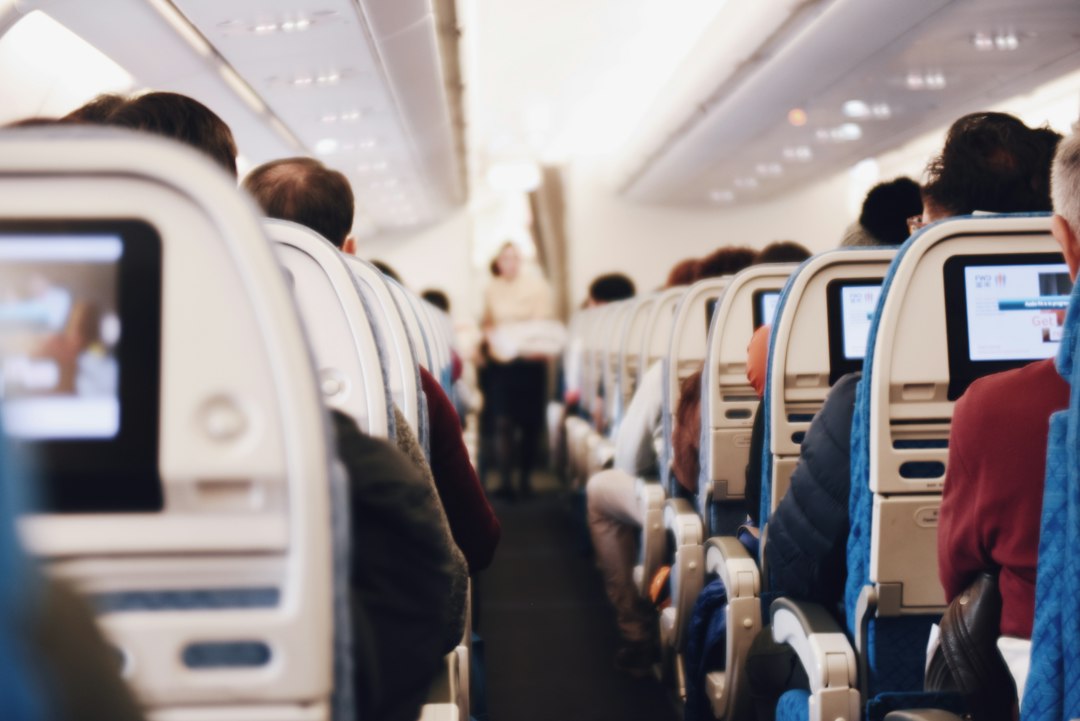
Let’s get straight to what this actually means for you when you buckle into seat 14F, because the link between crew rest and your safety isn’t some abstract regulatory footnote—it’s the difference between a cabin crew that can execute an emergency evacuation in under 90 seconds and one that fumbles a checklist. Research on this is now overwhelming: proper crew rest reduces the likelihood of safety incidents by about 30 percent, and that number isn’t pulled from thin air. It comes from a growing body of operational data that airlines themselves have started collecting, and early adopters of wearable biometric devices for flight attendants—measuring heart rate variability, sleep duration, and fatigue markers—reported a 35 percent drop in fatigue-related incident reports since 2024. That’s not a small effect. Think about it this way: the National Transportation Safety Board now pegs flight attendant fatigue as a contributing factor in 18 percent of all serious turbulence-related passenger injuries, up from 12 percent a few years ago, and that increase is largely because reporting has gotten better, not because fatigue is worse. So the new 10-hour rest rule isn’t just a quality-of-life win for crew—it’s a direct line to fewer injuries and safer evacuations for passengers.
But here’s where the story gets complicated, because more rest on paper doesn’t always mean better rest in practice. The Boeing 787 Dreamliner’s crew rest compartment sits in the forward cargo hold, and ambient noise levels there are 15 decibels higher than in the passenger cabin—that’s the difference between a quiet library and a busy restaurant, and it’s enough to fragment sleep cycles significantly. On top of that, flight attendants on ultra-long-haul flights often share bunks in a rotating “hot bunking” system, and a 2025 study found that reduces restorative sleep quality by 20 percent due to hygiene concerns, temperature fluctuations, and the sheer disruption of someone else’s body heat and schedule. The new FAA rule mandates time free from duty, not actually sleep-conducive environments, so a crew member can technically get a full 10 hours but only achieve four or five hours of actual restorative rest. That’s the gap that keeps fatigue researchers up at night—cumulative sleep debt from multi-day trips involving three or more time zone crossings can require up to 72 hours of consistent sleep timing to fully recover, and no single rest period, even 10 hours, can reverse that. The rule also includes a ten-minute transition window between release and the official start of rest, which fatigue researchers call the “ten-minute erosion”—meaning your crew’s effective rest can routinely be nine hours and fifty minutes, not a full ten.
And then there’s the operational ripple effect that travelers will feel in their own schedules. India’s stricter Flight Duty Time Limit regulations, designed to reduce pilot fatigue, triggered a massive operational crisis in July 2026 when IndiGo alone cancelled over 1,500 flights in a single month as the airline struggled to comply with the new rest requirements. That’s a real-world stress test for what happens when you tighten rest rules without fully resolving scheduling efficiency. The FAA’s own simulation of the new U.S. rule estimated it would increase regional airline flight cancellations by just 0.3 percent—but simultaneously reduce cancellations caused by fatigued crew call-ins by 1.2 percent, so net operational stability actually improves. Still, the rule leaves a two-tier safety system: cargo-only flight attendants under Part 121 still face the old nine-hour minimum, even though they fly identical long-haul routes and face the same circadian disruptions. And while U.S. carriers now mandate 10 hours, several European airlines voluntarily provide 14 consecutive hours for cabin crew on long-haul rotations, citing better retention and safety outcomes—meaning your risk profile on a transatlantic flight depends on which side of the Atlantic your carrier is based. So here’s what I’d watch going forward: the real battleground isn’t Washington regulatory rooms anymore, it’s in union contract negotiations where crews will push for sleep-conducive environments, better bunk design, and auditing of the “ten-minute erosion.” Until then, travelers should know that every hour of scheduled crew rest is a direct investment in your safety margin—but scheduled rest and restorative sleep are still two very different things.
Research Methodology & Editorial Standards
We begin by defining the specific objectives the reader needs to accomplish. Primary product documentation and authoritative secondary sources inform every guide before drafting begins.
Figures and rules are checked against the sources available at the time of publication. Travel pricing changes constantly — always confirm current fares, rates, and terms with the provider before booking.