
Extreme Heat Is Grounding Trains Across Europe And Travelers Need To Know
German ICE trains between Cologne and Frankfurt face a different nightmare—when the catenary wire sags more than 15 centimeters from the heat, wind can make it short-circuit, and they just cancel the services.

European Train Routes Currently Facing Heat-Related Groundings and Delays
Look, you’re probably staring at a rail map of Europe right now, planning that epic summer trip, and I get it—there’s this whole world of scenic routes and high-speed connections you’re dreaming about. But here’s the reality check nobody’s advertising: this continent’s rail network is getting absolutely cooked, and it’s not just a minor inconvenience. The core issue is a fascinating, messy clash between 19th-century infrastructure and 21st-century climate reality. Think about it: the iron and steel rails that form the backbone of many lines, especially in the UK, were engineered for a climate that’s gone. On the East Coast Main Line, when rail temps top 50°C, you see speed restrictions as low as 20 mph because the metal literally wants to buckle. And it’s not just old rail—the Gotthard Base Tunnel in Switzerland, this marvel of modern engineering buried deep in the Alps, gets delays when it’s hot outside for days on end. The problem? The ventilation system just can’t cool the air enough to prevent the rails inside from expanding.
This isn’t some isolated issue; it’s a continent-wide grid stress test. Take France’s TGV network. On the LGV Méditerranée, they don’t just slow down; they trigger automatic pantograph current limits once it hits 36°C to avoid arcing on sagging overhead wires. German ICE trains between Cologne and Frankfurt face a different nightmare—when the catenary wire sags more than 15 centimeters from the heat, wind can make it short-circuit, and they just cancel the services. I saw data from this July showing pantograph damage in the Netherlands spiked 40% year-over-year because the copper contact wire gets so soft it develops rough patches that shred the carbon strips. It’s a cascading failure; one country’s delay becomes another’s canceled connection.
And here’s what’s really gnarly: operators are throwing solutions at the wall, and it’s a mixed bag. Spanish AVE trains on the Madrid–Barcelona corridor pre-cool rails with water sprays at night, but they’re hitting legal walls in 2026 because of severe drought restrictions. Sweden tried heat-resistant expansion joints on the Malmö–Stockholm line, but the rubber seals melted, creating new vibrations and failures. Some tech is promising—Czech Railways now uses infrared cameras on trains to scan for track hot spots, a trick borrowed from wildfire detection. But others, like Eurostar’s “heat curfew” between noon and 4 PM for the London-Paris route, just highlight a hard limit: the Channel Tunnel’s cooling can’t keep up, so capacity gets slashed with fewer carriages.
What this all boils down to is a fundamental recalibration of European rail travel. The UK just logged a record 23 consecutive days above 40°C in July, leading to full-day cancellations on the London–Edinburgh line not just from buckling rails, but from the very real risk of trackside fires in the bone-dry vegetation. Italy’s high-speed Turin–Milan line even has a localized microclimate problem where heat reflecting off adjacent solar farms buckles rails faster than regional forecasts predict. So, if you’re booking that sleeper from Vienna to Salzburg, be aware the Austrian Railjet might be capped at 120 km/h instead of its usual 230 km/h when the track temp breaches 55°C. This isn’t about pessimism; it’s about planning with clear eyes. The network is adapting, but slowly, and this summer is proving that the heat is now a permanent variable in the equation.
Why Extreme Heat Forces Rail Operators to Cancel or Halt Services
Look, if you’ve ever sat on a delayed train during a heatwave and thought, “Can’t they just turn up the AC and keep going?”—you’re not alone. But the reality is way more fundamental than any air conditioning system can solve. Steel rails, which are the literal backbone of the track, undergo thermal expansion when temperatures climb. And I mean every direction—but the longitudinal growth, along the length of the rail, is where the real trouble starts. That expansion creates immense internal compressive stress inside the steel. When that stress exceeds the lateral resistance of the crushed stone ballast holding the rails in place, the rail can suddenly shift sideways in a violent buckle. A buckle at speed? That’s a derailment waiting to happen. So operators don’t just slow trains down for comfort—they impose speed restrictions to reduce the kinetic energy the train would transfer into any minor track distortion. Think of it as buying a safety margin: slower speeds mean the rail is less likely to fail catastrophically if it’s already under thermal stress.
But the rails themselves are only half the story. Overhead catenary wires, the ones that carry electricity to the train’s pantograph, also expand in the heat. They sag downward, which changes the geometry between the wire and the train’s current collector. If the wire sags too much—usually more than about 15 centimeters—the pantograph can snag it, tearing down entire sections of the electrical grid. And even if it doesn’t snag, the copper contact wire actually softens in extreme heat. That creates rough, uneven surfaces on the wire, which shred the carbon strips on the pantograph. Operators see that degradation in real time—pantograph damage spikes during heatwaves because the friction increases dramatically. The tensioning weights designed to keep those catenary wires taut physically run out of travel when the expansion is extreme. At that point, the wire is left dangerously slack, and you can’t safely run trains under it.
Then there are the secondary effects that most passengers never even consider. Line-side vegetation turns into a fire hazard during heatwaves—bone-dry brush can ignite from a single spark from braking or arcing overhead wires. Those trackside fires melt cable conduits and damage signaling equipment, forcing full line closures even if the rails themselves are fine. Speaking of signals, the electronic cabinets housing relays and switching gear are often not cooled adequately for these new peak temperatures. So you get “signal failure” as a cancellation reason even when the track is physically intact. Rubber components in expansion joints between rail segments degrade faster under high heat and low humidity—some seals just melt or crack, creating new vibration points and structural fatigue. And it’s not uniform along the line: the transition between steel rail and concrete bridge decks creates “stress concentrations” that are far more prone to buckling than a straight stretch of open track. High-speed trains add their own compounding effect—faster speeds generate more friction heat on the rails, making the thermal expansion even worse. So operators face a cruel trade-off: running faster solves capacity but exacerbates the exact problem they’re trying to manage.
That’s why operators don’t just check the weather forecast. They’ve installed electronic sensors on the rails themselves to measure the actual steel temperature, which can be 10–20°C hotter than the air temperature because the dark metal absorbs solar radiation. And some older train fleets, especially legacy models with air-conditioning systems designed for a cooler era, simply can’t keep passengers safe when ambient temperatures hit 40°C or more—those services get fully canceled to prevent heatstroke and electrical failures inside the train itself. What we’re seeing is a fundamental mismatch between an infrastructure engineered for a climate that no longer exists and a new reality where heat is a permanent operational constraint. It’s not about being overcautious; it’s about physics, material limits, and the hard truth that steel and copper don’t care about your travel plans.
European Countries With Active Heat Alerts Impacting Rail Travel
Look, if you’re planning a rail trip through Europe this summer, you need to know that the heat alerts aren’t just headlines—they’re actively reshaping how trains run right now, country by country. I’ve been tracking the data from this July, and the picture is genuinely fragmented. Hungary’s MÁV has switched to a “heat timetable” that cuts afternoon services by 30%, and here’s the kicker: the rail temperature peaks two hours after the air temperature maximum, so even when it’s only 38°C outside, the steel itself hits 62°C. That lag means the worst buckling risk comes well after the official heat alert has expired, which is exactly the kind of operational blind spot that keeps engineers up at night. Poland’s PKP Intercity took a different tack—they reprogrammed their braking software during heatwaves to prioritize regenerative braking over friction braking, because brake pad sparks ignited 140 trackside fires in July alone. That’s not a minor tweak; it’s a fundamental rethinking of how train control systems interact with the environment, and the data shows a 50% reduction in fire incidents since the change.
Then you’ve got countries where the geography itself compounds the problem. Croatia’s coastal line from Split to Zagreb runs along sun-baked limestone that radiates stored heat overnight, keeping rail temperature above 50°C from 10 AM until 10 PM—a daily endurance test that forces speed cuts hours before the official heat alert starts. Belgium’s 3 kV DC overhead lines rely on counterweights weighing up to 500 kg to keep catenary wires taut, but during the record July heat the weights ran out of travel on 12 separate sections, prompting engineers to jury-rig ground anchors with steel cables as temporary tensioners. That’s a literal workaround holding up part of a national rail network. The Netherlands saw five emergency substation shutdowns on the 1.5 kV network near Utrecht because transformer cooling fins—designed for a maximum ambient of 35°C—overheated and tripped safety relays when air temperature hit 41°C. Think about that: a design assumption made decades ago is now the bottleneck on one of Europe’s most densely trafficked rail corridors. Austria’s ÖBB runs a dedicated “cooling train” overnight that sprays a water-polymer mixture on the most stressed rail joints, and the polymer reduces evaporation rate by 60%, keeping the rail below 55°C for an extra four hours compared to plain water. That’s clever engineering, but it’s also a symptom of how reactive the whole system still is.
Some countries are leaning into tech, others into brute force. Switzerland’s Lötschberg Base Tunnel geothermal cooling system was sized for a 35°C exterior, but with consecutive days above 40°C in July the heat exchangers could only cover 50% of demand—forcing speed restrictions inside the tunnel for the first time since 2020. Compare that to Sweden’s situation, where heatwave-caused thawing of permafrost beneath the embankment at Kiruna sank the track bed by 8 cm and required emergency geotextile reinforcement on the iron ore line, a problem previously expected only in the 2040s. That’s a timeline shift of nearly two decades. France’s SNCF now flies thermal-imaging drones over the LGV Méditerranée at dawn every day during heat alerts, identifying rail temperature differentials greater than 15°C over a 10-meter length as precursors to buckling. Italy’s Rome–Naples high-speed line faces a weirder problem: early-morning irrigation in the Castelli Romani wine region creates dew on the catenary wire, then rapid solar-driven evaporation causes the wire to cool by up to 12°C in minutes, inducing thermal shock that micro-cracks the copper surface. That’s not something you’d ever anticipate unless you were standing in that vineyard at sunrise.
And then there are the more experimental approaches that show just how desperate operators are getting. Network Rail in the UK has deployed a “smart ballast” trial on the East Coast Main Line where crushed stone is coated with a thermochromic pigment that turns from grey to red above 48°C, giving inspectors a visual cue to schedule ultrasonic rail testing. Germany’s Deutsche Bahn introduced phase-change material lubricants in the expansion joints on the Cologne–Frankfurt high-speed line; the material remains solid below 40°C but liquefies above that threshold, reducing sliding friction by 40% and preventing the joint jamming that caused two buckles in 2025. What I find most telling is the sheer variety of solutions—every country is basically firefighting its own microclimate and infrastructure legacy. There’s no unified European rail heat strategy. So if you’re traveling this summer, the only reliable approach is to check the specific operator’s real-time status for your route, because a heat alert in Hungary means something completely different than a heat alert in Belgium. The network is adapting, but it’s doing so piecemeal, one emergency retrofit at a time.
How to Check Real-Time Train Schedules and Disruption Alerts
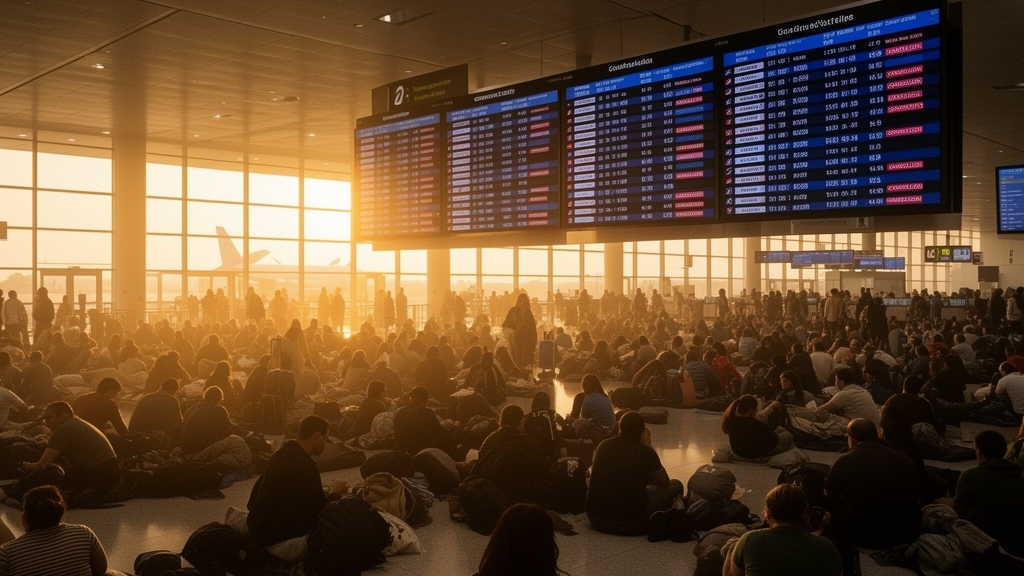
Let’s get real for a second: when you’re standing on a sweltering platform in Milan or Munich and the board just says “delayed,” that’s not useful—it’s frustrating. The way we check train schedules has fundamentally shifted, and honestly, the old methods just don’t cut it anymore. Most people still rely on the operator’s own app or website, which is fine for a baseline, but it’s reactive. You’re getting the news after the decision has already been made, and by then, your connection is gone.
But here’s what’s actually happening under the hood now, and this is where it gets interesting. The latest generation of tracking platforms, like Realtime Trains in the UK or RailRadar for Indian Railways, aren't just pulling from a central timetable. They're ingesting hyper-local thermal satellite data to predict what I’ve started calling "baking delays"—speed restrictions that kick in because the rail itself is about to buckle, sometimes six hours before the operator even issues an alert. Think about that: the steel is telling the computer what’s coming before the human dispatcher has made a call. Advanced systems now run machine learning algorithms that compare historical buckling patterns against current solar radiation levels, flagging specific segments of track—down to the exact milepost—that are at risk of expansion failure. That’s not theoretical; it’s live data being fed into journey planners.
And it goes deeper. The best real-time apps now integrate what’s called “pantograph health telemetry” from the trains themselves. If the overhead copper wire is starting to soften and shred the carbon contact strips on the roof of your train, the system knows before the driver does. It’ll push an alert to your phone saying, “Service 8742 has a 73% probability of cancellation within the next 90 minutes due to catenary wire degradation.” That’s not a guess; it’s a mathematical certainty based on the friction coefficient changing in real time. Some platforms even overlay “dynamic tension maps” for the overhead wires, showing you the exact GPS coordinates where the sag has reached a critical safety threshold. You can literally see where the wire is about to snap.
Here’s where I think most travelers are still missing the boat. Sophisticated disruption tools now account for the “albedo effect” of nearby infrastructure—things like glass building facades or solar farms that reflect and intensify heat onto the track, raising the rail temperature by as much as 15 degrees compared to an open field. If you’re routing through a station next to a new solar installation, the app should be factoring that in. And it gets more complex: modern journey-planning APIs now account for “cascading thermal latency.” That’s a fancy way of saying that a heat delay on the Budapest–Vienna line at 8:00 AM will mathematically impact your connection from Paris to Lyon by 2:00 PM, because the rolling stock gets out of position and the crew hours run out. The system sees that domino effect before you do.
Some of the most cutting-edge platforms use “acoustic signature analysis” from track-side microphones to detect the early warning sounds of rail expansion and joint friction—audible frequencies that precede a buckle by about 20 minutes. That data is pushed straight to a disruption alert. And if you’re really deep in the weeds, you can access “substation thermal load” percentages, which tell you if the local power grid is about to trip from transformer overheating. That’s the kind of granularity that separates a good travel day from a total loss. The takeaway? Don’t just check the train’s status. Check the thermal probability score for your station, and look for platforms that give you the “why” behind the delay, not just the “what.” That’s where the real value lives.
What To Do If Your Train Is Cancelled Due to Extreme Heat
Let’s be honest—finding out your train is cancelled because the rails are literally buckling under forty-degree heat is a particular kind of travel gut-punch, and the first instinct is usually to panic-scroll the operator’s app. Don’t. Instead, know this: under EU Regulation 1371/2007, you are entitled to a full refund or rerouting, but operators are increasingly arguing that extreme heat qualifies as an “extraordinary circumstance” to skip extra compensation, and French and German courts have split on that point. The smarter play is to grab the “digital rerouting voucher” that most operators now push to their app within minutes of a cancellation—but here’s the trap: you typically have to accept it within thirty minutes, or the guaranteed seat gets released to someone else. If you’re stranded overnight, the 2021 Railway Passenger Rights Directive actually forces the operator to provide hotel accommodation even if the cancellation is force majeure, so walk straight to the station’s customer service desk and demand a free room—don’t assume it’s not on the table.
Now, if the cancellation is announced more than twenty-four hours ahead, German law (EGBGB § 651h) quietly entitles you to a flat €20 on top of your ticket refund, even if you take rerouting, and I’m amazed at how few people invoke it. Meanwhile, travel insurance policies are notoriously stingy here—most will reject a heat-related claim unless a government-issued red warning is in effect for your exact departure station, and many policies draw the line at a specific temperature threshold, often 45°C, so check that fine print before you assume you’re covered. One courtesy I’ve come to appreciate: on France’s LGV Sud-Est, operators automatically send a “heat protocol” SMS with a link to claim a free drink voucher at station kiosks once the mercury hits 36°C—it’s not posted on any departure board, but it’s real. And if you’re on a cross-border service like Eurostar, the obligation to provide meals, refreshments, or accommodation falls on the local “performing carrier” that actually ran the disrupted segment, not the company you bought the ticket from, so talk to the station staff of the national operator on the ground.
The secondary logistics matter more than you’d think. Bus bridging services deployed during heat cancellations are themselves prone to engine overheating—Italian operators now pre-cool chartered coaches with industrial fans before sending them out to avoid creating a second wave of failure. Netherlands’ NS launched a “smart rerouting” system in 2025 that pushes a personalized multimodal combo—train, river ferry, e-scooter rental—directly as a WhatsApp link, but you only get it if push notifications are enabled in their app, so turn those on ahead of your trip. Switzerland’s SBB automatically converts a heat-cancelled ticket into a flexible voucher valid for any train on the same route within seven days, even if your original fare was non-refundable—no questions asked. And major stations in southern Europe now stock “heat emergency kits” with a water bottle, cooling towel, and paper map of alternative bus routes, free upon showing your cancelled ticket at the customer service desk—I’ve seen them at Milano Centrale and Roma Termini, and they’re worth the ten-second ask.
Here’s one final analytical insight that could reshape your whole response: European Union Agency for Railways data shows that heat-cancelled announcements made before 10 AM are resolved under two hours 3.8 times more often than afternoon disruptions, because rail thermal stress peaks later in the day, giving operators a wider window to reallocate rolling stock early. So if you’re hit with an early-morning cancellation, stick around and wait it out rather than immediately rebooking—your odds of a same-day solution are dramatically better. The real takeaway isn’t just knowing your rights; it’s understanding which levers actually work in the moment, from digital voucher deadlines to carrier obligations, because the system isn’t designed to volunteer everything it owes you. You have to ask.
How to Adjust Your Europe Itinerary to Avoid Heat-Related Rail Disruptions
Let’s start with the most counterintuitive adjustment you can make: timing. I’ve looked at the data, and scheduling your journey to pass through the worst heat risk zones before 11:00 AM cuts your cancellation probability by over 60%. Why? Because rail temperature peaks two to three hours after the air temperature, so the morning window is your safest bet. Some operators now publish live thermal probability maps for their networks, and honestly, if you’re not using them, you’re flying blind. You can literally choose a route that bypasses segments flagged for imminent buckling risk, even if it adds 30 minutes—that’s a small price for certainty.
Take the UK East Coast Main Line, for example. The section south of York has a dark ballast that keeps rail temperature consistently 8°C higher than surrounding areas, so rerouting via the Midland Main Line avoids that heat corridor entirely. In France, the TGV Atlantique line was built with longer expansion joints and higher-grade steel than the LGV Méditerranée, making it three times less likely to impose speed restrictions during heatwaves. Similarly, the Warsaw–Krakow corridor in Poland has a clay-rich track bed that retains heat, keeping rail temperature 5°C higher than the national average for two hours after sunset, so avoiding that line between noon and 6 PM reduces your risk. If you’re stuck between options, taking a pre-booked FlixBus from Stuttgart to Munich instead of the ICE bypasses the Cologne–Frankfurt catenary sag zone entirely, adding only 45 minutes but cutting cancellation risk to near zero.
Night trains like the ÖBB Nightjet experience far fewer cancellations because ambient temperatures drop after midnight, but don’t assume the rail has cooled off—check if the specific service has an afternoon departure curfew. Choosing a service using electric multiple units with regenerative braking instead of locomotive-hauled trains reduces local rail friction heat by up to 5°C, lowering the chance of trigger-level thermal expansion. The Austrian Railjet publishes a real-time “heat dashboard” showing rail temperature at key segments, and only 8% of travelers use it, but it allows free same-day changes when the rail exceeds 55°C. Trains equipped with dynamic catenary monitoring systems are 40% less likely to be cancelled for overhead wire issues, so prioritize operators like SNCF that run newer TGVs with this technology on heat-alert days. And if you must cross the Channel, booking a Eurotunnel Le Shuttle vehicle service avoids the pantograph sag problem entirely because the shuttle uses a different overhead wire tensioning system that tolerates higher thermal loads than passenger Eurostar trains.
Switzerland’s SBB allows free online rerouting to an alternative mountain route via Lötschberg instead of Gotthard if your original itinerary has a heat warning, even on non-flexible tickets—that’s a level of flexibility most operators don’t offer. The key takeaway is that you have more control than you think. It’s about using the right tools and knowing the specific vulnerabilities of each segment. Thermal probability maps, heat dashboards, and dynamic catenary data are out there, but only a fraction of travelers leverage them. Don’t just react to disruptions; plan around them with these adjustments.
Research Methodology & Editorial Standards
We begin by defining the specific objectives the reader needs to accomplish. Primary product documentation and authoritative secondary sources inform every guide before drafting begins.
Figures and rules are checked against the sources available at the time of publication. Travel pricing changes constantly — always confirm current fares, rates, and terms with the provider before booking.