
Experience the Timeless Beauty of Venice Italy
Look, I’ve spent a fair amount of time in Venice, and the real magic isn’t on the Grand Canal or under the pigeons in St. Mark’s—it’s in the details most people walk right past.
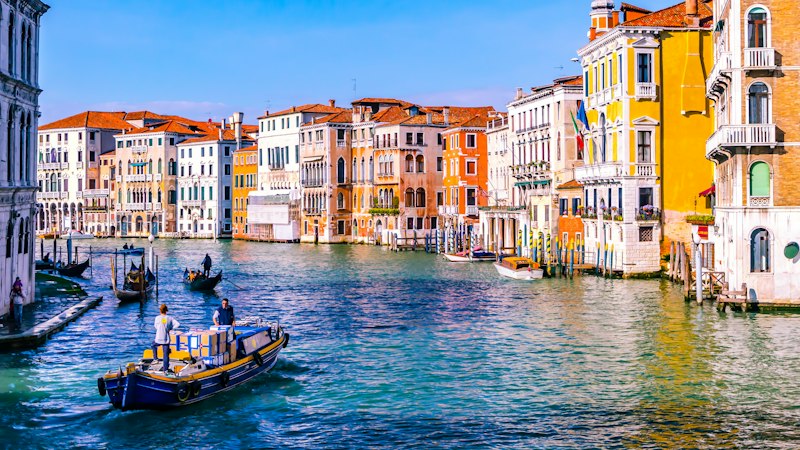
Gliding Through the Grand Canal: Venice's Most Iconic Waterway
Look, I’ll be honest—when you first step onto a gondola at the Grand Canal, it feels like a cliché you’ve seen a thousand times in movies. But here’s what nobody tells you: that iconic S-shaped waterway isn’t some man-made canal at all. It’s actually an ancient river that once flowed into the Venetian Lagoon, and it still follows that natural reverse-S course for about 3.8 kilometers, widening from a tight 30 meters to a generous 90 in places. The average depth is only around 5 meters, but the muddy bottom shifts constantly with the tides, which means the city has to dredge continuously just to keep vaporetti and water taxis moving. Think about that for a second—this whole romantic scene depends on routine maintenance that’s been happening for centuries.
Now, here’s where it gets really interesting from an engineering perspective. Those 170-plus palaces lining the canal? They’re all built on millions of wooden piles hammered into the marshy ground, and the wood stays preserved underwater because there’s almost no oxygen down there—a technique that’s kept the structures stable for hundreds of years. The Rialto Bridge, the oldest of the four bridges crossing the canal, started as a wooden pontoon bridge before being rebuilt in stone in 1591, and its single span of 28.8 meters was considered a Renaissance marvel. And if you look at the canal’s curve itself, Venetian architects deliberately used that S-shape to make sure at least one section catches sunlight at any given time, which reduces dampness on the Istrian stone facades and slows decay. It’s not just pretty—it’s a climate-control strategy baked into the urban design.
But the water isn’t just a backdrop for architecture; it’s a living system. The wooden piles and stone foundations are covered in algae and microorganisms that actually filter pollutants, and small fish like gobies and mullet still thrive in the brackish mix of saltwater from the lagoon and freshwater from the Brenta River. That salinity swings wildly with the tides—sometimes dropping to near-freshwater levels after heavy rain. Then there’s acqua alta, the high water phenomenon that can push levels more than a meter above normal, flooding piazzas and occasionally stopping gondola services under the lowest bridges. Beneath the surface, sonar has revealed remnants of two Roman roads and a medieval salt warehouse, proof that this was a commercial artery long before the Venetian Republic rose to power.
And about those gondolas themselves—they’re not just boats, they’re precision instruments. By law, each one can’t exceed 10.85 meters in length, must be built from eight different types of wood (larch, oak, mahogany, and others), and weighs about 350 kilograms when empty. That black pitch coating called pece? It’s not just for the classic look; it’s a boiled mix of pine resin and tar that originally served as waterproofing and insect repellent. The only remaining wooden bridge on the canal, the Ponte dell’Accademia, was actually a steel structure in 1854 that people hated so much they replaced it with wood in 1933—and even that version is a replica, because the original was dismantled and stored during World War II to keep it safe. So when you glide through the Grand Canal, you’re floating over Roman roads, past Renaissance engineering, through a living ecosystem, on a boat built from eight species of wood, under a bridge that survived a war in pieces. That’s not just a ride—it’s a cross-section of a thousand years of human ingenuity.
A Journey Through St. Mark's Square and Its Architectural Marvels
Let’s be real for a second: most people walk into St. Mark’s Square, snap a selfie with the pigeons, and never think about what they’re actually standing on. But look down at your feet—that herringbone pattern isn’t just aesthetic. It’s laid with trachyte, a volcanic stone that stays grippy even when the acqua alta floods the whole piazza, and the entire square has been raised about a meter over the centuries by layering in fill just to keep it from sinking into the lagoon. That’s not a one-time fix either; the ground underneath keeps settling, which is why the marble floor inside St. Mark’s Basilica undulates like ocean waves. The basilica’s builders solved that problem with a hidden network of wooden piles and lead counterweights that keep the inlaid panels from cracking apart—an invisible engineering system that’s been working for nearly a thousand years.
Now, here’s where the architectural sleight of hand gets wild. The square is actually a trapezoid, narrowing by about 10 meters from the far end toward the basilica, which tricks your eye into thinking the cathedral is larger and more imposing than it really is. That’s Renaissance urban design at its most manipulative, and it works every time. The five domes you’re staring at? They’re not masonry at all—they’re built from lightweight wooden ribs clad in lead sheeting, because anything heavier would have crushed the marshy foundations. And the Campanile that towers over everything? That’s a 1912 replica made with reinforced concrete inside, identical to the original that collapsed in 1902. The original bell tower was made of brick and stone, and when it fell, it just crumbled into a heap—no warning. So the Venetians rebuilt it smarter, not just prettier.
Take a closer look at the bronze horses on the basilica’s balcony—those are copies. The real ones, cast in Greece in the 2nd century AD, are kept inside the museum to protect them from salt air and pollution that would eat through the metal in a few decades. That same salt-air problem is why the winged lion on the granite column in the Piazzetta is a Frankenstein creature: its body dates to the 4th century BC from the Hellenistic period, but the head and wings were added by Venetian craftsmen in the 1200s after the original parts corroded beyond repair. Meanwhile, the Torre dell’Orologio’s astronomical clock, finished in 1499, still runs on a 15th-century Ptolemaic gear train that tracks the time, moon phases, zodiac signs, and the day’s dominant planet—all without any digital correction. It’s essentially a medieval computer that’s been ticking for over five centuries.
And the buildings framing the square weren’t built in one go. The Procuratie evolved over 400 years, originally housing the officials who managed the Venetian Republic’s entire state budget and public works—basically the treasury and infrastructure department rolled into one. Caffè Florian, tucked into the Procuratie Nuove, opened in 1720 and is still running as the world’s oldest continuously operating café, with original 18th-century frescoes and gilded mirrors that have hosted Casanova and Lord Byron. Excavations beneath the paving have revealed the remains of a 9th-century canal and a medieval cemetery, which means this entire piazza was once a navigable waterway before they filled it in to create the ceremonial space you see today. The interior of the basilica holds roughly 8,000 square meters of mosaics, many made with glass tesserae that sandwich gold leaf between two layers—a technique that catches the light and makes the whole ceiling shimmer like it’s alive. None of this is accidental. Every stone, every angle, every material choice was a response to the fundamental problem of building a world-class city on a mudflat. And that’s what I find so fascinating: St. Mark’s Square isn’t just beautiful—it’s a three-dimensional proof that constraints force invention.
Discovering Hidden Gems: Off-the-Beaten-Path Venice
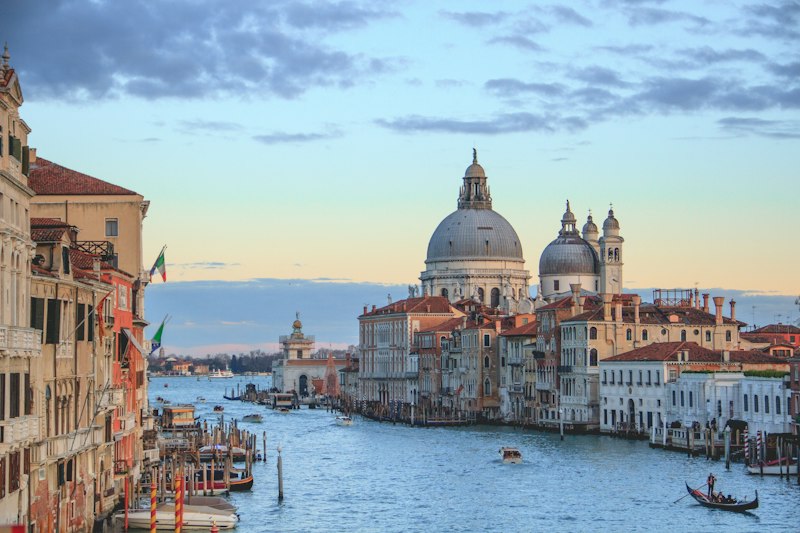
Look, I’ve spent a fair amount of time in Venice, and the real magic isn’t on the Grand Canal or under the pigeons in St. Mark’s—it’s in the details most people walk right past. Take the island of San Giorgio Maggiore, for instance. Everyone queues for the Campanile, but there’s a hidden terrace on that island’s bell tower that gives you a mathematically superior vantage point of the entire lagoon skyline—less crowded, better angle, and you actually see the city rise out of the water instead of looking down on rooftops. Then there are the calli, those impossibly narrow alleys. They weren’t random; they were engineered to be exactly the width of two people passing shoulder-to-shoulder, maximizing residential density in a city with zero room to expand horizontally. That kind of intentionality is everywhere once you start looking.
But here’s where it gets really specific. The Libreria Acqua Alta isn’t just a cute bookstore—it’s a case study in adaptive engineering. They store thousands of books in waterproof plastic tubs and even old gondolas, because the floor floods regularly, and those containers keep the inventory dry while the saltwater sloshes around them. In Cannaregio, you can find residential courtyards with ancient stone wells that tap into a complex subterranean freshwater filtration system—basically a natural sand-and-gravel filter that’s been providing drinkable water since the Middle Ages, long before municipal plumbing. And the island of Torcello? Most tourists skip it, but it holds a 7th-century cathedral that’s one of the earliest surviving examples of Byzantine influence in the lagoon, with mosaic work that predates St. Mark’s by four centuries. That’s not a side trip—that’s a time machine.
Now, think about the bridges. The smallest ones in quieter sestieri have a specific arch curvature calculated to let high-tide water pass underneath without creating turbulent eddies that would slowly erode the brick foundations—a hydraulic design solution that’s been working for centuries. Over in the Cloister of San Zaccaria, there are hidden gardens that maintain a microclimate allowing non-native Mediterranean flora to survive despite the constant salt spray, thanks to a combination of wall orientation and soil composition that traps moisture. And in Dorsoduro, a handful of traditional glass ateliers still use a 16th-century annealing method—slowly cooling the glass in a specific temperature gradient—to prevent structural fractures in complex sculptures. It’s a technique that modern kilns can replicate but rarely match for consistency, and the artisans there will show you if you ask.
The Venetian Ghetto, the world’s first, is another hidden layer. Because the Jewish community was confined to a fixed land area, they built upward—those buildings are disproportionately tall compared to the rest of Venice, with ceilings that feel almost cathedral-like. Meanwhile, many off-the-beaten-path churches use a porous limestone that naturally absorbs humidity from the air, protecting interior frescoes from the damp that destroys paintings in more famous basilicas. Even the colors of Burano, which everyone photographs, have a practical origin: they were historically used as navigational markers for fishermen returning through thick lagoon fog, each shade corresponding to a specific dock or family. And beneath the quieter residential canals, there are hidden sluice gates—manually operated—that regulate water levels in individual sestieri during acqua alta, a decentralized flood-control system that’s been in continuous use since the 1500s. That’s the Venice you don’t see on a postcard, and honestly, it’s the one worth discovering.
Savoring Venetian Cuisine: From Cicchetti to Fresh Seafood
Let’s be honest: most people think Italian food is just one big monolith of pasta and tomato sauce, but the moment you cross the water into Venice, that whole idea falls apart. You’re looking at a cuisine that’s less about the soil and almost entirely about the sea, shaped by centuries of merchants hauling spices and salted fish across the Mediterranean. I find it fascinating that the word "cicchetti" actually comes from the Latin ciccus, which basically means a "small quantity," and it wasn't some fancy culinary invention—it was a practical fix for Rialto market workers who needed a quick, cheap bite to keep them on their feet. These aren't your typical Italian antipasti; they are tiny, potent snacks designed to be eaten while standing at a wooden counter, usually washed down with an ombra, a "little shadow" of wine that refers to the old practice of following the Campanile’s shade to keep the barrels cool. If you really want to understand the city's soul, you have to look at baccalà mantecato, that whipped dried cod spread that feels like silk on the tongue. It’s made from Arctic cod from Norway’s Lofoten Islands, a 15th-century trade route that still supplies the city today because the quality of that specific fish is just non-negotiable for the real deal.
Now, if we’re talking about the seafood here, we have to address the lagoon’s unique biology, because it’s the secret ingredient you can’t see on a menu. The local vongole veraci (clams) have this distinct sweet-and-briny kick that you just can’t replicate with clams from the open Adriatic, all thanks to the specific microflora in that brackish water. Then there’s sarde in saor, which is basically a sweet-and-sour marinated sardine dish that sounds a bit odd on paper but is pure genius once you taste it. It was originally a preservation hack using vinegar and sugar to keep fish edible for weeks without ice, and honestly, the way the onions and raisins cut through the oil of the fish is a masterclass in flavor balancing. You’ll also find seppie in nero—cuttlefish cooked in its own ink—which isn't just a visual gimmick to impress your friends on Instagram. The ink contains melanin and tyrosinase enzymes that naturally thicken the sauce and provide a deep umami hit that artificial squid ink simply can't touch. When they serve it with risotto, they’re almost always using Vialone Nano rice from the Verona plains, and I’d argue it’s a far better choice than the more common Arborio because it absorbs that ink without turning into a mushy mess.
But it’s not all about the fish; the produce from the islands is just as vital to the region's identity. Take the castraure artichokes from Sant’Erasmo, for example. They are harvested during a tiny window in early spring before they even mature, and if you miss that picking date by three days, the texture is totally different. They are so tender you can eat them raw with just a splash of olive oil, and it’s one of those "if you know, you know" delicacies that puts the standard globe artichoke to shame. Then there’s the biancoperla cornmeal used for polenta, a heritage variety that has a much finer grind and a sweeter profile than the stuff you’d find in a standard supermarket. Historically, this was the base for most meals because wheat pasta was too pricey for the average Venetian household until the last century, so you’re essentially eating a bowl of history. And if you’re lucky enough to be there during the moeche harvest, you’re in for a treat. These are soft-shell crabs caught only when they molt, and the fishermen are basically at the mercy of the moon phases and water temperature to catch them during those few hours they’re edible whole. It’s a high-stakes agricultural process that makes the price tag on that plate actually make sense when you look at the labor involved.
We can't talk about the food without mentioning the Rialto fish market, which has been running continuously since 1097—that’s nearly a thousand years of commerce in one spot. The vendors still clean those ancient stone slabs with seawater every single day, maintaining a specific humidity that keeps the fish fresh without the need for modern refrigeration. It’s a raw, loud, and incredibly authentic experience that makes you realize why the seafood in Venice tastes so much better than what you’d get at a random Italian joint in the States. To wrap up a meal like a local, you have to go for the frittelle, those fried dough balls that were originally packed with pine nuts and raisins from the old spice trade. The most authentic ones still follow an 18th-century recipe that includes a splash of grappa in the batter, which cuts the grease and gives it a proper kick. When you sit down to a meal here, you aren't just eating; you're participating in a maritime economy that has been perfecting these recipes for centuries. My advice? Skip the "Italian" pizza places and head for the bacari (wine bars) where the locals are packed three deep—that’s where the real Venetian pantry opens up for you.
The Art and History of Venice: Museums, Palaces, and Timeless Culture
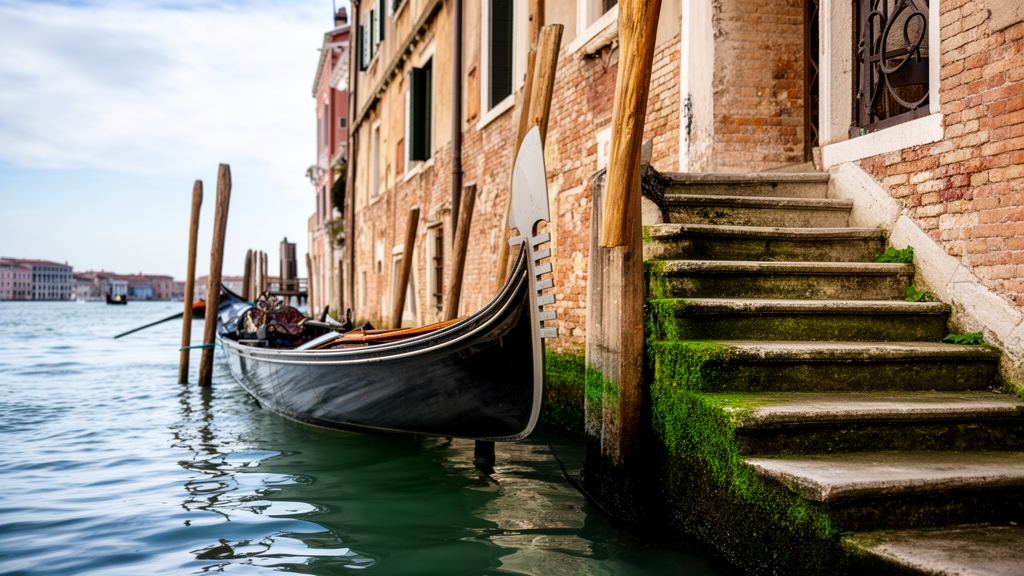
Look, we've already talked about the engineering of the canals and the tricks of the piazza, but we can't really wrap our heads around Venice without talking about the actual power centers—the palaces and museums. It's easy to view these places as just "tourist stops," but if you think about it as a market analyst would, these buildings were the corporate headquarters of a global trade empire. Take the Doge's Palace, for example; it wasn't just a fancy home, it was the central nervous system of the Venetian Republic's political and judicial machine. When you walk through those halls, you're not just looking at art; you're seeing a physical manifestation of how the city managed its wealth and maintained a stranglehold on Mediterranean trade for centuries.
But here's a bit of a reality check: if you only hit the big names in St. Mark's Square, you're missing the actual evolution of Venetian taste. I've always found the contrast between the Doge's Palace and a place like Ca' Pesaro to be the real story here. On one hand, you have the state-sponsored grandeur of the Republic, and on the other, you have the more intimate, often experimental collections of the nobility. It's kind of like comparing a government treasury to a private venture capital gallery. The city is essentially a living museum, and while the "big five" museums get all the press, the real value is in how these spaces transitioned from private residences to public archives.
I'm not sure if it's just me, but I think the most interesting part of the museum scene is the tension between the old world and the new, especially with things like the Venice Biennale. You've got these century-old artworks hanging under carved ceilings in one room, and then you step outside into a contemporary installation that's basically questioning the very nature of art. It's a weird, wonderful friction. Honestly, the best way to handle this is to mix your itinerary—hit the Biblioteca Nazionale Marciana for that heavy hit of history, but then wander into a smaller, less-crowded civic museum to see how the locals actually lived.
If you're planning your trip, my advice is to avoid the "checklist" mentality. Don't just buy a bundle ticket and race through five museums in a day; you'll just end up with "museum fatigue" and forget everything by dinner. Instead, pick one heavy hitter like the Doge's Palace to understand the power dynamics, then spend the rest of your time getting lost in the smaller palaces that aren't even on the main maps. That's where you find the authentic pulse of the city's culture, far away from the crowds and the audio-guide loops.
Practical Tips for Experiencing Venice Like a Local
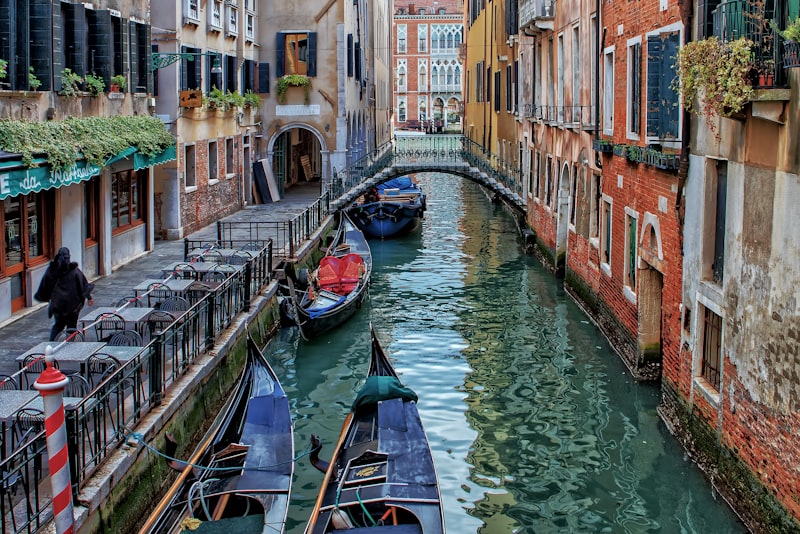
Look, I’ve spent enough time getting lost in Venice to know that the difference between a frustrating trip and a genuinely immersive one comes down to a handful of practical choices that most guidebooks gloss over. The city’s water bus system, the ACTV, isn’t priced by distance but by zone and time, so that single 9,50-euro ticket gets you 75 minutes—but after just three rides, you’re better off with the 25-euro 24-hour pass, which pays for itself before lunch. What really surprises people though are the traghetti: those two-euro gondola ferries that shuttle you across the Grand Canal at seven specific points, saving a twenty-minute walk and giving you a genuine taste of that iconic glide without the tourist markup. And speaking of money-saving moves, the public fontanelle scattered across the city—over 120 of them—dispense free still water and even sparkling for a small coin, and they’re tested daily for potability, so you can ditch the plastic bottles entirely. But here’s a tip that’ll save you more than a few euros: those bacari (wine bars) don’t charge the coperto cover fee if you eat standing at the counter, which means you grab a cicchetto and an ombra for half what you’d pay sitting down.
Now, let’s talk about navigating the city itself, because the street numbering system here is genuinely unhinged—each of the six sestieri has its own series, and numbers follow construction order, not geography, so you’ll find 1, 3, 5 on one side of a street and 2, 4, 6 on the other, but they won’t be consecutive. It’s maddening until you realize that basing your route on landmarks and campi (squares) rather than addresses is how locals do it. If you’re under 31, the Rollin Venice card costs just 6 euros and unlocks discounts on ACTV passes, museum entries, and even restaurant bills—it pays for itself on the first couple of days of public transport alone. And speaking of transport, here’s the real analysis: Vaporetto line 1 makes every single stop along the Grand Canal, perfect for sightseeing, while line 2 is express and skips the lesser quays; locals take line 2 for speed and line 1 for a lazy view, but they’re both covered by the same ticket, so you can switch based on how much time you have. For getting from Marco Polo Airport, the Alilaguna waterbus charges 16 euros one-way to San Marco and makes multiple stops, but I’ve found the combination of the ATVO bus to Piazzale Roma (10 euros) plus a vaporetto ticket is often faster and cheaper—and honestly, you won’t miss much floating past the industrial docks.
Timing is everything if you want to move like a local. The Rialto fish market runs from dawn until roughly midday, but the real hack is showing up around 11:30, when vendors drop prices by thirty percent because they don’t want to lug unsold stock home in the heat. Many churches charge admission, but the smaller ones like San Pantalon let you in free during the first hour of Mass—usually 8 to 9 AM—and you get the place almost to yourself. The secret itineraries tour of the Doge’s Palace costs just five euros more than a standard ticket, but it bypasses the general admission queue entirely and takes you onto the roof terrace and through the prison cells, which is where the real history lives. And don’t ignore the city’s ordinance on eating and drinking in public—fines can hit 500 euros if you’re caught on the steps of a bridge or monument, so do what locals do: eat your standing panino at the bar counter, not perched on the Rialto Bridge. The coperto fee isn’t illegal, but if a restaurant doesn’t display it clearly on the menu, you have grounds to contest it—and those menus must show prices including the charge, per Italian law. Ultimately, beating the crowds isn’t about waking up at dawn; it’s about understanding the city’s internal economic and logistical rhythms—the zone-based fares, the spare change for a traghetto, the morning Mass loophole, and the last-hour market scramble. Do that, and you’re not just visiting Venice—you’re borrowing its daily habits.
Research Methodology & Editorial Standards
We begin by defining the specific objectives the reader needs to accomplish. Primary product documentation and authoritative secondary sources inform every guide before drafting begins.
Figures and rules are checked against the sources available at the time of publication. Travel pricing changes constantly — always confirm current fares, rates, and terms with the provider before booking.