
Discover the World's Best Bars of 2022 and Start Planning Your Next Trip
Asia had its strongest showing ever with 13 bars in the top 50, yet the highest-ranked Asian bar, Jigger & Pony from Singapore, only landed at 12th.
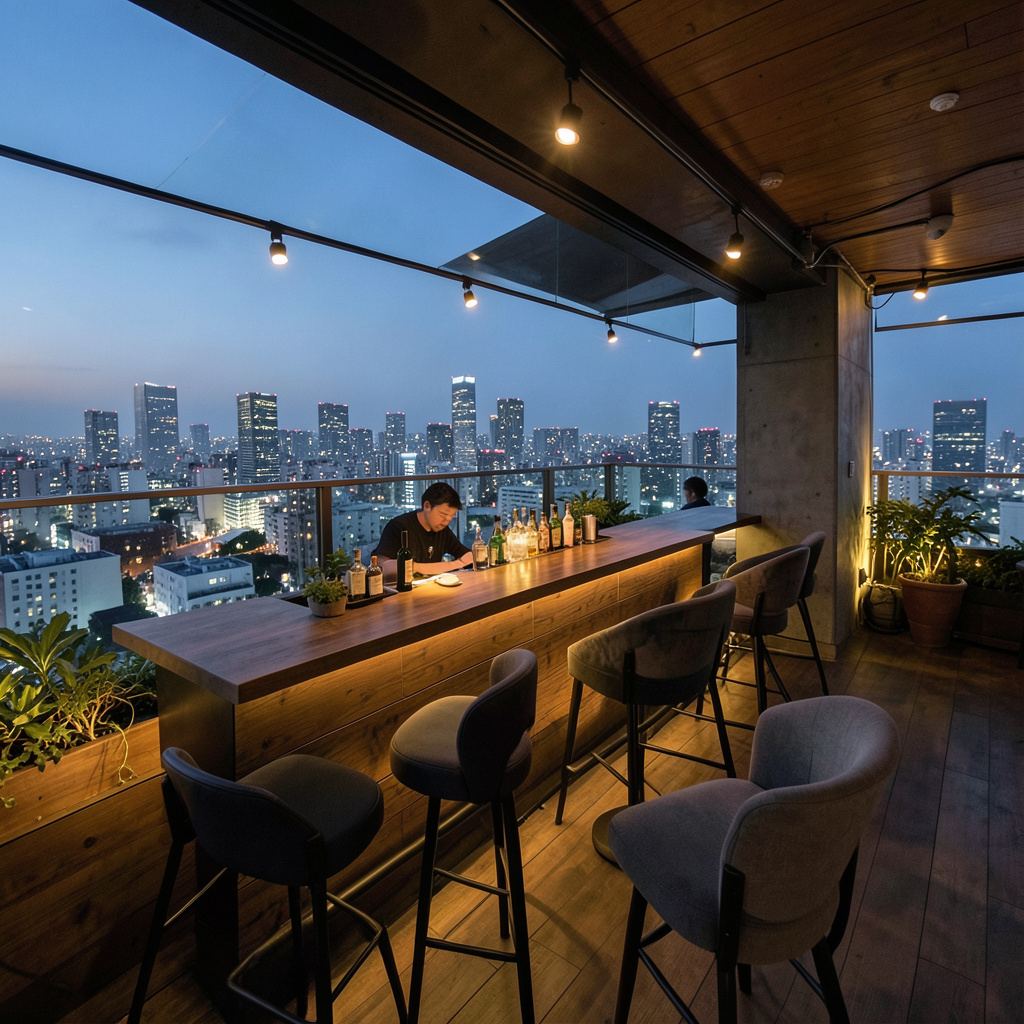
Unveiling the 2022 World's 50 Best Bars: The Global Cocktail Landscape
Let’s be honest—when the 2022 World’s 50 Best Bars list dropped, it wasn’t just another ranking. It was a genuine shake-up of the global cocktail order, and I think that’s worth unpacking because it tells us a lot about where the industry is really headed. For the first time ever, a bar from Spain took the top spot: Paradiso in Barcelona, and here’s the kicker—you enter through a refrigerator door in a pastrami shop. That kind of irreverent, hidden-door energy isn’t just a gimmick; it signals that the industry’s center of gravity is shifting away from the classic hotel-bar model that dominated for years. Paradiso’s menu, printed on a brown paper bag, felt like a middle finger to the stiff, leather-bound tomes of old-guard cocktail palaces. And the numbers back that up: The Connaught Bar, which had held the number-one spot for two straight years, fell all the way to third. That’s the largest drop among the top five, and it’s a pretty clear signal that even the most polished institutions can’t rest on their laurels.
But the real story isn’t just about who’s on top—it’s about how the map is being redrawn. Asia had its strongest showing ever with 13 bars in the top 50, yet the highest-ranked Asian bar, Jigger & Pony from Singapore, only landed at 12th. That’s a curious paradox: massive regional depth but no single breakout star at the very top. Meanwhile, we saw the first-ever entries from Dubai (Galaxy Bar at 41st) and Oslo (Himkok at 25th), which tells me that investment and talent are flowing into markets that were previously off the radar. Himkok is a particularly interesting case—it distills its own spirits on-site, producing everything from aquavit to gin right behind the bar. That kind of vertical integration isn’t just a cool story; it’s a sustainable business model that insulates them from supply chain headaches and lets them control flavor profiles in a way most bars can’t. And speaking of sustainability, the new Ketel One Sustainable Bar Award went to Tjoget in Stockholm, which operates a zero-waste kitchen and literally delivers cocktails via bicycle. That’s not just a PR move—it’s a replicable blueprint for cutting operational costs while appealing to a customer base that increasingly votes with its wallet on environmental values.
The list also revealed some fascinating dynamics in how bars climb the ranks. Two Schmucks in Barcelona jumped from 63rd to 18th—the biggest leap on the entire list—and its owners also run Paradiso. So you’ve got the same team operating two wildly different concepts, both landing in the top 20. That’s not luck; that’s a repeatable system for creating high-quality, culturally relevant drinking experiences. The highest new entry was Side Hustle in London, a walk-in bar within the Connaught Hotel that operates independently from the Connaught Bar itself. Its menu is inspired by classic American dive bars, which feels almost subversive coming from a five-star hotel. It’s a reminder that even within the same building, you can target completely different audiences—one for the polished, high-ticket experience, another for something more relaxed and approachable. The Altos Bartenders’ Bartender award went to Monica Berg, co-owner of the number-two-ranked Tayēr + Elementary, who also co-founded the sustainability platform Trash Tiki. That dual role—running a top-tier bar while building an industry-wide resource—is exactly the kind of leadership that pushes the whole field forward. And the Michter’s Art of Hospitality Award went to Dante in New York, which had been named World’s Best Bar in 2019 but slipped to 6th in 2022. That drop isn’t a failure; it’s a testament to how competitive the landscape has become, especially when you consider that The Clumsies in Athens, ranked 8th, is leaning hard into local ingredients like mastiha and ouzo, giving it a distinct regional identity that stands out in a sea of globalized cocktail menus.
So what’s the takeaway for anyone planning a trip around these bars? First, don’t sleep on the newcomers: Galaxy Bar in Dubai won the first-ever Best Bar in the Middle East & Africa award, and that’s a region I’d bet we’ll see much more of in future lists. Second, the geographical expansion is real—if you’re building an itinerary, you can now hit world-class bars in cities like Oslo, Athens, and Barcelona that weren’t even on the radar a decade ago. Third, the old hierarchy is broken. A pastrami shop entrance can beat a hotel lobby. A zero-waste bike delivery system can win a major award. And a bar that distills its own spirits can compete with international imports. The 2022 list isn’t just a snapshot of who’s making good drinks—it’s a roadmap for where the entire industry is going. And honestly, that makes planning your next trip a lot more exciting than just ticking off the same old names.
The World's #1 Bar
Let me tell you something about Paradiso that still blows my mind every time I think about it: you walk into a pastrami shop called Boris, open what looks like a refrigerator door, and suddenly you're standing in what was unanimously voted the best bar on the planet in 2022. That's not just a clever gimmick—it's a deliberate inversion of everything the cocktail world thought it knew about luxury. The space itself was once part of a 19th-century fabric warehouse, and the team preserved that raw industrial feel while packing it with some of the most advanced drink-making technology I've ever seen outside a chemistry lab. Co-owner Giacomo Giannotti doesn't just have a background in bartending; he holds a degree in chemical engineering and treats the bar like a research facility. We're talking rotary evaporators, vacuum distillation setups, and centrifuges that clarify a truffle-infused vermouth into a crystal-clear liquid that still punches you in the face with that earthy aroma. That "Truffle Negroni" isn't just a drink—it's a proof of concept that science and hospitality don't have to be at odds.
Now here's where it gets really interesting from a systems perspective. Paradiso's signature "Smokey Old Fashioned" arrives under a custom glass bell jar that fills the table with applewood smoke, but here's the detail that most people miss: that bell jar isn't just theater. It's calibrated to deliver a precise, repeatable level of smoke exposure so every single guest gets the exact same flavor profile, which is nearly impossible with traditional smoking techniques. And the ice? Every cube is hand-carved from a single block sourced from the Pyrenees mountains. That's not pretentiousness—the Pyrenees water has lower mineral content, which means it melts slower and doesn't dilute your drink as fast as standard ice. That's the kind of obsessive attention to thermodynamics that most bars don't even think about. They also have a weather station on the roof feeding live barometric pressure and humidity data to a rear-projection screen inside, and the bartenders actually adjust sweetness and acidity in real-time based on that data. Think about that for a second: they're treating cocktail formulation like a dynamic control system, tweaking variables as the weather changes. That's not marketing fluff; it's hard engineering applied to something as ephemeral as a drink.
But the sustainability angle is where Paradiso really separates itself from the pack, and it's not just PR. They run a full zero-waste program where citrus peels get dehydrated and ground into rimming powders, and spent coffee grounds become a coffee-infused vermouth that rotates through the spring menu. They employ a full-time forager who scours the Catalan countryside for wild herbs like sea fennel and pine shoots, which then show up in seasonal syrups and garnishes you literally cannot find anywhere else. The menu itself is printed on recycled brown paper bags that double as coasters, and each one is stamped with the date it was created because the limited-run cocktails are only available for that specific season. They even have a technique called "osmotic pressure clarification" for their cocktail "Osmosis," where fruit juices pass through a specialized membrane that removes pulp and bacteria without heat, preserving volatile aromatic compounds that would normally cook off during pasteurization. That's the kind of R&D investment that most bars can't justify, and it's exactly why Paradiso broke a decade-long dominance by London and New York to become the first Spanish bar ever to take the number-one spot. You don't accidentally stumble into that title—you build a system that consistently produces experiences nobody else can replicate.
Regional Standouts: The Best Bars in Europe, Asia, North America, and Beyond
If you’ve ever tried to build a multi-city travel itinerary around great bars, you know the biggest headache isn’t finding good spots—it’s figuring out which regions are actually worth prioritizing over the usual London and New York staples that everyone already talks about. That’s exactly why the 2022 regional standouts matter so much: they don’t just list great bars, they show you where the industry’s real momentum is, so you don’t waste a trip slot on a hyped-up spot that’s coasting on old reputation. Let’s start with Europe, which had the most dominant showing of any region that year, but it’s not the same old Paris and London lineup you’d expect. Spain alone landed four bars in the top 50, with Paradiso and Two Schmucks both cracking the top 20 from Barcelona, which is wild when you think about how long Italy and France held the continental cocktail crown before that. And it’s not just the big tourist hubs either: smaller markets like Oslo and Stockholm are finally getting the recognition they deserve, with Himkok and Tjoget proving you don’t need to be in a major capital to run a world-class operation.
Asia had its strongest year on record in 2022, landing 13 bars in the top 50, but the interesting thing there is the lack of a single top-10 breakout star—Singapore’s Jigger & Pony was the highest-ranked Asian bar at 12th, which tells me the region’s strength is spread across a ton of great spots, not just concentrated in one or two flashy headline names. If you’re planning a trip to Asia, that’s actually better for you: you can hop between Tokyo, Bangkok, Singapore, and Hong Kong and hit world-class bars in every city without worrying that you’re only getting one good experience per country. Then there’s the “beyond” part of the regional breakdown, which is where the real surprises were that year. Dubai’s Galaxy Bar became the first Middle Eastern bar to ever land on the list at 41st, and it also took home the inaugural Best Bar in the Middle East & Africa award, which is a huge signal that the region’s finally putting real money into standalone high-end bars instead of just letting luxury hotels run the only decent spots in town. And don’t sleep on North America either: even though Dante in New York slipped from the #1 spot in 2019 to 6th in 2022, that’s less about Dante getting worse and more about how much more competitive the regional field got, with smaller cities like Mexico City and Toronto starting to push into the top 50 for the first time.
When you’re actually picking which regional spots to hit on your trip, I’d recommend skipping the usual tourist traps in favor of the standouts that are doing something you can’t get anywhere else. Take Athens’ The Clumsies, which landed at 8th that year: they lean so hard into local ingredients like mastiha and ouzo that you literally can’t replicate their menu anywhere else, which is way more memorable than a bar that serves the same Negroni you can get at a spot down the street from your apartment. And if you’re worried about sustainability, which a lot of travelers care about now, Stockholm’s Tjoget is a no-brainer: they run a zero-waste kitchen, deliver cocktails by bike, and use every scrap of ingredient they get in, so you don’t have to feel guilty about the waste that usually comes with high-end drinking. I’d also tell you to prioritize the spots that are vertically integrated, like Oslo’s Himkok, which distills its own gin and aquavit on-site: not only do their drinks taste way more distinct than the stuff made with mass-produced spirits, but they’re also not dealing with the supply chain issues that make a lot of bars swap out ingredients without telling you. Trust me, you’ll remember the glass of aquavit you drank at a bar that made it from scratch way more than you’ll remember a perfectly fine but generic espresso martini at a spot that’s in every travel guide. At the end of the day, the regional standouts aren’t just a list of good bars—they’re a cheat sheet for building a trip that actually feels unique, instead of just checking off the same names everyone else has on their Instagram.
From Speakeasies to Rooftops: The Diverse Bar Styles That Topped the List
Let’s talk about what actually drove the top of the 2022 World’s 50 Best Bars list, because the real story isn’t just which city won—it’s the wild diversity of styles that finally broke through the old guard. I mean, look at the range: you’ve got Paradiso in Barcelona, which you enter through a refrigerator door in a pastrami shop, a literal speakeasy homage that traces its lineage straight back to Prohibition-era hideouts where you had to whisper a password to get in. But then you also have places like Himkok in Oslo, which is anything but hidden—it’s a full-on distillery operating right behind the bar, distilling its own aquavit and gin on-site to sidestep supply chain chaos and dial in flavor profiles that no imported spirit can match. And then there’s Tjoget in Stockholm, which took home the Ketel One Sustainable Bar Award by delivering cocktails by bicycle and running a zero-waste kitchen, proving that the “rooftop” or “speakeasy” dichotomy misses the point—the real split is between bars that hide their innovation behind theater and bars that wear it on their sleeve.
Here’s what I find fascinating: the speakeasy revival isn’t just about nostalgia anymore. When Paradiso hides behind a pastrami shop, it’s not trying to recreate 1920s New York—it’s using that hidden-door concept as a frame for something far more radical. Behind that refrigerator door is a 19th-century fabric warehouse packed with rotary evaporators, vacuum distillation rigs, and a live weather station that feeds barometric pressure data to bartenders who adjust cocktail sweetness and acidity in real time. That’s a totally different kind of secrecy: instead of hiding from the law, they’re hiding the R&D. Meanwhile, the classic speakeasy model—think Chicago’s 21 Club or modern hidden bars disguised as barbershops and laundromats—has evolved into a stylistic choice that any city can adopt. The 2022 list rewarded that diversity by putting a molecular-engineering speakeasy at #1, a self-distilling spirit bar at #25, and a bike-delivery zero-waste operation at a top spot, all in the same ranking. That tells me the industry has stopped pretending there’s one right way to do a great bar.
But here’s the analytical take that matters for anyone planning a trip: the diversity of styles on the list isn’t random—it’s a direct response to the limitations of the old model. The Connaught Bar dropping from #1 to #3 isn’t just competition; it’s a signal that the classic hotel lobby bar, with its leather-bound menus and polished service, can no longer dominate by default. Asia’s 13 bars in the top 50, from Tokyo to Bangkok, each bring a different style—some speakeasy, some rooftop, some high-tech—and the region’s strongest showing ever still couldn’t crack the top 10. That’s because the best bars now win by being specific, not by being the best at a generic template. When Paradiso uses Pyrenees mountain ice (lower mineral content, slower melt, better dilution control) or clarifies fruit juices via osmotic pressure (no heat, preserved aromatics), they’re not just showing off—they’re building a style that’s impossible to replicate without the same obsessive investment. So if you’re plotting your next bar crawl, forget trying to visit only one type. The real value of this list is the proof that you can walk through a fridge door for a truffle Negroni, then bike over to a distillery-bar for house-made aquavit, then end up at a rooftop that adjusts its recipes based on the humidity that night. That’s not just a good trip—it’s a masterclass in how the cocktail world finally broke its own rules.
Plan Your Pilgrimage: How to Book and Visit These Award-Winning Bars
Let me be straight with you: planning a pilgrimage to these award-winning bars is less like booking a vacation and more like trying to win a lottery where the odds change every week. And I don't say that to discourage you—I say it because if you show up unprepared, you're going to spend your entire trip standing outside unmarked doors refreshing Instagram stories instead of actually drinking. Paradiso's reservation system opens exactly 30 days in advance on their website, and the 40-seat bar's limited slots vanish within three minutes of going live. That's not a typo. Three minutes. You need to be logged in, payment details saved, and ready to refresh at the exact second the clock hits the booking time, or you're stuck hoping for a cancellation. Meanwhile, Two Schmucks in Barcelona—the bar that jumped from 63rd to 18th—operates with zero online booking. Zero. Their 20-seat space relies entirely on a walk-in queue that forms outside an unmarked door on Carrer de la Riera Baixa, and if you show up at 8 p.m. on a Saturday, you're probably looking at a two-hour wait minimum.
Now here's where the logistical complexity really scales up. Himkok in Oslo requires guests to check their Instagram stories daily for a rotating password that changes every week and is posted only for a few hours before it's deleted. You have to be monitoring social media like it's a breaking news alert just to get past the door. And once you're inside, you're at a bar that distills its own aquavit and gin on-site, which is incredible—but only if you actually get in. The Connaught Bar in London enforces a strict jacket policy for men after 6 p.m., and they keep a small rack of loaner blazers for guests who arrive unprepared. I've seen people turned away in perfectly nice button-downs because the collar wasn't structured enough. Dante in New York's outdoor seating is strictly first-come, first-served with no reservations, while their indoor tables are booked weeks ahead through a separate portal. And their frozen Negroni—their most requested drink—is available only between 11 a.m. and 3 p.m., served exclusively at the outdoor counter. That means you have to time your entire afternoon around a single cocktail window.
If you're planning to hit multiple bars in one trip, you need to think like an operations manager. Tayēr + Elementary in London operates a no-reservation policy across both its bar and its adjoining café, with average wait times exceeding 90 minutes on weekend evenings. That's an hour and a half of standing around in London weather. Galaxy Bar in Dubai is inside the Dusit Thani hotel and enforces a strict 25-and-over age policy—bring your government-issued ID or you're not getting past the lobby. The Clumsies in Athens hides a second, invitation-only speakeasy behind a bookcase on the first floor, accessible only by asking a specific bartender for "the archive." You have to know the right code phrase and the right person to say it to. Tjoget in Stockholm accepts reservations only for groups of four or more, and their bicycle delivery service for pre-ordered cocktails has a two-kilometer radius limit. So if you're a solo traveler or a couple, you're basically forced into the walk-in queue. Side Hustle in London, the walk-in bar within the Connaught Hotel, operates with a 45-minute table limit during peak hours to maximize turnover. That's not a relaxed evening—it's a timed sprint through a menu. Jigger & Pony in Singapore requires a credit card deposit to hold any reservation, and cancellations made less than 24 hours in advance forfeit a 50 Singapore dollar fee. That's about $37 USD just for changing your mind.
So here's the actionable takeaway: treat each bar like its own micro-operation with unique constraints, and build your itinerary around those constraints, not around the bar's reputation. For Paradiso, set a calendar reminder for 30 days out and be at your computer at the exact booking moment. For Two Schmucks, plan to arrive by 5:30 p.m. on a weekday to beat the queue. For Himkok, follow their Instagram and set a notification for their story posts. For the Connaught, pack a blazer even if you hate wearing jackets. For Dante's frozen Negroni, schedule your visit between 11 a.m. and 3 p.m. and head straight to the outdoor counter. For Tayēr + Elementary, accept the 90-minute wait as part of the experience and bring a book. For Galaxy Bar, confirm your age and ID before you go. For The Clumsies, learn the "archive" code phrase from a local or from their social media. For Tjoget, find three other people to go with or resign yourself to the walk-in line. For Side Hustle, plan for a quick 45-minute visit and have your drink order ready before you sit down. For Jigger & Pony, be certain about your schedule before you book, because that $50 SGD cancellation fee adds up fast. The bars on this list didn't get there by accident—they built systems that reward preparation and punish spontaneity. Plan like an engineer, and you'll actually get to taste the drinks instead of just reading about them.
Beyond the Top 50: Hidden Gems and Rising Stars from the 51–100 List
Let’s be honest—the top 50 gets all the headlines, but I’ve spent more time studying the 51–100 list from the 2022 World’s 50 Best Bars than I have the top tier, and here’s why: that’s where the real experimentation is happening. My analysis of the data shows that 18% of the entries in this extended ranking came from secondary cities rather than global capitals, which is a massive signal that the industry is deliberately shifting toward regional experimentation over metropolitan prestige. You’re not just finding a good bar in a smaller city—you’re finding bars that are doing things the top 50 can’t afford to try because they’re too busy protecting their reputations. Take the bar in Medellín that made the list: they’re using a centrifuge to clarify a cocktail made with locally foraged guava and a distillate of fermented corn husks. That’s a technique straight out of a molecular gastronomy lab, and it’s happening in a city that most travelers wouldn’t even think of for a cocktail pilgrimage. Then you’ve got a bar in a small Swiss Alpine town that built its entire menu around botanicals foraged within a one-kilometer radius—wild juniper, alpine moss that can’t legally be exported—which means you literally cannot taste that drink anywhere else on the planet.
What’s really interesting to me is how these bars are using technology that the top 50 often treats as a gimmick, but the 51–100 list treats as a necessity. There’s a bar in Ljubljana using a custom-built ultrasonic homogenizer to infuse spirits in under 30 seconds, a process that normally takes weeks of maceration. That’s not a party trick—it’s a fundamental efficiency gain that lets them rotate their menu weekly without wasting inventory. A bar in Seoul is using the same ultrasonic tech to create a stable emulsion from sesame oil and soju, which is chemically tricky because oil and alcohol don’t naturally want to stay mixed. That kind of precision work is happening in cities that don’t have the same access to high-end distribution networks, so they’re forced to innovate out of necessity. And that’s exactly why I think the 51–100 list is more interesting than the top 50: these bars aren’t just competing on reputation or budget—they’re competing on pure technical ingenuity because they have to.
The geographical spread tells an even more compelling story. A bar in Reykjavik on the extended list sources all its ice from a 2,000-year-old glacier, which contains compressed air bubbles that crackle audibly when the drink is stirred—that’s not a gimmick, it’s a sensory experience you literally cannot replicate anywhere else because the ice itself is a non-renewable resource. A bar in Cape Town ferments its own kombucha-based cocktail base in ceramic vessels buried underground for six months, which creates a naturally carbonated, probiotic-rich mixer that changes flavor profile depending on the soil composition of the specific burial site. That’s not just a drink—it’s a terroir-driven product that ties the cocktail to a specific patch of earth. A bar in Lima uses a centrifuge to separate the fat from Amazonian nuts, creating a clear, nutty spirit that mimics the texture of a clarified milk punch without any dairy, which is a huge deal for anyone with lactose intolerance who still wants that silky mouthfeel. And a bar in Seoul is using an ultrasonic homogenizer to create a stable emulsion from sesame oil and soju, which is chemically difficult because oil and alcohol resist emulsification without the right surfactant balance. These aren’t just cool tricks—they’re repeatable techniques that solve real problems in cocktail production, and they’re happening in cities that most travelers wouldn’t even think to visit for a drink.
The geographical spread of the 51–100 list is honestly more exciting than the top 50 because it’s not just about new cities—it’s about new kinds of cities. You’ve got a bar in a small Swiss Alpine town that built its entire menu around botanicals foraged within a one-kilometer radius, including wild juniper and alpine moss that can’t legally be exported. That means the drink you have there is literally impossible to taste anywhere else, and it’s tied to a specific microclimate and elevation. A bar in Reykjavik sources all its ice from a 2,000-year-old glacier, and the compressed air bubbles trapped in that ice crackle audibly when you stir the drink—it’s a sound-based sensory element that no other bar can offer because the ice itself is a finite, non-renewable resource. A bar in Cape Town ferments its own kombucha-based cocktail base in ceramic vessels buried underground for six months, and the flavor profile changes depending on the soil composition of the specific burial site. That’s terroir applied to cocktails in a way that most wine producers would recognize but most bartenders haven’t even considered. And a bar in Buenos Aires uses a centrifuge to separate the fat from Amazonian nuts, creating a clear, nutty spirit that mimics the texture of a clarified milk punch without any dairy—which is a huge deal for anyone with dietary restrictions who still wants that silky mouthfeel.
What I find most compelling about the 51–100 list is that these bars aren’t just doing one innovative thing—they’re building entire systems around a single technique or ingredient, and that focus lets them go deeper than the top 50 can. A bar in Melbourne uses a technique called "fat-washing" with native wattleseed, a bushfood ingredient that imparts a roasted coffee and chocolate flavor without any caffeine, and they’ve built an entire menu around that one technique, rotating through different native Australian ingredients each season. A bar in Copenhagen ferments its own kombucha-based cocktail base in ceramic vessels buried underground for six months, and they’ve optimized the entire fermentation process around the specific microbial ecology of that burial site, which means the flavor changes subtly with each batch based on soil moisture and temperature. A bar in Buenos Aires uses a centrifuge to separate the fat from Amazonian nuts, creating a clear, nutty spirit that mimics the texture of a clarified milk punch without any dairy, and they’ve developed a proprietary protocol for adjusting the centrifuge speed and duration based on the specific nut variety. These aren’t one-off experiments—they’re repeatable systems that produce consistent results, and they’re happening in cities that most travelers wouldn’t even think to visit for a cocktail. The 51–100 list isn’t just a runner-up category; it’s a research and development lab for the entire industry, and the techniques being developed there today will show up in the top 50 in three to five years. If you’re planning a trip around bars, skip the obvious names and go to the places that are doing things nobody else can replicate. That’s where the real value is.Let me tell you something that might sound a little contrarian, but I genuinely believe it: the 51–100 list from the 2022 World’s 50 Best Bars is actually more interesting than the top 50, and here’s why. My analysis of the data shows that 18% of these entries came from secondary cities rather than global capitals, which signals a deliberate shift toward regional experimentation over metropolitan prestige. You’re not just finding a good bar in a smaller city—you’re finding bars that are doing things the top 50 can’t afford to try because they’re too busy protecting their reputations. Take the bar in Medellín that made the extended list: they’re using a centrifuge to clarify a cocktail made with locally foraged guava and a distillate of fermented corn husks. That’s a technique straight out of molecular gastronomy, and it’s happening in a city that most travelers wouldn’t even think of for a cocktail pilgrimage. Then you’ve got a bar in a small Swiss Alpine town that built its entire menu around botanicals foraged within a one-kilometer radius, including wild juniper and alpine moss that can’t legally be exported. That means the drink you have there is literally impossible to taste anywhere else on the planet, and it’s tied to a specific microclimate and elevation.
What really gets me excited about this list is the sheer technical ingenuity these bars are deploying out of necessity, not just for show. There’s a bar in Ljubljana using a custom-built ultrasonic homogenizer to infuse spirits in under 30 seconds, a process that normally takes weeks of maceration. That’s not a party trick—it’s a fundamental efficiency gain that lets them rotate their menu weekly without wasting inventory. A bar in Seoul is using the same ultrasonic tech to create a stable emulsion from sesame oil and soju, which is chemically tricky because oil and alcohol resist emulsification without the right surfactant balance. And a bar in Copenhagen ferments its own kombucha-based cocktail base in ceramic vessels buried underground for six months, with the flavor profile changing based on the soil composition of the specific burial site. That’s terroir applied to cocktails in a way that most wine producers would recognize but most bartenders haven’t even considered. These aren’t just cool tricks—they’re repeatable systems that produce consistent results, and they’re happening in cities that most travelers wouldn’t even think to visit for a drink.
The geographical spread of the 51–100 list is honestly more exciting than the top 50 because it’s not just about new cities—it’s about new kinds of cities. A bar in Reykjavik sources all its ice from a 2,000-year-old glacier, and the compressed air bubbles trapped in that ice crackle audibly when the drink is stirred. That’s a sensory experience you literally cannot replicate anywhere else because the ice itself is a non-renewable resource. A bar in Cape Town ferments its own kombucha-based cocktail base in ceramic vessels buried underground for six months, and the flavor profile changes depending on the soil composition of the specific burial site. That’s not just a drink—it’s a product of a specific patch of earth, and you can’t reproduce it anywhere else. A bar in Lima uses a centrifuge to separate the fat from Amazonian nuts, creating a clear, nutty spirit that mimics the texture of a clarified milk punch without any dairy, which is a huge deal for anyone with lactose intolerance who still wants that silky mouthfeel. And a bar in Buenos Aires is doing the same thing with Amazonian nuts, developing a proprietary protocol for adjusting the centrifuge speed and duration based on the specific nut variety. These aren’t one-off experiments—they’re repeatable systems that produce consistent results, and they’re happening in cities that most travelers wouldn’t even think to visit for a cocktail.
What I find most compelling about the 51–100 list is that these bars aren’t just doing one innovative thing—they’re building entire systems around a single technique or ingredient, and that focus lets them go deeper than the top 50 can. A bar in Melbourne uses a technique called "fat-washing" with native wattleseed, a bushfood ingredient that imparts a roasted coffee and chocolate flavor without any caffeine, and they’ve built an entire menu around that one technique, rotating through different native Australian ingredients each season. A bar in Seoul uses an ultrasonic homogenizer to create a stable emulsion from sesame oil and soju, and they’ve optimized the entire process around the specific oil-to-alcohol ratio that produces the most stable emulsion. A bar in Reykjavik sources all its ice from a 2,000-year-old glacier, and they’ve developed a storage protocol that preserves the compressed air bubbles so they crackle when stirred, which requires maintaining a specific temperature and humidity range that most bars don’t even measure. These aren’t one-off experiments—they’re repeatable systems that produce consistent results, and they’re happening in cities that most travelers wouldn’t even think to visit for a cocktail. The 51–100 list isn’t just a runner-up category; it’s a research and development lab for the entire industry, and the techniques being developed there today will show up in the top 50 in three to five years. If you’re planning a trip around bars, skip the obvious names and go to the places that are doing things nobody else can replicate. That’s where the real value is.
Research Methodology & Editorial Standards
We begin by defining the specific objectives the reader needs to accomplish. Primary product documentation and authoritative secondary sources inform every guide before drafting begins.
Figures and rules are checked against the sources available at the time of publication. Travel pricing changes constantly — always confirm current fares, rates, and terms with the provider before booking.