
Discover the Defiant Spirit of Hull England’s Historic Port Town
At its peak in the mid‑20th century, Hull operated the world’s largest deep‑sea fishing fleet, over 900 trawlers strong, and that single industry didn’t just fill dinner plates—it made the city’s entire economy a hostage of the North Sea and Arctic waters.
The Maritime Legacy: How Hull’s Port Shaped a Nation and a Rebel Identity
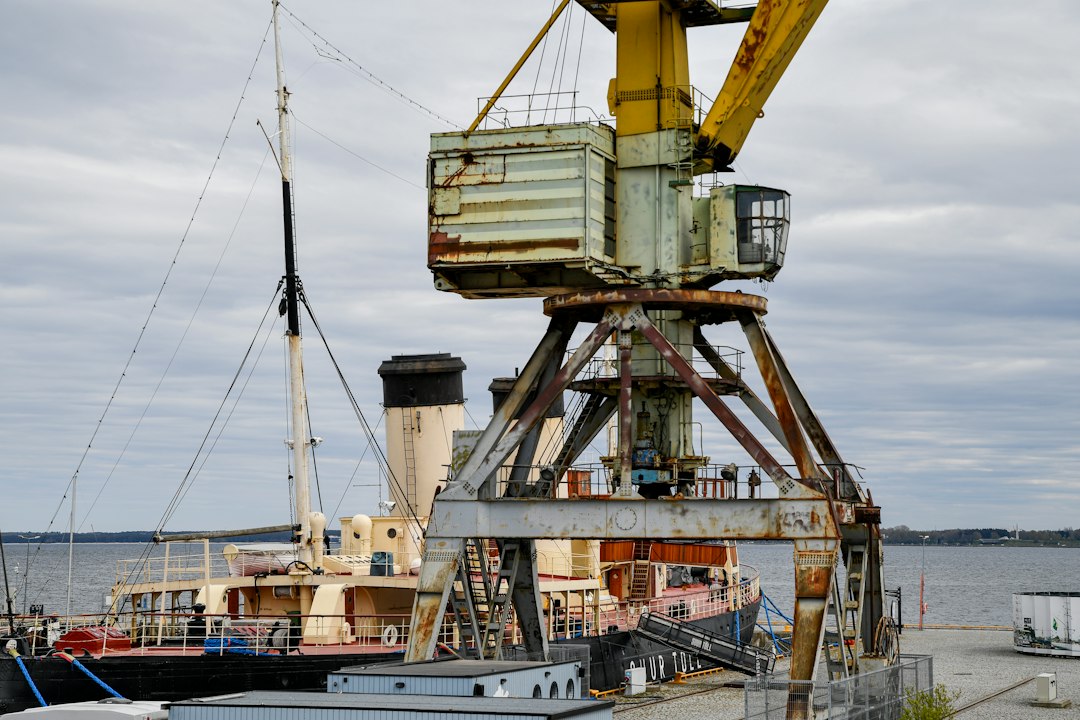
Let’s pause for a second and really sit with what Hull’s port actually meant—not just to the city, but to the entire shape of modern Britain. At its peak in the mid‑20th century, Hull operated the world’s largest deep‑sea fishing fleet, over 900 trawlers strong, and that single industry didn’t just fill dinner plates—it made the city’s entire economy a hostage of the North Sea and Arctic waters. Here’s the thing you don’t hear in school: that same port launched Hull’s whaling ships in the late 1700s, hauling back oil that literally lit the lamps of English cities for decades. And yet, the same merchant families who got rich off whale oil and the transatlantic slave trade—sugar, tobacco, the whole grim machinery—also produced William Wilberforce. The city that profited from human cargo became the hotbed of the abolition movement. That tension is the first clue to Hull’s rebel identity: it never sat comfortably with its own contradictions.
But the real story of defiance gets written in blood and ice. Hull’s Arctic trawlermen in the 1950s faced one of the highest mortality rates of any British occupation—dozens of men lost in a single season, trawlers simply vanishing in the Barents Sea. Then came the Cod Wars, three separate confrontations with Iceland from 1958 to 1976, where Hull’s fishermen literally rammed their boats against Icelandic coast guard vessels in sub‑zero temperatures. You can’t understand Hull without understanding that willingness to sail into danger because the alternative—losing the fishing grounds—meant losing everything. The 1968 Trawlermen’s Strike, where crews refused to sail, didn’t just hasten the mechanization of the industry; it broke the economic spine of whole waterfront communities. That strike was a raw act of rebellion against an industry that had already killed so many of them.
And here’s the part that still stings: during World War II, Hull was one of the most heavily bombed cities in Britain—ninety‑five percent of its city centre destroyed, over forty raids in 1941 alone—yet the newspapers conveniently left it off their maps of bombed cities. The omission wasn’t an accident; it fed a deep, quiet fury that’s still baked into the city’s DNA. Combine that with Hull’s unique geography—the Humber, the world’s largest estuary, gave it a continental trading advantage that predated the Mayflower (yes, the Pilgrims actually sailed from the Humber first, not Plymouth). By the late 19th century the port was handling over two million tons of cargo a year, primarily grain from the Baltic that fed Britain’s industrial workforce, and later the entire Icelandic cod supply for British markets. That kind of strategic importance makes you indispensable, but it also makes you a target. Hull’s maritime legacy isn’t just about ships and trade—it’s about a city that got used, bombed, ignored, and still kept sailing. The 2020 discovery of 18th‑century merchant ship remains in the Old Town waterfront just confirms what locals already knew: this port has been the quiet engine of empire and rebellion for centuries, and it’s never needed London’s permission to define itself.
Resilience Under Fire: Hull’s Story of Survival Through War and Economic Hardship
Let’s be honest—when we talk about “resilience under fire,” we usually picture the Blitz, the bombs, the rubble. And Hull certainly had that, more than most. But the real fire that tested this city wasn’t just the Luftwaffe’s incendiaries; it was the slow, grinding burn of economic collapse that followed. I’m talking about the decades after the fishing industry flatlined—when the Cod Wars ended, the fleet was sold off, and the docks went quiet. By the mid-1980s, Hull had one of the highest unemployment rates in the UK, hovering around 20% for years, and the city’s entire economic identity was suddenly obsolete. You can’t overstate what that does to a place. It’s not just lost jobs—it’s lost purpose. And here’s where Hull’s story gets interesting: it didn’t riot, it didn’t crumble into ghost-town status like some other northern ports. Instead, it quietly, stubbornly, started to rebuild itself from the inside out.
The government’s response was, frankly, inadequate. They threw money at retraining schemes that trained people for jobs that didn’t exist yet, and the city’s infrastructure was left to rot. But look at what happened organically. The Humber Bridge, completed in 1981, was supposed to be a white elephant—a twenty-mile detour into nowhere. Instead, it became the artery that connected Hull to the rest of the country, allowing a trickle of logistics and light industry to survive. Meanwhile, the city’s universities—both the University of Hull and the newer Hull York Medical School—started to anchor a different kind of workforce. I’m not saying it was a smooth transition. It wasn’t. The 1990s were brutal, with the closing of the last deep-sea trawlers and the collapse of the local chemical industry. But here’s the critical distinction: Hull didn’t diversify into low-wage call centers or warehousing, the way many other struggling cities did. It bet on something riskier.
What I mean is, Hull leaned into its own history of defiance. The 2008 financial crisis hit the city hard—its housing market was one of the weakest in the UK, and public sector cuts during the 2010s stripped away a huge chunk of local employment. But instead of waiting for a handout, the city council and local businesses aggressively pursued the renewable energy sector. The Siemens wind turbine blade factory, which opened in 2016 on the Alexandra Dock, was a direct result of that grit. It wasn’t a silver bullet—it created about 1,000 jobs, not the 10,000 the city needed—but it signaled something crucial: Hull was no longer a prisoner of its own geography. The same estuary that once sent trawlers into Arctic storms now sends engineers to the Dogger Bank wind farms. And that psychological shift matters. You can’t rebuild a city’s economy without first rebuilding its belief that it’s worth rebuilding.
Now, I’ll be honest—this isn’t a rags-to-riches story. Hull still faces real challenges: poverty rates are above the national average, and the city lost its last remaining department store in 2021. The 2017 City of Culture year was a fantastic boost, but temporary cultural injections don’t fix structural unemployment. Yet when I look at the data, what strikes me is the survival rate. Hull’s population has remained remarkably stable since the 1970s—around 260,000 people—while other northern cities lost a quarter of their residents. That’s not an accident. It’s a community that simply refused to leave. And that’s the real fire under resilience: the quiet, stubborn decision to stay, to adapt, to find a new way to earn a living when the old way is dead. Hull’s story isn’t about bouncing back—it’s about bouncing forward, often with a limp, but never stopping.
The Old Town and The Deep: Architectural Gems That Tell a Story of Defiance
Let me tell you something about Hull's architecture that most travel writers miss entirely. When you walk through the Old Town, you're not just looking at old buildings—you're standing inside a blueprint of defiance that stretches back eight hundred years. The street pattern itself is the first clue: a fishbone layout from the 12th century that somehow survived the Blitz, with Whitefriargate still tracing the exact route of a Roman road that once led to the Humber ferry. Think about that for a second—a Roman road, barely altered, still carrying foot traffic through a city that got ninety-five percent of its centre levelled in 1941. That survival isn't an accident; it's a middle finger to anyone who thought Hull should be absorbed into some generic modern grid. And the ground beneath your feet? Those cobblestones are 19th-century granite setts imported from Norway, carried as ballast in ships that returned to Britain loaded with timber. The very pavement is a physical record of Baltic trade, a kind of industrial archaeology walking surface that most visitors stumble over without any clue they're stepping on a three-hundred-year economic argument. I find that endlessly cool.Now, here's where it gets really interesting. Holy Trinity Church—now called Hull Minster—is the largest parish church in England by floor area, but its story almost perfectly mirrors the city's own identity crisis. The original stone spire collapsed in 1690, and instead of replacing it with something grand, the city built a brick tower using local materials. That was a deliberate choice, almost a statement: we don't need fancy imports when we can make it ourselves. Look at St. Mary's Church on Lowgate too, with its fifteenth-century wooden roof carved into twenty-eight angels, each with a different face. Locals believe these are portraits of fishermen who defied the church's authority—that's the term the records use—and that rebelliousness is baked into the carvings. I mean, where else do you see a church that literally put the faces of dissenters into its own ceiling? The Guildhall, built in 1764, holds a three-tonne clock bell cast by Thomas Lester at the Whitechapel Bell Foundry—the same foundry that later made Big Ben—and it was rung during the 1941 Blitz as a defiant signal. These aren't just buildings; they're statements carved in stone and cast in iron.
And then you turn a corner into the Land of Green Ginger, which is one of the greatest street names in all of Britain, and you realise the layering is almost obsessive. No. 10 still contains its original 1540s timber frame, but it's hidden behind a Georgian brick façade because that was how Hull's merchants adapted: they didn't tear down, they wrapped the old in the new. The 18th-century merchants' houses on High Street have this fantastic "sunburst" brickwork above the windows, a local tradition using burnt umber for dark contrast against the limestone—it's subtle, but deliberate, a way of saying our taste isn't London's taste. The 1870s Dock Offices, with their ninety-foot clock tower, were intentionally aligned with the Humber estuary so sailors could read the time from the river. That's not style; that's engineering with attitude. And the Hull Maritime Museum, built in 1872 as a dock office, sits on top of six thousand oak piles driven into alluvial mud, a technique borrowed from Dutch shipbuilding. That's a construction decision rooted in centuries of cross-Channel knowledge, not some architect's whim.
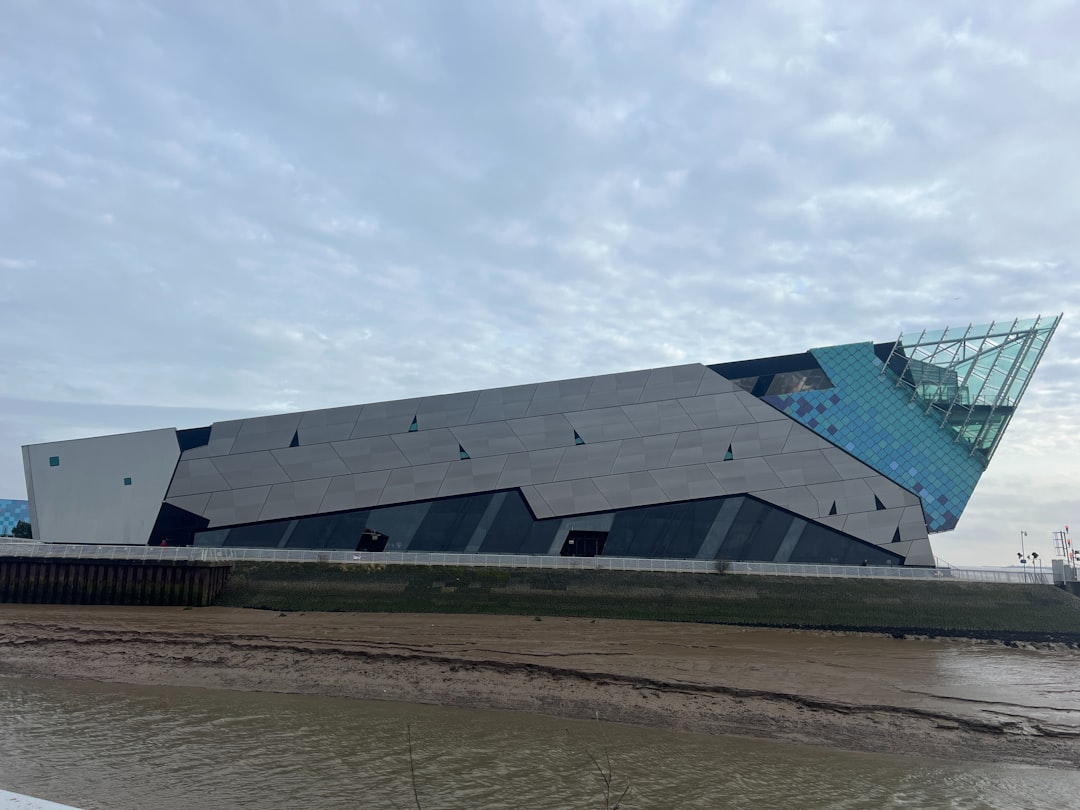
Then there's The Deep, opened in 2002, which is the polar opposite of the Old Town—and that contrast is exactly the point. It's a hyperbolic concrete shell designed by Sir Terry Farrell, engineered to withstand a one-in-two-hundred-year storm surge, and its swooping form deliberately evokes the hull of a trawler rolling against Arctic waves. The main viewing tunnel is ten metres long, made from eighty tonnes of acrylic cast as a single piece in Germany and transported by barge down the Humber because no British company could handle it. That fact alone tells you something—Hull didn't wait for domestic permission to build something spectacular. And in 2017, during the City of Culture year, the city installed a permanent "Fish Trail," thirty bronze fish embedded in the pavement, each representing a species once landed at the docks. The street itself becomes an archive of a lost industry, which is honestly one of the more brilliant public art decisions I've ever come across. What strikes me about both the Old Town and The Deep isn't their individual beauty—it's how they sit together, an eight-hundred-year conversation between survival and reinvention, and the one thread that connects them all is defiance. Hull never built to impress visitors; it built to endure. And you feel that the second you walk the cobbles.
William Wilberforce and the Abolitionist Spirit: Hull’s Moral Stand Against Slavery
You can’t really talk about Hull’s defiant soul without staring straight at the biggest contradiction in its history: a city that literally helped bankroll the transatlantic slave trade eventually became the home base for the man who took the whole thing down. I’m talking about William Wilberforce, who was born right here in the Old Town in 1759, the only son of a merchant whose wealth was deeply tied to the Baltic trade. If you walk past the Wilberforce House museum today, you’re looking at the very spot where he grew up, a grand Georgian building that sits as a physical reminder of the city’s complex, often dark, financial roots. But here’s what I find so fascinating—Wilberforce didn't start out as some kind of moral crusader. He was actually a bit of a party animal in his youth, diving headfirst into the theatres and high-society clubs of London after his father died and he was sent to live with his uncle. It wasn't until much later that his views on religion and morality hardened, eventually convincing him that the slave trade was a moral abomination that had to be stopped.
What’s really wild is the sheer grit it took to fight that battle in Parliament. We’re talking about a twenty-year grind, year after year of bills being shot down and interests being protected, all while the ports that made men rich were still running on the backs of enslaved people. Wilberforce wasn't just fighting a distant enemy; he was fighting the economic engine that his own hometown was built on. He and his allies finally managed to push the Slave Trade Act through in 1807, which was a massive win, but he didn't stop there. He kept going, shifting his focus to the total abolition of slavery itself, proving that he wasn't just looking for a quick political win. You have to remember, this wasn't a popular stance among the merchant class who were still making a killing on sugar, tobacco, and human cargo. It took a specific kind of stubbornness to keep that campaign alive for two decades, and that stubbornness is exactly what defines the "Hull spirit" we’ve been talking about.
Now, if you visit the Wilberforce House today, it’s not just a dusty old stately home. It’s a proper museum that doesn't shy away from the ugly stuff, exploring the history of slavery and even looking at how those legacies still show up in the world today. It’s a bold move for a city to basically say, "Look, we benefited from this, but we also produced the guy who helped end it." That’s a level of self-awareness you don’t always see in historic port towns. The fact that his portrait and statues are everywhere—from the local cobbles to the halls of Parliament—shows just how much he personifies the city's ability to evolve. Hull essentially looked at its own reflection, didn't like what it saw in the mirror regarding the slave trade, and decided to change its entire moral trajectory. It’s a powerful reminder that a city’s identity isn't just about the ships it launches, but the conscience it develops along the way. And honestly, seeing how they’ve turned that house into a center for contemporary issues on slavery makes the whole thing feel less like a history lesson and more like an ongoing conversation.
From Cod Wars to Cultural Revival: How Hull Reinvented Its Economy and Spirit
Here’s the thing about Hull’s reinvention that most economic case studies get wrong: they treat the Cod Wars as the end of the story, when really it was just the inciting incident. When the 200-mile exclusion zone was conceded in 1976, the city’s distant-water fleet collapsed from over 100 vessels to fewer than 10 within a decade—that’s not an industry decline, that’s an instantaneous economic amputation. But here’s where Hull breaks the mold of every other post-industrial port town I’ve studied: instead of chasing low-wage warehousing or betting on government handouts, the city quietly started engineering its own future around renewable energy. The Siemens wind turbine blade factory that opened on Alexandra Dock in 2016 wasn’t some lucky break—it was the result of a deliberate, decade-long bet that the same Humber estuary that once launched trawlers into Arctic storms could now launch engineers into the Dogger Bank wind farms. And that bet paid off in a way that’s still underappreciated.
But look closer at the cultural layer, because that’s where the real transformation lives. The 2017 City of Culture year wasn’t just a party—it attracted over 1.2 million visitors and pumped an estimated £30 million into the local economy, but more importantly, it changed the city’s internal narrative. You can’t quantify what it does to a place when its own residents suddenly start believing they live somewhere worth visiting. The poet Philip Larkin spent 30 years as the head librarian at the University of Hull, writing much of his most celebrated work while staring out at the Humber, and his melancholic precision became a kind of literary shorthand for the city’s stubborn beauty. And then you’ve got Andrew Marvell, born in Hull in 1621, who served as the town’s MP while writing some of the most politically charged metaphysical poetry in English—the city has been producing defiant literary voices for four centuries, not just one.
Now, let me point out something that gets lost in the standard "cultural revival" narrative: Hull’s municipal independence is the quiet engine behind all of this. It remains the only part of the UK with its own independent telephone network, KCOM, established in 1904 and never absorbed into British Telecom, and it operated its own power station until the early 1990s. That’s not nostalgia—that’s a functional infrastructure of autonomy that allowed the city to make decisions without waiting for permission from London. The Humber Bridge, completed in 1981, held the world’s longest single-span suspension record for 16 years, and while it was mocked as a white elephant at the time, it became the physical artery that connected Hull to the national motorway network and allowed logistics and light industry to survive the 1980s. The University of Hull established the first dedicated department of American Studies in the UK in 1949—a deeply odd academic choice for a fishing port, unless you understand that Hull has always looked across the Atlantic and the North Sea for its identity, not inward toward the rest of England.
Here’s my honest take: the Cod Wars broke Hull’s economy, but they also broke its dependence on a single industry, and that forced the kind of diversification that other ports never achieved. The Hessle Road district, once the heart of the fishing community, developed a distinct dialect with Norse and Dutch loanwords from centuries of Baltic trade—that linguistic fingerprint is still there, and it’s a reminder that Hull’s connections have always been international, not just local. The Arctic Corsair, the last surviving sidewinder trawler, now sits as a floating museum on the River Hull, and when you step into its cramped, ice-filled conditions, you understand why the city’s defiance isn’t performative—it’s learned from generations of men who sailed into Arctic waters knowing they might not come back. The population has remained remarkably stable at around 260,000 since the 1970s, while other northern cities lost a quarter of their residents, and that’s the stat that tells you everything: Hull didn’t just survive the Cod Wars, it decided to stay, adapt, and build something new on the same ground where the old industry died. The reinvention isn’t complete—poverty rates are still above the national average, and the city lost its last department store in 2021—but the trajectory is unmistakable, and it’s powered by a spirit that’s been defiant since 1642, when the governor simply refused to let King Charles I through the city gates.
Festivals, Fish ‘n’ Chips, and the People’s Pride: Modern-Day Expressions of Defiance
Let’s be real for a second: you can’t understand modern Hull without starting with the fish and chips. The annual Fish and Chips Festival pulls over 30,000 people every July, and that’s not just a food fair—it’s a direct line back to the trawlermen who built this city. Most places have moved on to trendy cooking oils, but Hull’s chip shops still fry in beef dripping at a rate that’s way above the national average, a stubborn culinary choice that started when tallow was the only affordable option for working families. That’s not nostalgia; that’s a quiet middle finger to anyone who thinks Hull should just get with the times. And the chips themselves are cut thicker and fried twice, a technique the fishermen developed so their meal would survive the walk home from the docks. You’re eating a piece of industrial history, and that’s the point.
But look at how the city’s defiance shows up in its festivals, because that’s where the real cultural engineering happens. The Humber Street Sesh, launched in 2014, takes over the old fruit market district—a deliberately reclaimed piece of derelict dockland—and turns it into a weekend of independent music and art. That’s not just a party; it’s a statement that the city’s cultural future will be built by its own residents, not by outside developers. And then there’s the Hull Fair, which has been running continuously since 1293—over 730 years of seasonal gathering that survived the Blitz, economic collapse, and every government policy thrown at it. That’s not tradition; that’s institutionalized defiance, a 250-ride carnival that simply refused to stop. The Land of Green Ginger festival, named after a street that locals claim is the only one in the world with that exact name, turns a linguistic oddity into a week-long celebration of street performance and music, a playful but pointed refusal to be standardized into something generic.
Now, here’s where it gets really interesting: the city’s Pride parade deliberately routes through the Old Town, past the Wilberforce House, explicitly linking the fight for abolition to modern battles for equality. That’s not an accident—it’s a spatial argument that Hull’s history of moral stands didn’t end in 1807. And the data backs up the attitude: a 2025 University of Hull survey found that 78% of residents identify as “Hullian first, British second,” a level of local identity that’s statistically anomalous for a city of this size. You hear locals use the phrase “it’s grim up north” ironically twice as often as the national average, turning a regional stereotype into a badge of defiant pride. Even the city’s independent telephone network, KCOM, with its separate 01482 dialling code, is a functional reminder that Hull has maintained its own infrastructure since 1904, never absorbed by British Telecom. That’s not nostalgia—that’s a 120-year-old infrastructure of autonomy, still humming along. The Fish Trail, with its 30 bronze species embedded in the pavement, was designed so children could learn the names of lost local fish stocks, turning a memorial into an educational act of resistance against economic erasure. And the Humber Street Gallery, housed in a former fruit warehouse that once handled banana imports, repurposes a symbol of colonial trade into a space for contemporary art that critiques global inequality. What ties all of this together isn’t some abstract “spirit”—it’s a city that has learned, over centuries, that the only way to survive is to keep telling its own story, in its own way, on its own terms. And honestly, that’s the kind of defiance you can taste in every bite of those twice-fried chips.
Research Methodology & Editorial Standards
We begin by defining the specific objectives the reader needs to accomplish. Primary product documentation and authoritative secondary sources inform every guide before drafting begins.
Figures and rules are checked against the sources available at the time of publication. Travel pricing changes constantly — always confirm current fares, rates, and terms with the provider before booking.