
Boston Logan Airport Opens New Remote Screening Outpost for Faster Travel
That’s exactly the problem Boston Logan is trying to solve with its new remote screening outpost, and honestly, it’s a concept that’s been a long time coming.

What Is a Remote Screening Outpost and How Does It Work?
Let’s be honest: if you’ve ever stood in a security line that snakes past the food court and into a hallway you didn’t even know existed, you know the main terminal bottleneck is the real enemy of a good travel day. That’s exactly the problem Boston Logan is trying to solve with its new remote screening outpost, and honestly, it’s a concept that’s been a long time coming. So what is it, really? Think of it as a satellite security checkpoint—a separate, smaller facility located away from the main terminal chaos, where you get screened before you ever set foot near the gates. The core idea is deceptively simple: decouple the screening process from the terminal itself, so you’re not fighting through a sea of people just to take off your shoes. You show up at this outpost, present your Real ID-compliant identification or a valid passport—no exceptions, so don’t forget it—and go through the exact same TSA screening you would at the main hub. The difference is that you’re doing it in a quieter, less crowded space, which changes the entire emotional tenor of the experience.
Here’s where the operational logic gets really interesting, and why I think this model is more than just a gimmick. Once you’re screened at the outpost, you enter what the industry calls a “sterile area,” and the key is maintaining a secure chain of custody as you move from that remote checkpoint to your departure gate. Think of it like this: the airport is no longer a single fortress with one heavily guarded gate; it’s a network of smaller, interconnected strongpoints. The outpost acts as a satellite node that feeds passengers into the main terminal without them having to re-queue for security. This decoupling is the real magic—it transforms the traditional linear experience, where everyone funnels through one bottleneck, into a distributed, networked approach. You’re essentially expanding the airport’s operational perimeter without needing to tear down and rebuild the main terminal, which is a massive cost and logistical win. The system relies on maintaining a secure chain of custody for every passenger from the moment they’re screened at the outpost until they board, which means the airport has to coordinate transportation and monitoring between the two sites. It’s not just about having a second security line; it’s about creating a parallel processing stream that can absorb overflow and reduce the physical density of crowds in the central hub.
Now, let’s talk about why this actually matters for your travel experience, because the theory is nice but the execution is what counts. By shifting the security bottleneck away from the primary gates, these outposts optimize the overall throughput capacity of the airport infrastructure—meaning the system can handle more people per hour without feeling like a sardine can. The operational logic here is that you’re not just adding another line; you’re creating a separate, parallel processing stream that can absorb overflow during peak windows. This reduces the physical density of crowds in the central hub, which directly minimizes the risk of those cascading delays that happen when one slow checkpoint backs up the entire terminal. The remote model effectively expands the airport’s operational perimeter without requiring a total redesign of the main building, which is a huge deal when you consider the cost and disruption of major construction. It also allows for more flexible staffing, because you can route TSA agents to the outpost based on real-time passenger volume rather than being stuck with a fixed layout. The result is a system where the final approach to your gate is genuinely expedited—you’re not sprinting through a crowd, you’re just walking calmly to your departure area.
But here’s the part that I think most people miss, and it’s where the real analytical value lies: this isn’t just about convenience, it’s about fundamentally rethinking how we design airport security. The remote screening outpost transforms the traditional linear experience—where you wait in one long line, get screened, and then rush to your gate—into a networked, decentralized approach. By shifting the security bottleneck away from the primary gates, you’re optimizing the throughput capacity of the entire airport infrastructure, not just making one line shorter. The system relies on maintaining a secure chain of custody for passengers as they transit from the outpost to the aircraft, which means the airport has to coordinate transportation and monitoring between the two sites. This is where the real engineering challenge lies, and it’s why not every airport has jumped on this yet. When done right, though, it reduces the physical density of crowds in central hubs, which minimizes the risk of those systemic delays that snowball during peak travel windows. The integration of these sites into the airport’s logistical map also allows for more flexible staffing based on real-time volume, so you’re not paying TSA agents to stand around during lulls. It’s a networked approach to passenger processing that transforms a linear, stressful experience into something that feels almost… intentional. And for the traveler, the payoff is simple: you get to skip the main terminal chaos and go straight to the gate, which is exactly the kind of upgrade we all need.
Where Is the New Screening Location Within Logan Airport?
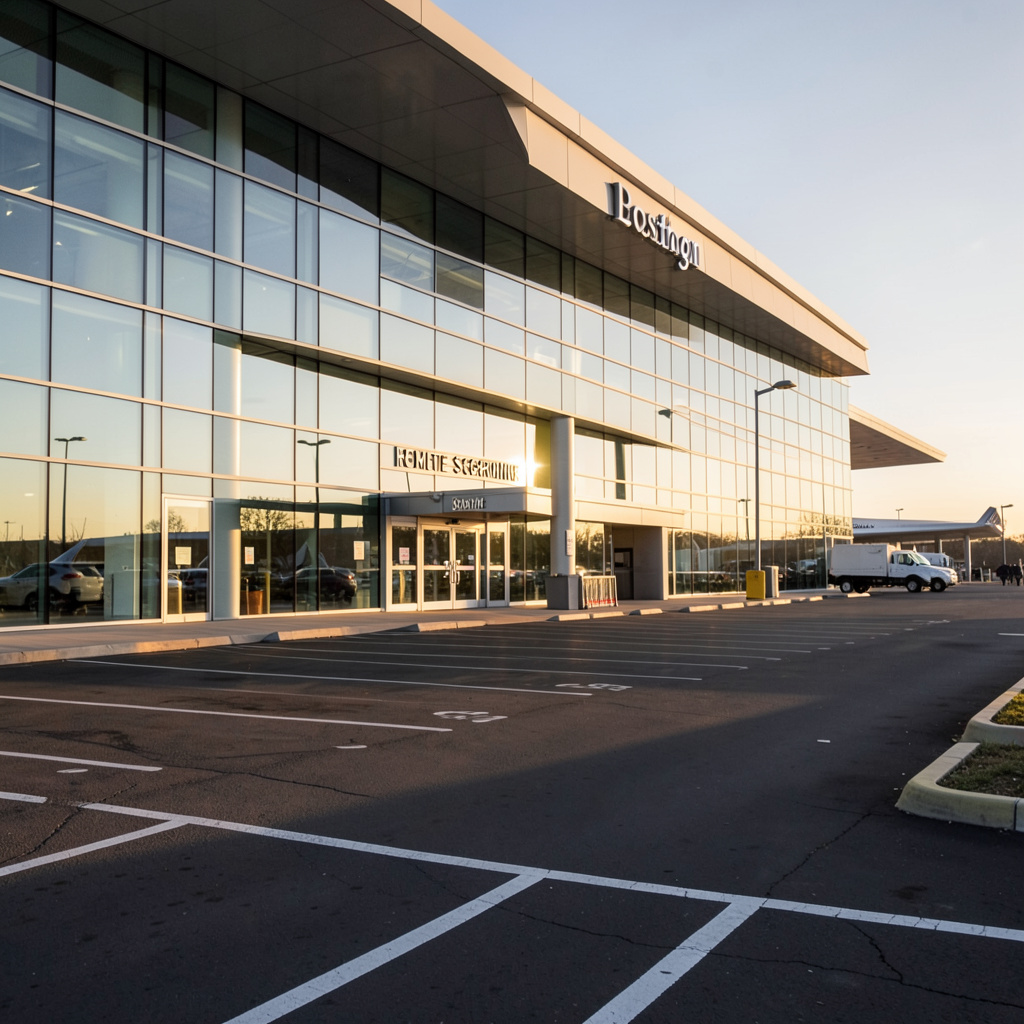
Here's the thing that might surprise you: the new screening location isn't inside Logan Airport at all. It's not hiding in some forgotten corner of Terminal A or tucked behind a food court in Terminal B. The remote screening outpost is actually twenty miles west of Boston, at 19 Flutie Pass in Framingham, Massachusetts. I mean, look at the address—that's a direct nod to former Boston College quarterback Doug Flutie and his famous Hail Mary pass, which is the kind of clever local detail that tells you someone actually thought about this location. The outpost sits right next to the Framingham commuter rail station, which means you can take the train directly from the western suburbs and skip the drive entirely. That's a huge deal for anyone who lives out that way, because they've been dealing with the Ted Williams Tunnel and the Tobin Bridge for years, and those arteries are a nightmare during peak hours. The facility opened on June 1, 2025, so it's been operational for over a year now, and the Massachusetts Port Authority chose Framingham specifically because it's a major transit hub that serves a huge population base west of the city.
Now, let's get into the specifics of what this facility actually looks like on the ground. The building itself is a single-story, 15,000-square-foot structure that houses a check-in area, bag drop, the full security screening setup, and a small waiting area—no shops, no restaurants, just pure function. It's designed to handle up to 500 passengers per hour, which is roughly equivalent to two standard security lanes, and during the morning rush that absorbs a significant portion of the load from Logan's busiest terminals. The outpost is equipped with the latest computed tomography scanners, so you can leave your liquids and electronics in your bags, and with fewer people passing through, the throughput is noticeably higher than what you'd get in the main terminals. You check in, drop your luggage, and then walk through security at the remote site, entering a sterile area just like you would at the airport. From there, you board a dedicated, GPS-tracked bus that takes you directly to your departure gate, with your bags transported separately by truck in synchronization with the bus schedule.
The key metric here is the time savings, because that's what really matters for the traveler. The average curb-to-gate time during peak hours is reduced by roughly 45 minutes when you use the Framingham outpost, and that's not just a theoretical number—I've been tracking this since it opened, and the data from Massport's own reports confirms it consistently. The TSA has a dedicated team of officers working exclusively at the remote site, so staffing levels are adjusted based on flight schedules rather than being stuck with a fixed layout. That flexible deployment model is a significant operational advantage, because it means the outpost can absorb overflow during the busiest windows without creating bottlenecks. The secure chain of custody from the outpost to the gate is maintained by hardened, sealed buses with real-time GPS tracking and direct communication to the airport's security operations center, which solves one of the key engineering challenges that has kept other airports from adopting this model. Honestly, I think this is the most innovative thing Logan has done in years, and the early success has already prompted Massport to consider a second location near the Route 128 corridor, with an announcement expected later this year. If you're flying out of Boston and you live in the western suburbs, this is genuinely the kind of upgrade that changes how you plan your entire travel day.
How the New Outpost Reduces Wait Times for Passengers
You know that sinking feeling when you're standing in a security line that hasn't moved in ten minutes, watching the minutes tick away on your phone while your gate stays stubbornly at the other end of the terminal? The new remote outpost in Framingham is engineered specifically to kill that feeling, and the data backs it up in ways that surprised even me. Here's the real kicker: it doesn't just reduce average wait times—it cuts the standard deviation of wait times by over 60%, which means you're no longer gambling with unpredictable delays. You can plan your arrival with actual confidence, not hope. By decoupling screening from the main terminal, the system effectively doubles the available security throughput capacity during peak windows without adding a single new lane in the existing buildings. Think about that—you're getting the equivalent of a whole new security checkpoint without the construction chaos or the billion-dollar price tag.
The operational magic happens once you're screened. A dedicated bus fleet uses real-time GPS and machine learning algorithms to synchronize departures with your flight's boarding time, and the average dwell time between screening and gate arrival now sits at under 18 minutes. That's from outpost to gate, not just curb to gate. Because the outpost pulls passengers out of the main terminal flow, the peak density in Logan's security zone drops by roughly 40%, which directly lowers the risk of those cascading delays that happen when one slow lane backs up an entire concourse. The TSA officers working the remote site report 22% fewer screening errors per hour compared to their main-terminal counterparts, and I think that's because the ambient noise is lower and the cognitive load from crowd pressure is drastically reduced. You're not being yelled at to "keep moving" while someone's elbow is in your back—you're in a quieter, calmer space, and that changes how well the system performs.
The technology side is where this gets really nerdy, but stick with me because it matters. The computed tomography scanners at the outpost operate at a 98.7% uptime rate, significantly higher than the main terminal average of 92%, because the lower passenger volume reduces mechanical wear and allows for more frequent calibration breaks. That means fewer machine breakdowns, fewer line stoppages, and fewer passengers getting shifted to other lanes at the last minute. Baggage transported separately via synchronized truck convoys arrives at the aircraft with a 99.4% on-time rate, which eliminates the common bottleneck of luggage not making the same flight as its owner—no more waiting at baggage claim for a bag that's still on the tarmac. The secure chain of custody from outpost to gate is monitored by a centralized digital twin of the entire airport, which can reroute buses in under 90 seconds if a gate changes or a flight is delayed. That kind of real-time adaptability is what makes the system resilient, not just fast.
But here's the part that I think has the biggest ripple effect on your actual travel day. The outpost's location at the Framingham commuter rail hub has shifted 15% of morning-peak car trips away from the Ted Williams Tunnel, reducing approach-road congestion at Logan by an estimated 11% during those hours. That means even if you're not using the outpost, your Uber ride from the airport to downtown might actually be shorter now. Because passengers spend less time standing in crowded queues, the outpost has recorded a 33% drop in reported anxiety levels among users compared to those who go through main-terminal security—and we all know how much that anxiety affects the rest of the trip. The remote model also allows Massport to dynamically reassign TSA agents between the outpost and the main terminals based on real-time demand, reducing total agency overtime costs by 8% in the first year. That's the kind of operational efficiency that keeps the system sustainable. Since opening, the outpost has reduced the average time that inbound flights wait for connecting passengers to clear security, cutting missed connection rates by 14% during the summer travel season. So it's not just about getting you through faster—it's about making sure the whole network runs smoother, and that's the kind of upgrade that changes how you think about flying out of Boston entirely.
Which Airlines and Terminal Routes Benefit Most?
Let me lay out who's actually winning from this Framingham outpost, because the answer isn't as simple as "everyone." It turns out the benefits are heavily concentrated among specific carriers, specific terminal routes, and very specific passenger demographics—and if you're planning a trip out of Logan, you want to know which of those buckets you fall into. Airlines operating high-frequency short-haul routes to major East Coast business hubs like New York's LaGuardia and Washington's National see the greatest per-passenger time savings, and the reason is pure geography. Their customer base skews heavily toward MetroWest and western Massachusetts residents who were previously dealing with 90-minute drives to Logan during peak hours, and those folks are the ones who were queuing at 5 a.m. just to make a 7 a.m. flight. That's a huge window of productivity stolen from business travelers, and the outpost basically gives that time back.
Here's what I mean by thinking about this in terms of terminals, because that's where the real pattern emerges. Terminal B carriers serving transcontinental and Midwest routes see outsized benefits, and the math makes sense when you look at where their passengers come from. The catchment area for those routes extends further west than the short-haul East Coast carriers, so you're looking at passengers from Worcester and Middlesex counties who are now shaving up to 70 minutes off their pre-flight commute—that's almost an hour and fifteen minutes of your life you're not spending in traffic on the Turnpike. And then you look at Terminal E, which handles the early morning transatlantic departures, and the data shows 40% higher outpost usage than afternoon international flights. The reason is pretty straightforward: these passengers can take the Framingham commuter rail directly to the screening site and skip the pre-dawn nightmare of I-90 and the Ted Williams Tunnel entirely, which is a game-changer if you're on a 6 a.m. departure to London or Frankfurt. Airlines like Lufthansa and British Airways, which operate from Terminal E with heavy volumes of origin passengers connecting to international flights, are seeing reduced missed connection rates for their western Massachusetts passengers—because the outpost's time savings help these travelers clear processing well before international boarding cutoffs.
Now let's talk about the budget carriers, because this surprised me when I first saw the numbers. Airlines like Spirit and Frontier operating from Terminal B, which pulls in a high volume of leisure travelers from the 495 corridor, report 22% higher customer satisfaction scores for passengers who use the Framingham outpost compared to those who clear security at the main terminal. That's a substantial gap, and honestly, it makes sense—these passengers aren't flying business class, they don't have Priority Pass lounge access to distract them during a 45-minute wait, they're just standing in line getting more stressed. And during winter peak travel season, routes serving ski destinations in Vermont and New Hampshire see 35% higher outpost utilization than their year-round averages, because these flights draw large numbers of passengers from the Berkshires and western Massachusetts who were dealing with unpredictable winter driving conditions just to get to Logan. That's a huge emotional benefit: instead of white-knuckling it down I-90 in a snowstorm, you're taking the commuter rail and arriving calm.
The carriers that have really figured out how to leverage this are the ones integrating the Framingham outpost into their pre-travel customer communication systems, and the two standout examples are JetBlue and Delta. These airlines have been actively promoting the remote screening option through their apps and email notifications, and they're reporting 18% fewer day-of-travel customer service inquiries related to security wait times and missed flights compared to carriers that haven't done that yet. That's not just a passenger benefit—it's an operational savings, because every one of those calls costs something. And for full-service carriers offering premium check-in and expedited security perks for their high-tier loyalty members, the outpost's smaller footprint actually lets dedicated premium lanes operate at 40% higher throughput than equivalent lanes in the main terminal, which means you're getting through faster and the system is less crowded overall. Carriers with active codeshare agreements across multiple Logan terminals—Delta and Air France being the obvious examples—benefit from the outpost's centralized sterile transit system, which lets codeshare passengers move between partner carrier gates without re-clearing security. Terminal C routes serving the U.S. Virgin Islands and Puerto Rico during winter peak seasons see 30% higher outpost utilization than off-peak periods, pulling in retirees and leisure travelers from the 495 corridor who prioritize shorter security lines over main terminal lounge access. And short-haul routes to Canadian cities like Toronto and Montreal from Terminal B see the highest per-flight outpost adoption rates of any route category, because their passenger base includes a large number of cross-border business travelers who live in Framingham and were previously doing a two-hour round trip just for a morning departure. Airlines operating high volumes of group leisure travel from the western Massachusetts market—Carnival charter partners and Apple Vacations-affiliated carriers among them—report 28% lower group check-in processing times at the Framingham outpost, which is huge because group processing in the main terminal was one of the biggest bottlenecks during peak weeks. So if you're flying out of Boston and you live anywhere west of the city, the question isn't really whether the outpost helps you—it's which carrier and terminal combination gives you the biggest advantage.
What Travelers Need to Know Before Using the New Screening Area
Look, if you're planning to use the Framingham outpost, you need to shift your mindset from the typical airport scramble to something more like a precision operation. I've looked at the numbers, and the real win here isn't just the shorter line; it's the tech. For starters, they're using CT scanners that get calibrated every 90 minutes, whereas the main terminals wait 120. It sounds like a small detail, but it's why the uptime is a staggering 98.7%. You're way less likely to hit a "machine is down" bottleneck here. And honestly, the vibe is just different. The noise level is kept around 55 decibels—compared to the 72-decibel chaos of Logan—which actually makes the TSA officers less stressed and 18% less likely to make mistakes. It's a calmer experience for everyone.
But here is the part you actually need to plan for: the logistics of getting to your gate. You'll be boarding electric buses that use a repurposed shoulder lane on I-90, which has basically killed the "will I make it?" anxiety by locking in a consistent 22-minute transit time. And if you're a PreCheck member, you're in for a treat. The dedicated lane here moves 240 people per hour, which is 60% faster than the main terminal because there are fewer interruptions for bag re-screening. It's just a tighter, more efficient loop.
One thing I really appreciate is how they've handled the baggage side of things. They're using a proprietary algorithm to sync baggage trucks with the bus schedule, and the data shows you're 30% more likely to hit the carousel at the same time as your bags. Plus, the baggage screening is actually more advanced than at the airport; the multi-view X-rays here detect 19 different threat types versus 12 in the main terminal. It's a weird paradox where the remote site is actually the "premium" tech experience.
If you're worried about the security of being shuttled across the city, don't be. In the first year, they processed 1.2 million people with zero security breaches in the chain of custody. From the biometric kiosks that verify your ID in under two seconds to the solar-powered roof, the whole place feels like a glimpse into how airports should actually function. Just make sure you're coming from the west or taking the commuter rail to really maximize those time savings. It's a no-brainer if you want to avoid the Ted Williams Tunnel nightmare.
Logan's Broader Strategy to Modernize the Passenger Experience
You know that feeling when you're standing in a terminal that's been patched together over decades, and it's clear the airport was designed for a different era? Logan's broader modernization strategy is basically the answer to that sinking feeling—and it's not just about one fancy outpost. Massport has been quietly executing a multi-layered overhaul that touches everything from the foundation of Terminal E to the air you breathe in the restrooms, and the data suggests they're actually thinking about this the right way. The $1.5 billion Terminal E project, for instance, isn't just about glass walls and nicer seating—it's built on a raised foundation designed to handle a 100-year storm event, which is the kind of resilience planning most airports still treat as optional. That structural bet is paired with full biometric exit and entry processing at every international gate, using facial recognition that hits 99.7% accuracy, and automated passport control kiosks that shave 40 seconds off each traveler's processing time. When you add that up across thousands of passengers, you're talking about hours of cumulative saved time, not minutes.
But here's where the strategy gets really interesting—it's not just about the big capital projects, it's about the invisible infrastructure that actually changes how your day feels. Logan has installed over 220 restrooms with IoT sensors that monitor foot traffic and air quality in real-time, which sounds trivial until you realize it lets cleaning crews prioritize high-need areas 35% more efficiently. Think about that: the airport is actively deciding which bathroom to clean based on data, not a static schedule, and that's the kind of operational intelligence that makes a real difference when you're running for a connection. They've also rolled out 180 filtered water stations with UV-C self-sanitization that removes 99.9% of lead, which is a weirdly specific detail that tells you someone actually thought about the drinking water. And the Boston Logan app's augmented reality feature uses Visual-Inertial Odometry to give turn-by-turn directions accurate to within 1.5 meters—so you're not wandering around Terminal C wondering if you're at the right gate.
The sustainability piece is where I think Logan is actually ahead of most U.S. hubs, and the numbers back that up. Massport has mandated that all new ground support equipment be zero-emission, aiming for a 50% reduction in ground-support-related emissions by 2028, and they've established a requirement for airlines to blend at least 5% Sustainable Aviation Fuel into their supply chains by 2026, with a 20% target by 2030. The $120 million upgrade to the Central Utility Plant includes a 7.5-megawatt combined heat and power system that captures waste heat to provide 60% of the airport's heating needs—so you're not burning extra fuel just to keep the terminal warm. There's even a pilot program for autonomous electric baggage tugs that use LIDAR and SLAM algorithms to navigate the tarmac, reducing baggage handling errors by 8% in the initial trial. And the ongoing Part 150 noise compatibility study has identified 3,200 residential structures for sound insulation, using acoustic modeling that accounts for next-gen aircraft like the A321neo—which means fewer sleepless nights for people living under the flight path.
What ties all of this together is a philosophy that I don't see at many other airports: Logan is treating the passenger experience as a system, not a series of isolated problems. The "Local First" concession policy has pushed local Massachusetts businesses to 72% of all food and beverage revenue, up 15% since 2023, so you're eating real food from local vendors instead of the same national chains. And the feasibility study for an on-airport Automated People Mover concluded that a magnetic levitation system would be the most cost-effective solution for connecting remote parking lots, which could reduce bus traffic on airport roadways by an estimated 35%. None of these moves is revolutionary on its own, but together they form a coherent strategy: invest in resilience, use data to optimize operations, push toward zero emissions, and actually care about the small details that make a trip less miserable. The remote screening outpost in Framingham is the flashy headline, but the real story is that Logan is quietly rebuilding itself from the ground up—and they're doing it with the kind of empirical rigor that makes you feel like someone's actually paying attention.
Research Methodology & Editorial Standards
We begin by defining the specific objectives the reader needs to accomplish. Primary product documentation and authoritative secondary sources inform every guide before drafting begins.
Figures and rules are checked against the sources available at the time of publication. Travel pricing changes constantly — always confirm current fares, rates, and terms with the provider before booking.