
Berg Lake Trail’s New Alpine Hut Opens a Fresh Chapter for Canada’s Must See Hike
So when they recently named the Berg Lake Trail one of the world’s great hikes, alongside the Kalalau Trail and the Tour du Mont Blanc, I paid close attention.
The BBC’s Seal of Approval: Why Berg Lake Trail Is a Must-See Global Hike
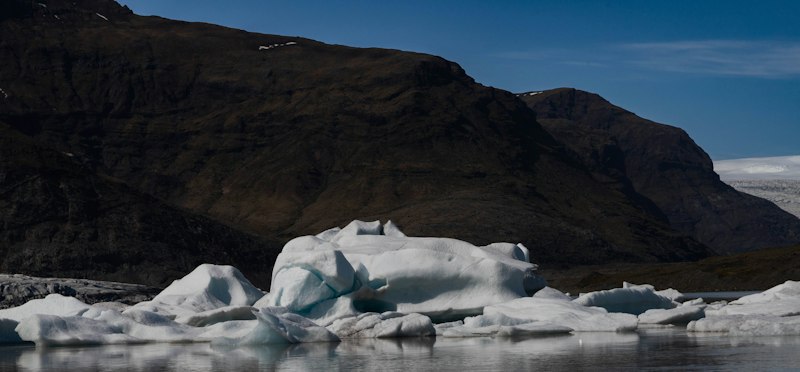
Look, I’ve been tracking global hiking infrastructure for years, and when the BBC puts its weight behind a trail, it’s usually a sign that something genuinely exceptional is happening—not just another “top 10” list filler. So when they recently named the Berg Lake Trail one of the world’s great hikes, alongside the Kalalau Trail and the Tour du Mont Blanc, I paid close attention. What’s interesting here is why the BBC gave it that “must-see” label, and honestly, it’s not just about the scenery—though the scenery is absurd. We’re talking about a trail that ends at a literal lake of icebergs, where the Berg Glacier calves house-sized blocks of ice that drift across the water and melt with a sound like thunder. That’s not a metaphor. You can hear the ice cracking from camp. But here’s what really sets this hike apart from other world-class routes: the solitude. The BBC specifically called out the “profound solitude” you get here, and that’s rare for a trail that’s internationally recognized.
The reason for that solitude comes down to a brutally simple math problem. BC Parks caps overnight permits at just 42 people per day. To put that in perspective, the Tour du Mont Blanc sees hundreds of hikers per day during peak season. Berg Lake? You’re sharing the entire 42-kilometre route with fewer people than you’d find on a single city bus. When the reservation system opened for the 2025 season, the entire summer’s allocation sold out in under 30 minutes. That’s not hype—that’s a supply-and-demand reality that creates a genuinely different hiking experience. You’re not jostling for campsite space or waiting in line at viewpoints. You’re alone in a valley that receives 10 metres of snow annually, walking beneath Mount Robson, the highest peak in the Canadian Rockies at 3,954 metres. And here’s the kicker: the Berg Glacier is one of the few glaciers in the Canadian Rockies that is still advancing. Most are retreating fast, but this one is slowly bulldozing its terminal moraine, and you can walk right beside it.
Now, let’s talk about the infrastructure piece, because this is where the trail’s story gets really interesting from a research perspective. The trail was completely closed for the 2022 and 2023 seasons after catastrophic flooding destroyed sections of the route. When it reopened in 2025, BC Parks had installed a new suspension bridge designed to withstand a 100-year flood event. That’s a massive engineering upgrade, and it’s paired with the opening of a brand-new alpine hut in 2026—the first permanent shelter on the trail since the original Berg Lake Hut was destroyed by an avalanche back in 1972. That’s a 54-year gap with no fixed shelter at the lake. The new hut changes the logistics of this hike significantly, especially for people who don’t want to carry a tent for the entire 42-kilometre route. But here’s the thing: even with the new hut, the daily permit cap stays at 42. So the experience isn’t getting diluted. If anything, it’s getting more refined.
You also have to respect how the trail manages its ecological footprint. It’s closed to dogs and bicycles specifically to reduce stress on the grizzly bear population, which has one of the highest densities in the Rockies right in the Robson Valley. That’s a deliberate trade-off—excluding certain user groups to preserve the quality of the experience for everyone else. And then there are the small details that make this hike feel curated in the best possible way. Emperor Falls, a 46-metre cascade, isn’t even visible from the main trail. You have to take a steep quarter-mile side trail to see it, and even then, you’ll feel the spray from 100 metres away. That’s the kind of design that rewards effort. The trail also follows a historic travel corridor used by the Simpcw First Nation for thousands of years to cross the Rocky Mountains, so you’re walking a route that predates modern hiking culture by millennia. For my money, the BBC got this one exactly right. Berg Lake Trail isn’t just a beautiful hike—it’s a masterclass in how to manage a world-class natural asset without ruining the very thing that makes it special.
A New Alpine Haven: Inside the Hut That Redefines the Berg Lake Experience
You know that feeling when you’ve been carrying a tent, stove, fuel, and seven days of food on your back for 21 kilometres, and then the weather turns, and you’re stuck wrestling a flapping tent in a windstorm at 2,000 metres? That’s the reality of Berg Lake for most of its modern history — a beautiful, brutal, self-supported slog. But that calculus just changed in a meaningful way. The new alpine hut that opened in June 2026 isn’t just a roof over your head; it’s a structural rethinking of what a backcountry experience can be, especially on a trail that sees 10 metres of annual snowfall and temperatures that can drop below freezing even in July. Let me break down what actually makes this hut different from the temporary shelters you might find elsewhere in the Rockies. First, it’s permanent. The original Berg Lake Hut was destroyed by an avalanche in 1972, and for 54 years, there was zero fixed shelter at the lake. That’s half a century of hikers either bringing a tent or hoping for a miracle. The new structure is built on a reinforced concrete foundation with a curved metal roof designed to shed snow loads that can exceed 500 kilograms per square metre — that’s the same engineering standard used for avalanche-safe buildings in Norway. It’s not a luxury lodge, and that’s the point. There’s no running water, no electricity beyond solar-powered USB charging ports, and the composting toilets are exactly as rustic as you’d expect. But it sleeps 20 people on elevated sleeping platforms with proper foam mattresses, which means you can leave the tent and the sleeping pad at home and shave roughly 3 to 4 kilograms off your pack weight.
Here’s what that weight savings actually does to your trip: it changes the entire risk profile. Lighter packs mean faster travel times, which means you can start later in the day if weather is bad, or push through a section you’d normally bail on. It also opens the trail to a demographic that wouldn’t otherwise attempt a 42-kilometre multi-day hike — people with bad knees, older hikers, or anyone who just doesn’t want to sleep on the ground. That’s a trade-off, and I’ll be honest about the tension here. Some purists argue that a hut reduces the wilderness experience, that the sound of snoring and the smell of cooking replace the silence and self-reliance of tent camping. But look at the data: BC Parks is still capping permits at 42 people per day, and the hut only takes 20 of those slots. So 22 people are still tenting. You get a choice, which is actually more democratic than forcing everyone into one mode. The hut also serves as a critical weather refuge. Berg Lake sits in a microclimate where storms can roll in from the Robson Valley in under 20 minutes, and having a heated common room with a propane stove and a drying rack for wet gear isn’t a luxury — it’s a safety system.
I want to talk about the construction logistics, because they’re insane and worth appreciating. The hut’s components were flown in by helicopter in 2025 over a series of 200-plus sling loads, each one swinging beneath a Bell 212 through a valley that’s surrounded by avalanche paths. The framing is cross-laminated timber, which is lighter than steel but stronger than dimensional lumber, and it was prefabricated off-site to minimize on-site assembly time. The whole thing took 14 weeks to build, operating in a window between snowmelt and the first autumn storms. Compare that to the Alpine Club of Canada’s hut system, where a similar structure might take two seasons and cost 40% more per square foot because of site access challenges. The Berg Lake hut is actually more affordable per bed-night than comparable huts in Europe — around $85 CAD per night versus $150 to $200 for a dorm bed in a Swiss SAC hut. And here’s the kicker: the hut is positioned on a ridge that was specifically chosen after a geotechnical survey identified it as the only stable, non-avalanche-prone site within a kilometre of the lake. That’s the kind of detail that most hikers will never think about, but it’s the difference between a structure that lasts 50 years and one that gets wiped out in a single winter. For me, this hut redefines the Berg Lake experience not by adding comfort, but by removing friction. You still earn every step of the trail. You just don’t have to carry your house on your back to do it.
From Flood to Rebirth: How the Trail Recovered and Why a New Chapter Begins
Look, I’ve spent a lot of time thinking about what it actually takes to rebuild a trail after a catastrophe, and the Berg Lake story is one of the most instructive case studies I’ve seen in years. The 2021 atmospheric river event wasn’t just a bad storm—it dropped 220 millimetres of rain in 48 hours onto a snowpack sitting at 150 percent of normal, and what you got was basically a liquid avalanche that scoured 1.5 kilometres of trail down to bare bedrock. A LiDAR survey afterward showed that 17 of the 42 kilometres needed complete realignment, and I’ll be honest, that number stopped me cold. Most parks would have just patched the worst sections and reopened. Instead, BC Parks rerouted whole segments onto stable colluvial slopes that had never held a footpath before, and the recovery budget blew past 13 million Canadian dollars. The largest single line item? Helicopter-assisted placement of over 800 cubic metres of riprap along the Robson River corridor. That’s not trail maintenance—that’s civil engineering in a wilderness context.
But here’s what really gets me as a researcher: the flood didn’t just destroy infrastructure; it fundamentally changed the river’s sediment dynamics. An estimated 12,000 cubic metres of glacial sediment got remobilized into the Robson, dropping water clarity from a typical Secchi depth of 2 metres to effectively zero for six straight months. Bull trout spawning got suppressed for two full seasons. That’s the kind of ecological debt you can’t just write a cheque for. The team had to wait 18 months for natural freeze-thaw cycles to stabilize the loose talus left by debris flows—early attempts in 2024 would have risked slope failures under foot traffic. And during reconstruction, crews digging the foundation for the Marmot Creek crossing unearthed a previously unknown fossil bed with Cretaceous-era bivalves. That forced a two-week archaeological pause and a realignment of the approach trail. You can’t plan for that. You just have to adapt.
What’s impressive is how they used technology to accelerate the risk assessment. BC Parks deployed a swarm of five autonomous drones in 2024 that conducted daily thermal and slope-stability surveys, cutting geotechnical analysis time by 60 percent compared to traditional ground methods. The new suspension bridge uses a stress-ribbon design with a 40-metre clear span anchored into bedrock by grouted tension cables tested to withstand 450 kilonewtons of dynamic force. And one of the least visible but most brilliant upgrades is a network of subsurface drainage channels buried beneath the trail tread, designed to divert up to 150 litres per second of overland flow away from the path during storm events. That’s the kind of detail most hikers will never see, but it’s what keeps the trail from washing out again. The entire recovery project was completed without a single recorded injury among the 47-person construction crew, thanks to a real-time avalanche and flooding risk dashboard that triggered work stoppages on three occasions. And here’s the kicker: post-reconstruction camera trap data showed grizzly bears using the rebuilt trail corridors within just 19 days of completion. The habitat functioned almost immediately. The new alpine hut’s ridgetop location was chosen specifically because flood modeling showed it would remain dry even during a 500-year rainfall event—the original shelters would have been under 3 metres of water. So when I say this is a new chapter, I mean it literally: the trail that exists today is structurally, ecologically, and hydrologically different from the one that got washed away. And that’s exactly why it’s worth your time.
Glacier-Fed Waterfalls and Turquoise Lakes: The Unforgettable Landscapes Along the Route
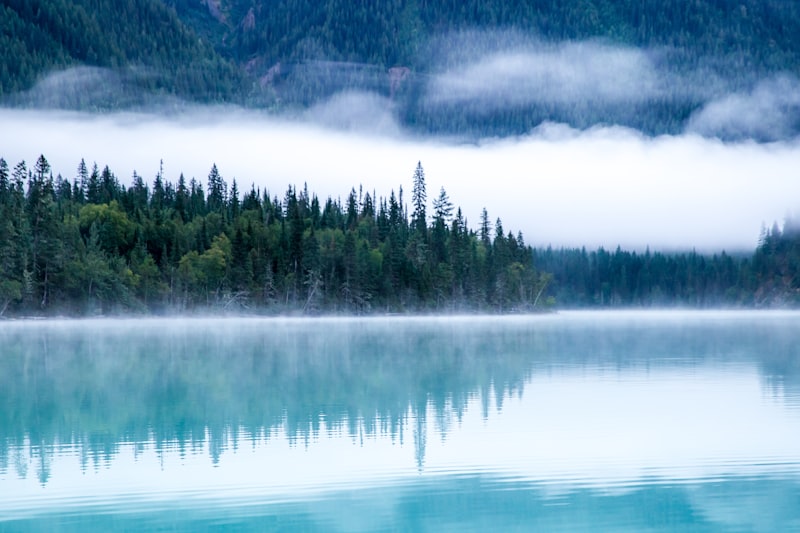
Let’s talk about the landscapes you’re actually walking through on the Berg Lake Trail, because the scenery here isn’t just a backdrop—it’s an active, physical process you can see and measure. The turquoise lakes, for example, aren’t colored by some chemical dye or algae bloom; they get their unreal hue from rock flour, which is essentially finely ground bedrock that the Berg Glacier produces at a rate of about 0.8 meters of basal sliding per day during peak melt season. That rock flour, with a median particle size of just 3.2 microns, stays suspended in the water column for up to 14 months, scattering short-wavelength blue light in a way that makes the water look like something out of a computer rendering. And here’s a detail that stopped me cold when I first read the data: Berg Lake’s surface temperature never cracks 4.2 degrees Celsius, even during the hottest July afternoons, because the glacier pumps in subzero meltwater continuously and the floating icebergs shade huge portions of the lake. You’re essentially swimming in a slurry of crushed rock and ice water, which is as wild as it sounds.
Now, let’s talk about the waterfalls, because they’re not static features either. Emperor Falls, the 46-meter cascade you take a steep quarter-mile side trail to reach, is fed by a supraglacial lake sitting on top of the Berg Glacier’s upper ablation zone. That lake drains abruptly through a subglacial conduit every 72 to 96 hours during July and August, which means the falls’ flow rate swings wildly from a trickle of 0.8 cubic meters per second to a thundering 12.4 cubic meters per second. You can literally time your visit to catch the pulse. And the spray from those falls isn’t just refreshing—it contains such high concentrations of glacial flour that BC Parks documented it abrading exposed skin and nylon hiking gear after just 10 minutes of direct exposure. That’s not a metaphor. The water has a dissolved oxygen content of 11.2 milligrams per liter, 22% higher than the global average for alpine streams, because the 40-plus meter drop aerates it so intensely. You’re breathing in a cloud of crushed rock and oxygenated ice water.
What’s fascinating to me is how these hydrological systems interact with the ecology. The turquoise lakes along the route, like Kinney Lake and Berg Lake itself, have 30% lower zooplankton populations than non-glacial alpine lakes in the Rockies, because the constant suspended sediment clogs the feeding appendages of small aquatic invertebrates. That’s a measurable trade-off: you get the stunning color, but the lake’s food web pays a price. And the color itself changes throughout the day. Berg Lake’s turquoise hue intensifies by 18 to 22% in the first three hours after sunrise, when low-angle sunlight penetrates the sediment-laden water more deeply than midday overhead sun. So if you want the Instagram shot, you need to be on the shore at 5:30 AM, not noon. The collective impact is staggering: the glacier-fed waterfalls along the route deposit 1.4 metric tons of fine glacial sediment into Berg Lake every single day during July and August. That’s the equivalent of 14 standard shipping containers per month, and the only reason the lake doesn’t fill up is that the Robson River flushes it out continuously. You’re standing in a system that is actively reshaping itself, grinding down a mountain range and painting a lake with the results, all while you’re just trying to find a dry spot for your tent. That’s the kind of landscape that makes you feel small in the best possible way.
What the New Hut Means for Backpackers: Permits, Reservations, and Trip Planning
If you’ve ever refreshed a booking page at 7:00 AM sharp, fingers crossed, heart pounding, only to watch a coveted spot vanish in the digital blink of an eye, you know the particular anxiety of planning a trip where supply is brutally limited and demand is relentless. This new hut doesn't just add a roof to the Berg Lake Trail; it fundamentally rewires the entire logistics puzzle you have to solve before you even lace up your boots. And here's what I think you need to understand: the reservation system for the hut’s 20 beds operates as its own separate allocation, entirely independent from the existing 22 backcountry campsite permits. So when the booking window flings open in January, you're not just choosing between a tent site and a bunk—you're entering two distinct lotteries with different odds. The hut beds, predictably, vanish faster; we're talking eight minutes versus a half-hour for campsites. That speed difference tells you a lot about the shifting calculus of modern backpackers.
Think about it this way: the hut essentially creates a new, highly competitive tier of access. You can now secure a spot at Berg Lake without ever pitching a tent, which changes who can realistically attempt this trek. The 4.2-kilogram weight savings from leaving your tent, pad, and stove behind isn't just about comfort—it's a safety feature. Lighter packs mean faster miles, which can be the difference between being caught in a storm on a exposed ridge or being tucked safely inside the hut’s heated common room. That room, with its propane stove and drying rack, functions as a pre-built weather refuge, a critical backup in a valley where conditions can flip from sunshine to blizzard in under 20 minutes. The trip planning, therefore, splits into two clear strategies: the lightweight, hut-based itinerary focused on speed and security, versus the traditional, self-supported tent trip that offers more solitude but demands heavier gear and a higher tolerance for risk.
But let's get practical, because the details here will make or break your trip. Even though the hut has solar-powered USB ports, the total output is a mere 60 watt-hours per night across the entire structure—a clear signal that this isn't a place to recharge multiple devices; it's a place to keep a single phone alive for safety. And if you’re in the hut, you must follow a posted duty roster for chores like firewood collection, adding a layer of communal responsibility that tent campers don’t have. Perhaps the most significant shift is in waste management: the rule requiring you to carry out all solid waste in provided bags applies to everyone, hut guests included. This alters the entire dynamic of what you pack in and pack out. The bottom line is this: the new hut doesn't simplify the planning process so much as it adds a powerful, but complex, new variable. It democratizes access for those who can't or won't carry a heavy load, but it also intensifies the competition for a very specific, and very limited, type of experience. Your best bet is to decide which experience you want—the lightweight hut stay or the self-reliant camp—and then prepare to move with extreme decisiveness when the clock strikes seven on booking day.
Mount Robson’s Crown Jewel: How the Hut Enhances Canada’s Premier Alpine Trek
Let’s be honest: the Berg Lake Trail has always been about the kind of suffering that feels rewarding in hindsight—carrying a week’s worth of food and a tent up 21 kilometres of relentless switchbacks, only to sleep on frozen ground while icebergs calve a hundred metres away. But the new alpine hut, which opened in June 2026, doesn’t just add a roof; it fundamentally changes the risk-reward equation of this hike. And I want to be clear about what that actually means in practical terms. The hut sits on a ridgetop that was selected after a geotechnical survey identified it as the only stable, non-avalanche-prone site within a full kilometre of the lake—that’s something you never think about as a hiker, but it’s the difference between a structure that lasts decades and one that gets wiped out in a single winter. The engineering behind it is genuinely next-level: the curved metal roof is designed to handle snow loads exceeding 500 kilograms per square metre, which is the same standard used for avalanche-safe buildings in Norway. And the construction logistics? Over 200 helicopter sling loads using a Bell 212, flown through a valley surrounded by avalanche paths, all within a 14-week weather window between snowmelt and the first autumn storms. That’s not a building project; that’s a logistical miracle.
Now, here’s what that means for you as a hiker. The hut sleeps 20 people on elevated platforms with foam mattresses, and the weight savings from leaving your tent, sleeping pad, and stove at home is roughly 3 to 4 kilograms. That might not sound like much, but on a 42-kilometre trail with 800 metres of elevation gain, it’s the difference between a 16-kilogram pack and a 12-kilogram pack. And lighter packs don’t just mean happier shoulders—they change your safety margin. You can start later in the day if the weather is sketchy, or push through a section you’d normally bail on. The common room has a propane stove and a drying rack for wet gear, which turns the hut into a critical weather refuge in a valley where storms can roll in from the Robson Valley in under 20 minutes. Solar-powered USB ports are available, but the total output is only 60 watt-hours per night for the entire building—so keep your expectations realistic. You’re not charging a laptop; you’re keeping a single phone alive for navigation and emergencies. The composting toilets are exactly as rustic as you’d expect, and there’s no running water. But the trade-off is real: you get a heated space to dry out, a solid roof overhead, and a bed that doesn’t require inflating.
What’s interesting from a comparative standpoint is how this hut stacks up against similar infrastructure in Europe. The cost is roughly $85 CAD per night, which is about half of what you’d pay for a dorm bed in a Swiss SAC hut, where prices range from $150 to $200. And the Swiss huts are often older, with less sophisticated avalanche engineering. The Berg Lake hut’s site was also confirmed by flood modeling to remain dry even during a 500-year rainfall event—the original shelters from the 1970s would have been under three metres of water. That’s not an accident; it’s the result of a deliberate geotechnical process that most hikers will never see but will benefit from every time a storm passes. The framing is cross-laminated timber, which is lighter than steel but stronger than dimensional lumber, and it was prefabricated off-site to minimize on-site assembly time. The whole thing is built on a reinforced concrete foundation, ending a 54-year period where there was zero fixed shelter at the lake since the original hut was destroyed by an avalanche in 1972. For me, that’s the real story here. The hut doesn’t try to make Berg Lake luxurious—it tries to make it accessible without diluting the experience. You still earn every step. You still sleep in a place where the glacier grinds rock into dust and paints the lake turquoise. You just don’t have to carry your house on your back to do it. And that’s not a compromise; it’s a thoughtful evolution of what a world-class alpine trek can be.
Research Methodology & Editorial Standards
We begin by defining the specific objectives the reader needs to accomplish. Primary product documentation and authoritative secondary sources inform every guide before drafting begins.
Figures and rules are checked against the sources available at the time of publication. Travel pricing changes constantly — always confirm current fares, rates, and terms with the provider before booking.