
Barcelona Just Drew a Line in the Sand on Tourism and Travelers Need to Listen
You know, when we talk about 16 million annual visitors, it’s easy for that number to just feel like a statistic on a tourism board flyer, but when you actually live it or even just visit during peak season, the physical reality of that density is hard to ignore.
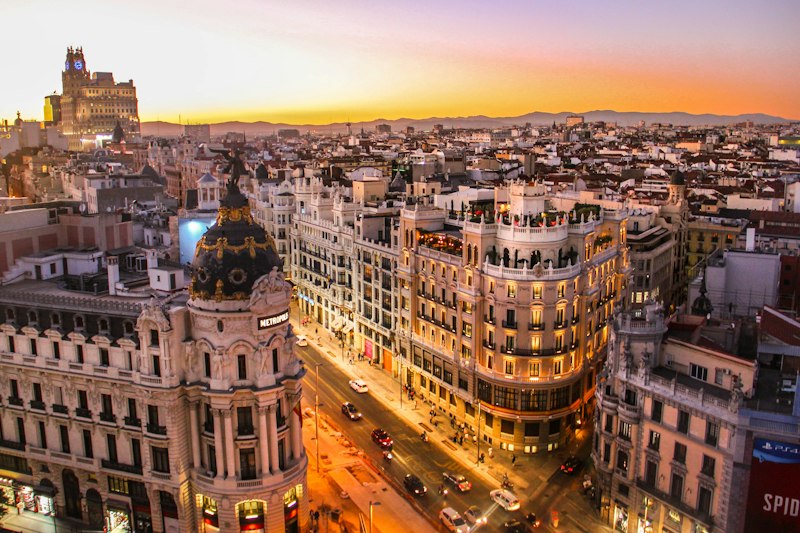
What It Means for Travelers
Look, when you see a slogan like "Not One Tourist More," it's easy to brush it off as just another angry protest sign, but here's the thing: Barcelona is actually putting its money where its mouth is. We're not talking about vague complaints anymore; we're seeing a hard pivot toward aggressive regulation. For instance, the city council just slapped a binding cap of six cruise ships per day, which is a massive drop from the ten ships they averaged back in 2023. That's a 40% cut in daily arrivals right there. If you're planning a cruise, you're now looking at a tourist tax of €4.50 per person per night—a 50% jump from 2024—and that cash is going straight into affordable housing and transit, not some general fund.
I think we need to pause and look at the math here, because it explains why the locals are so fed up. A University of Barcelona study found that the city's infrastructure cost per tourist is about €215 a day, but the average visitor only spends €186. Think about that for a second. The city is essentially losing €29 on every single person who walks through the door before they even collect taxes. When you combine that financial leak with a 300% spike in noise complaints in the Gothic Quarter over five years, it's pretty clear why "Not One Tourist More" became the rallying cry in neighborhood assemblies. It's not about hating visitors; it's about a system that's mathematically broken.
And if you're thinking of booking a quirky Airbnb, you might want to double-check your listing. The city has gone on a warpath against illegal rentals, scrubbing over 1,500 listings in 2025 and hiring 30 new inspectors to hunt down the rest. They've even set up a system where rental platforms have to hand over monthly occupancy data or face fines up to €600,000. It's working, too. Honestly, the message is loud and clear: the era of unrestricted access is over, and if we want to keep visiting these places, we have to accept that the rules of the game have changed.
The Numbers Behind the Shift: Why 16 Million Annual Visitors Is a Breaking Point
You know, when we talk about 16 million annual visitors, it’s easy for that number to just feel like a statistic on a tourism board flyer, but when you actually live it or even just visit during peak season, the physical reality of that density is hard to ignore. To put that in perspective, we’re looking at roughly ten times the city’s resident population flooding these streets every single year, and that’s a ratio that would make any urban planner break out in a cold sweat. I’ve been digging into the infrastructure reports, and honestly, the data is pretty grim; the city’s sewage and road systems were never, ever designed to handle this kind of sustained pressure. We aren't just talking about crowded sidewalks or long lines at the Sagrada Familia anymore, we’re talking about the very real risk of a total infrastructure collapse that could turn a dream vacation into a public health nightmare.
Think about the sheer logistics for a second, because the math just doesn't add up in favor of the current model. The city has even had to create a brand-new role, a Commissioner for Sustainable Tourism, basically hiring José Antonio Donaire to do the impossible: manage a crowd that has already exceeded the city's physical carrying capacity. It reminds me of that old engineering adage: just because a bridge hasn't fallen yet doesn't mean the stress isn't there. When you compare Barcelona to a place like Rome, which somehow handled over 68 million visitors during the Jubilee, it’s not necessarily that Rome is "better" at tourism, it’s that their breaking point is just in a different place. Barcelona’s breaking point is happening right now at 16 million because the physical systems—the pipes, the buses, the narrow Gothic streets—have hit their absolute limit.
And here’s the kicker that most people miss when they look at these headlines: this isn't a seasonal issue or a bad year for crowds; it’s a fundamental mismatch between the city’s bones and its ambitions. If you’re a traveler, you need to understand that 16 million is the line in the sand where the "vibe" of the city shifts from vibrant to broken. The appointment of a specific commissioner for this crisis tells me that the city leaders have moved past the "growth at all costs" phase and are now in full-blown damage control mode. We’re seeing a shift where the data is forcing a hard stop, and if you’re planning a trip, you’re going to feel the effects of these caps whether you like it or not. The city is effectively saying that the cost of the 16 millionth visitor is higher than the revenue they bring, and that’s a realization that changes everything about how we’ll be able to visit in the future.
From Hotel Moratoriums to Protest Movements: Tracing Barcelona’s Anti-Overtourism Timeline
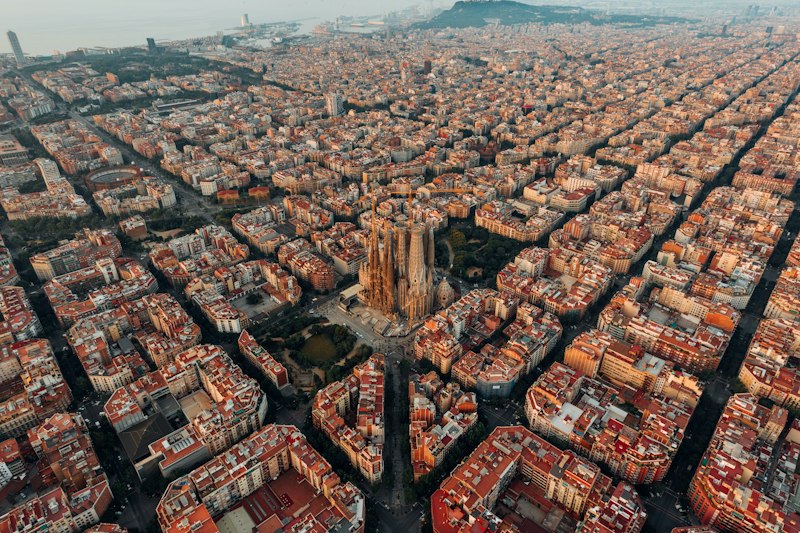
You know, when you trace Barcelona’s anti-overtourism timeline, the real story isn’t about angry tourists getting squirted with water pistols—it’s about a city that’s been fighting this battle for over a decade, and the protests are just the tip of the iceberg. The first major policy move came way back in 2015, when the city council froze all new hotel licenses in the Ciutat Vella district—the historic Gothic Quarter—essentially admitting that the core had already hit its breaking point. That moratorium wasn’t some temporary measure; it was later extended to cover Eixample and Gràcia as the tourism pressure simply spilled over into residential neighborhoods. But here’s what I find fascinating: even that aggressive regulatory step didn’t stop the bleeding. By 2019, local residents realized that licensing freezes alone couldn’t fix a housing crisis driven by short-term rentals and cruise ships, so they formed the Assembly of Neighborhoods for Tourist Degrowth, or ABDT. That’s the group that’s been coordinating the street-level resistance ever since, and it’s a much more sophisticated coalition than you’d expect.
Let’s talk about who’s actually showing up at these protests, because it’s not just disgruntled locals. The June 2025 march, which drew thousands near the Sagrada Familia, included the Las Kellys—that’s the hotel cleaners’ collective—demanding a reduction in hotel rooms because their own working conditions had become unsustainable. Public transit workers joined them, pointing to the metro system’s 40% spike in peak-season ridership, which made their jobs a nightmare. Even residents of Park Güell, the Gaudi park that’s been choked by selfie sticks for years, marched alongside the Zeroport coalition, which is fighting to stop airport expansion. Think about that for a second: you’ve got cleaners, bus drivers, park neighbors, and anti-airport activists all marching under the same banner. That’s not a fringe movement anymore—it’s a cross-class alliance that’s harder to dismiss as just “angry locals.”
The escalation has been deliberate and symbolic. During that June 2025 protest, demonstrators carried banners reading “Decrease level of tourism now” and “Mass tourism kills neighborhoods,” but they also brought water pistols to spray tourists—a pointed act meant to “cool down” an overheated industry. And then came the hotel blockade. Activists physically blocked the entrance to a hotel, preventing guests from checking in, which is a direct action that signals a shift from shouting to disruption. The same day, hotel workers in Tenerife staged their first-ever strike against overtourism, and simultaneous protests hit Madrid, Valencia, the Canary Islands, and even Berlin. This isn’t a Barcelona-specific tantrum; it’s a synchronized wave across southern Europe, with regional slogans like “Tarragona without cruise ships” showing that the anger is spreading beyond the city limits. If you’re watching this timeline from a policy perspective, the 2015 moratorium was the first line in the sand, but the 2025 protests are the moment the line got drawn in blood. The movement has evolved from a quiet bureaucratic freeze to a loud, coordinated, and sometimes confrontational demand for degrowth, and I don’t think we’ve seen the last of it.
Meet the Man in Charge: José Antonio Donaire’s Plan to Reshape the City’s Tourism Future
So here's where things get really interesting, because when Barcelona created the role of Commissioner for Sustainable Tourism, they didn't hire some hotel industry veteran or a politician looking for a title. They tapped José Antonio Donaire, a guy whose background is in geography, not hospitality—and honestly, that choice tells you everything about where the city is headed. His academic work was built on mathematical modeling of tourist flows in public spaces, which gives him a granular understanding of pedestrian bottlenecks that most tourism directors don't even know exist. Think about it this way: while most city planners see a crowd on Las Ramblas and think "add more signage," Donaire sees the data behind exactly how and when that crowd forms and where it spreads. And that's a fundamentally different way of thinking about a city that gets ten times its resident population in visitors every year.
Here's what I think matters most for travelers, though. Donaire has publicly stated the goal isn't to kill revenue—it's to shift the city's heavy reliance away from the 2.2 billion euros generated by day-trippers, who pile on congestion without even booking a hotel. That's the economic hinge that most people miss: the loudest complaints aren't about the people who stay and spend, they're about the ones who show up, clog the streets, and leave. He's pushing a tiered tourist tax system that uses dynamic pricing—more expensive during peak months, cheaper in winter—to smooth out the 40% seasonal swing in arrivals. Under his plan, the city will also deploy AI-driven sensors in public squares to measure real-time density, which is a fancy way of saying they'll be able to redirect foot traffic away from saturated zones like the Gothic Quarter and Ramblas in real time.
And the neighborhood-level data is where it gets even more practical. Donaire's office has mapped all 73 of Barcelona's neighborhoods using something called a "tourism fatigue index"—it factors in noise levels, rental density, and waste collection data to figure out which areas need intervention most urgently. Here's a concrete example that really stuck with me: his team commissioned a study showing that every new hotel room in the Eixample district requires an additional 1.2 public trash bins and 0.8 bus stops just to maintain existing service levels. That's the kind of infrastructure math that makes you realize how broken the old model actually was. He's also proposing a digital permit system for all tour groups, capped at 15 people with mandatory time slots at major attractions, plus a "cruise passenger dispersal algorithm" that would stagger disembarkation times to prevent that brutal 8:00 a.m. metro surge we've all seen. And quietly, he's been lobbying the Catalan government for a 2% surcharge on airline tickets to Barcelona-El Prat, with the proceeds going to noise mitigation in residential flight paths.
What I find most striking, though, is his pilot program to convert one in five tourist apartments in the Gothic Quarter into long-term rentals for essential workers, targeting 500 units by 2028. That's not just a policy tweak—it's a structural shift in how the city allocates its housing stock, and if it works, it could become a template for other European cities drowning in the same problem. Donaire's approach is essentially the first serious attempt to measure tourism not by how many people show up, but by how many people can show up without breaking the city. The math behind the 16 million visitor threshold we talked about earlier—it's not arbitrary, it's grounded in the kind of granular, neighborhood-by-neighborhood analysis that most tourism boards don't even attempt. Whether his plan actually works or not, the fact that Barcelona handed control of tourism to a geographer instead of a marketer tells you everything you need to know about how the game has changed. You're not just visiting a city anymore; you're visiting a city that's actively managing your arrival, and that changes what it means to be a tourist in the first place.
Beyond the Headlines: The Economic, Social, and Environmental Cost of Unchecked Tourism
Let’s be honest, when you scroll past another headline about tourists getting squirted with water pistols, it’s tempting to write it off as seasonal drama. But the real story underneath those protests is a quiet economic catastrophe that most travelers never see coming. I’m talking about the "tourism paradox" — the brutal irony where the very thing you came to experience gets destroyed by the sheer volume of people who showed up to experience it. The math behind this isn't abstract; it's a hard cap on how many visitors a place can absorb before the local culture permanently shifts into something performative and hollow. Think about the "leakage effect" for a second: in some destinations, up to 80% of every dollar you spend never actually stays in the local economy. It flows straight back to foreign-owned hotel chains, international airlines, and tour operators headquartered thousands of miles away. So the crowded streets, the higher prices, the noise — you're bearing all the costs, but the community isn't even keeping most of the revenue. That's not tourism; that's extraction.
And the environmental side? That's where the numbers get genuinely unsettling. In historic city centers during peak season, nitrogen oxide levels from idling tour buses can exceed World Health Organization safety limits by 20%. That's not an inconvenience; that's a public health violation happening in real time. Meanwhile, the average tourist consumes roughly 300% more water per day than a local resident — in places where water scarcity is already a ticking time bomb. Coastal areas face a different kind of assault: unregulated anchor drops from leisure craft have been linked to a 15% increase in seabed degradation, shredding seagrass meadows that act as carbon sinks. And then there's the "Instagram effect" — artificial demand peaks at photogenic spots that can spike local waste production by 400% in previously pristine natural areas. The infrastructure simply wasn't built for that kind of concentrated abuse.
But the social cost is what keeps me up at night, honestly. When residential housing gets converted into short-term rentals, you trigger what researchers call a "displacement ripple" — essential workers like nurses, teachers, and hospitality staff get pushed five kilometers or more away from their jobs. The city hollows out from the inside. Noise pollution in over-visited neighborhoods consistently hits 70 to 80 decibels, which is the range linked to sleep deprivation and cardiovascular stress. That's not a vibe; that's a health crisis. You also get this "tourism-led price spiral" where basic groceries in tourist zones rise far faster than national inflation, making it impossible for locals to afford to live in their own neighborhoods. Traditional workshops and pharmacies close, replaced by souvenir shops selling zero long-term economic value. That's the "Disneyfication" everyone talks about — a city that looks like a postcard but functions like a theme park, with all the authenticity scrubbed out. The psychological toll of living in a "museum city" leads to measurable declines in resident mental well-being, and that's the cost you'll never see on a tourism board's brochure.
How Travelers Must Adapt: Practical Ways to Respect Barcelona’s New Sustainable Tourism Policies
Look, here's the part most travelers are going to miss entirely: Barcelona's new rules aren't just about restricting everyone else—they're about what you, as someone who actually wants to visit the city, need to do differently. And honestly, if you're still thinking of showing up to the Sagrada Familia at 2:00 PM with no plan, you're already behind the curve. Let's break this down practically, because the policies hitting the ground right now are granular, real, and they're designed to make your behavior matter more than ever.
First off, let's talk about the 30% discount on municipal museum entry fees if you show up before 10:00 AM or after 6:00 PM—if you're booking a trip to Barcelona this summer, that's not just a nice perk, it's a strategic move. Early or late arrivals reduce peak-hour crowding at places like the Picasso Museum, where this policy already cut peak-time crowding by 22% in the second quarter of 2026 per municipal transit data. That's not a minor adjustment; it's a structural shift in how you time your day. If you've ever stood in a sweaty queue at the Picasso Museum in July, you know exactly how much that 22% matters, and honestly, the quieter hours feel like a completely different experience—more intimate, more real. So if you're still planning your itinerary around hitting the big attractions at peak midday, think again. The math is clear: the city is rewarding off-peak behavior and penalizing the opposite.
Now here's where it gets a little more involved, especially if you're staying in a short-term rental or booking a hotel. The city has mandated that all accommodation providers—hotels and rental hosts alike—must provide color-coded, multilingual waste sorting bins with QR codes linked to a city compliance app. This kicked in July 2026, and properties that see their guests fail to sort correctly at least 75% of the time face a 15% annual business tax surcharge. That's not a small penalty; that's a serious business cost, and it means you're going to notice these bins in your room, city center, or lobby. If you're someone who tosses everything in one trash can, you're going to need to actually understand what goes where, because it's not optional anymore—it's part of the city's infrastructure compliance. And honestly, when the system is that granular, it forces you to be a better guest, which is part of the point.
And the noise rules? If you're planning to join a guided tour group, you need to know that twelve residential squares in Gràcia and Poble Sec have been designated permanent "zero-noise zones" as of March 2026. No amplified tour group sound—none—and fixed sensors issue €300 automatic fines for groups exceeding 55 decibels during daytime. That's about the volume of a normal conversation, so if your guide is using a megaphone or speaking loudly in one of these areas, you're technically participating in something that could generate a fine. It's a small detail, maybe, but it's part of the city's way of saying that the streets belong to residents, not just tourists. And if you're a tour operator or even a traveler who books group experiences, you're going to be more careful about where you gather and how loud you are. That's a real behavioral shift, and I think most people don't realize how serious the enforcement is.
Let's also talk about the cruise ship rules, because this is where the data gets a little more dramatic. As of January 2026, all cruise lines docking in Barcelona must provide free 48-hour public transit passes to all passengers and offset 100% of passenger ground emissions via certified Catalan reforestation projects, or they face 12-month docking bans. That is a direct operational cost for the cruise lines, and it's meant to reduce the chaos of surge arrivals at the port—particularly that brutal 8:00 AM metro crush we've all seen. And if you're arriving by cruise ship, you'll probably notice the things that weren't happening before: more organized transit, fewer sudden crowds, and a more controlled flow of people into the city. The 48-hour pass is also meant to encourage you to use public transport instead of renting a car, which is a huge win for the city's congestion problem. So if you're booking a cruise to Barcelona, you want to plan ahead—know the transit schedule, download the city's app, and be ready for a more regulated experience.
The rules for tour operators are also changing the way you'll be able to book group experiences. Starting in 2026, guided tour operators must employ at least 70% of guides with five or more consecutive years of Barcelona residency to qualify for the official "Sustainable Tour Operator" certification required for major attraction group booking slots. That's not just a requirement for operators—it's a way for you to get a more authentic, locally grounded experience. You're going to see more local guides, more neighborhood knowledge, and fewer generic, cookie-cutter tours. That's actually a good thing for your experience as a traveler, and if you're someone who values depth over speed, it's a win. And think about it this way: when you're paying for a tour, you want someone who knows the streets, not someone who's reading from a script they've had for five minutes.
Now, here's a metric that might surprise you: tour groups of 15 or more now pay a €25 per person "neighborhood impact fee" for each hour in residential zones outside designated tourist corridors. This money goes directly to rent subsidies for local families in those areas, and it's a way for you to contribute to the community's well-being while you're there. It's not about making you feel guilty; it's about acknowledging that tourism has a real cost, and this is the mechanism for offsetting it. If you're booking a group tour, you're going to see this fee quietly added to your bill, and if you're a solo traveler or in a small group, you're not going to hit that threshold. But it's a reminder that the bigger you travel, the more you pay—and the more you contribute to the local economy in a tangible, measurable way.
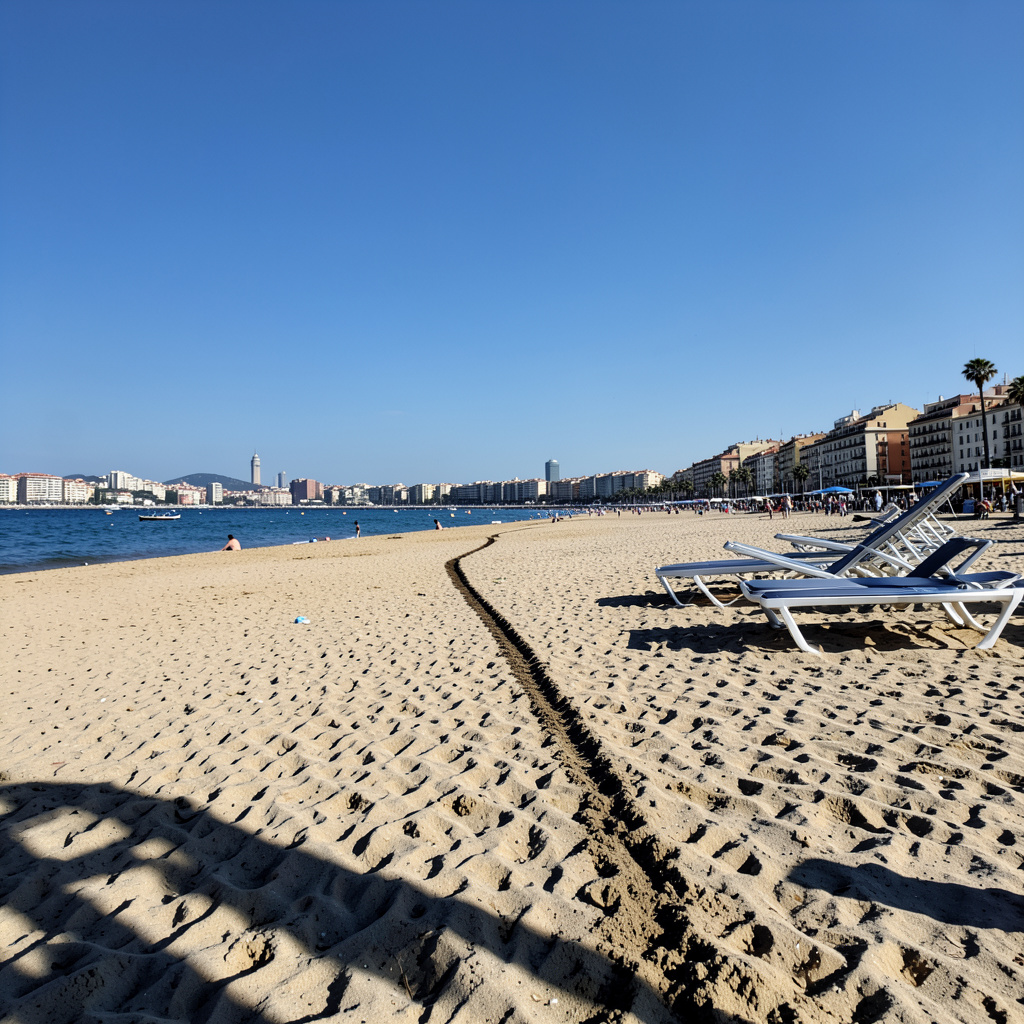
And then there's the beach situation, because if you're planning to spend time on Barcelona's coast, you need to know that real-time crowd counters were installed at all seven of the city's public beaches starting in May 2026. When capacity hits 85% of safe limits, automated entry closures kick in, and the only way in is through pre-booked slots via the city's tourism app. That's a serious operational constraint, and it's meant to cut overcrowding incidents, which have dropped by 38% since launch. If you're a beach person—and let's be honest, a lot of us are—this is the kind of thing you're going to want to plan for weeks in advance. You can't just wander down to the beach at noon anymore and expect to get a spot. That's a big shift in behavior, and it's a good example of how Barcelona is using technology to manage the human flow in a very tangible way.
The grocery and restaurant side of things is also changing, and if you're someone who likes to eat local, which you should, you're going to see some new rules. Convenience stores within 500 meters of UNESCO World Heritage sites must allocate 40% of shelf space to locally produced, non-souvenir goods at resident-tier pricing as of June 2026, and if they don't, they face €1,200 fines per violation. That's a direct intervention in the market, and it's meant to prevent the tourist trap phenomenon where every shop near a landmark is selling overpriced trinkets rather than real food or local goods. Restaurants within one kilometer of major tourist attractions are now required to source at least 60% of their ingredients from the Barcelona metropolitan area, and there's a "local sourcing score" displayed on the menu. If the restaurant doesn't comply, it doesn't get city tourism marketing grants, which is a real economic lever. So if you're eating near the Sagrada Familia or the Gothic Quarter, you're going to see more locally sourced food, and you're going to see the price reflect that—because it's not about being cheap, it's about being real.
And finally, if you're staying in a hotel and you're trying to reduce your environmental footprint, you're going to want to know that large hotels—those with over 50 rooms—must cut per-guest water consumption by 25% from 2023 baselines as of July 2026. That's audited via quarterly smart meter audits, and excess usage comes with a €10 per cubic meter surcharge. That's not a suggestion; it's a hard number, and it means the hotel is going to be watching your consumption closely. You might see shorter showers, fewer towels, or less hot water, and that's all part of the city's broader push to reduce the ecological toll of its visitors. It's a reminder that staying in a city isn't just about your comfort—it's about your footprint, and Barcelona is making sure every guest is aware of the cost of their stay.
These changes aren't just symbolic—they're structural, they're enforced, and they're designed to reshape how you experience the city. If you're planning a trip, you want to do your homework ahead of time, because the days of spontaneous, unplanned travel in Barcelona are fading. The city is building a system where your behavior, your timing, your choices as a traveler have real consequences—and real rewards. The best way to respect Barcelona's new policies isn't to resist them; it's to use them as a framework for a better, more intentional trip. You'll enjoy it more, the locals will appreciate you more, and you'll come home with a deeper understanding of what it actually means to travel responsibly in a city that's actively redefining what tourism can look like.
Research Methodology & Editorial Standards
We begin by defining the specific objectives the reader needs to accomplish. Primary product documentation and authoritative secondary sources inform every guide before drafting begins.
Figures and rules are checked against the sources available at the time of publication. Travel pricing changes constantly — always confirm current fares, rates, and terms with the provider before booking.