
AutoCamp Is Betting That Luxury Outdoor Travel Will Keep Growing This Summer
AutoCamp exists to erase that entire mental image.
What Is AutoCamp? Breaking Down the Brand’s Luxury Outdoor Lodging Model
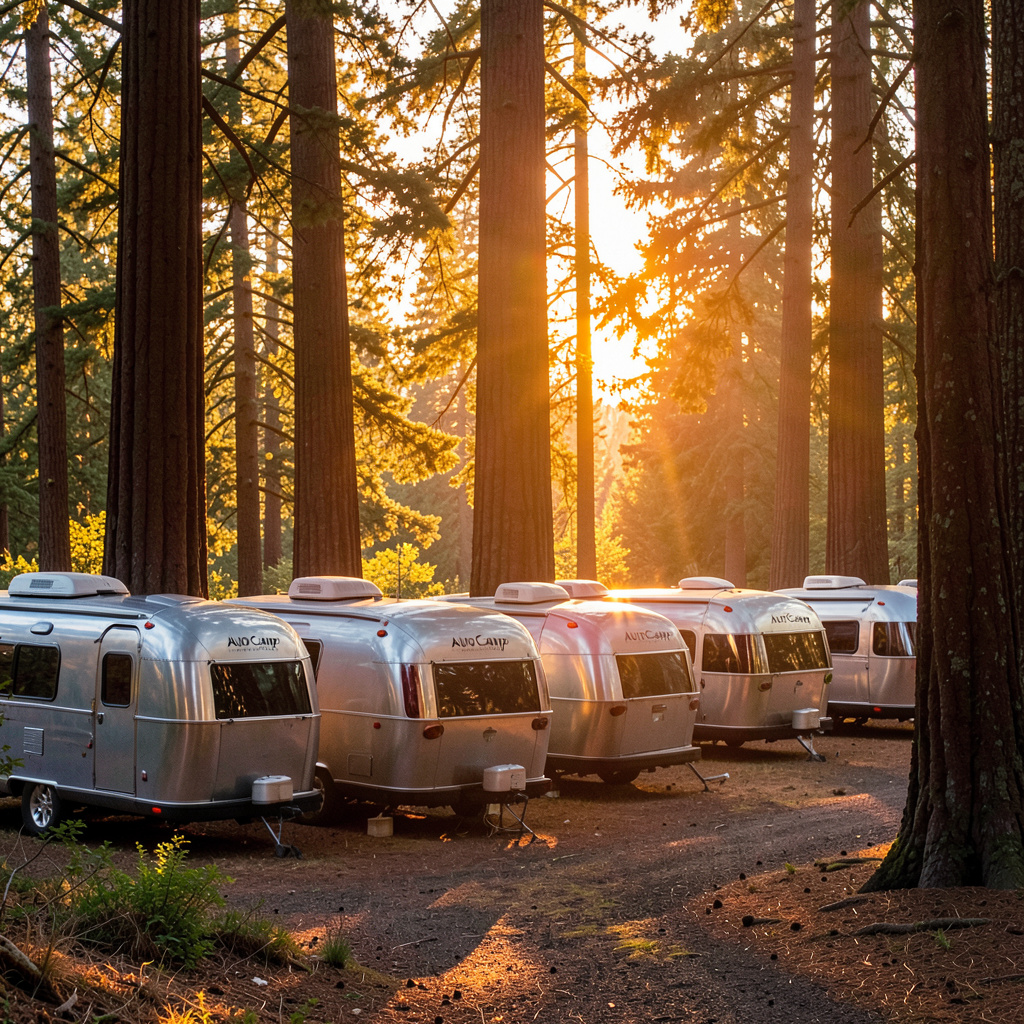
Let’s be honest: when most people hear “camping,” they picture a damp sleeping bag, a tent that takes an hour to set up, and a cold breakfast of granola bars. AutoCamp exists to erase that entire mental image. The brand is essentially a hybrid—part boutique hotel, part outdoor adventure base—built around a fleet of fully restored 31-foot Airstream trailers that have been gutted and rebuilt with custom interiors. We’re talking real kitchenettes, private bathrooms with rainfall showers, and in-floor heating that makes a 40-degree morning feel almost cozy. But here’s what I find most interesting from a market perspective: AutoCamp isn’t just selling a room; it’s selling a curated outdoor experience that requires zero effort from the guest. You show up, your Airstream is already parked on a private deck with a propane fire pit lit and ready, and there’s no tent to pitch or gear to haul. That frictionless arrival is the core of the brand’s value proposition, and it’s why their average stay runs three to four nights—significantly longer than a typical hotel booking. From a business model standpoint, the numbers back up the concept. Revenue per available room at AutoCamp properties often matches or beats nearby upscale hotels, which is remarkable for a company that started with a single location in Russian River back in 2013. The Hilton partnership, formalized in 2022, was a strategic masterstroke: it’s the only major loyalty program that lets you earn and redeem points for glamping, which immediately plugged AutoCamp into a massive existing customer base. But here’s where the operational nuance comes in. More than 70% of bookings come directly through AutoCamp or Hilton channels, bypassing Expedia and Booking.com entirely, which protects margins in an industry where third-party commissions can eat 15-20% of revenue. The brand also runs a proprietary revenue management system that adjusts pricing in real time based on occupancy, much like an airline would, which helps them maximize yield during peak seasons like summer and fall foliage. Each property includes a Clubhouse designed by a different architecture firm—the one in Russian River uses reclaimed wood and a double-sided stone fireplace—that serves as a social anchor for guests who want to work, eat, or just hang out. And that’s not just aesthetic fluff; the Clubhouse doubles as a co-working space with high-speed Wi-Fi, which explains why remote workers make up a significant chunk of the guest profile. The on-site general store, meanwhile, isn’t just a convenience—it’s a meaningful revenue stream, selling local food, camping gear, and firewood that guests actually buy because they’re staying longer and cooking their own meals. Every location is positioned within 20 to 30 minutes of a national park entrance, which is a deliberate trade-off: you get the remote feel without the two-hour drive to the nearest trailhead. And because the brand owns its booking platform and bypasses third-party OTAs for the vast majority of reservations, it keeps margins healthy while offering rates that often undercut nearby boutique hotels. The expansion has been aggressive—from one property in 2013 to nine by mid-2026, with more in development—but the real test will be whether they can maintain that consistency as they scale. For now, though, AutoCamp has essentially created a new category: outdoor lodging that feels like a design-forward hotel but smells like pine trees and campfire smoke.
AutoCamp Raises Fresh Capital to Scale Its High-End Camping Concept Ahead of Summer
Let's dive into the capital story here, because it's actually one of the most revealing signals about where luxury outdoor travel is headed. AutoCamp just raised $1.2 million from 353 individual backers through an SEC-regulated crowdfunding campaign, and if that number feels oddly specific, it's because the average investment per person worked out to roughly $3,400. That's not a rounding error—that's a community of guests who've actually stayed in these Airstreams, eaten at the Clubhouse, and decided to put real money behind the brand. Here's what I think matters: this isn't AutoCamp going back to Silicon Valley VCs with a pitch deck and a promise. It's the company saying, "We'd rather have our own customers own a piece of this." And that's a fundamentally different approach to growth than what you see in most hospitality startups.
But zoom out for a second, because this crowdfunding round doesn't exist in a vacuum. Back in 2019, AutoCamp pulled in $115 million from institutional investors, which was a massive bet on the glamping thesis at a time when most people still thought "luxury camping" was an oxymoron. That institutional money got them from a single Russian River location to nine properties across California, Massachusetts, New York, and Utah by mid-2026. So why pivot to crowdfunding now? I think the answer is twofold. First, equity crowdfunding lets them diversify their funding sources without giving up control or diluting ownership in ways that traditional VC rounds tend to do. And second—and this is the part that really caught my attention—it deepens the emotional bond between the brand and its guests. When you own a tiny slice of the company you love visiting, you're not just a customer anymore. You're an advocate.
The timing of this raise is also telling. They're specifically earmarking the capital to scale ahead of summer, which is when demand for outdoor lodging historically peaks. Think about it this way: summer bookings at properties like Joshua Tree and Cape Cod likely run at or near full occupancy for months, and the revenue management system they've built—pricing dynamically like an airline—means they can squeeze maximum yield from every Airstream and cabin. But if you only have nine locations and the demand keeps climbing, you're leaving money on the table. So raising capital now, before the peak season, gives them the runway to build or acquire new properties that can capture that demand in 2027 and beyond. It's a forward-looking move, not a reactive one.
What I find most compelling, though, is the broader market signal. The fact that 353 people voluntarily invested an average of $3,400 each suggests that AutoCamp has built something rare in hospitality: genuine brand loyalty that translates into financial commitment. Most glamping operators rely on seasonal bookings and word-of-mouth, but AutoCamp is essentially crowdsourcing its growth from the people who already love the product. That's a flywheel that's hard to replicate. And honestly, in a market where traditional campgrounds are struggling to compete with Airbnb and boutique hotels, AutoCamp's ability to raise money from its own community—rather than begging banks or chasing venture capital—feels like a real competitive edge. Whether they can maintain that consistency as they expand from nine to, say, fifteen or twenty properties is the open question. But the capital is there, the demand is clearly there, and the summer travel season is about to prove whether this model can scale without losing the magic that made people fall in love with it in the first place.
Why AutoCamp Is Betting Luxury Outdoor Travel Demand Will Keep Growing Through Summer

Look, I’ve been watching the glamping space for years, and what AutoCamp is doing right now feels different from the usual summer travel hype. The timing of their latest capital raise—right around the July 4th 250th birthday weekend—wasn’t an accident. That’s the moment when domestic travel hits its absolute peak, and patriotic sentiment actually drives real booking behavior. But here’s the thing that makes me think this bet is smarter than it looks on the surface: luxury outdoor lodging has proven to be stubbornly recession-resistant. Even when consumers started pulling back on air travel and cutting hotel budgets in mid-2026, glamping demand barely flinched. You’d think a $400-a-night Airstream would be the first thing to go when gas prices creep up, but it’s actually the opposite—those same gas prices make a three-hour drive to a nearby AutoCamp property far more appealing than a cross-country flight or a long road trip to a distant national park.
What really solidifies the thesis for me is how AutoCamp is expanding beyond the classic national park gateway model. They’ve opened a location in Texas Hill Country and another in Asheville, North Carolina, and those aren’t just random picks. Hill Country attracts a traveler who wants wine country meets outdoor luxury—a different demographic than the Yosemite hiker. Asheville pulls in the artsy, foodie crowd who might never book a traditional campground but will absolutely spend three nights in a custom Airstream with a rainfall shower. That diversification matters because it insulates the brand from any single season or destination downturn. And let’s not overlook the exclusive Airstream partnership—no other glamping operator in the U.S. can touch that. It’s a structural moat that keeps competitors from simply copying the format, which means AutoCamp holds pricing power even as supply of outdoor lodging grows.
You also have to consider the guest psychology behind the crowdfunding round. Most of those 353 investors were past guests—people who had actually stayed in those Airstreams and decided to buy in. That’s not just brand loyalty; it’s a signal that the experience creates enough emotional stickiness to convert casual customers into financial stakeholders. When your customers become your investors, you’ve essentially built a demand buffer that’s hard for any competitor to replicate. Throw in elevated gas prices making close-to-home luxury camping a rational economic choice, and the whole picture starts to look less like a temporary summer bump and more like a structural shift in how Americans want to travel. It’s a category that’s here to stay.
How AutoCamp Differentiates Itself From Traditional Campgrounds and Competing Glamping Brands

Let's pause for a moment and really look at how AutoCamp actually stacks up against the rest of the field, because "glamping" has become such a baggy term that it almost doesn't mean anything anymore. If you've ever stayed at a typical glamping spot, you know the drill: it's usually just a fancy tent with a mattress that's a bit too thin and a shared bathroom that's... well, still a campground bathroom. AutoCamp isn't playing that game. While traditional campgrounds are basically just selling you a patch of dirt and a fire ring, AutoCamp is selling a design-led hospitality product. Think about it this way: they aren't just slapping a fresh coat of paint on old trailers. They gut those Airstreams and rebuild them from the studs up with spa-inspired bathrooms and rainfall showers—features you'll find in maybe 5% of traditional campgrounds, if you're lucky.
But here is where it gets really interesting from a market perspective. Most glamping brands are fragmented, a collection of disparate sites with varying quality, but AutoCamp has built a structural moat through its exclusive partnership with Airstream. You can't just go out and buy a fleet of "AutoCamp-certified" trailers to start a rival brand; that's a massive barrier to entry that gives them serious pricing power. And look, I'm not just talking about the hardware. Their approach to the "hub" of the property is different too. Most campgrounds have a dusty ranger station or a basic office, but AutoCamp builds a custom Clubhouse at every site, each designed by a different architecture firm. It's a deliberate move to ensure the brand feels localized rather than corporate, which is a tough balance to strike when you're scaling.
Then there's the actual business engine running under the hood, which is honestly where they're laps ahead of the competition. While your local campground probably has a static seasonal rate, AutoCamp uses a proprietary revenue management system that functions like an airline, shifting prices in real time based on occupancy. It's a sophisticated play that allows them to match or even beat the revenue per available room (RevPAR) of nearby upscale hotels. And because they've integrated with Hilton, they've tapped into a loyalty ecosystem that most boutique glamping operators can't even dream of. It turns a "once-in-a-lifetime" quirky stay into a repeatable, reward-earning habit for high-spend travelers.
And honestly, I think the real secret sauce is how they've solved the "last mile" problem of outdoor travel. They position every property within 20 to 30 minutes of a national park entrance. It's a calculated trade-off: you get the psychological feeling of being "out there" without the soul-crushing two-hour drive from a hotel to the trailhead. When you combine that with high-speed Wi-Fi in the Clubhouse and a general store that actually sells high-quality local provisions, you realize they aren't really competing with campgrounds at all. They're competing with boutique hotels, but they're doing it with a campfire and a view. It's a much smarter way to capture the remote-work crowd who wants to feel like they're off the grid without actually losing their Zoom connection.
AutoCamp’s Growing U.S. Footprint: Current Locations and Planned Expansion Sites

If you’ve been tracking the glamping space, you’ve probably noticed that AutoCamp isn’t just dipping its toes in the water anymore; they’re going all in on a national strategy that’s actually starting to look like a real empire. By mid-2026, they’ve scaled up to nine fully operational properties, a massive jump from the five they were sitting on just a few years ago. It’s kind of wild to see a niche concept grow into a $40.4 million revenue business with 148 employees, but the numbers don't lie. They’re hitting an 80% occupancy rate during the summer peak, which honestly rivals the fancy upscale hotels that usually dominate the market. Now, if you look at a map, you’ll see a pretty clear pattern—they’re sticking to the coasts and the big national park gateways. You won’t find them in Alaska, Hawaii, or smack dab in the middle of the country, which is a gap their main rival, Under Canvas, is also leaving on the table.
But here’s where the plot thickens: they’re finally moving beyond the typical "near a park" model. The 2023 expansion was a huge turning point, adding four new locations like Joshua Tree and the Catskills in New York’s Hudson Valley. These aren't just random spots; they’re lifestyle hubs. I mean, think about it—Asheville and Texas Hill Country aren’t just for the hikers anymore; they’re for the wine drinkers and the remote workers who want that "outdoorsy" feel without the actual dirt under their fingernails. Each site is sitting on about 10 to 20 acres, which gives you that sense of seclusion you crave, but you’re still only 30 minutes away from a decent restaurant or a trailhead. It’s a calculated trade-off that keeps the "magic" of the woods intact while making sure you don’t have to drive two hours just to find a signal.
We should also talk about the hardware, because that’s where AutoCamp really builds its moat. They don’t just buy off-the-lot Airstreams; they have a custom manufacturing partnership where the trailers are basically built to their specs from the ground up. That means a competitor can’t just go out and buy the same "look" to undercut them, which is a big deal in a market that’s getting crowded fast. And it’s not just Airstreams anymore—they’re mixing in luxury tent cabins and suites to give people more options. This diversification is smart because it captures different price points without cheapening the brand. You can go for the classic silver trailer or try a cabin, but either way, you’re getting that rainfall shower and the high-speed Wi-Fi in the Clubhouse.
So, what’s next for the footprint? Well, the brand has made it clear they’re looking everywhere, but I suspect we’ll see them continue to fill in the gaps between the coasts before they tackle the middle of the country. They’ve proven the model works in places like Cape Cod and Yosemite, and now they’re taking those learnings to places that feel more like a "vibe" than a destination. The fact that they can maintain that 80% occupancy while scaling this fast tells me they’ve figured out the operational rhythm. If you’re planning a summer trip in 2027, keep an eye on where they pop up next, because once they enter a market, those Airstreams tend to book up months in advance. It’s a high-signal play in a noisy travel world, and frankly, it’s working.
Signature AutoCamp Guest Perks: Airstream Suites, Design-Forward Amenities and Iconic Destination Access
Here's what I think gets lost when people talk about AutoCamp: the guest perks aren't just marketing gloss—they're engineered to keep you inside the ecosystem once you've booked the Airstream. Let's pause for a moment and look at the actual details, because this is where the brand quietly separates itself from every other glamping operator. The complimentary morning coffee and granola bars aren't some generic continental breakfast setup. They're sourced from local roasters and bakeries tied to each property's region, which means you're getting a different experience at Russian River than you are at Cape Cod. It's a small detail, but it signals something bigger: AutoCamp isn't trying to replicate a hotel; they're trying to anchor you in the specific place where you're staying, which is a far more defensible position than copying a chain that does the same thing everywhere.
And the Airstream suites themselves carry these subtle design choices that matter more than you'd think at first glance. The custom cabinetry has soft-close drawers and integrated USB-C charging ports throughout the kitchenette—features you won't find in any standard RV, period. That sounds minor until you realize that half the people booking these places are remote workers and digital nomads who need reliable charging without hunting for outlets that don't exist in a typical camper. The water system, meanwhile, uses a specialized pump that conserves usage by roughly 30 percent without sacrificing pressure, and the in-floor heating runs on a smart thermostat with motion sensors that reduce energy consumption by an estimated 15 percent. It's the kind of engineering that doesn't sell the room, but it absolutely sells the return visit, because you feel comfortable without thinking about why.
But here's where AutoCamp really earns its boutique status compared to competitors, and honestly, it comes down to the "secret" layer of the guest experience. Upon check-in, you receive a curated list of local trails and viewpoints that aren't on any public map or guidebook—they're shared exclusively with guests. Think about it this way: if you're driving 20 to 30 minutes to a national park entrance, you're already getting the outdoor access, but these hidden spots are what make the stay feel less like a resort and more like a local secret you were let in on. At the Catskills property, the Clubhouse library has vintage outdoor magazines and curated maps, a screen-free perk that feels intentional in a world where everyone's glued to their phones. The board games and books in each Airstream are actually chosen by a local librarian affiliated with the property's region, which again grounds the experience in place rather than corporate template.
There's also this sustainability angle that I think deserves attention because it's not just performative greenwashing. The firewood sold in the general store is sourced within 50 miles of each property, and the brand offsets the carbon footprint of every bundle through a reforestation nonprofit. The propane fire pits themselves come with a child safety lock and an automatic shut-off timer that limits continuous operation to two hours—a feature that surprises guests who expect an open flame and then realize the system is genuinely built for safety and efficiency. All of this runs through a custom underbelly insulation package on the Airstreams that allows year-round operation in climates as cold as Cape Cod in winter, which is a design detail that most glamping brands don't even consider. So when you step back and look at the full picture, the perks aren't scattered add-ons; they're a tightly integrated system that keeps the guest connected to the land, the local community, and the brand's design ethos in a way that's genuinely hard to replicate. And that's what makes AutoCamp a different kind of luxury travel product—it's not about how much you can spend; it's about how much you care about where you're actually staying.
Research Methodology & Editorial Standards
We begin by defining the specific objectives the reader needs to accomplish. Primary product documentation and authoritative secondary sources inform every guide before drafting begins.
Figures and rules are checked against the sources available at the time of publication. Travel pricing changes constantly — always confirm current fares, rates, and terms with the provider before booking.