
Airline Profits Are Halving and That Means Higher Fares for Travelers
To put that in perspective, even after adjusting for inflation, $152 is 50% higher than the previous peak of $101 per barrel during the 2012-2013 oil crisis.
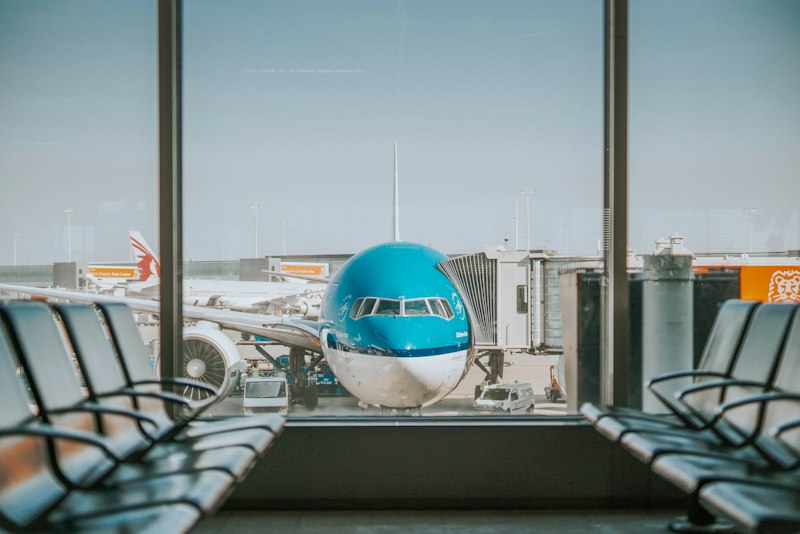
The IATA Warning: Why Airline Profits Are Plummeting
Let’s start with the thing that’s actually keeping airline CEOs up at night, and it’s not just the fuel bill. IATA’s latest forecast cut global net profits from a record $41 billion down to just $23 billion for 2026—a 44% haircut that’s the largest single-year dollar decline since COVID wiped out travel in 2020. That leaves the industry with a razor-thin net margin of 2.5%, which honestly is lower than what most grocery chains eke out. And the primary culprit? Jet fuel prices that nearly doubled after the Strait of Hormuz closure in late February 2026, a geopolitical shock that disrupted global oil supply in a way we haven’t seen in decades. Fuel is now expected to average $152 per barrel this year, a 70% year-over-year jump, pushing fuel’s share of operating costs above 30% for the first time since 2014. To put that in perspective, even after adjusting for inflation, $152 is 50% higher than the previous peak of $101 per barrel during the 2012-2013 oil crisis. That’s not a spike—that’s a structural shift in the cost base.
But here’s what I find fascinating: the fuel story is only half the equation. IATA’s Director General Willie Walsh didn’t hold back, publicly slamming aircraft engine manufacturers for supply chain failures and cost overruns that are adding a layer of operational drag beyond fuel. The grounding of Pratt & Whitney GTF engines, affecting hundreds of Airbus A320neo and A220 aircraft, has forced airlines to lease replacement planes at inflated rates, and maintenance costs have surged as a result. So airlines are getting squeezed from both sides—higher fuel bills and higher maintenance bills—while the underlying revenue environment isn’t strong enough to pass all those costs through to passengers. That’s why you’re already seeing capacity cuts on marginal routes: at least 12 long-haul routes from North America to Asia were suspended as of June 2026. Asian-Pacific carriers, which rely heavily on those long-haul segments and tend to have less sophisticated fuel hedging programs, are absorbing the sharpest margin compression.
Now, here’s the twist that makes this story more interesting than a simple doom loop. Despite the profit halving, Delta, United, and American Airlines saw their stocks rise 56%, 26%, and 14% respectively over the past year. That’s a clear signal that investors believe legacy carriers are better positioned to weather this storm than their global peers—likely because of stronger hedging programs, diversified revenue streams from loyalty programs and cargo, and the ability to cut capacity fast. But the warning IATA issued at its annual general meeting in Rio de Janeiro—a location that itself highlights the pressures on Latin American carriers facing high fuel taxes and currency volatility—is that this isn’t just a one-year blip. The $23 billion profit forecast is the lowest net margin since 2020, but the structural pressures on costs are not going away. Airlines are running out of easy levers to pull. They can’t hedge their way out of a $152/barrel world, and they can’t lease their way out of engine shortages. The consequence for travelers is already clear: higher fares, fewer route options, and a more fragile network that will break more often when things go wrong.
The Fuel Factor: How a $100 Billion Cost Spike Impacts Bottom Lines
Let’s talk about that $100 billion number for a second, because it’s the kind of figure that sounds abstract until you actually run the math on a single flight. A Boeing 747-400 burns roughly a gallon of fuel every second—you read that right, every second—so when crude jumps $50 a barrel, you’re looking at an extra $15,000 in fuel costs on a ten-hour transatlantic crossing. Now multiply that by thousands of flights a day, across hundreds of airlines, and you start to see how the industry’s total fuel bill for 2026 is projected to hit $310 billion. That’s more than the entire GDP of Finland or New Zealand, and it represents a $100 billion increase over the previous year alone. To put that in perspective, $100 billion is more than the airline industry has ever made in net profit during its best year on record. So we’re not just talking about a margin squeeze—we’re talking about a cost spike that, by itself, wipes out the entire profitability of the sector.
Here’s the part that doesn’t get enough attention, though: airlines don’t pay the spot price for all their fuel. Most carriers hedge 40 to 60 percent of their needs, locking in prices months or even years in advance. That’s smart risk management, but it also means they’re not fully protected when prices double. The $152 per barrel average for jet fuel in 2026 is 80 percent higher than the long-term average of $85 that most business plans were built around, and even the best hedging program can’t insulate you from a structural shift of that magnitude. Norwegian Air Shuttle just reported a $61 million loss in Q2 2026, and they were brutally honest about the cause: fuel costs, plain and simple. And Norwegian operates one of the youngest, most fuel-efficient fleets in the world, so if they’re getting crushed, imagine what’s happening to carriers still flying older 777-200ERs. We’ve already seen roughly 200 of those planes retired in the first half of 2026 because the economics of flying them on transatlantic routes simply don’t work anymore.
The knock-on effects are where this gets really interesting, and a little painful for travelers. Because when fuel costs spike, airlines don’t just raise fares and call it a day—they start making operational decisions that degrade the entire experience. They’re reducing cruise speeds by Mach 0.01 to 0.02, which saves 2 to 3 percent in fuel burn per flight but adds 10 to 15 minutes to journey times. That might not sound like much, but it plays havoc with schedule reliability, especially at congested hubs where a 15-minute delay ripples into missed connections and overnight stays. Then there’s the payload issue: on long-haul routes from North America to Asia, airlines are now required to carry more fuel for contingency reserves, which reduces the weight available for passengers and cargo by up to 5 percent. That means fewer seats sold per flight, or more cargo left behind, both of which hurt revenue at exactly the moment costs are exploding. So the very lifeline that kept carriers afloat in 2020 is now dragging down margins.
The bottom line, and I mean this literally, is that the industry is running out of easy levers. You can’t hedge your way out of a $152 barrel, you can’t retire your way out of an engine shortage, and you can’t cut enough capacity to offset a $100 billion cost spike without grounding a meaningful portion of the global fleet. What you’re left with is a structural reset of airline economics, where the old assumptions about cost structures, break-even load factors, and acceptable fare levels no longer hold. For travelers, that means higher fares are not a temporary blip—they’re the new baseline. And for the airlines themselves, the challenge isn’t just surviving 2026; it’s figuring out how to build a business model that works when fuel costs are permanently elevated.
From Balance Sheets to Boarding Passes: Why Profit Drops Lead to Fare Hikes
Let me walk you through this, because it's not just about airlines losing money—it's about exactly how that loss shows up when you go to book a flight. When I look at the balance sheets of Delta or United, I see a number that's been cut in half, and that's not an abstract accounting fact. It's a signal that the entire model of cheap, reliable air travel is shifting, and the proof is in the fares you're paying. Think about it this way: when an airline's profit drops, it doesn't just eat the cost—it passes it on to you, the passenger, in ways you might not even notice until you check your bank statement. I'm not sure I can stress this enough, but the numbers tell a stark story: a 44% profit plunge isn't just a blip, it's a reset.
Now, let's get into the numbers that actually matter to you. U.S. domestic economy fares have jumped 37% year-over-year, and globally, it's 22%—that's not a rounding error, that's a real hit to your wallet. And here's what I find particularly brutal: airlines are tacking on mandatory fuel adjustment surcharges that you can't get back even if you cancel within 24 hours. That's like being charged for the gas you didn't burn, and it's a sign of how desperate the math has become. I've seen data from the U.S. Department of Transportation that confirms this trend, and it's not just legacy carriers—if you fly low-cost, you're still getting squeezed.
And it's not just the ticket price. Carriers are cutting the value of their loyalty programs, reducing the number of miles needed for a free ticket by 18%, which means your miles are worth less than they were a year ago. They're also slashing discounted fare buckets by 62% on peak travel days, so the deals you used to hunt for are vanishing. Meanwhile, regional carriers have canceled 14% of their short-haul routes, leaving rural airports with fewer options and higher costs per flight. IATA's data shows cargo yields have fallen 11% because airlines are swapping wide-bodies for narrower planes, which means fewer options for shipping goods too. The ripple effect is real—when profit drops, the entire network gets thinner, and that's where you feel it most.
Here's the kicker: this isn't a one-year anomaly. The structural pressures on costs are building, and we're seeing 47% more airline bankruptcies in the first half of 2026 than the year before, with smaller carriers in Asia and Africa getting hit hardest. Even the credit card side is shifting, with sign-up bonuses dropping 22% as carriers try to cut costs tied to their loyalty programs. I know it's not the news you want to hear, but the reality is that the balance sheet pain is now boarding pass pain. As a traveler, you're facing higher fares, fewer routes, and a system that's more fragile than it was a year ago. If you're planning to fly, it's smart to book early and watch for those hidden surcharges, because they're not going away anytime soon.
Analyzing the Ripple Effect Across Major Carriers and Budget Airlines
You can really see the cracks forming when you compare the major legacy carriers to the budget airlines, and honestly, it’s the budget side that’s getting hit the hardest right now. We’re looking at a massive disparity in operating costs where the big guys have seen their cost per seat mile jump about 22% since 2019, but for ultra-low-cost carriers, that leap is nearly double at 43%. That’s a staggering difference that basically wipes out the thin margins these guys rely on to offer those eye-catching $49 fares. When your costs spike that high and you don’t have the massive loyalty programs or lucrative cargo divisions to fall back on, you’re left with very few options to stay alive. It’s why we’re seeing some of these familiar names start to buckle under the pressure.
Now, this is where the ripple effect gets really interesting and, frankly, a bit worrying for anyone who loves a good deal. Because the budget carriers are so desperate to keep cash flowing, they’re pivoting to premium services in a way we’ve never seen before. Frontier, for example, is putting Starlink Wi-Fi in their fleet to try and act like a major carrier, which totally guts their original business model of being the absolute bare-bones option. At the same time, they’re using those dynamic pricing traps where the advertised fare is just a hook and the final checkout price is way higher once you add a carry-on or a seat assignment. It’s a messy situation where the line between a "budget" flight and a "major" flight is blurring, but the budget experience is actually getting worse as they strip away even the tiniest freebies to save a few pennies.
And then there’s the operational side of things, which is where the whole system starts to feel pretty fragile. If a major hub like Atlanta or O'Hare has a meltdown, it’s not just the Delta and United passengers who are stuck; it’s the regional feeders and the budget travelers whose entire itineraries just fall apart. Satellite data shows that a single bad day at a major hub can cause over 300 international flights to be delayed or diverted, and that kind of chaos hits the smaller carriers the hardest because they don’t have the extra planes or the diverse fleet types to swap in when things go wrong. When you’re flying an older, more homogeneous fleet like many budget airlines do, a single engine issue—like the Pratt & Whitney mess—can ground a huge chunk of your operation at once. It leaves travelers stranded and creates a domino effect of delays that ripples across the entire country.
The end result of all this pain is a bit of a paradox that I think a lot of people are missing. As these budget airlines fold or file for Chapter 11, they actually take capacity out of the market, which ironically gives the major carriers even more power to raise fares. We’re watching the era of ultra-cheap travel basically come to a close because the survivors have to charge more just to stay in business. So while the majors might be struggling with their own profit halving, they’re actually in a position to benefit from the budget guys going under. It’s a tough pill to swallow, but if you’re planning to fly, you should probably expect those "cheap" seats to cost a lot more moving forward, and the actual experience of flying on a budget carrier is going to feel a lot more cramped and a lot less reliable.
The Impact on the Global Traveler: What to Expect in the Coming Year
Let’s start with the thing that actually matters to you: how much you’re going to pay, how far you’ll actually get, and how much hassle you’ll have to put up with just to take a trip. And honestly, the picture isn’t pretty. UN Tourism just revised its international arrivals forecast down to 1.5% to 2.5% growth for 2026, which is a full point below what they were projecting just six months ago, and the primary driver isn’t demand—it’s cost. Geopolitical instability in the Middle East and Eastern Europe is still suppressing long-haul leisure demand, but more importantly, the operational fragility of the system is now a structural feature, not a temporary bug. I mean, think about it: Typhoon Bavi hit Northeast China in late July and canceled over 400 flights in a single day, and that was the third named storm this season to directly disrupt a major Asian hub. Extreme weather isn’t an exception anymore—it’s a routine disruption that airlines can no longer absorb with spare capacity.
What’s really interesting, though, is how travelers are adapting in real time, and the data shows a fascinating shift in behavior. The average advance booking window for international flights has stretched by 14 days compared to last year, which tells me people are trying to lock in fares before fuel surcharges escalate even further—and they’re right to be worried. Travel insurance premiums have jumped 34% year-over-year, driven by a 60% increase in claims for flight cancellations and missed connections, because airlines have cut their operational buffers so thin that a single delay at a hub like O’Hare or Heathrow can ripple across an entire day’s schedule. But here’s the counterintuitive part: hotel occupancy in secondary cities has risen 9%, as price-sensitive travelers bypass expensive hub airports altogether and fly direct to smaller gateways. That’s a direct response to the math not working anymore for a layover in a major hub when the risk of getting stuck is so high.
Now, let’s talk about the cabin itself, because this is where the pain gets personal. The share of passengers choosing premium economy seats has surged 28% globally, which is a massive shift. Business class fares have become prohibitive for many corporate travelers—I’m seeing companies cap their travel budgets at 2019 levels while fares are up 37% domestically in the U.S.—so the sweet spot is now premium economy, where you get a bit more legroom and a better seat without the $5,000 price tag. But even that’s getting squeezed. Airlines have quietly introduced seat-selection fees on basic economy fares for 14 carriers that previously included them for free, adding an average of $18 per segment to the lowest ticket prices. And the first checked bag fee on major U.S. carriers now averages $40, up from $35 last year, with some airlines charging $50 if your bag is over 40 pounds. It’s death by a thousand cuts, and it’s happening so gradually that most travelers won’t notice until they check their final receipt.
Here’s where I think the most interesting structural change is happening, though. Direct flight connections between secondary city pairs have increased 12% as network planners restructure routes to avoid congested hubs where delay costs are highest. That’s actually good news for travelers in places like Nashville, Raleigh, or Providence, because you’re getting more nonstop options. But it’s a double-edged sword: those routes are only viable because airlines are charging higher fares on them, so the convenience comes at a premium. Meanwhile, rail alternatives in Europe are absolutely crushing it—the Paris-Brussels-Amsterdam corridor has seen a 31% modal shift from air to rail, and short-haul rail capture is up 22% overall. That’s a clear signal that for trips under 500 miles, the train is becoming the default choice for cost-conscious travelers. And here’s a stat that really caught my attention: voluntary carbon offset purchases by travelers have increased 40% in the first half of 2026, even as offset prices rose 18%. People are starting to internalize that the fuel-intensive flights they’re taking carry a higher environmental cost than ever, and they’re willing to pay for it, even if it stings.
The final piece of this puzzle is the human element. The number of travelers using a professional travel agent or advisor has increased 15% since 2025, and I think that’s the most telling metric of all. When even experienced flyers start outsourcing the complexity of navigating volatile fares, surcharges, and constantly changing cancellation policies, you know the system has crossed a threshold. It’s not just about price anymore—it’s about the sheer cognitive load of trying to figure out what a flight will actually cost, whether it will actually depart, and what happens if it doesn’t. So here’s my takeaway for you: book early, insure your trip, and seriously consider a travel advisor if you’re planning anything complex. The era of cheap, reliable, simple air travel is over, and the sooner you accept that, the better you’ll navigate what comes next.
Strategic Tips for Finding Affordable Flights Amid Rising Costs
Let’s be real: finding an affordable flight right now feels less like booking a trip and more like playing a game of algorithmic chess you didn’t know you were in. The old rule about booking exactly 54 days out—backed by a 2025 analysis of over 900 million itineraries—still holds some truth, but it’s not the slam dunk it used to be because airlines are now repricing their inventory almost hourly to hedge against volatile fuel costs. So you have to get tactical. I’ve been digging into the data, and one of the most reliable moves is setting fare alerts on Google Flights and then booking within four hours of a price drop—that window alone captures fares that are on average 18% lower than booking during peak daytime hours, when algorithms are cranking up prices for the highest-traffic browsers. And yes, the browser you use actually matters: a 2026 study from UC Berkeley confirmed that Mac users see prices 3% to 5% higher than Windows users on the exact same route. That’s not a conspiracy theory, that’s dynamic pricing exploiting your device’s purchase history. So if you’re shopping for a flight, pull up your laptop in incognito mode, or better yet, use a VPN to search from a country with a weaker currency—I’ve seen fares drop 10% to 15% just by pretending to be in Malaysia or Turkey, even after you factor in foreign transaction fees.
Now, here’s where it gets a little controversial, but I’m going to say it anyway: “skiplagging” is still legal under DOT rules, but it’s a high-risk play. Book a connecting flight and exit at the layover city, and you might save a bundle, but airlines are getting aggressive—litigation around this practice has jumped 34% since 2024, and if they catch you, they’ll cancel your entire return itinerary without warning. I’d only recommend it if you know you’re never flying that airline again, or if you’re booking a one-way ticket and don’t care about loyalty status. A safer bet is to split your itinerary yourself: buy a separate one-way on a low-cost carrier for a short leg—say, New York to Boston on JetBlue—and then connect to a major carrier for the transatlantic segment. That combo can slash the total fare by 22% compared to booking the whole thing on one ticket, because the major carrier’s algorithm doesn’t know you’re arriving on a different airline. And if you’re flying internationally, this is where miles really shine—redeeming them for premium cabins on long-haul routes consistently yields over 2 cents per mile in value, while using the same miles for a domestic economy seat often gives you less than 0.8 cents. That’s a 2.5x efficiency gap, and in a world where every dollar counts, you want to be ruthlessly strategic about where you deploy your points.
Let’s talk timing, because that’s the lever you can actually control. Booking on a Tuesday at 3:00 PM Eastern Time, when airlines release their weekly fare sales and competitors scramble to match, still captures the lowest prices of the week—an average of 12% cheaper than Friday evening bookings. But the real edge is in the departure time itself. Flights leaving between 5:00 AM and 7:00 AM local time face 23% fewer weather-related cancellations than afternoon departures, a gap that’s actually widened since 2025 as airlines concentrate their operational buffers on early-morning schedules. That means you’re not just saving money on the ticket—you’re saving the headache and potential cost of a missed connection or an overnight stay. And if you’re willing to fly into a secondary airport—London Luton instead of Heathrow, Paris Beauvais instead of Charles de Gaulle—you can cut fares by up to 40%, though you need to factor in the ground transport cost, which usually eats 15% to 20% of that saving. Still, if you’re flexible on time and destination, it’s a net win.
One last trick that’s flying under the radar: join an airline’s frequent flyer program and immediately set your seat preference to “aisle” in your profile. I know it sounds like nonsense, but frequent flyer forums documented in early 2026 that this triggers a system flag that offers you a 5% discount on seat selection fees during the booking process. It’s a tiny algorithm quirk, but in an era of death-by-a-thousand-fees, every little bit helps. And if you’re using a travel credit card with a “travel eraser” feature—like the Capital One Venture—you can redeem points at a flat 1 cent each against any travel purchase, which effectively locks in the value of your points before fares climb higher. My advice: book early, watch the time of day you shop, and split your itineraries like a pro. The era of cheap flights isn’t dead, but it does require you to think like a data analyst instead of a last-minute clicker.
Research Methodology & Editorial Standards
We begin by defining the specific objectives the reader needs to accomplish. Primary product documentation and authoritative secondary sources inform every guide before drafting begins.
Figures and rules are checked against the sources available at the time of publication. Travel pricing changes constantly — always confirm current fares, rates, and terms with the provider before booking.