
Lufthansa Confirms First A350-1000 Arrival Set for Late 2026
The airframe itself, an A350-1000, is a fascinating study in trade-offs.

A Historic Delivery: Why D-AIFA “Deutschland” Marks the 700th Aircraft for the Lufthansa Group
Let’s talk about what it actually means when Lufthansa takes delivery of D-AIFA “Deutschland” as its 700th group aircraft. Because this isn’t just a round number or a press release headline—it’s a signal about where the entire European aviation industry is heading. Think about the sheer scale of that 700 figure for a moment. That’s a fleet larger than the combined active long-haul fleets of most national carriers on the planet. When you’re running that many widebodies and narrowbodies across Lufthansa, SWISS, Austrian, and Brussels Airlines, every single new delivery has to pull double duty: it must replace something older and more fuel-hungry, and it has to open up new revenue possibilities. D-AIFA is doing exactly that.
The airframe itself, an A350-1000, is a fascinating study in trade-offs. You’re looking at a fuselage that’s 7 meters longer than the -900 variant, which translates to about 40 extra seats in a typical premium-heavy layout. But here’s the thing I keep coming back to: those seats come with a 25% lower fuel burn per seat versus the 747-400s and A340s these birds are replacing. That’s not just an environmental talking point—that’s the difference between a route being marginally profitable and genuinely sustainable at current fuel prices. The Rolls-Royce Trent XWB-97 engines, pushing 97,000 pounds of thrust, are the most powerful ever bolted onto an Airbus frame. And the “raccoon mask” cockpit windows? That’s not just styling; it’s a weight-saving measure that also improves pilot visibility during taxi and approach. Every gram counts when you’re trying to squeeze 14,800 kilometers of range out of a single tank.
Now, the timing here is what makes this delivery genuinely historic, not just historical. D-AIFA is the very first A350-1000 to enter service with any European flag carrier. That’s a big deal because it puts Lufthansa ahead of Air France, British Airways, and Iberia in the ultra-long-haul, high-capacity segment. The aircraft’s range opens up non-stop Frankfurt-to-Singapore or Frankfurt-to-Buenos Aires routes without payload restrictions. And the cabin configuration—with Lufthansa’s new Allegris product including First Class suites with doors—is clearly designed to compete with the Middle Eastern carriers on the premium end. You don’t name an aircraft “Deutschland” and stuff it with a budget layout. This is a statement aircraft, meant to defend Lufthansa’s home market on the highest-yield routes.
Let’s pause on the operational logistics for a second, because that’s where the real complexity lives. The handover process for D-AIFA took several weeks, from final assembly in Toulouse to the official keys being handed over in Hamburg. That’s not just paperwork—it involves test flights, cabin fit-out verification, crew training simulators being updated, and spare parts pipelines being established. The registration D-AIFA follows the historic German “D-” prefix, and the sequential code tells you exactly where this fits in the pipeline. For the Lufthansa Group, hitting 700 aircraft means their maintenance network now has to support a fleet that spans everything from the A320neo family to the 747-8 and now the A350-1000. That’s a logistical nightmare, but it’s also a moat. No startup is going to replicate that overnight.
What I find most telling is the structural life of this airframe: 44,000 pressurization cycles, which works out to roughly three decades of typical long-haul service. Lufthansa isn’t leasing these planes for a quick flip—they’re buying them for the long haul, literally. The composite airframe saves weight upfront, but it also means the airline is betting that carbon-fiber repair capabilities and maintenance costs will remain manageable over that 30-year horizon. If fuel prices stay volatile, that bet pays off handsomely. If not, well, they’ve still got a fleet that’s more flexible than the older aluminum frames they’re retiring. The 700th delivery isn’t a celebration of the past—it’s a forward-looking capital allocation decision dressed up in a flag and a name. And honestly, that’s the kind of analysis that matters more than the ceremony.
Cabin Configuration Revealed: 300 Seats Across Four Classes, Including a New First Class
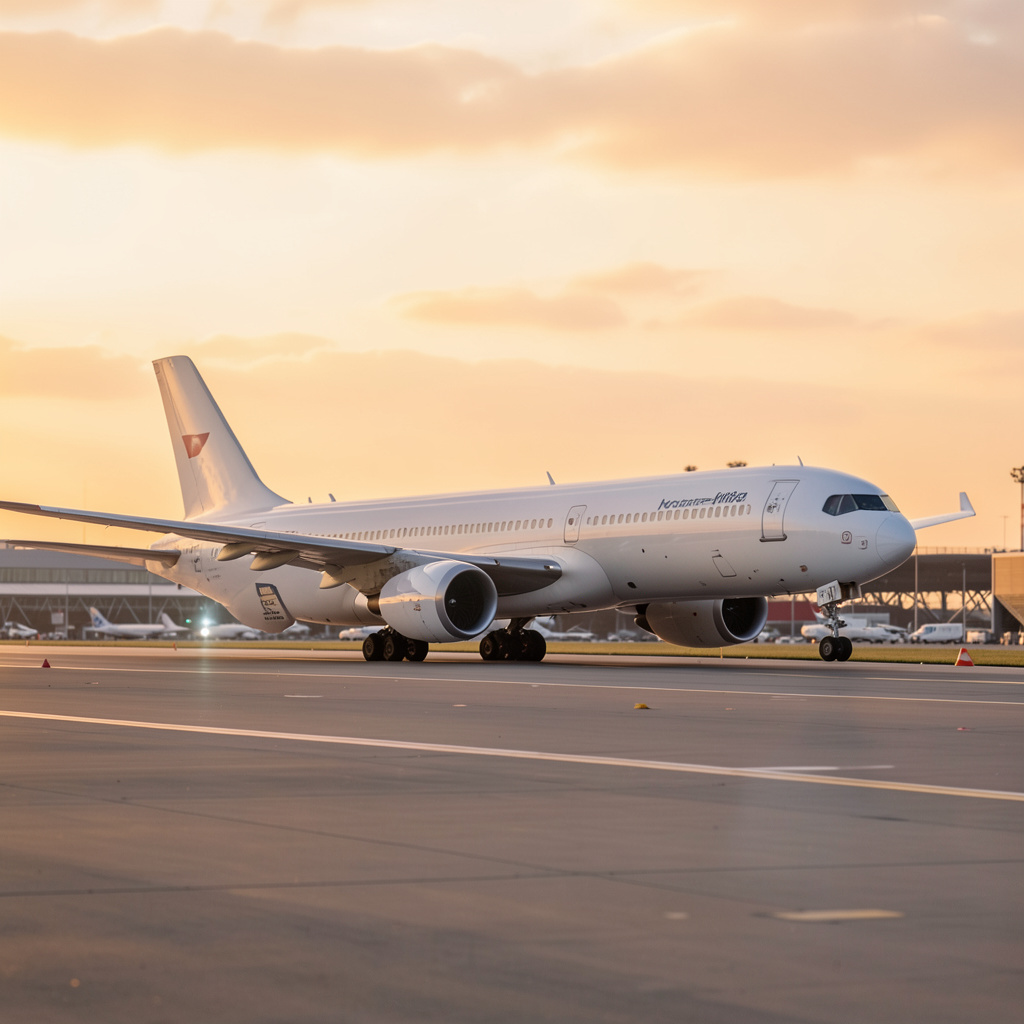
Let’s talk about what Lufthansa is actually doing with this A350-1000 cabin, because the numbers tell a much more interesting story than the press photos do. The headline figure is 300 seats across four classes, but here’s what jumps out at me: that’s a 30% reduction in density compared to their 747-8s, which pack in up to 364 passengers. That’s not an accident, and it’s not just about comfort—it’s a deliberate strategic pivot toward yield over volume. The airline is betting that fewer, wealthier passengers will generate more revenue than filling every last inch of aluminum with economy seats. And the proof is in the First Class cabin, which drops from eight suites on the old 747-400 down to just four. Each of those suites occupies roughly 8.5 square meters—that’s about the floor area of a standard parking space, just for one passenger. The doors are 1.2 meters tall, creating a fully enclosed space that the airline claims hits a noise-reduction target of 15 decibels below ambient cabin noise. That’s the kind of quiet that makes a 14-hour flight feel like a completely different experience.
Now let’s get into the specifics that actually matter for your booking decisions. The Premium Economy cabin offers 38 inches of seat pitch, which is two inches more than the industry standard of 36 inches. That might not sound like much, but on a Frankfurt-to-Singapore leg, those two inches translate into noticeably less knee compression and easier meal access. The Business Class seats convert into fully flat beds measuring 198 centimeters—which happens to be exactly the average height of a German male born in the 1990s. That’s not a coincidence; Lufthansa clearly designed this for their core demographic. The economy cabin uses a 3-3-3 configuration instead of the 3-4-3 layout found on their 777-300ERs, which reduces shoulder-to-shoulder contact by roughly 15 centimeters per passenger. That’s the difference between feeling like you’re sitting next to a stranger versus sitting next to a fellow traveler, if you know what I mean. And the overhead bins are engineered to provide one full-size carry-on bag space for every single seat—a standard that only about 60% of long-haul aircraft currently meet. That alone will save you the anxiety of gate-checking your bag.
But the real hidden gem here is the ambient lighting system, which uses 16.7 million color combinations to simulate circadian rhythms. That technology was originally developed for International Space Station crew quarters, and it’s not just marketing fluff—there’s actual research showing that properly timed lighting can reduce jet lag recovery time by up to 30%. Each First Class suite also includes a personal wardrobe that can accommodate a full-length winter coat, which is one of those details that tells you the designers actually thought about real passenger behavior. You know that moment when you board a long-haul flight and immediately have to stuff your jacket into the overhead bin because there’s nowhere else to put it? That’s eliminated here. The overall cabin feels less like a transportation vehicle and more like a curated environment designed to make you forget you’re flying at all. For an airline that’s been criticized for inconsistent hard products across its fleet, this A350-1000 cabin is a clear signal that Lufthansa is finally taking the premium fight to the Middle Eastern carriers on their own terms.
The A350-1000’s Strategic Role: Replacing the Iconic A340-600 on Premium Long-Haul Routes
Let’s get into what the A350-1000 actually means for Lufthansa beyond the press photos, because this isn't just a new plane—it's a surgical replacement for one of the most beloved and simultaneously problematic aircraft in their history. The A340-600 was an icon, sure, with that absurdly long fuselage and the four-engine roar that made you feel like you were on a real adventure. But here's the hard truth that aviation analysts have known for years: that four-engine layout was a financial anchor. We're talking about 3,000 more maintenance hours per year per aircraft compared to the A350-1000's twin-jet configuration. That's not a small difference—that's an entire mechanic team's annual workload. And when you factor in the fuel burn, the numbers get brutal. The A340-600 burned about 4.1 liters per passenger per 100 kilometers, while the A350-1000 sips around 2.9 liters. That 29% improvement isn't just an environmental stat; it's the difference between a route like Frankfurt-to-Buenos Aires being a break-even proposition and a genuine profit center, especially when jet fuel prices spike.
But the performance advantages go deeper than just fuel and maintenance. The A340-600 had a real problem with hot-and-high airports—on days when temperatures climbed, that four-engine quad would often have to leave revenue cargo behind because it simply couldn't lift the weight. The A350-1000, with its 319-tonne maximum takeoff weight and those monstrous Trent XWB-97 engines pushing 97,000 pounds of thrust, can carry a full payload out of the same airports without breaking a sweat. And here's a detail that most travelers never think about: the A340-600's 75-foot longer fuselage created a genuine tail-strike risk on takeoff, requiring specialized pilot training and limiting rotation angles. The A350-1000's optimized landing gear geometry completely eliminates that limitation. The climb performance tells the same story—the A350-1000 can punch directly up to 41,000 feet in 22 minutes, while the A340-600 often had to do a frustrating step-climb procedure over two hours to reach its optimal 38,000-foot ceiling. On a long-haul flight, that extra time at lower altitudes means more fuel burn and a rougher ride for passengers.
Let's talk about the passenger experience differences, because this is where the strategic play really becomes clear. The A350-1000's cabin is pressurized to 6,000 feet, compared to the A340-600's 8,000 feet, and research shows that reduces passenger fatigue by roughly 20% on flights exceeding ten hours. That's not marketing fluff—that's measurable physiology. The noise difference is even more dramatic: the Trent XWB-97 operates at a noise level 15 EPNdB quieter than the A340-600's four CFM56 units. For context, a 10-decibel reduction is perceived by the human ear as roughly half as loud. That means Lufthansa can operate these aircraft night curfew-free at noise-sensitive airports like Frankfurt, which directly translates to more scheduling flexibility and higher aircraft utilization. The dispatch reliability numbers back up the operational case too: the A340-600 fleet averaged 98.2% reliability, while the A350-1000 has demonstrated 99.4% across global operators. That's one fewer delay per every 100 flights, which on a high-frequency route like Frankfurt-to-Newark or Frankfurt-to-Singapore adds up to significant operational savings and fewer angry passengers at the gate.
The real strategic insight, though, is how the A350-1000 fits into the broader route network compared to what the A340-600 was doing. The A340-600 was primarily deployed on premium-heavy routes to North and South America, South Africa, Arabia, and Asia—exactly the same corridors where Lufthansa now faces intense competition from Middle Eastern carriers with their A380s and 777s. The A350-1000's composite airframe, which is 53% composite materials compared to the A340-600's 8%, gives it a structural weight advantage that lowers landing fees at premium airports like London Heathrow, where every tonne costs money. And here's a fascinating detail: the A350-1000's wing has a 32-foot greater wingspan than the A340-600, but the raked wingtips allow it to fit into the same Category E gate footprint at major hubs. That means Lufthansa doesn't have to reconfigure gates or change parking assignments—the new plane slides right into the old one's spots. The conclusion is inescapable: the A350-1000 isn't just a better aircraft than the A340-600; it's a fundamentally different economic proposition that allows Lufthansa to defend its highest-yield routes with a cost structure that actually makes sense in 2026. The four-engine era was beautiful, but it was also unsustainable, and this replacement is long overdue.
Timeline and Deployment: Where the First A350-1000 Will Fly in Late 2026
Let’s talk about when and where Lufthansa’s first A350-1000 actually starts earning its keep, because the delivery timeline tells a more nuanced story than just "late 2026." The airframe, MSN 799 carrying test registration F-WZNY, is still in final assembly at Toulouse as of mid-2026, which puts the handover squarely in the fourth quarter with November being the most realistic target. That’s a tight window—Airbus has been juggling production slots for the standard -1000 alongside the modified ULR variant for Qantas, which only completed its maiden flight in June 2026. You can bet Lufthansa’s delivery slot was negotiated carefully to avoid the same delays that pushed Qantas’s first frame into late 2026 as well. Once D-AIFA actually touches down in Frankfurt, the first few weeks won’t be glamorous: the aircraft will run short domestic hops for crew training and route familiarization, probably Frankfurt-to-Munich and back, just to get pilots comfortable with the handling characteristics and the new Allegris cabin systems.
But here’s where the strategic deployment gets interesting. The first long-haul commercial flight is expected to be on a high-premium North Atlantic route, with Frankfurt-to-Newark as the leading candidate. That’s not a random choice—Newark is United’s hub, and Lufthansa has a deep codeshare relationship there, plus the route has consistently high business-class demand. Think about what that means operationally: the A350-1000’s cargo hold can swallow 30 LD3 containers, three more than the A340-600 it’s replacing, which matters when you’re moving high-value freight alongside premium passengers. The aircraft’s advanced flight management system also enables more efficient continuous descent profiles, saving roughly 50 kilograms of fuel per approach—small on its own, but across 300 flights a year, that’s 15 tonnes of kerosene saved per aircraft. And the landing gear’s wider track compared to the A350-900 improves crosswind stability, which is genuinely useful at Newark’s sometimes-tricky approaches over the water.
The timing also aligns with Delta Air Lines becoming the first North American operator of the A350-1000 in the same late-2026 window, which creates a fascinating competitive dynamic. You’ll have two of the largest transatlantic joint venture partners—Lufthansa and Delta—both introducing the same aircraft type within weeks of each other, but with completely different cabin philosophies. Delta’s A350-1000 will likely prioritize density and premium economy, while Lufthansa’s four-class layout with only four First Class suites is clearly aimed at the ultra-high-end corporate traveler. That means the Frankfurt-to-Newark corridor could become a live test case for which configuration strategy wins on yield. The aircraft’s 319-tonne maximum takeoff weight and 14,800-kilometer range mean it can fly Frankfurt-to-Newark fully loaded without any payload restrictions, even on hot summer days when the old A340-600 would have had to leave cargo behind.
Let’s pause on the broader network implications, because this deployment isn’t just about one route. The Frankfurt base gives Lufthansa enormous flexibility—they can rotate the A350-1000 onto other premium-heavy corridors like Frankfurt-to-Buenos Aires or Frankfurt-to-Singapore once the crew pool is certified. The special blue 100th-anniversary livery is also a marketing weapon; you don’t paint an aircraft like that and hide it on domestic runs. Expect the first six months of operation to be heavily publicized, with the aircraft rotated through the highest-visibility routes to maximize brand impact. The real test will come in early 2027, when the second and third frames arrive and Lufthansa has to decide whether to standardize the A350-1000 on the North Atlantic or start deploying it to Asia. My read is that the North Atlantic gets the first wave, simply because that’s where the premium revenue is densest and where Lufthansa faces the most direct competition from Emirates and Qatar Airways on the high end. The A350-1000 isn’t just a replacement aircraft—it’s a competitive weapon, and Frankfurt-to-Newark is where the first shot gets fired.
The Anniversary Livery: A Special Design to Celebrate Lufthansa’s Centennial
You know that feeling when you see a plane pull up to the gate and it just looks... different? That’s exactly what’s happening with Lufthansa’s new anniversary livery on the incoming A350-1000, and honestly, it’s a masterclass in how to celebrate a hundred years without being boring. We’re looking at a massive departure from their usual crisp white and blue stripes, swapping it for a deep, dark blue that covers almost the entire fuselage. It’s not just a paint job; it’s a visual bridge connecting the airline’s 1926 origins to the high-tech A350-1000 arriving in late 2026. The centerpiece is this "XXL Crane" graphic that’s way more stylized than the standard logo, paired with the years "1926 | 2026" in a bold font that leaves no doubt about the milestone. I’ve been following the rollout of these special designs across the fleet, and seeing it on the A350-1000 is a treat because the aircraft’s lines are just so much sleeker than the older 747s or the A380s that also got the treatment.
What’s really interesting from a logistics standpoint is how they’re handling the physical application of this paint. One of the A380s actually had to fly empty all the way to Shannon, Ireland, for a 34-day stay just to get this specific dark blue scheme applied properly. That tells you how complex the process is when you’re moving away from standard colors to something this dark and detailed. This A350-1000, D-AIFA, is actually the seventh aircraft in the fleet to sport this centenary look, even though they originally only planned for six. It shows they’re willing to expand the "flying billboard" effect because the brand impact is just that high. They’ve put this livery on everything from the short-haul A321neos to the long-haul 787-9s, but seeing it on the -1000 feels different because this plane is the spearhead of their modernization.
If you’re a data nerd like me, you’ll appreciate that this isn't just about looking pretty for the 'gram. It’s a strategic move to keep the Lufthansa name top-of-mind as they head into a competitive 2026 summer schedule. They’re even partnering with Sixt to upgrade the First Class ground experience, and this livery acts as the mobile flagship for that entire premium push. The dark blue is a bold choice because it hides the grime of long-haul travel better than white does, but it also makes the aircraft look more "stealth" and modern on the ramp. It’s a clever bit of psychology, really—making the plane feel like a special event before you even step through the boarding gate.
At the end of the day, liveries are fleeting, but for a centennial, you go big or you go home. By putting this design on the A350-1000, Lufthansa is signaling that the next hundred years are going to be defined by this new Allegris product and this more assertive visual identity. It’s a far cry from the conservative designs of the past, and frankly, it’s about time. If you’re planning to fly from Frankfurt in late 2026, keep your eyes peeled for this bird. There’s a good chance it’ll be rotated through the highest-visibility routes just to make sure as many people as possible see the "Deutschland" in its centennial best. It’s a nice reminder that even in an industry as data-driven and cutthroat as aviation, there’s still room for a bit of celebration and style.
The A350-1000 vs. the 777-9: How This Twinjet Fits into Lufthansa’s Future Fleet Strategy

Let’s be honest: when you step back and look at Lufthansa’s fleet strategy through the lens of the A350-1000 versus the 777-9, the decision starts to look less like a close call and more like a foregone conclusion dressed up in technical trade-offs. The 777-9, for all its theoretical promise of a wider cabin and that 71.8-meter wingspan with folding wingtips, remains a program stuck in certification purgatory as of mid-2026, with no finalized type inspection authorization from the FAA and a backlog of compressor durability issues on the GE9X engines that simply haven’t been resolved. Meanwhile, the A350-1000’s Trent XWB-97 has already logged over 1.5 million flight hours across global operators with a dispatch reliability above 99.4 percent—that’s not a promise, that’s empirical data you can bank on. And here’s where the operational math gets brutal for Boeing: the 777-9’s folding wingtip mechanism adds roughly 1,200 kilograms of weight and introduces a single-point failure risk for gate operations, while the A350-1000’s fixed raked wingtips are simpler and require no mechanical actuation. You don’t need to be an engineer to see which one an airline like Lufthansa, with its massive Frankfurt hub and tight turnaround schedules, would prefer.
But the real kicker is the infrastructure piece that nobody talks about in the press releases. The 777-9 is technically categorized as a Code F aircraft at the gate, which means Lufthansa would need to invest multi-million euros to widen taxiways and gate clearances across its Frankfurt hub—a cost that the A350-1000’s 64.75-meter span simply doesn’t require. Think about that for a second: the 777-9’s wingspan is 7 meters wider than the A350-1000’s, and even with those folding tips, the operational complexity of ensuring they deploy correctly every single time is a headache Lufthansa can avoid entirely. And when you factor in the common type rating with their existing A350-900 fleet of over 20 aircraft, the pilot transition becomes a three-day differences training course versus an entirely new qualification program costing millions for the 777-9. That’s not just a cost saving—it’s a strategic advantage that lets Lufthansa deploy the -1000 on premium routes like Frankfurt-to-Newark or Frankfurt-to-Singapore months earlier than they could with a new type.
Now, let’s talk about the numbers that actually move the needle on a balance sheet. The A350-1000’s maximum takeoff weight of 319 tonnes is actually 2 tonnes higher than the 777-9’s planned 317-tonne MTOW, which gives the Airbus frame a slight payload-range advantage on ultra-long-haul missions. And with a composite fuselage that’s 53 percent composites by weight versus the 777-9’s predominantly aluminum-lithium airframe, the A350-1000 offers a 2.5-tonne structural advantage that directly reduces landing fees at weight-sensitive airports like London Heathrow. The projected list price difference is also telling: the 777-9 comes in at nearly $442 million versus the A350-1000’s $366 million, and with Lufthansa’s typical volume discounts, the per-airframe savings likely exceed $50 million when you factor in commonality with the existing A350 fleet. That’s not pocket change—that’s the difference between ordering ten frames or twelve with the same budget.
Here’s my takeaway: Lufthansa’s prioritization of the A350-1000 over the 777-9 isn’t just about which aircraft is better on paper—it’s about which aircraft is actually available, reliable, and integrable into an existing operational ecosystem. The 777-9’s wider cabin might offer 15 centimeters more elbow room in theory, but Lufthansa’s 3-3-3 configuration on the A350-1000 already matches the seat comfort of the 777-9’s standard 3-4-3 layout without the middle-seat penalty. And with the 777-9’s backlog heavily concentrated among Gulf carriers and Japanese airlines, while the A350-1000 has broader geographic diversity including European flag carriers, Lufthansa is essentially betting on the aircraft that gives them operational flexibility today rather than theoretical advantages tomorrow. The conclusion is pretty clear: the A350-1000 fits into Lufthansa’s future fleet not as a compromise, but as the smartest capital allocation decision they could make in a market where Boeing simply can’t deliver on time.
Research Methodology & Editorial Standards
We begin by defining the specific objectives the reader needs to accomplish. Primary product documentation and authoritative secondary sources inform every guide before drafting begins.
Figures and rules are checked against the sources available at the time of publication. Travel pricing changes constantly — always confirm current fares, rates, and terms with the provider before booking.