
2026 Is the Year the North Dakota Badlands Finally Get the Attention They Deserve
If you stand in front of that 60-foot "showstopper" wall, you'll see a gradient of ochre, tan, and rust that literally mirrors the geological layers of the Badlands.
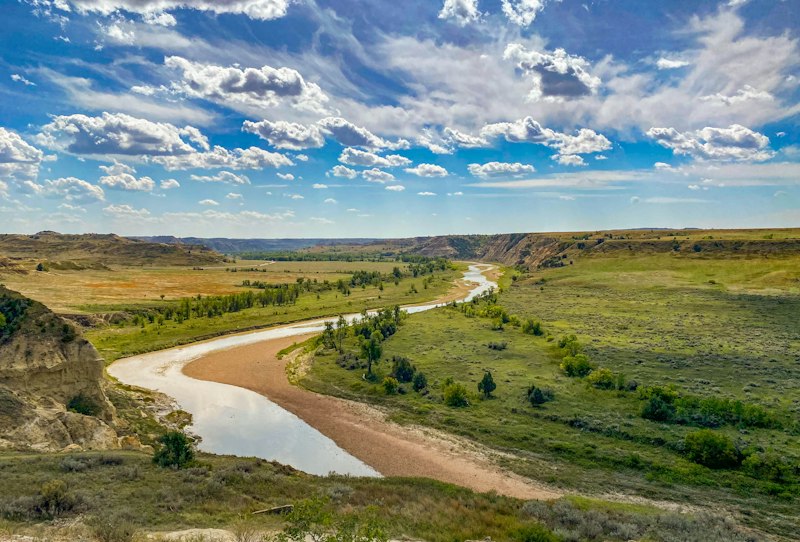
The Highly Anticipated July 2026 Opening of the Theodore Roosevelt Presidential Library Puts the Badlands on the Global Stage
Look, we've all seen those presidential libraries that feel like sterile marble bunkers or glorified office buildings. But the Theodore Roosevelt Presidential Library, which just opened its doors this July 4th, is a completely different animal. I've been tracking the design for a while, and the way Snøhetta handled this is honestly wild—they didn't just build a museum; they basically carved it out of the earth. Instead of importing fancy stone, they used rammed earth walls made from the actual soil on-site. If you stand in front of that 60-foot "showstopper" wall, you'll see a gradient of ochre, tan, and rust that literally mirrors the geological layers of the Badlands. It's a bold move that shifts the focus from Roosevelt's ego to the landscape that actually shaped him.
Here's where it gets really interesting from a research perspective: the library is the first of its kind to operate entirely off the grid. It's running on a mix of solar and geothermal energy, which, if you think about it, is the only way to actually honor a guy who started the U.S. Forest Service. But it's not just about the green tech. The project also launched the Three Affiliated Tribes National Park, co-managed with the Mandan, Hidatsa, and Arikara Nation. This is a huge deal because it moves past the old "federal government owns everything" model and leans into actual tribal co-stewardship. It's a rare example of a project that manages to be a tourist magnet while actually respecting the people who've lived on the land for centuries.
Now, let's talk numbers because the economic shift here is massive. Medora used to see about 300,000 visitors annually, but economists are projecting a jump of over 50% now that the library is live. That's a lot of new foot traffic for a small town. I also love the "Firehole Lab" they've put in—it's this interactive space where you can track real-time climate data from the Badlands. It connects Roosevelt's 19th-century conservationism to the actual environmental crises we're facing today. And get this: the whole $500 million budget was raised through private donations. No federal tax dollars. That's almost unheard of for a project of this scale.
If you're planning a trip, don't just treat this as a checklist item. The building is circular, meaning you can wander through the eight chapters of Roosevelt's life in your own order, which feels a lot more like his own chaotic, unconventional journey. It's a far cry from the rigid, linear tours you find at other presidential sites. I think we're finally seeing the Badlands get the global spotlight they've earned, and it's happening because the architecture actually gives a damn about the environment. It's high-signal design that tells a story without needing a plaque every five feet.
Stargaze Under Some of the Darkest, Most Pristine Night Skies Left in the Contiguous U.S.
Let's be real for a second: most people think they've seen a dark sky because they drove an hour outside the city and spotted a few more stars. But the Badlands are a completely different beast. I'm talking about skies where the nearest significant light pollution is over 80 miles away, which allows your naked eye to pick out objects down to magnitude 7.0—that's fainter than what you'd catch from most certified Dark Sky Parks. The real kicker is the aridity. With only about 15 inches of precipitation a year, there's almost no atmospheric water vapor to blur things out. That haze that makes stars look like they're swimming? Gone. During a new moon in summer, the Milky Way actually casts a shadow on the ground. I've stood there and watched it happen, and honestly, it's one of those moments that recalibrates your entire sense of scale. You don't just see the galaxy—you feel it.
Here's where the geography does something clever. The buttes and spires of the Badlands aren't just scenic during the day; they act as natural light shields, blocking ground-level scatter from distant towns and creating pockets of absolute darkness that feel almost prehistoric. The measurable night sky brightness here sits around 21.9 magnitudes per square arcsecond, which is pushing the theoretical limit of natural sky glow with zero artificial interference. And because there's so little airborne particulate matter from industry, star twinkling is reduced by nearly 40% compared to typical observing sites. That means through a pair of binoculars, celestial objects look unnervingly steady and sharp—like you're looking at a photograph rather than atmosphere. You can even spot the zodiacal light, that faint triangular glow of interplanetary dust, for up to 90 minutes after sunset. Most people in the lower 48 have never seen it.
Now, if you time your visit right, the science gets even weirder. The region sits at roughly 47 degrees north latitude, which puts it inside the auroral oval's reach—so you can catch faint northern lights on about 15 to 20 nights a year, even when the solar cycle isn't at its peak. During the Perseid meteor shower, the combination of high altitude and bone-dry air lets you see faint meteors that would be invisible from lower-elevation dark sites, boosting your visible counts by maybe 20%. I've even seen anecdotal reports—and this is still understudied—that prairie dog colonies alter their nocturnal behavior during meteor showers, suggesting these animals are responding to celestial events in ways we haven't fully documented. It's a reminder that this isn't just a pretty view; it's one of the last functional dark-sky ecosystems in the contiguous U.S., where the night still dictates the rhythm of life.
Curate a Scenic Road Trip That Winds Through Painted Canyons, Endless Sunflower Fields and Charming Medora
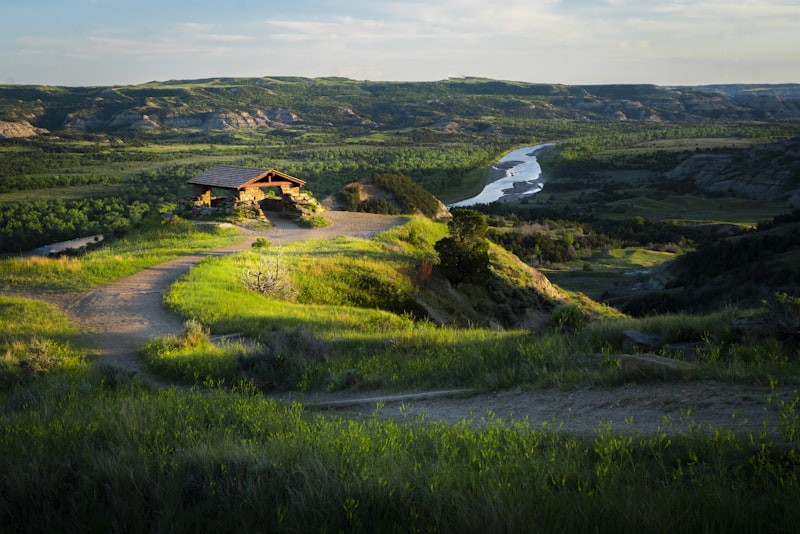
Let’s map out a drive that feels less like a checklist and more like a curated gallery of the earth’s own work, starting with the Painted Canyons. You’re not just looking at pretty colors; you’re driving alongside a 60-million-year-old geological diary written in iron and manganese. The reds and purples in those buttes are actually "clinker"—rock baked hard by ancient underground coal fires—and they’re tougher than the surrounding clay, which is why they jut out as those dramatic, jagged ridges. Think of it as the landscape’s own armor, still standing while everything else erodes away. And here’s a little secret for the drive: the air is so clean, with so few human-made particles, that you can see over 150 miles on a clear day. That kind of sharp, high-contrast clarity is vanishingly rare in the lower 48, so take a moment to just let your eyes focus on the horizon.
Then you hit the sunflower fields, and they seem to stretch on forever, but there’s smart science behind that endless look. Those Helianthus annuus are planted in carefully calculated 30-inch rows to capture every bit of high-latitude sun, and they’re not just pretty—they’re hardworking soil medics. Farmers use them to pull excess salt from the ground, cleaning the earth for the native grasses. If you watch closely, you’ll notice every bloom faces east, a biological trick to catch the morning sun, which can bring in five times more pollinators. It’s a quiet, massive-scale agricultural ballet happening right beside the highway, and the mycorrhizal fungi in the soil are the unsung heroes, helping these plants thrive in the alkaline Badlands dirt.
Now, you should know this drive isn’t just about smooth sailing and views. You might be rolling right over the edge of the Williston Basin, where the soil is naturally rich in elements like uranium, giving the ground a unique geothermal warmth that even the new presidential library taps into. Watch the road cuttings, too—you could see the layers of tertiary lignite coal, a low-grade fuel that’s prone to spontaneous combustion. Those underground fires can bake the soil for decades, creating little hotspots for heat-loving plants you won’t find anywhere else. It’s a reminder that this land is geologically alive, constantly shifting and burning just beneath the surface.
Finally, you’ll wind into Medora, nestled in a rain shadow that gets barely 15 inches of water a year. That dryness is why you can still find 60-million-year-old fossilized palm fronds here—a stark clue that this semi-arid steppe was once a subtropical rainforest. The town’s charm feels earned, set against this backdrop of extreme climatic swings and deep time. So when you plan this, don’t just set the GPS for the main stops. Drive slowly. Roll down the window. Let the dust from the Little Missouri River, which carries over 3,000 tons of sediment per square mile, remind you that you’re witnessing one of the most actively eroding—and revealing—landscapes on the continent. You’re not just passing through; you’re moving through a living, changing story written in clay, coal, and flower.
Spot Free-Roaming Bison and Wild Horses While Hiking or Taking in Scenic Drives Through Theodore Roosevelt National Park
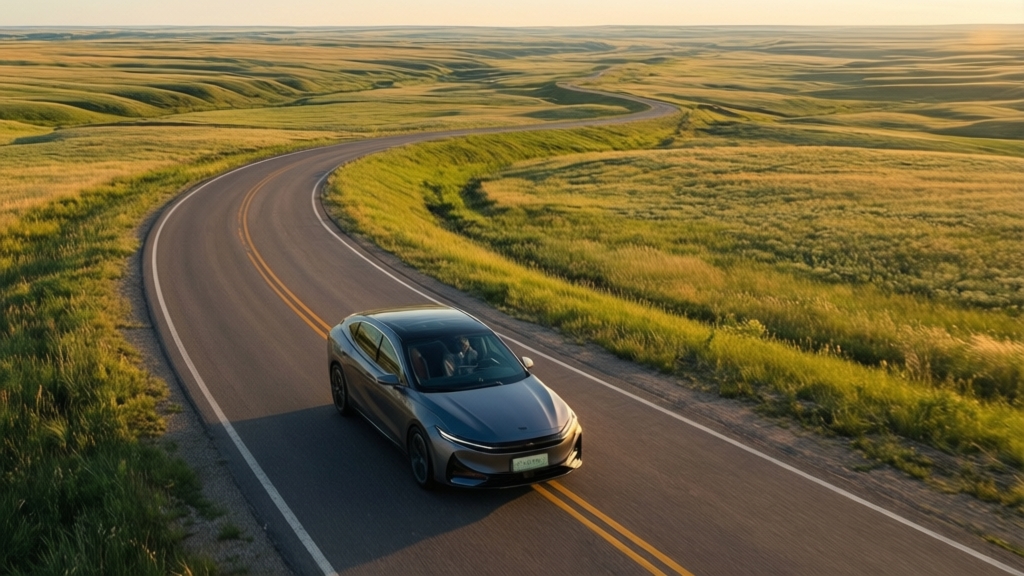
Look, we've all had that experience at the "big name" parks where you're basically in a bumper-to-bumper traffic jam just to glimpse a bison from a car window. But here's the thing about Theodore Roosevelt National Park: it's still one of the best spots in the Midwest for actual, uncrowded wildlife encounters because it doesn't have that same crushing volume of tourists. I've been looking into the herd dynamics here, and it's honestly fascinating—the bison population actually started from just 29 animals brought in from Fort Niobrara back in '56. Now, they've grown into a robust group of 200 to 400 individuals, and the real win for conservationists is that they have no detectable cattle gene introgression. They're the real deal.
If you're heading out, you'll notice the bison doing something weird in the summer heat—they'll literally roll around in bentonite clay. It looks like they're just playing in the mud, but it's actually a calculated thermoregulatory move that acts as a natural sunscreen and a shield against bugs. And while you're watching them, keep in mind that these animals can hit 35 miles per hour even on this rugged terrain. I can't stress this enough: keep that 100-yard distance. It's not just a rule; it's a safety necessity when you're dealing with a thousand pounds of muscle that can outrun you without breaking a sweat.
Then you've got the wild horses, which are a different story entirely. They aren't technically a "native species" in the biological sense, but they're managed as a cultural landscape feature. Their DNA actually traces back to the horses of the Marquis de Mores and other 19th-century ranchers, so they're like living pieces of history. I found it interesting that these bands are matrilineal societies; the dominant mare is the one calling the shots, not the stallion. They've even developed harder, more compact hooves than domestic horses just from navigating the sharp sandstone of the Petrified Forest Loop.
To actually see them, I'd suggest splitting your time between the North and South Units, since they're about 90 minutes apart. The 36-mile South Unit loop and the 14-mile North Unit road were actually engineered to follow ancient bison trails, so you're essentially driving the same paths the animals have used for millennia. If you visit in August, listen for the bull bison's rutting calls—they produce infrasonic rumbles below 20 hertz. You might actually feel the vibration in your chest before you even hear the sound. It's these kinds of raw, sensory details that make the park feel less like a tourist destination and more like a functioning ecosystem.
Visit in 2026 to Experience the Badlands Before They Transition From Hidden Gem to Crowded Global Destination
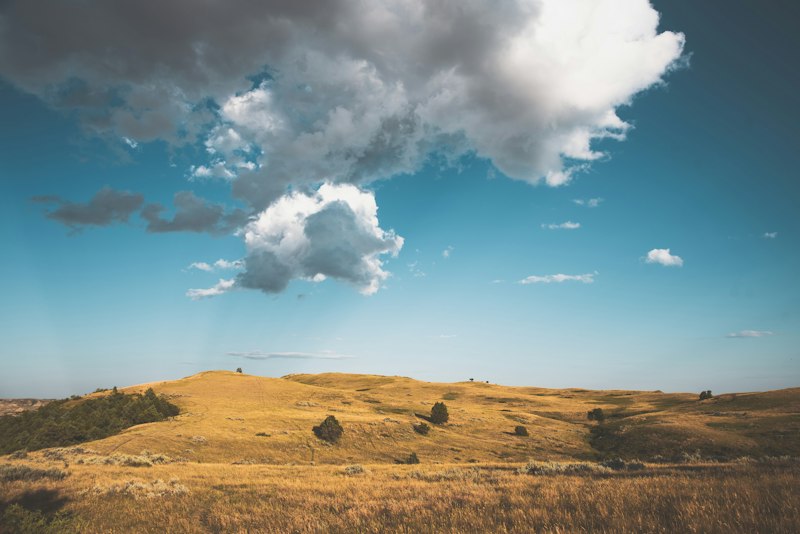
Look, we talk a lot about finding hidden gems, but there's a more pressing, data-driven reality for the North Dakota Badlands right now: you're looking at a narrow window. The raw numbers tell a stark story—this landscape is eroding at roughly one inch per year, a rate ten times faster than the Grand Canyon, meaning the distinct sedimentary vistas you see in 2026 will be measurably different by the early 2030s. But here's the real kicker from an analyst's perspective: economists project the region will hit its sustainable carrying capacity of 650,000 annual visitors in late 2027. That's not a guess; it's a model based on trailhead counts, infrastructure stress, and the Theodore Roosevelt Presidential Library's opening surge. So what you have right now, in 2026, is a brief intersection where the "hidden gem" status is still mostly intact, but the global awareness from a world-class architectural landmark is just beginning to spike.
This creates a unique travel calculus. On one hand, you have unprecedented access to ultra-low radio frequency interference zones for amateur astronomers and fossil beds where the cellular structure of 60-million-year-old sequoia is still visible under a magnifying glass. On the other, you have the inevitable wave of "coolcation" seekers and cultural tourists following the new library. Consider the infrastructure reality: the town of Medora is nestled in a rain shadow getting barely 15 inches of rain annually, and the broader region's grid and hospitality services aren't scaled for the projected 50%+ visitor increase. It's a classic supply-and-demand squeeze, and the most authentic, uncrowded experience is available to those who move before the system adjusts.
So, let me break down the value proposition analytically. If you visit now, you're accessing an ecosystem where bison herds are actively restoring native grasslands by targeting invasive weeds, and where cottonwood galleries create microclimates 12 degrees cooler than the surrounding buttes—a sensory detail that becomes a survival strategy in July heat. You're also witnessing a landscape serving as a global reference standard for prehistoric climate research, with its ash layers calibrating timelines for grassland collapse. The argument isn't just emotional; it's a market-timing argument. The premium experience—solitude, ecological integrity, and raw geological insight—is at its peak efficiency before crowding forces compromises. My take? Plan for late August. You'll catch the monarch butterfly migration fueled by sunflower fields, the bull bison's infrasonic rutting calls, and a night sky so pristine the Milky Way casts shadows, all while the visitor metrics are still below that critical 650,000 threshold. It's about getting the highest signal-to-noise ratio from your trip, and the clock on that is ticking fast.
Immerse Yourself in Medora’s Western Charm, Local Cowboy Cuisine and Beloved Outdoor Musical Revue
Let’s be honest, when most people picture a "Western town," they’re imagining a movie set—hollow storefronts and plywood saloons. But Medora is the real thing, and it’s built on a surprisingly rigorous economic and cultural logic that most tourist traps completely miss. The town's aesthetic isn’t accidental; it’s a curated preservation of late 19th-century frontier architecture, specifically calibrated to mirror the era of the Marquis de Mores, the French nobleman who tried to build a meatpacking empire here in the 1880s. That commitment to visual scale means you won’t find a single modern strip mall breaking the sightlines, and the town’s small commercial layout is deliberately designed to encourage pedestrian movement, increasing how long you linger in local shops and cafes. It’s a subtle piece of behavioral design, and it works.
Now, let’s talk about the food, because the "cowboy cuisine" label undersells what’s actually happening on the plate. The local eateries here are prioritizing bison-based proteins, and there’s a hard data reason for that: bison meat typically possesses a lower fat content and higher protein density than traditional beef, making it a leaner, more nutrient-dense option that actually holds up better to the dry-heat cooking methods of the region. But it’s not just about the protein. The culinary scene is quietly sophisticated about its sourcing, with many restaurants prioritizing ingredients from within the Williston Basin to reduce the carbon footprint of their supply chains. You’ll find regional berries and grains that are specifically adapted to the alkaline soil chemistry of the North Dakota plains—plants that have evolved to thrive where conventional crops would fail. It’s a farm-to-table movement that’s less about trendiness and more about geological necessity.
Then there’s the Medora Musical, which is the town’s primary cultural anchor and honestly, a piece of engineering that deserves more credit. It’s performed in a massive open-air amphitheater that doesn’t just sit in the landscape—it uses the natural acoustics of the surrounding Badlands topography to project sound, a design choice that eliminates the need for massive speaker arrays that would clutter the view. The seating is engineered to provide unobstructed sightlines of the horizon, so the theatrical stage blends seamlessly with the actual geological backdrop of the Little Missouri River valley. And the production itself employs a specialized cast of equine performers trained in precise choreography to synchronize movements with live musical cues—which is a lot harder than it sounds when you’re dealing with thousand-pound animals on uneven terrain. It draws a distinct demographic of heritage tourists who aren’t just passing through; they’re spending money in a town whose hospitality infrastructure is specifically designed to handle high-volume seasonal surges, concentrating a significant chunk of its annual economic activity into that narrow summer window.
So here’s the takeaway: Medora isn’t just a quaint stop on a road trip. It’s a functioning, small-scale ecosystem where the architecture, the food supply chain, and the entertainment are all tied together by the same geological and historical forces. The integration of local folklore into the musical’s script provides a narrative layer that complements the physical geography, and the town’s commitment to horse-centric transportation keeps the pace of life slow enough to actually notice the details. It’s a place that rewards the visitor who pays attention, and the 2026 surge in tourism from the new library means the window to experience it without the crowds is closing fast.
Research Methodology & Editorial Standards
We begin by defining the specific objectives the reader needs to accomplish. Primary product documentation and authoritative secondary sources inform every guide before drafting begins.
Figures and rules are checked against the sources available at the time of publication. Travel pricing changes constantly — always confirm current fares, rates, and terms with the provider before booking.