
Why Airlines Are Struggling With The Latest Generation Of Jet Engines
When we talk about the latest generation of jet engines, the conversation almost always starts with fuel efficiency, but we rarely discuss the hidden price tag attached to that performance.
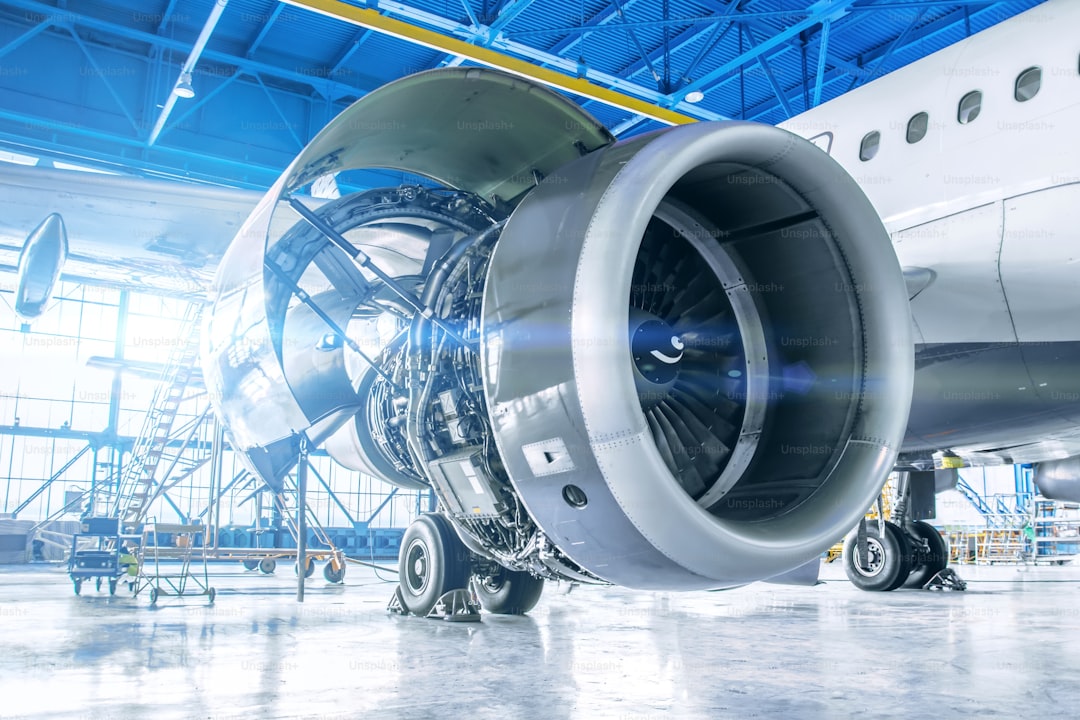
The Trade-off: Balancing Fuel Efficiency Against Maintenance Demands
When we talk about the latest generation of jet engines, the conversation almost always starts with fuel efficiency, but we rarely discuss the hidden price tag attached to that performance. The reality is that pushing these engines to operate at temperatures beyond the melting point of their own superalloys creates a constant battle against physics. You’ve got these incredibly complex cooling channels inside the turbine blades, but even a tiny bit of dust or ash can clog them, leading to rapid metallurgical fatigue that forces an early engine removal. It’s a classic case of chasing efficiency gains only to find that the hardware underneath is becoming increasingly fragile.
Think about the trade-offs in the design itself; to get those higher bypass ratios, we’re dealing with massive fan diameters that demand heavier, more robust casings just to handle the structural load. While engineers have tried to offset this weight with thinner titanium alloys, you end up sacrificing bird-strike resilience, which leaves airlines deciding between a more aerodynamic profile and the skyrocketing cost of repairs after wildlife encounters. Even with advanced architectures like geared turbofans that decouple fan speed from the compressor, you’re introducing mechanical complexity that makes thermal expansion mismatches a frequent headache. It’s like trying to balance a spinning plate that’s constantly changing shape.
Then you have the issue of maintenance, which is frankly becoming a nightmare for fleet managers who expected these engines to be workhorses. Those high-pressure turbine seals require sub-millimeter clearances to keep gas from leaking, but even minor vibrations during a routine short-haul flight can lead to blade-tip rub, which is essentially a catastrophic internal failure. We’re also seeing that the cooling systems meant to protect these parts are so energy-intensive that they eat into the very fuel savings we worked so hard to achieve. At the end of the day, airlines are realizing that the financial benefit of burning less fuel is being completely eroded by the need to stock expensive, high-lead-time spare modules. It makes you wonder if the long-term economic models we used to justify these purchases are actually holding up in the real world.
Premature Wear and the Hidden Costs of High-Bypass Technology
Let’s talk about why these massive engines are giving mechanics such a headache lately. When we look at the integration of ceramic matrix composites in high-pressure turbine sections, we hit a wall where the material’s thermal expansion just doesn’t match the metallic housing. This mismatch creates microscopic cracking during rapid power cycles, essentially bruising the engine from the inside out every time a pilot hits the throttle. Plus, these engines suffer from a soak-back effect, where heat stays trapped in the core after shutdown, cooking internal parts that we used to think were bulletproof. It is a constant battle against physics that feels like we are pushing materials past their actual breaking point.
Then there is the issue of what we are sucking into these intakes. Airborne particles like desert sand or volcanic ash turn into a glass-like coating inside the turbine, which acts like an insulator that forces internal temperatures way above their design limits. It is ironic that the high-bypass design, which is meant to be so efficient, requires a massive gearbox that generates intense localized heat, forcing us to add parasitic weight just to keep the oil cool. Even our advanced thermal barrier coatings are hitting a wall because the bond coat between the ceramic and metal keeps failing, often due to steam-induced delamination from trapped moisture.
We are also seeing that the way we fly these planes makes a huge difference in their lifespan. Frequent short-haul hops force the engine through thermal shock cycles far more often than long-haul routes, which can actually shorten the life of a combustion liner by nearly forty percent. Airlines are finding that the primary failure mode has shifted from simple mechanical wear to chemical degradation, especially when sulfur in regional fuel interacts with those tiny cooling holes. It makes me wonder if we’ve traded away the reliability of older engines just for a slightly better fuel burn, only to spend all those savings on expensive computed tomography scans just to figure out why the blades are failing prematurely.
Supply Chain Bottlenecks: The Struggle to Source Critical Spare Parts
You know that sinking feeling when you realize your entire fleet is held hostage by a single, tiny missing part? We're currently staring down a massive supply chain wall where the production of specialized turbine components has effectively slammed into a bottleneck, largely due to a deepening scarcity of rare earth elements that are non-negotiable for high-temperature stability. It's a mess, really, because those materials are the only thing keeping these engines from melting down, and their absence is forcing maintenance shops to stretch inspection intervals far beyond what we’d normally consider safe. Honestly, it feels like we’re balancing the entire industry's operational capacity on a knife's edge, all because we can't get the raw ingredients for the metallurgy we need.
It’s gotten to the point where technicians are essentially performing surgery on decommissioned wide-body jets, like the A380, just to keep operational planes in the sky. When new-build components are stuck in eighteen-month-long backlogs, cannibalizing older frames isn't just a workaround; it's the only game in town. But here’s the catch: those scavenged parts aren't just pulled and slapped on. We're seeing crews rely on intense computed tomography scans to hunt for micro-fatigue that no one would have even looked for a few years ago. It’s a sign of how desperate the hunt for parts has become, turning the graveyard of retired aircraft into the most valuable warehouse in the sector.
And don't even get me started on the geopolitical tug-of-war happening behind the scenes. When defense departments pivot to prioritize their own internal military needs, commercial airlines are suddenly forced into a head-to-head fight with defense contractors for the same limited pool of high-grade superalloy foundries. It’s not just a commercial headache anymore; it’s a systemic collision between national security and global travel. You look at the "just-in-time" manufacturing models that were supposed to make us efficient, and now they look like a liability—we’ve got absolutely no buffer left to absorb a ripple in the supply chain, let alone a wave.
Ultimately, this volatility is completely wrecking the math for fleet managers trying to plan for the next fiscal year. We’re watching secondary market prices for engine modules skyrocket, which makes you wonder if it’s even worth keeping some of these older birds flying. Instead of waiting for new parts that might never show up on time, carriers are opting for expensive, non-standard repairs just to keep the lights on and the planes moving. It’s a frustrating reality where even a minor hiccup in a trade agreement can ground an entire aircraft, leaving us to wonder how long this fragile balancing act can actually last before the scheduling cuts become permanent.
Why Newer Engines Are Spending More Time in the Shop
When we look at why the latest generation of engines is spending so much more time on the shop floor than we originally anticipated, the answer isn’t just one single design flaw, but rather a convergence of aggressive engineering goals hitting the hard ceiling of physical reality. You’ve likely noticed that these newer platforms are pushing the limits of materials science, specifically with those ultra-thin cooling passages in turbine blades that are incredibly efficient until they aren't. Even a microscopic amount of airborne particulate can cause a flow blockage, which forces us into frequent, time-consuming borescope inspections just to ensure the integrity of the core. It really feels like we’ve traded the rugged simplicity of older models for a razor-thin margin of error where even the smallest deviation from perfect conditions triggers an unscheduled shop visit.
Think about it this way: to reach these record-breaking fuel efficiency targets, manufacturers have moved toward complex geared architectures and higher bypass ratios that demand massive fan diameters. While the physics of a larger fan is great for fuel burn, it introduces complex aero-elastic vibrations that were never this pronounced in previous designs. These vibrations can unpredictably excite the engine casing, leading to premature structural fatigue that we simply didn't see coming during the initial testing phases. And because these high-pressure compressors run so much hotter, the discharge air temperatures are putting immense thermal stress on downstream components, causing protective coatings to degrade much faster than our laboratory models ever predicted.
But the issue also spills over into the logistics of how we actually support these engines when they do come off-wing. We’re currently trapped in a cycle where advanced engine health monitoring systems—which are brilliant in theory—often flag false positives, leading to expensive, unnecessary removals that clog up our maintenance hangars. To make matters worse, we’re seeing a real shortage of the specialized high-grade nickel-based powders required for additive manufacturing of replacement parts, meaning a simple repair can turn into a months-long wait for a single component. It’s a frustrating reality where our pursuit of peak performance has unintentionally created a system that is incredibly sensitive to even the smallest disruption, leaving us to wonder if the next generation of powerplants will finally prioritize durability over these fleeting, hard-won efficiency gains.
Reliability Issues Disrupting Flight Schedules and Operational Capacity
When you look at the state of modern air travel, it often feels like we’re balancing on a knife’s edge, and honestly, the root cause is frequently sitting right under the wing. You’ve probably noticed the headlines about thousands of travelers stranded in Frankfurt or Madrid, but what the news often misses is the technical reality of why these disruptions have become the new normal. We’ve reached a point where the sheer complexity of our newest jet engines is creating a paradox: we’ve built machines that are incredibly efficient on paper, yet they’re proving to be remarkably fragile in the real world. It’s not just one bad day of weather or a single air traffic control hiccup; it’s a systemic collision between aggressive engineering targets and the unforgiving physics of daily operations.
Think about it this way: to squeeze out every drop of fuel efficiency, we’ve pushed materials to their absolute thermal limits. We’re dealing with ultra-thin cooling passages that are essentially clogged by the slightest bit of dust, and ceramic components that struggle to expand at the same rate as the metal housing surrounding them. When you add in the fact that these engines are being pushed through frequent, punishing short-haul cycles, it’s no wonder we’re seeing combustion liners fail nearly forty percent faster than on long-haul routes. It’s like taking a high-performance race car and deciding to drive it exclusively through a stop-and-go city commute—the wear is inevitable, and the cost of keeping that engine running is starting to erase the very fuel savings that were the whole point of the upgrade.
And here’s where it gets even more frustrating for the folks trying to keep the schedule on time. We’re currently caught in a massive supply chain bottleneck, where the raw materials needed for these repairs are so scarce that airlines are literally scavenging parts from retired jets just to keep their active fleets in the sky. When you combine that scarcity with hypersensitive monitoring systems that frequently flag false positives, you end up with planes stuck in maintenance hangars for weeks at a time. It’s a messy, high-stakes game of musical chairs where one tiny, missing specialized component can derail an entire network. Honestly, we’re seeing a future where aviation reliability is no longer just about operational planning, but about how effectively we can manage these microscopic, hidden mechanical failures that are quietly eroding the capacity of our global transit network.
The Long-Term Financial Impact of Accelerated Engine Inspections
Let’s pause for a moment and look at the real-world financial fallout of these accelerated inspection mandates. We’re seeing airlines forced to yank engines after just 2,000 flight cycles, which is a staggering drop from the 10,000 to 15,000 cycles these powerplants were originally designed to handle. When you consider that a single full teardown can hit $5 million per shop visit, you realize how quickly these costs spiral out of control. It’s not just the direct repair price tag that hurts, though; it’s the fact that turnaround times have ballooned from a couple of months to over 200 days in some areas. That’s effectively half a year where a multi-million-dollar asset is just sitting on the floor instead of generating revenue in the sky.
The irony here is that the manufacturers’ compensation plans rarely bridge the gap between their support payments and the current market rates for wet-leasing a replacement plane. Because of this, we’re seeing carriers get creative, often opting to de-rate their engines by intentionally lowering takeoff thrust. By reducing those peak temperatures, they’re trying to stretch the time between mandatory inspections, but it’s a delicate balancing act that limits operational flexibility. Meanwhile, the secondary market for spare modules has turned into a brutal bidding war, with prices for airworthy components jumping 30% or more as everyone scrambles for the same limited inventory.
To make matters worse, the industry is hitting a wall with specialized materials like high-grade superalloy powders, which are needed for additive manufacturing but simply aren't available in the quantities we need right now. Even our high-tech monitoring systems are adding to the headache, often flagging false positives that force unnecessary removals and keep qualified technicians tied up on ghost hunts rather than actual repairs. When you add that 10% to 20% spike in insurance premiums for affected fleets, it’s clear this isn't just a technical glitch. We are watching the long-term financial models for these engine programs get completely rewritten in real-time, and honestly, the shift toward unpredictable time-and-material billing suggests that nobody is quite sure when the costs will finally stabilize.
Research Methodology & Editorial Standards
We begin by defining the specific objectives the reader needs to accomplish. Primary product documentation and authoritative secondary sources inform every guide before drafting begins.
Figures and rules are checked against the sources available at the time of publication. Travel pricing changes constantly — always confirm current fares, rates, and terms with the provider before booking.