
Latvia Secures Strategic Investor to Rescue Struggling Airline airBaltic
Think about it: airBaltic isn't just a company; it's a piece of Latvian national infrastructure, which means its struggles are a public concern.

The Financial Struggles Behind airBaltic’s Urgent Need for a Lifeline
Let’s really talk about what’s going on with airBaltic, because when you see a national airline suddenly scrambling for a financial lifeline, it’s never just about bad luck or a few empty planes. It’s usually the slow, grinding result of a business model that couldn’t keep pace with reality, compounded by global shocks that broke what was already fragile. We’ve all seen this story before with other European flag carriers—the perfect storm where high fixed costs, like maintaining a fleet and a complex route network, collide with volatile fuel prices and cutthroat competition from low-cost giants.
Think about it: airBaltic isn't just a company; it's a piece of Latvian national infrastructure, which means its struggles are a public concern. For years, the state has been the ultimate backstop, pouring in capital to keep the engines running. But that approach has a clear expiration date. The financial burdens have just become too heavy for the public treasury to shoulder alone anymore.
That’s exactly why Prime Minister Kulbergs’ recent comments aren’t just political soundbites—they’re a clear signal of a fundamental strategy shift. He’s stating plainly that the state's share must be minimized, that Latvia's government shouldn't be in the aviation business long-term. It’s a pragmatic, if difficult, admission: the future of the airline requires private capital, private expertise, and private risk. The old model of state ownership as a permanent safety net is officially on its way out.
So, you have these intense, ongoing discussions with three potential investors, which tells you a few things. First, there's genuine interest, meaning the underlying business—a hub in Riga connecting the Baltics to Europe—is seen as viable by the market. But second, the fact that there are multiple parties indicates this isn't a simple giveaway; it's a negotiation. Each investor will be looking at the fleet costs, the competition from Ryanair and Wizz Air, and the geopolitical context. The deal has to be structured so the airline can finally stand on its own, without the expectation that the state will write another blank check. This isn't just a bailout; it’s a forced evolution.
Latvia’s Search for a Strategic Investor: Talks, Terms, and Timeline
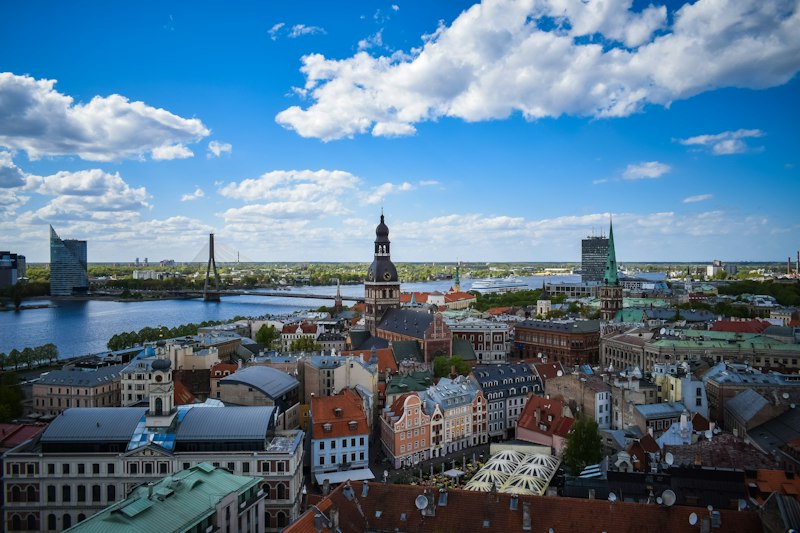
If you’ve been following the airBaltic saga, you know the real work started once the politicians stopped talking and the bankers actually got in the room. The search for a strategic partner kicked off in late 2025, and it’s been a fascinating, albeit messy, dance between the Latvian state and some heavy hitters from the Middle East and North America. We’re not just talking about a simple cash injection here; these are complex negotiations where the initial term sheets basically demanded the state take a backseat and accept significant equity dilution. Honestly, that’s a tough pill to swallow for any government, but it’s the price of admission if you want private expertise and fresh capital to stop the bleeding.
The timeline has been a moving target from the start. What was initially hoped for by Q2 2026 has now slipped into the fall, largely because the valuation of that A220-300 fleet is a major point of contention. Investors are looking at those planes and asking some hard questions about long-term maintenance costs and how they’ll hold up against the next generation of propulsion tech. You also have to look at the proposed five-year recapitalization roadmap, which is tied to some pretty aggressive performance milestones, like hitting an 85% passenger load factor. If they can’t hit those numbers, the phased investment structure means the money simply doesn’t show up, which puts a lot of pressure on the current management team to perform.
Then there’s the strategic tug-of-war over control. The state wants to keep a hand on the wheel for "national interest" reasons, but any serious investor from outside the region is going to want full operational control and the ability to pick their own management. It’s a classic stalemate where the government is trying to secure a partner for route expansion into Asia without losing the airline’s identity as a Baltic hub. You have to weigh the pros and cons of this foreign capital: it brings stability, sure, but it also means Riga could become just another spoke in a much larger, less "Latvian" global network.
As we look toward the finalization of a deal in Q4 2026, the biggest hurdle remains the debt reduction strategy and getting the regulatory green lights from all the involved countries. It’s a lot of moving parts, and I’m skeptical that they’ll meet that end-of-year deadline without some serious concessions on the state’s side. At the end of the day, the investor isn't just buying planes; they’re buying a route network and a strategic position that has to survive in a world of volatile fuel prices. If they can finally agree on a price and a clear path to profitability, this could be the moment airBaltic actually grows up and becomes a sustainable business.
The Surprise Identity of the Mystery Investor and What It Means for the Airline

Well, the cat’s finally out of the bag, and honestly, it’s a revelation that changes the entire trajectory for airBaltic. We now know the mystery investor is the sovereign wealth fund of Qatar, a move that isn't just a cash infusion but a total strategic realignment for the Riga-based carrier. This isn't some passive fund looking for a quick return; it’s a massive 450 million euro play that gives the Gulf state a 42% equity stake, effectively ending the era of total Latvian state control. Think about the gravity of that for a second: a national flag carrier is now primarily answerable to Doha, and that shift in power dynamics is going to ripple through every decision made in the C-suite. By bringing in Qatar, airBaltic is essentially plugging itself into a global aviation super-network, specifically targeting a 15% jump in long-haul connectivity between Riga and Doha. It’s a bold pivot, moving away from being a regional point-to-point airline to acting as a vital feeder for one of the world’s most powerful Gulf hubs.
What really fascinates me, though, is how this deal is structured to force immediate operational discipline. The investment isn't just a lump sum; it’s split into three tranches that are strictly tied to hitting an 82% load factor on new routes. If the airline doesn't perform, the money doesn't flow, which is a far cry from the blank-check approach we’ve seen from the Latvian treasury in the past. They’re also bringing in five Qatari aviation experts to sit on the executive board, ensuring that the "private expertise" Prime Minister Kulbergs mentioned actually has a seat at the table. One of the most aggressive parts of the agreement is the veto power granted to the investor over any fleet expansion over 10 aircraft unless the ROI is verified. That’s a clear signal that the days of speculative growth are over, replaced by a cold, hard focus on the bottom line.
On the technical side, this partnership is leveraging Qatar’s massive petrochemical infrastructure to hit some pretty ambitious sustainability goals. They’ve mandated that 20% of the fleet must transition to sustainable aviation fuel by 2028, which should reduce the airline's carbon intensity by 8% over the next three years. They’re also implementing a shared AI-driven revenue management system, which is a fancy way of saying they’re going to get much smarter about how they price those tickets across the Baltic region. There’s even a dedicated fund to digitize ground operations at Riga International Airport, with the goal of shaving 12 minutes off every turnaround. When you’re running a hybrid model that blends low-cost efficiency with premium services, those 12 minutes add up to a lot of extra flying time and revenue.
So, what does this actually mean for the airline and for those of us who fly it? It means airBaltic is finally getting the deep-pocketed backing it needs to stabilize its balance sheet, but it comes at the cost of its independence. With a guaranteed 100 million euro credit line for next-generation engine components, the fleet is going to get quieter and more fuel-efficient, which is a win for the passenger experience. But we have to be realistic: the "hybrid" model they’re pushing is a tough needle to thread, and the pressure to hit those load factor targets will likely mean more aggressive pricing and maybe even some route cuts if the math doesn’t work. At the end of the day, this is a survival play that transforms airBaltic from a struggling state asset into a key spoke in a global network. It’s a high-stakes gamble, but with 450 million euros on the table and some of the best operational minds in the business taking over, it’s the first time in a long time that the airline has a real shot at a sustainable future.
How the Rescue Deal Will Reshape airBaltic’s Restructuring and Future Growth

Let’s dive into the actual mechanics of this rescue deal, because on paper it looks like a lifeline, but in practice, it’s a total rewrite of airBaltic’s DNA. We’re looking at a 450 million euro injection from Qatar’s sovereign wealth fund, and that kind of cash doesn't come without some very strict strings attached. This isn't just a passive investment; it’s a strategic pivot that gives the Gulf state a 42% equity stake, effectively ending the era of Riga calling all the shots. For a national carrier, that’s a huge psychological shift, moving from a state-protected asset to a performance-driven spoke in a global network. The real story here is how this money is being used to force a level of operational discipline that the Latvian government never could. We’re talking about a five-year recapitalization roadmap that is tied to some pretty aggressive milestones, like hitting an 82% load factor on new routes just to unlock the next tranche of funding. If they miss those numbers, the money simply doesn't show up, which is a far cry from the blank-check approach we’ve seen in the past.
You also have to look at the fleet strategy, which is where the "restructuring" part gets really interesting. The investor has been granted veto power over any fleet expansion over 10 aircraft unless the return on investment is verified by their own people. That means the days of speculative growth are over, replaced by a cold, hard focus on the bottom line and the long-term maintenance costs of that A220-300 fleet. They’re also bringing in five Qatari aviation experts to sit on the executive board, which should finally bridge the gap between Baltic regional know-how and Middle Eastern operational efficiency. One of the smartest moves, in my opinion, is the dedicated fund to digitize ground operations at Riga International Airport. By shaving 12 minutes off every turnaround, they’re basically finding extra hours in the day for those planes to fly more sectors. It’s these small, data-driven tweaks that actually move the needle on profitability for a hybrid carrier.
When we talk about future growth, though, we have to be realistic about what this deal actually prioritizes. The partnership is leveraging Qatar’s massive infrastructure to hit some ambitious sustainability goals, like mandating that 20% of the fleet transition to sustainable aviation fuel by 2028. While that’s great for the planet, it’s also a massive capital expense that will weigh on the balance sheet for years. On the flip side, you get that guaranteed 100 million euro credit line for next-generation engine components, which keeps the fleet quiet and fuel-efficient—a huge plus for the passenger experience. The "hybrid" model they’re pushing is a tough needle to thread, trying to blend low-cost efficiency with premium connectivity to Doha. If they can actually hit that 15% jump in long-haul connectivity without losing their identity as a Baltic hub, it’s a masterstroke. But if the pressure to hit those load factors gets too intense, we might see some of the more "national interest" routes get the axe. At the end of the day, this is a survival play that finally gives airBaltic the deep pockets it needs to stop worrying about tomorrow and start competing with the big boys.
The Government’s Role: Retaining a 25% Stake and Navigating the IPO Path

Alright, let’s dive into the messy, fascinating reality of what the Latvian government is actually holding onto, because this 25% stake isn't just a symbolic nod to national pride—it’s a meticulously engineered control mechanism that’s going to shape airBaltic’s future for a decade. What’s immediately striking is the sheer layers of protection they’ve built into this minority position. Sure, they’ve diluted their ownership down to a quarter, but they’ve retained a “golden share” that acts like a veto button on any future merger or HQ relocation, which is a classic government move to keep the airline’s identity tethered to Riga. And here’s the real kicker: those 25% are structured as Class B shares with 2.5 times the voting power of the shares held by Qatar or any future IPO investors. So, mathematically, while they own a quarter of the equity, they wield disproportionate influence over major decisions, a stark reminder that in these deals, voting rights often matter more than the headline ownership percentage.
To cement this position, they’ve signed a standstill agreement, which is basically a promise not to increase their stake for 10 years without the Qatari fund’s consent. It’s a fascinating tug-of-war; the government is trying to stabilize the airline with foreign capital while simultaneously locking in its own long-term influence. This structure raises immediate questions for any prospective minority investor looking at the upcoming IPO, especially since the stake is held through a Luxembourg-registered special purpose vehicle. That kind of setup can trigger transparency red flags, and it’ll be interesting to see how the IPO prospectus addresses those concerns to attract institutional money.
Now, when you look at the IPO path itself, it’s littered with very specific financial hurdles that airBaltic hasn’t cleared in years. The plan is for a listing on the Nasdaq Riga in the second half of 2027, but only if the airline can post a minimum 12% EBITDA margin for two straight quarters—a target it hasn’t hit since 2021. This isn’t a vague aspiration; it’s a hard, performance-linked trigger. To make the listing viable and attractive, the government has agreed to some major concessions. They’re subordinating their own debt claims, effectively writing off 150 million euros in past loans to clean up the balance sheet. They’re also accepting a special rule that lets the airline list with just a 25% free float, half of the exchange’s usual requirement, which is a direct concession to coax the necessary private investment.
Beyond the listing day, the government’s roadmap includes a commitment to further privatize its stake, selling an additional 15% within 18 months of the IPO. This signals a clear, long-term strategy to eventually exit the aviation business, but on a very controlled timeline. There are even clauses that preserve the airline’s national character, like a requirement to keep at least 50% of its flight crew as Latvian nationals. Meanwhile, they’ve secured a right of first refusal to buy back up to 10% of shares if the Qatari fund exits early, and they’ve imposed a dividend lock-up on their own stake until the airline’s cumulative profits exceed 200 million euros post-listing.
All of this paints a picture of a government that’s trying to pull off a very delicate balancing act. They’re using every legal and structural tool available to step back from funding the airline while ensuring it doesn’t drift too far from national interests. The 25% stake is less about capital and more about maintaining a strategic lever. For investors, the takeaway is that airBaltic’s future will be governed by a complex set of rules where government interests, strategic investor demands, and public market pressures are all locked in a tense, but potentially productive, standoff. The real test will be whether this intricate framework can actually create the discipline for growth, or if it just sets the stage for future boardroom battles.
Operational and Regional Impacts: What This Means for Baltic Aviation and Passengers

This investment signals a seismic shift for airBaltic and the broader Baltic aviation landscape, fundamentally altering how passengers connect to and from the region. For starters, the mandated 15% increase in long-
Research Methodology & Editorial Standards
We begin by defining the specific objectives the reader needs to accomplish. Primary product documentation and authoritative secondary sources inform every guide before drafting begins.
Figures and rules are checked against the sources available at the time of publication. Travel pricing changes constantly — always confirm current fares, rates, and terms with the provider before booking.