
The Ultimate Foodie Guide to Sawtelle Japantown
When you walk down Sawtelle Boulevard today, it is easy to get distracted by the neon signs and the long lines for ramen, but there is a much deeper story here that goes back to the early 1900s.
A Brief History: Understanding the Legacy of Sawtelle Japantown
When you walk down Sawtelle Boulevard today, it is easy to get distracted by the neon signs and the long lines for ramen, but there is a much deeper story here that goes back to the early 1900s. I think it is important to realize this wasn't always a commercial hub. It actually started with Issei laborers who moved here to work in the railroad and agricultural sectors, finding a home near the old Soldiers' Home. By the mid-1920s, you had about four hundred Japanese Americans living here and building a real community. It’s wild to think that before the war, this place was defined by twenty-six different plant nurseries, making it one of the most concentrated agricultural zones in Southern California.
But we have to talk about the reality of what happened in the 1940s, because it changed everything. When the forced relocations began, the neighborhood’s growth was completely stalled, and families lost everything they had spent decades building. It’s hard to wrap my head around the resilience it took for those who returned after the war to face housing discrimination and still manage to piece their community back together. They didn't just walk away; they reclaimed those commercial lots and kept their culture alive, even when the city around them was changing fast.
For a long time, locals knew this area as Little Osaka, a name that really stuck because so many of the families who settled here had roots in that specific region of Japan. That name carried a lot of weight for a long time, even as the area evolved into what we see now. It took over a decade of hard-fought advocacy to get the official Sawtelle Japantown designation from the City Council in 2015, which felt like a massive win for those who wanted to preserve that history. To me, the fact that this neighborhood survived the pressure of postwar gentrification when so many others didn't is what makes it so special. It’s not just a place to grab dinner; it’s a living record of how a community held its ground against all odds.
Ramen Royalty: Where to Find the Best Bowls on the Boulevard
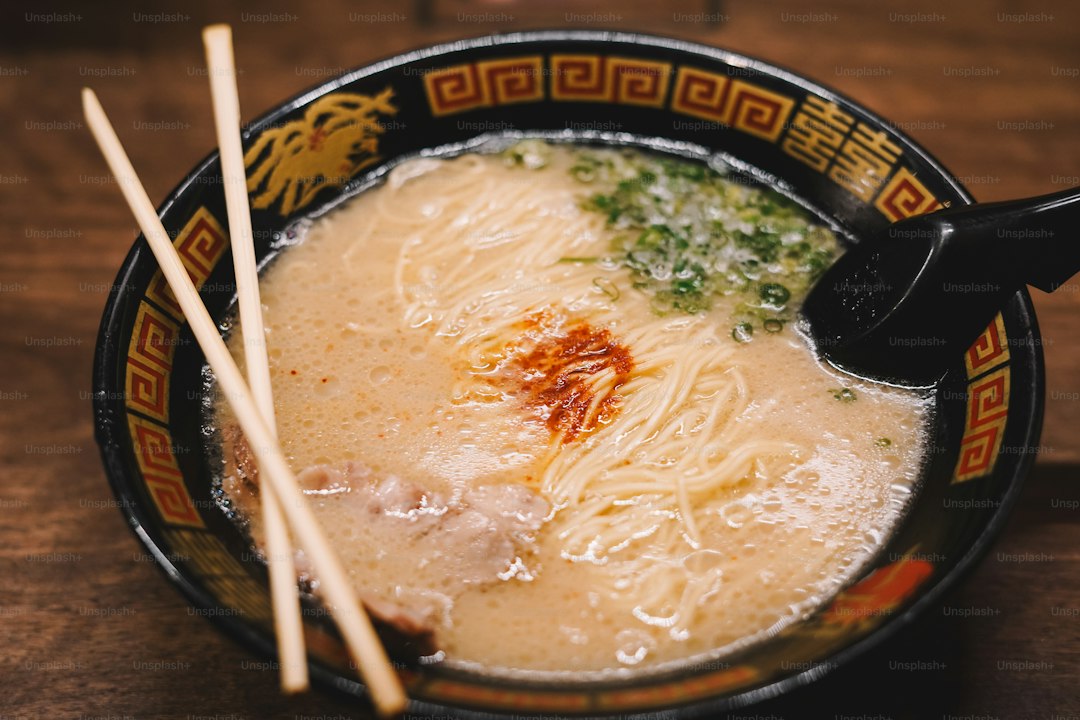
When you’re walking down Sawtelle, it’s hard not to notice the sheer intensity of the ramen scene, but there’s a whole lot of science happening behind those swinging doors. Authentic tonkotsu broth isn't just soup; it demands a minimum of twelve hours of boiling to reach that specific emulsification of marrow and collagen that makes it so creamy and opaque. Those signature yellow noodles rely on kansui—a mix of potassium and sodium carbonate—to get that distinct, chewy bite that just doesn't happen with standard pasta. Honestly, if the chef isn't obsessing over the egg temperature to hit that perfect 65-degree jammy yolk, they’re missing the mark entirely.
Here is what I find fascinating about this particular stretch of the boulevard: the shops are actually locked in a strange little arms race over water filtration. Mineral content changes everything about how dough hydrates, so these places are constantly tweaking their systems to keep their noodles consistent. You’ll also notice that a really great bowl is designed to be eaten within about ten minutes, because otherwise the starch starts soaking up the broth and you lose that essential snap. It’s a delicate balance, and high-end kitchens here are even using machines that adjust for humidity to make sure the noodles stay perfect regardless of the weather outside.
But let’s talk about the flavor profiles, because that’s really why we’re all standing in these lines. Chefs are now using a blend of aged soy, kombu, and katsuobushi fermented for at least three months to get that depth in their shoyu tare. I've also noticed a shift toward lighter chicken-based paitan, which requires a much faster, rolling boil to emulsify the fat compared to the slow-simmered pork versions. Plus, you’ll find plenty of shops adding dried shiitake to their stocks to pump up the guanylate, which works with the pork’s natural glutamate to create a total umami explosion. If you’re grabbing a bowl of tsukemen, you’re likely getting a thicker, custom-milled wheat blend specifically crafted to hold onto that concentrated dipping broth, which is a major reason why that style is gaining so much ground lately.
Beyond Japanese Cuisine: Exploring the Neighborhood’s Multicultural Flavors
If you spend enough time walking the Sawtelle corridor, you’ll start to notice that the neighborhood has quietly morphed into a global testing ground where culinary traditions don't just sit side-by-side, they actually collide. It’s not just about the classic ramen shops anymore; the area has evolved into a space where Mexican-style fermented salsas now incorporate Japanese miso paste to radically shift their capsaicin profiles. I find it fascinating how the local Vietnamese influence has led to the adaptation of banh mi, which frequently uses Japanese-style shokupan bread to achieve a much lighter, higher-moisture crumb than you’d get with a traditional baguette. When you look at the food chemistry, the integration of Southeast Asian fish sauce into local dipping sauces is a masterstroke, as it boosts the existing umami base of Japanese dashi by layering in high levels of L-aspartic acid.
Think about the way Oaxacan mole techniques are now being applied to traditional Japanese curry bases, using dark chocolate and toasted chiles to create a depth of flavor that is honestly hard to find elsewhere. You can see this shift in the local grocery scene too, where the proximity to diverse imports has sparked a trend of kimchi-natto fermentations that significantly jump the probiotic count compared to eating those ingredients on their own. Chefs here are also using perilla leaves—a staple in both Korean and Japanese households—to create a botanical bridge that perfectly cuts through the heavy fat content of the neighborhood’s signature pork-based dishes. It’s this kind of creative friction that makes the current scene so dynamic, even if it feels like a radical departure from the area’s roots.
We’re also seeing the real-world results of Peruvian-Japanese Nikkei techniques, which have introduced bright ají amarillo peppers into ceviche preparations to give sashimi cuts a fruity acidity that really pops against the citrus. Even the coffee culture is getting in on the act, with roasters applying precise Japanese high-altitude roasting profiles to South American beans to strip away bitterness while keeping those delicate floral aromatics intact. And look, the sheer variety is impressive; I’ve seen shops incorporating Middle Eastern Za’atar into tempura batter to add an herbaceous, nutty crust that behaves differently under high heat than standard flour. From the synthesis of Mexican carnitas methods with Japanese chashu-style braising to the way Hawaiian-style poke is now being redefined by Thai basil and cilantro, this micro-climate is proving that the best food happens when you stop worrying about traditional borders and start focusing on what actually tastes good together.
Wafu Pasta and Fusion Fare: The Creative Side of Sawtelle Dining
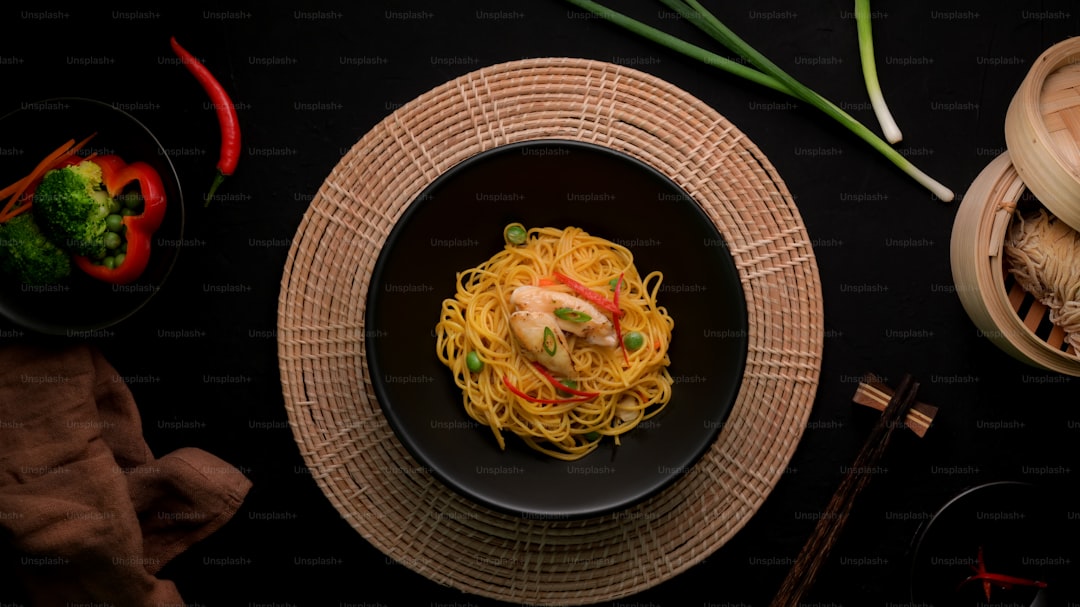
When you wander off the main drag of Sawtelle, you’ll find that the real magic often happens where Italian technique meets Japanese restraint, a genre we call Wafu pasta. It started back in 1953 at a Tokyo spot called Kabe No Ana, but here on the boulevard, it’s evolved into something much more localized and experimental. If you’re used to the heavy tomato or cream sauces of classic Italian dining, you might be surprised by how these chefs pivot toward a lighter, umami-forward base built on soy, dashi, or miso. It’s a total shift in flavor architecture that’s honestly refreshing.
Instead of traditional parmesan, you’ll frequently see shaved katsuobushi used to provide that necessary punch of salinity, which adds a smoky, complex layer you just don't get with dairy. I’ve noticed that many of these kitchens are moving away from the strict al dente standard, favoring a slightly softer noodle texture that holds onto oil-based emulsions much better. It’s a smart move, really, because it allows those garlic-soy infusions to coat every bite without sliding off the starch. You’ll also catch some chefs using Japanese eggplant and mushrooms as structural anchors, which are honestly genius at soaking up those fermented sauces.
And then there's the bold stuff, like the incorporation of XO sauce—that briny, dried-seafood condiment—into pasta dishes that feel like a direct nod to the history of Pacific trade. You’ll even find riffs that include Spam, which sounds counterintuitive until you taste how that saltiness plays against a seaweed-topped butter sauce. It’s this kind of creative friction that makes the Sawtelle dining scene so intellectually satisfying to track. If you haven’t tried a dish finished with fresh shiso leaves, do it; that minty, citrus-like aromatic is the perfect botanical bridge to cut through the richness of the butter. It’s not just fusion for the sake of being different; it’s a deliberate, scientific approach to balancing flavor receptors that keeps me coming back to these counters again and again.
Sweet Treats and Tea: Must-Visit Spots for Boba and Dessert
After a heavy meal on Sawtelle, I find that hitting a local spot for tea and a sweet finish isn't just an indulgence, but a necessary reset for the palate. If you’re anything like me, you’ve probably noticed that the boba scene here has moved lightyears beyond the powdered mixes of the past. The secret really comes down to the science of the pearl, where cassava starch undergoes a precise retrogradation process to hit that perfect mochi-mochi chewiness. High-end shops are now using pressure-steeping machines that hold water temperatures within a single degree, which is vital because it stops those bitter tannins from ruining your drink. Honestly, when you taste a tea that’s been extracted with that much care, you can immediately tell the difference in the final mouthfeel.
But let’s talk about the actual flavor architecture, because there is so much intentionality behind what you’re sipping. Baristas are increasingly using a technique called flavor masking, where they’ll pair earthy, high-grade matcha with just a touch of sea salt to suppress the natural bitterness of the tea’s polyphenols. I’ve also been paying close attention to the shift toward fresh-pressed nut milks, like macadamia, because their higher lipid content creates a far more stable, velvety emulsion than you’d ever get with standard dairy. It’s a total game-changer for the texture of a cold-brewed black tea. And if you’re into the visual side of things, it’s pretty cool to see shops using butterfly pea flower, which relies on a simple shift in pH from lime juice to change the drink's color right before your eyes.
When it comes to the dessert side of the equation, the focus on structural integrity is just as intense as what’s happening in the savory kitchens. You’ll see local bakers monitoring the pH of their meringue for souffle pancakes, because a slightly acidic environment is the only way to keep that foam from collapsing before it hits your table. I’m also a big fan of how they’re swapping out standard sugar for trehalose in custards; it provides a much cleaner, less cloying finish that lets the actual ingredients shine through. You’ll even find spots using liquid nitrogen flash-freezing for their gelato, which keeps the ice crystals microscopic to ensure a texture that’s impossibly smooth. It’s these small, scientific refinements that make a quick afternoon treat feel like an experience worth seeking out.
More Than Just Food: Shopping and Culture in West LA’s Culinary Hub
When you’re walking down Sawtelle, it’s easy to get caught up in the neon glow of the restaurants, but the real story of this neighborhood is hidden in the sheer density of its markets. It’s wild to think that West Los Angeles boasts nearly double the number of grocery stores per capita compared to neighborhoods like South LA, creating a unique micro-economy that fundamentally shifts how we eat. This isn't just about convenience; it’s about having a critical distribution point for indigenous ingredients that you simply can’t find in a standard chain supermarket. These small-scale grocers act as vital nodes for cultural preservation, allowing families to source the specific items that keep their culinary traditions alive. Honestly, the difference in access to fresh, culturally specific produce here compared to food deserts elsewhere in the city is massive, and it changes the way people cook on a daily basis.
I’ve spent a lot of time observing how these independent merchants operate, and it’s clear they’re thriving on a collaborative model that keeps them ahead of the curve. By focusing on diaspora-specific inventory, these shop owners have effectively lowered the barrier to entry for any of us who want to experiment with authentic international flavors at home. Because they often maintain direct relationships with local growers and international exporters, they can bring in seasonal items that larger chains wouldn't touch. This creates a kind of self-sustaining ecosystem where culinary innovation is driven by the immediate, physical availability of diverse, high-quality ingredients. It’s a smart, agile system where inventory is adjusted in real-time based on actual customer demand, which is why the neighborhood feels so much more dynamic than your average commercial strip.
What really fascinates me is how this retail landscape has turned the area into a primary testing ground for new culinary concepts that rely on specialized supply chains. Entrepreneurs gravitate toward this corridor specifically because the surrounding density guarantees a customer base that already understands and values these niche imports. You’ll notice a trend toward a hybrid model, too, where traditional grocery shopping bleeds into prepared, ready-to-eat sections—a logical response to the fast-paced nature of our lives. This competitive environment forces shops to focus on quality and unique finds rather than just price, which unintentionally creates a culture of discovery for anyone just walking through. It’s the kind of place where you go in for one specific spice and end up walking out with a new perspective on how to build a dish from the ground up, all because of the incredible concentration of resources packed into these few blocks.
Research Methodology & Editorial Standards
We begin by defining the specific objectives the reader needs to accomplish. Primary product documentation and authoritative secondary sources inform every guide before drafting begins.
Figures and rules are checked against the sources available at the time of publication. Travel pricing changes constantly — always confirm current fares, rates, and terms with the provider before booking.