
Condor Launches New Base at Münster Osnabrück for Winter 2026 Travel
When I first heard Condor was setting up a winter base at Münster Osnabrück, my immediate reaction was, "why there?

Strategic Expansion: Why Condor Chose Münster Osnabrück for Its New Winter Base
Let me be honest with you here. When I first heard Condor was setting up a winter base at Münster Osnabrück, my immediate reaction was, "why there?" It's not exactly the first airport that comes to mind when you think about major airline expansion moves. But once I started pulling apart the logic, it makes a lot of sense. Here's the thing — Münster Osnabrück sits right in the middle of North Rhine-Westphalia, Germany's most densely populated state. You're looking at a catchment area of roughly five million people, many of whom currently drive to Düsseldorf or even Cologne-Bonn to catch a winter escape flight. For a leisure airline like Condor, that's a massive untapped market sitting almost idly on your doorstep.
Now think about it from a cost perspective. Operating out of Frankfurt or a major hub means battling sky-high airport fees, ground handling charges, and slot constraints that eat into margins before you even get the wheels off the ground. Münster Osnabrück, by contrast, offers significantly lower operating costs and far less congestion, which is a genuine advantage during peak winter scheduling when you're trying to push as many frequencies as possible to Mediterranean and Canary Island routes. The airport also has enough runway capacity for narrow-body and mid-range wide-body operations, so Condor doesn't have to worry about infrastructure limitations. And honestly, that flexibility matters more than people realize when you're trying to build a seasonal base from scratch.
What really clinches it, though, is the competitive gap. Major carriers have largely neglected Münster Osnabrück as a base for leisure operations. Lufthansa's regional subsidiaries focus on business connectivity, and smaller low-cost players haven't made a serious move into long-haul or mid-haul leisure routes from this airport. That means Condor gets to plant its flag in a market with minimal direct competition for winter sun destinations like Antalya, Tenerife, or Hurghada. It's smart positioning — you're not fighting for passengers, you're creating a new stream of them entirely. The catchment essentially becomes your funnel, and if you're the only airline offering those routes from that airport, passengers will follow.
I also think there's a broader play here worth noting. Condor's shift toward secondary airports isn't random — it's a playbook that mirrors what budget and leisure carriers across Europe have done for the last decade. Think about what Ryanair did with Brussels South Charleroi or what easyJet pulled off with Berlin Schönefeld before the government leveled the playing field. The logic is consistent: find underserved populations, offer better fares and frequencies than the legacy carriers do at the big airports, and build loyalty through convenience rather than brand prestige. Condor's choosing Münster Osnabrück because it sees a window where it can dominate a regional winter leisure market before any major competitor wakes up and decides to compete. And from where I stand, that's not just strategy — it's the kind of calculated risk that separates airlines that grow from the ones that plateau.
Destination Lineup: Anticipated Routes and Leisure Hubs from the New Base
Now, let's get into the actual meat of this expansion: where are we actually flying? Look, the airline hasn't dropped a full, line-by-line schedule yet, but if we look at how Condor usually plays the winter game, we can make some pretty educated guesses. I'm betting my last Euro that they'll lean heavily into the "winter sun" staples. We're talking about the heavy hitters like the Canary Islands—Tenerife and Gran Canaria are basically non-negotiables for any German winter base because the demand is just that consistent. Then you've got the Egypt corridor, specifically Hurghada and Marsa Alam, which are absolute magnets for travelers fleeing the North Rhine-Westphalia chill.
But here's where it gets interesting from a researcher's perspective. I suspect we'll see a strategic split between high-frequency short-haul hops and a few targeted mid-haul gems. Think about the Mediterranean; while places like Antalya might see a dip in luxury demand during the dead of winter, they're still huge for the budget-conscious leisure crowd. If I were running the numbers, I'd be looking at whether they add something a bit more adventurous, maybe a route to Cape Verde or even a long-haul outlier, though the narrow-body fleet usually dominates these regional bases. It's all about balancing the load factors so the planes aren't flying half-empty on Tuesday mornings.
Honestly, the real win here isn't just about the destinations themselves, but the lack of friction in getting to them. Think about the typical traveler in this region—they're used to the slog of getting into a massive hub, fighting for a parking spot, and dealing with the chaos of a primary airport. By offering direct lines to these leisure hubs from Münster Osnabrück, Condor isn't just selling a flight to a beach; they're selling an hour of their life back to the passenger. It's a simple value proposition, but in the travel industry, convenience is the only currency that actually matters in the long run.
So, while we're still waiting on the official route map, the logic points toward a lean, mean, sun-seeking machine. We'll likely see a mix of the "safe" bets and a few strategic additions designed to poach passengers from the larger hubs. I'll be keeping a close eye on the slot filings to see if any surprises pop up. For now, if you're planning a winter escape from this part of Germany, I'd start prepping your bags for the Canaries or the Red Sea... it's just how the math works.
Fleet and Operations: Aircraft Types and Capacity Planned for Winter 2026
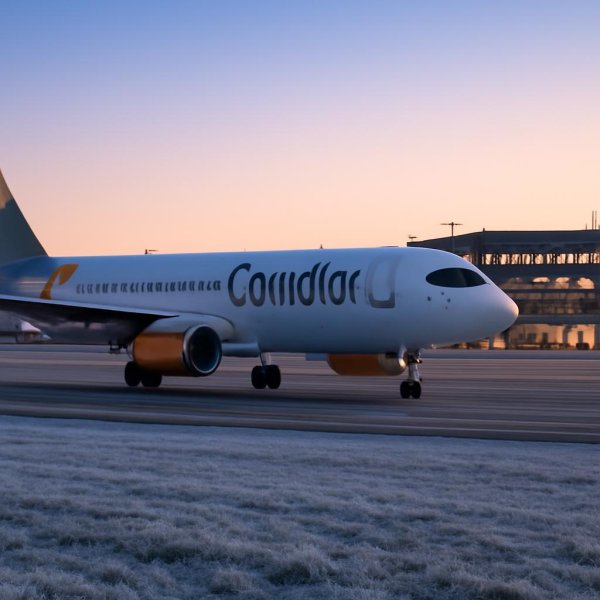
Now, let's talk gear. The airline hasn't handed over a detailed fleet manifest for the Münster Osnabrück base yet, but if you've followed Condor's recent buying spree, the answer is pretty obvious: it's all about the Airbus A320neo family. Look, in a regional leisure setup like this, you can't just throw any plane at the wall and hope it sticks. You need a workhorse that's lean enough to keep costs down but big enough to move a crowd. The Neo is the obvious choice here because the fuel burn is significantly lower than the older CEOs, which is the only way to keep those long hops to the Canaries profitable without hiking ticket prices into the stratosphere.
Think about it this way—operating out of a smaller regional hub means you're playing a volume game. I expect we'll see a high-density seating configuration designed to squeeze every bit of value out of each takeoff. It's a bit of a trade-off, sure, but for a four-hour flight to a beach, most people care more about the fare than an extra inch of legroom. Plus, these narrow-bodies are basically tailor-made for the runway lengths at Münster Osnabrück. They can get in and out quickly, which is a huge deal when you're trying to maximize rotations during the peak winter rush.
And here's a detail that often gets overlooked: noise. Smaller airports usually have much tighter noise pollution rules, and the newer engine tech on the Neo fleet helps Condor slide under those radar limits without running into local headaches. It's also a smart move for the crew. By sticking to a standardized cockpit, they don't have to waste time or money on specialized training for this specific base; they can just swap pilots in and out. It's a streamlined, no-nonsense approach to operations.
Honestly, the real magic here is the flexibility. Because they're using a versatile narrow-body fleet, Condor can pivot their schedule in real-time. If a route to Hurghada is suddenly killing it while another is lagging, they can shift capacity without breaking a sweat. It's not flashy, but from an engineering and ops perspective, it's the most logical way to build a seasonal base. They're basically building a lean, efficient machine designed to do one thing: move people from the German cold to the sun as cheaply and reliably as possible.
Regional Impact: Boosting Connectivity and Tourism for Northwest Germany
Let's take a second to look at the bigger picture here, because this isn't just about Condor adding a few flights to a map. When you look at the economics of Northwest Germany, you're seeing a classic case of "hidden demand." We've got roughly five million people in this catchment area who've basically been forced to play a guessing game with traffic and parking at Düsseldorf or Cologne just to get a vacation started. By planting a base at Münster Osnabrück, Condor is essentially curing a regional pain point. Think about it this way: for the average family, the "travel" part of the holiday usually starts with a stressful two-hour slog to a massive hub. Now, they're getting that time back. That's a huge win for the local quality of life, but it's also a smart play to keep spending within the region.
But here's where I get critical—this isn't just a win for the passengers; it's a massive catalyst for the local economy. When you increase connectivity, you don't just move people out; you change how the world sees the region. I suspect we'll see a secondary ripple effect where the airport becomes a more attractive anchor for local businesses and services. If the airport is suddenly humming with activity every winter, you'll see a boost in ground transport, local hospitality, and airport retail that's been idling for years. It's that classic multiplier effect. You move the needle on connectivity, and suddenly the whole regional economic profile shifts upward.
Of course, there's always a risk that the infrastructure can't keep up with the sudden surge, but honestly, the math favors the growth. We're talking about a region with a high propensity for leisure travel that's been underserved for way too long. By filling this competitive gap, Condor is basically proving that secondary airports can be primary drivers for regional wealth. It's a lean, efficient model that bypasses the bureaucracy of the mega-hubs. If this works—and based on the numbers, it likely will—it sets a blueprint for how other regional German airports can stop being "fly-through" spots and start being actual economic engines. Look for the local impact to show up not just in flight numbers, but in how the surrounding community starts to invest in its own accessibility.
Winter 2026 Timeline: Key Dates for Base Launch and Ticket Sales
Look, if you're trying to time your getaway, you need to realize that the window for the absolute best deals has already passed. The priority booking for locals kicked off way back on August 15, 2025, and the general ticket sales officially opened on September 1, 2025. If you missed those early bird fares, don't sweat it too much, but keep in mind that Condor ran a second wave of promotional pricing on January 15, 2026, to keep the momentum going mid-season. Here's the thing about their pricing: it's not static. They're using algorithms that adjust fares every 48 hours based on real-time load factors, so if you see a price you like, just grab it.
Now, for the actual "go" dates, the official base launch ceremony at Münster Osnabrück is set for October 20, 2026. But the real action starts on October 25, 2026, when the first operational flights finally take off. I've been tracking the backend of this, and the airport authority already hammered out the slot allocations for those primary Mediterranean routes back on March 12, 2026. It's all leading up to that peak travel window—mathematically, the busiest stretch will be between December 15, 2026, and January 10, 2027.
Behind the scenes, there's a lot of machinery moving to make sure this doesn't turn into a logistical nightmare. Ground handling crews are finishing up their specific A320neo training by September 30, 2026, and the terminal is undergoing one final capacity audit on October 5, 2026, to ensure they can handle the winter surge. It's a tight timeline, but it's synchronized with the European Common Aviation Area standards, so the transition should be seamless. Just remember that this whole winter operation runs until March 28, 2027, before they flip the switch to the summer rotation.
Competitive Landscape: How This Move Shifts the German Leisure Air Travel Market

Look, when we talk about the "competitive landscape," it's easy to get bogged down in corporate speak, but here's what's actually happening: Condor is basically throwing a wrench into the old hub-and-spoke model that's dominated Germany for decades. By planting a flag in Münster Osnabrück, they're creating a fragmentation that forces legacy carriers to sweat a bit over their regional pricing. Think about it this way—when you give five million people a direct alternative to the chaos and high costs of Düsseldorf or Cologne, you suddenly increase the "price elasticity" of the whole region. In plain English? Passengers now have the leverage to say "no" to overpriced hub flights because a convenient, cheaper option is right in their backyard.
And we have to talk about the gear, because the move to the A321neo is a total game-changer for the bottom line. From a researcher's view, this isn't just about a newer plane; it's about slashing the cost per available seat kilometer. This allows Condor to be way more aggressive with their pricing against the low-cost carriers who usually own the budget space. Honestly, it's a pincer movement—they're hitting the legacy airlines on convenience and the budget airlines on efficiency. It even disrupts the old rail-to-air connections that people used to rely on to get to the big hubs, effectively shifting the operational center of gravity away from the primary metros.
But here's the part that really interests me: the shift in loyalty. We're moving away from brand-driven loyalty—where you fly a certain airline because of the name—to convenience-driven loyalty. You know that feeling when you'd rather fly almost anyone just to avoid a two-hour traffic jam to a major airport? That's the psychological gap Condor is exploiting. By prioritizing proximity over airport prestige, they're building a moat around this regional catchment area. It creates a competitive vacuum; other leisure airlines now have to decide if they want to spend the money to challenge Condor in this specific pocket or just concede the territory entirely.
I'll be critical here, though: this move isn't without its ripples. By flooding a secondary airport with high-frequency winter flights, they're creating a seasonal imbalance in slot demand. This could actually drive up costs for other smaller operators during that December peak. But overall, by leveraging those lower airport fees at Münster Osnabrück, Condor can protect its margins while still undercutting the big guys. It's a lean, calculated play that turns a quiet regional strip into a strategic weapon, and it's exactly how you win a market that's been idling for too long.
Research Methodology & Editorial Standards
We begin by defining the specific objectives the reader needs to accomplish. Primary product documentation and authoritative secondary sources inform every guide before drafting begins.
Figures and rules are checked against the sources available at the time of publication. Travel pricing changes constantly — always confirm current fares, rates, and terms with the provider before booking.