
Legendary Aviation Pioneers That Shaped Modern Air Travel History
It’s funny—after changing the course of human history, they both preferred the reliability of a train over the very machines that made them famous.
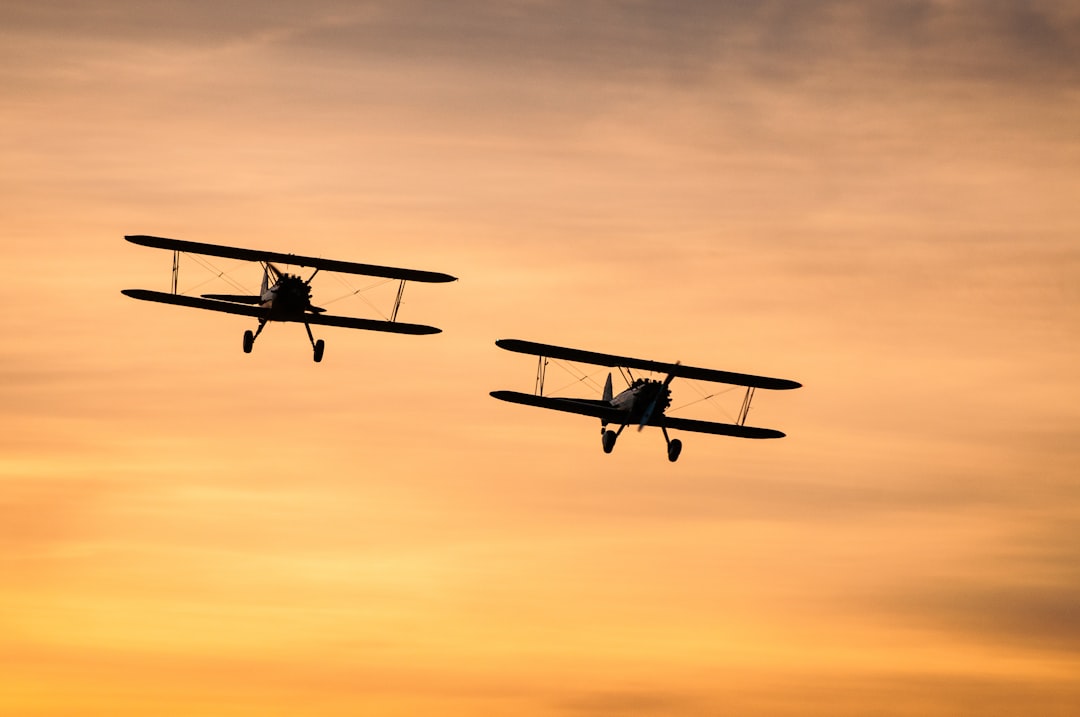
The Wright Brothers and the Dawn of Controlled Powered Flight
Let’s talk about the Wright brothers for a second, because we often view their 1903 flight at Kitty Hawk as a singular, magical moment, but the reality was far more of a grind than the history books let on. They didn't just stumble into the sky; they financed their entire operation out of their own pockets, using the profits from their bicycle shop in Dayton to fund years of trial and error. It’s wild to think they built a homemade, six-foot-long wind tunnel just to test over 200 different wing shapes before they even felt ready to build a flyer. When they finally needed an engine, they couldn't find a manufacturer who could meet their weight requirements, so their mechanic, Charles Taylor, had to cast the block from aluminum himself.
The technical brilliance here wasn't just about getting off the ground; it was about the fundamental shift toward maneuverability. Most people assume they started with standard landing gear, but they actually used a wooden monorail track for those early takeoffs. They also had this realization that an airplane needed to be inherently unstable to be truly controllable, which led them to develop that clever wing-warping system. They spent countless hours logging over 100 flights at Huffman Prairie in Ohio, treating the sky like a laboratory while the rest of the world was still skeptical of the whole idea.
If you look at the documentation they left behind, you’ll see they were as much engineers as they were inventors, keeping meticulous handwritten journals of every single design iteration. There was a fair bit of internal tension and debate, with some recent research even suggesting Wilbur might have carried more of the technical load than we traditionally acknowledge. They were notoriously protective of their work, refusing to fly in public until they had ironclad patents, which honestly just fed the doubt from the scientific community at the time. It’s funny—after changing the course of human history, they both preferred the reliability of a train over the very machines that made them famous.
Breaking Barriers: Amelia Earhart and the Golden Age of Aviation
When we talk about the Golden Age of Aviation, it’s easy to get caught up in the romance of the era, but honestly, Amelia Earhart’s career was defined more by cold, hard engineering than by sheer luck. Think about that 1932 solo transcontinental flight from Los Angeles to Newark; she wasn't just flying, she was managing a sophisticated Lockheed Electra 10E with the kind of precision that would put many modern private pilots to shame. She understood that success lived or died by the details, like testing fuel consumption against air pressure to squeeze every possible mile out of those Pratt & Whitney engines. It’s wild to imagine her sitting in a non-pressurized cabin, battling freezing temperatures while relying on dead reckoning and basic radio direction finding, long before we ever had the luxury of GPS.
And you really have to admire the professional rigor she brought to the table, which often gets overshadowed by the celebrity status she carried. She didn't just fly; she was an assistant general traffic manager for Ludington Airline, helping pioneer the high-frequency shuttle model we take for granted today. When she stopped in places like Havana, she wasn't just a passenger; she was out on the tarmac inspecting airfield infrastructure with the eye of someone who knew that ground facilities were the true backbone of global transit. She even stripped out cabin upholstery to save weight for extra fuel, showing a level of trade-off analysis that would make any modern flight engineer nod in approval.
But the most compelling part for me is how she used that platform to pull others up alongside her. By serving as the first president of The Ninety-Nines, she turned a lonely, high-stakes career path into a support network for female pilots, creating a blueprint for the industry that lasted decades. Her navigational charts from that time are still studied today because they show a grasp of oceanic meteorology and wind patterns that were honestly ahead of their time. She wasn't just breaking barriers for the sake of the headlines; she was setting the technical and organizational standards that helped transform aviation from a dangerous spectacle into a legitimate, reliable mode of transport.
Charles Lindbergh and the Rise of Transatlantic Commercial Potential
When we look back at Charles Lindbergh’s flight, it’s easy to romanticize the lone pilot arriving in Paris, but the real story is about how that singular journey shifted the entire economic trajectory of aviation. Think about the Spirit of St. To hit the range needed for that crossing, Lindbergh actually removed the windshield to fit a massive fuel tank, forcing him to rely on a periscope just to see ahead. He even swapped out a standard pilot seat for a light wicker version and ditched both the radio and parachute to save every possible ounce. It sounds reckless today, but it was a cold, calculated experiment in power-to-weight ratios that forced the industry to rethink what was mechanically possible.
The engine performance was arguably the most critical data point for the future of the industry. That Wright Whirlwind J-5C didn't just carry him across the ocean; it ran for 33.5 hours straight without a single mechanical hiccup. That level of reliability was the turning point that convinced wary investors that the Atlantic wasn't an impossible barrier, but a future transit corridor. He used great circle navigation to cut his flight time, and his ability to manage wing ice by shifting altitudes showed that human ingenuity could solve even the most brutal atmospheric problems. It wasn't just a win for a pilot; it was a proof of concept for the commercial mail and passenger routes that would soon follow.
The ripple effect on public policy and funding was almost immediate once he touched down. His arrival acted as a catalyst for the Guggenheim Fund to dump millions into infrastructure and research, effectively moving aviation from a hobbyist pursuit into a serious sector of the economy. That momentum pushed the government to pass the Air Commerce Act, finally setting the standards for pilot licensing and aircraft airworthiness that we still rely on to build safe, scalable fleets today. He proved that one person could handle the transoceanic workload, which really paved the way for the development of the autopilot systems and cockpit tech we see in every cockpit now. Honestly, without that specific push to prove long-distance reliability, we might have stayed stuck in the era of short, regional hops for decades longer than we actually did.
Engineering the Future: The Legacy of Iconic Aircraft Manufacturers
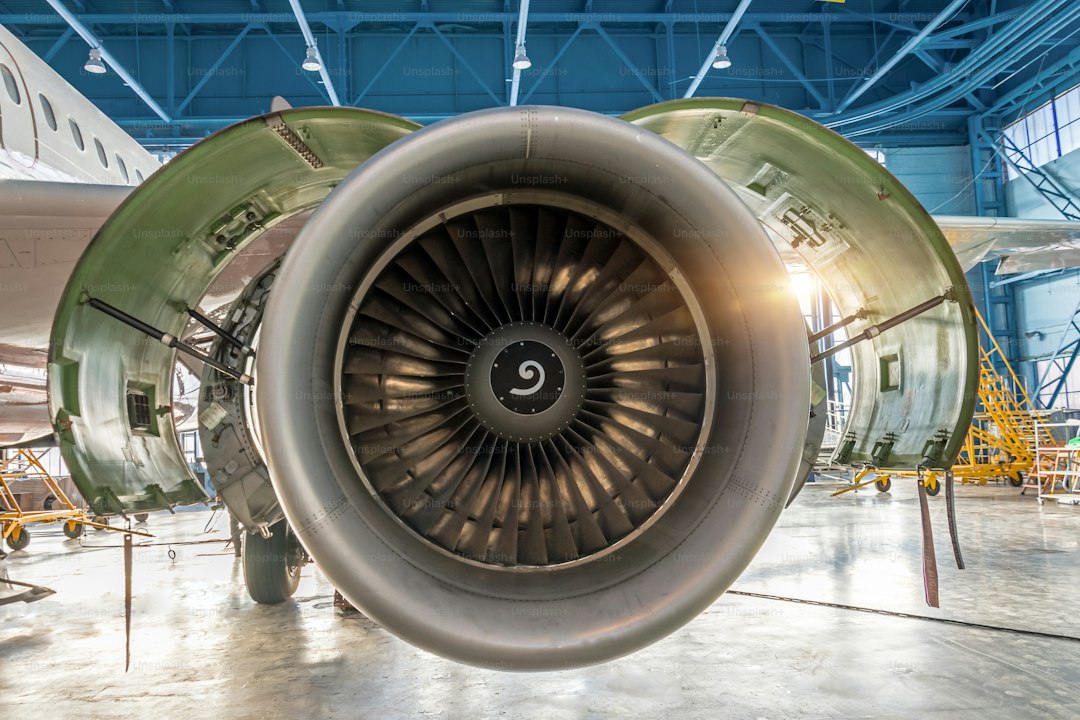
When we look at the evolution of flight, it’s easy to focus solely on the pilots, but the real story is written in the steel and geometry left behind by the manufacturers who actually built these machines. You see, an aircraft is really just a collection of hard-won compromises, like the Boeing 747’s famous upper deck hump, which wasn't an aesthetic choice at all but a clever hack to allow for a hinged nose door in case cargo demand beat out passenger travel. It’s wild to think that such a massive, iconic silhouette was essentially a contingency plan for a market shift that never quite happened the way they expected. Or take the Airbus Beluga, which uses that strange, low-mounted cockpit just so the nose can swing open to swallow oversized parts whole, proving that utility almost always dictates form in the end.
If you want to understand how we got here, you have to look at the transition from early, manual assembly to the kind of precision we see today. Back in the day, the jump from manual riveting to robotic fastening wasn't just about speed; it actually trimmed nearly 15 percent of the structural weight off these airframes because machines could hold tolerances that human hands simply couldn't match. It’s the same logic behind the Concorde’s ogival delta wing, which had to solve the impossible math of needing high lift for takeoff while maintaining low drag at Mach 2. Designers weren't just guessing; they were refining the area rule in wind tunnels to narrow fuselages right where the wings meet the body, a move that still governs how we build transonic planes today.
And honestly, the challenge isn't just building new tech; it’s keeping the history alive when the blueprints literally disappear. I’ve been looking into how manufacturers try to restart legacy lines, and it’s a nightmare because the original specialized tooling is usually long gone, forcing engineers to use 3D scanning and digital twins just to replicate a single part that meets modern safety standards. It really makes you appreciate places like the Brooklands site in the UK, which held onto that lineage from simple wood-and-canvas biplanes all the way to supersonic jets. Whether we're talking about the shift to glass cockpits to stop pilot overload or the move to carbon-fiber composites that let us breathe easier at higher altitudes, it’s clear that the future of air travel is just a constant, iterative reaction to the limitations of the past.
The Impact of Military Innovation on Post-War Civilian Travel
If you’ve ever wondered why modern air travel feels like such a seamless, high-tech experience, you have to look at the massive surge in military innovation that spilled over into the civilian world after the big wars. It’s honestly wild to think that the very systems keeping us safe at 30,000 feet were once born out of the absolute necessity of combat. Take the Douglas C-54 Skymaster, for instance; those surplus frames gave commercial airlines their first real taste of reliable, long-range pressurized travel, essentially shrinking the globe overnight. Before that, we were basically winging it with far less capable gear, but the pressure to maintain air superiority during the war forced a level of engineering speed that we just didn't see in private industry back then.
And the tech stack we take for granted now? It’s all rooted in those early, desperate adaptations. Radar, which started as a way to track night fighters, became the backbone of our modern air traffic control systems, moving us from visual guesswork to the precise, high-density flight paths we navigate today. Then you have the jet engine—pushed to the limit for interceptors, it slashed transatlantic travel times by more than half once it hit the commercial market. I think it’s easy to forget that everything from the synthetic rubber in those heavy-duty landing tires to the fire-resistant cabin materials we rely on is just a descendant of military-grade research meant to keep bombers in the sky.
Even the way we plot our routes across the ocean relies on military meteorology and pressure-pattern navigation that was once purely tactical. It’s kind of a strange irony that the same G-force analysis used to train fighter pilots now informs how we design seat ergonomics to keep us comfortable and safe during turbulence. Even the tricycle landing gear, which we see on every jet at the gate, became the industry standard because it was the only way to ensure stability on those rough, makeshift runways during the war. It’s clear that our ability to traverse the world safely today is largely a legacy of engineers who were tasked with solving the hardest problems imaginable under fire, and honestly, we’re still just iterating on their genius.
Visionaries of Modern Aviation: Shaping the Global Skies of Tomorrow
When we look at the trajectory of modern flight, it’s easy to focus on the flashy hardware, but I think the real story lies in the quiet evolution of how we actually solve engineering problems. If you trace the history of the de Havilland Comet, you’ll see that our current obsession with fuselage integrity was born from the hard, tragic lessons of square windows causing metal fatigue. It’s wild to realize that every time you fly today, you’re benefiting from that specific shift toward fail-safe structural design. We’ve moved from those early, primitive pressure chambers to a world where we use Computational Fluid Dynamics to simulate billions of air particles before a single piece of metal is ever cut. It’s a total game-changer, and honestly, it makes you wonder how we ever managed to build anything at all without these digital twins.
But the innovation didn't stop with the airframe; the way we control these machines has undergone an equally massive transformation. When Airbus pushed the A320 into the era of fly-by-wire, they weren't just swapping cables for signals; they were cutting hundreds of pounds of weight to redefine control precision. I always think about Sir Frank Whittle, who spent years fighting for his turbojet design because he knew the robustness of a centrifugal compressor was the way forward, even when everyone else was looking elsewhere. That kind of stubborn vision is exactly what led to the supercritical airfoils we use today, which let us cruise efficiently near the speed of sound. It’s a constant, iterative process of stripping away drag and inefficiency, one breakthrough at a time.
Looking ahead, I’m really struck by how the passenger experience is quietly being transformed by the materials themselves. Think about the Boeing 787; by moving to carbon fiber reinforced polymers, engineers didn't just make a lighter plane, they actually enabled higher cabin humidity and larger windows that genuinely reduce the physical toll of long-haul travel. And we’re seeing that same kind of smart thinking in the shift from ground-based VOR stations to satellite-based GPS, which gives us these precise, curved landing paths that cut down on fuel burn and noise. It’s all part of this move toward predictive maintenance, where sensors pull thousands of data points mid-flight so that parts are swapped out before a failure even happens. It’s not just about getting from A to B anymore; it’s about refining the machine to be a living, breathing part of the global grid.
Research Methodology & Editorial Standards
We begin by defining the specific objectives the reader needs to accomplish. Primary product documentation and authoritative secondary sources inform every guide before drafting begins.
Figures and rules are checked against the sources available at the time of publication. Travel pricing changes constantly — always confirm current fares, rates, and terms with the provider before booking.