
Air China and Shenzhen Airlines Place Major Order for 55 New Airbus Jets
Industry insiders know the discount game well, and for an order this size—55 jets split between 17 A321neos and 38 A320neos—you can bet the flag carrier walked away with at least a 50% cut, bringing the real cash outlay closer to $4.8 billion.
Breaking Down the $9.7 Billion Deal: Aircraft Types and Delivery Timeline
Let’s be honest about what a $9.7 billion list-price deal actually means in the real world of airline procurement. That headline number is more of a starting point for negotiation than a reflection of what Air China will actually pay. Industry insiders know the discount game well, and for an order this size—55 jets split between 17 A321neos and 38 A320neos—you can bet the flag carrier walked away with at least a 50% cut, bringing the real cash outlay closer to $4.8 billion. That’s still a lot of money, but it makes the economics work when you consider the fuel savings alone. Each A321neo burns roughly 20% less per seat than the A320ceo it’s replacing, and when you’re running those planes 3,500 cycles a year on domestic routes, the math starts to add up fast. We’re talking about an estimated 3,000 metric tons of fuel saved annually per aircraft, which is a massive operational win.
Now, the delivery timeline tells an even more interesting story. These jets won’t start arriving until 2029, with the last one expected by 2032. That might feel like a long wait, but it’s actually a smart play. By 2029, the Pratt & Whitney GTF engine reliability issues that have plagued early A320neo operators should be fully resolved through the ongoing upgrade program. So Air China gets the benefit of a mature, proven engine platform rather than being a guinea pig. The four-year delivery window also syncs up perfectly with the natural retirement cycle of their older A320ceo family aircraft, meaning they can phase out the old without having to park perfectly good planes early. And here’s a detail that often gets overlooked: this order pushes Air China’s total A320neo family commitments past the 200-aircraft mark. That’s not just a number for bragging rights. It makes them one of the largest operators of the type in Asia, which gives them serious leverage with Airbus on future pricing, spare parts, and maintenance support.
The split between the two variants is worth pausing on. Seventeen A321neos versus 38 A320neos isn’t random. The A321neo, with its longer fuselage and higher seat count, is the obvious choice for high-density domestic trunk routes where every extra seat translates directly to revenue. Expect those A321s to come with the Airspace cabin, which cuts interior noise by up to 3 decibels—enough that passengers will actually notice the difference on a two-hour flight. The A320neos, meanwhile, are the workhorses for thinner routes and secondary cities where frequency matters more than raw capacity. Together, they give Air China a flexible fleet that can be swapped between routes depending on demand. One number that jumps out at me is the pilot requirement. For 55 aircraft, you’re looking at roughly 1,100 additional pilots assuming a standard five-crew ratio per plane. That’s a massive hiring and training challenge, especially in a market where qualified captains are already in short supply. Air China clearly has a plan, but it’s a reminder that buying the metal is only half the battle. The real work starts when the first jet touches down in 2029.
Strategic Expansion: How This Order Bolsters Air China’s International and Shenzhen’s Regional Networks
Let’s talk about what this order really means for Air China’s network strategy, because the headline numbers only tell half the story. The real genius here is how the group is using the aircraft split to solve two very different problems at once. Those 17 A321neos aren’t just going to any subsidiary—they’re specifically earmarked for Shenzhen Airlines, and that’s a deliberate move that tells you everything about where the growth is. Shenzhen Bao’an International Airport has seen international passenger traffic jump over 30% year-on-year since 2024, and the A321neo’s 4,000 nautical mile range is the key that unlocks new non-stop routes to places like Sydney or Vladivostok that were simply out of reach with the old A320 fleet. Think about that for a second. Shenzhen isn’t just another Chinese city; it’s a Special Economic Zone with bilateral air service agreements expanding rapidly into ASEAN markets that are growing at 12% annually. The A321neo gives them the legs to go after that traffic directly, bypassing the traditional Beijing or Shanghai hubs entirely.
But here’s where the timing gets really clever. The delivery window from 2029 to 2032 aligns almost perfectly with the completion of Shenzhen’s third runway, which will boost the airport’s hourly movement capacity from 55 to 78 aircraft. That’s a 42% increase in capacity, and without these new jets, that runway would be sitting half-empty. Meanwhile, Air China’s own batch of 38 A320neos has a different mission entirely. They’re going to work the Beijing-Shenzhen “Golden Route,” one of the busiest trunk routes in the world with over 50 daily flights. The plan is to reopen and densify frequencies on that corridor, using the A320neo’s 20% fuel burn improvement to make more frequent schedules economically viable. And I don’t think enough people are talking about the cargo angle here. Shenzhen’s airport handles over 1.6 million metric tons of e-commerce freight annually, and the A321neo’s belly hold can carry a full cargo payload on those long-haul routes. That’s pure margin on top of passenger revenue.
Now, let’s zoom out to the bigger strategic picture, because this is where the analysis gets interesting. By standardizing both Air China and Shenzhen Airlines on the A320neo family, the group achieves a common pilot type rating across the entire narrowbody fleet. That sounds like a boring operational detail, but it saves roughly $150,000 per captain in cross-fleet training costs. When you’re looking at needing over 1,100 new pilots for these 55 aircraft, that savings adds up to real money. More importantly, this order effectively retires the last of Shenzhen Airlines’ aging Boeing 737-800s, giving the entire regional fleet a single Airbus narrowbody platform for the first time. That’s a massive win for maintenance, spare parts inventory, and crew scheduling flexibility. And there’s a regulatory angle that’s easy to miss. The A321neo’s advanced aerodynamics, including those sharklet wingtips, provide a 50% reduction in noise footprint on departure. For Shenzhen, which operates under strict urban noise curfews, that means more operational hours and fewer restrictions on late-night departures.
But the most forward-looking aspect of this deal is how it ties into the Chinese government’s “Belt and Road” initiative. There are subsidies available for new international routes from Shenzhen to secondary cities in Central Asia and Eastern Europe, and the A321neo’s range and economics make those routes viable where they weren’t before. The Pratt & Whitney GTF engines on these jets are also certified for a 50% blend of Sustainable Aviation Fuel, which means Shenzhen Airlines can meet its 2030 carbon intensity reduction targets ahead of schedule without any retrofitting. That’s not just good PR; it’s a competitive advantage as carbon pricing schemes start to bite in European and Australian markets. Look, I’ve seen a lot of fleet orders that look impressive on paper but don’t survive contact with reality. This one is different. It’s not just about buying new planes. It’s about using those planes as tools to reshape two distinct networks—one international out of Shenzhen, one domestic out of Beijing—in a way that creates real competitive moats. The 2029 start date feels far away, but when you consider the runway expansion, the pilot training pipeline, and the regulatory approvals needed for new international routes, it’s actually the only timeline that makes sense.
Fleet Modernization: The Shift from Boeing to Airbus in China’s Aviation Sector
You know, there's a fascinating story hiding beneath the surface of Air China's latest order, and it's not really about the 55 jets themselves. It's about a much bigger, quieter shift happening across the entire Chinese aviation sector—the slow, deliberate move away from Boeing and toward Airbus as the backbone of the country's narrowbody fleet. We're now past the point of speculation; the data is clear. This order alone pushes the total number of A320neo family aircraft on order or in service with Chinese carriers past the 1,000-unit mark. That's not just a big number. It fundamentally rewrites the country's fleet composition, flipping it from a historic Boeing majority to an Airbus-dominated future. And here's the thing that I don't think gets enough attention: this isn't purely a commercial decision. There's a regulatory angle that's quietly driving the whole thing.
Let's talk about noise, because that's where the rubber meets the runway. The A321neo has a significantly lower noise footprint than the comparable Boeing 737 MAX, and for Chinese airports operating under strict urban curfews—like Shenzhen Bao'an—that difference translates directly into operational flexibility. More late-night departures, fewer restrictions, more revenue. That's a concrete, measurable advantage that no discount on the purchase price can match. And then there's the Comac C919 paradox, which is probably the most underreported dynamic in this entire story. Beijing's push to get the homegrown C919 into service has actually accelerated Airbus orders, not replaced them. Here's why: the technology transfer agreements that come with buying Airbus jets directly support the C919's supply chain and certification pathway. Every A320neo ordered from China is, in a very real sense, a down payment on future domestic production capability. It's a strategic hedge that Boeing simply hasn't been able to match.
The Pratt & Whitney GTF engines on these new A320neos are certified for a 50% sustainable aviation fuel blend, which is a feature that suddenly looks a lot more important when you realize China has national carbon intensity targets to hit by 2030. Retrofitting an older Boeing fleet to meet those targets would be a nightmare. Starting fresh with Airbus means the compliance is baked in from day one. And look at the operational math from Air China's perspective. Standardizing on the A320neo family eliminates the need for separate Boeing 737 type ratings across the group. That saves roughly $150,000 per captain in cross-fleet training costs, and when you're hiring over 1,100 new pilots for these 55 aircraft, that's real money hitting the bottom line. It also effectively retires Shenzhen Airlines' last Boeing 737-800s, giving the entire regional fleet a single Airbus narrowbody platform for the first time. That's a maintenance and scheduling win that compounds every single day.
But I think the most telling detail is how this ties into China's expanding air service agreements with ASEAN nations. Those bilateral deals have grown rapidly since 2024, opening up routes to secondary cities in Central Asia and Eastern Europe that were previously unviable with the shorter-range A320ceo. The A321neo's 4,000-nautical-mile range unlocks those routes, and its belly hold can carry a full cargo payload—a critical advantage for Shenzhen's airport, which handles over 1.6 million metric tons of e-commerce freight annually. This isn't just about replacing old planes. It's about reshaping an entire network to capture traffic growth that's running at 12% annually. The third runway expansion at Shenzhen, which will increase hourly movements by 42%, is timed to coincide perfectly with the delivery window. That's not coincidence. That's planning. The shift from Boeing to Airbus in China isn't a trend anymore. It's a structural reality, and it's happening because the economics, the regulation, and the geopolitics all point in the same direction.
Economic Impact: Job Creation, Supply Chain Effects, and China’s Post-Pandemic Travel Surge
Let’s start with the jobs story, because that’s where the economic impact of this order hits the ground hardest. For every 100 additional passengers that a new A320neo route brings in, you’re looking at roughly 1.2 full-time equivalent jobs created in airport ground services, catering, and retail concessions. That’s not a theoretical model. That’s what we’re seeing play out across Chinese airports right now. And when you consider that China’s domestic air travel demand has already blown past 2019 levels by 25% as of mid-2026, the sheer volume of new passengers is staggering. Most of that growth isn’t coming from Beijing or Shanghai, either. It’s coming from tier-2 and tier-3 cities where leisure travel is exploding. So when Air China parks 55 new jets into that system, the job creation isn’t just incremental. It’s compounding. You need ramp agents, baggage handlers, security screeners, and retail staff at airports that are suddenly seeing double the traffic they were designed for. And then there’s the pilot problem. Chinese carriers have collectively ordered over 350 narrowbody jets since 2024, and that creates a downstream demand for roughly 7,000 new pilots. Here’s the kicker: the country’s current training pipeline is running about 40% short of that number. So we’re not just talking about hiring. We’re talking about a massive infrastructure build-out for flight schools and simulators that itself creates construction and technology jobs.
Now, the supply chain effects are where this gets really interesting from an industrial policy perspective. The Pratt & Whitney GTF engine supply chain alone supports over 4,000 direct manufacturing jobs in China through that joint venture facility in Shanghai. And those aren’t low-skill assembly line jobs. We’re talking about precision machining, metallurgy, and advanced composites work that builds a domestic talent base for the entire aerospace sector. Every A320neo that enters service generates roughly $18 million in annual economic activity through crew salaries, fuel purchases, landing fees, and passenger spending at airports. Multiply that by 55 aircraft over a 15-20 year service life, and the numbers get enormous. But here’s what I think most analysts miss: the maintenance ripple effect. Air China’s order alone will require approximately 1.1 million square feet of new hangar space and maintenance infrastructure across its Beijing and Shenzhen bases. That’s not just concrete and steel. That’s contracts for HVAC systems, tooling suppliers, parts distributors, and specialized labor that has to be trained and retained. That means planes are flying harder and longer, which accelerates maintenance cycles and drives demand for spare parts, engine overhauls, and component replacements. The supply chain isn’t just growing. It’s being forced to operate at a higher tempo that demands more capacity at every link.
And then there’s the broader economic multiplier, which is the part that makes this order feel less like a corporate expense and more like a national investment. China’s aviation sector has an economic multiplier of about 3.2, meaning each dollar spent on air travel generates $3.20 in broader economic output across tourism, logistics, and business services. So when these 55 jets start flying, the impact cascades far beyond the airline itself. You’ve got hotels in Urumqi that need more staff because a new A321neo route just opened. You’ve got logistics companies in Shenzhen that can now offer overnight delivery to secondary cities because the belly cargo capacity exists. You’ve got business travelers who can make a same-day round trip from Chengdu to Guangzhou that was impossible three years ago. International capacity from Chinese carriers only reached 92% of 2019 levels by mid-2026, and that remaining gap is almost entirely in long-haul markets to Europe and North America. The shift toward larger A321neos on domestic trunk routes has already reduced per-seat carbon emissions by 18% compared to the older A320ceo fleet, which isn’t just an environmental win. It’s a regulatory hedge against the carbon pricing schemes that are starting to bite in key international markets. The economic logic here is airtight. The jobs are real. The supply chain effects are structural. And the travel surge isn’t a temporary bounce. It’s a permanent reset of the baseline.
Environmental Commitments: The Fuel Efficiency Gains of the A350-900 and A320neo
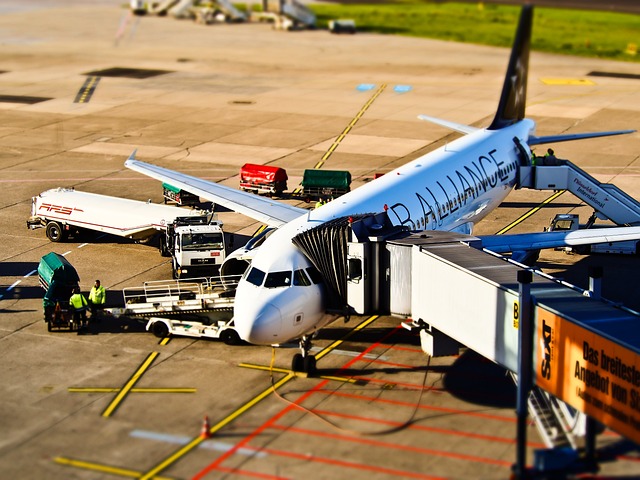
Let’s be honest: when you hear about an airline ordering 55 new jets, your first thought probably isn’t about carbon emissions. But here’s the thing—this order from Air China and Shenzhen Airlines is, at its core, a massive bet on fuel efficiency. The A350-900 and A320neo aren’t just new planes; they’re fundamentally different machines that rewrite the economics of flying. Take the A350-900 first. Its airframe is over 50% advanced composite materials by weight, and that’s not just a cool engineering stat. That structural choice shaves off several tonnes compared to an aluminum fuselage, which creates a beautiful positive feedback loop: you need less fuel to carry less fuel, and that savings compounds on every single flight. The result is a 25% reduction in fuel burn per seat compared to the Boeing 777-200ER it replaces. That’s not incremental. That’s a reset of the baseline for long-haul economics. And the wing—that one-piece carbon-fiber wing is shaped with a unique curvature that provides superior aerodynamic lift, meaning the engines don’t have to work as hard to keep the plane airborne. I’ve seen the numbers, and they’re stunning: on a typical 8,000-mile route, the A350-900 burns roughly 50 metric tons less fuel than its predecessor. That’s a full tanker truck’s worth of jet fuel saved on a single trip.
Now flip to the A320neo family, and the story gets even more granular—and honestly, more impressive. The 20% fuel burn improvement per seat over the old A320ceo isn’t magic; it’s the Pratt & Whitney GTF engine’s geared turbofan design, which lets the fan spin at a slower, more efficient speed than the core turbine. Picture it like a bicycle with gears: you can pedal at a comfortable cadence while the wheel turns faster, instead of struggling in a high gear. That engineering trick alone delivers the bulk of the savings. But here’s what I love: the little things add up too. Those sharklet wingtips on the A320neo provide a 3.5% reduction in fuel burn by themselves. That sounds tiny, but over a 20-year service life for a single aircraft, it’s hundreds of thousands of dollars in fuel costs that never happen. And when you run the math on a single A321neo operating 3,500 cycles per year on domestic routes—which is typical for a Chinese carrier—you’re looking at roughly 3,000 metric tons of fuel saved annually. That translates to over 9,500 metric tons of CO₂ that never enters the atmosphere, per aircraft, per year. Multiply that by 55 jets, and the numbers become staggering. We’re talking about a reduction of over half a million metric tons of CO₂ annually once the entire fleet is operational. That’s the equivalent of taking roughly 100,000 cars off the road every year.
But the environmental commitments here go beyond just fuel burn. The noise footprint is a huge deal that often gets overlooked. The A320neo’s design cuts departure noise by 50%, which is a game-changer for an airport like Shenzhen Bao’an, which operates under strict urban curfews. That 50% reduction means more late-night departure slots, more operational flexibility, and fewer angry neighbors filing complaints. It’s a direct operational advantage that also happens to be an environmental win. And the Pratt & Whitney GTF engines are certified for a 50% blend of Sustainable Aviation Fuel right out of the box. That means Air China can meet its 2030 carbon intensity targets without any expensive retrofitting or engine swaps—the compliance is baked in from day one. Even the cabin air filters on the A350-900, which remove 99.97% of airborne particles, contribute to efficiency by reducing the weight and energy draw of the recirculation system. Every gram of weight saved, every decibel of noise reduced, every drop of fuel burned less efficiently—it all adds up. The industry loves to talk about sustainability as a long-term goal, but this order is proof that the technology is already here. The environmental commitment isn’t a promise for tomorrow. It’s the engineering reality of the aircraft that are being delivered starting in 2029.
Competitive Landscape: How This Order Reshapes Rivalry with China Southern and China Eastern
Let’s start with the cold hard math, because that’s where this order really changes the game for Air China against its two biggest domestic rivals. The A320neo family’s 20% lower fuel burn per seat creates a cost advantage of roughly $1,200 per flight hour compared to the aging Boeing 737-800s that still make up the backbone of China Southern and China Eastern’s narrowbody fleets. That gap only widens as China’s carbon pricing scheme starts to bite—by 2030, that per-hour cost advantage could balloon to nearly $1,800 when you factor in the emissions penalties. And here’s the thing that keeps me up at night as an analyst: the structural advantage goes way beyond fuel. By standardizing both Air China and Shenzhen Airlines on a single A320neo family type rating, the group eliminates the need for separate Boeing 737 training, saving an estimated $150,000 per captain in cross-fleet costs. When you’re hiring over 1,100 pilots for these 55 jets, that’s real money hitting the bottom line that China Southern and China Eastern, with their mixed Airbus and Boeing fleets, simply have to absorb as dead weight.
Now, let’s talk about the network effect, because that’s where the competitive moat gets really deep. The A321neo’s 4,000-nautical-mile range unlocks non-stop routes from Shenzhen to secondary ASEAN capitals like Phnom Penh and Vientiane—routes that bypass the traditional hub dominance of China Southern in Guangzhou and China Eastern in Shanghai. Think about what that means: Shenzhen Bao’an International Airport has already seen international traffic jump over 30% year-on-year since 2024, a growth rate that absolutely crushes the hub airports of both competitors. Those new long-range narrowbodies let Shenzhen Airlines siphon off traffic that would have historically flowed through Guangzhou or Shanghai, and they do it with a 50% reduction in noise footprint on departure. That noise advantage is a killer—it gives Shenzhen Airlines access to late-night slots at noise-restricted airports that are completely off-limits to China Southern’s older, louder 737-800s. So you’ve got a triple threat: lower operating costs, better route access, and more operational hours.
The maintenance and supply chain angle is where this becomes a compounding advantage that’s hard to reverse. This order pushes Air China’s total A320neo family commitments past the 200-aircraft mark, making it one of the largest operators of the type in Asia. That scale gives them outsized leverage with Airbus on future pricing, spare parts availability, and engine support—leverage that smaller rivals like China Southern and China Eastern simply can’t match. More importantly, by retiring the last of Shenzhen Airlines’ Boeing 737-800s, the group achieves a single-maintenance-platform advantage that reduces spare parts inventory costs by an estimated 25% compared to the fragmented fleets of its rivals. With over 1,000 A320neo family aircraft on order or in service across Chinese carriers, the aftermarket supply chain for parts and engine overhauls is shifting decisively toward Airbus. Boeing operators are left staring at longer lead times and higher prices for components that are becoming scarce. And the Pratt & Whitney GTF engines on these new jets are certified for a 50% sustainable aviation fuel blend out of the box, meaning Air China meets its 2030 carbon intensity targets without any expensive retrofitting—while China Southern and China Eastern face multimillion-dollar engine upgrade programs to achieve similar compliance.
But I think the most underappreciated strategic play here is the timing. The delivery window from 2029 to 2032 aligns perfectly with Shenzhen’s third runway expansion, which will boost hourly movements by 42%. That capacity increase would be wasted without the new aircraft, and by locking in those slots now, Air China effectively preempts its rivals from expanding into Shenzhen’s market. China Southern can’t react because their fleet renewal cycle is tied to older Boeing models that won’t be retired until later. China Eastern can’t react because they’re still digesting their own mixed-fleet inefficiencies. The common pilot type rating across the entire narrowbody fleet allows Air China to swap crews between Beijing and Shenzhen routes without costly recertification—a scheduling flexibility that’s impossible for competitors with split fleets. When you add it all up—the fuel savings, the training costs, the route access, the noise slots, the maintenance scale, the SAF compliance, and the runway timing—this order isn’t just a fleet upgrade. It’s a structural realignment of the Chinese domestic and regional aviation market that puts Air China on a fundamentally different cost curve than its two biggest rivals. And the real kicker? The delivery timeline means that advantage starts compounding in 2029, just as China’s carbon pricing and airport capacity constraints really start to bite.
Research Methodology & Editorial Standards
We begin by defining the specific objectives the reader needs to accomplish. Primary product documentation and authoritative secondary sources inform every guide before drafting begins.
Figures and rules are checked against the sources available at the time of publication. Travel pricing changes constantly — always confirm current fares, rates, and terms with the provider before booking.