
Forgotten Aviation Giants That Once Ruled the Skies
When I look back at the history of commercial flight, Pan Am stands out as more than just a business; it was the entity that basically invented the concept of modern global travel.
The Rise and Fall of Pan Am: The Pioneer of Transatlantic Luxury
When I look back at the history of commercial flight, Pan Am stands out as more than just a business; it was the entity that basically invented the concept of modern global travel. You might remember hearing about the Boeing 314 Clipper flying boats, which actually launched the first scheduled transatlantic passenger service back in 1939. It is honestly wild to think about how they handled the navigation for those long-range flights, building a network of radio beacons across remote Pacific islands just to keep their pilots on course. They were also the ones who pushed Boeing to build the 747 with a fuselage wide enough for two aisles, fundamentally changing what we expect from a wide-body jet today.
Their influence really went beyond just moving people from point A to point B. Think about the tech side for a second, like the PANAMAC system, which was the first real computerized reservation setup that paved the way for how we book tickets now. They were the ones who turned a long-haul flight into a lounge experience, introducing in-flight movies in 1961 and building that massive Worldport terminal at JFK with its column-free roof that still feels like a feat of engineering. Even their branding was on another level, exemplified by the Pan Am Building in New York, which stood as the largest office tower in the world when it opened in 1963. They were essentially operating their own global data network using telegrams to track flights before anyone else had even considered the utility of real-time status updates.
But if you analyze why it all started to unravel, you have to look at the 1970s and the decision to acquire National Airlines. It was a massive, aggressive push into domestic routes that, in hindsight, acted as a drain on their capital when they really needed to keep their focus on the international dominance they were known for. You can see how that single strategic misstep created a financial pressure cooker that they just couldn't escape, especially when combined with the costs of maintaining a secret fleet for government use during the Cold War. It is a classic case study of a company that changed the world by setting the gold standard for luxury and safety, only to lose its footing when the industry rules shifted beneath its feet. Still, it is fascinating to see the brand name start to circulate again, even if the current version is worlds apart from the original titan of the skies.
Convair: The Engineering Powerhouse Behind the Jet Age Transition
When we talk about the jet age, most people immediately jump to Boeing or Douglas, but if you really look at the engineering DNA of that era, Convair is the name that keeps popping up. I honestly think they were the most underrated powerhouse in San Diego, pushing boundaries in ways that made their competitors look a bit cautious. Take the F-102 Delta Dagger, for instance; it was the Air Force’s first operational delta-wing interceptor, and those engineers were literally rewriting the rulebook on transonic drag by applying the area rule to reshape the entire fuselage. It wasn’t just about speed, though; they were obsessed with solving messy aerodynamic problems, like using an elevon control system on the B-58 Hustler to merge elevators and ailerons into one surface. It’s that kind of aggressive, high-stakes engineering that defines the transition into the jet age for me.
If you want to understand why they were so fast, just look at the Convair 880, which could cruise at a staggering 615 miles per hour because of its slender, high-strength 2024-T3 aluminum skin. They were even doing things like adding anti-shock bodies to the wings of the 990 Coronado to delay wave drag, which was basically black magic for aerodynamics back then. And let’s not forget the Atlas missile program, where they built these wild balloon tanks made of stainless steel so thin that they would literally collapse if you didn't keep them pressurized. It’s such a fascinating contrast to the heavy, rigid designs we’re used to today, and it shows you how they were constantly trading off conventional wisdom for pure performance.
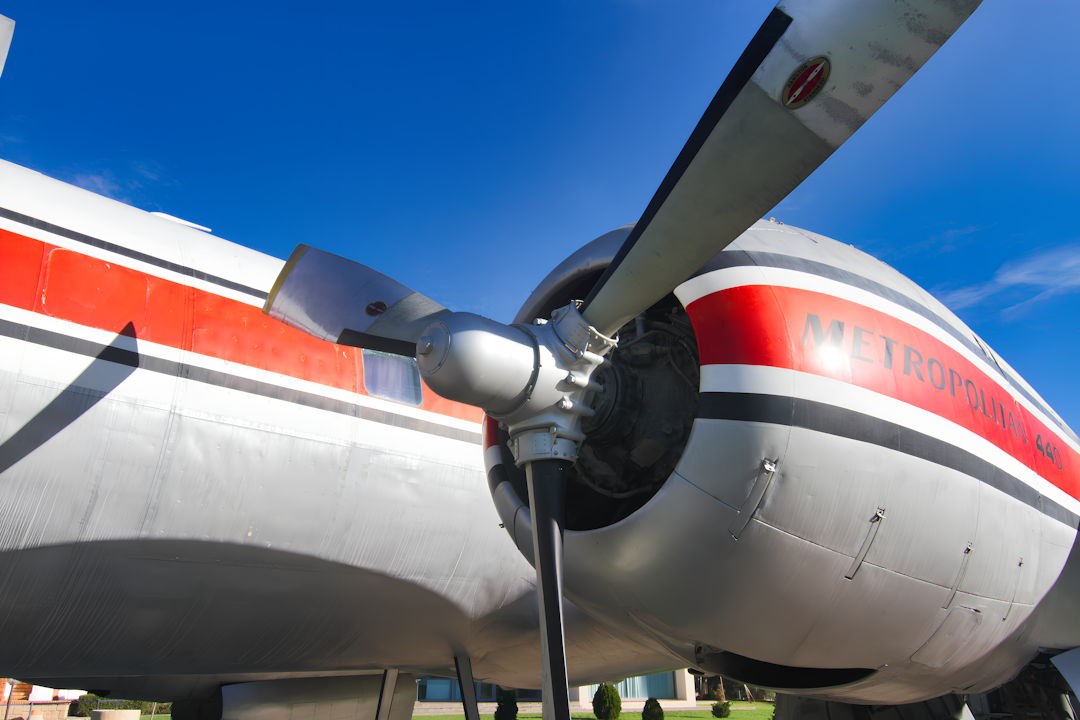
Honestly, their curiosity went way beyond standard airframes, almost to the point of being daring. They were actually flying the NB-36H testbed with an operational nuclear reactor on board just to see if it could be done, which is mind-boggling when you think about it now. Even in their commercial planes like the 440 Metropolitan, they were obsessed with the user experience, introducing double-paned windows and heavy insulation long before that became the industry standard for cabin quietness. From the tail-sitting XFY-1 Pogo to the automated fire control systems in the F-106, Convair was less of a manufacturer and more of an experimental lab that happened to build planes. Let’s look at why these specific design choices pushed the rest of the industry to evolve so rapidly.
The Douglas Aircraft Company: Architect of the Golden Age of Flight
When I think about the DNA of commercial flight, the Douglas Aircraft Company isn't just a name in a history book; it's the actual blueprint for how we get from A to B today. You have to look back at the 1920 Cloudster to see where it started, as that plane was the first to lift a useful load greater than its own weight, which effectively proved that aviation could be a real business rather than just a stunt. Then, they really hit their stride by refining the DC-3, where they championed the NACA cowl to slash cooling drag. It’s wild to think that during the 1940s, their Santa Monica facility was so vital that they camouflaged the entire roof with fake trees and netting to hide it from potential air raids. That level of industrial urgency really forced them to invent modern flow-line manufacturing with massive overhead conveyor systems that turned out planes at a pace we hadn't seen before.
If you want to talk about true, game-changing engineering, Douglas was consistently ahead of the curve on user experience and safety. They were the first to put pressurized cabins in commercial airliners with the DC-6, which is why we can fly comfortably at high altitudes today without needing oxygen masks. You’ll also notice they were pioneers of the "fail-safe" design philosophy, building structures that could keep flying even if a part failed, which honestly became the industry's baseline for safety. When they introduced the DC-4, it was the first mass-produced transport to use tricycle landing gear, which made ground handling and pilot visibility so much better. Even with their military projects like the SBD Dauntless, they were innovating with perforated split flaps that doubled as air brakes, letting pilots hold a steady, steep descent without tearing the wings off.
The move into the jet age only further cemented their role as the architects of that golden era. The DC-8 was a masterclass in balance, using a 30-degree wing sweep to hit cruise speeds of Mach 0.82 without sacrificing the low-speed handling that pilots needed for landing. I find it fascinating that they were also the first to offer a turbofan engine option on the DC-8-50, a choice that pushed the whole industry toward better fuel efficiency and less noise. Even in their compact designs like the A-4 Skyhawk, they managed a delta-wing layout so efficient that they didn't even need folding wings to fit on carrier elevators. It’s this kind of relentless, high-stakes problem solving that makes me look at Douglas as the foundation of modern aviation, rather than just another manufacturer.
Vickers-Armstrongs: British Innovation and the Legacy of the Viscount
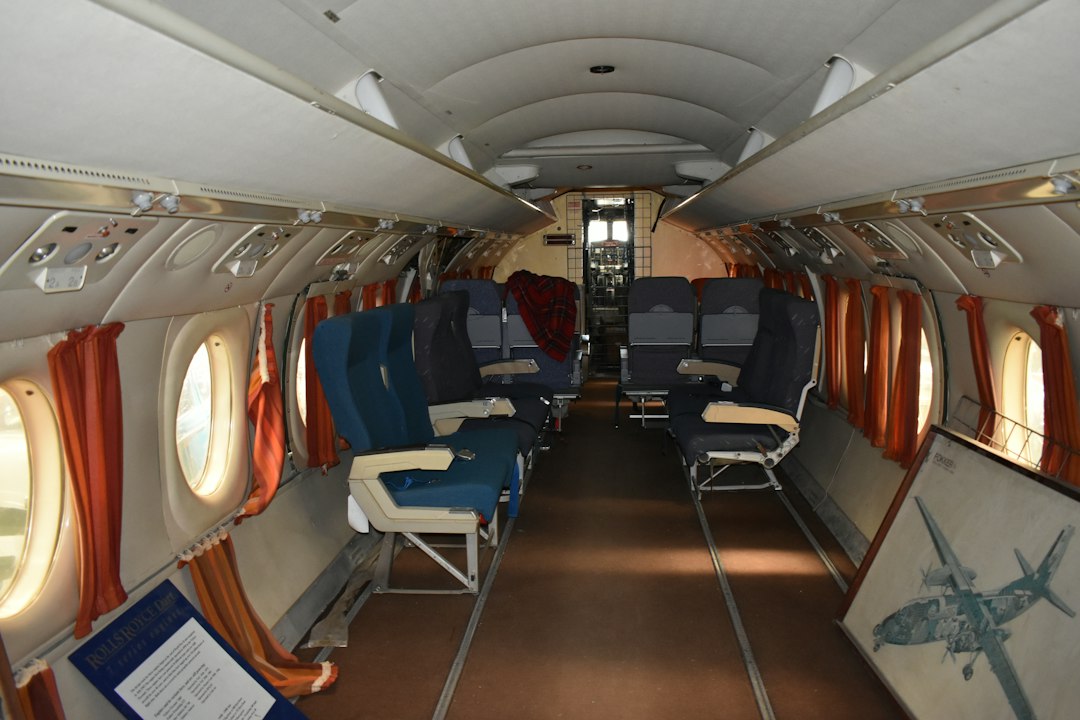
When I think about the real turning points in aviation history, the Vickers Viscount always comes to mind as the moment we collectively stopped shaking and started flying. It was the world’s first turboprop airliner, and frankly, that move away from the vibration-heavy piston engines of the day changed everything for the passenger experience. You have to appreciate the engineering brilliance of those four Rolls-Royce Dart engines, which didn't just run smoother but also swapped high-octane gasoline for kerosene to cut fuel costs and fire risks. It’s easy to overlook now, but that shift really set the stage for the reliability we expect today.
The design was just as forward-thinking as the powerplant, especially when you look at those iconic large elliptical windows. Vickers-Armstrongs chose that shape because it provided better visibility, sure, but it also cleverly reduced stress concentrations in the pressurized cabin skin. They were also pushing boundaries with the structure itself, pioneering the use of integral fuel tanks within the wings to save weight and stretch their range. If you look at how modern jetliners are built, you’re basically seeing the evolution of those very same weight-saving measures.
Safety was clearly the obsession, too. The prototype was put through such rigorous testing that it proved it could maintain level flight on just two of its four engines, which really established a new benchmark for what we consider multi-engine safety. They even built in a cross-feed fuel system so any engine could draw from any tank, and they added a hydraulic damping system to the landing gear just so the plane could handle those rougher grass runways that were everywhere in the 1950s. It’s that kind of practical, high-stakes problem solving that helped the Viscount become the first British plane to actually break into the U.S. market. Capital Airlines bought in, and that move alone validated the entire turboprop concept for the rest of the world.
Think about the flight deck, too, where they introduced a centralized warning panel for engine temperatures and vibration. It was essentially the great-grandfather of the modern glass cockpit, giving pilots immediate, clear data before that was ever the industry standard. By the time they finished the production run, the Viscount had logged millions of hours, proving that a turboprop platform could be the perfect, economical bridge between the old propeller age and the jet era. It wasn't just a plane; it was a masterclass in making complex technology feel reliable enough for the average traveler to trust with their life.
De Havilland: From the Comet’s Revolutionary Debut to Market Decline
When I think about the birth of the jet age, I keep coming back to the de Havilland Comet as the most beautiful tragedy in aviation history. It was the world’s first commercial jet, and honestly, the sheer audacity of moving from slow, vibrating piston engines to a sleek, pressurized cabin in 1949 was nothing short of brilliant. The engineers didn't just want to fly; they wanted to redefine the experience of travel, embedding the engines into the wing roots to keep the profile clean and the drag low. It was a masterclass in aerodynamic efficiency, but they were working in a vacuum of knowledge that eventually caught up to them in a devastating way.
Here’s the thing that really stays with me: we didn't fully grasp the physics of metal fatigue back then. Those iconic square windows looked sharp, but they acted as focal points for stress that eventually caused the pressurized fuselage to fail under the constant cycle of climbing and descending. It’s hard to imagine, but investigators actually had to build a giant water tank to submerge an entire test fuselage, pressurizing it until it burst, just to prove what was happening to the metal. That moment was a brutal, high-stakes lesson that cost lives but ultimately wrote the safety rulebook for every single pressurized jet we board today.
By the time they rolled out the redesigned Comet 4 with its reinforced, oval-shaped windows, the momentum had already shifted. You can see how the delay created a vacuum that allowed the Boeing 707 to swoop in with its more efficient, podded engines and superior range. It’s a classic case of being the first to innovate, only to have the market move on while you’re still fixing the fundamental design flaws. Even though the Comet eventually became a reliable, workhorse platform, it’s always going to be remembered as the pioneer that paved the way for its own competitors to dominate the skies. It makes you realize that in aviation, being first doesn't always guarantee you'll be the one to stay in the lead.
Fairchild Hiller: The Strategic Consolidation of Aerospace Titans
When I look at the mid-sixties, the formation of Fairchild Hiller stands out as a masterclass in how to build a diversified aerospace powerhouse by simply knowing when to merge competing skill sets. By picking up Hiller Aircraft in 1964, Fairchild essentially forced a marriage between their own fixed-wing background and Stanley Hiller’s rotary-wing brilliance, which was a pretty bold move for the time. You can really see the logic here; they didn't just want to build planes, they wanted to own the entire spectrum of flight, from the FH-1100 helicopter that was turning heads in the Army’s Light Observation competition to the heavy-duty components they were churning out for the F-105 Thunderchief. It’s the kind of strategic consolidation that makes you wonder why more firms didn't try to bridge those specific gaps between rotorcraft maneuverability and high-speed airframe production.
The technical output from this merger was honestly all over the map in the best way possible, ranging from the stretched F-227 regional airliner to the rugged AU-23A Peacemaker designed for tactical work. I’m particularly drawn to their work on the FH-227B, where they focused on an avionics suite to help regional carriers actually fly safely in nasty weather, which was a huge deal for reliability back then. But they were also tinkering with the future, like the VZ-5 project that played around with deflected slipstream technology for vertical lift, and even pushing into space with environmental systems for the Manned Orbiting Laboratory. It shows a company that wasn't afraid to be an experimental lab, even while they were anchoring their bottom line by acting as a top-tier supplier for the Boeing 747 tail section.
What really ties this all together for me is their obsession with high-strength aluminum bonding, which was the secret sauce that let them shave off weight without compromising on structural integrity. If you compare them to the other giants of that era, Fairchild Hiller felt more like a collection of specialized problem-solvers rather than a rigid, singular manufacturer. They were balancing the delicate mechanics of a high-speed rotor head on the FH-1100 against the massive industrial demands of building jumbo jet components, and somehow, they made it look like a natural fit. It’s a fascinating, if sometimes overlooked, piece of the industry puzzle that reminds us how much innovation comes from simply refusing to stay in one lane.
Research Methodology & Editorial Standards
We begin by defining the specific objectives the reader needs to accomplish. Primary product documentation and authoritative secondary sources inform every guide before drafting begins.
Figures and rules are checked against the sources available at the time of publication. Travel pricing changes constantly — always confirm current fares, rates, and terms with the provider before booking.