
Discover the hidden side of Quebec beyond the French influence
When you really start digging into the history of Quebec, you quickly realize that the French colonial narrative we’re so often fed is just a thin layer over a much deeper, more ancient story.
The Indigenous Roots: Honoring First Nations Heritage and Traditions
When you really start digging into the history of Quebec, you quickly realize that the French colonial narrative we’re so often fed is just a thin layer over a much deeper, more ancient story. Let’s pause for a moment to think about the Huron-Wendat Nation, who built the village of Stadacona right where Quebec City stands today long before any ships arrived from Europe. It’s wild to consider that they were already running sophisticated trade networks that stretched all the way from the Atlantic coast to the Great Lakes. You’ve got the Innu Nation, too, who have called the boreal forests of Nitassinan home for thousands of years, holding onto an ecological knowledge of caribou migration that kept them thriving in conditions most of us couldn't handle. Honestly, it’s humbling to see how these groups functioned not just as survivors, but as stewards of the land with complex systems that modern science is only now starting to fully appreciate.
Think about their agricultural game for a second—the Three Sisters method of planting corn, beans, and squash wasn't just a random practice, but a masterclass in sustainable soil management that still holds up as one of the most efficient systems in North American history. And it’s not just about farming; the Algonquian-speaking peoples built birch-bark canoes with such precision that they could navigate the most difficult river systems of the Canadian Shield with ease. You can still see how their traditional ecological calendars, tied to lunar cycles and plant behavior, offered a way to exist in total sync with the rhythm of the seasons. It makes you wonder how much we’ve lost by moving away from those kinds of direct, sensory observations of the world around us.
But here is where it gets even more fascinating: the Haudenosaunee Confederacy developed the Great Law of Peace, a form of government built on consensus that, in many ways, was far ahead of the rigid colonial structures that followed. We’re also seeing how oral traditions in these regions have kept records of ancient earthquakes and river changes that match up perfectly with modern geological data. The Cree, for their part, have long practiced rotational harvesting in their trapping territories to make sure they never over-exploit the wildlife they rely on. There are eleven distinct nations here, each with their own unique language and heritage, and they aren't just artifacts of the past—they’re active, living cultures. I really think that if you’re heading to Quebec, you owe it to yourself to look past the cobblestone streets and recognize that you’re walking through a space shaped by thousands of years of sophisticated diplomacy, art, and innovation.
Beyond the St. Lawrence: Exploring the Rugged Landscapes of the North
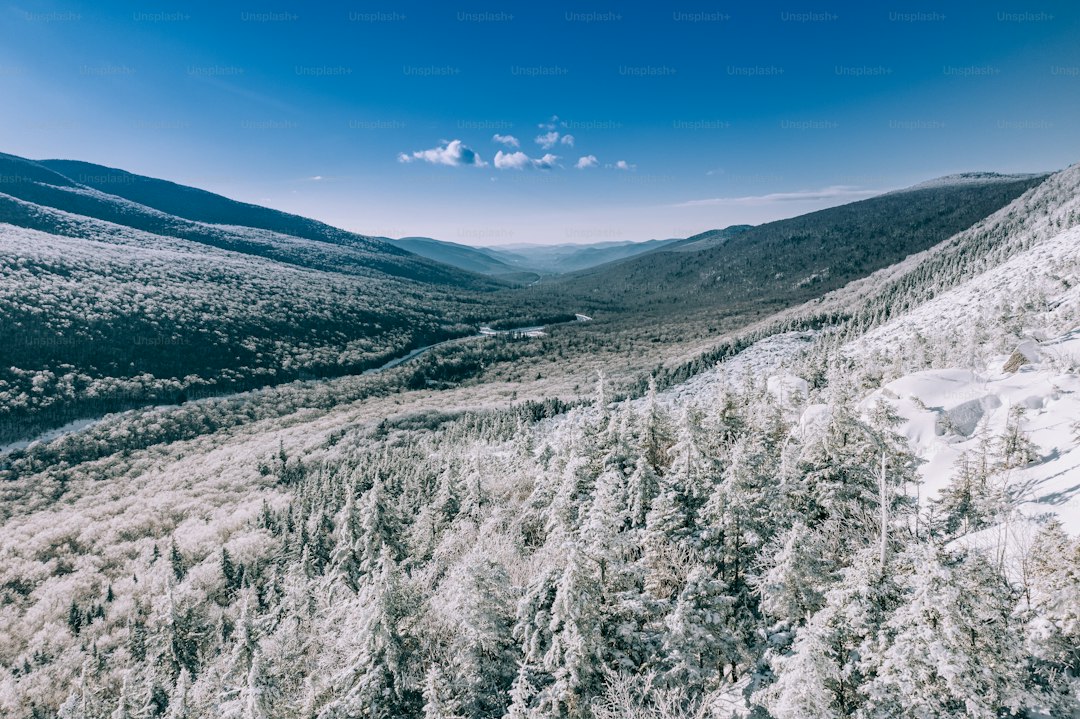
If you really want to see the raw, unpolished power of Quebec, you have to leave the St. Lawrence River behind and head deep into the north. Most travelers stick to the southern corridors, but the real geological story starts once you cross into the vastness of the Ungava Peninsula. Think about the Pingualuit Crater, for instance, which is this near-perfect circle formed 1.4 million years ago by a meteorite strike, holding some of the purest, clearest freshwater on the entire planet. It’s a stark reminder that this landscape isn’t just scenery; it’s a living record of violent cosmic events that happened long before humans were even a blip on the radar.
When you push further east toward the Torngat Mountains, you’re literally walking on the oldest ground left on Earth. We are talking about rock formations dating back 3.9 billion years to the Archean Eon, which makes the Alps or the Rockies look like they were formed yesterday. It’s also where you’ll find the Manicouagan Reservoir, an massive impact crater from 200 million years ago that’s so large you can easily spot its ring shape from space. I find it pretty wild that while we obsess over current climate trends, this region is quietly holding onto massive permafrost peatlands that act as some of the most critical carbon sinks we have left.
The biology up here is just as rugged as the geology, dictated by a subarctic microclimate where the mercury stays below freezing for more than half the year. You’ve got species like the woodland caribou that depend entirely on undisturbed lichen-rich habitats, making them a perfect indicator of how healthy these ecosystems actually are. Plants like Labrador tea have had to evolve thick, oily leaves just to survive the biting, dehydrating winds of the tundra. And if you’re lucky enough to visit during the summer, you’ll catch the midnight sun, where the horizon just refuses to let the light go for days on end. It’s a different world up there, defined by glacial scars, shifting magnetic poles, and land that is still slowly rising from the weight of ice sheets that melted eons ago.
The Melting Pot: Diverse Cultural Enclaves in Urban Quebec
When we talk about Quebec’s urban centers, we really need to look past the standard tourist brochures to see what’s actually happening on the ground. Montreal, in particular, acts as this incredible, messy, and beautiful linguistic outlier where over 20 percent of residents speak something other than French or English at home. Think about a place like Parc-Extension, which is one of the most culturally dense spots in all of Canada. You walk through those streets and you aren’t just seeing a neighborhood; you’re witnessing how South Asian heritage has completely reshaped the local grocery scene and community festivals. It’s not just a surface-level change—it’s a fundamental shift in how the city actually functions day-to-day.
But here is where it gets really interesting if you’re into the numbers. We’ve seen the percentage of people identifying as a visible minority in Montreal double over the last two decades, and that growth is rippling out into every single district. Take the Villeray or Saint-Michel areas, where immigrant-owned bakeries are quietly moving in and redefining what breakfast looks like by blending Middle Eastern and Maghreb influences into the traditional morning routine. You’ve also got a massive influx of international students from Francophone Africa, especially in Côte-des-Neiges, who are bringing fresh energy and totally different social dynamics to the table. It’s a bit of a friction point, sure, especially when you consider recent local mandates requiring buskers in tourist hubs to perform exclusively in French, but that tension is just part of a much larger, ongoing dialogue about identity.
If you spend enough time walking these blocks, you start to see that this isn't a new phenomenon—it’s just the latest chapter in a long history of migration. The Italian wave from the mid-20th century didn’t just give us Little Italy; it set a blueprint for how new communities would permanently alter the city’s architecture and social rhythm. You can trace that same influence through the Portuguese heritage in the Plateau or the way the Vietnamese community has turned the Quartier Chinois into a cornerstone of contemporary urban life. Even the Haitian influence on the local arts scene—especially in literature—has become so woven into the city’s DNA that it’s hard to imagine Montreal without it. Honestly, it’s this density that makes the city feel so resilient; those tight-knit social networks in these enclaves aren't just cultural markers, they’re the primary reason the city functions as well as it does when things get tough.
Artisanal Traditions: Craftsmanship That Transcends European Roots
When you look closely at the craft scene in Quebec, it’s easy to assume everything started in a French workshop, but that’s really missing the bigger picture. If we peel back the layers, we find that the most resilient traditions here aren't just colonial echoes; they are brilliant adaptations to a harsh, unforgiving climate that required engineering precision long before industrial tools arrived. Take the classic snowshoe, for instance, which relies on a geometric lacing of caribou or moose babiche; that structural elasticity isn't just a design choice, it's a necessity that synthetic materials still fail to replicate in sub-zero conditions. It’s wild to think that while we chase modern, mass-produced gear, these older methods—like steam-bending white ash for toboggans to prevent splintering—actually offer a level of mechanical endurance that’s functionally superior to anything you’ll find in a standard hardware store.
Let’s pause for a moment to consider the ceinture fléchée, or arrow sash, which is honestly a masterclass in material science. By using a finger-weaving technique that skips the loom entirely, artisans created a dense, high-tensile rope that’s flexible enough to wear but tough enough to hold real loads. We see this same spirit of functional innovation in the Laurentians, where woodworkers still prefer riving timber along the grain over modern sawing, a choice that physically prevents water absorption and keeps outdoor structures standing for decades longer than kiln-dried alternatives. Even the local ironwork tells this story; when you compare gas-heated steel to charcoal-fired forge work, the organic fuel creates a surface molecular density that just holds up better under stress. It’s not just about keeping a legacy alive for the sake of it, but about using the specific chemistry of local resources—like the fossil-rich clay of Charlevoix—to create products that actually outperform modern, standardized options.
I really think we underestimate the sheer level of scientific observation embedded in these heritage skills, from the way soapstone carvings are cooled to retain fine detail to the specific way wool is spun to re-introduce lanolin for a natural hydrophobic barrier. It’s humbling to realize that the acoustic richness of a handmade Quebecois fiddle often comes from using reclaimed timber that’s had time to stabilize, a kind of slow-aging process that kiln-dried wood just can't fake. Even the way traditional barns are built—using wooden dowels in mortise-and-tenon joints—demonstrates a deep understanding of thermal expansion that allows the building to "breathe" through extreme seasonal shifts without losing its integrity. When you walk through these regions, don't just look at the items as souvenirs; see them as evidence of a culture that prioritized smart, local engineering over convenience. It’s a great reminder that sometimes the oldest way of doing things is actually the most sophisticated solution to the problems we’re still trying to solve today.
Wildlife Encounters: Wilderness Expeditions in Quebec’s Untamed Interior
If you’re looking to truly grasp the scale of Quebec’s wilderness, you have to move past the postcard views and consider the sheer resilience of the wildlife living in its interior. Let’s dive into the James Bay region, where polar bears exhibit a fascinating genetic plasticity; unlike their Arctic counterparts, these bears have adapted to survive on land for extended periods, foraging for berries and kelp when the sea ice retreats. It’s a stark contrast to the Leaf River caribou, whose massive migrations represent one of the most significant terrestrial movements on the planet. I’ve always found it wild to imagine standing in the path of hundreds of thousands of animals, where the collective sound of their movement creates a sonic landscape that literally travels for kilometers. It’s a sensory experience that defines the raw, unbridled nature of the north.
But the complexity doesn't stop at the large mammals, because the survival strategies of the smaller, often overlooked species are just as impressive. Take the muskox, for example, which has been successfully reintroduced to the tundra with a two-layered coat so efficient it makes modern technical gear look like a joke. Their underwool, qiviut, is eight times warmer than sheep’s wool and naturally sheds in the spring, a perfect biological solution to prevent overheating during the brief summer thaw. Then you have the boreal owl, a species that essentially treats the entire province as a map to be navigated based on food availability. They’re effectively nomads, shifting their entire breeding range by hundreds of kilometers in a single season just to track vole populations. It’s a high-stakes, boom-and-bust existence that requires constant movement to maintain reproductive success.
When you analyze the aquatic life in these high-altitude watersheds, you realize how isolated these ecosystems really are. The landlocked Atlantic salmon, known locally as ouananiche, has completely abandoned the ocean, evolving instead to thrive in the nutrient-poor, acidic conditions of the Canadian Shield. Similarly, the Arctic char found in the deepest northern lakes are biological relics of the last glacial retreat, often displaying unique, dwarfed phenotypes because they’ve had to adapt to such limited food resources. These fish can live for over thirty years in those ultra-oligotrophic waters, serving as a long-term record of the chemical stability of their environment. It’s honestly humbling to think that these creatures are effectively living indicators of how these remote habitats have held steady for eons, even as the rest of the world shifts around them.
Culinary Evolution: Modern Flavors Inspired by Local Foraging and Global Fusion
When you really start digging into what’s happening in Quebec’s kitchens, you’ll find that it’s less about following global trends and more about a quiet, localized revolution in flavor. I think what’s catching people off guard is how chefs are blending ancestral knowledge—like the First Nations' use of sweet gale to season meats—with high-end, modern techniques that push the boundaries of what we consider regional dining. It’s not just about throwing local ingredients onto a plate; it’s a deliberate, scientific approach to balancing the subarctic climate’s need for richness with the bright, acidic profiles found in ingredients like sea buckthorn and spruce tips. You’re seeing this firsthand in how spruce tips are being processed for their specific terpene profiles, creating a resinous, citrusy punch that completely changes the architecture of a traditional sauce.
Think about the sheer ingenuity involved in using birch sap as an enzymatic tenderizer for wild game, a method that effectively bridges the gap between ancient preservation and modern sous-vide precision. It’s a fascinating pivot from the standard heavy, fat-rich diet we’ve historically associated with this part of the world. By integrating cattail hearts as a seasonal, nutrient-dense starch or using the umami-rich qualities of wild dulse, these kitchens are actively reducing their reliance on imported goods while lowering their carbon footprint. Honestly, the results are incredible, especially when you consider how producers are fermenting maple sap into probiotic-rich beverages that rival the complexity of any high-end kombucha you'd find in a major metropolitan hub.
But here is where it gets truly interesting from a market perspective: this isn't just a niche fad. We’re witnessing the development of a high-value culinary export market, particularly with the matsutake mushrooms harvested from the sandy boreal forest soils, which are now being evaluated against the finest Japanese specimens. When you look at the chemical composition of these wild ingredients, you realize that chefs are essentially acting as field researchers, using antioxidant-rich Labrador tea to infuse fats or utilizing crabapples for their acidity to create ciders that cut through fatty game meats far better than any commercial variety. It’s a rigorous, evidence-based evolution of flavor that takes the concept of terroir to a new level. If you’re heading out to eat in Quebec, keep an eye out for these subtle shifts; they’re the real story of how a region is reclaiming its culinary identity by looking at its own backyard through a much sharper, more analytical lens.
Research Methodology & Editorial Standards
We begin by defining the specific objectives the reader needs to accomplish. Primary product documentation and authoritative secondary sources inform every guide before drafting begins.
Figures and rules are checked against the sources available at the time of publication. Travel pricing changes constantly — always confirm current fares, rates, and terms with the provider before booking.