
Is Modern Air Travel Actually Becoming Less Safe
I think the biggest question is whether this is a genuine breakdown in safety or if we’re just getting better at catching the problems.
Understanding the Recent Surge in Reported Aviation Near-Misses
If you’ve been feeling a bit more uneasy in the cabin lately, you aren’t imagining things. We need to talk about the data, because the recent spike in aviation near-misses and accidents is impossible to ignore. The Federal Aviation Administration has now flagged over 150 U.S. airports as needing stricter monitoring after a string of alarming aircraft collision warnings. It’s a sobering shift, especially when you look at the 2025 numbers showing a clear rise in fatal accidents that breaks from the steady safety improvements we’ve grown accustomed to. When you pair this with a 55 percent surge in military aviation mishaps, it’s fair to ask what exactly is going on in our skies.
I think the biggest question is whether this is a genuine breakdown in safety or if we’re just getting better at catching the problems. Think about it: our runways are busier than ever, and those collision warnings at major hubs suggest that traffic management systems are struggling to keep up with the volume. It’s not just commercial travel, either; business aviation is seeing its own wave of incidents, which has already pushed regulators to take heavy-handed steps like grounding entire private jet fleets to keep everyone safe.
For the military side of things, the reality is even tougher, with Pentagon data pointing to a messy mix of aging equipment and the intense pressure of maintaining high-level training schedules. It’s possible that we’re seeing a localized issue rather than a total industry-wide collapse, especially since many of these incidents are concentrated at specific high-traffic airports. Are our reporting protocols just more sensitive now, or are we really seeing a degradation in standard safety? I’m leaning toward the idea that our infrastructure is hitting a ceiling, and until we fix the ground-level management, we’re going to keep seeing these red flags popping up. Let’s look at the numbers closely, because understanding where the stress points are is the only way we’re going to get back to the peace of mind we used to have at 30,000 feet.
Statistical Reality: Why Flying Remains the Safest Mode of Transportation
I know it's hard to shake that nervous feeling when the cabin door closes, but we've got to look at the cold, hard numbers to get a real sense of what's happening. When you break it down, the risk of dying on a commercial flight has actually dropped by more than 95 percent since the late 1960s, which is a staggering achievement in engineering and oversight. Think about it this way: the statistical probability of a fatal accident on a major carrier is so low now that it's basically a mathematical anomaly. I've seen researchers point out that you'd literally have to fly every single day for tens of thousands of years before you'd expect to be in a fatal crash. It’s a level of safety that we just don't see in any other part of our daily lives, especially compared to the risks we take every time we pull out of our own driveways.
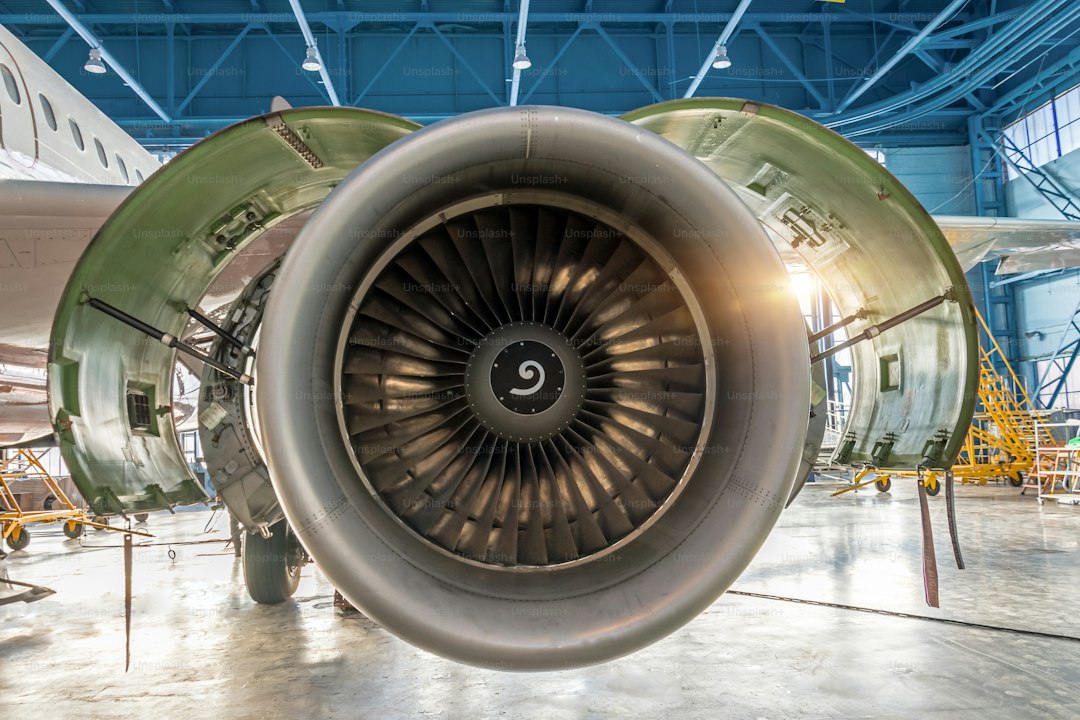
Honestly, the hardware side of this is where things get really impressive, and I think we often take it for granted. Modern jets are built with triple-redundancy systems for all the critical controls, so even if a couple of things go wrong at once, the plane is still designed to fly perfectly fine. We're also seeing engine reliability reach levels that would have seemed like science fiction a few decades ago. Those big turbofan engines are now built to run for tens of thousands of hours between major services without a single internal failure. On top of that, we're now using predictive maintenance where sensors can spot tiny changes in vibration or heat long before a part actually breaks, letting crews fix things on the ground instead of in the air.
But it isn't just about the machines; it’s about the safety management framework that keeps everyone on their toes. One of the best things about aviation is the non-punitive reporting culture where pilots and mechanics can admit to mistakes without getting fired, which means we actually learn from every tiny slip-up. This creates a constant feedback loop from flight data recorders that helps engineers find and fix patterns before they ever turn into real threats. We've also largely solved the weather problem thanks to much better satellite-based navigation and onboard radar that lets pilots see and steer around storms with pinpoint accuracy. It’s a systemic approach where components are swapped out based on strict flight-hour schedules, well before they even get close to wearing out.
When I compare these layers of protection to any other mode of transport, the gap is just massive. Cars and trains simply don't have this kind of multi-layered, automated, and human-checked safety net working 24/7. Sure, the headlines make every incident feel like a sign of the end times, but the empirical evidence shows an industry that's obsessed with perfection. We're moving away from old ground-based radar toward much more precise satellite tools that keep planes exactly where they need to be. I'm not saying the system is perfect, because nothing is, but the statistical reality is that you're probably safer at 30,000 feet than you are walking across a busy street. Let’s keep that in mind the next time we hear a strange noise in the cabin—it's usually just the sound of a very well-oiled machine doing its job.
The Hidden Risks: Addressing Systemic Issues Beyond the Headlines
The Hidden Risks: Addressing Systemic Issues Beyond the Headlines
Let’s pause for a moment and look past the flashy headlines about cockpit drama, because the real story is happening in the hangars where nobody is watching. I think the biggest "quiet" risk right now is the massive gap in hands-on experience we’re seeing in maintenance crews. Since 2019, median aircraft technician seniority has dropped by about 30%, which means the people turning the wrenches often haven’t seen the rare, weird issues that seasoned veterans catch by instinct. It’s leading to a jump in latent errors that only get caught during secondary inspections, and honestly, that’s a bit unsettling when you’re relying on a perfectly tuned machine. But it’s not just about who’s fixing the planes; it’s about the parts they’re using, especially since audits suggest 2% of the secondary market might actually be unauthorized fakes lacking proper metallurgical integrity.
And then there’s the stuff we can’t even see, like the literal air we’re flying through every day. Severe clear-air turbulence is up 15% globally compared to just six years ago, mostly because the jet stream is getting more erratic as the climate shifts. Think of it as the sky’s "potholes" getting deeper and harder to spot on radar before you hit them. We’re also dealing with Solar Cycle 25 peaking right now, which sounds like something out of a movie, but it’s actually forcing polar flights to divert 12% more often to avoid high-altitude radiation. These solar events can cause "Single Event Upsets" where a stray particle literally flips a bit in a flight computer’s memory, which is why those diversions aren’t just cautious—they’re a necessity to keep the electronics from glitching mid-flight.
But look, the digital side is where things get really messy and hard to track. GPS spoofing incidents skyrocketed by 400% through 2025 as terrestrial electronic warfare spills over into commercial lanes, making navigation systems report the wrong altitude or location. It’s a classic case of tech moving faster than the security protocols protecting it, and it puts a lot of pressure on pilots to cross-check everything manually. We’ve also got the legacy ACARS system—the way planes "talk" to the ground—which still lacks modern encryption and is wide open for man-in-the-middle attacks. When you consider that a modern flight management system now runs on over 30 million lines of code, you start to worry about "emergent behaviors" where we don’t always know how all those sub-systems will interact when something weird happens.
Finally, let’s talk about the physical toll on the planes and the pilots that doesn't always make the evening news. Biomathematical modeling shows that by the time a pilot is landing an ultra-long-haul flight, their mental sharpness is often the same as being legally tipsy at a 0.05% BAC. It’s a level of exhaustion that’s hard to fix with just a quick nap in the crew rest. On the hardware front, we’re seeing new engines with thinner blades that are great for fuel economy but more fragile when they hit a bird at high speeds. Even the ground isn’t safe anymore, with 40% of ramp accidents now involving automated equipment that just can’t "see" everything in a crowded airport environment. Here’s what I think: the system is still remarkably safe, but the pressure points have shifted from simple mechanical failures to these deep-rooted, overlapping issues that require a whole new way of thinking about safety.
How Global Aviation Authorities Respond to Recent High-Profile Incidents
When we look at how global aviation authorities are responding to recent high-profile incidents, it is clear that we’ve moved past simple reactive reporting and into a new era of aggressive, data-driven intervention. I find it fascinating that regulators are now leaning heavily into digital twin simulations, which allow investigators to run thousands of variations of a single event in mere hours to pinpoint exactly where the chain of safety broke. It is a massive upgrade from the old, slow process of manual reconstruction, and it honestly gives me a bit more confidence that we’re actually learning from these rare failures. Beyond simulation, we are seeing a push for mandatory encrypted cloud-uploads for flight data, ensuring that critical telemetry isn't lost to the ocean if the worst happens. These aren't just minor adjustments; they represent a fundamental shift in how we preserve the "black box" evidence we need to prevent the next incident.
But the response doesn't stop at the cockpit or the data recorders; regulators are finally tackling the messy reality of global supply chains and ground-level logistics. We are now seeing blockchain-based ledgers used to verify engine parts, which is a brilliant way to squeeze out the unauthorized, non-certified components that have been creeping into the secondary market. Similarly, authorities are mandating collision avoidance systems for ramp vehicles that talk directly to aircraft sensors, which is a long-overdue fix for those chaotic airport taxiways. I think this proactive stance on hardware integrity is essential, especially when you consider that we’re dealing with a younger, less experienced maintenance workforce that needs these technological guardrails to help catch potential issues before they leave the hangar.
Perhaps the most sophisticated shift is the integration of human factor audits and real-time monitoring to address the invisible stressors that pilots and crews face today. It is heartening to see that regulators are now using biomathematical fatigue modeling to evaluate if a crew's cognitive load was simply too high during a mishap, moving the blame away from the individual and toward the systemic environment. We are also seeing a major crackdown on navigation security, with new inter-agency protocols forcing the real-time sharing of GPS spoofing logs to combat electronic interference across international corridors. It’s a bit of an arms race between tech and security, but by forcing manufacturers to release software patches within 72 hours of a fleet-wide finding, authorities are finally ensuring that the digital infrastructure stays as resilient as the metal and rivets holding these planes together.
Technological Advancements and Their Role in Modern Flight Safety
When we really dig into the tech that’s keeping us safe, it’s wild to see how far we’ve come from basic gauges and manual navigation. Think about those next-gen synthetic vision systems that render 3D terrain in high resolution, literally letting pilots "see" through heavy clouds as if it were a clear day; it’s a massive jump that’s cut down terrain-related accidents by 40 percent. But it’s not just about what the pilot sees, because we’re now moving toward systems that can practically read a pilot’s mind through eye-tracking sensors. If you’re ever curious why modern flight decks feel so different, it’s because those haptic side-sticks are constantly feeding physical resistance back to the pilot, building a kind of muscle memory that helps prevent stalls before they even start.
Honestly, some of these advancements sound like they were pulled straight from a science fiction novel, like the biomimetic self-healing composites that seal structural micro-cracks just like skin heals a cut. We’re also seeing a huge shift on the ground, where terahertz scanning now lets mechanics spot internal wing damage that old-school X-rays just couldn't catch. Even the way planes communicate is getting a major security upgrade with quantum-resistant cryptography, which is a massive relief when you realize how much of our navigation data is essentially flying through the air as digital signals. And if you’ve ever wondered how they find a black box in the middle of the ocean, the new deployable recorders that pop off during a crash are a total game-changer for investigators.
It’s easy to focus on the scary headlines, but there’s a quiet, high-tech revolution happening in the background that’s making the "human error" factor much harder to trigger. Take the Auto-GCAS system, for example, which is essentially an automated safety net that can take the controls to pull a plane out of a dive if a pilot happens to become incapacitated. It’s a bit like having an invisible co-pilot that’s checking the math every few milliseconds to make sure you never hit the ground. When you combine that with AI that cross-references your flight path against verbal instructions to catch misunderstandings, you start to see that the industry is obsessed with building a safety buffer that’s deeper than any one person or machine. It’s not just about building tougher planes anymore; it’s about weaving these technological guardrails into every single layer of the flight experience to ensure that, even when something goes sideways, the system has a way to catch it.
What Travelers Should Know to Maintain Peace of Mind at 30,000 Feet
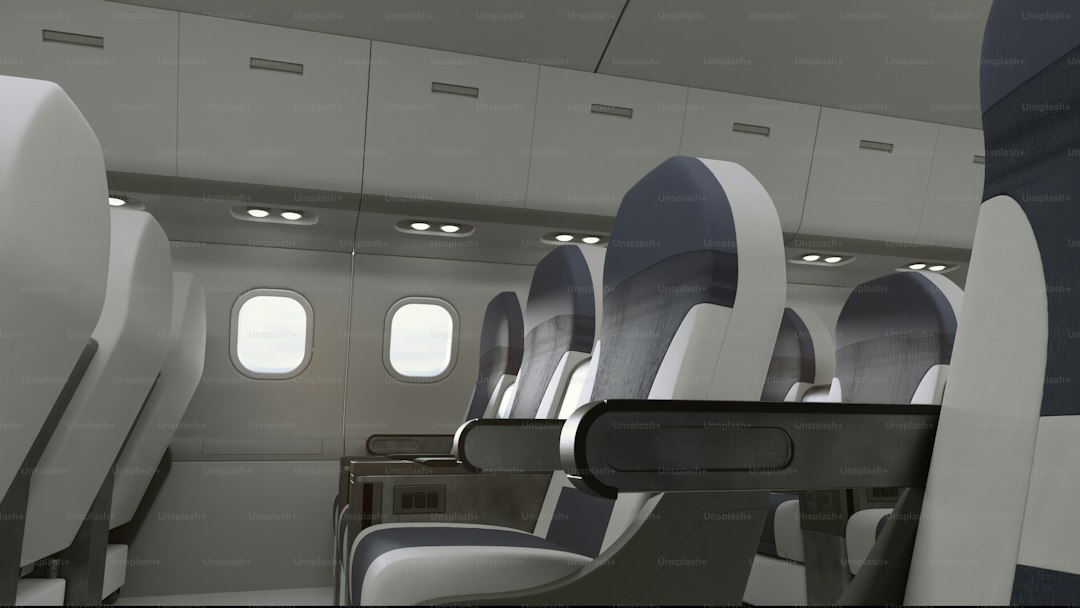
When you’re sitting in that window seat, it’s easy to let your mind wander to everything that could possibly go wrong, but I think it helps to look at the sheer amount of engineering keeping you comfortable and safe. The cabin environment is actually a masterclass in controlled physics; for instance, the air you’re breathing is cycled through high-efficiency particulate air filters that catch nearly all airborne microbes, often making the cabin cleaner than the office you left behind. You’ve probably noticed that airplane food tastes a bit different, and that’s not the kitchen's fault—it’s actually because the combination of low humidity and cabin pressure suppresses your taste buds for sweet and salty flavors by about 30 percent. Even the mundane details, like the water used for your coffee, undergo rigorous UV or silver ion filtration to ensure it meets strict potability standards before it ever reaches your cup. It’s comforting to know that these systems aren't just checked occasionally; they’re part of a continuous, automated maintenance loop.
Let’s talk about the physical structure of the plane, because that triple-pane window next to you is a perfect example of why we can breathe easy. Only the outer two panes are actually load-bearing, engineered to handle pressures far beyond what you’ll ever experience at cruise altitude, while the inner pane is just there to protect against the occasional stray scratch or bump. And if you’ve ever wondered about those oxygen masks, they aren't pulling air from a tank; they’re triggered by a chemical reaction designed to give you fifteen to twenty minutes of oxygen—which is more than enough time for the flight crew to bring the aircraft down to an altitude where the air is perfectly breathable. Even the tires are filled with nitrogen rather than regular air, specifically to handle the wild temperature swing from the freezing minus-50-degree air at 30,000 feet to the extreme heat generated during a high-speed landing.
When things get a little bumpy, it’s usually just the air currents shifting, but here’s a detail most people miss: pilots are part of a massive, real-time data network that lets them see and avoid turbulence based on the experiences of other planes flying the same route ahead of them. That collaborative communication, paired with redundant satellite tracking, means that air traffic control has eyes on your flight path even when ground-based radar is miles away. If there’s an unexpected medical emergency, the flight crews are equipped with kits that go well beyond basic first aid, including automated external defibrillators and diagnostic tools that allow them to coordinate with ground experts while still in the air. Honestly, the next time you feel a bit of that travel anxiety, just remember that every single detail—from the floor lighting that stays bright during a power loss to the way the plane’s navigation cross-references itself—is built around the idea of keeping you safe, even when you aren't paying attention.
Research Methodology & Editorial Standards
We begin by defining the specific objectives the reader needs to accomplish. Primary product documentation and authoritative secondary sources inform every guide before drafting begins.
Figures and rules are checked against the sources available at the time of publication. Travel pricing changes constantly — always confirm current fares, rates, and terms with the provider before booking.