
How to experience the magic of a Yosemite moonbow for yourself
A lunar rainbow, or moonbow, is essentially a game of perfect geometry played out in the dark.
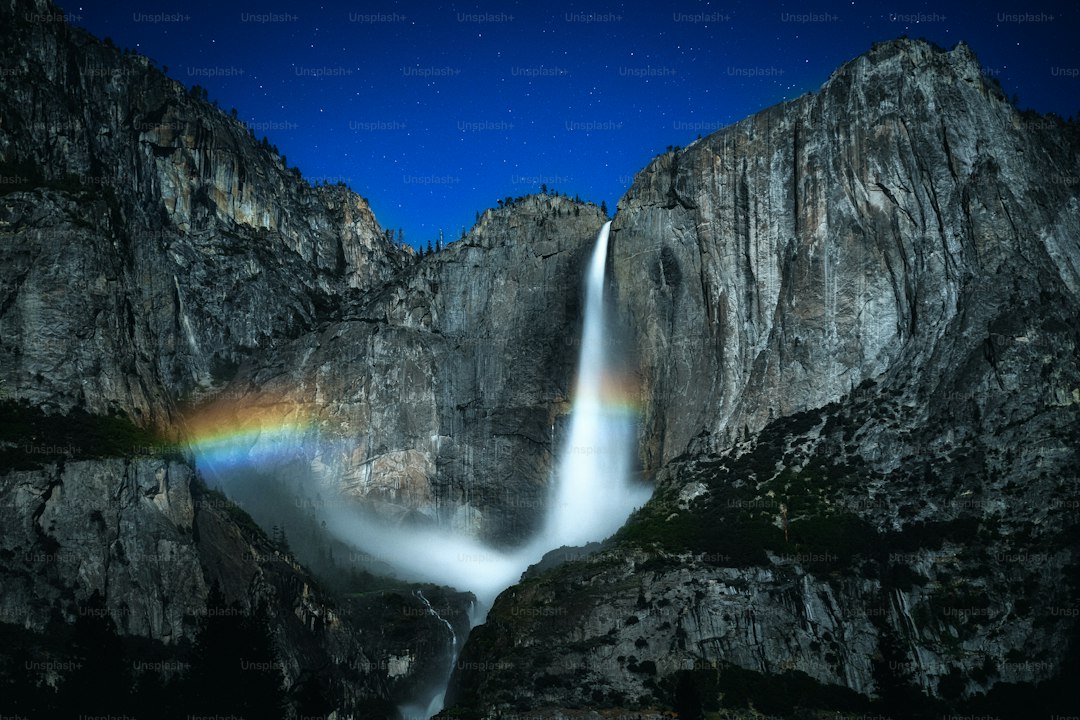
Understanding the science behind the lunar rainbow
Let’s dive into what’s actually happening when you see that ghostly arc shimmering in the mist. A lunar rainbow, or moonbow, is essentially a game of perfect geometry played out in the dark. Because moonlight is really just reflected sunlight, it carries the same spectrum of colors as a standard rainbow, but the intensity is much lower. For your eyes to pick this up, the moonlight needs to be bright enough to refract through water droplets, which is why a full moon—or one very close to it—is a non-negotiable requirement. You also need the moon to sit low in the sky, specifically less than 42 degrees above the horizon, to get the right angle for the light to bounce back to you.
Here’s where the human element gets a bit tricky. We often expect to see a vibrant, multicolored arch, but our eyes just aren't built for that in low light. Since moonlight is relatively faint, it often fails to stimulate our retina’s cone cells enough to register color, making the arc look like a pale, ghostly white band to the naked eye. If you want to see those true colors, you’re going to need a camera capable of long-exposure photography to gather enough light over time. It’s a fascinating limitation of our biology; the science is technically there, but our hardware just doesn't catch the full signal without a little technological help.
Think about the environment required to make this work, too. You aren't going to find these in a light-polluted city or during a dry spell. You need the fine, consistent mist of a powerful waterfall like those in Yosemite to act as the perfect screen for the light. If the air is too dry, those droplets evaporate before they can do their job, and if the waterfall isn't throwing enough spray, the light just passes right through. It’s all about that precise alignment between the moon’s position, the mist density, and exactly where you’re standing. When all those variables snap into place, you get a stationary, glowing arc that feels like a secret the night is finally sharing with you.
The ideal timing: When to hunt for Yosemite’s moonbows
If you’re planning a trip to catch a moonbow, let’s get real about the window of opportunity because it’s surprisingly narrow. The magic really happens during the peak spring runoff, typically between April and June, when the snowmelt is roaring and turning the waterfalls into absolute powerhouses of mist. Honestly, if you try to visit during a dry year or mid-winter when the flow is barely a trickle, you’re likely going to walk away disappointed. I’ve found that May is usually the sweet spot where the volume of water hitting the granite base of Lower Yosemite Fall is just right to create that perfect, consistent spray.
Now, here is the counterintuitive part about the timing: don't obsess over the exact night of the full moon. While everyone else is scrambling for that one specific date, you’ll actually have better luck targeting the nights surrounding it, particularly when the moon is in a waxing or waning gibbous phase. You’re looking for a balance between lunar brightness and the physical state of the waterfall, which can be fickle depending on the temperature. If we have an unseasonably warm stretch, that snowmelt can surge too fast and lead to flooding, or conversely, a freezing night might just shut down the mist entirely.
It really comes down to being in the right spot after sunset, usually waiting until the moon is low enough in the sky to hit that 42-degree refraction angle. I’d suggest finding a vantage point at the base of Lower Yosemite Fall, but keep in mind that even a slight shift in the wind can blow your mist screen away in seconds. It’s a game of patience, and you might spend hours in the dark waiting for the wind to die down and the conditions to snap into place. Just remember that cloud cover is your biggest enemy here, as it’ll kill your visibility instantly, so keep a close eye on the local forecast and stay flexible with your plans.
Best vantage points within Yosemite National Park
When you’re chasing a moonbow, knowing where to stand is arguably as important as the lunar phase itself. I’ve spent enough time in the valley to know that the difference between a clear, glowing arc and a frustrating night of staring at empty darkness often comes down to just a few hundred yards. If you’re looking for that quintessential, unobstructed shot, Sentinel Bridge is hard to beat because the Merced River acts like a giant mirror, reflecting the ambient light and adding a layer of depth that you just don't get from solid ground. Personally, I’m a fan of Cook’s Meadow for a wider field of vision; the lack of dense trees there prevents the high valley rims from stealing your view of the moon too early in the evening.
But if you want to get technical, the talus slopes beneath the massive granite walls are where you’ll find the real strategic advantage. Those elevated positions keep you above the thick, ground-level fog that frequently wrecks the mist screen in lower parts of the valley. For those who don't want to hike, Glacier Point is a rare high-elevation spot you can drive to, offering a vertical perspective that makes it much easier to track exactly how the light is interacting with the spray below. If the wind is being difficult at Lower Yosemite Fall, try shifting your focus to the base of Bridalveil Fall, where the canyon walls tend to funnel the air into a more consistent, reliable stream of mist.
Honestly, the best approach is to stay mobile and keep an eye on how the local microclimates are behaving. Areas like Cathedral Beach stay a bit warmer due to the soil near the river, which can actually help stabilize the air currents if the night starts getting chilly. If you’re really serious about contrast, head toward the eastern section near Ahwahnee Meadow; the drop in light pollution from park facilities makes those subtle lunar arcs pop against the dark granite in a way that’s almost impossible to replicate elsewhere. It’s a bit of a gamble, but once you find that sweet spot where the topography shields you from the wind, the entire valley feels like your own private observatory.
Essential gear for nocturnal photography and observation
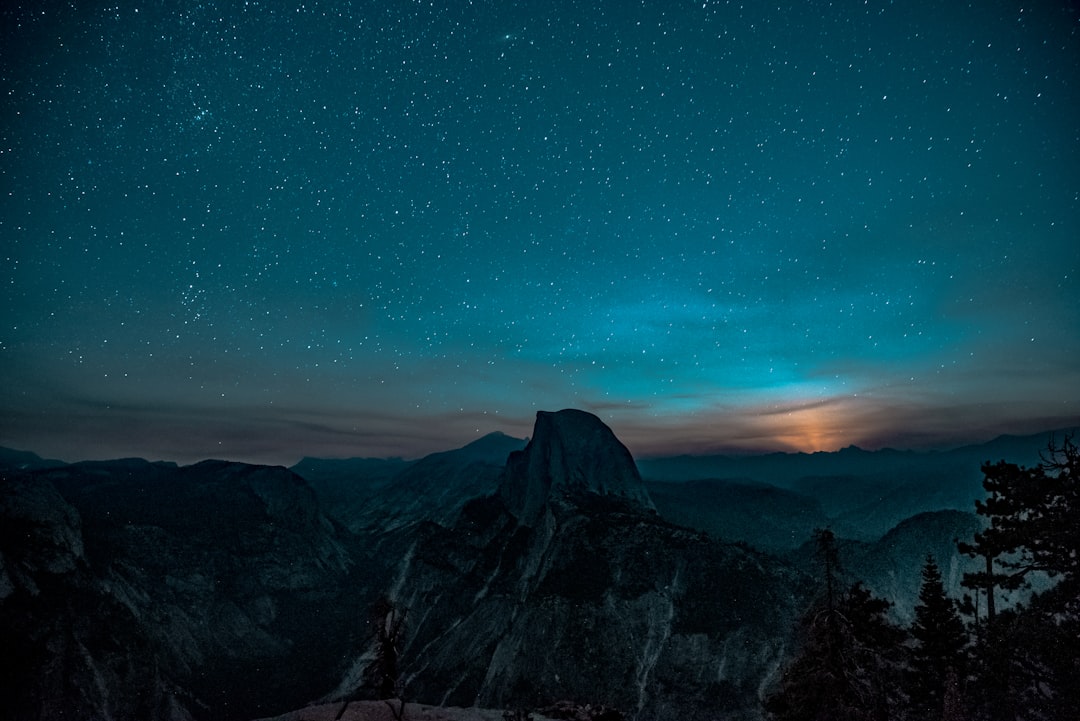
Let’s talk about the gear you’ll actually need to drag into the cold, because chasing a moonbow is a lot more technical than just showing up with a camera. First, you really need a red-filtered headlamp; red light has a longer wavelength that preserves your rhodopsin levels, so you aren't resetting your night vision every time you check your settings. To nail that narrow 42-degree refraction window, I always use an augmented reality app to map the moon’s exact trajectory against the granite walls of the valley before I even leave the car. When it comes to your tripod, skip the standard aluminum stuff if you can, as it’s prone to rapid thermal contraction and icing in the mist; a carbon-fiber setup is much more stable and won't freeze to your hands when you're making adjustments in the dark.
And you have to protect your glass, because that waterfall spray is relentless and will find its way into your electronics if you aren't careful. I suggest wrapping your camera body in a silicone weather-sealed sleeve to stop internal condensation from fogging up your sensor mid-shoot. More importantly, a dew heater strip around your lens is a non-negotiable hack—it keeps the glass just a few degrees above the dew point so you don't end up with a blurry, moisture-streaked capture after an hour of waiting. Autofocus is basically useless in this kind of low-light environment, so rely on a high-contrast focus peaking monitor or zoom in 10x on a bright star to nail your sharpness manually.
Since you’re going to be standing there for long periods, consider an intervalometer to trigger your shots without touching the camera, which is the only way to avoid the micro-vibrations that ruin those fine, ghostly details. I’ve also started carrying a high-CRI flashlight; it helps me actually see the color of the moisture buildup on my gear, whereas standard blue-tinted LEDs just hide the frost until it’s too late. If you’re using a smart telescope, make sure it’s in a lunar-tracking mode to compensate for the moon’s drift, but don't forget the practical stuff, like keeping your spare lithium-ion batteries in an inner jacket pocket to keep them warm. Cold air kills discharge efficiency, and you’ll want that extra twenty percent of juice when the conditions finally snap into place. Just keep a pair of conductive, silver-threaded gloves on so you can tweak your settings on the fly without having to expose your skin to the damp, biting air of the canyon floor.
Navigating park regulations and safety after dark
Let’s pause for a moment and reflect on the reality of being out in the wild after the sun dips behind those granite walls. It is easy to get caught up in the pursuit of the perfect moonbow, but you really have to respect the environment when you are navigating Yosemite in the dark. The park requires you to stick strictly to designated trails, and that is not just a suggestion; straying onto uneven, unmaintained granite surfaces after sunset is a quick way to find yourself disoriented or injured. You should also be aware that mountain lions and black bears are much more active during these quiet hours, so if you are bringing food to an observation point, keep it in a bear-resistant canister.
You might start your hike feeling comfortable, but once the sun is gone, the air on the valley floor can plummet well below freezing, making hypothermia a very real risk if you are not dressed for the cold. And because the mist from the waterfalls makes the rocks incredibly slick, do yourself a favor and wear boots with high-traction, vibram-style outsoles to avoid taking a spill on the mossy slopes. I also always check the real-time road status before heading out, as those high-altitude switchbacks can ice over unexpectedly, leading to sudden overnight closures that could leave you stuck.
Think about your gear and your communication plan, too, because relying on your phone is a mistake. Cellular connectivity is basically nonexistent in the deep canyons, so having offline topographical maps downloaded and carrying an emergency satellite communication device is just smart practice. Also, skip the blindingly bright, broad-spectrum flashlights; they really disrupt the nocturnal wildlife, like owls, and they will ruin your own night vision. Instead, make sure every person in your group has their own reliable light source, and consider wearing some reflective gear so you’re visible to others. It is all about maintaining situational awareness, especially since the roar of the water can mask the sounds of everything else around you.
Pro tips for capturing the perfect long-exposure shot
Capturing a moonbow isn’t just about leaving your shutter open; it’s a delicate dance with physics that requires you to outsmart your own gear. Let’s dive into what I think is the most critical hurdle: managing sensor heat. You’ve probably noticed that modern CMOS sensors get cranky during long exposures, with dark current noise roughly doubling for every six to eight degrees Celsius of heat. By 2026, we’re seeing graphene heat spreaders built into high-end bodies specifically to combat that annoying magenta glow, but you can still help by keeping your camera out of the direct path of any wind-blocking gear. And look, forget the old 500 rule you might have heard about; it’s outdated. Instead, use the NPF rule, which factors in your specific pixel pitch and aperture to make sure your stars stay sharp points rather than messy streaks.
Speaking of sharpness, you’ll want to flip on your Electronic Front Curtain Shutter before you even think about hitting the remote. It sounds like a minor tweak, but it kills that tiny physical vibration from the first shutter blade that ruins shots when you’re dealing with the long exposure times needed for a moonbow. Also, if you’re worried about blowing out the highlights of the moonlit mist, embrace the fact that most current sensors are ISO-invariant. You’re actually better off shooting at a lower base ISO and lifting the shadows in post-production, as this keeps your dynamic range intact without adding that nasty electronic noise. Just keep an eye on your aperture; if you stop down past f/11, you’re going to hit the diffraction limit, and that delicate arc will suddenly look soft and muddy.
When you’re finally out there in the dark, don’t bank on a single long exposure to do all the heavy lifting. I’ve found that median stacking—taking several shorter exposures and blending them—is the gold standard for cleaning up random photon noise while keeping the signal clean. If you notice strange, single-pixel artifacts in your shots, don't panic; it’s likely just a cosmic ray hit, which is surprisingly common in high-altitude spots like Yosemite when your shutter is open for a minute or longer. And if you’re really feeling tech-forward, use a light pollution filter tuned to block the 589-nanometer wavelength of sodium lamps; it makes a world of difference in pulling that ghostly moonbow out of the dark. It’s a bit of a technical slog to set up, but honestly, once you see those colors pop on your screen, you’ll realize why the extra effort is worth it.
Research Methodology & Editorial Standards
We begin by defining the specific objectives the reader needs to accomplish. Primary product documentation and authoritative secondary sources inform every guide before drafting begins.
Figures and rules are checked against the sources available at the time of publication. Travel pricing changes constantly — always confirm current fares, rates, and terms with the provider before booking.