
Hidden Roman treasures discovered beneath major new railway construction site
You know, it’s funny how we usually think of modern rail lines as something that just cuts through the past, but the reality is actually the opposite.
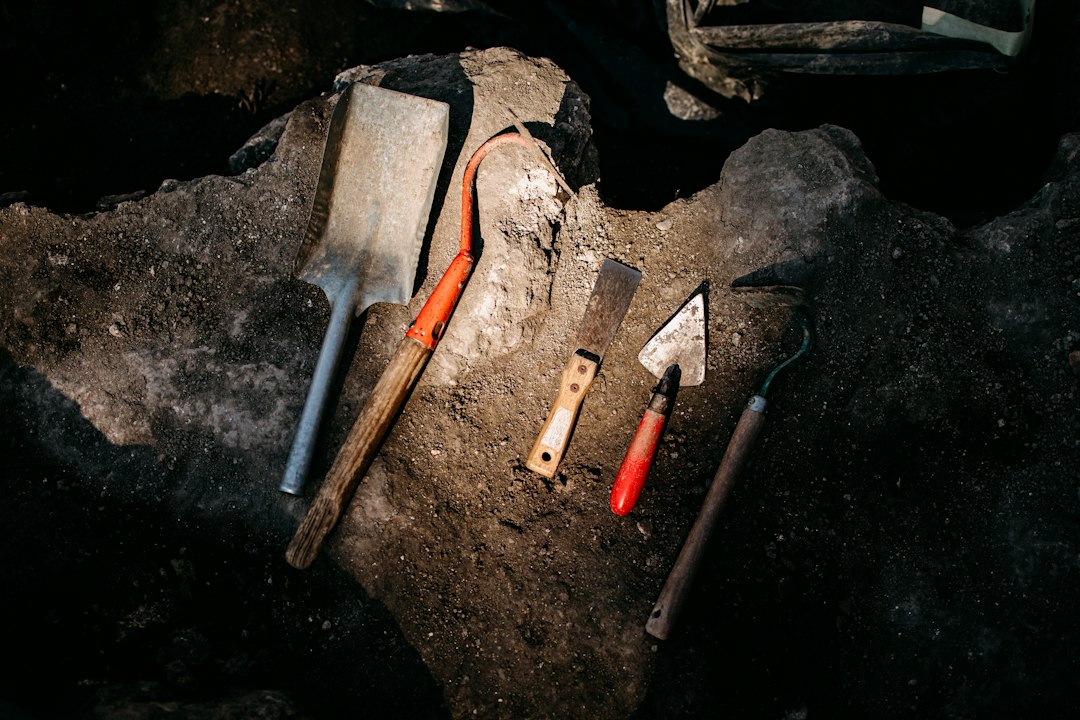
Infrastructure Meets History: How Rail Projects Are Reshaping Archaeology
You know, it’s funny how we usually think of modern rail lines as something that just cuts through the past, but the reality is actually the opposite. When you look at projects like the High Speed 2 in the UK, you’re seeing the largest archaeological effort in British history, with over a thousand specialists working across sixty sites. It’s not just about moving dirt anymore; it’s about using LiDAR to map out Roman roads hidden under centuries of mud before a machine even shows up. I find it fascinating that these rail projects are now responsible for nearly 40 percent of all new historical site discoveries in the EU since 2020. Honestly, we’re learning more about the Roman Empire from these train tracks than we ever did from traditional, slow-moving digs.
Think about the sheer scale of what’s coming to light here. In London, the Crossrail project pulled over 10,000 artifacts from waterlogged soil, including rare horseshoes and pottery that were essentially frozen in time. Then you have Germany, where they’re using real-time sensors to avoid smashing into unmapped villa foundations that sit deeper than our usual tools can even reach. And it’s not just European history being rewritten either. In Israel, a new high-speed line led to the discovery of a massive Roman olive oil factory, which completely changes our understanding of how important that region actually was to the Empire’s economy.
It’s pretty cool how technology is making this possible without stalling the trains. Engineers are now using Building Information Modeling to shift track alignments by just a few centimeters, which lets them skip over a heritage site entirely. We’re even seeing drones with multispectral cameras spotting buried walls based on how the grass grows differently above them, which is a massive leap from the old way of just digging and hoping. Plus, the work is getting more scientific, like in Italy, where they’re using stable isotope analysis on skeletons to prove that workers were actually traveling all the way from North Africa to build these ancient supply routes.
And here’s the best part: all this data is finally going into open-access digital archives instead of just sitting in some dusty filing cabinet. It’s creating a massive, connected map of how the Romans moved goods across entire continents. Sometimes, the construction work even helps save what’s left; the vibration-dampening tech we build for modern high-speed trains is actually stabilizing fragile underground ruins that were literally falling apart. By syncing up digging schedules with construction, teams are saving thousands of coins that would’ve been crushed into dust by piling equipment. It’s a strange, unintended partnership, but it’s giving us a much clearer picture of our own history.
Unearthing the Past: Notable Roman Finds from Modern Transit Construction
It is honestly wild to think that while we are rushing to catch a train, we might be standing directly above a slice of history that has been tucked away for two millennia. I find it fascinating how the development of Rome’s Metro C line has effectively turned daily transit hubs into living museums, where you can peek at excavated military barracks and thermal baths right there in the station architecture. It isn’t just happening in the heart of the empire, either, as transit-related earthworks in places like Tajikistan have revealed sophisticated water pipelines that prove Roman-influenced engineering reached much further than we once assumed. These projects are essentially forcing us to reconsider the logistical footprint of the ancient world, uncovering everything from standardized iron tools used for rapid road construction to the humble remains of service stations that functioned exactly like our modern highway rest stops.
The way we integrate these findings into our actual transit experience is what really strikes me as a massive win for public history. Instead of just burying these sites again, we are seeing new railway terminals with glass-floored concourses that let you walk directly over preserved mosaic flooring while waiting for your commute. When construction crews hit something sensitive, they are now using specialized protective barriers to shield fragile wall paintings from the heavy vibrations of the machinery, which is a far cry from the old days of just digging through everything. It creates this strange, cool continuity where the same ground that supported an ancient courier network is now helping us move people across the city at high speeds.
Beyond just the big, flashy ruins, the smaller items we are pulling out of these tunnels are arguably the most human part of the whole story. I’m talking about discarded wooden writing tablets that give us a genuine, unfiltered look at the daily grumblings of middle-management officials, or ceramic vessels that act like breadcrumbs to help researchers map out exactly how grain moved from North Africa to feed the masses. Even the geotechnical surveys meant for rail foundations are uncovering buried stone cisterns, which show us exactly how Romans managed their water supply during the droughts we’ve read about in textbooks. It’s pretty rare that we get to see the environmental impact of history in such high definition, but these deep-drilling techniques are finally letting us analyze soil layers from two thousand years ago. When you look at it this way, these transit projects aren't just moving people; they are helping us connect the dots on how an entire civilization actually functioned on a daily basis.
The Collaborative Effort: When Construction Crews Become History Detectives
You know, it’s honestly wild how the divide between a modern construction worker and an ancient engineer is getting thinner by the day. When we look at the findings coming out of these rail projects, we’re seeing that Roman teams were basically running their own version of a modern site office. Take the discovery of roadside workshops, which functioned as mobile repair centers where specialized teams actually followed the main crews to handle tool manufacturing on the fly. It suggests a level of logistical planning that mirrors exactly how we manage massive infrastructure projects today, right down to the on-site maintenance.
The technical brilliance of these ancient builders is also coming into focus through the debris they left behind. We’ve found that they were using pozzolana, a volcanic ash that let their concrete harden underwater, keeping structures sound for two millennia, while their mortar often contained recycled high-lead waste from smelting to add structural reinforcement. They even had waterproofing down to a science, using bitumen-coated joints on wooden drainage pipes to prevent rot. It’s a bit humbling to realize that these designs were effectively pre-dating our modern industrial techniques by centuries.
And the level of precision in their work is just as impressive as the chemistry. Forensic analysis of limestone blocks found at these sites shows that they were using hydraulic pulleys to align foundations with astronomical accuracy, while neutron tomography on iron nails reveals sophisticated heat-treatment patterns to boost tensile strength. They were even thinking about climate control, with hand-carved stone tunnels beneath commercial hubs that acted as primitive air-cooling systems. It’s clear they weren't just building paths, but managing complex, climate-resilient infrastructure that we’re only just now fully grasping through our own modern, high-speed excavation efforts.
Decoding Daily Life: What Recent Discoveries Reveal About Roman Society
It is honestly wild to think that while we are rushing to catch a train, we might be standing directly above a slice of history that has been tucked away for two millennia. I find it fascinating how the development of modern transit hubs has effectively turned construction sites into living museums, where we are uncovering everything from the gritty reality of middle-management to the high-stakes survival of the elite. When you start looking at the specific data, you realize we aren't just finding broken pots; we are essentially decoding the operating manual for an entire civilization. For instance, recent DNA analysis of 2,000-year-old residues has allowed scientists to chemically reconstruct garum, that famous fermented fish sauce, which gives us a literal taste of what daily life actually looked like in the Roman kitchen.
And the level of detail we’re pulling out of these sites is just staggering. Take those wooden writing tablets recovered from waterlogged soil in Belgium; they’ve revealed informal shorthand used by officials, essentially capturing the daily grumblings of people just trying to get through their shift. It’s a complete departure from the grand, polished narratives we usually get in history books. We are even seeing the emergency side of things, where excavations of burned houses have unearthed hidden caches of wealth, showing us the exact panic-driven measures families took to protect their assets during sudden catastrophes. It makes you realize that, beneath the marble statues and military campaigns, these people were dealing with the same basic human stresses—job frustration, financial anxiety, and the need for a good meal—that we face today.
But what really gets me is the sheer engineering brilliance that these discoveries are proving. We’ve found that Roman crews weren't just guessing; they were using mobile roadside workshops to manufacture standardized tools on the fly, a level of logistical planning that rivals our own modern project management. Even their infrastructure had a "smart" design, with hand-carved stone tunnels acting as passive air-cooling systems and sediment traps built into cisterns to handle drought. From the bitumen-coated joints on their wooden pipes to the heat-treated iron nails analyzed via neutron tomography, it is clear they were managing a complex, climate-resilient network that we are only just beginning to fully appreciate. It’s like we’re finally seeing the "software" of the Roman world, and honestly, it’s a lot more advanced than we ever gave them credit for.
Technological Marvels: Excavating Beneath Ancient Metropolitan Hubs
When we look at the sheer technical sophistication unearthed beneath modern transit hubs, it’s honestly easy to forget that these aren't just ruins; they’re the remnants of a highly engineered society. I’m thinking specifically of those groma surveying instruments that used plumb lines to achieve a level of straight-line accuracy that honestly rivals our current laser-leveling standards. It’s wild to see how they managed groundwater, too, using layers of crushed brick and pottery as a permeable sub-base for their road beds, which effectively prevented the kind of soil heave that would destroy a modern rail line. They were even using silver-enriched alloys to seal lead pipes, a move that clearly shows they understood how to handle high-pressure water surges long before we had modern plumbing codes.
The more we scan these sites, the more it feels like we’re reading an ancient technical manual. Take the subterranean walls where digital photogrammetry has revealed instructional etchings from stonemasons, basically serving as a "how-to" guide for future maintenance crews. It’s also fascinating to see how they handled comfort and structural resilience, like the way they used layers of hollow terracotta tubes within walls for thermal mass insulation. Or consider the acoustic engineering they deployed, strategically placing vessels within stone arches to act as resonance chambers—basically, their version of a public address system for transit hubs.
And don't get me started on the logistics. We’ve found standardized metal identification tags near transportation nodes that functioned just like our modern cargo tracking systems, proving they had a real grasp on supply chain management. It’s even in the small details, like the ergonomic cleats found on footwear, which were clearly designed to give laborers better traction on those steep, man-made embankments. Honestly, when you realize they were using charcoal and ash layers to protect wooden pilings from decay, you start to see that they were building with a level of foresight we often assume is purely modern. It’s a strange, humbling realization that the foundations of our current cities are literally sitting on top of such a masterclass in urban planning.
Preserving the Legacy: Balancing Urban Expansion with Historical Heritage
When we look at the way our modern cities are expanding, it’s easy to feel like we’re constantly forced to choose between building for the future and respecting the past. But honestly, the more I dig into this, the more I realize that it’s not really a zero-sum game; it’s more about how we use new tech to bridge that gap. For example, satellite-based monitoring like the Copernicus system now lets urban planners spot ground subsidence caused by hidden ancient voids long before a single heavy machine shows up on-site. It’s a total game changer because it means we aren't just reacting to surprises, but actually designing around history. Think about it: by using non-invasive muon tomography, engineers can map out dense Roman vaults deep under city centers without ever needing to break ground.
It’s also pretty wild how much we’re learning from the ancient world that actually makes our current infrastructure stronger. I mean, some modern rail projects are now testing out sacrificial layers of crushed brick in their foundations, which is a direct nod to Roman drainage techniques that have kept structures stable for two millennia. We’re even seeing transit authorities adopt open-access GIS databases that let developers overlay current construction blueprints with historical site maps in real-time. It’s making the whole process of urban expansion much more transparent and, frankly, a lot less destructive. Plus, the fact that we’re using vibration-dampening sensors—which were originally built for high-speed trains—to keep fragile Roman mosaics from cracking as subways pass underneath is just brilliant.
What I really love is how this shift is changing our perspective on what it means to build a city. When you realize that many of our current metropolitan grid patterns are essentially direct overlays of ancient Roman land division systems, you start to see that we’ve been building on the same logic for centuries. It’s not just about saving a few old walls; it’s about understanding the foundational DNA of our urban spaces so we can adapt them for the next few hundred years. By using tools like digital photogrammetry to reverse-engineer ancient construction standards, we’re actually finding safer, more sustainable ways to build our own transit networks. Honestly, it feels like we’re finally moving toward a version of urban planning where progress doesn't have to come at the cost of our shared human story.
Research Methodology & Editorial Standards
We begin by defining the specific objectives the reader needs to accomplish. Primary product documentation and authoritative secondary sources inform every guide before drafting begins.
Figures and rules are checked against the sources available at the time of publication. Travel pricing changes constantly — always confirm current fares, rates, and terms with the provider before booking.