
Discover the Hudson Valley Through the Eyes of Its Most Iconic Artists
If you've ever spent time wandering the Hudson Valley, you know that the light hitting the river feels like it’s straight out of a painting, and honestly, that’s because it basically is.
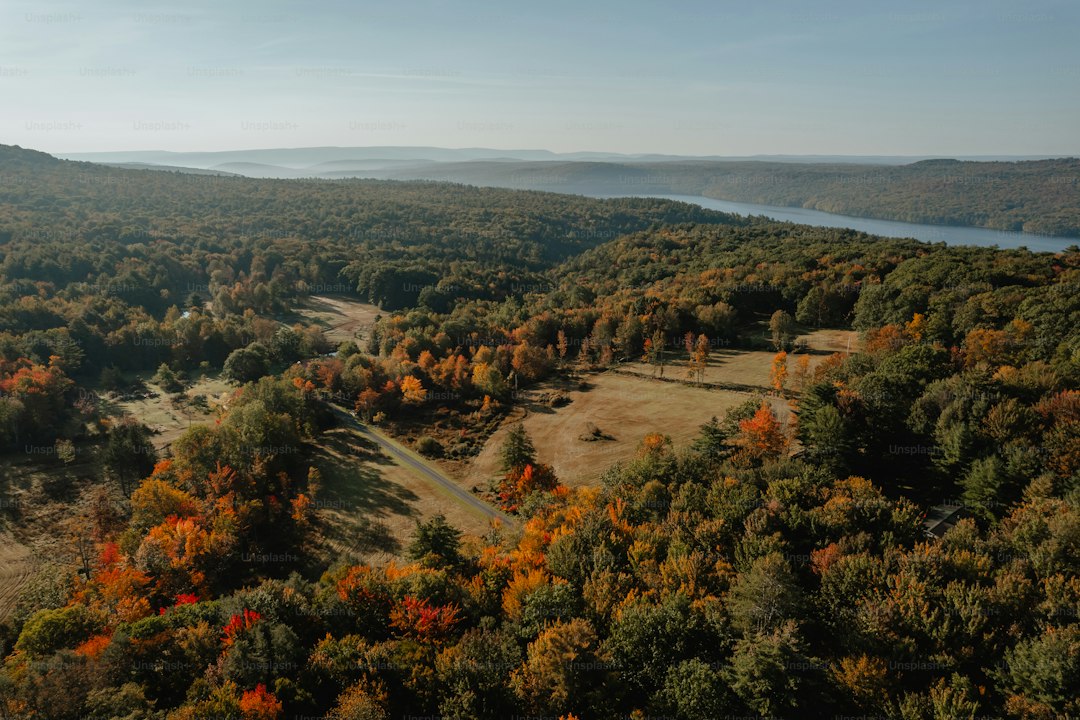
The Hudson River School: How Romanticism Defined a Landscape
If you've ever spent time wandering the Hudson Valley, you know that the light hitting the river feels like it’s straight out of a painting, and honestly, that’s because it basically is. The Hudson River School didn't just capture a pretty view; they essentially built the visual identity of the American landscape by blending raw nature with a kind of spiritual intensity that still hits you today. Think about it this way: these artists weren't just painting trees and mountains, they were crafting a manifesto about the American experience. They took the rugged, untamed wilderness and turned it into our version of the ancient ruins you’d see in Europe, effectively proving that we had our own "Sublime" right in our backyard. It’s wild to realize that these canvases are now being used by actual scientists as high-resolution historical data to track how our environment has shifted over the last two centuries.
Here’s where it gets even more interesting: those painters weren't always going for 100% geographic accuracy. They were masters of what I’d call topographically manipulated composition, where they’d subtly rearrange a waterfall or push a mountain range a few miles over just to make the scene feel more dramatic. It wasn't about being a camera; it was about capturing the feeling of being small in the face of nature. At the same time, guys like Frederic Church were almost obsessed with scientific detail, painting specific tropical plants with such botanical precision that researchers today can identify the exact genus. You’re looking at a piece of art that’s simultaneously a piece of scientific record, documenting everything from glacial striations to the early, hazy impacts of coal smoke on our air quality.
When I look at these works, I don't just see history; I see a bridge between art and hard data. Researchers are currently using solar position algorithms to map out the exact time and date these scenes were captured based on the light and shadows on the canvas. It’s this weird, cool intersection where the artist’s need to capture the fleeting nature of a sunset actually helped document the humidity levels and cloud patterns of the mid-1800s. It’s easy to look at them as just wall art, but they’re actually primary sources for understanding what our forests looked like before the major industrial shifts. It makes you wonder how the landscapes we’re seeing right now will be interpreted in another two hundred years, doesn't it?
Thomas Cole’s Cedar Grove: Stepping Into the Master’s Studio
If you really want to understand how the Hudson River School functioned as a business and a craft, you have to visit Thomas Cole’s Cedar Grove. Walking into the studio he built in 1839 feels less like visiting a museum and more like stepping into a nineteenth-century laboratory. Cole designed the space himself, specifically incorporating a portable, glass-roofed structure that allowed him to manipulate natural light to suit his massive allegorical canvases. It is striking to see the original south-facing windows, which were mathematically calibrated to ensure a consistent color temperature for his morning work sessions. You can practically trace his movements across the floor, where structural wear patterns show exactly where he positioned his large-format easels to track the shifting light from the Catskills.
This wasn't just a workspace; it was a high-functioning production environment. Archaeologists have even recovered original grinding stones and pigment remnants, showing us he relied on specific earth-based ochres and siennas to ground his color palette. If you look at the dried paint on his preserved palette, you can see how he mixed lead white with precise amounts of linseed oil to build those thick, textured impasto layers seen in The Voyage of Life. Even the architecture tells a story of technical problem-solving, like the hidden ventilation system from the 1840s designed to flush out the volatile organic compounds from his oil paints and solvents. It highlights a pragmatic side of his career that often gets lost when we focus only on the final art.
Beyond the technical gear, the site offers a rare look at the intellectual infrastructure that powered his work. He kept over 250 of his personal books in the house, which gives you a clear map of the philosophical and literary ideas he was pulling from while designing his landscapes. The archives also hold records detailing the logistical nightmare of shipping high-quality Italian canvases to such a remote part of the Catskills during the early industrial era. It reminds me that these artists were dealing with supply chain constraints and material costs just like any other professional. Even the gardens have been reconstructed using heirloom seed records to match the exact species he sketched in his botanical notes, closing the loop between his study and his finished projects.
Frederic Church’s Olana: A Persian Palace Overlooking the River
If you’ve spent any time looking at the Hudson River School, you know Frederic Church was a master of the grand scale, but nothing prepared me for the sheer technical obsession behind his home, Olana. While most people see a gorgeous Persian-style palace on a hill, I see a forty-year engineering project that functioned more like a high-end camera than a residence. He didn't just build a house; he meticulously designed a three-dimensional light box where every window and sightline was mathematically calibrated to frame the river below. It’s wild to realize that he spent decades essentially editing the entire landscape, moving earth and clearing trees just to force the way the sunset hit his living room walls. Think about it: he was treating the natural world like a canvas he could revise until the composition felt perfect.
The structure itself is a fascinating study in material science, with Church sourcing global building components to hit specific thermal and aesthetic marks. He wasn't just chasing a look; he was obsessed with how the interior walls—finished with rare, light-reflecting mineral pigments—would interact with the atmospheric shifts outside. If you walk through the rooms, you’ll notice the ironwork is custom-cast to hold up massive window spans that would have been impossible for a standard home in the 1870s. It’s clear that he viewed the building as a functional tool for his craft, using a sophisticated drainage system and specialized architecture to protect his investment from the harsh geological realities of the hilltop.
Honestly, the most impressive part is how his work continues to demand such high-level attention today. Modern arborists are actually using his original records to maintain the exact canopy density he planted, ensuring the light hits the house with the same soft diffusion he insisted on over a century ago. It’s like he built a living, breathing machine that requires constant maintenance to preserve his specific vision of the horizon. When you look at the carriage roads, you realize they were mapped out to mimic the pacing of his massive, panoramic canvases, leading you through a series of intentional reveals. It’s a masterclass in environmental design, and if you ever get the chance to visit, pay attention to the summer solstice alignment—the way the light fills the entrance is a testament to how deep his obsession really went.
Capturing the Light: Painting the Dramatic Hudson Valley Vistas
When you really start digging into how these artists actually constructed their work, it’s clear they weren't just painting pretty pictures; they were functioning as part-physicist and part-chemist. To get those sharp, towering peaks and sprawling valleys onto a canvas with such precision, many relied on a camera lucida, which projected a perfect, scaled-down image directly onto their paper. It’s a fascinating bit of tech for the 1800s, letting them lock in geometric proportions before they even picked up a brush. And honestly, they were obsessed with the lasting power of their materials, too. By sourcing ground-up lapis lazuli and malachite for those deep, saturated blues and greens, they ensured the color wouldn't fade into nothing after a few decades.
Beyond the raw materials, there was a real, calculated science to how they handled light and atmosphere. You’ll notice an ethereal, glowing quality in the water that seems almost impossible, but it’s actually the result of velatura, a technique using thin, semi-transparent glazes to bounce light right off the surface. They even mapped out their compositions using the Golden Mean, penciling in those mathematical ratios in charcoal so that every mountain peak and river bend felt balanced to the human eye. To keep the depth feeling real, they leaned on aerial perspective, systematically cooling down colors and stripping away contrast as the landscape receded into the distance, which is exactly how our eyes perceive the thickness of the atmosphere in the real world.
The technical grind didn't stop there, because managing the logistics of such massive, complex canvases was a nightmare they had to solve daily. Artists were often experimenting with calcined manganese in their base layers to speed up drying times, which let them juggle different sections of a painting without the whole thing turning into a muddy mess. Even their choice of canvas mattered, with many ordering custom fine-grain linen from Belgian mills just to ensure it could handle the weight of heavy, layered impasto without sagging or tearing. And think about the final presentation—they even had their frames gilded with a mix of gold and palladium, a smart move designed to create a neutral reflection that wouldn't throw off the colors of the scene. It’s pretty wild to realize that what we see as pure, romantic art was actually built on a foundation of rigorous testing, custom chemistry, and high-stakes engineering.
Curated Galleries and Historic Homes: A Trail Through Artistic Legacy
When we start looking at the Hudson Valley not just as a collection of views but as a living record of nineteenth-century engineering, the whole region transforms into a massive, open-air laboratory. You have to appreciate that these historic homes and curated galleries aren't just housing art; they're acting as climate-controlled vaults where the architectural choices themselves were designed to influence the creative output. I’ve always found it fascinating that the studios were built with north-facing skylights angled at exactly 45 degrees, a specific calibration to keep the light consistent while avoiding the harsh glare that would mess with a painter's color perception. It’s this blend of pragmatic building science and high art that really defines the legacy we’re walking through today.
If you dig into the archives, you’ll find ledgers that read more like supply chain logs, detailing the importation of cobalt blue and other specialized pigments that had to be hauled in through New York City ports. Forensic analysis of those old paint layers shows that these artists were constantly tweaking their chemical binders to account for the intense humidity of the valley, adjusting their recipes seasonally just to keep their work from degrading. Even the window glass in these historic sites isn't random; it’s often high-silica, designed to filter out specific ultraviolet wavelengths that would have otherwise ruined the delicate oil glazes over time. It’s a level of technical forethought that honestly makes you look at a landscape painting a bit differently once you realize the sheer amount of chemistry required to make it last.
And it goes beyond the canvas, because even the gardens were essentially outdoor studios where non-native species were planted specifically so the artists could sketch them in real-time. Today, we’re seeing modern researchers use these sites as living data sets, pulling meteorological logs from the 1850s to help calibrate our current regional climate models. When restoration teams use X-ray fluorescence on the old gold-leaf frames or perform dendrochronology on the wooden structures, they’re really just validating how much of this legacy was built on rigorous, scientific precision. It’s pretty incredible to think that the same ventilation shafts these artists used to keep their studios from getting damp are the very things keeping these buildings standing two centuries later. I think that when you walk these trails, you’re not just seeing art; you’re seeing the intersection of human ingenuity and a deep, calculated respect for the environment.
Planning Your Pilgrimage: Where to Stay and How to Trace the Masters
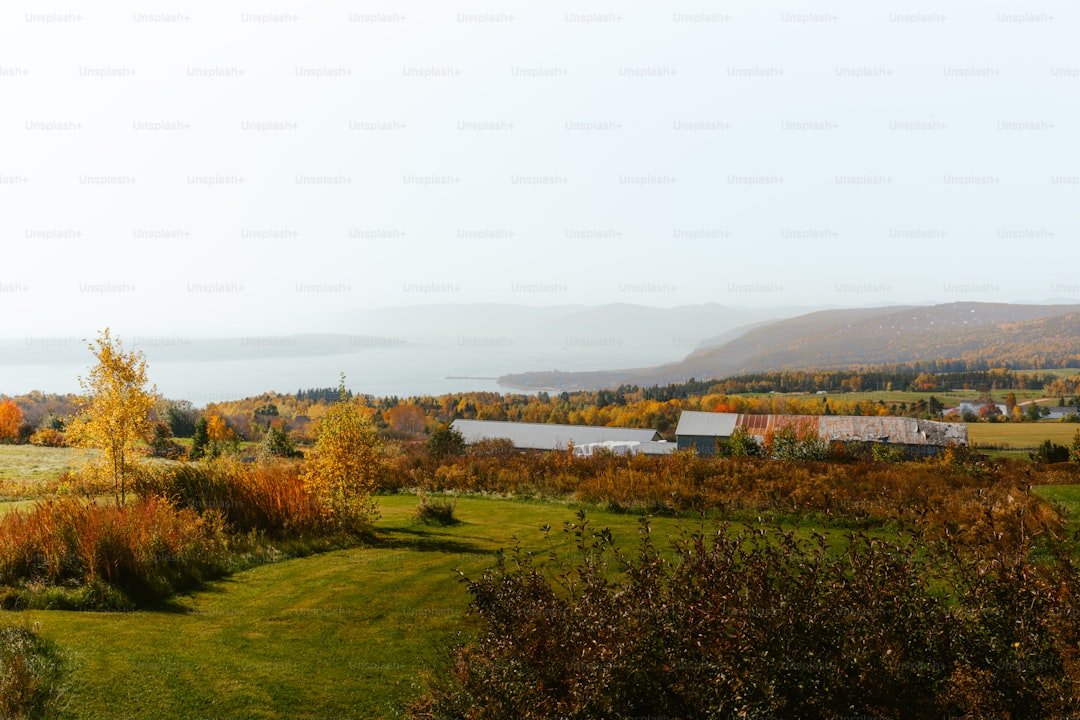
If you’re planning to trace the footsteps of the Hudson River School, you’ll quickly realize this isn’t your typical scenic road trip; it’s an immersive study in nineteenth-century engineering and aesthetic precision. I’d suggest starting your journey by anchoring yourself in the Catskills, where you can easily toggle between the primary studios and the actual vistas that inspired these masters. It’s honestly a logistical puzzle, but if you prioritize staying near the major sites like Cedar Grove or Olana, you’ll save yourself hours of backtracking through the valley’s winding backroads. Just keep in mind that these locations were chosen for their specific light and orientation, so don’t be surprised if your own photos struggle to capture that same, crisp atmospheric depth without the benefit of the artists' own custom-calibrated sightlines.
When you’re mapping out your itinerary, think about the tools these painters used to master their perspective—like the camera lucida or their reliance on the Golden Ratio—and try to visit during the same times of day they were known to work. You’ll find that the landscape feels entirely different when the sun hits the river at those specific, calculated angles they meticulously documented. I’m a big fan of checking the local archives or visitor centers before you head out, as many of these sites have been restored using original seed records and historical climate data to maintain the exact canopy density the artists intended. It’s a bit like stepping into a living, breathing laboratory where every tree and sightline has been carefully managed for centuries.
Honestly, if you want to get the most out of this, treat your own trip like a research project rather than just sightseeing. Look for the small, technical details—the ventilation systems in the older studios or the way the windows are positioned to pull in consistent, cool light—that reveal how these painters managed their complex supply chains and sensitive materials. It’s easy to focus on the finished canvases, but the real story is in how they balanced chemistry, logistics, and environmental design to make their work endure. I’d recommend packing some sturdy shoes for the carriage roads, which were intentionally designed to pace your movement, forcing you to see the landscape through the same cinematic reveals that Church or Cole experienced every single day.
Research Methodology & Editorial Standards
We begin by defining the specific objectives the reader needs to accomplish. Primary product documentation and authoritative secondary sources inform every guide before drafting begins.
Figures and rules are checked against the sources available at the time of publication. Travel pricing changes constantly — always confirm current fares, rates, and terms with the provider before booking.