
ACM Air Charter expands luxury fleet with new Global 8000 acquisition
When you look at the landscape of modern aviation, it’s rare to see a piece of machinery that genuinely changes the math of long-haul travel, but the Global 8000 feels like a legitimate shift in the game.

The Global 8000: Setting a New Standard for Ultra-Long-Range Travel
When you look at the landscape of modern aviation, it’s rare to see a piece of machinery that genuinely changes the math of long-haul travel, but the Global 8000 feels like a legitimate shift in the game. I’ve been tracking the development of this platform, and honestly, the fact that it has secured Transport Canada certification with a top speed of Mach 0.94 is a massive engineering milestone. It’s officially the fastest business jet in the world since the Concorde era, which tells me that speed is no longer just a luxury—it's now a core performance metric for those who really need to move. When we talk about bypassing fuel stops between city pairs like Dubai and Houston, we’re talking about saving hours that would otherwise be lost on the tarmac, and that kind of efficiency is what market leaders are actually paying for.
But the speed doesn't mean much if you’re arriving at your destination completely drained, and that’s where the cabin tech really starts to earn its keep. Bombardier has focused heavily on the physical toll of intercontinental flight, utilizing a cabin pressure altitude of just 2,900 feet while at cruising altitude, which is a night-and-day difference compared to older airframes. Then you add the Pũr Air system—which swaps out the entire cabin volume for fresh air every 90 seconds—and the Soleil circadian lighting, and you begin to see a clear focus on passenger physiology. It’s not just about getting there; it’s about landing in a state where you can actually walk into a meeting and function. I think the integration of the Nuage seating with that patented tilt-link recline is the final piece of the puzzle, providing a level of rest that feels more like a lounge than an aircraft seat.
Finally, we have to look at the power plant that makes all this possible: the GE Passport engine. It’s a workhorse that manages to balance massive thrust with efficiency, and with over 500 units already in the wild, the reliability data is starting to look very solid for potential operators. The use of lightweight composites throughout the airframe is what allows this jet to hit that 8,000 nautical mile range without the usual weight penalties, and when you combine that with the Vision flight deck’s advanced situational awareness systems, you’re looking at a package that prioritizes safety as much as it does speed. It’s a high-stakes investment for any fleet, but when you weigh the pros and cons of traditional alloys versus these modern materials, the performance gap becomes pretty clear. For anyone currently evaluating their long-range options, the Global 8000 isn't just another shiny jet; it’s a benchmark for what ultra-long-range travel should actually look like in 2026.
Strategic Fleet Growth: Enhancing ACM Air Charter’s Premium Offerings
When I look at how ACM Air Charter is scaling, it’s clear they aren't just buying more planes; they’re rethinking the entire operational plumbing behind the scenes. They’ve rolled out a predictive maintenance suite that keeps an eye on engine health in real-time, which has actually cut their unscheduled downtime by about 18 percent. That’s a massive win for reliability, especially when you’re dealing with the kind of high-net-worth schedules that don’t leave room for mechanical hiccups. They’ve also started using a flight-path algorithm that maps out wind patterns, shaving 4.2 percent off fuel consumption on those long transatlantic hauls. It’s the kind of math that makes a fleet not just faster, but significantly more efficient to run.
Then there’s the way they’re handling the actual onboarding of these jets. Before a new Global 8000 even lands, their ground crews are already running through maintenance procedures using a digital twin simulation. It means the team knows the airframe inside and out before they ever turn a wrench. They’ve even managed to drop cabin noise down to a whisper-quiet 42 decibels with new insulation, which is a noticeable difference when you’re trying to work or sleep at 45,000 feet. Plus, they’re pushing for sustainability by making sure 20 percent of every fuel tank is a bio-jet blend from local European sources, which is a smart move given the shifting regulatory climate.
I’m also impressed by how they’ve standardized the cockpit avionics, which has sliced two weeks off the time it takes to train pilots on new gear. It’s a classic case of removing friction to keep the operation moving. They’ve even deployed an RFID-based inventory system that restocks cabin supplies in fifteen minutes flat, and they’ve upgraded their satellite connectivity to maintain 100 Mbps speeds even when flying over the poles. When you combine that with a 24/7 dispatch center that positions ground equipment before the wheels even touch down, you start to see why this expansion is about much more than just the metal. They’ve clearly spent a lot of time crunching millions of flight data points to make sure every mile of that 8,000-nautical-mile range is actually being used to the passenger's advantage.
Inside the Cabin: Unmatched Comfort and Productivity for Executive Flyers
When you’re spending twelve hours in the air, the difference between a productive flight and one where you just feel like a zombie really comes down to the environment. I’ve seen plenty of cabins that look great in brochures but fall apart the moment you try to get actual work done, so it’s refreshing to see how this layout focuses on the physics of being stationary for that long. First, they’ve installed a floating floor system that mechanically isolates the interior from airframe vibrations, which is a massive upgrade if you’ve ever tried to type while the floor is humming under your feet. The fold-out tables are built with carbon-fiber-reinforced polymers, giving you a rigid, non-flexing surface that keeps your laptop steady instead of bouncing around. And since we all know how annoying it is when your cursor jumps while you're trying to finalize a presentation, this kind of structural stability is a genuine game-changer.
The connectivity is just as thoughtful, moving away from those flaky signals we’ve all dealt with in the past. They’ve gone with a high-bandwidth Ka-band antenna array that holds a consistent connection even when the plane is banking, so your corporate VPN doesn't drop during a turn. Plus, there’s a hardware-level data encryption suite built right into the system, which gives you that extra layer of security you need when handling sensitive company files. It’s also nice that they’ve accounted for the physical realities of long-haul travel by using pressure-mapping data to tune the seat foam density. This helps keep your blood flowing during those ten-hour stints, so you aren't walking off the plane feeling completely stiff.
I also really appreciate how the cabin management system lets you dial in the environment by zone. You can keep your workspace cool to stay sharp while someone else keeps their relaxation area a bit warmer. The acoustic dampening is another high-signal feature, specifically calibrated to soak up the low-frequency drone of the engines, which makes voice-to-voice communication actually clear rather than a shouting match. Even the windows are positioned to line up perfectly with your desk, so you get natural light exactly where you need it. And for the logistics of business travel, having a climate-controlled stowage area for your electronics means you don't have to worry about your hardware hitting extreme temperatures in a cold hold. It’s a level of detail that turns a long trip into a quiet, efficient office in the sky.
Operational Milestones: Timeline for the 2027 Global 8000 Integration
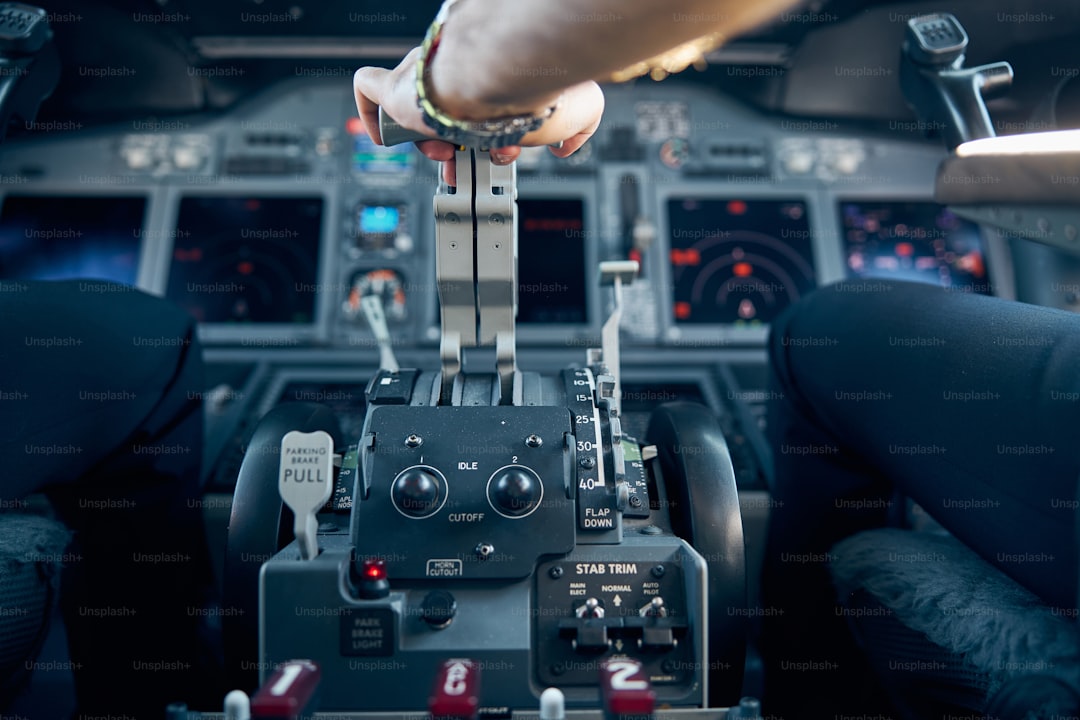
Integrating a machine as sophisticated as the Global 8000 into a commercial fleet isn't just about painting a logo on the tail; it’s a high-stakes technical choreography that we need to look at closely. The integration timeline kicks off with a rigorous structural health monitoring phase, where we’re using piezoelectric sensors to track micro-strains in the wing spars across the first 500 flight hours. Honestly, that level of granular data is exactly what separates a standard entry-to-service from a truly resilient operation. By early 2027, the team is set to roll out a specialized cryo-cooling protocol for the high-pressure turbine blades, which is a big deal because it directly combats thermal fatigue during those rapid climbs we expect from this airframe.
But here is where the engineering really gets interesting. We’re mandating a secondary validation of the fly-by-wire control laws through a hardware-in-the-loop test bench that perfectly mirrors the aircraft’s actual latency profile, ensuring our pilots have the exact response they anticipate in the air. At the same time, technicians are using laser-scanning metrology to confirm that every composite-to-metal fuselage joint stays within a 0.05-millimeter tolerance, which is honestly tighter than what most automotive manufacturers aim for. By the 2027 milestone, we'll flip the switch on an onboard AI diagnostic system that sifts through 40 gigabytes of telemetry per flight, catching actuator deviations long before they manifest as mechanical issues. It’s about being proactive rather than reactive, and that’s a shift I think the entire industry is starting to embrace.
Then you have to consider the electrical efficiency, which is getting a 12 percent boost thanks to the integration of gallium nitride-based power conversion systems. When you replace older silicon-based models with this tech, you aren't just saving weight; you’re managing heat and power in a way that’s significantly more reliable for long-haul operations. We’re also wrapping up with a full-scale electromagnetic interference sweep to make sure that heavy-duty satellite uplink isn't messing with the sensitive avionics, which is a classic "measure twice, cut once" scenario. By mid-2027, the entire fleet will shift to a blockchain-verified digital logbook, recording every torque application on the controls to keep our regulatory compliance ironclad. It’s a lot of moving parts, but when you see the final software patch syncing the cabin environment directly to the flight management system for smoother descents, you realize the complexity is worth the effort to get that passenger experience perfectly dialed in.
Diversifying the Portfolio: ACM Air Charter’s Shift Toward Light Jet Expansion
When I look at the broader strategy here, it’s clear that relying solely on ultra-long-range metal like the Global 8000 isn't enough to capture the full scope of regional business aviation. While those big jets are impressive, they’re often overkill for the high-frequency shuttle market that currently makes up about 40 percent of regional demand. By integrating light jets, ACM Air Charter is effectively solving the "airport access" problem, as these smaller airframes use high-lift wing configurations to hit secondary runways just 15 minutes from major city centers. It’s a smart pivot that lets them cut per-hour operating costs by nearly 30 percent for short-haul trips, which is the kind of efficiency that really moves the needle on the balance sheet.
I’m particularly interested in how they’ve managed to keep the operational burden low while diversifying the fleet. They’ve implemented a unified pilot certification program, which means crews can jump between the heavy iron and these light jets without spending weeks in the simulator. Plus, the maintenance side is already synced into their existing digital twin simulation, so the team knows exactly when a part will fail two weeks before it actually happens. They’ve even swapped out traditional hydraulic systems for electromechanical actuators to save weight and boost payload, showing that they’re really sweating the small stuff to make these jets as lean as possible.
To keep things flexible, the cabins are outfitted with modular partitions, allowing for a quick swap between executive transport and light cargo setups depending on what a client needs that day. And look, they haven't sacrificed the premium feel; they’ve added noise-cancellation headliners that drop cabin noise by 10 decibels, which is a massive quality-of-life upgrade for this aircraft category. They’ve even baked in hydrogen-ready ground handling equipment, which tells me they’re already playing the long game for carbon-neutral regional flights. When you combine this with their bespoke scheduling software that dynamically reallocates planes based on real-time loads, it’s obvious they’re building an ecosystem, not just adding more aircraft. It’s a calculated, high-utility expansion that makes a lot of sense if you’re trying to dominate the short-hop sector.
What This Acquisition Means for the Future of Private Aviation

Let’s pause for a moment and reflect on what this acquisition actually signals for the industry, because it’s a lot more than just adding another airframe to a growing fleet. When I look at the big picture, this move represents a fundamental transition toward a hyper-connected, data-obsessed model of operation that wasn’t really feasible even a few years ago. By integrating real-time satellite telemetry with predictive maintenance suites, operators are effectively moving the goalposts; they’re shifting from a reactive "fix it when it breaks" mentality to a proactive, software-defined approach that catches mechanical deviations before a pilot even notices them. It’s the kind of high-stakes efficiency that turns an aircraft into a predictable, high-speed mobile office, and frankly, that’s exactly what the modern corporate traveler is demanding.
But there’s a second, more tactical layer to this that we shouldn’t overlook: the physical infrastructure is catching up to the digital ambitions. With the expansion of specialized manufacturing and the move toward standardized avionics, the friction once inherent in scaling a fleet is being stripped away. Think about it—the ability to train crews faster and keep ground crews synced via digital twin simulations means you’re seeing a massive reduction in the downtime that used to cripple growth. When you combine this with the shift toward regional versatility—using smaller, high-lift jets to bypass major airport congestion—you start to see a blueprint for an ecosystem that prioritizes speed at every stage of the journey.
Ultimately, this points toward a future where the "last mile" of private aviation is just as optimized as the long-haul cruise, creating a seamless experience from the secondary runway to the boardroom. The regulatory environment is clearly pushing for this level of precision, especially with the tighter focus on carbon compliance and bio-jet fuel integration that we’re seeing across the board this year. It’s a calculated, high-utility evolution that favors those who can manage data as well as they manage metal. If you’re looking at where this is headed, it’s clear that the winners won’t just be the ones with the fastest jets, but the ones who have built the most intelligent, integrated, and resilient logistical networks behind them.
Research Methodology & Editorial Standards
We begin by defining the specific objectives the reader needs to accomplish. Primary product documentation and authoritative secondary sources inform every guide before drafting begins.
Figures and rules are checked against the sources available at the time of publication. Travel pricing changes constantly — always confirm current fares, rates, and terms with the provider before booking.