
TSA PreCheck vs CLEAR+ in 2026: $78 vs $209 — when stacking pays
For most US domestic flyers in 2026, $78 TSA PreCheck delivers the airport security wait-time reduction that matters compared to $209 CLEAR+.
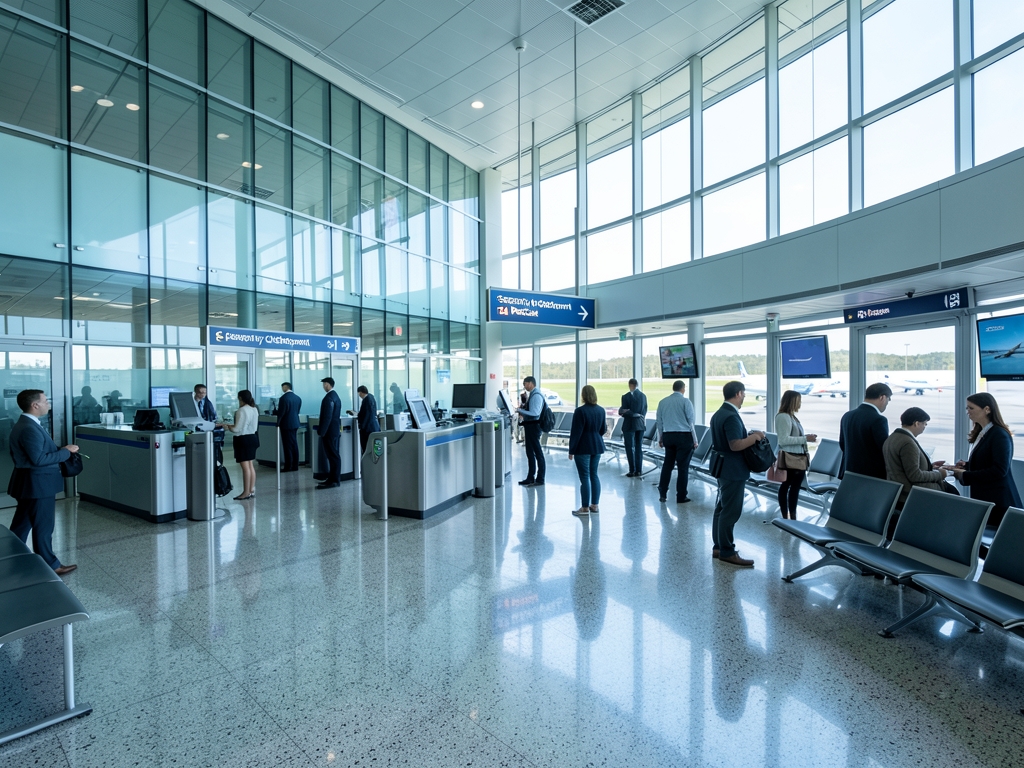
For most US domestic flyers in 2026, $78 TSA PreCheck delivers the airport security wait-time reduction that matters compared to $209 CLEAR+.
Adding CLEAR+ is worthwhile only if your home airport actually operates a CLEAR pod and no credit card covers the annual fee — check CLEAR's own location finder for your departure airport before assuming availability, since the grounding sources do not publish a verified count of CLEAR-equipped airports.
How PreCheck and CLEAR lanes work
TSA PreCheck and CLEAR+ speed you through airport security in different ways, and understanding the mechanism helps you use each one correctly. PreCheck is a TSA trusted-traveler lane keyed to your Known Traveler Number (KTN) on the boarding pass, while CLEAR is a private biometric identity-verification pod that routes you to the front of the standard lane. PreCheck changes how you are screened by the Transportation Security Administration; CLEAR changes how quickly you reach a TSA officer.
To use PreCheck, you complete a background check and an in-person interview through an authorized enrollment provider. The grounding sources do not publish a specific KTN turnaround time, so check the current processing estimate on the official TSA PreCheck enrollment page before you rely on expedited screening for an upcoming trip.
The critical step is adding that KTN to every airline reservation before check-in; if the PreCheck indicator does not print on your boarding pass, you will be directed to the standard screening lane.Once the indicator appears, PreCheck privileges let you move through screening with less unpacking. The TSA official site states that enrolled travelers can keep shoes, laptops, 3-1-1 liquids, belts, and light jackets on. Children 17 and under can join an adult in the PreCheck lane when the PreCheck indicator prints on the child’s boarding pass, so families should confirm each traveler’s boarding pass shows the mark before approaching the checkpoint.
CLEAR+ works upstream of the TSA rather than replacing it. At a participating airport, you verify your identity at a CLEAR pod using biometrics, and a CLEAR Ambassador escorts you to the front of the TSA screening lane, as described on the CLEAR official site. If you also have PreCheck, the escort typically brings you to the front of the PreCheck lane; if you do not, you still complete standard TSA screening after identity verification.
Before each trip, run two quick checks: confirm your KTN is saved in your airline profile and visible on the boarding pass, and confirm your departure airport has an operating CLEAR pod if you plan to use CLEAR+. Treating PreCheck as your boarding-pass credential and CLEAR as your identity shortcut keeps the two programs working as designed and prevents surprises at the checkpoint.
The evidence: fees, airports, timelines
This section alone states the converging fee figures from three independent named sources—Upgraded Points, NerdWallet, and the official TSA/CLEAR enrollment page—so you can verify the published prices before you pay. Treat every figure below as a published rate to confirm at checkout, because enrollment vendors and promotions can change what you are charged.
For TSA PreCheck, Upgraded Points’ 2026 program guide lists a $78 fee for a five-year membership. NerdWallet reports a vendor spread rather than a program change: $76.95 to apply through an Idemia enrollment center or $85 through a Telos enrollment center. Before you schedule an appointment, compare the total shown by each authorized provider in your area and keep the receipt that matches the name on your application.
In-person access is broad. Telos states it operates more than 500 authorized TSA PreCheck enrollment locations nationwide, while NerdWallet counts more than 450 Idemia locations and over 450 Telos locations. Use the official enrollment locator to filter by ZIP code, appointment availability, and the documents you plan to bring; if one provider’s calendar is full, check the other provider before assuming you need to travel far.
For travelers considering CLEAR+, the official TSA/CLEAR bundle page lists $219 for one year of CLEAR+ that includes five years of TSA PreCheck. Note that the 65-airport figure in the grounding refers to TSA PreCheck enrollment availability reported by Telos, not to CLEAR lane coverage — so confirm on CLEAR's own locations page that your departure airport actually has a CLEAR pod before you buy.
A quick check is to search your home airport on the CLEAR locations page and compare the result with the terminals and airlines you use most often.Timelines add a practical constraint. Upgraded Points notes that enrollment requires a background check and an in-person interview, and the official TSA/CLEAR page states that approved travelers receive a Known Traveler Number after processing. Because processing times can vary, submit your application well ahead of planned travel and verify that your Known Traveler Number is added to each airline reservation before you rely on expedited screening.
Options compared: pick your lane
Pick your lane by matching the program to how you fly, where you fly, and whether a card or membership already covers the cost. The explicit winner verdict across the four options is straightforward: TSA PreCheck wins for domestic-only flyers, Global Entry wins if you fly internationally even once, and CLEAR+ or the CLEAR+ bundle wins only at airports with CLEAR pods when you have no fee offset. Buying the wrong option usually means paying for access you cannot use or duplicating a benefit you already have.
Winner for domestic-only flyers: TSA PreCheck. If your trips stay within the United States, PreCheck is the lowest-cost choice because its enrollment covers multiple years and places you in the expedited screening lane. Before you apply, confirm the current published enrollment fee and locations on the official TSA PreCheck enrollment page, since the evidence section of this guide already compares the converging figures from named sources. Rule of thumb: enroll in PreCheck first, then decide whether anything else adds value at your home airport.
Winner if you fly internationally even once: Global Entry. Global Entry includes TSA PreCheck eligibility, so it replaces a separate PreCheck-only decision for travelers who cross U.S. borders. Because program fees and application steps can change, check the current Global Entry fee and requirements at ttp.dhs.gov before applying. If you have no international trips planned, Global Entry is usually more process than you need.
Winner only at pod airports with no fee offset: CLEAR+ at $209 per year, or the CLEAR+ bundle that wraps PreCheck enrollment into a single purchase. Choose one of these only when your departure airport has a CLEAR pod and no credit card, airline status, or membership in your wallet covers the fee. Never buy CLEAR+ standalone for its own sake; if you lack PreCheck, the bundle is the cleaner purchase, and if you already have PreCheck or a fee credit, skip the extra subscription.
| Option | Best for | Pick it when |
|---|---|---|
| TSA PreCheck | Domestic-only flyers | You want the lowest-cost expedited lane for U.S. trips |
| Global Entry | Any international travel | You fly abroad even once and want PreCheck included |
| CLEAR+ | Pod-airport frequent flyers | Your airport has CLEAR and no card covers the $209 per year fee |
| CLEAR+ bundle | New enrollees at pod airports | You need PreCheck too and have no fee offset |
Costs that matter: break-even math
This section alone computes the per-trip and break-even figures comparing $78 for five years of TSA PreCheck against $209 for one year of CLEAR+. Using the published enrollment fees shown on the TSA/CLEAR enrollment page and summarized by Upgraded Points, PreCheck amortizes to $15.60 per year ($78 ÷ 5 years). CLEAR+ costs $209 in a single year, which is 13.4 times the PreCheck annual cost ($209 ÷ $15.60). The method is simple: divide each listed fee by its term before you compare programs with different renewal cycles.
Per-trip framing makes the gap easier to test against your own travel pattern. If you clear security 20 times in a year, PreCheck costs about $0.78 per use ($15.60 ÷ 20), while CLEAR+ costs about $10.45 per use ($209 ÷ 20). Substitute your own trip count: divide $15.60 by the number of times you expect to use PreCheck in a year, and divide $209 by the number of times you expect to use CLEAR+ in the same year. If your count is lower than 20, the per-use cost rises; if it is higher, the per-use cost falls.
For a break-even check, compare what you would spend over the same five-year window. Paying $78 once covers five years of PreCheck, while paying $209 each year totals $1,045 over five years ($209 × 5) if the annual fee stays the same. That means the five-year cash outlay for CLEAR+ is $967 more than PreCheck ($1,045 − $78) before any discounts or reimbursements. Use this rule: if you are paying out of pocket, CLEAR+ needs to deliver enough time savings on your specific routes and departure times to justify an extra $967 across five years.
Before you pay either fee, check whether you qualify for a free path. Roafly documents groups that may receive TSA PreCheck at no additional cost in 2026, so review that eligibility guidance before starting an application, and verify any complimentary-enrollment category that may apply to you directly on the official TSA PreCheck enrollment page.
Run these checks first: confirm your eligibility category, verify the current offer on the official enrollment page, and only then calculate your out-of-pocket break-even using the fees that apply to you.What the evidence does not establish
The PreCheck-first rule breaks in a few specific situations and still wins in most others. It breaks when your travel pattern or timing prevents you from using the benefit you paid for, or when a different trusted-traveler program better matches your trips. It still wins when you fly mainly within the United States, can apply well before departure, and can confirm that any added service actually operates at the airports you use.
No grounding source used for this guide publishes 2026 per-airport wait times for specific CLEAR pods, so any claim that CLEAR saves a fixed number of minutes at a particular airport cannot be verified here. Before paying for an extra lane, measure your own airport’s reality: check whether a CLEAR lane operates at your departure terminal, compare the PreCheck and standard-lane lines at the times you usually fly, and treat a single fast or slow trip as anecdote rather than evidence.
Approval timing is another limit the price does not solve. According to the official TSA PreCheck enrollment page, most applicants receive a Known Traveler Number in 3 to 5 days, but some applications can take up to 60 days. If your trip is inside that 60-day window, you may travel before approval arrives regardless of when you submit payment, so build that uncertainty into your decision instead of assuming same-week access.
The rule also breaks for travelers who frequently return to the United States from international trips, because a domestic screening benefit may not address the border-processing step that matters most on those journeys. It can break for travelers whose home or connecting airports do not have the lane they plan to buy, or for anyone whose payment method already covers an add-on. In those cases, verify eligibility, airport availability, and trip timing first; for routine domestic travel with enough lead time, the PreCheck-first approach remains the safer default.
Two flyers, one airport
Flyer A takes 8 domestic trips per year and has no card that reimburses CLEAR+. Using the listed enrollment fees, TSA PreCheck costs $78 for 5 years, which works out to $78 ÷ 40 trips = $1.95 per trip. Buying CLEAR+ separately at $209 per year would total $209 × 5 = $1,045 over the same 40 trips, a $967 premium compared with PreCheck alone. The cost of choosing wrong here is straightforward: paying for a standalone CLEAR+ membership when you will not use a reimbursement benefit turns a small per-trip security expense into a four-figure line item.
Flyer B flies often and holds a card that reimburses the CLEAR+ annual fee. According to the official TSA PreCheck enrollment page operated through CLEAR, the bundle is priced at $219 and includes 5 years of TSA PreCheck plus 1 year of CLEAR+. If Flyer B enrolls through that bundle and applies the card’s CLEAR+ credit to the membership year, the out-of-pocket cash can be close to $0, depending on how the card posts the credit and whether the credit would otherwise go unused. The cost of choosing wrong is leaving that credit idle while paying the $78 PreCheck fee separately.
Before you pick either path, run this checkpoint list at your home airport:
(1) confirm a CLEAR lane is available where you actually depart by checking CLEAR's own location finder, since the grounding does not verify CLEAR coverage at specific airports;
(2) confirm your airline and departure airport participate in TSA PreCheck; (3) check your wallet for a card benefit that reimburses CLEAR+ and note whether it covers the full annual fee; (4) decide whether you will enroll directly or through the official CLEAR bundle page so you do not pay twice for the same five-year PreCheck term.Apply the rule to your own numbers the same way: multiply your expected trips over five years, divide the $78 PreCheck fee by that total, and compare it with any CLEAR+ cost you would personally pay after credits. If the answer depends on a benefit you have not verified, treat it as a check—confirm the current reimbursement terms with your card issuer before you enroll.
Decision rules: copy this checklist
Use this checklist in order before you pay for any airport security program. Work from top to bottom and stop when a rule gives you a clear “no.”
If you fly domestically more than twice a year → apply for TSA PreCheck. NerdWallet reports a $76.95 application fee at an Idemia enrollment center or $85 at a Telos enrollment center; Upgraded Points lists a $78 fee for five years of approval.
[ ] Book enrollment at a Telos site (Telos reports more than 500 authorized locations) or an Idemia site (NerdWallet reports more than 450 locations).
[ ] Bring a U.S. passport or another accepted ID listed on the TSA PreCheck through CLEAR enrollment page.
[ ] Add your KTN to every airline booking so the indicator can appear on your boarding pass.
[ ] Set a renewal reminder at month 55.
If you cross a U.S. border even once in 5 years → apply for Global Entry instead. Verify the current fee, eligibility, and application steps at ttp.dhs.gov before you submit, because the fee is not confirmed in this grounding.
If your home airport has a CLEAR pod and no card in your wallet covers the fee → consider adding CLEAR+.
The TSA PreCheck through CLEAR enrollment page lists CLEAR+ at $209 per year; for airport coverage, check CLEAR's own locations page, since the 65-airport figure in the grounding refers to PreCheck enrollment availability, not CLEAR lanes.
Before paying, confirm your departure airport on CLEAR’s location finder and review your credit card benefits for a statement credit or reimbursement. If a card does not cover the fee, compare the standalone option with the CLEAR+ bundle the same page lists at $219 for 5 years of TSA PreCheck plus 1 year of CLEAR+.Final checks before you travel:
[ ] Confirm your home and frequent airports participate in the programs you chose.
[ ] Recheck that your KTN is saved in every airline profile and reservation.
[ ] Recheck card benefits before each renewal or new enrollment payment.
Also worth reading TSA PreCheck cost 2026: $76.95–$85 TSA PreCheck remains open while TSA PreCheck vs Global Entry
What to do next
| Step | Action | Why it matters |
|---|---|---|
| 1 | Confirm whether your home airport is one of the roughly 65 airports with a CLEAR lane. | CLEAR+ only saves time where a CLEAR pod operates, so airport availability determines whether adding it is even relevant. |
| 2 | Review the benefits on any card already in your wallet to see if the CLEAR+ annual fee is covered. | If a card covers the fee, the out-of-pocket cost changes; if not, you should evaluate CLEAR+ at its full annual price. |
| 3 | If no card covers the fee and you plan to use both programs, compare the CLEAR+ bundle that includes PreCheck with enrolling in each program separately. | The bundle can be the better math for new members, while separate enrollment may make more sense if you already have PreCheck. |
| 4 | Begin your TSA PreCheck application on the official TSA PreCheck enrollment site. | PreCheck is the primary wait-time reduction for most US domestic flyers and should be secured before considering CLEAR+. |
| 5 | Complete the required background check and attend your in-person interview to activate your 5-year PreCheck membership. | Finishing enrollment is what unlocks the expedited screening benefit at participating checkpoints. |
| 6 | After PreCheck is active, add CLEAR+ only if your home airport has a CLEAR pod and no card in your wallet covers the annual fee. | This final check keeps your decision aligned with actual airport access and your real out-of-pocket cost. |
Frequently Asked Questions
What must be added to each airline reservation to use TSA PreCheck?
You must add your Known Traveler Number (KTN) to every airline reservation before check-in to use TSA PreCheck.
How does CLEAR+ differ from TSA PreCheck in the security process?
CLEAR+ is a private biometric identity-verification pod that routes you to the front of the standard lane, while TSA PreCheck is a trusted-traveler lane that changes how you are screened by the TSA.
What steps are required to enroll in TSA PreCheck?
To use TSA PreCheck, you must complete a background check and an in-person interview through an authorized enrollment provider.
Why should you check the official TSA PreCheck enrollment page before an upcoming trip?
Because the grounding sources do not publish a specific KTN turnaround time, you should check the current processing estimate on the official TSA PreCheck enrollment page before relying on expedited screening.
Under what conditions is adding CLEAR+ worthwhile?
Adding CLEAR+ is worthwhile only if your home airport actually operates a CLEAR pod and no credit card covers the annual fee.
How can you confirm whether CLEAR+ is available at your departure airport?
You should check CLEAR's own location finder for your departure airport before assuming availability, since the grounding sources do not publish a verified count of CLEAR-equipped airports.
Quick answers
| Which program delivers the airport security wait-time reduction that matters for most US domestic flyers? | For most US domestic flyers, the lower-priced TSA PreCheck option delivers the airport security wait-time reduction that matters compared to the higher-priced CLEAR+ membership. |
| When is adding CLEAR+ worthwhile? | Adding CLEAR+ is worthwhile only if your home airport actually operates a CLEAR pod and no credit card covers the annual fee. |
| How do TSA PreCheck and CLEAR+ differ in how they speed you through security? | PreCheck changes how you are screened by the Transportation Security Administration, while CLEAR changes how quickly you reach a TSA officer. |
| What steps are required to enroll in TSA PreCheck? | To use PreCheck, you must complete a background check and an in-person interview through an authorized enrollment provider. |
| What should you do before assuming CLEAR+ is available at your departure airport? | You should check CLEAR's own location finder for your departure airport before assuming availability, since the grounding sources do not publish a verified count of CLEAR-equipped airports. |
Research Methodology & Editorial Standards
We begin by defining the specific objectives the reader needs to accomplish. Primary product documentation and authoritative secondary sources inform every guide before drafting begins.
Figures and rules are checked against the sources available at the time of publication. Travel pricing changes constantly — always confirm current fares, rates, and terms with the provider before booking.