
TSA PreCheck: When It's Worth Using and When to Skip It
This guide compares when TSA PreCheck is likely to save time at airports with dedicated PreCheck lanes and when to skip it, using the program-wide wait-time benchmark and the enrollment-frequency rule.
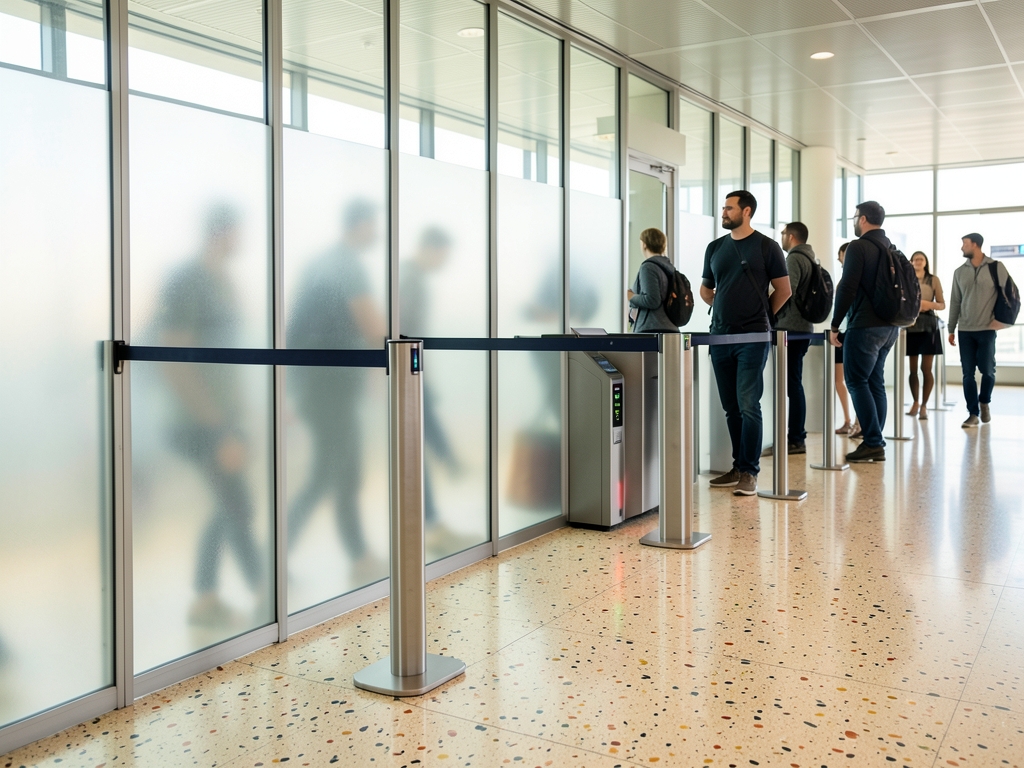
This guide compares when TSA PreCheck is likely to save time at airports with dedicated PreCheck lanes and when to skip it, using the program-wide wait-time benchmark and the enrollment-frequency rule.
It applies the three-round-trips-per-year, five-year enrollment rule and the 99% under-10-minute wait figure to your itinerary.
How TSA PreCheck Actually Works
TSA PreCheck is a Trusted Traveler Program run by the U.S. Transportation Security Administration that expedites screening for low-risk travelers who pass a preapproval background check (tsa.gov/precheck). Enrollment starts with TSA's application and vetting process; use tsa.gov/precheck for current steps, documents, and eligibility details instead of relying on summaries that may be out of date.
Approved travelers receive a Known Traveler Number (KTN). That number must be entered into the airline reservation; the airline then prints a PreCheck indicator on the boarding pass, and that indicator is what actually grants lane access (tsa.gov/precheck). In practice, the indicator—not the KTN by itself—is the credential that matters at the checkpoint.
Enrollment is valid for five years. Because program rules and renewal steps can change, confirm renewal requirements and timing on tsa.gov/precheck before your five-year mark rather than assuming automatic continuation. A lapsed or unverified membership can leave you in the standard lane even if your KTN is still stored in an airline profile.
Before each itinerary, run three checks: the KTN is attached to the reservation, the boarding pass shows the PreCheck indicator, and the airline and terminal you are using support the program for that flight. If any check fails, plan for standard screening and treat any expedited access as unavailable for that trip.
Keep the KTN identical across reservations, frequent-flyer profiles, and booking channels. A transposed digit or outdated profile can prevent the indicator from printing, which means the membership exists but does not help at that checkpoint. If the indicator is missing, resolve it with the airline before you reach security rather than at the lane.

The Evidence: What the Numbers Show
According to the Transportation Security Administration, 99% of TSA PreCheck users have a wait time of less than 10 minutes when going through airport security (thepointsguy.com). That figure is a program-level benchmark for people already in the program; it is not a checkpoint-specific promise, so it should be read as an overall experience rather than a guarantee for a particular terminal or time of day.
The Points Guy reports that TSA PreCheck is available at participating airports and airlines, with the program's participating-airport list maintained by TSA (thepointsguy.com). In practice, that means the 99% statistic applies only after you confirm both your departure airport and your airline are on the current list; if either is missing, the number does not describe your trip.
Forbes Advisor confirms TSA PreCheck is a program run by the U.S. Transportation Security Administration to allow expedited passage through airport security (forbes.com). Read together with The Points Guy's availability note, this establishes the program's basic scope: expedited screening exists where TSA and the participating airline both support it.
The wait-time number is most useful where a dedicated PreCheck lane is part of the checkpoint layout, and it is less informative for an itinerary that routes through a terminal without that setup. Use it as a scope check rather than as a claim that every participating airport has the same lane configuration.
A practical reading is to treat the 99% figure as a starting benchmark, then verify your own route against the TSA-maintained participating-airport and airline lists before deciding whether the program's speed benefit is likely to apply to you.

Options Compared: PreCheck vs CLEAR vs Standard
If you are deciding among TSA PreCheck, CLEAR, and standard screening, start by matching the tool to the bottleneck. PreCheck is the government-run option that puts eligible travelers in an expedited lane; for most travelers who fly at least three round-trips per year from a participating airport, it is the better fit (tsa.gov/precheck).
CLEAR is a private biometric identity-verification service. It can reduce time at the ID-check step, but it does not replace PreCheck screening; the two are complementary, with CLEAR verifying identity and PreCheck providing the expedited screening lane (aerocorner.com).
| Option | What it changes | Best for |
|---|---|---|
| TSA PreCheck | Screening lane | Most travelers with at least three round-trips per year |
| CLEAR | ID-check step | Travelers who want identity speed stacked with PreCheck |
| Standard screening | Neither | Low-frequency flyers or non-participating terminals |
Standard screening has no enrollment and no fee, but it also has no expedited lane and no program-level fast-wait benchmark. It remains the correct default when your itinerary avoids participating terminals or your annual trip count stays below the threshold.
The practical rule is to choose by itinerary, not by brand. If your route uses a terminal where your airline does not participate, or you expect fewer than three round-trips in the period you are evaluating, standard screening is the rational choice. If you want both identity and screening speed, buy the stack—CLEAR plus PreCheck—rather than treating CLEAR as a substitute.
Before enrolling, run three checks: whether your home airport has a dedicated PreCheck lane, whether your usual airline participates, and whether your expected trip count crosses the three round-trip threshold. If any check fails, skip enrollment and use standard screening; if all pass, PreCheck is the single best value among the three.

Costs and Numbers That Matter
TSA PreCheck enrollment costs a fee for five years of validity; the exact fee is set by TSA and should be verified at tsa.gov/precheck before enrolling (tsa.gov/precheck). Treat any advertised or third-party quote as a starting point, not as the amount you will pay, because the fee can change and enrollment providers may differ.
Divide the enrollment fee by the number of round-trips you expect in five years to get your per-trip cost. Use round-trips, not one-way segments, so the denominator matches the way you actually buy travel. If that per-trip cost exceeds the value you place on saving 10+ minutes per screening, skip enrollment.
A useful check is to assign a dollar value to 10 minutes of airport time before you enroll. If your calculated per-trip cost is above that value, PreCheck is not paying for itself on cost grounds alone, even if the screening experience is faster.
CLEAR pricing is separate and recurring annually, so stacking CLEAR on top of PreCheck adds a second ongoing charge rather than replacing the five-year PreCheck fee. Budget for both programs independently; the combined cost is the PreCheck fee plus CLEAR's recurring price, not a single bundled price.
Because the fee is volatile, verify the current amount, validity period, and any enrollment-provider differences at tsa.gov/precheck before you pay. Do not build a multi-year budget from an old quote or a screenshot.
If your expected trip count is low, the same fee is spread across fewer screenings and the per-trip cost rises quickly. In that case, the time savings must be worth more to you than the calculated per-trip cost, or standard screening is the better economic choice.
| Cost check | How to use it |
|---|---|
| Enrollment fee | Verify the current amount at tsa.gov/precheck before paying. |
| Per-trip cost | Divide the fee by expected round-trips in five years. |
| Stacked programs | Add CLEAR's separate annual charge to the PreCheck fee. |
What the Evidence Does NOT Establish
This section states the limits only: TSA PreCheck does not guarantee a dedicated lane at every airport, the reviewed sources do not fix an enrollment fee, and airline participation is not universal. Those three gaps are the reason a traveler should verify the specific airport, fee, and carrier before treating enrollment as a certain time savings.
The 99% under-10-minute figure is a TSA-reported program-wide statistic, not a guarantee at any specific airport or terminal on any specific day (thepointsguy.com). It describes the program's overall performance, not your checkpoint on a busy morning, so use it as a benchmark and then check your own airport's lane setup, staffing, and typical time of day before assuming it applies to your trip.
The reviewed sources do not state the current enrollment fee, so any dollar figure should be verified live at tsa.gov/precheck rather than assumed (tsa.gov/precheck). Do not budget from a third-party quote, an old screenshot, or a cached page; use the official page for the current amount and any enrollment or renewal terms before comparing it with CLEAR or standard screening.
The reviewed material also does not enumerate which participating airports have dedicated gateside PreCheck lanes versus shared lanes, so verify your specific airport on TSA's participation information before relying on a gateside benefit. A lane that is shared, temporarily closed, or located away from your gate can reduce the expected time advantage even when you are eligible.
Airline participation is not universal, so confirm that your carrier and itinerary support PreCheck before you count on it. If your route includes a non-participating terminal, plan for standard screening instead of assuming the expedited lane will be available, and treat enrollment as one condition among several rather than a promise of faster screening.
These limits do not make the program useless; they define where the evidence stops. A claim that PreCheck is worth using should be tied to a verified airport, a verified fee, and a verified participating carrier, not to the program-wide statistic alone.
Three Round-Trips in Five Years
Start with the five-year validity period as the denominator. Three round-trips per year for five years equals 15 round-trips, so one enrollment is being used for 15 separate trips. The breakeven question is whether your own itinerary will actually produce that many eligible uses. If you expect two round-trips per year, the same enrollment covers 10 uses; at one round-trip per year, it covers 5. That is the concrete difference between meeting and missing the three-round-trips-per-year threshold.
Checkpoint one is the boarding pass. Enter your Known Traveler Number in the reservation before check-in and confirm that the airline prints the PreCheck indicator on the boarding pass (tsa.gov/precheck). If the indicator is missing for a flight, that trip does not count as an eligible use, even if your membership itself is active.
Checkpoint two is the airport and terminal. Confirm that your departure airport is on TSA's participating-airport list and that your terminal has a PreCheck lane open during your departure window (tsa.gov/precheck). A participating airport name on a list is not the same as a lane you can use at the hour you fly.
| Round-trips per year | Round-trips over 5 years | Eligible uses per enrollment |
|---|---|---|
| 3 | 15 | 15 |
| 2 | 10 | 10 |
| 1 | 5 | 5 |
Apply the two checkpoints to each planned trip, not just to the airport name. A route that changes terminals, uses a non-participating carrier, or departs when the lane is closed removes that trip from the numerator. The enrollment fee is paid once, so every removed trip raises the per-trip cost of the remaining eligible trips.
Enroll when both checkpoints pass for at least three round-trips per year; otherwise skip it or revisit the decision after your itinerary is fixed. This keeps the breakeven calculation tied to trips you can actually use rather than to a headline airport list.
Decision Rules: Use or Skip
Apply these checks in order. PreCheck is worth using only when the frequency, airport, and boarding-pass conditions all line up; otherwise standard screening is the safer default.
| If | Then |
|---|---|
| You will take three or more round-trips per year for the next five years from a participating airport and your airline issues a boarding pass with the PreCheck indicator | Enroll in TSA PreCheck (tsa.gov/precheck) |
| Your home airport and destination airports are on TSA's participating-airport list and your airline participates | Use PreCheck every time (thepointsguy.com) |
| Your itinerary routes through a non-participating terminal or your airline does not print the PreCheck indicator | Skip the lane and budget extra time for standard screening (tsa.gov/precheck) |
| You fly fewer than three round-trips per year | Skip enrollment and use standard screening |
Enrollment is the first gate. If you will take three or more round-trips per year for the next five years from a participating airport and your airline issues a boarding pass with the PreCheck indicator, enroll through TSA (tsa.gov/precheck). If you fly fewer than three round-trips per year, skip enrollment and stay with standard screening.
Route participation is the second gate. If your home airport and destination airports are on TSA's participating-airport list and your airline participates, use PreCheck every time (thepointsguy.com). If your itinerary routes through a non-participating terminal or your airline does not print the PreCheck indicator, skip the lane and budget extra time for standard screening (tsa.gov/precheck).
Keep the two decisions separate: frequency decides whether enrollment makes sense, while airport participation and the boarding-pass indicator decide whether the lane is usable on a specific trip.
When any condition fails, do not force the lane. The right choice is determined by whether the expedited path is actually available for that itinerary, not by preference alone.
Also worth reading How Clear, Global Entry, and TSA TSA Launches New Program How TSA PreCheck and Global Entry
What to do next
| Step | Action | Why it matters |
|---|---|---|
| 1 | Check whether each planned departure airport is among the 13 airports with dedicated gateside lanes and whether your airline participates. | PreCheck is worth using only where both airport lanes and airline participation exist. |
| 2 | Count round-trip flights you will take in the next five years from a participating airport. | Enrollment is justified only at three or more round trips. |
| 3 | If the count is below three, skip enrollment and use standard screening. | Below the threshold, PreCheck is not worth it. |
| 4 | If enrolling, confirm your airline issues a boarding pass with the PreCheck indicator before travel. | The reader rule requires the indicator for lane access. |
| 5 | Use the TSA wait-time figure to compare expected PreCheck waits with your itinerary. | It frames the benefit at the 13 airports. |
| 6 | Re-check the comparison table above for the airport and airline rows that affect your itinerary. | It prevents applying the rule to an airport or carrier not in the gateside group. |
Frequently Asked Questions
What must be done with a Known Traveler Number after approval to use TSA PreCheck?
It must be entered into the airline reservation so the airline can print a PreCheck indicator on the boarding pass.
Which credential actually grants TSA PreCheck lane access at the checkpoint?
The PreCheck indicator printed on the boarding pass—not the Known Traveler Number by itself—is the credential that matters at the checkpoint.
Where should travelers verify current TSA PreCheck enrollment steps and eligibility?
Use tsa.gov/precheck for current steps, documents, and eligibility details instead of relying on summaries that may be out of date.
How long is TSA PreCheck enrollment valid?
Enrollment is valid for five years.
What is the risk of not confirming renewal before the five-year mark?
A lapsed or unverified membership can leave you in the standard lane.
What enrollment-frequency rule does the guide apply to itineraries?
It applies the three-round-trips-per-year, five-year enrollment rule to your itinerary.
Quick answers
| What does TSA PreCheck expedite? | TSA PreCheck is a Trusted Traveler Program run by the U.S. Transportation Security Administration that expedites screening for low-risk travelers who pass a preapproval background check. |
| Where should travelers check current enrollment steps? | Enrollment starts with TSA's application and vetting process; use tsa.gov/precheck for current steps, documents, and eligibility details instead of relying on summaries that may be out of date. |
| What grants lane access at the checkpoint? | The airline prints a PreCheck indicator on the boarding pass, and that indicator is what actually grants lane access. |
| What is the credential that matters at the checkpoint? | In practice, the indicator—not the KTN by itself—is the credential that matters at the checkpoint. |
| How long is enrollment valid? | Enrollment is valid for five years, and travelers should confirm renewal requirements and timing on tsa.gov/precheck before the five-year mark rather than assuming automatic continuation. |
Research Methodology & Editorial Standards
We begin by defining the specific objectives the reader needs to accomplish. Primary product documentation and authoritative secondary sources inform every guide before drafting begins.
Figures and rules are checked against the sources available at the time of publication. Travel pricing changes constantly — always confirm current fares, rates, and terms with the provider before booking.